-
-
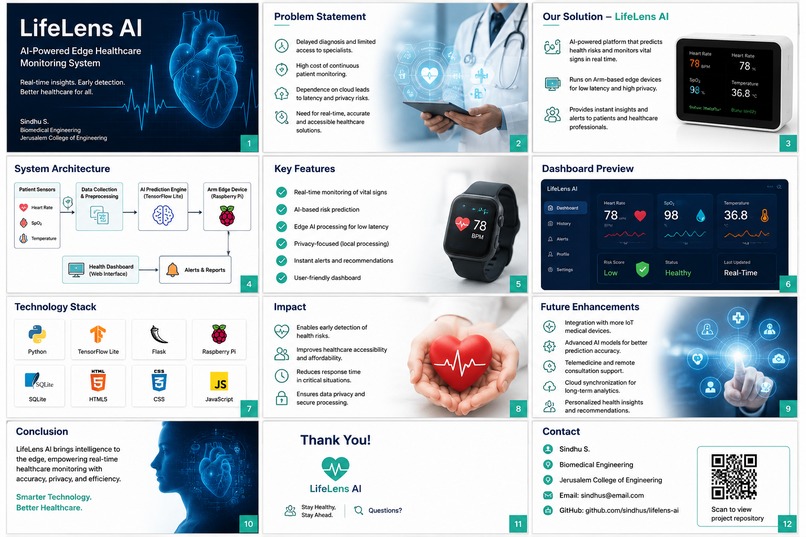
Lifelens
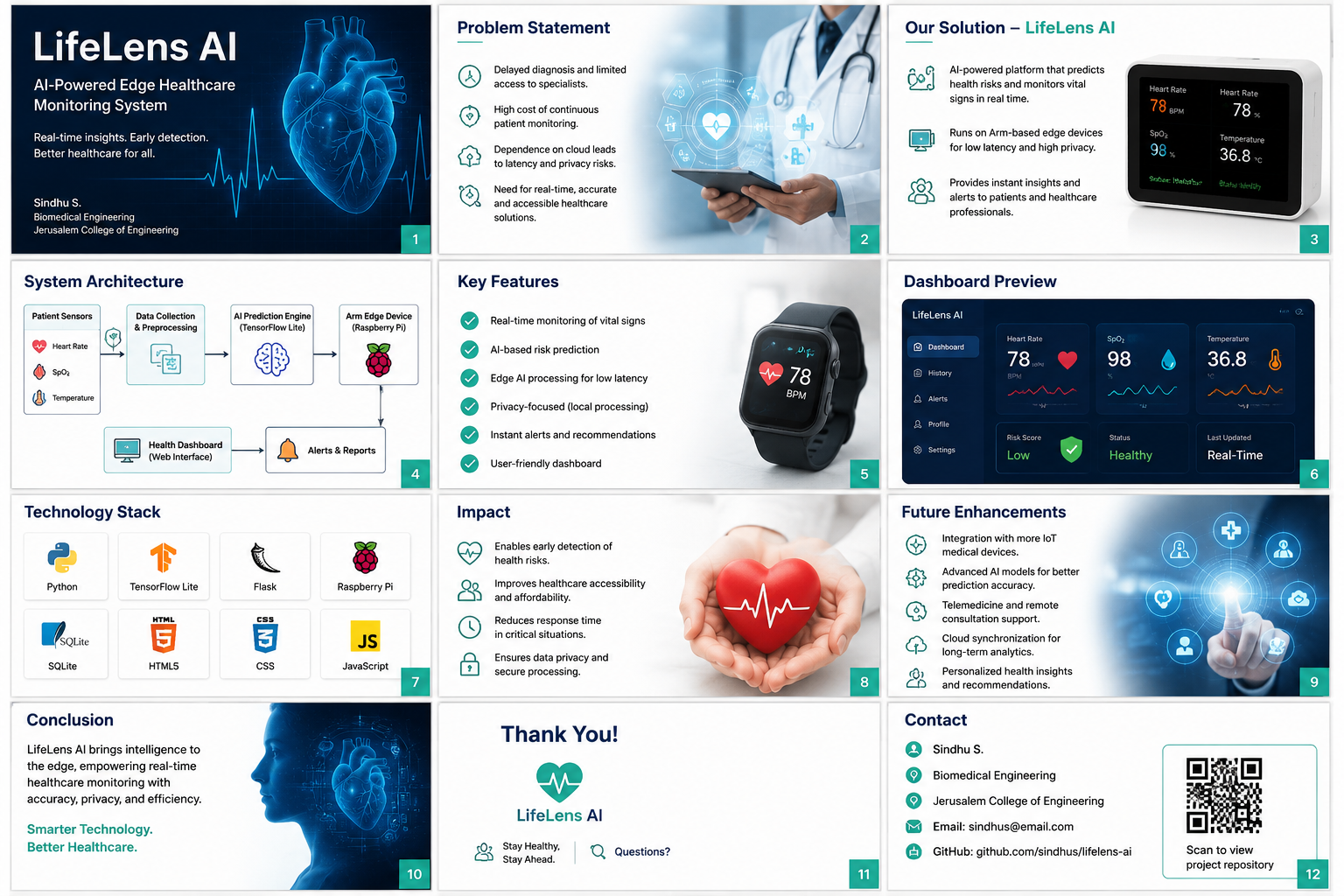
LifeLens AI – Predicting Health Risks Before Symptoms Appear
Inspiration
As a Biomedical Engineering student, I have always been fascinated by the intersection of healthcare and technology. One challenge that inspired me was the fact that many diseases are diagnosed only after symptoms become severe, reducing the chances of effective treatment. I wanted to explore how Artificial Intelligence could help identify health risks earlier and empower individuals to take preventive action.
This idea led to the creation of LifeLens AI, an intelligent healthcare assistant designed to analyze health-related data and provide personalized risk assessments and recommendations.
What It Does
LifeLens AI uses machine learning and data analytics to evaluate user health parameters such as age, lifestyle habits, medical history, and vital signs. Based on these inputs, the system predicts potential health risks and offers preventive suggestions.
Key features include:
- AI-powered health risk prediction
- Personalized health recommendations
- User-friendly dashboard
- Early warning indicators for potential diseases
- Data-driven decision support
How We Built It
The project was developed using a combination of AI and software technologies.
Technology Stack
- Python
- Machine Learning Algorithms
- Data Analytics
- Streamlit/Web Interface
- Healthcare Datasets
- Cloud-based Deployment
Workflow
- Collect and preprocess healthcare data.
- Train machine learning models to identify risk patterns.
- Evaluate model accuracy and performance.
- Develop an interactive user interface.
- Generate personalized health insights and recommendations.
Challenges We Faced
One of the major challenges was obtaining reliable healthcare datasets while maintaining data privacy and ethical considerations.
Other challenges included:
- Handling missing and inconsistent data
- Improving prediction accuracy
- Reducing model bias
- Designing an intuitive user experience
- Ensuring recommendations remain understandable to non-technical users
Through continuous testing and optimization, these challenges were addressed to improve system performance.
What We Learned
This project helped us gain valuable experience in:
- Artificial Intelligence in healthcare
- Machine learning model development
- Data preprocessing and feature engineering
- User-centered design
- Ethical considerations in health technology
We also learned the importance of balancing technical accuracy with accessibility so that healthcare solutions can benefit a wider audience.
Future Scope
In the future, LifeLens AI can be enhanced by:
- Integrating wearable device data
- Real-time health monitoring
- Telemedicine support
- Advanced disease prediction models
- Multilingual accessibility
- Hospital and clinic integration
Impact
LifeLens AI aims to shift healthcare from reactive treatment to proactive prevention. By identifying risks early and providing actionable insights, the platform has the potential to improve health outcomes, reduce healthcare costs, and promote healthier lifestyles.
Our vision is simple: help people make informed health decisions before problems become critical.
Built With
- ai/ml
- python
- scikit-learn
- sqlite
- streamlit


Log in or sign up for Devpost to join the conversation.