-
-
Lifelens-ai
-
LifeLens AI
Inspiration
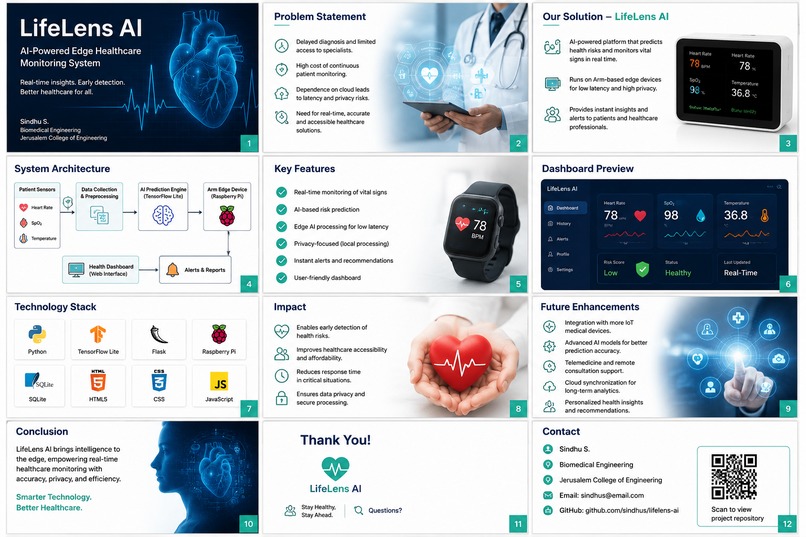
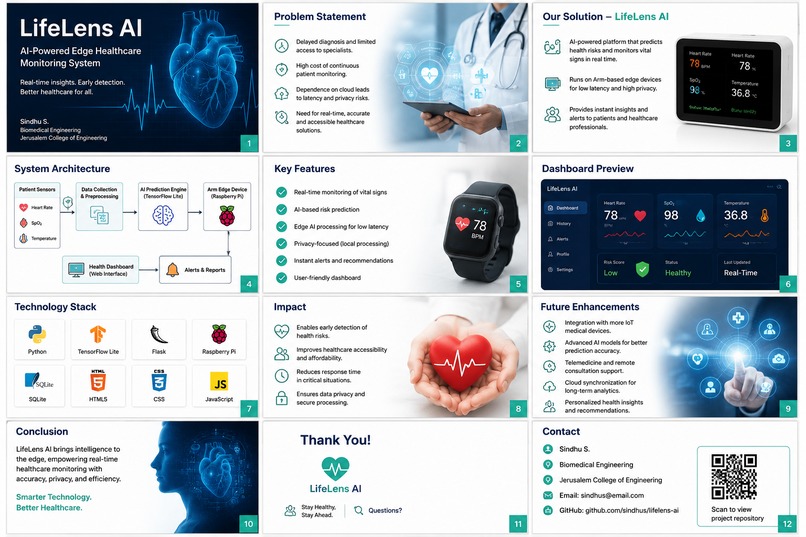
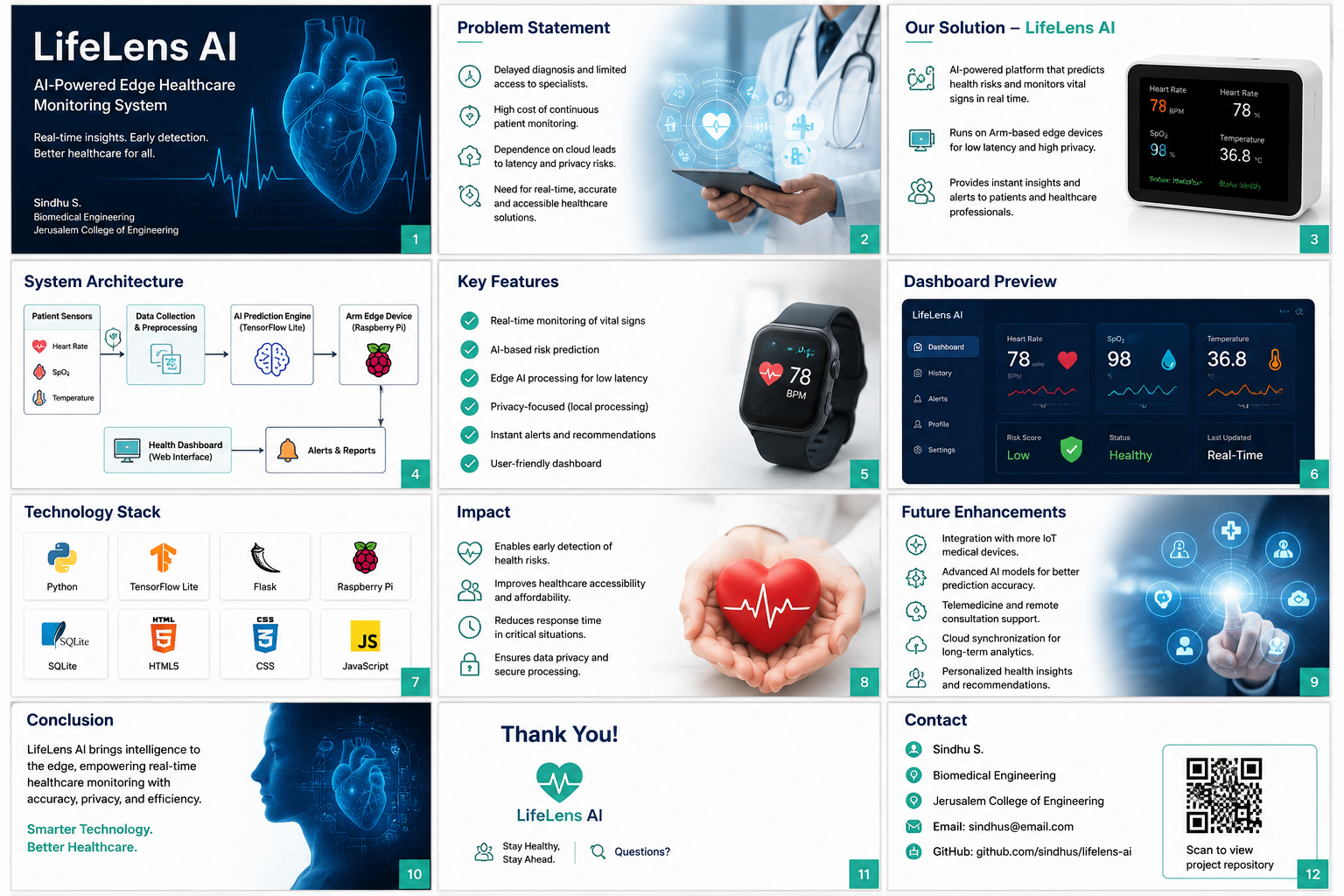
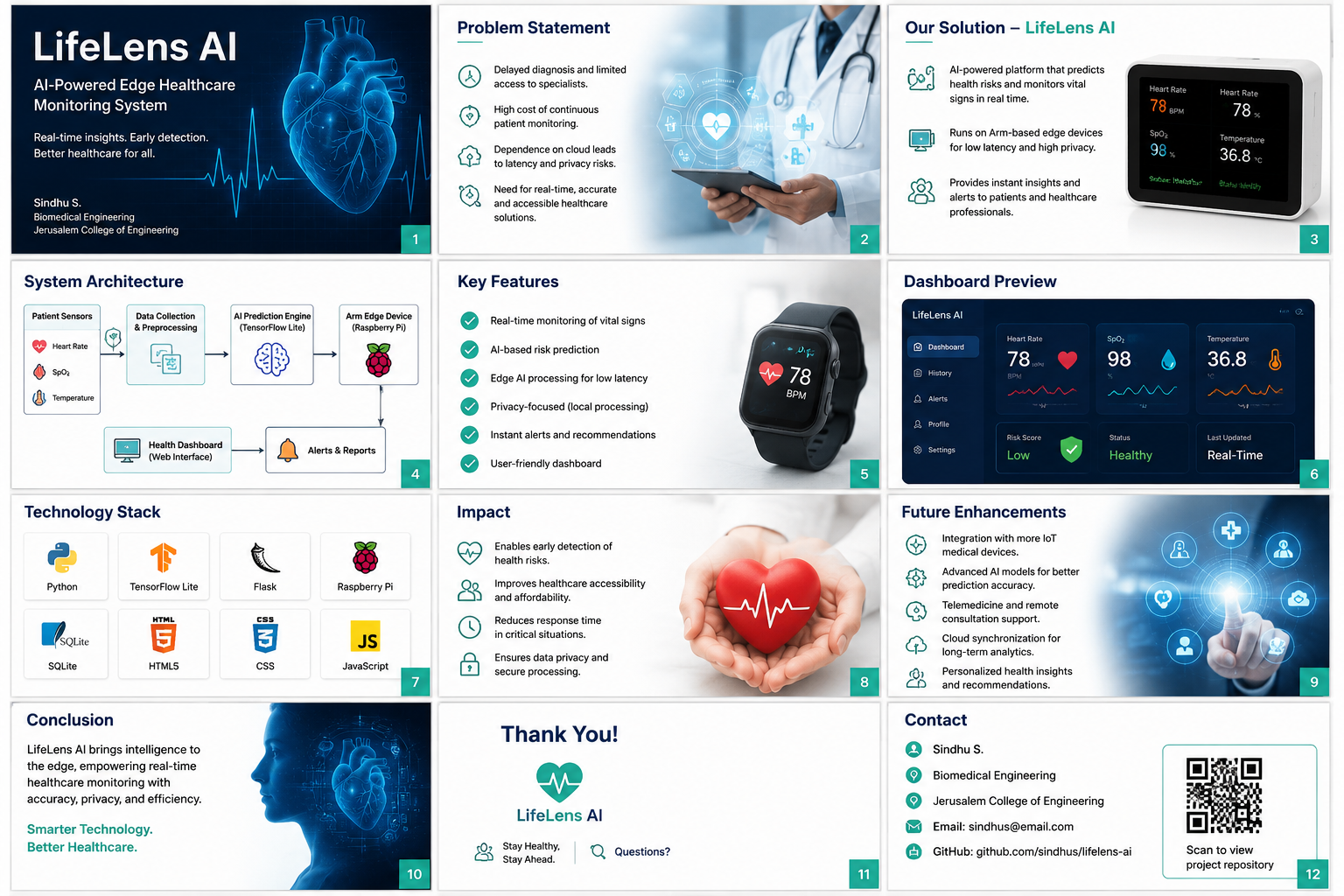
Healthcare systems often struggle with delayed diagnosis, limited access to specialists, and the high cost of continuous patient monitoring. As a Biomedical Engineering student, I was inspired to create a solution that combines Artificial Intelligence with edge computing to provide faster and more accessible healthcare support. The goal was to develop a platform that can analyze patient data in real time while maintaining privacy and reducing dependence on cloud infrastructure.
What It Does
LifeLens AI is an intelligent healthcare monitoring platform that predicts potential health risks, tracks vital signs, and provides instant insights directly on Arm-powered edge devices. The system processes physiological data such as heart rate, blood oxygen level, body temperature, and activity patterns to identify abnormalities and generate early warnings for patients and healthcare providers.
How We Built It
The project consists of four major components:
- Data Acquisition Layer
- Collects patient vital signs from sensors and wearable devices.
- Supports real-time data streaming.
- AI Prediction Engine
- Uses machine learning models to detect anomalies and predict health risks.
- Optimized for efficient execution on Arm processors.
- Edge Computing Layer
- Processes data locally to reduce latency and improve privacy.
- Minimizes cloud dependency and network usage.
- User Dashboard
- Displays health trends, alerts, and recommendations.
- Provides an easy-to-use interface for patients and healthcare professionals.
Challenges We Faced
Data Quality
Healthcare datasets often contain missing values and inconsistencies. Data preprocessing and normalization were necessary to improve prediction accuracy.
Edge Optimization
Running AI models on resource-constrained devices required careful optimization of model size, memory usage, and inference speed.
Privacy and Security
Patient information is highly sensitive. Implementing local processing and secure data handling mechanisms was essential.
Real-Time Performance
Balancing prediction accuracy with low latency was a significant challenge during development.
What We Learned
Through this project, we gained valuable experience in:
- Machine Learning and AI model deployment
- Edge AI optimization for Arm architecture
- Biomedical signal processing
- Healthcare data privacy and security
- Real-time system design
We also learned how efficient AI models can deliver impactful healthcare solutions even on low-power devices.
Future Improvements
- Integration with IoT medical devices
- Advanced disease prediction models
- Telemedicine support
- Cloud synchronization for long-term analytics
- Personalized healthcare recommendations
Impact
LifeLens AI demonstrates how optimized AI on Arm-based edge devices can improve healthcare accessibility, reduce response time, and support early disease detection. By bringing intelligence closer to patients, the solution enables faster, safer, and more efficient healthcare delivery.


Log in or sign up for Devpost to join the conversation.