-
-
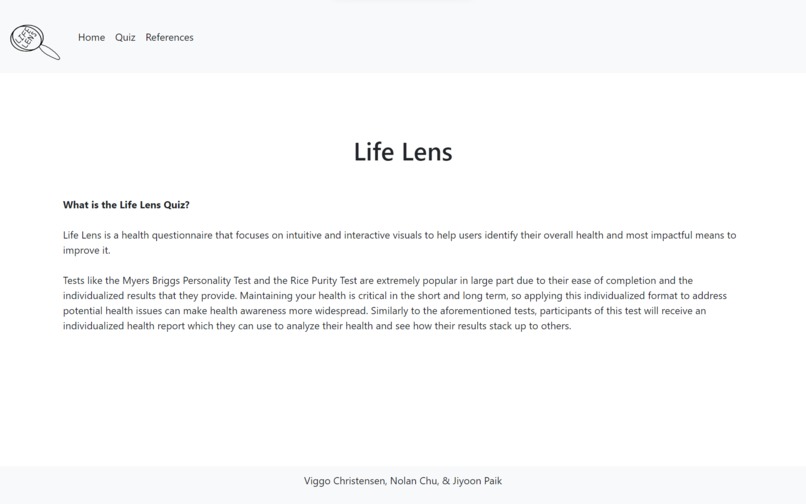
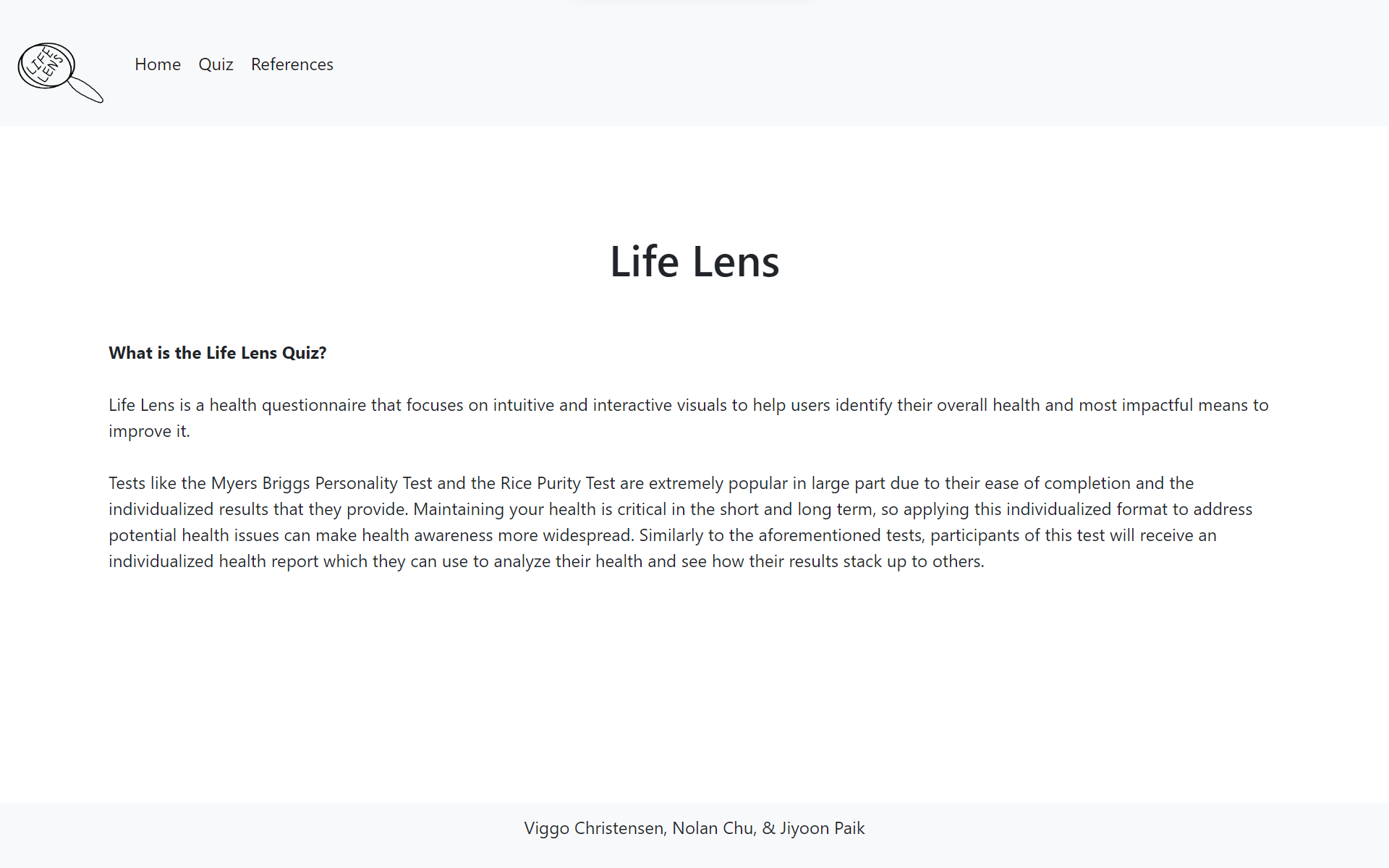
Landing Page
-
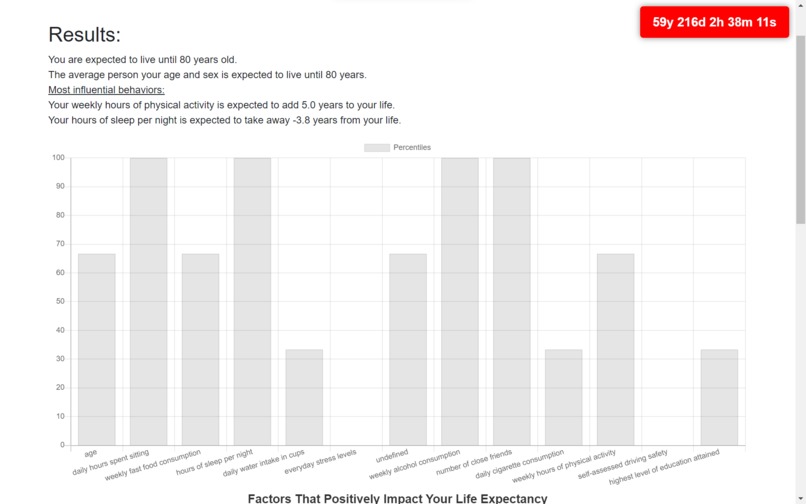
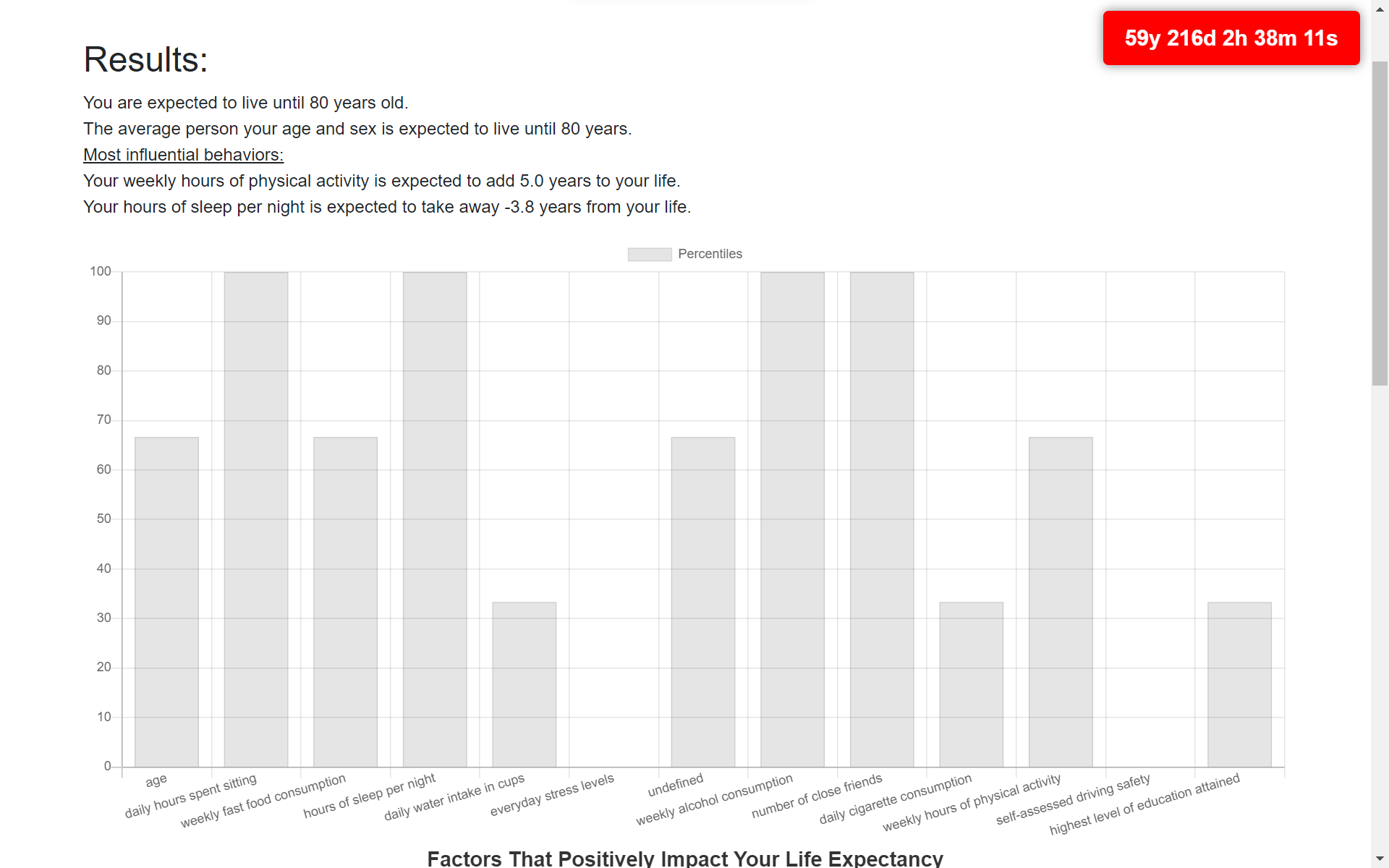
Results Top
-
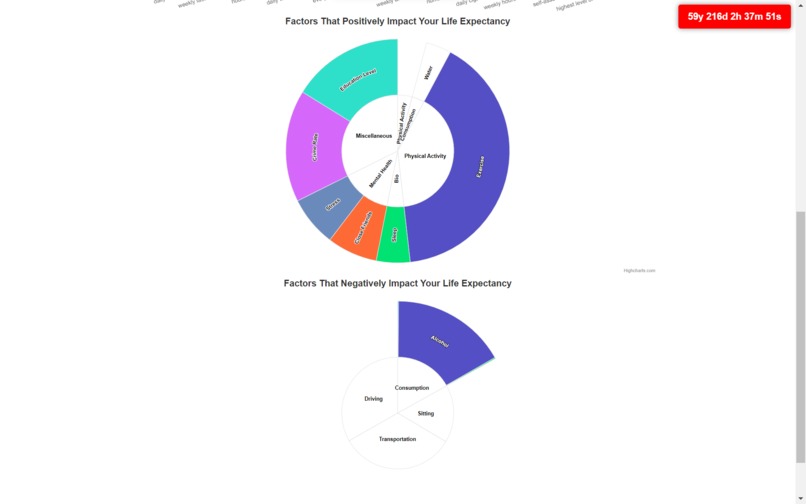
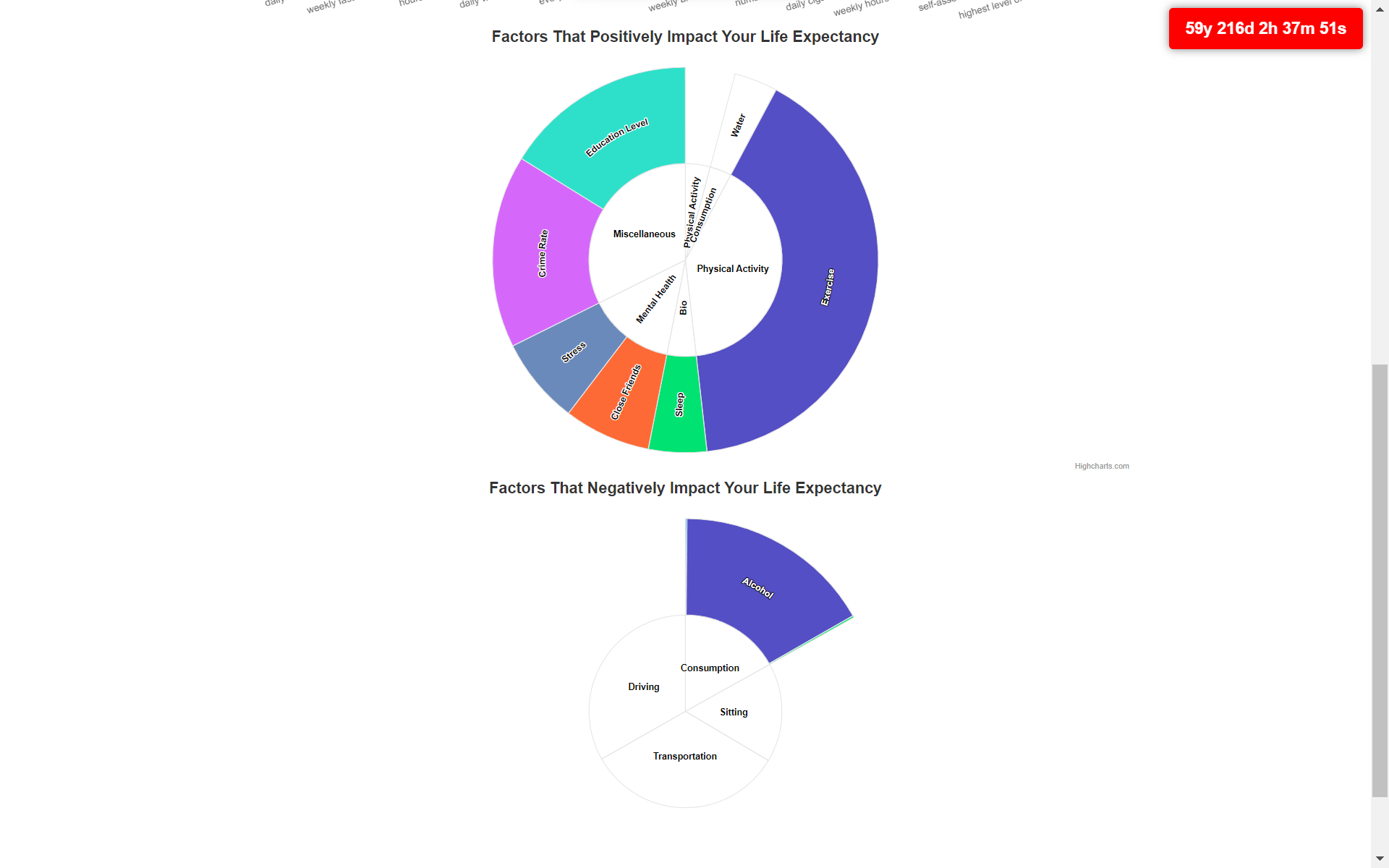
Results Bottom
-
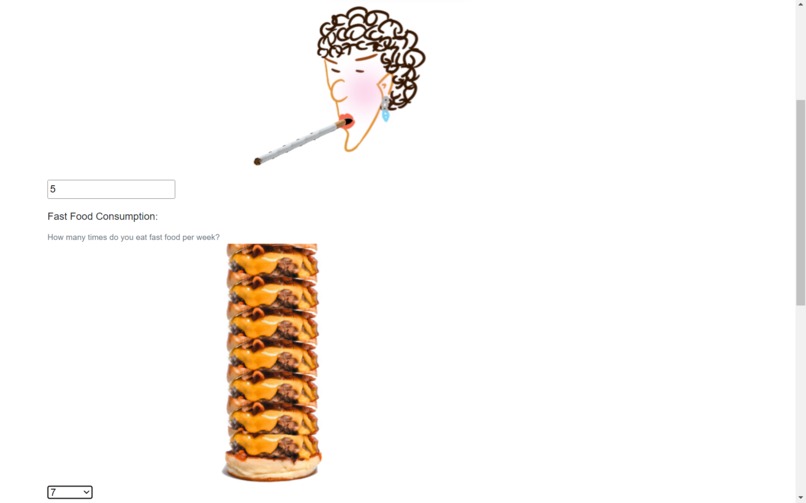
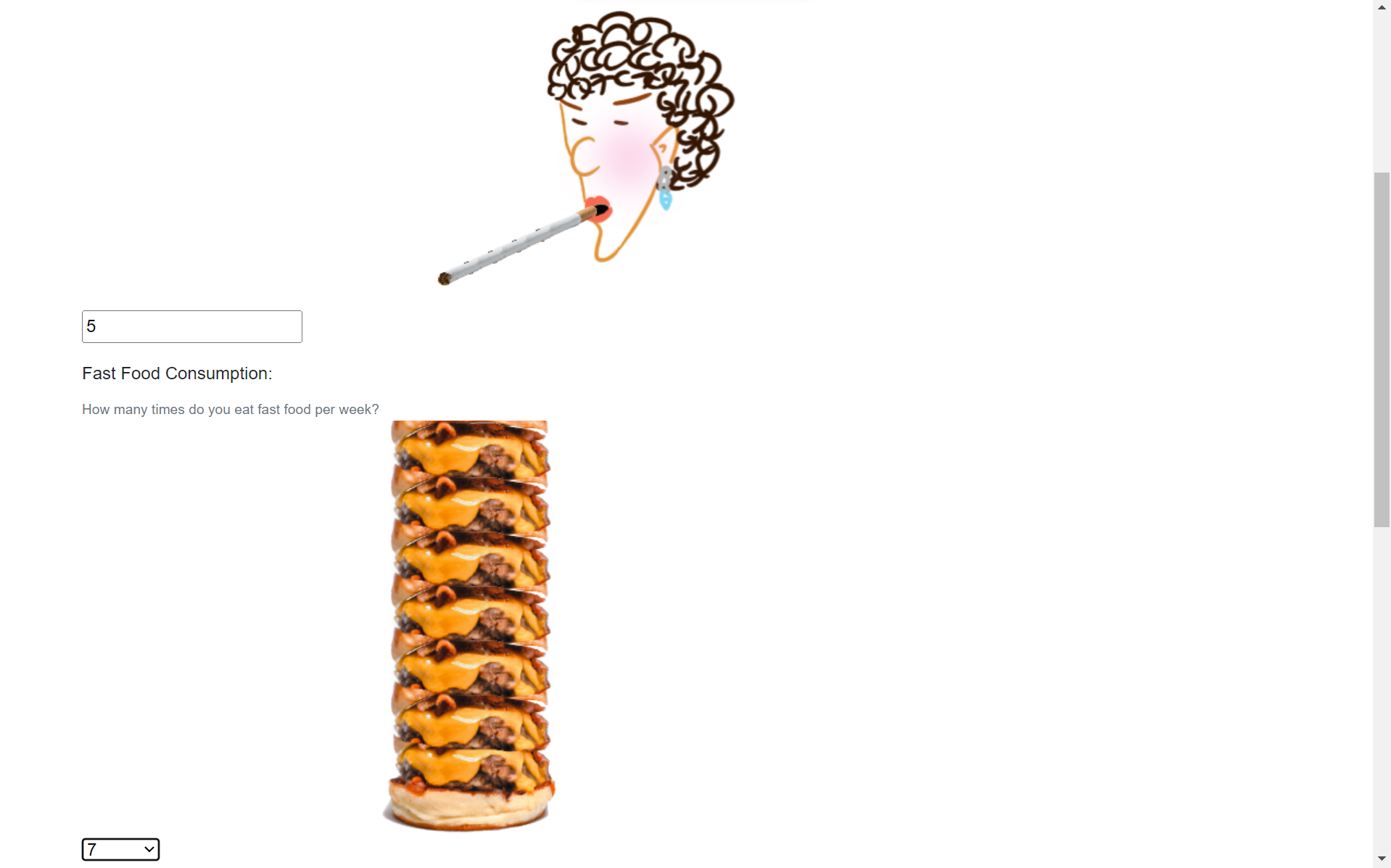
Second Page of Questions
Inspiration
Our inspiration was drawn from the widespread popularity and impact of tests like the Myers-Briggs Personality Test and the Rice Purity Test. Recognizing their engaging format, we wondered: could we make a health assessment as captivating? Our aim was to create a platform that made health consciousness not just informative, but also engaging.
What It Does
Upon visiting our website, users can delve right into our health questionnaire. As they respond, our system calculates the potential influence of their answers on life expectancy. It also pinpoints which health areas might most significantly impact them. The results are presented through a range of graphics, aiding users in comprehending their health status and determining areas of focus. Furthermore, we store test data, offering users insights into how their results match up against prior participants.
How We Built It
Our platform relies on a Python and Django backend, paired with an HTML and JavaScript frontend.
Challenges We Ran Into
With two members relatively new to programming and navigating their first Hackathon, even tasks as basic as crafting an HTML page layout became considerable challenges. This meant our third member often had to step in to help. Deployment posed another set of challenges, as elusive syntax errors led to time-consuming troubleshooting sessions.
Accomplishments We're Proud Of
Despite the hurdles, our least experienced team members have now gained substantial familiarity with web development, collaborative work on GitHub, and the nuances of project execution from inception to completion. Being able to deploy our code and engage fellow hackers in data collection was particularly thrilling.
What We Learned
Our experience provided valuable insights into web app development, especially without heavily relying on frameworks. Though we utilized bootstrap CSS, the majority of our frontend work was accomplished with vanilla JS, HTML, and CSS. Our understanding of databases and Django's applications also deepened considerably.
What's Next for LifeLens
Looking ahead, we're excited about introducing benchmark tests. For instance, a reaction time test, informed by data linking it to life expectancy, could offer users a fun and interactive experience. We're also keen on making the input methods more dynamic and interactive.



Log in or sign up for Devpost to join the conversation.