-
-
Flipper the Lifeguard
Inspiration
We've all seen fish cams and pan-tilt-zoom cameras that track movement, but who's seen one built using an ultrasound sensor? We had a limited selection of sensors, and we wanted to use the ultrasound. So, we came up with Lifeguard, combining our knowledge of web servers and integration to make a final, live camera product.
What it does
Lifeguard is a pivoting camera that can track a swan dive, a beach ball, or a seagull streaking through the sky. Keeping watch of everything in its sight, Lifeguard livestreams its footage to a web server where many can tune in.
How we built it
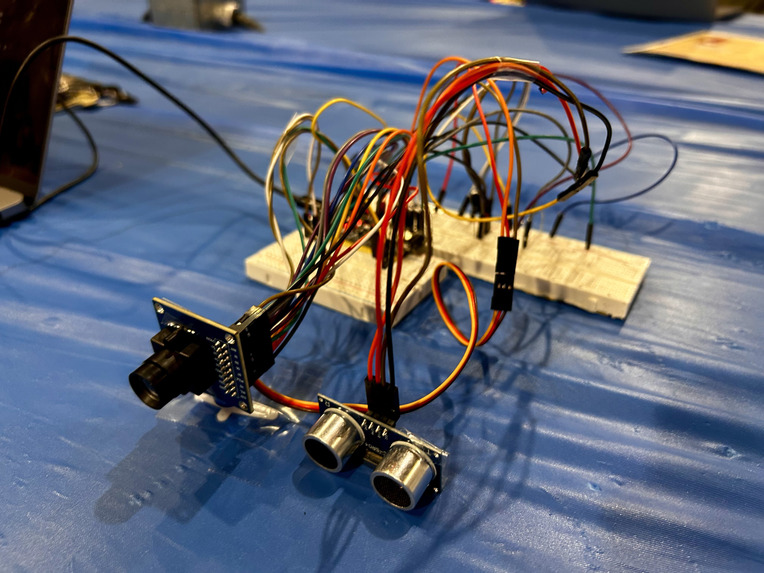
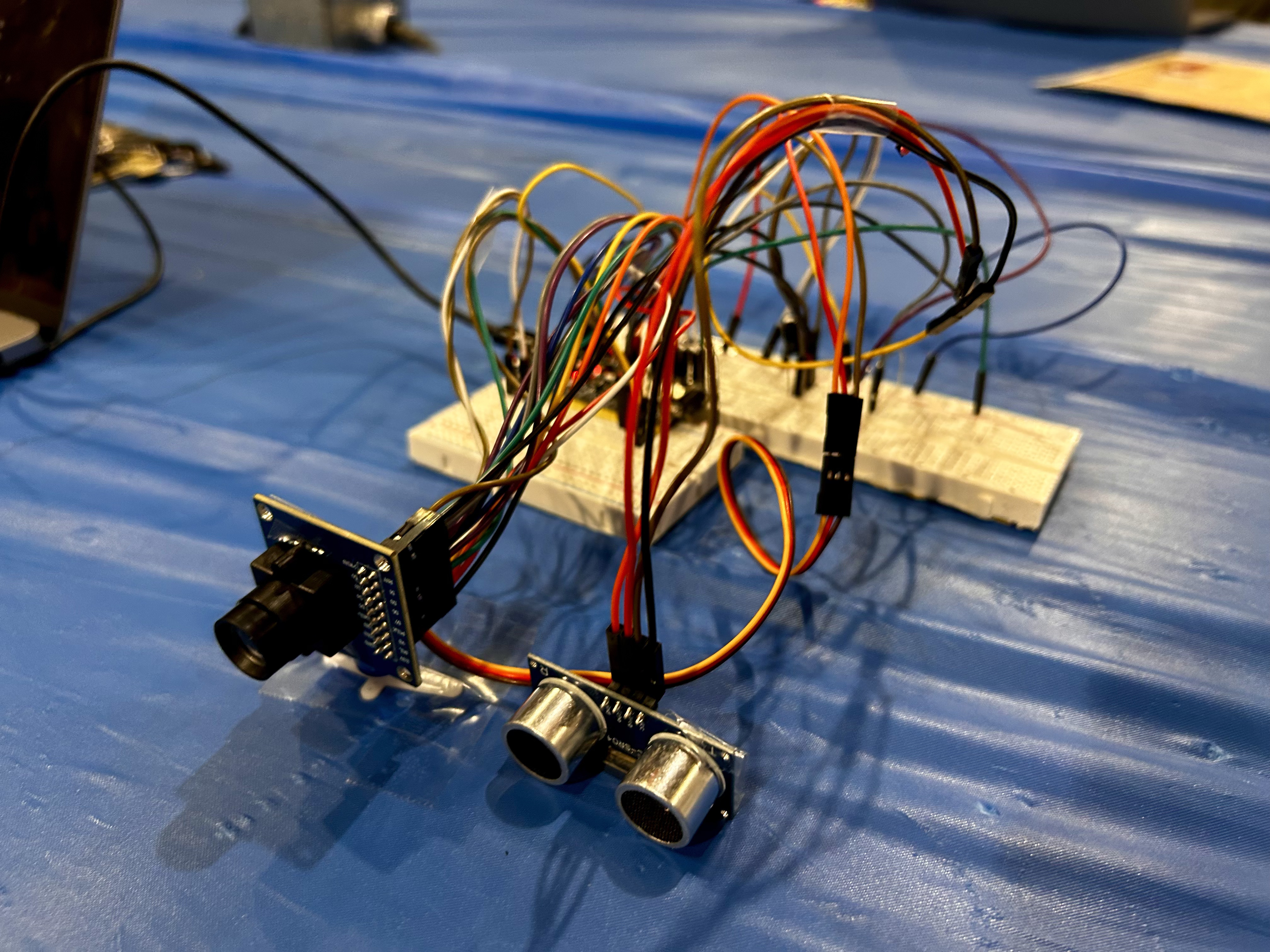
Starting with a simple tutorial on how to get a web server on an ESP32 to blink LEDs through commands on the website, we decided to integrate an ultrasound sensor we had on hand with a camera and a servo. After testing each component separately to ensure more simplicity during debugging and wiring, we then integrated them with the appropriate configuration through a final code.
Challenges we ran into
Getting the web server up was a challenge, as was the camera feed. We'd never worked with an ESP32 before, and we realized that there were settings within our Arduino IDE and network settings that had to be a certain way to interact with the components. Once we figured that out, we ran into problems with striped and discolored images on the live feed, which was due to the long jumper wires causing noise. With each challenge, we learned what worked and what didn't, and iterated upon that.
Accomplishments that we're proud of
All our progress was from zero knowledge of the ESP32, using Arduino IDE, or integrating live cameras. In 24 hours, we have gone from an empty breadboard to an Lifeguard, a working, moving example of how far we've gone.
What we learned
How to bounce back from failures. Nothing worked on the first try in our project, and that was the point! With every "camera initialization failed" or dark LED, we learned how to pivot and be flexible with our knowledge.
What's next for Flipper the Lifeguard
Limiting noise from the cables for the camera, making a better website, packaging the components within a PCB or case that is more reliable, and working on the sensitivity of the sensors to the camera reacting.
Built With
- esp32
- hardware

Log in or sign up for Devpost to join the conversation.