-
-
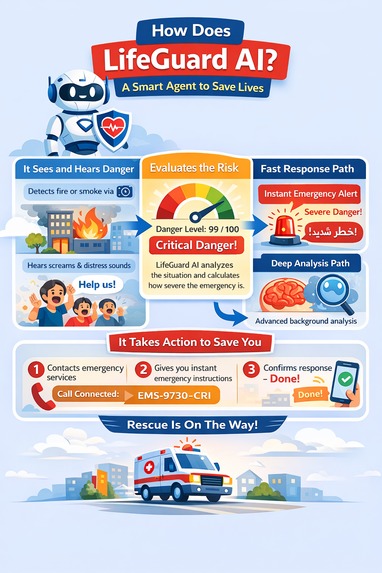
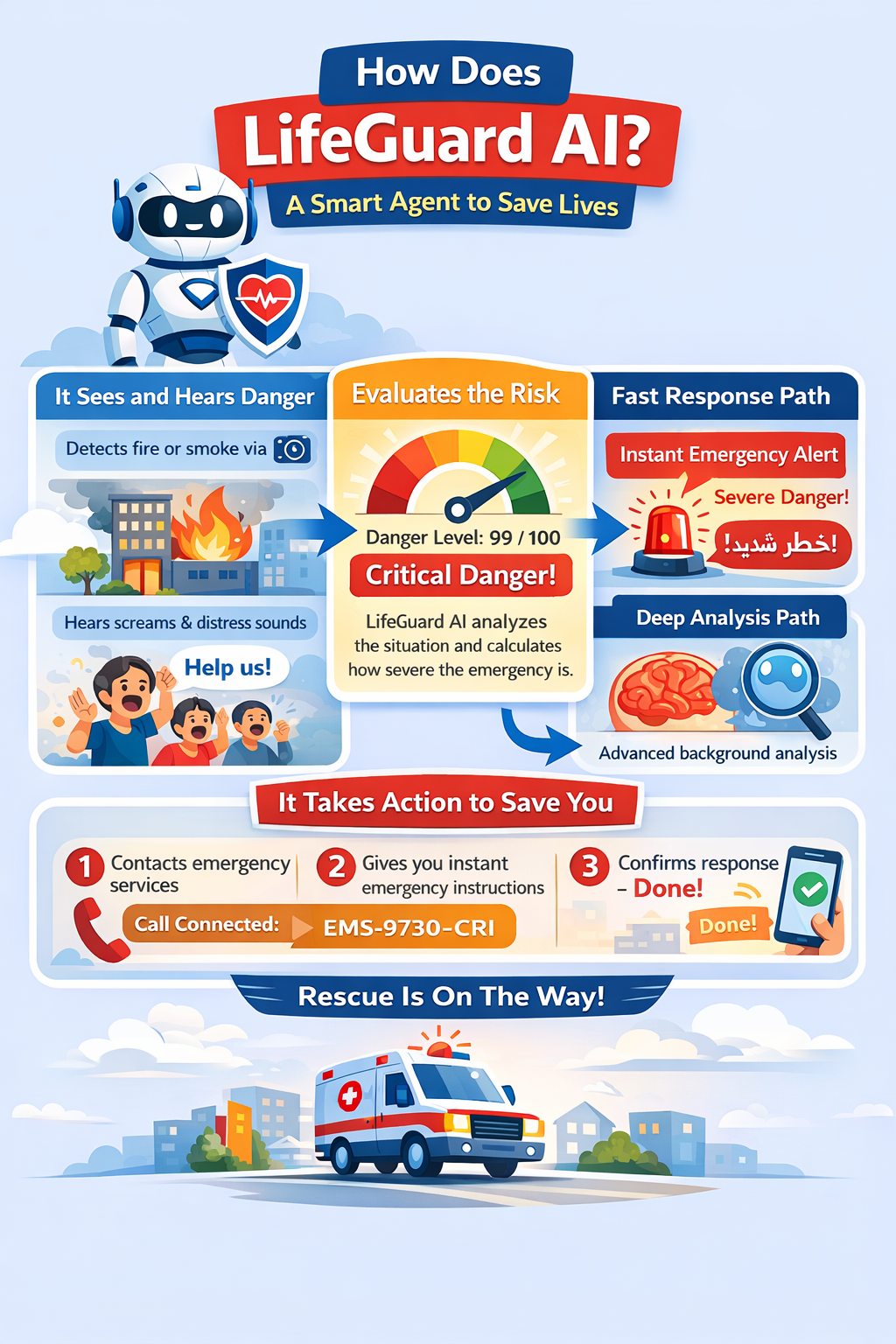
A comprehensive overview of the LifeGuard AI ecosystem, illustrating the Dual-Path response system and the autonomous decision-making flow
-
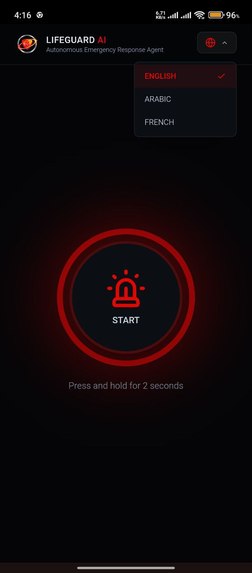
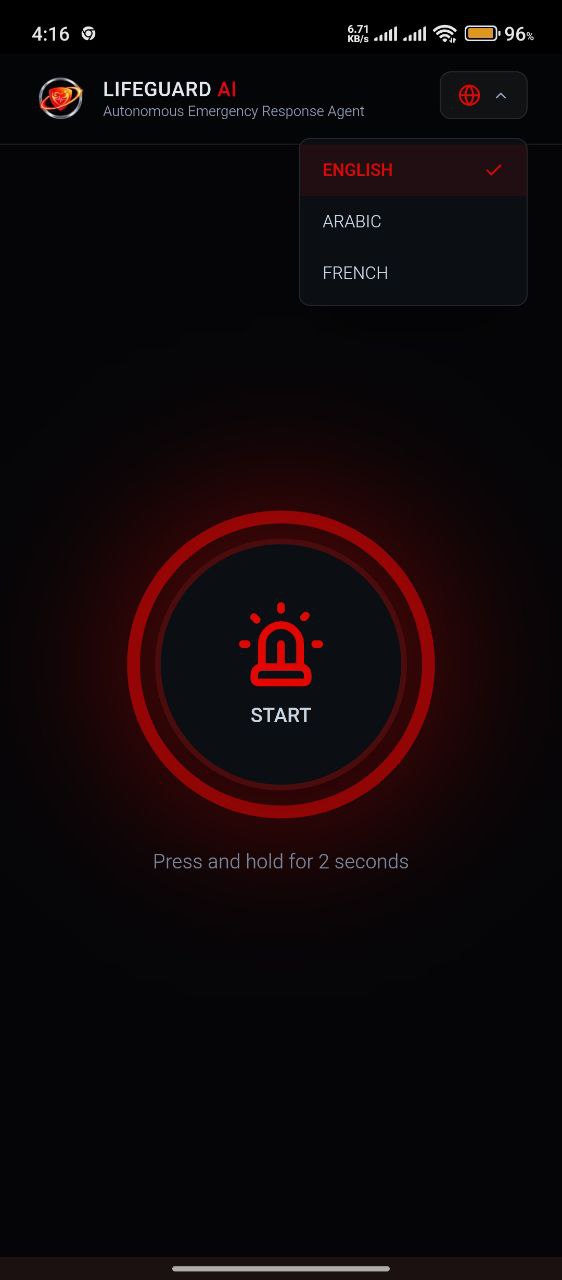
Dashboard: Clean, high-stakes UI with "Press & Hold" trigger and native support for English, Arabic, and French to prevent accidental alerts
-
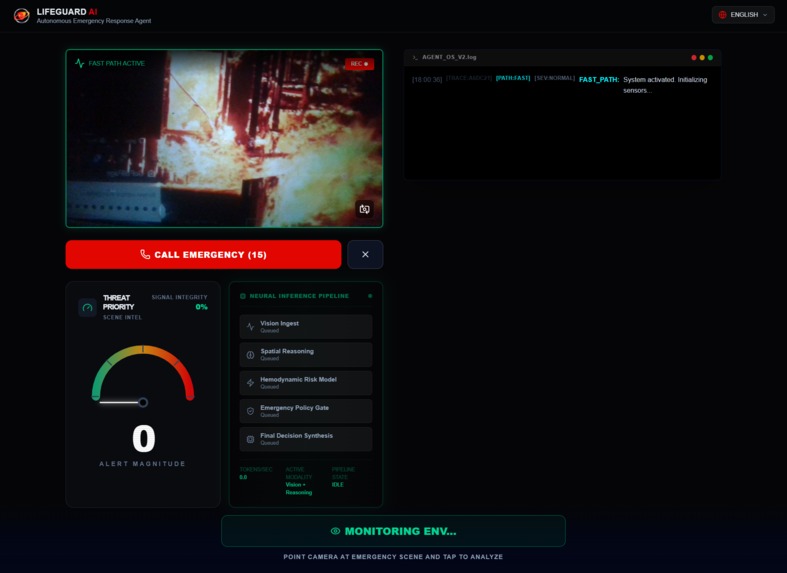
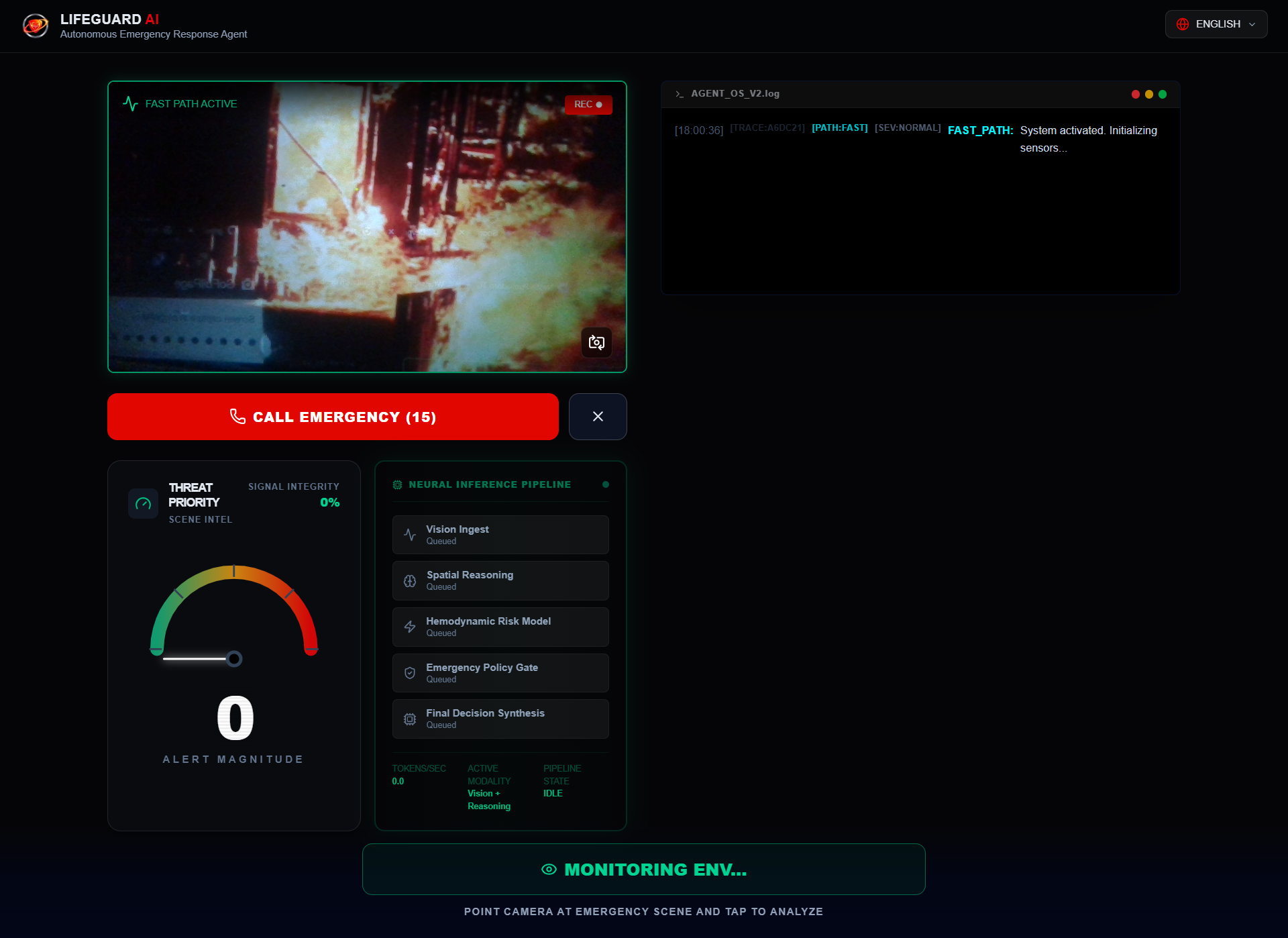
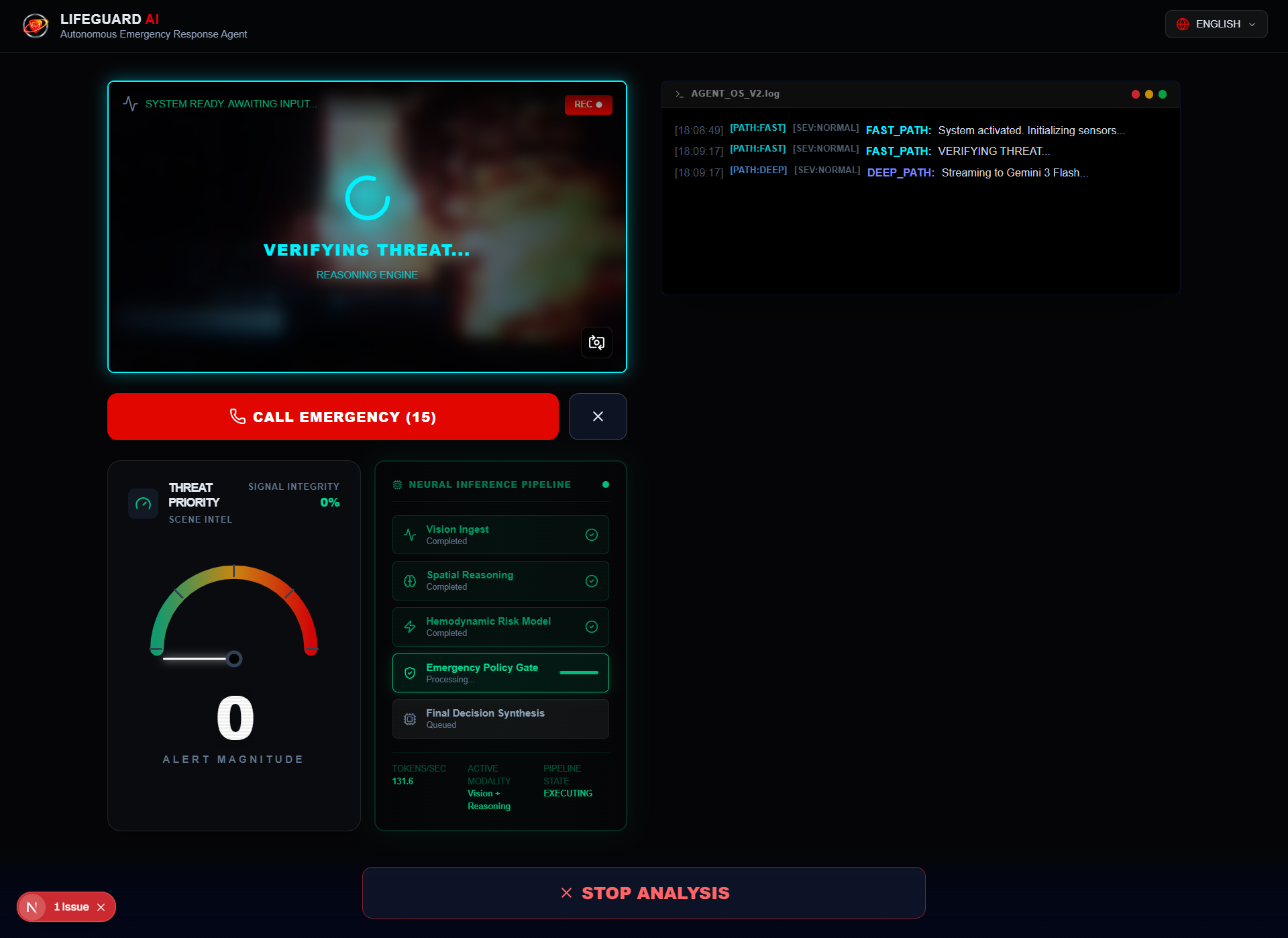
Vision: Real-time visual processing; capturing live emergency scenes to stream multimodal context to Gemini 3 for instant assessment.
-
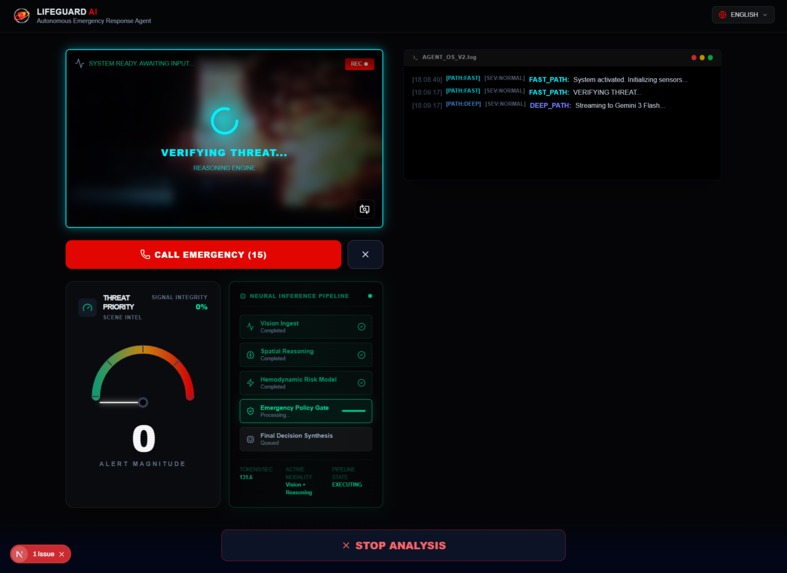
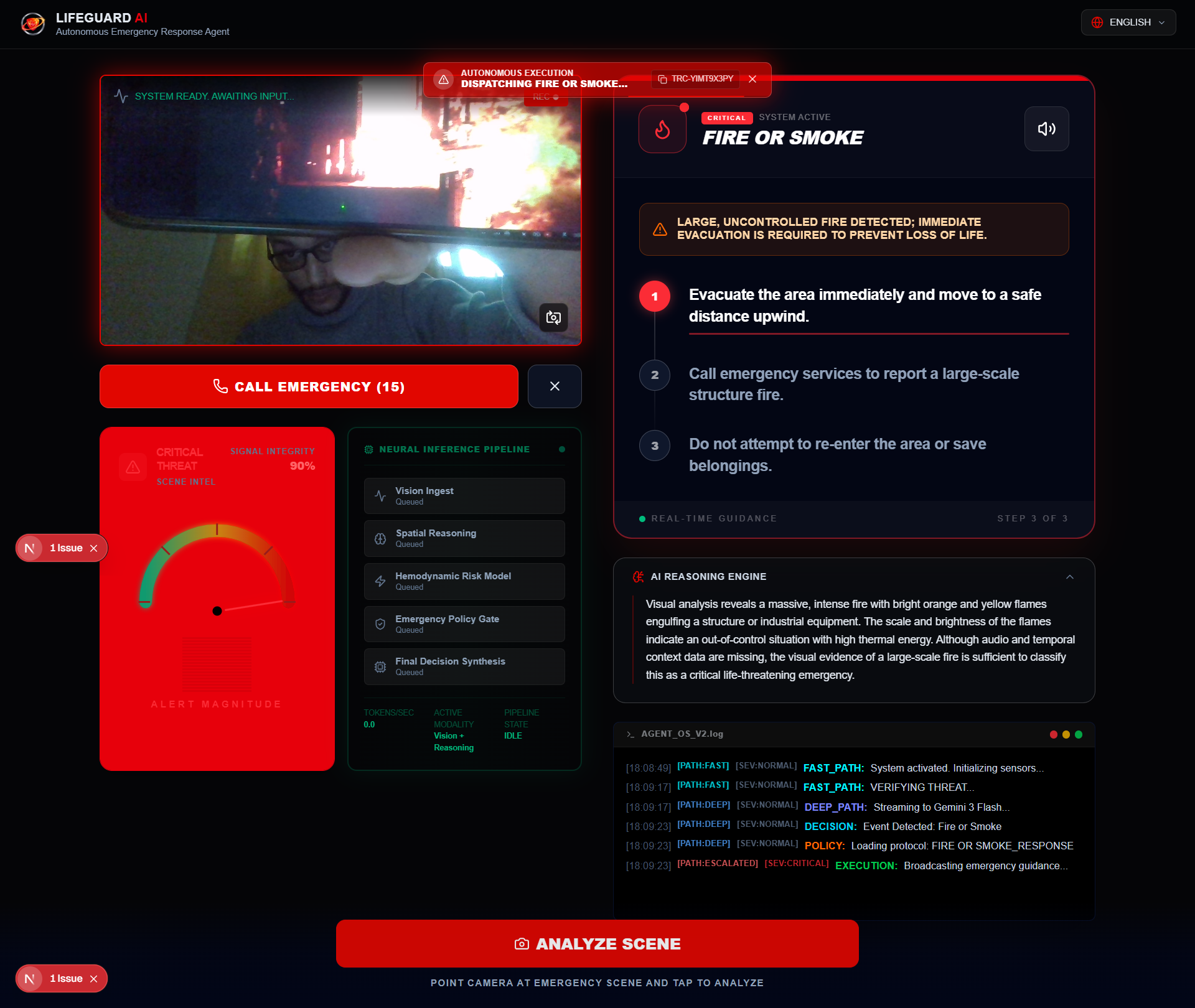
Analysis: Gemini 3 in action; processing visual and audio cues simultaneously with low-latency reasoning to categorize threats in seconds.
-
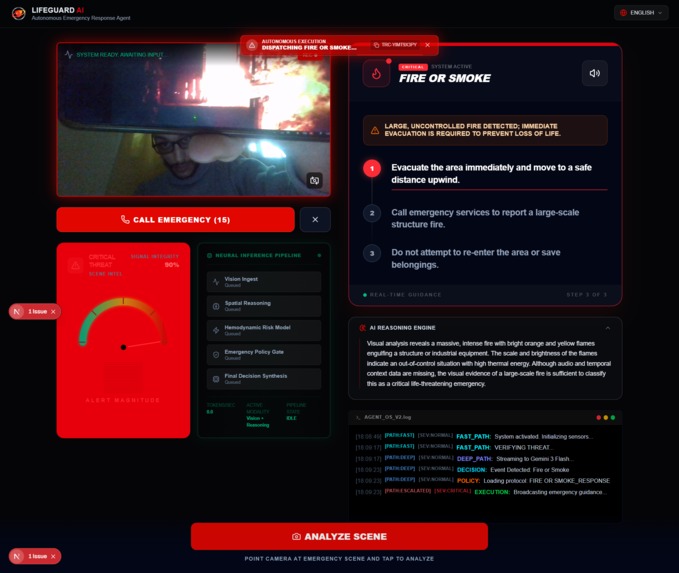
Results: Life-saving output providing "CRITICAL" danger alerts and step-by-step evacuation guidance with immediate emergency contact buttons
Inspiration
We wanted to build a tool capable of saving lives in real-time using AI, after noticing that ordinary users often hesitate or don’t know how to act in emergencies. The idea emerged from the need for a smart, autonomous agent that can perceive the scene, assess dangers, and provide immediate instructions until professional help arrives.
What it does
LifeGuard AI is an autonomous emergency agent on your smartphone:
Captures video and audio from the user’s environment.
Analyzes the scene with Google Gemini 3 Multimodal AI to detect injuries or hazards like bleeding or fire.
Provides instant voice and text guidance in ~2 seconds.
Allows one-tap calling to emergency services.
Supports Arabic, French, and English for global accessibility.
How we built it
Frontend: Next.js PWA for fast, mobile-friendly interface.
Backend/API: /api/analyze handles communication with Gemini 3 and real-time input analysis.
Core Logic: lib/prompt.ts for decision-making, with gemini.ts bridging the app and Google Gemini.
Instruction Generation: Converts analysis into text and speech instructions using TTS.
Architecture: Dual-path system:
Fast Path: Immediate reactions to alert the user instantly.
Deep Path: Full-scene analysis via Gemini 3 to classify hazards accurately.
Challenges we ran into
Real-time processing: Ensuring analysis completes in under two seconds across different network conditions.
Multilingual guidance: Maintaining accurate instructions in Arabic, French, and English in critical scenarios.
Privacy & security: Ensuring images/audio are not logged insecurely and all communication is HTTPS.
Medical reliability: Making instructions accurate enough to guide the user, while emphasizing professional help is necessary.
Accomplishments that we're proud of
Turning a smartphone into an autonomous emergency agent that can make real-time decisions.
Full utilization of Gemini 3 Multimodal AI for simultaneous vision and audio analysis.
Simple and effective UX suitable for high-pressure situations.
Direct emergency call integration within seconds of detection.
Multilingual support for wider global impact.
What we learned
The importance of a dual-path system (Fast & Deep) to balance speed and accuracy.
How a Multimodal LLM can act as a true autonomous agent rather than a simple text assistant.
Challenges of combining real-time analysis with a simple user interface while ensuring data security.
The power of AI in humanitarian and social impact applications beyond traditional use cases.
What's next for LifeGuard AI
Continuous video/audio streaming analysis instead of a single snapshot.
Expanded medical instruction set including CPR, tourniquets, and advanced first aid.
Wider language support and global accessibility.
Medical validation with professionals to ensure reliability.
Integration with instant notifications to emergency services for critical situations.
Built With
- framer-motion
- gemini-3-api
- next.js
- tailwind-css
- typescript
- vercel
- web-speech-api


Log in or sign up for Devpost to join the conversation.