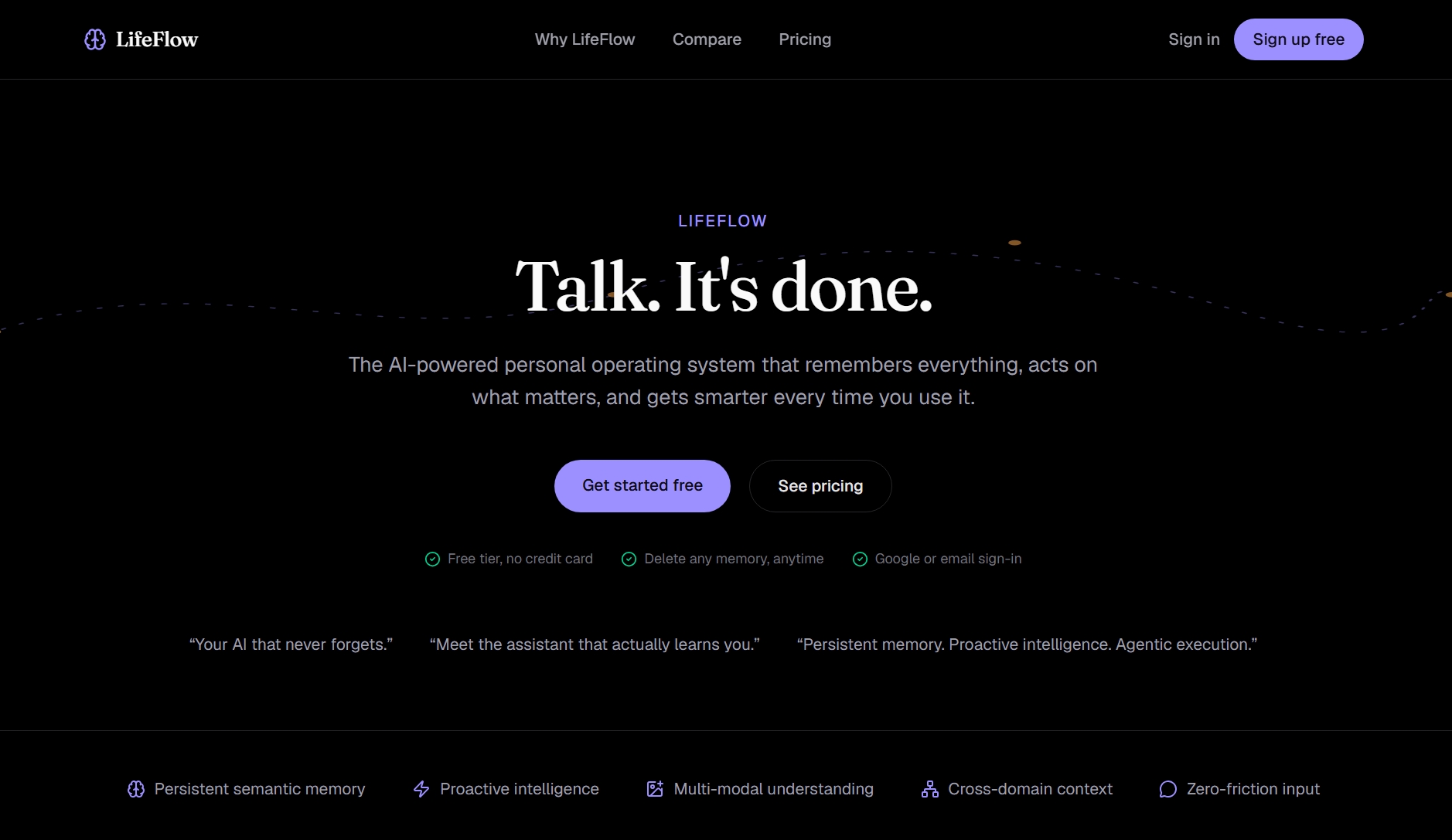
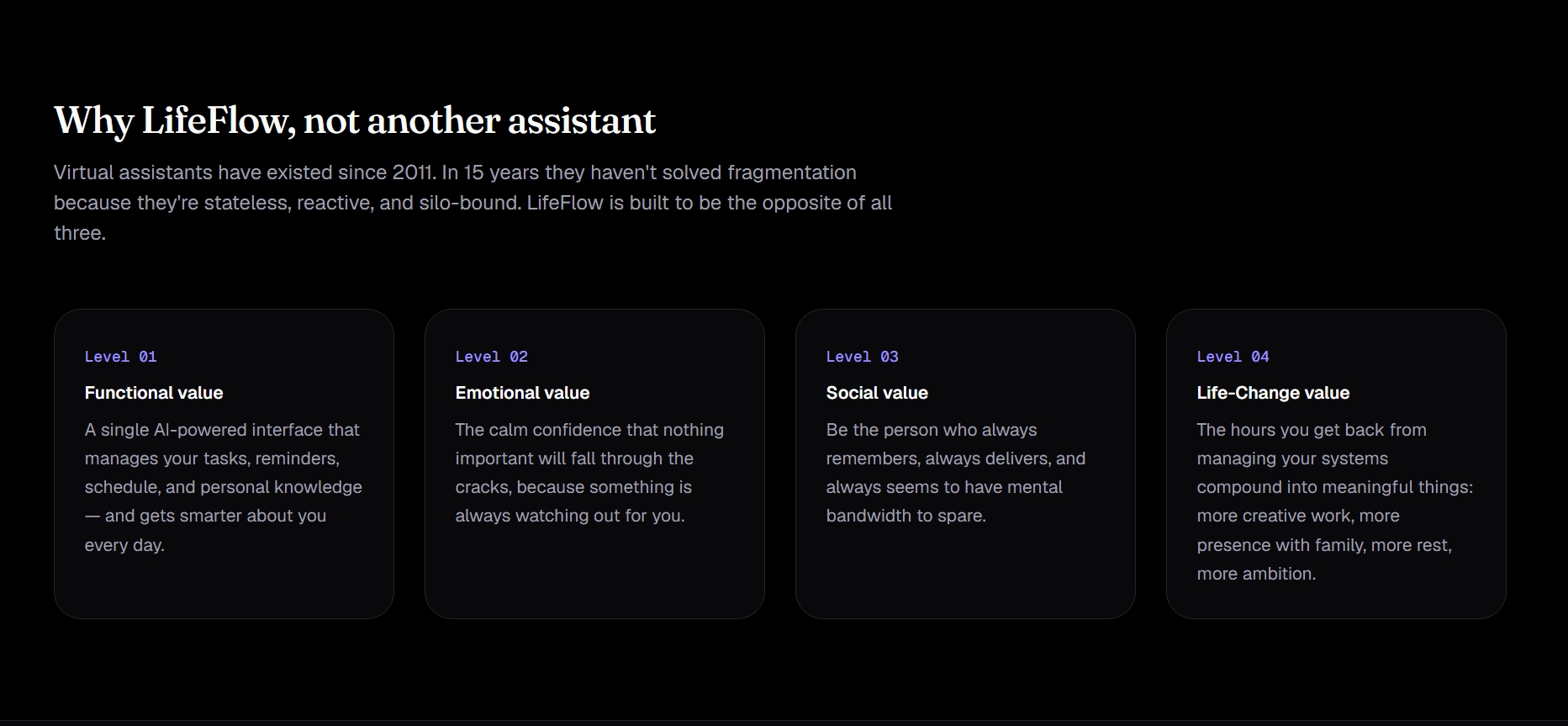
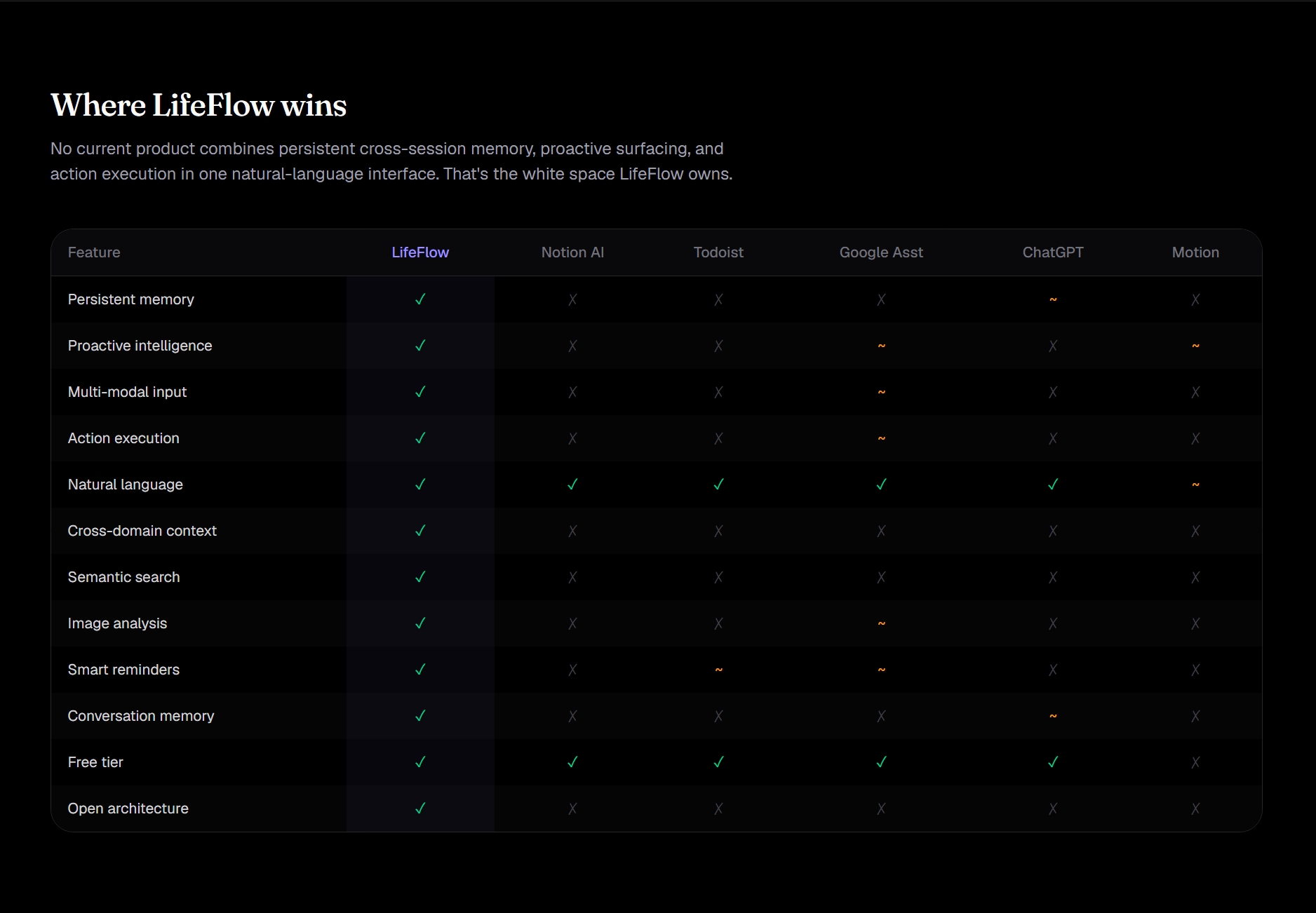
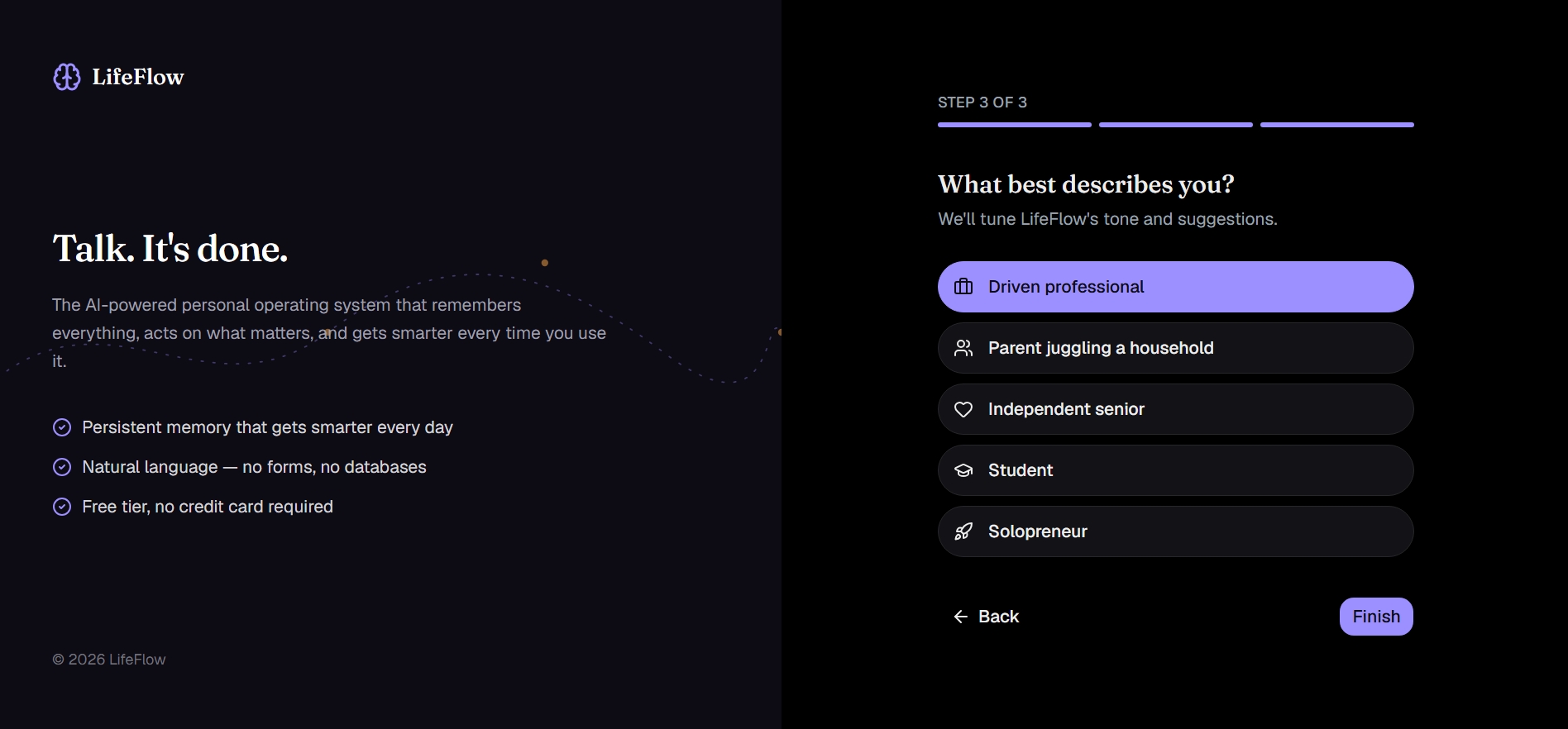
Inspiration Most AI assistants reset every conversation,you have to re-explain your context, your preferences, your ongoing tasks, every single time. Life Flow was built to fix that. A personal AI agent that actually remembers who you are and what matters to you across sessions, so it gets more useful the more you use it instead of starting from zero each time.
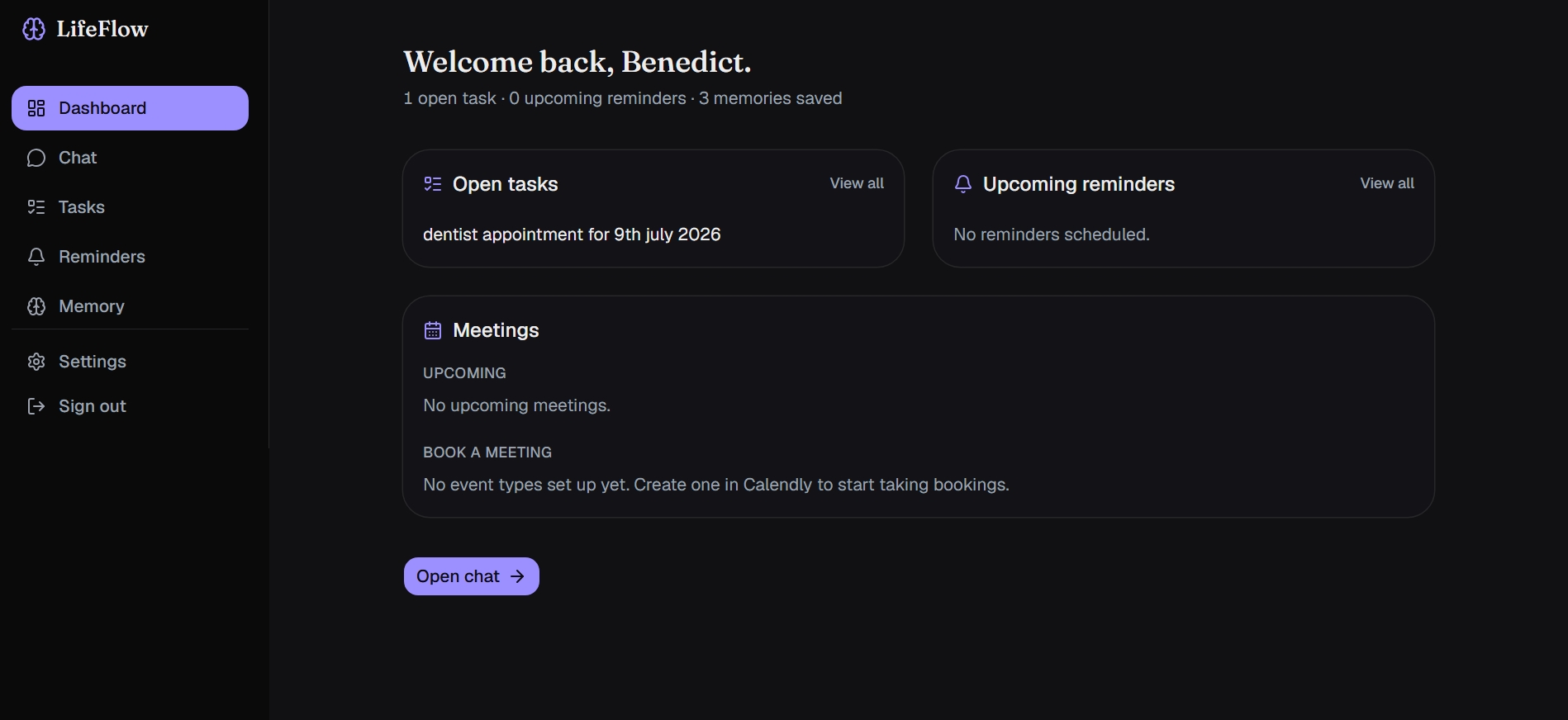
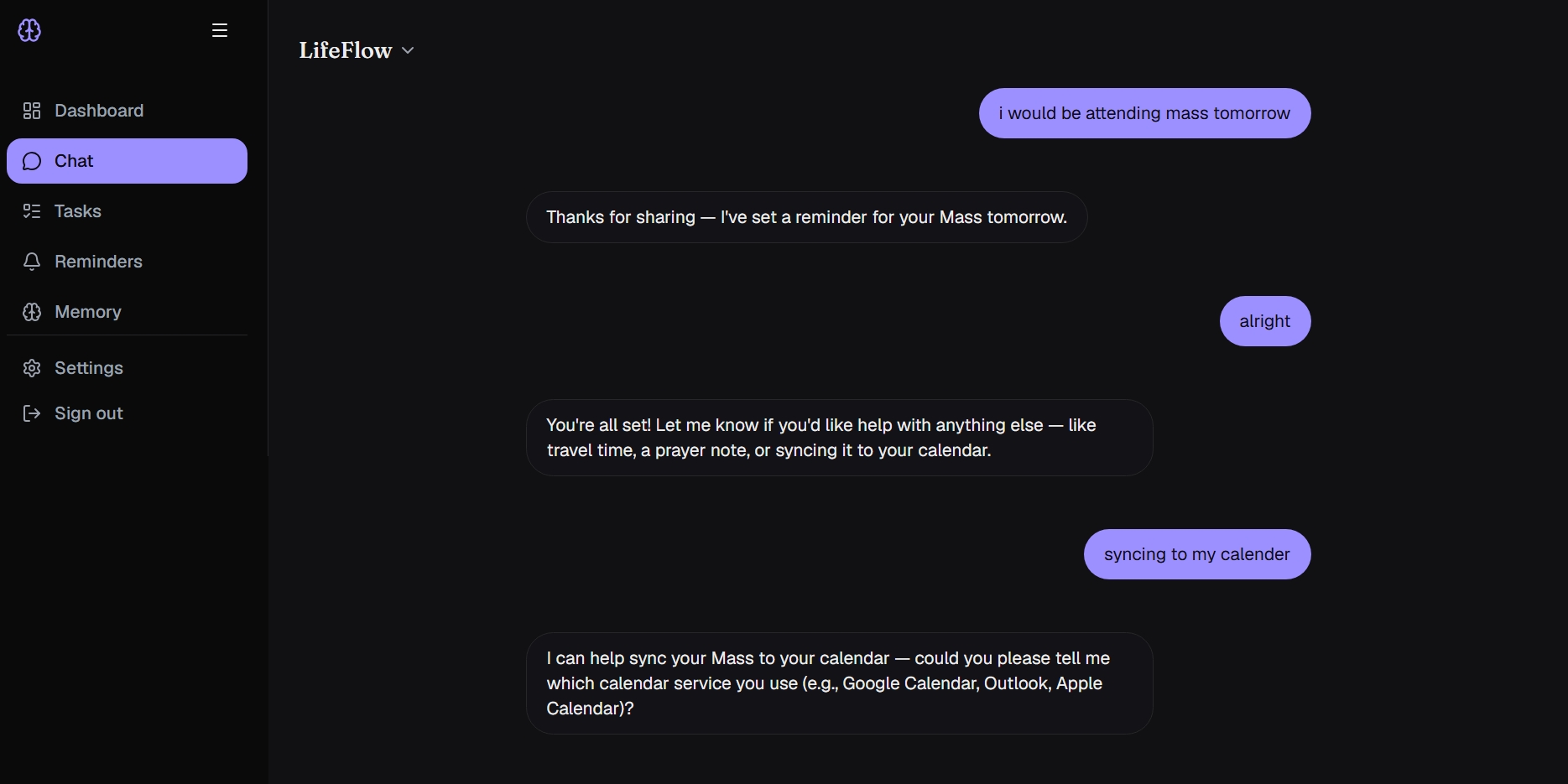
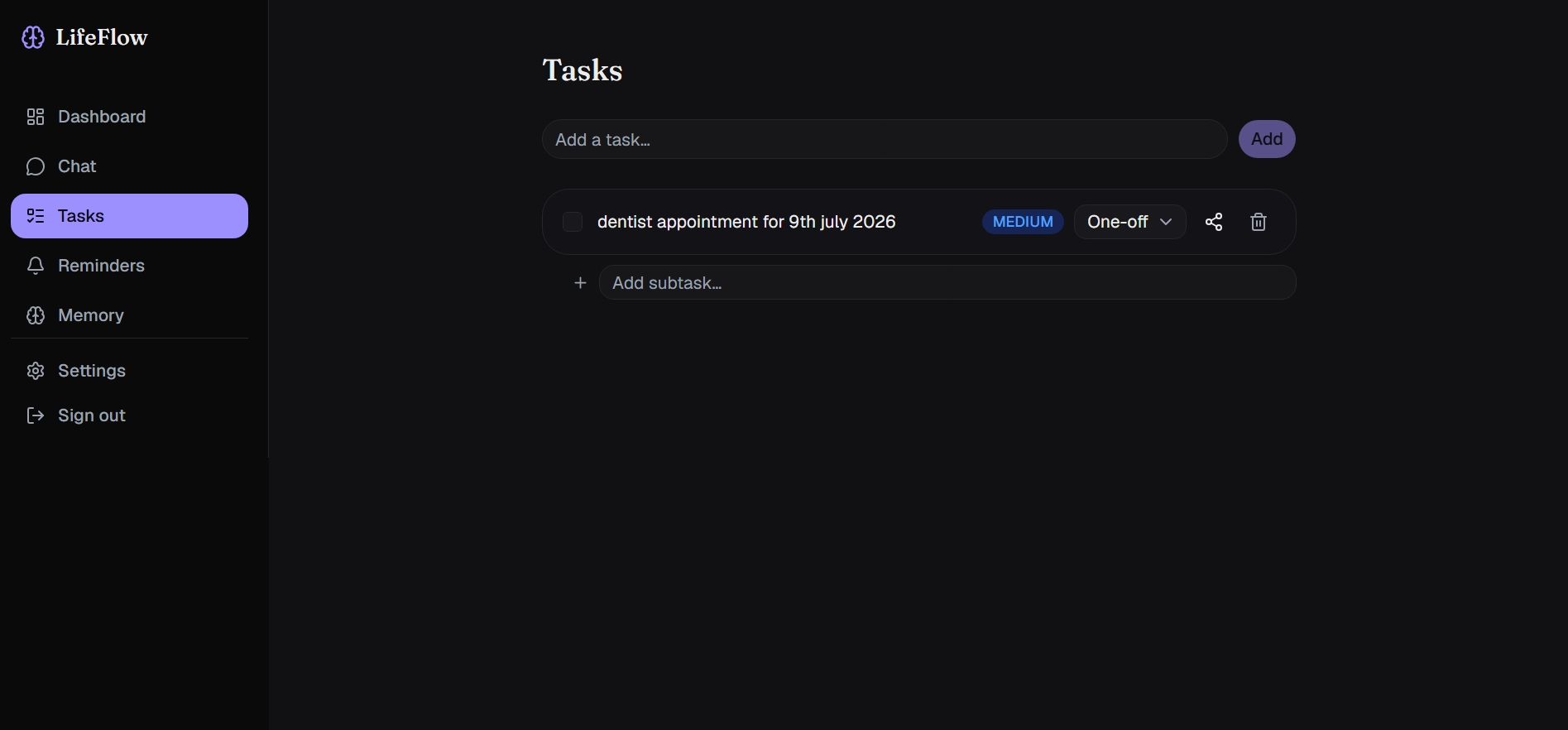
What it does LifeFlow is a persistent-memory AI assistant that helps you manage tasks, reminders, and meetings through natural conversation. Key features:
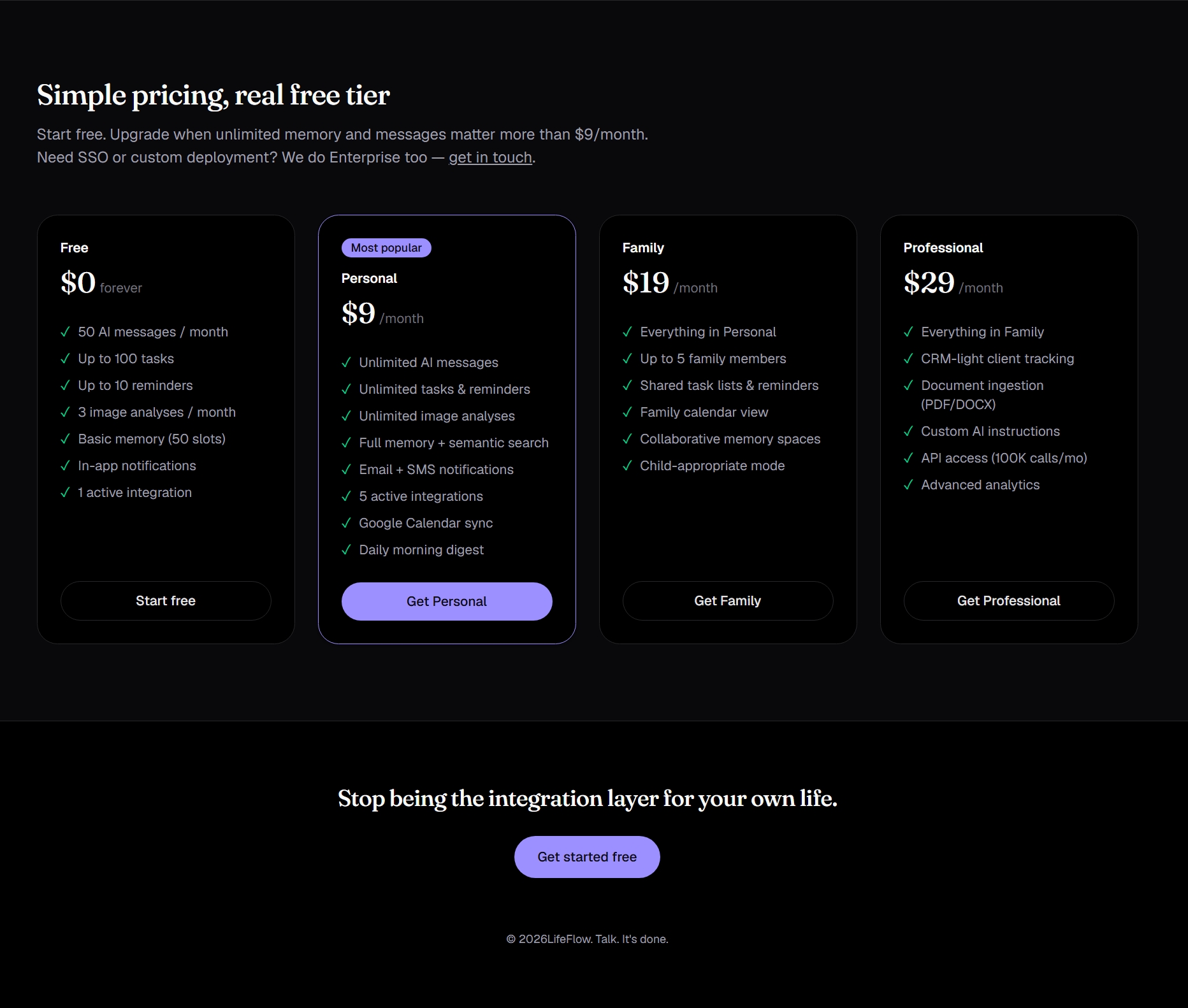
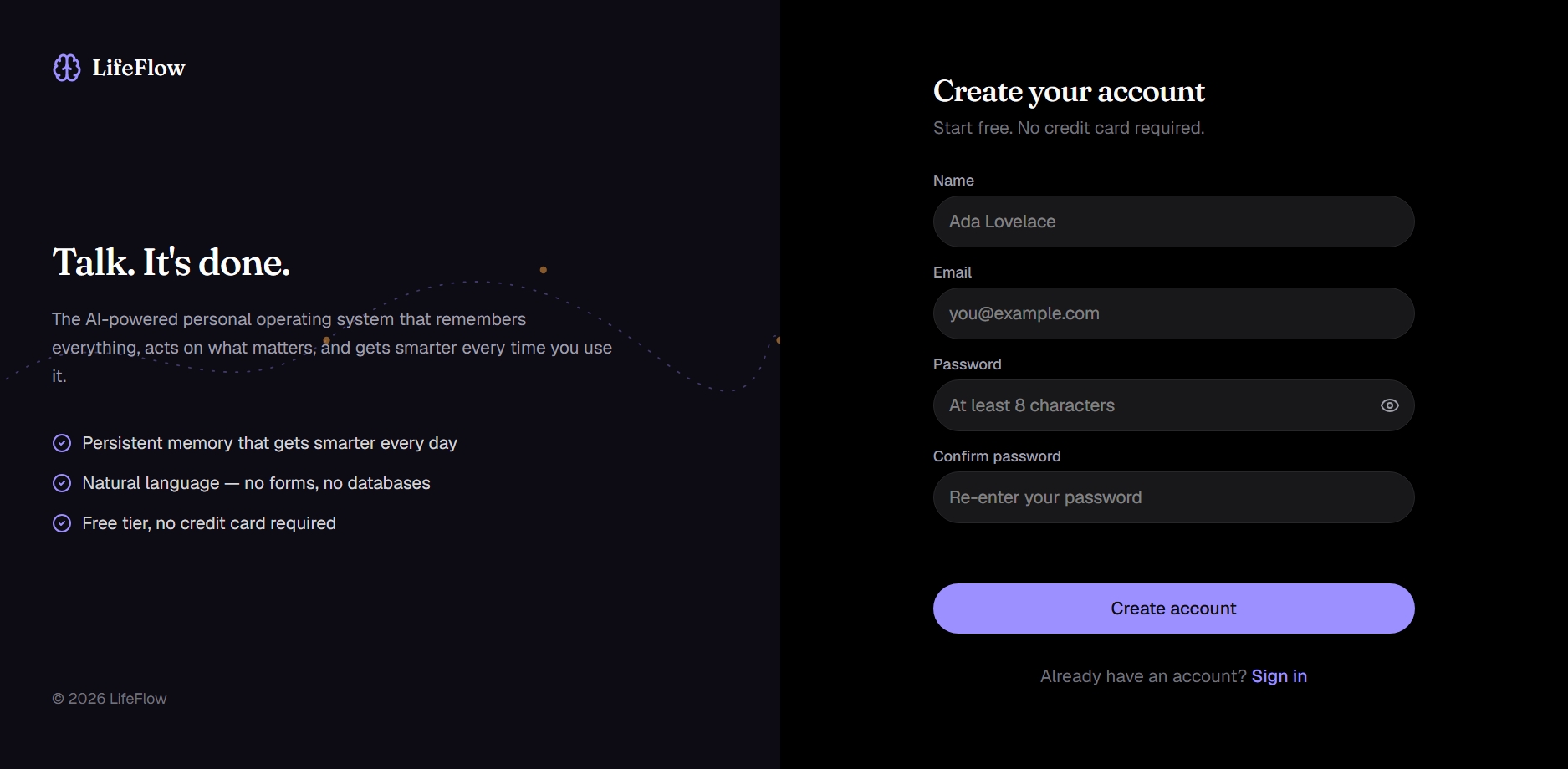
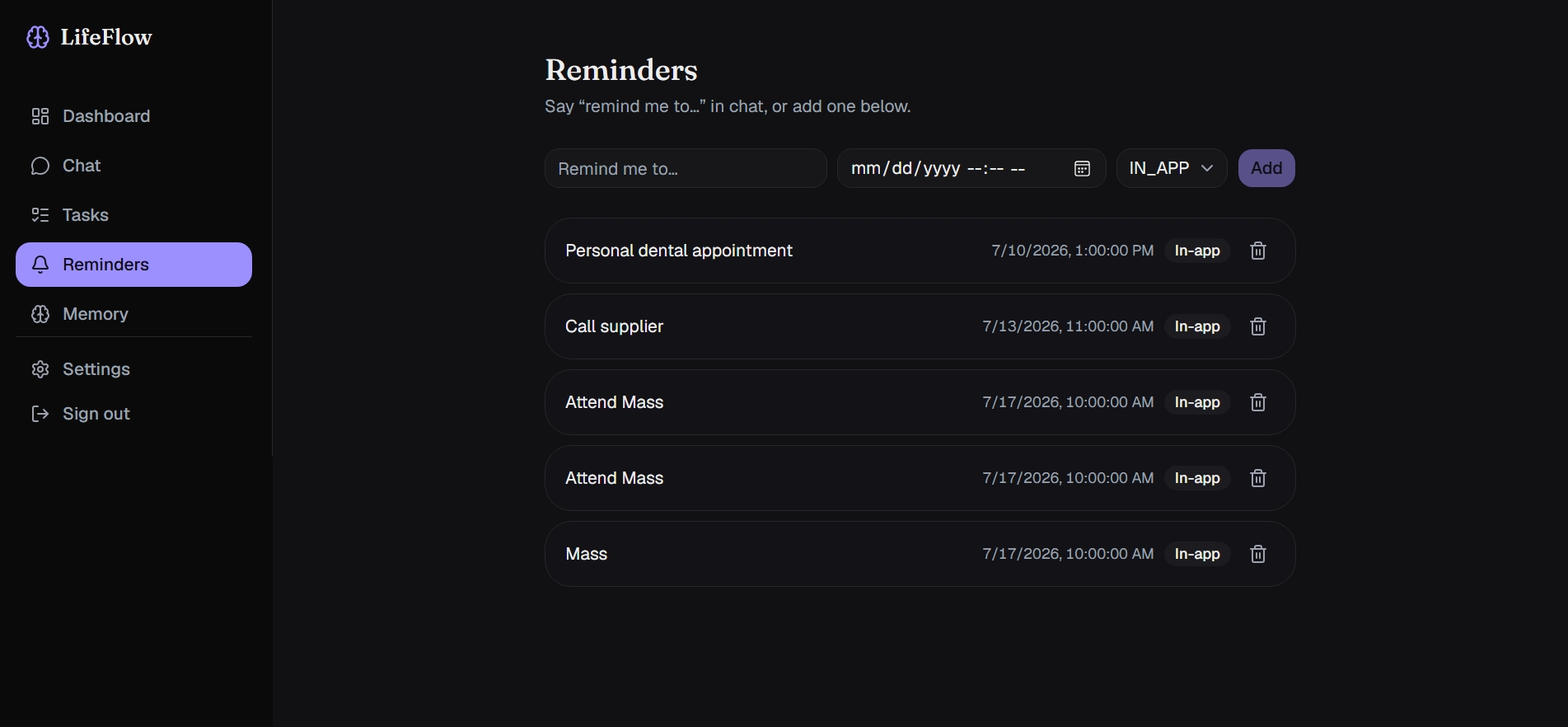
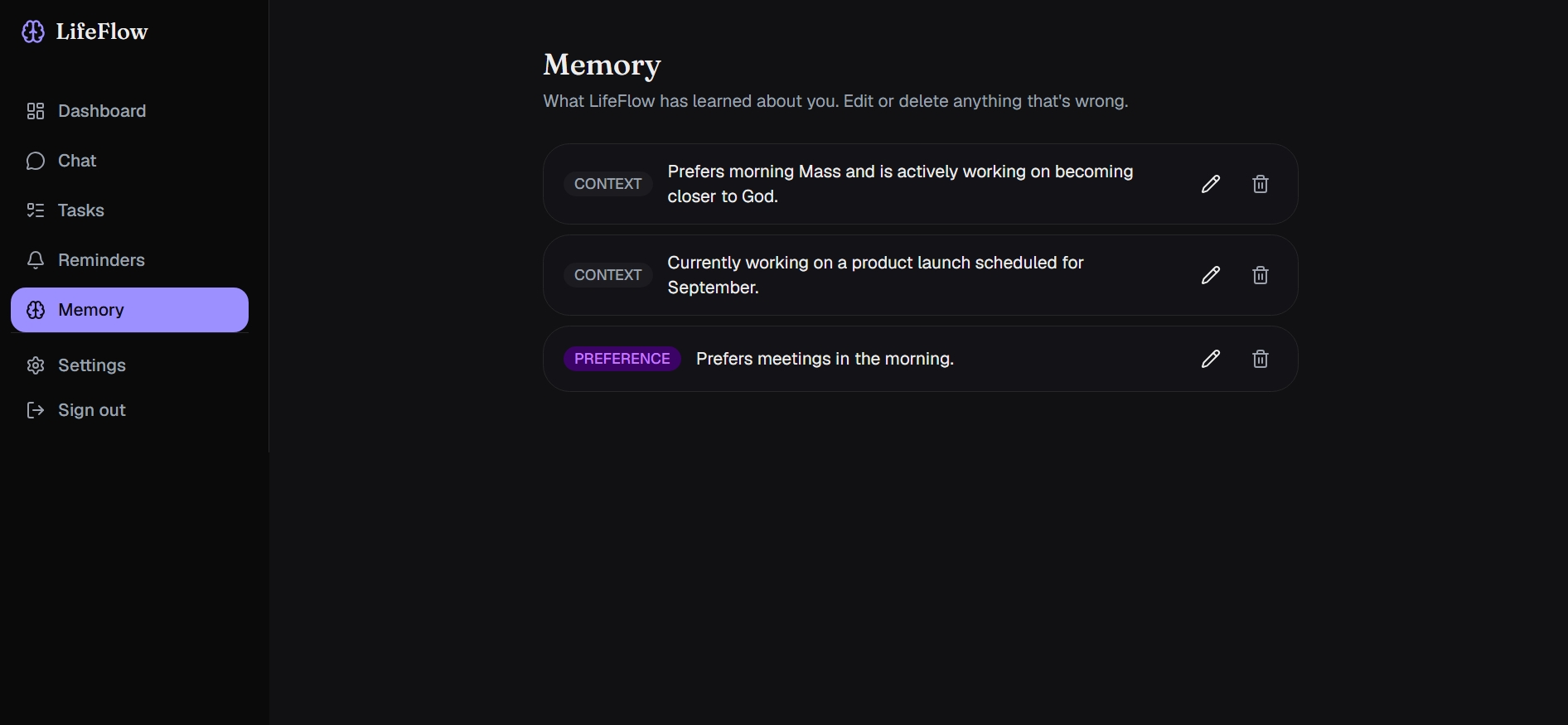
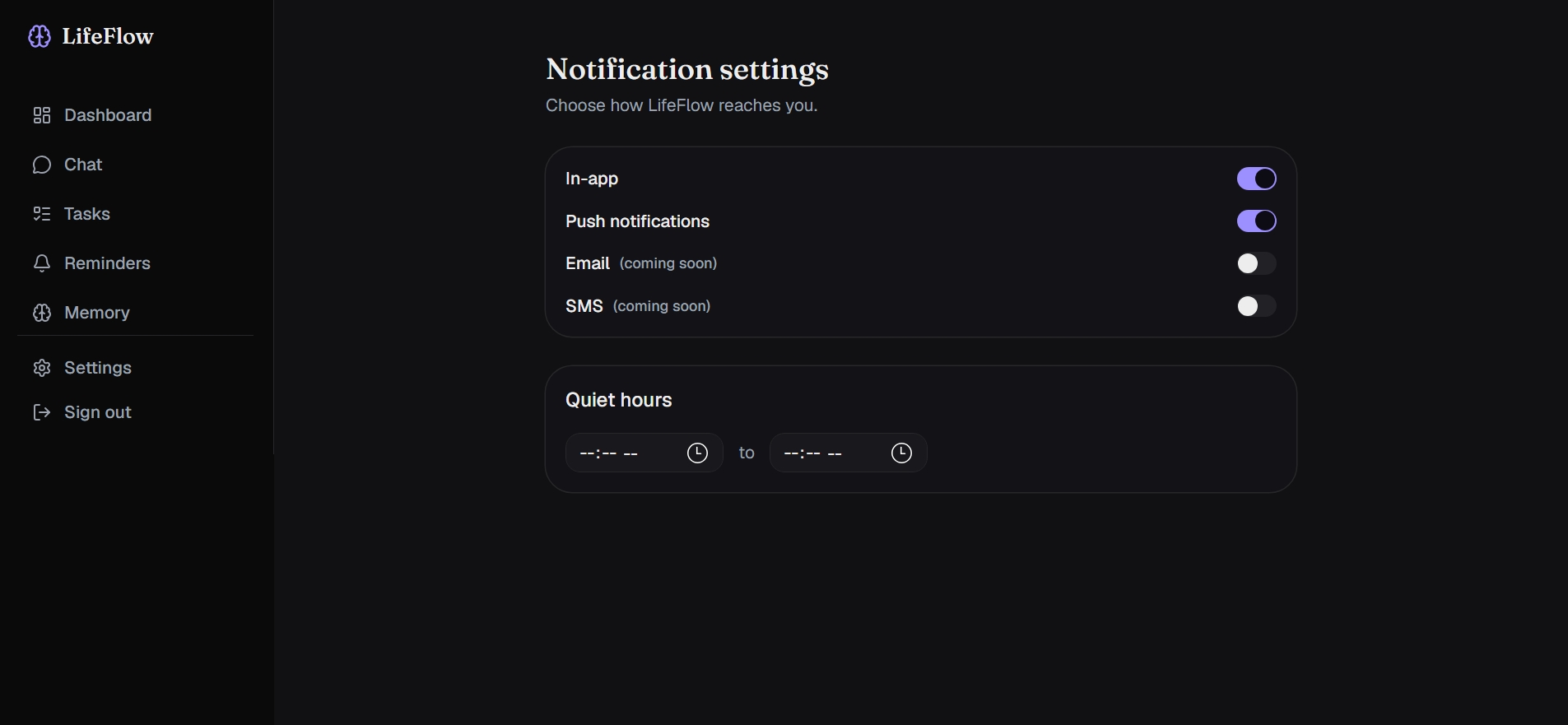
Conversational task & reminder management — just type things like "add task: finish the report by Friday" and LifeFlow parses, stores, and tracks it for you Persistent memory — LifeFlow remembers facts, preferences, and context from past conversations, and recalls them accurately in later sessions using semantic embeddings rather than simple keyword matching Meeting scheduling — integrated booking flow (via Calendly) so LifeFlow can help schedule and surface upcoming meetings directly from the dashboard Push notifications — reminders and updates delivered even when you're not actively in the app Secure, authenticated accounts — full sign-up/login flow with JWT-based auth, so your data and memory are private to you
How we built it Frontend: Next.js (deployed on Vercel), providing the chat interface, dashboard, tasks, reminders, and memory views Backend: Node.js/Express with TypeScript, deployed in a Docker container on Alibaba Cloud ECS (Singapore region) Database: PostgreSQL, managed via Prisma ORM, running in its own container on the same Alibaba Cloud instance AI Layer: Qwen Cloud — qwen-plus for conversational reasoning, and text-embedding-v3 for generating memory embeddings that power semantic recall across sessions Auth & notifications: JWT-based authentication, Web Push (VAPID) for reminders Integrations: Calendly API for meeting scheduling
The backend and database run as isolated Docker containers on a single Alibaba Cloud ECS instance, connected over a private Docker network, with the API exposed securely over a configured Security Group rule.
Challenges we ran into Deploying to a CentOS 7-based ECS instance surfaced real infrastructure constraints — the OS's older glibc version blocked standard Node.js package installs via yum, which we solved by installing Node directly from official binaries. We also hit Alibaba Cloud's distinction between per-region Security Groups (rules created in the wrong region didn't apply to our actual instance) and had to carefully trace which security group was truly attached to our running instance versus one edited in a different region's console view. Getting HTTPS/mixed-content and environment variable parsing right between our Next.js frontend on Vercel and our containerized backend on Alibaba Cloud also required careful debugging of .env formatting and CORS configuration.
Accomplishments we're proud of Getting a full production-style stack frontend, backend, database, and a real AI memory pipeline — running end-to-end on Alibaba Cloud infrastructure, with working authentication, real-time chat, and persistent cross-session memory, all within the hackathon timeline.
What we learned Hands-on experience with Alibaba Cloud ECS deployment, Docker networking, Qwen Cloud's chat and embedding APIs, and the practical realities of cloud security group configuration across regions.
What's next for LifeFlow Expand memory capabilities with more nuanced forgetting/decay of outdated information Add more integrations (email, calendar providers beyond Calendly) Move the Postgres database to Alibaba Cloud's managed RDS for production-grade reliability Add proactive agent behavior — LifeFlow reaching out with suggestions rather than only responding
Built With
- alibaba-cloud
- calendly
- docker
- express.js
- jwt
- nextjs
- node.js
- postgresql
- prisma
- qwen-cloud
- typescript
- vercel
- web-push


Log in or sign up for Devpost to join the conversation.