-
-
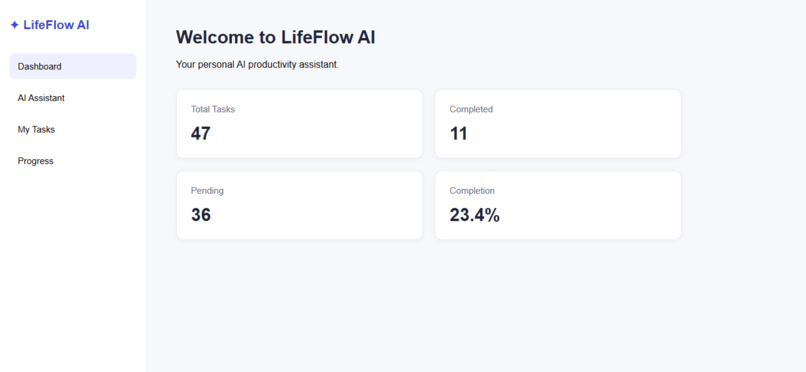
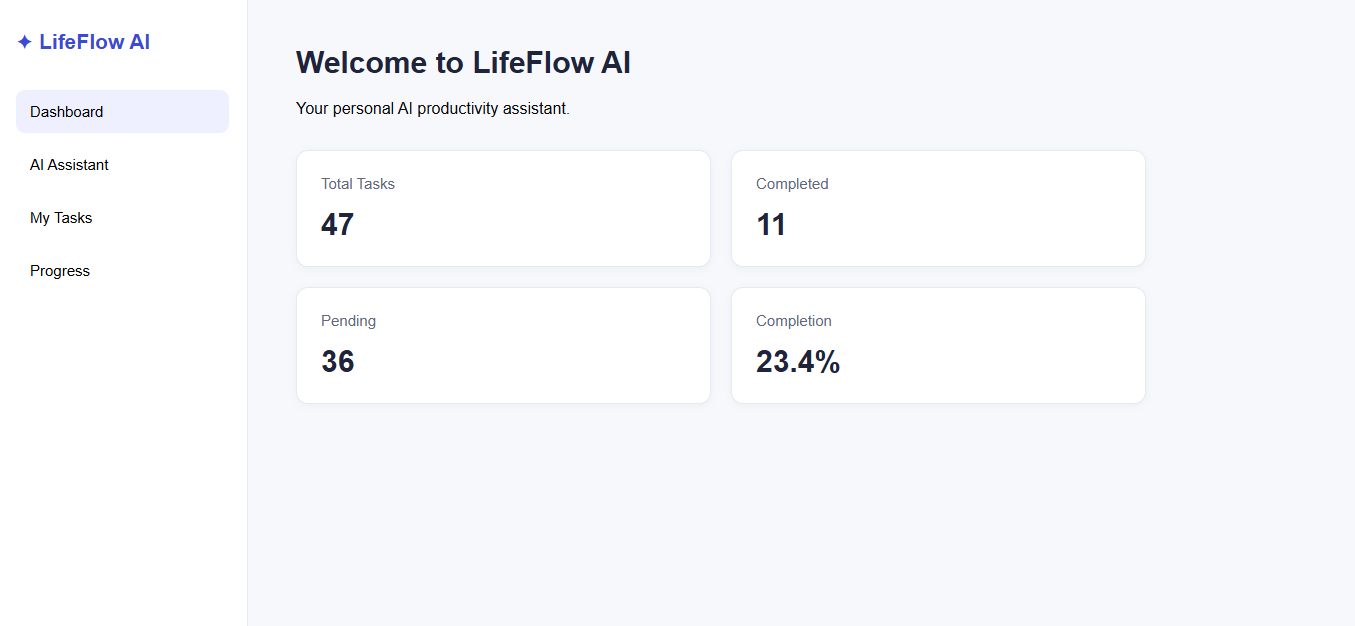
LifeFlow AI — Main Dashboard A centralized dashboard that provides an overview of tasks, productivity, and progress at a glance.
-
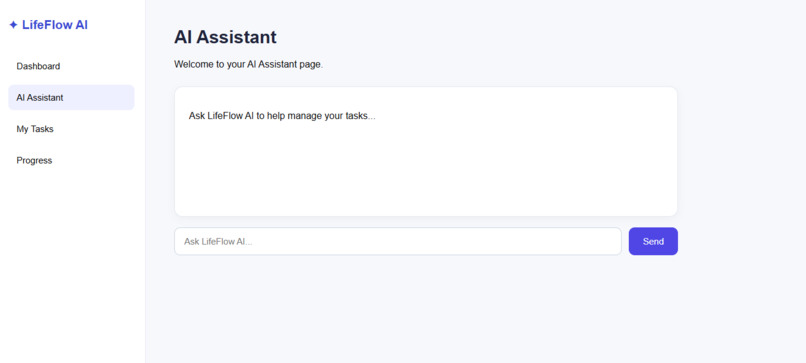
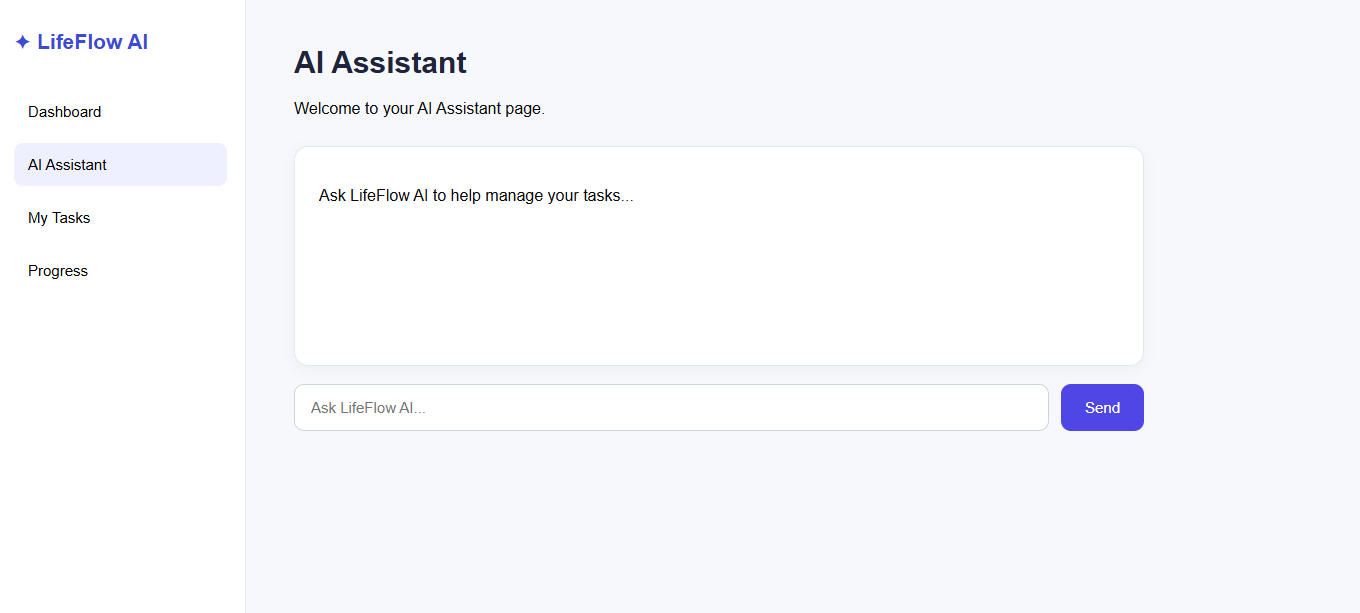
AI Assistant — Natural Language Interaction Interact with the AI assistant using natural-language requests to access task information
-
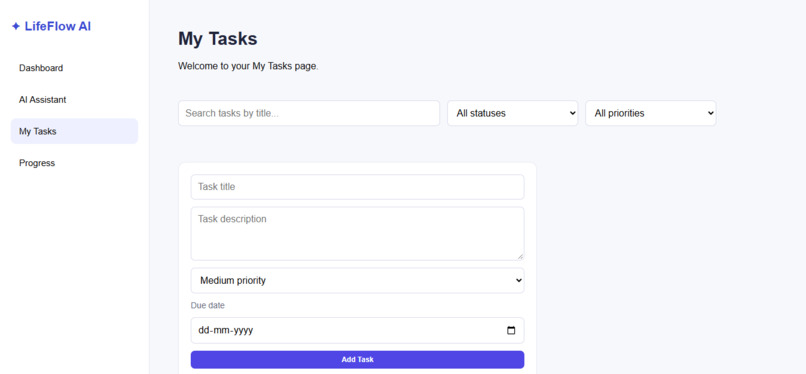
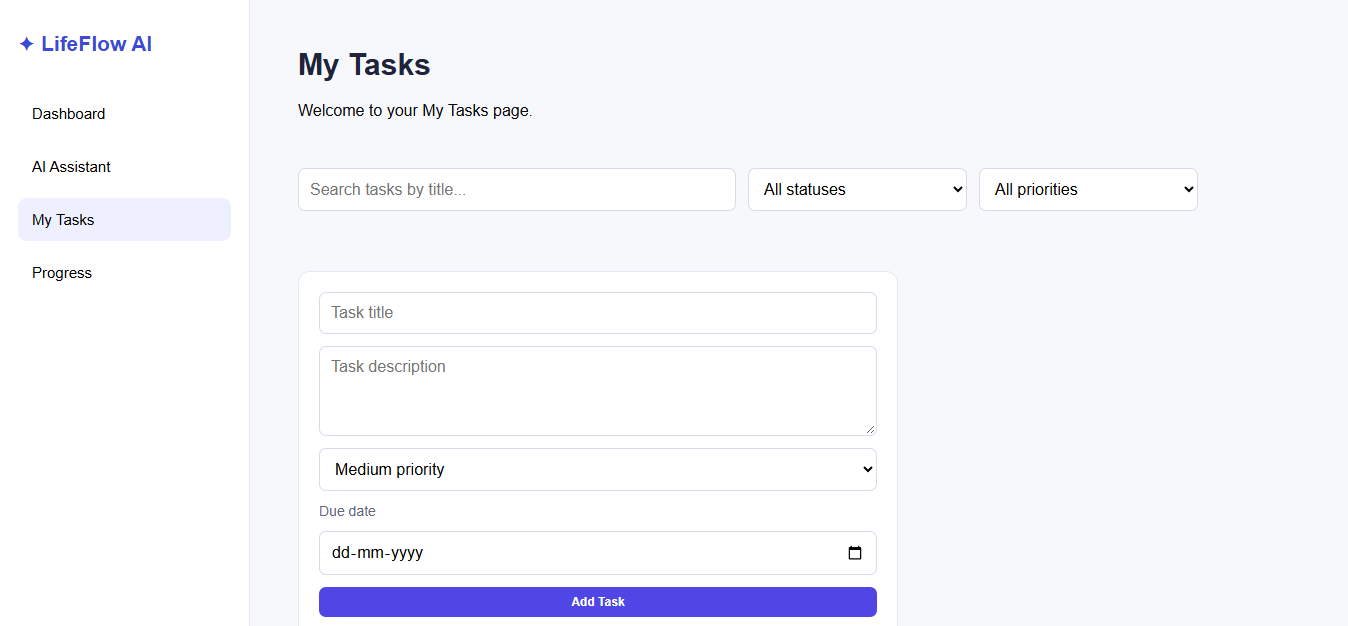
My Tasks — Task Management Create, manage, and complete tasks in one place to stay organized and focused on your goals.
-
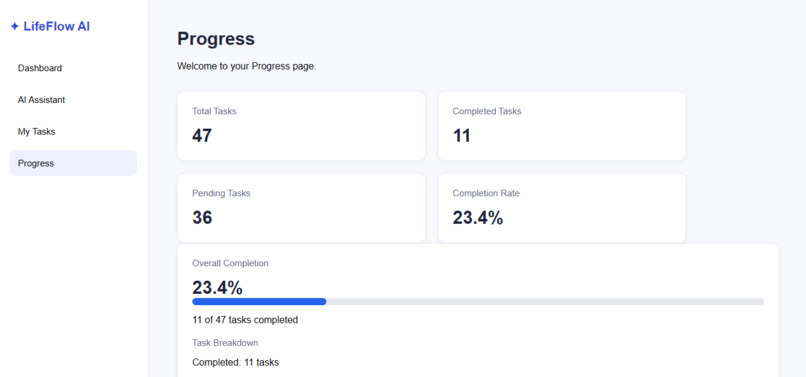
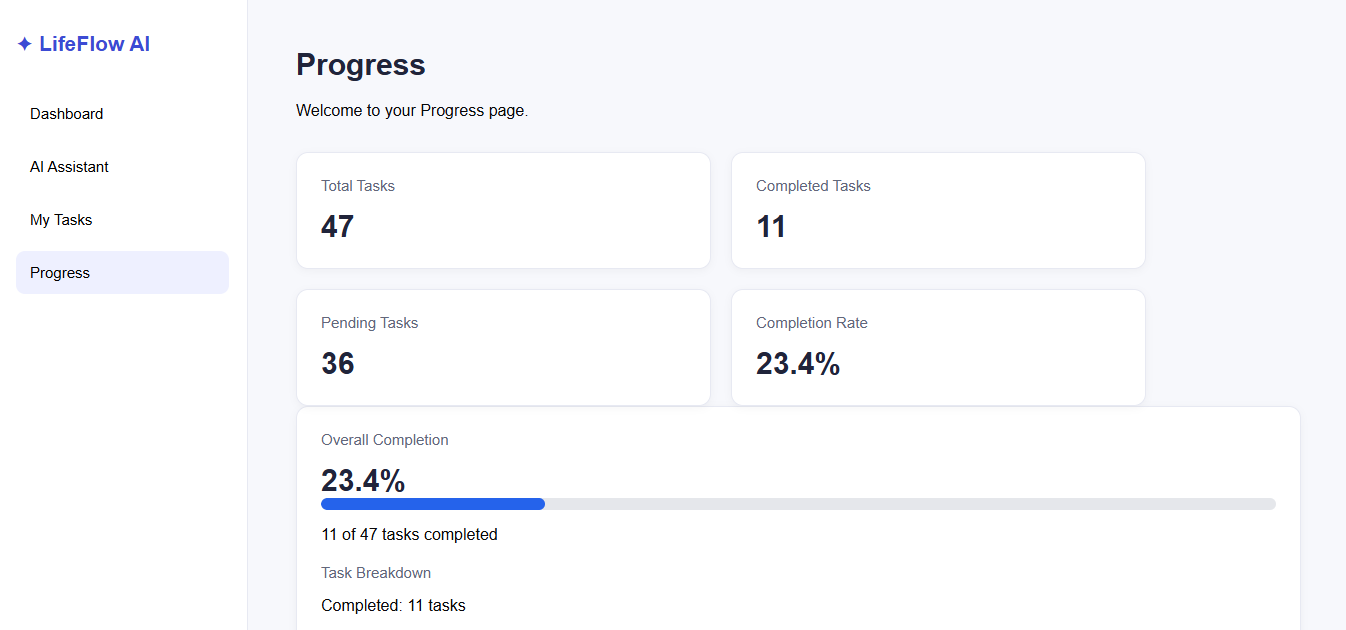
Progress Tracking — Productivity Overview Monitor completed and pending tasks and track overall progress toward your productivity goals.
Inspiration
Managing tasks, tracking progress, and preparing for upcoming goals can feel overwhelming. I built LifeFlow AI to make personal productivity easier through natural-language interactions with an AI assistant.
What It Does
LifeFlow AI is an AI-powered productivity assistant with a simple dashboard. Users can:
- Create and manage tasks.
- Mark tasks as completed.
- Track completed and pending tasks.
- View overall task progress.
- Generate plans for upcoming goals using natural-language requests.
How We Built It
LifeFlow AI combines React for the frontend, Java Spring Boot for the backend, Node.js for the AI integration layer, Model Context Protocol (MCP) tools for task actions, and Ollama for local AI model interaction. MySQL stores task data.
The assistant connects natural-language requests to tools that can retrieve tasks, create tasks, complete tasks, check progress, and generate plans.
Challenges We Ran Into
One major challenge was connecting AI responses with real application actions. Integrating the frontend, backend APIs, AI model, and MCP tools required careful testing and debugging.
What We Learned
Building LifeFlow AI helped me understand how AI models can use tools to perform practical tasks, how MCP supports tool integration, and how frontend and backend components work together in an AI-powered application.
What's Next
Future improvements include individual user accounts, personalized task data, reminders, and deeper voice-assistant integration.
LifeFlow AI is a web-based productivity assistant inspired by conversational AI experiences. It is a project prototype built for the hackathon.
Built With
- java
- javascript
- modelcontestprotocol
- mysql
- node.js
- ollama
- react
- springboot
- typescript


Log in or sign up for Devpost to join the conversation.