-
-
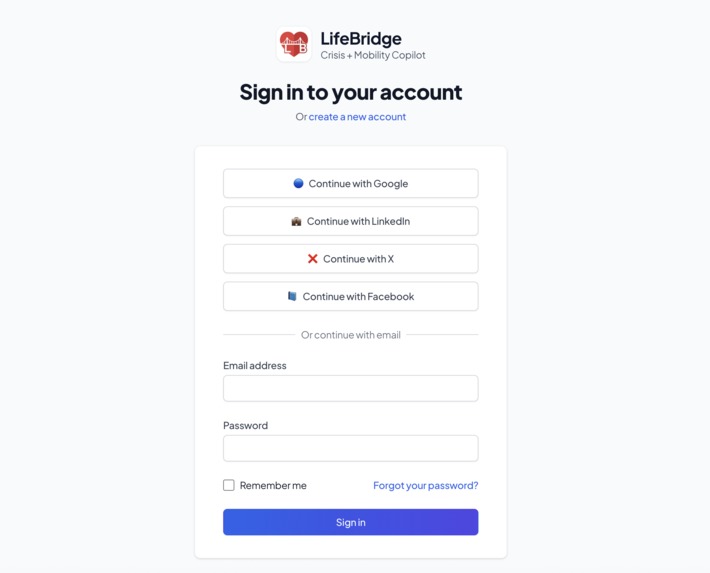
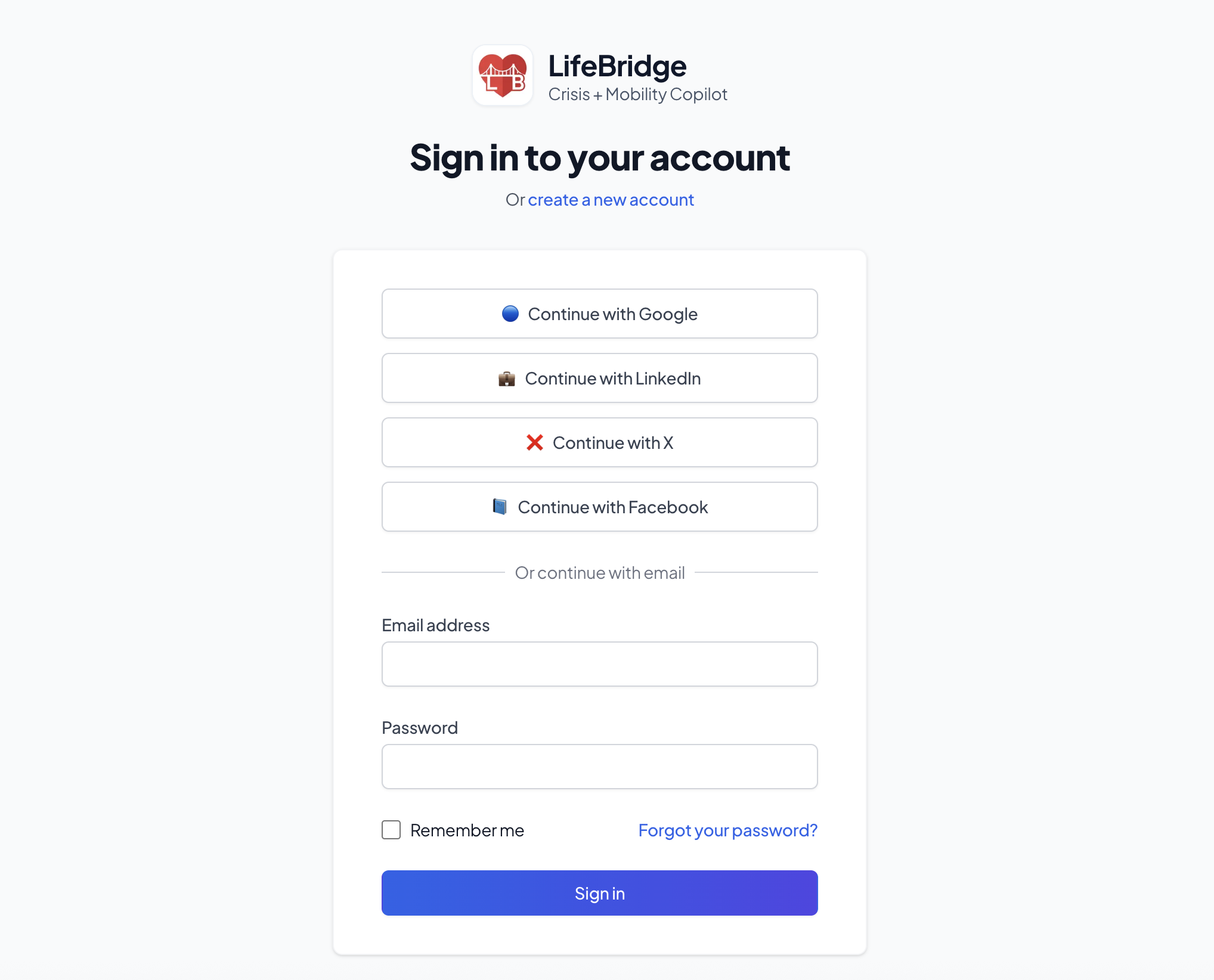
Login Page
-
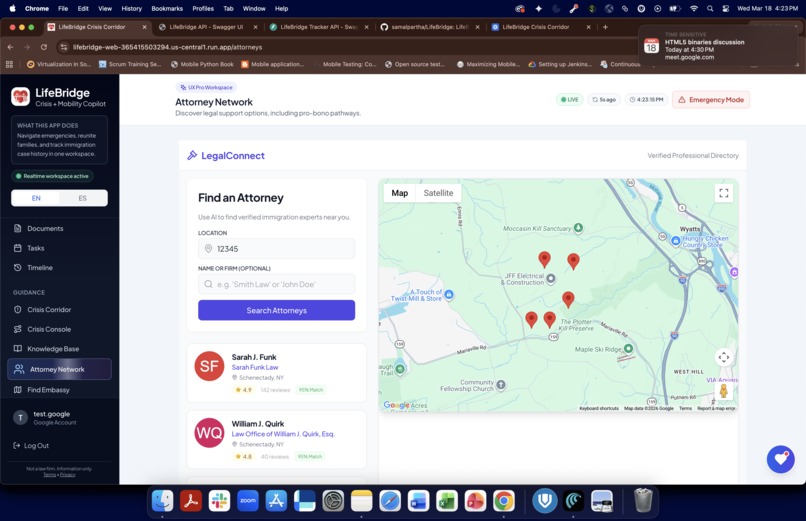
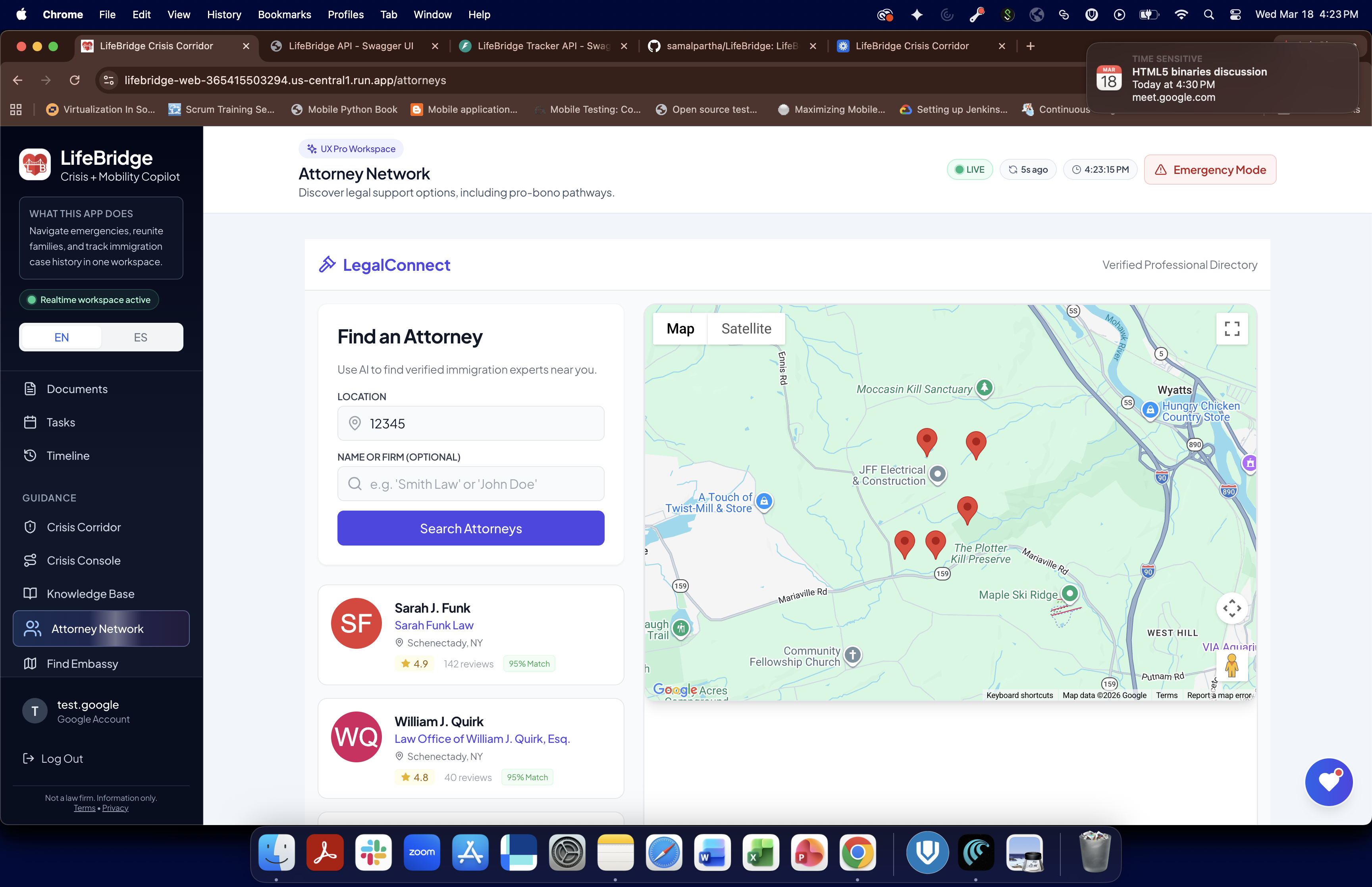
Attorney Network
-
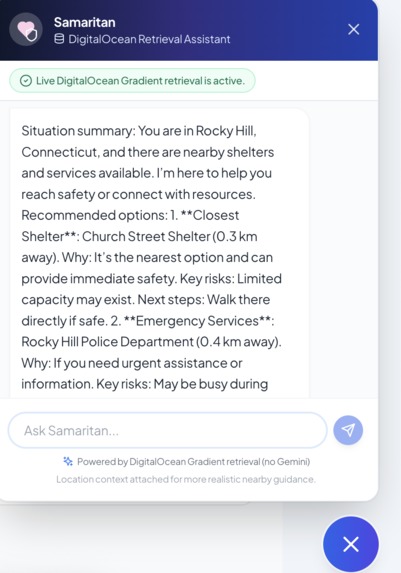
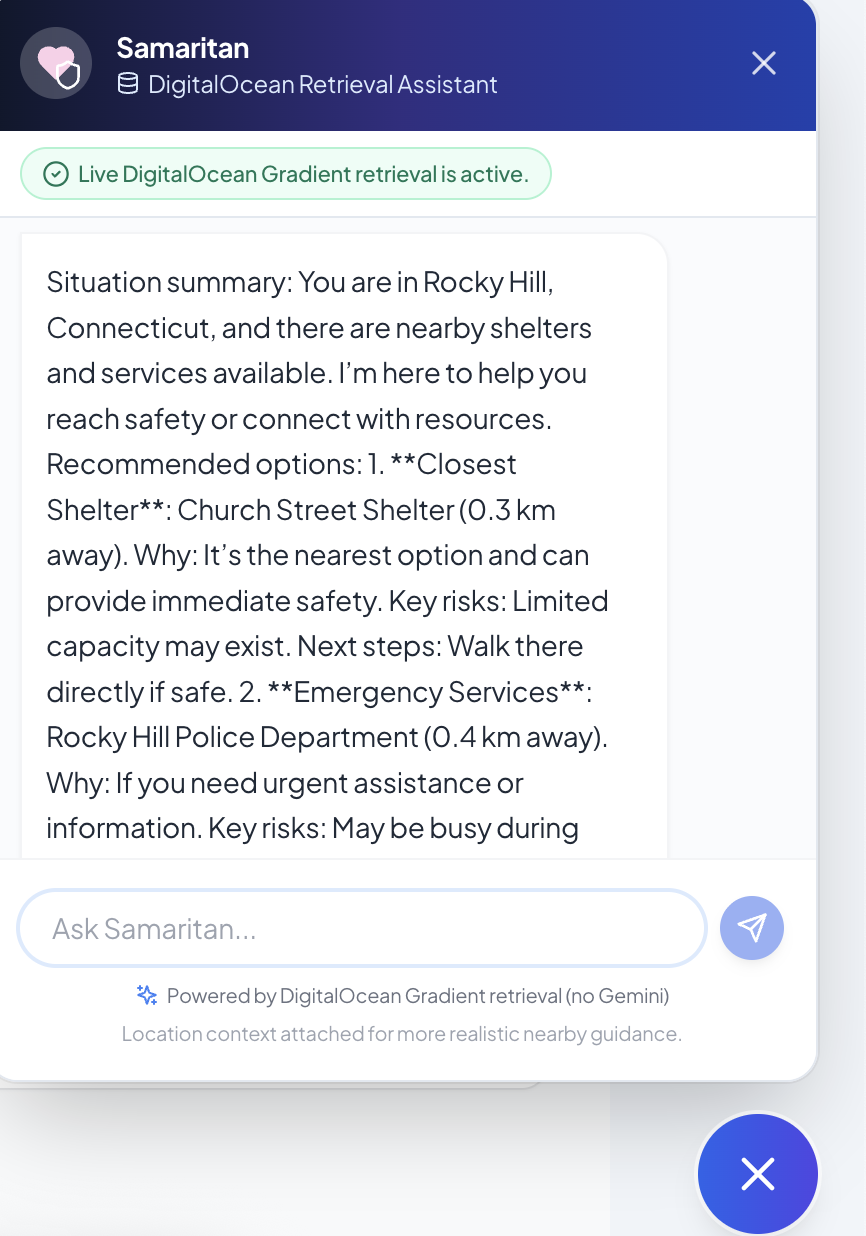
Chatbot assistant
-
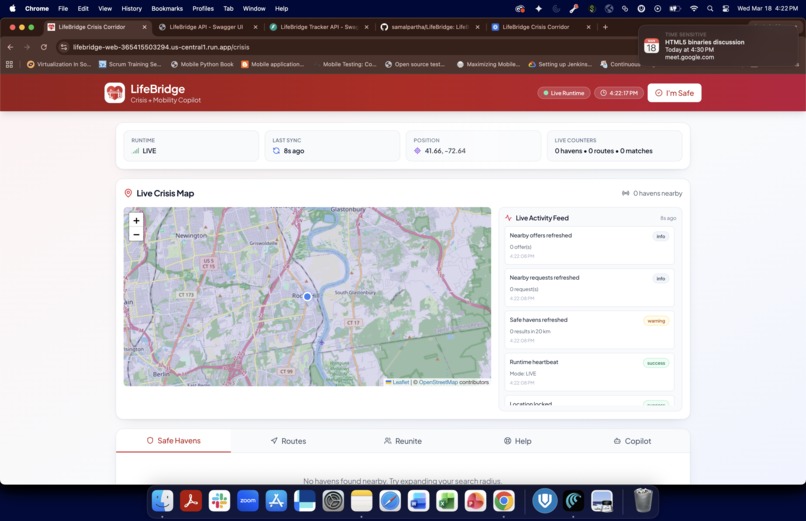
Crisis Console
-
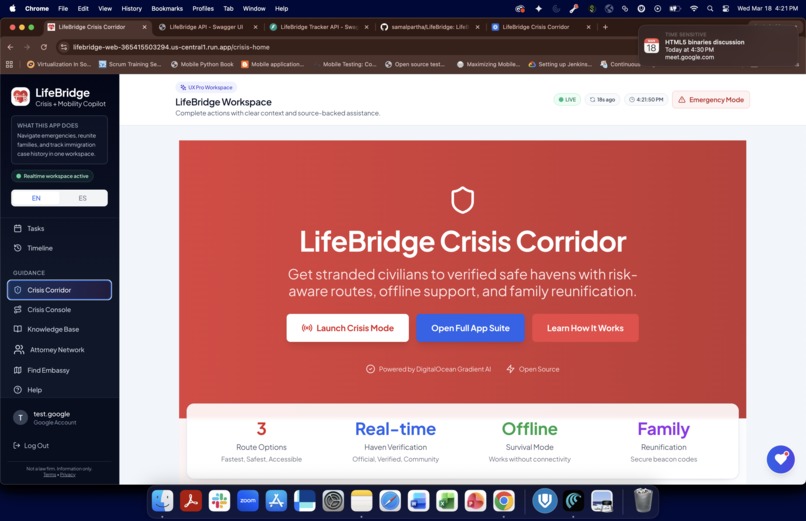
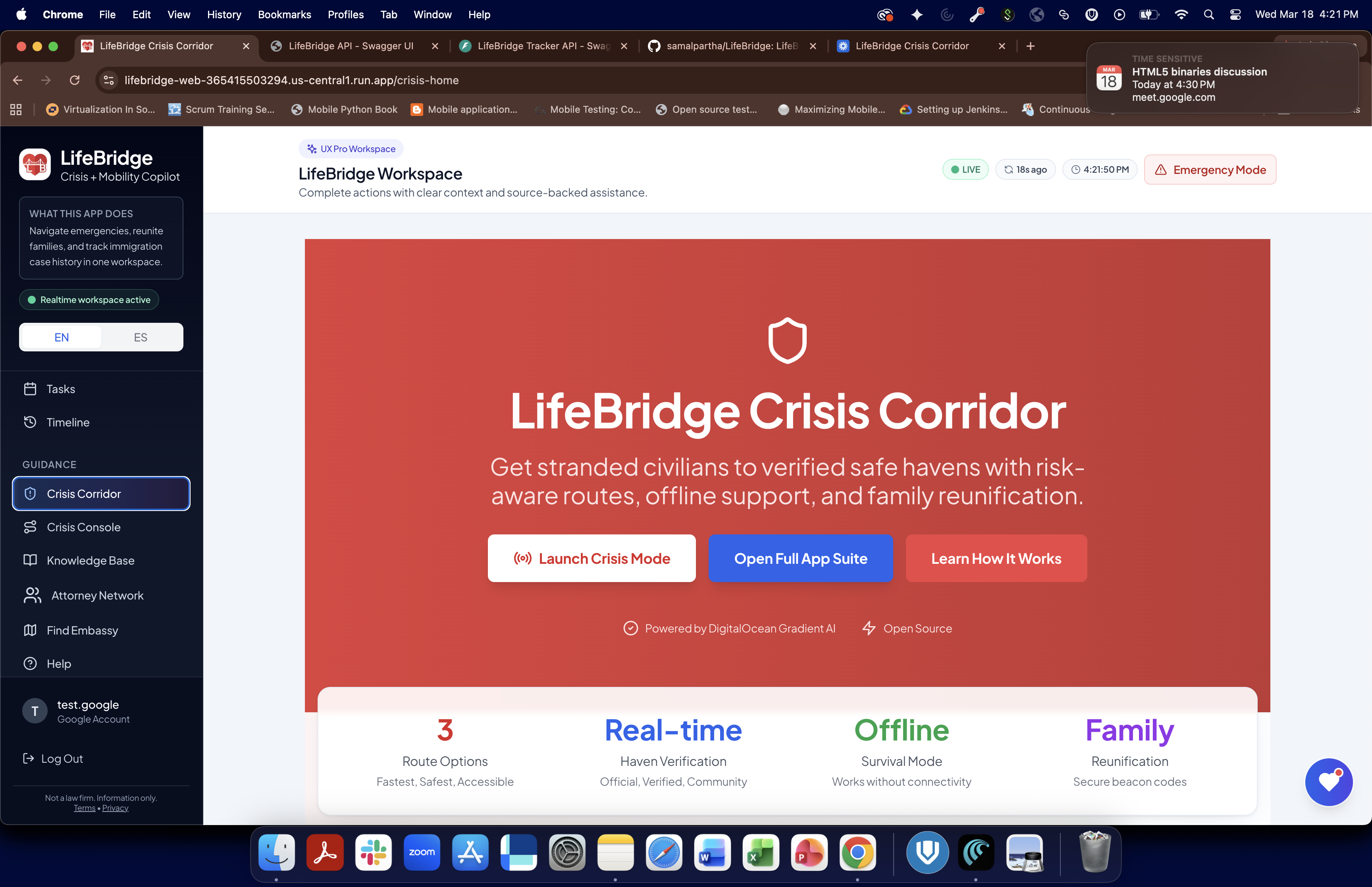
Crisis Corridor
-
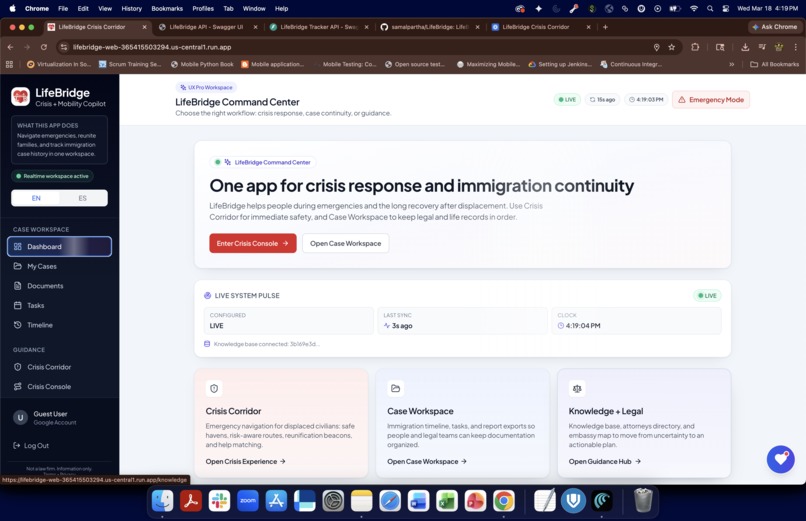
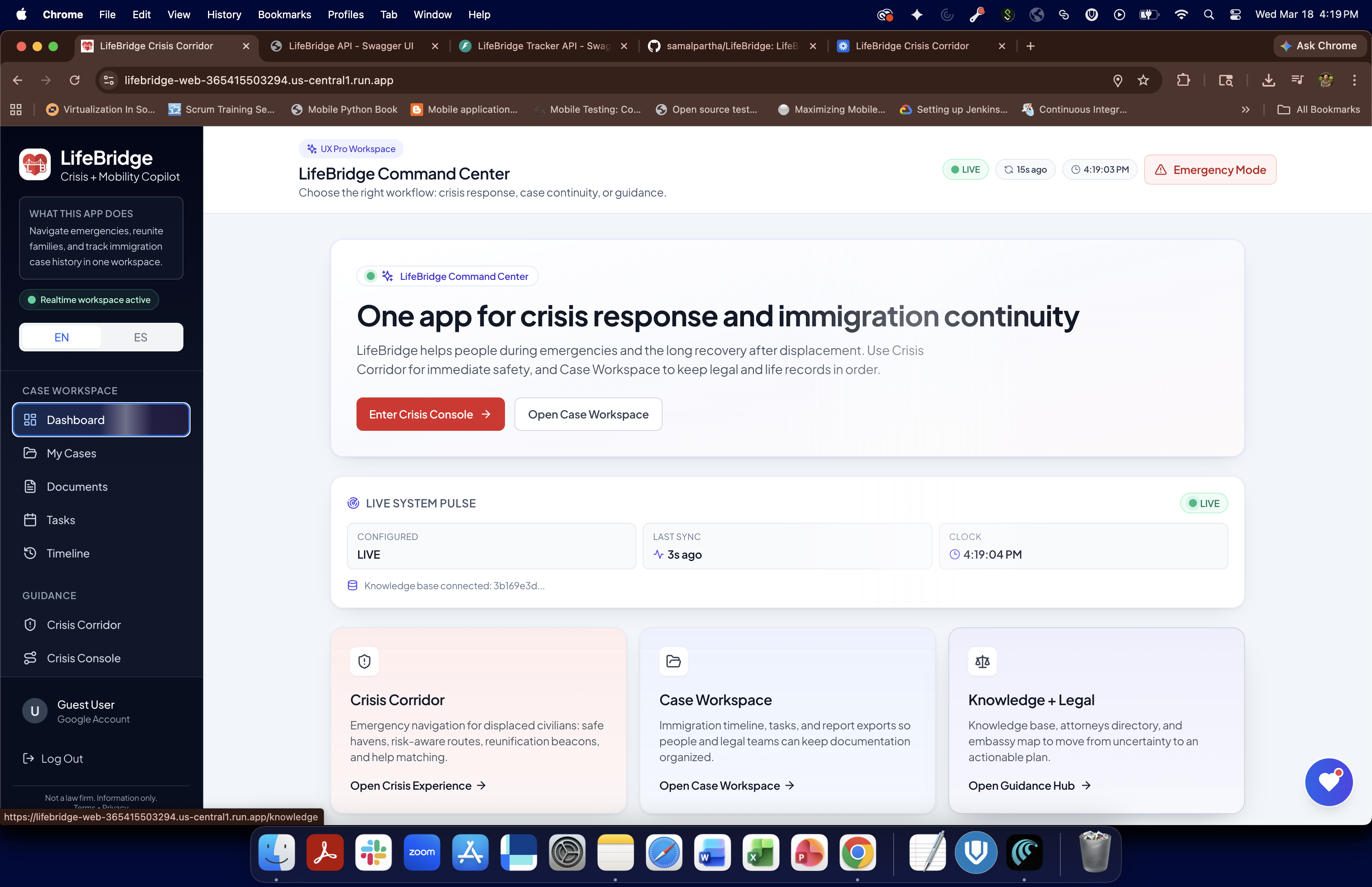
Dashboard
-
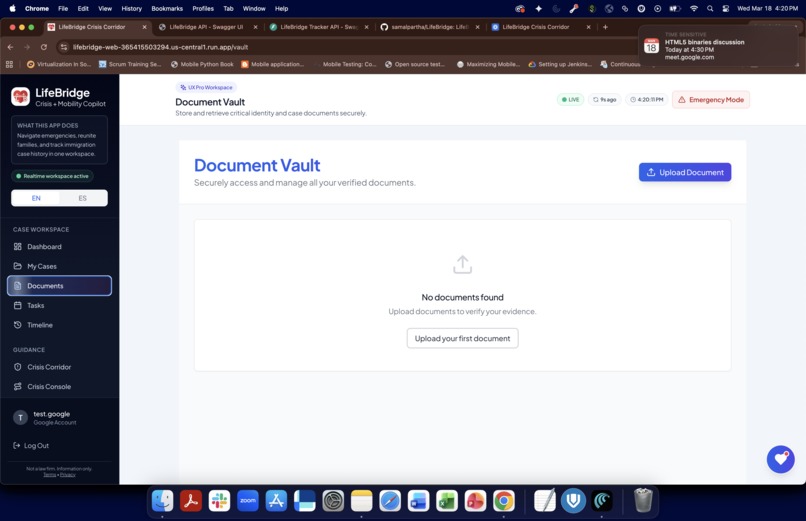
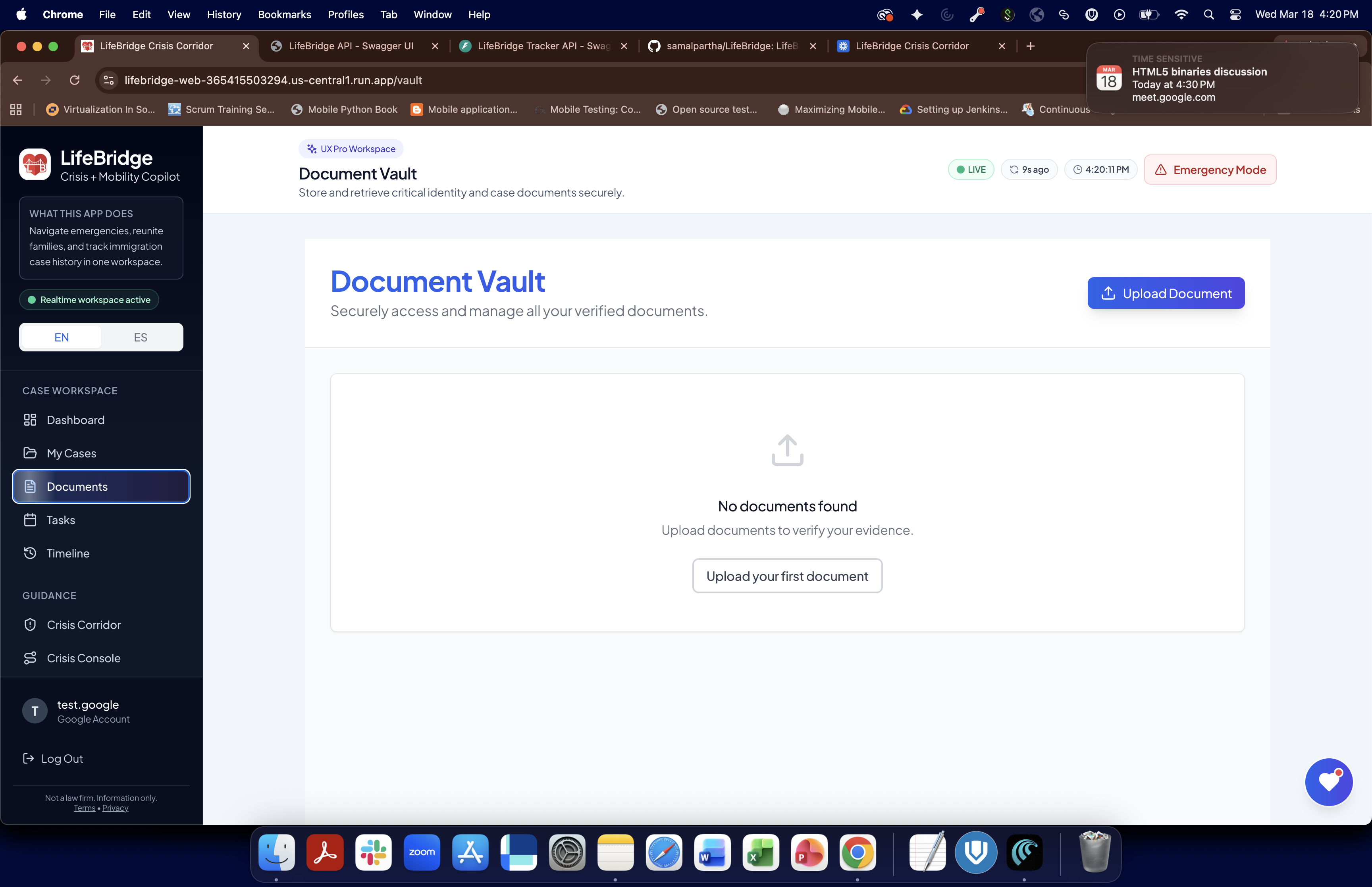
Document Vault
-
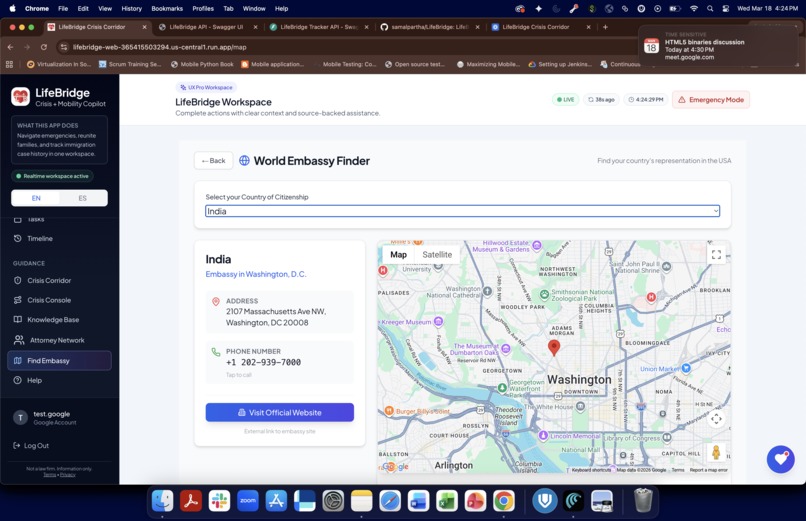
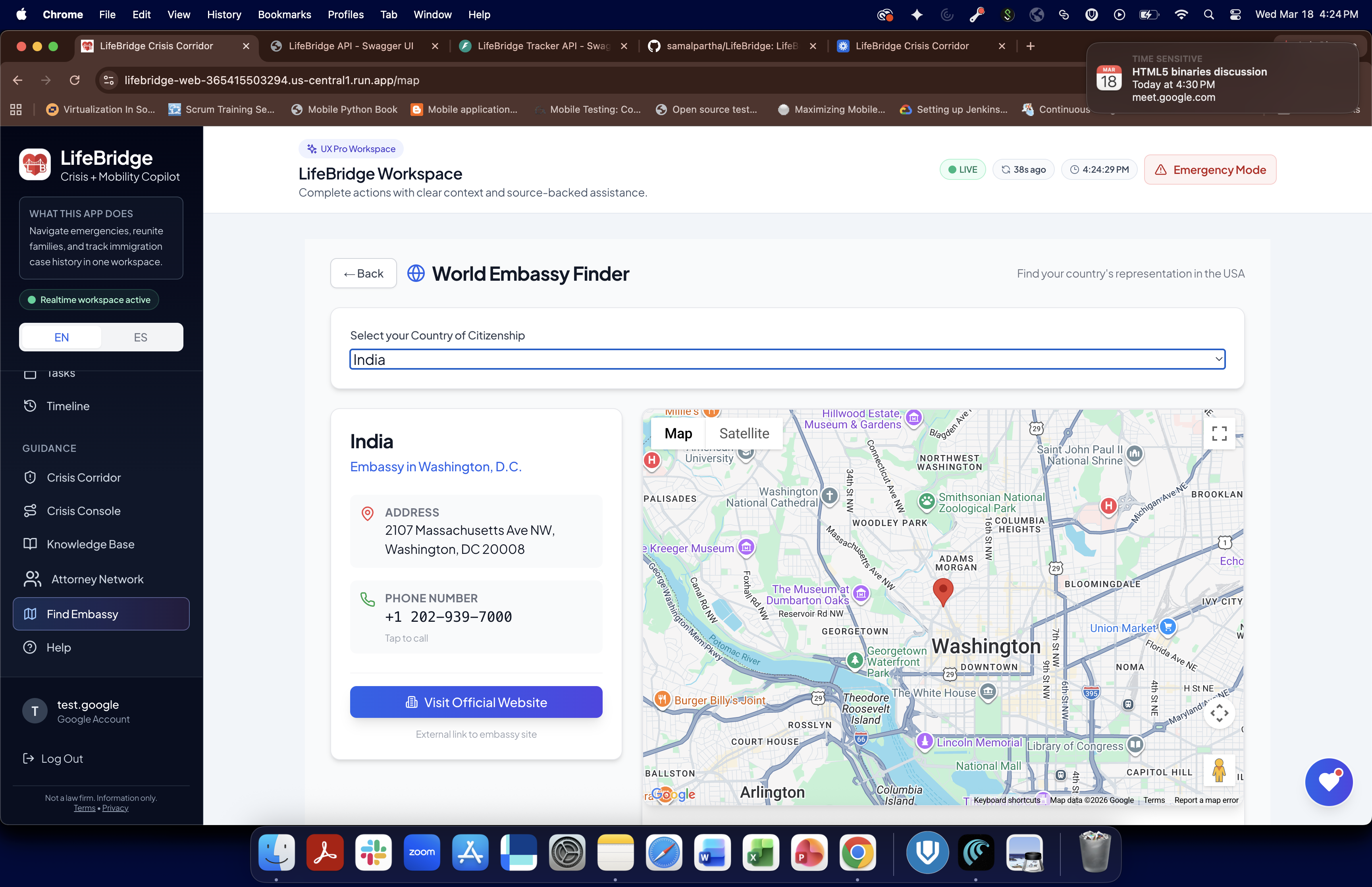
Find Embassy
-
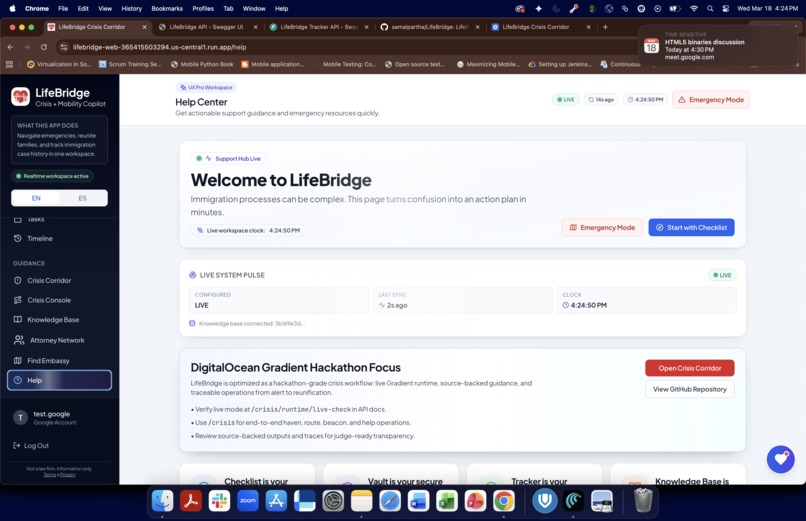
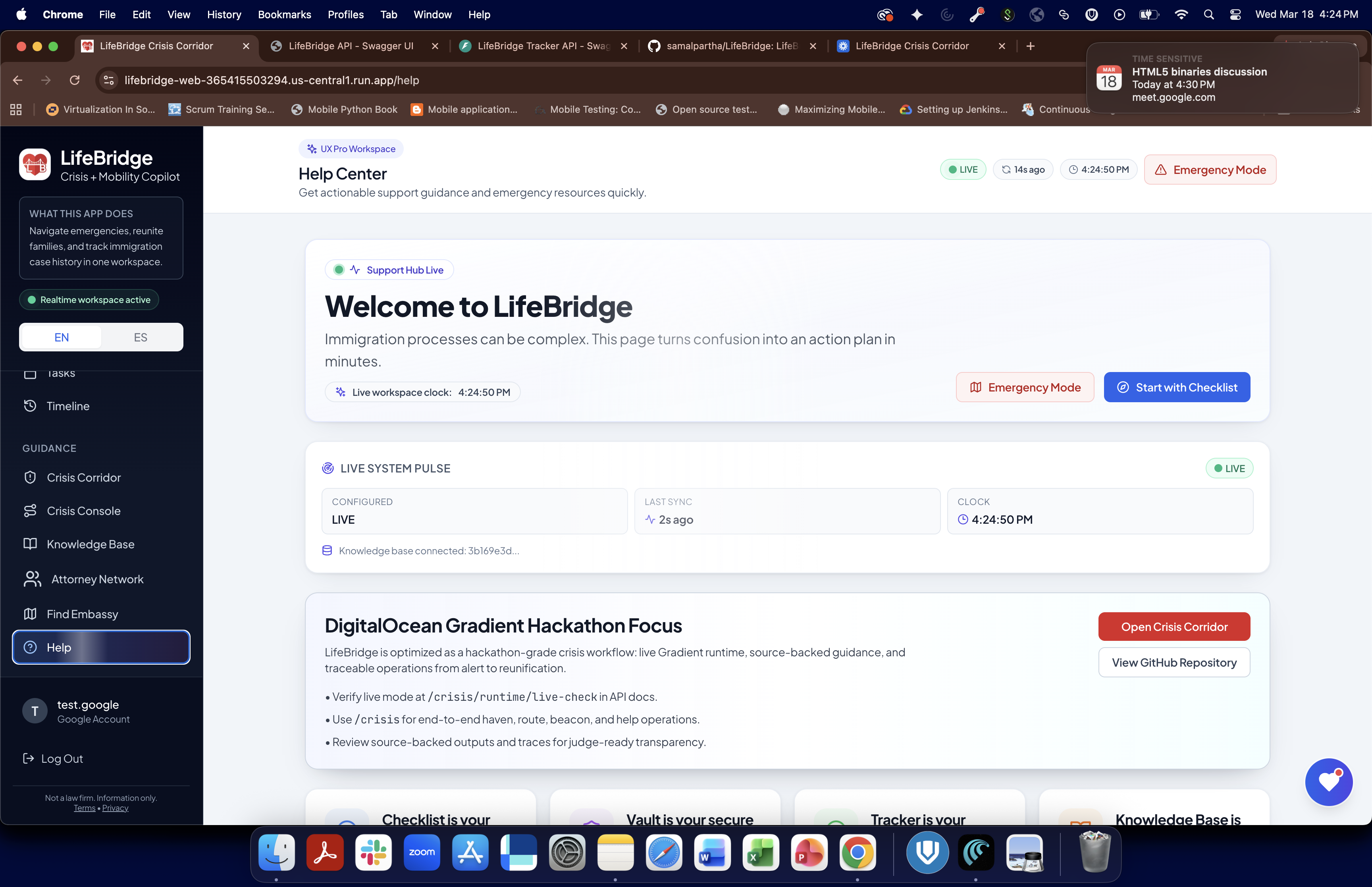
Help
-
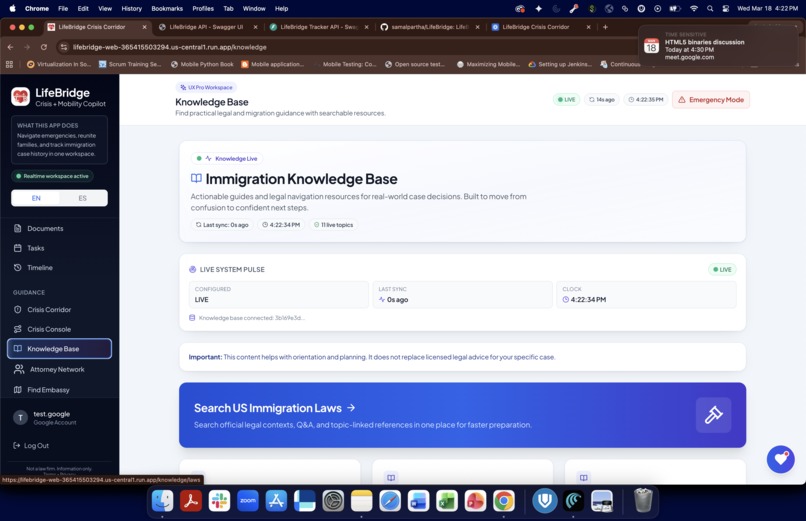
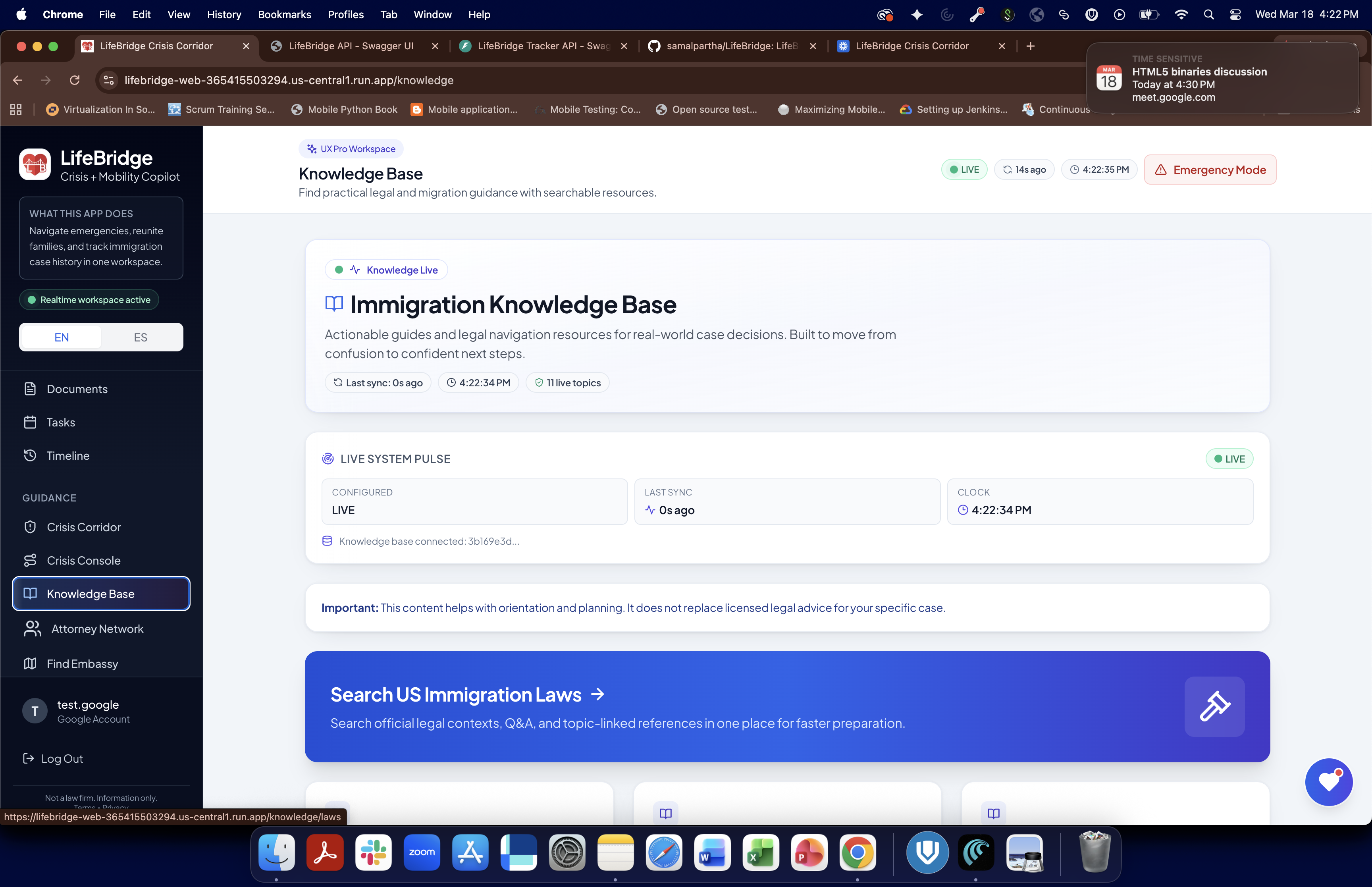
Knowledge Base
-
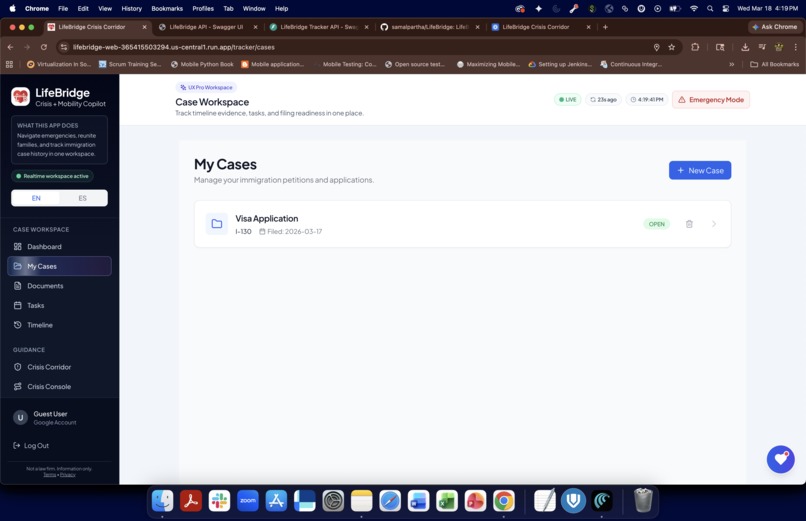
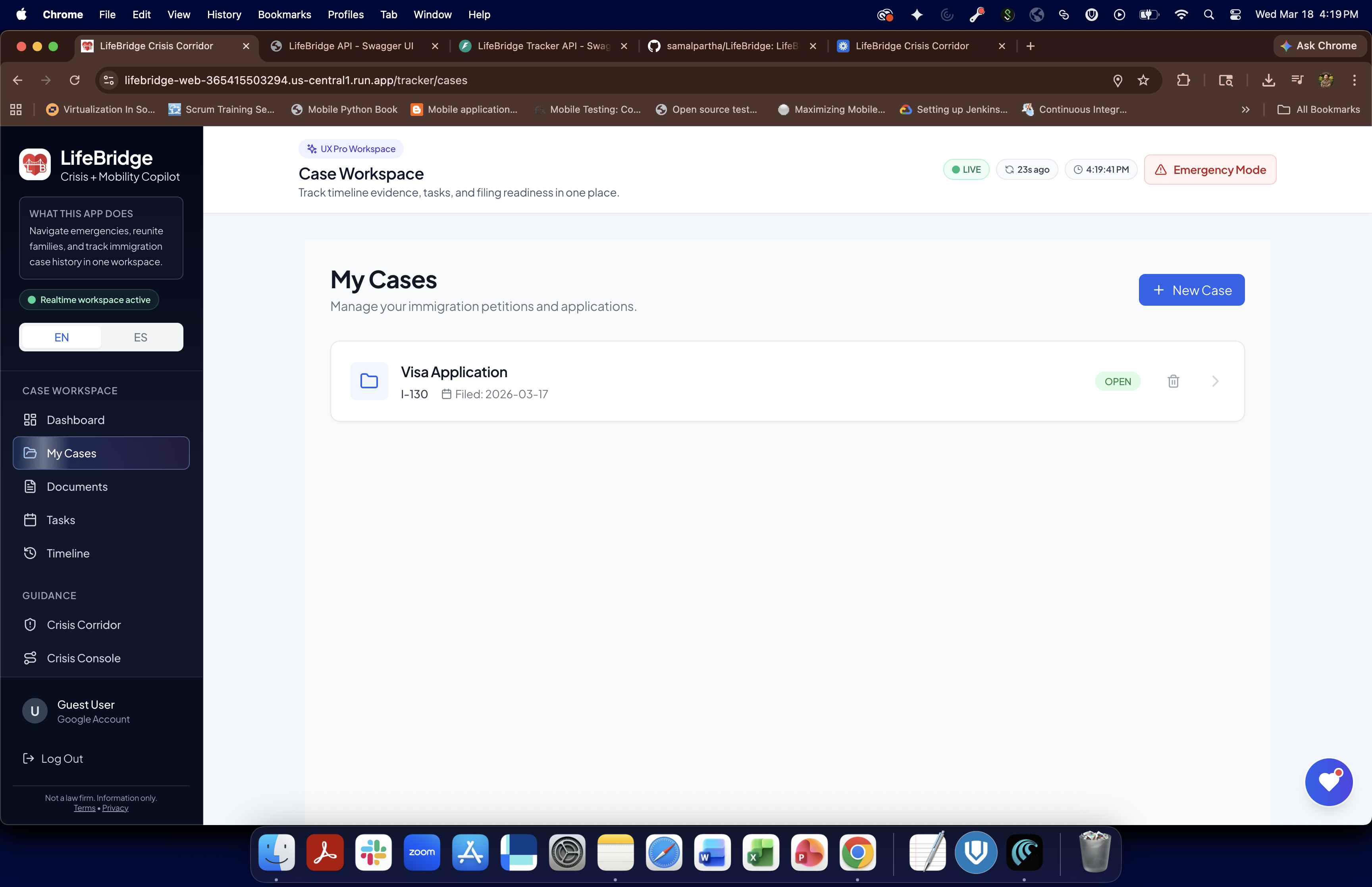
My Cases
-
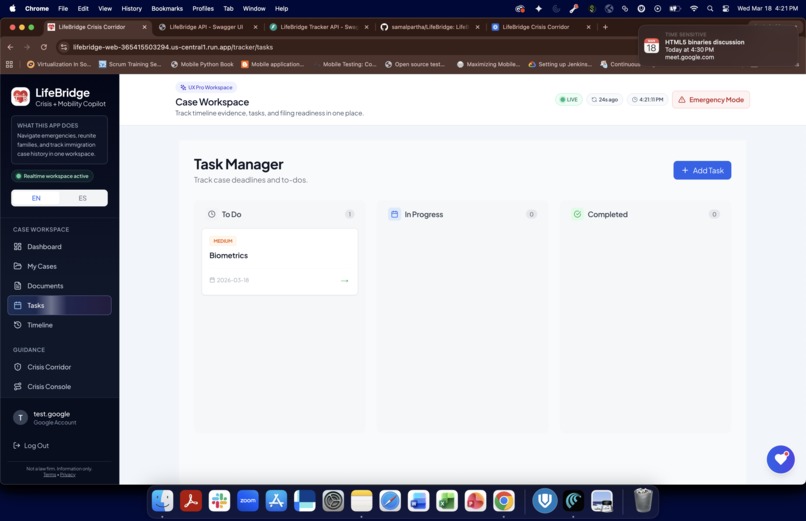
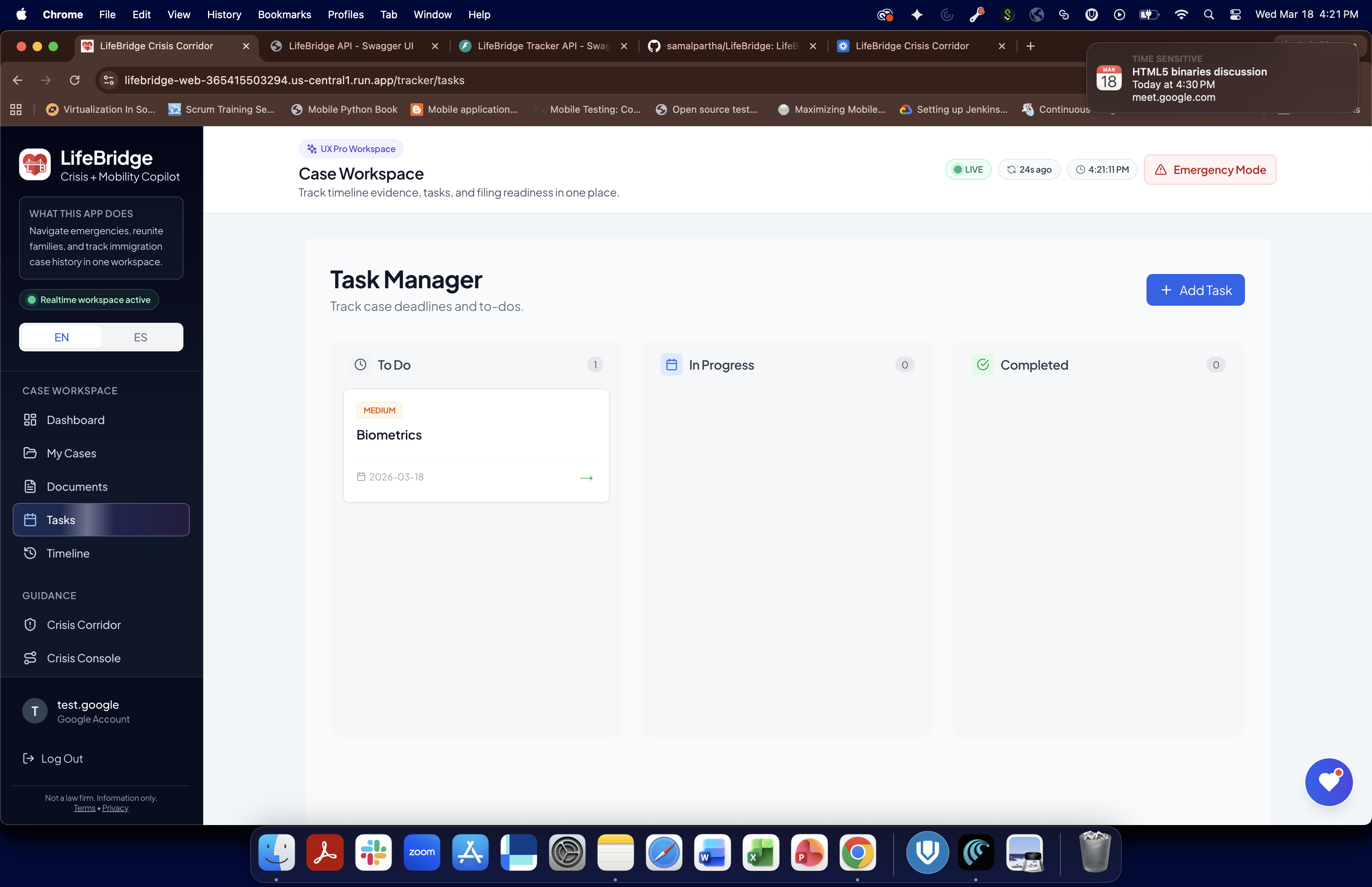
Tasks
-
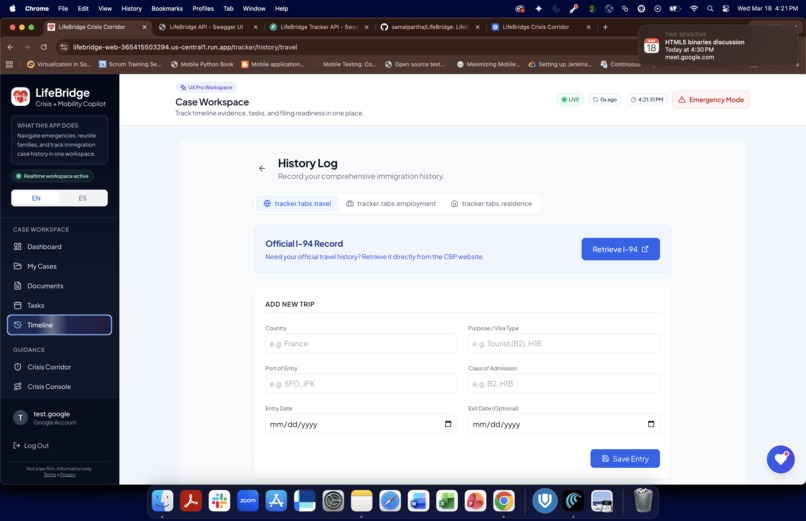
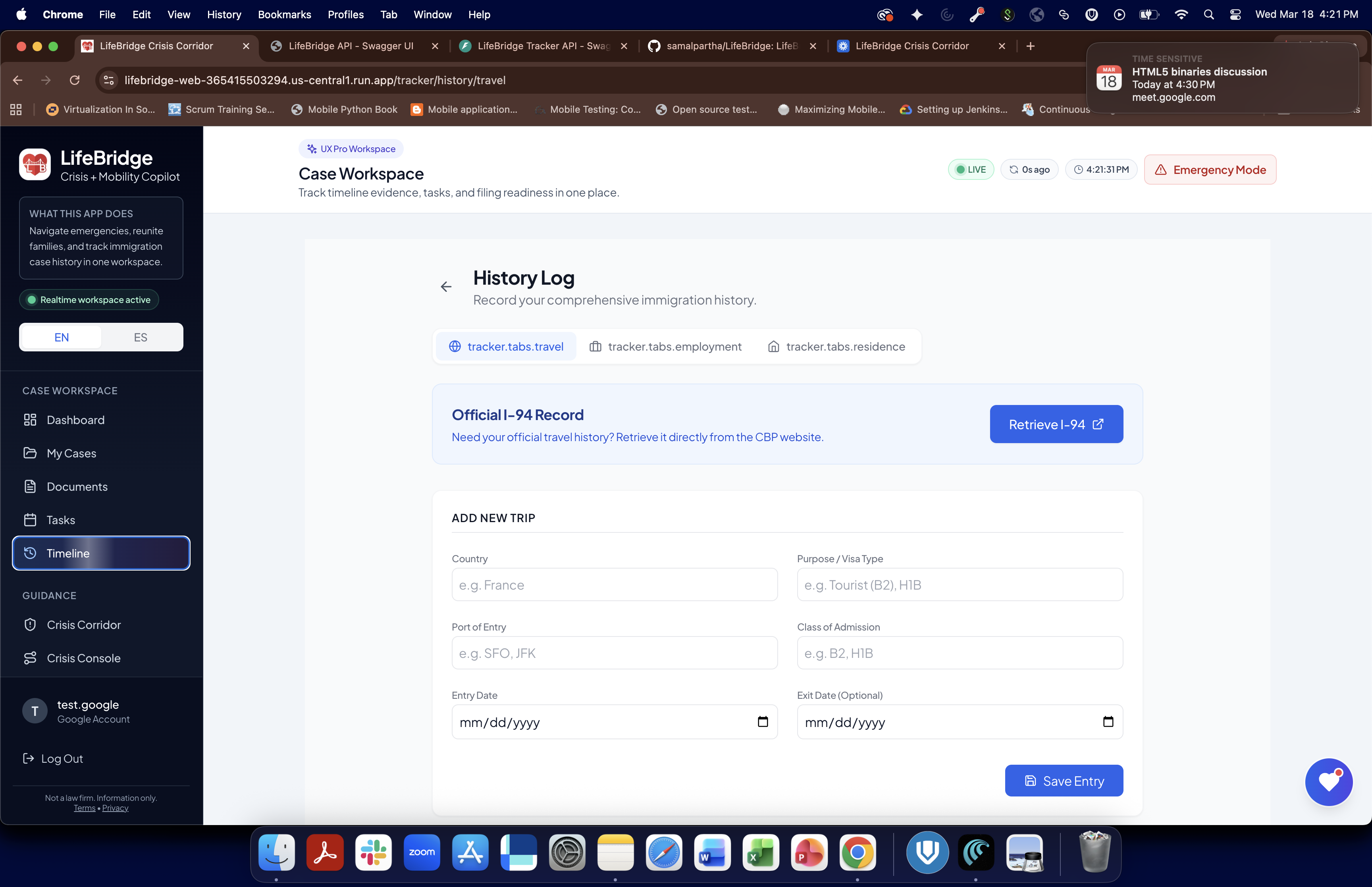
Timeline
Inspiration
People in crisis — whether fleeing conflict, natural disasters, or personal emergencies — face fragmented, slow, and confusing systems when they need help the most. We were inspired by the real-world gap between those in danger and the resources that could save them. Cross-border mobility during a crisis is a life-or-death challenge, and we wanted to build something that makes navigation, reunification, and safety accessible in real time.
What It Does
LifeBridge is a crisis navigation and reunification platform that moves people in crisis to safer nearby options using:
- Live AI Guidance — Powered by DigitalOcean Gradient AI with retrieval-augmented generation (RAG) and traceable tool calls
- Safe Haven Search — Verified nearby shelters, services, and refuges with rich metadata
- Risk-Aware Route Generation — Routes scored by danger level, border crossings, and safety indicators
- Safety Check-Ins — Idempotent check-ins to signal you're okay
- Family Reunification Beacons — Create, lookup, and update reunion points for separated families
- Nearby Help Matching — Match help requests with volunteers and aid offers in real time
- Tracker Workspace — Case continuity with tasks, notes, history, and document storage
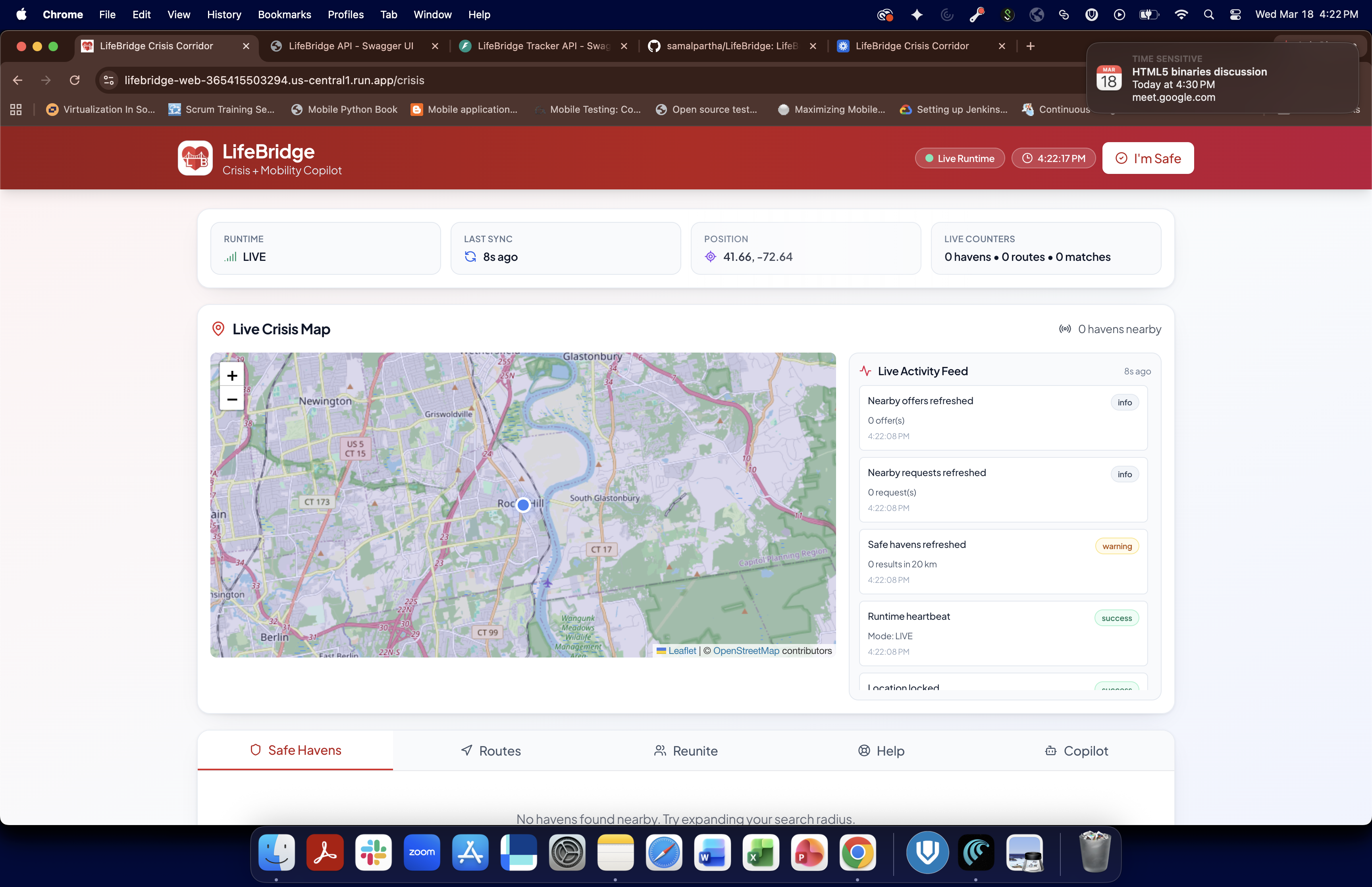
- Crisis Command Center — A live operations console (
/crisis) with runtime health indicators
How We Built It
Architecture:
- Frontend: Next.js with Tailwind CSS (responsive, mobile-first design)
- Core API: FastAPI with DigitalOcean Gradient AI integration
- Tracker API: FastAPI with SQLite for case management and continuity
- Docgen Service: FastAPI for document generation
- Storage: PostgreSQL + object storage compatible pattern
- Deployment: Google Cloud Run (fully containerized)
DigitalOcean Gradient Integration: LifeBridge uses Gradient in live mode through a DigitalOcean Agent endpoint:
- Live runtime status:
GET /crisis/runtime - Live connectivity probe:
GET /crisis/runtime/live-check - Agent orchestration query:
POST /crisis/agent/query - Retrieval-aware sources and persisted traces
- Runtime modes:
live(strict Gradient),mock(local fallback),auto(smart fallback)
Challenges We Ran Into
- Designing idempotent check-ins that are reliable even with network instability
- Making AI-powered route generation risk-aware without false positives
- Ensuring the Gradient AI runtime gracefully falls back to mock mode when connectivity is unavailable
- Building a real-time family reunification beacon system that works across borders
- Containerizing and orchestrating 4 services (web, api, tracker-api, docgen) for Cloud Run deployment
What We Learned
- DigitalOcean Gradient's agent endpoint is powerful for real-time retrieval-augmented AI at scale
- Crisis UX demands extreme clarity — every second matters, so UI/UX was ruthlessly simplified
- Operational resilience (fallback modes, idempotency) is as important as features in emergency tools
- FastAPI + Next.js is an excellent stack for rapid full-stack prototyping with live deployments
What's Next
- Offline-first mobile app (PWA) for areas with intermittent connectivity
- Multi-language support for global crisis scenarios
- Integration with official refugee and emergency management APIs
- Real-time push notifications for beacon updates and route changes
- Expanded AI knowledge base with region-specific crisis resources
Built With
- digitalocean
- docker
- fastapi
- next.js
- postgresql
- python
- sqlite
- tailwind


Log in or sign up for Devpost to join the conversation.