AMBIGUOUS — Reimagining Progress Through Education, Career, and Life
Tagline: Reimagine education. Explore possible futures. Design a life beyond graduation.
Inspiration 💡
We built AMBIGUOUS around a question: Why do we ask students to make some of the most important decisions of their lives without giving them the tools to explore what those decisions could mean for their future?
At 18, students are expected to choose majors. At 22, they're expected to choose careers. By 30, they're expected to have figured out what success looks like. Yet life rarely follows a predictable path.
Traditional education systems measure progress through grades, credits, graduation rates, and employment statistics. These metrics are important, but they don't tell the complete story of human development.
What about purpose? Financial independence? Career reinvention? Personal fulfillment? Lifelong learning?
Inspired by the challenge to reimagine progress, we wanted to create something fundamentally different from conventional education and career-planning software.
We imagined a platform where students could explore multiple possible futures, understand the consequences of educational choices, and develop their own definition of success.
That idea became AMBIGUOUS.
What It Does 🚀
AMBIGUOUS is an AI-assisted lifelong education and career intelligence platform that puts students in control of their future.
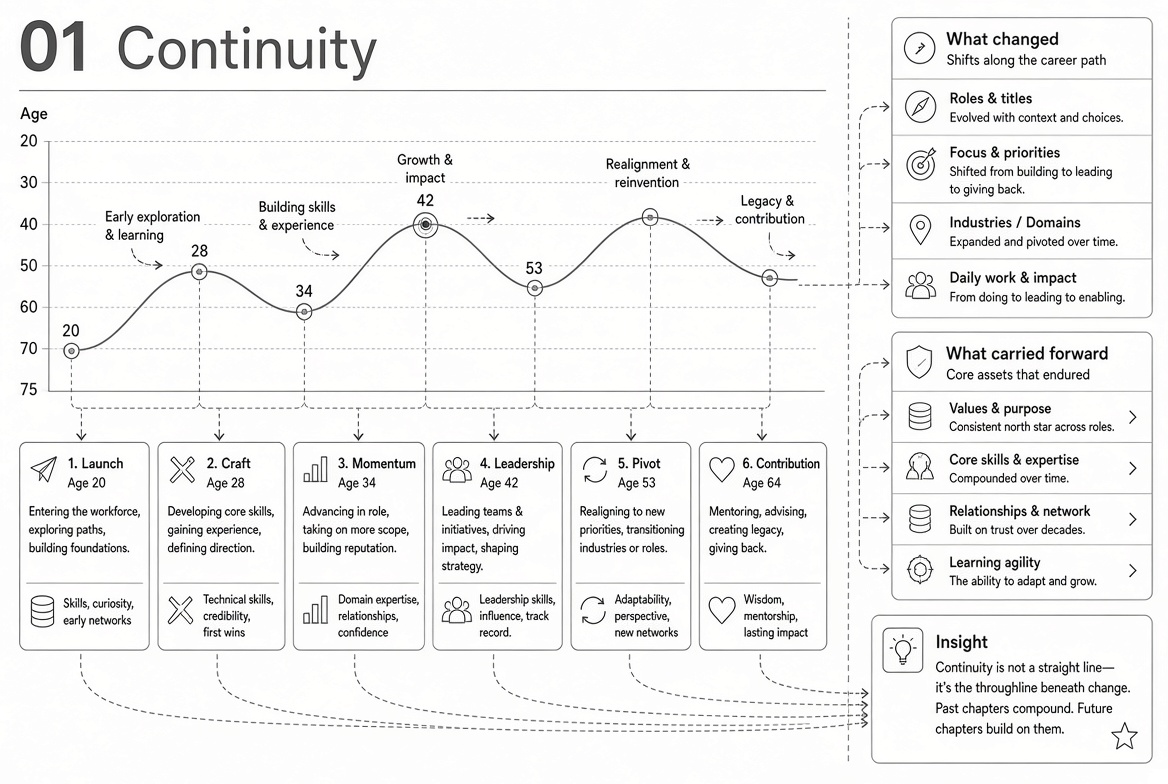
Instead of simply recommending a college major or occupation, AMBIGUOUS introduces the Life Canvas, a visual framework for exploring educational, professional, financial, and personal development across an entire lifetime.
The Life Canvas is organized around five major life stages:
- Age 25: Education, early career development, and financial foundations.
- Age 35: Career advancement, financial stability, and personal priorities.
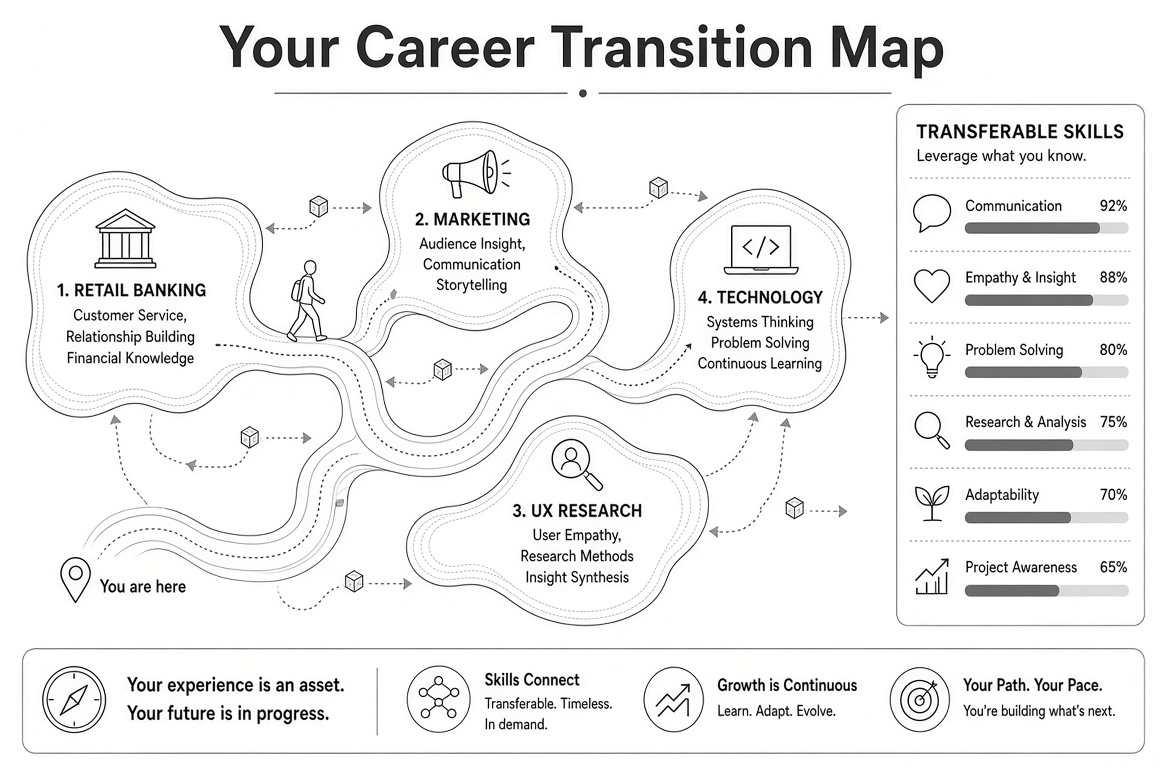
- Age 45: Leadership, entrepreneurship, specialization, and reinvention.
- Age 55: Career transitions, accumulated experience, and lifelong learning.
- Age 65: Financial security, personal legacy, mentorship, and new opportunities.
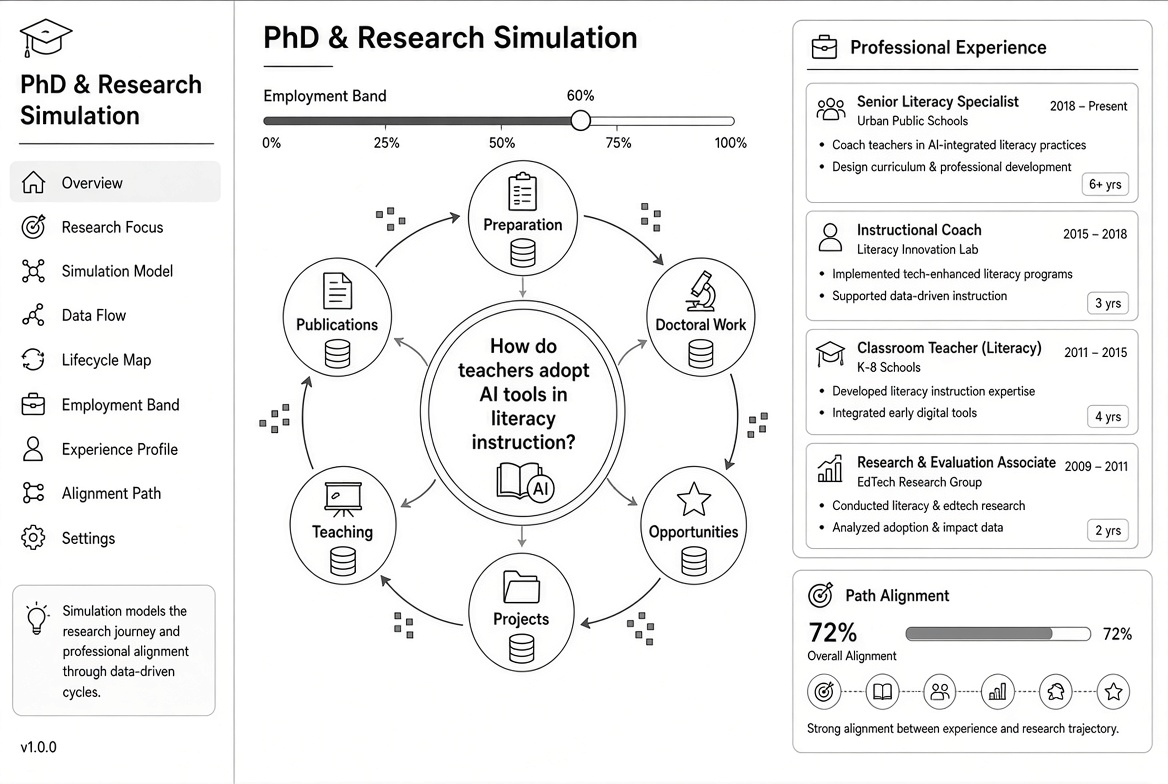
Students can examine different scenarios involving educational investment, potential earnings, opportunity costs, professional interests, and long-term ambitions.
The broader platform is designed around three interconnected systems.
1. Curriculum Intelligence
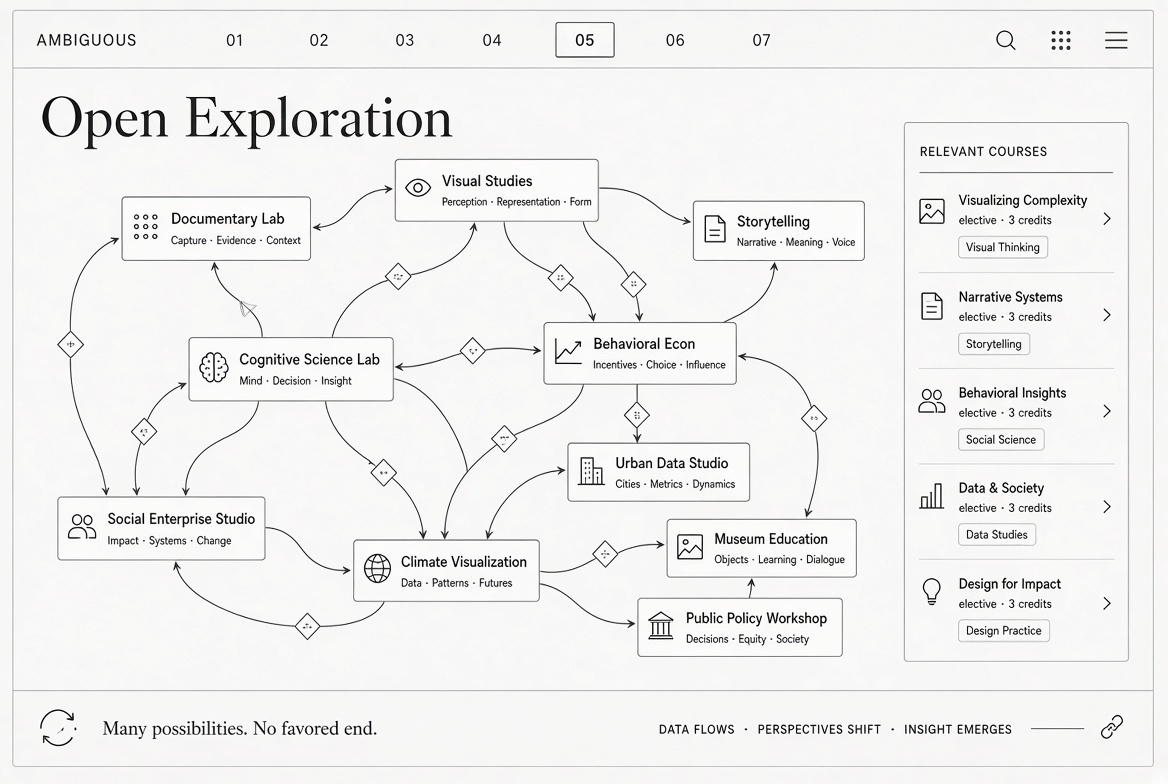
A framework for connecting university programs, courses, academic requirements, and skills to educational and career pathways.
Using New York University as our initial institutional context, we explored how university curriculum information could become part of a more comprehensive student decision-making experience.
2. Life Canvas
A visual environment for investigating different possible futures.
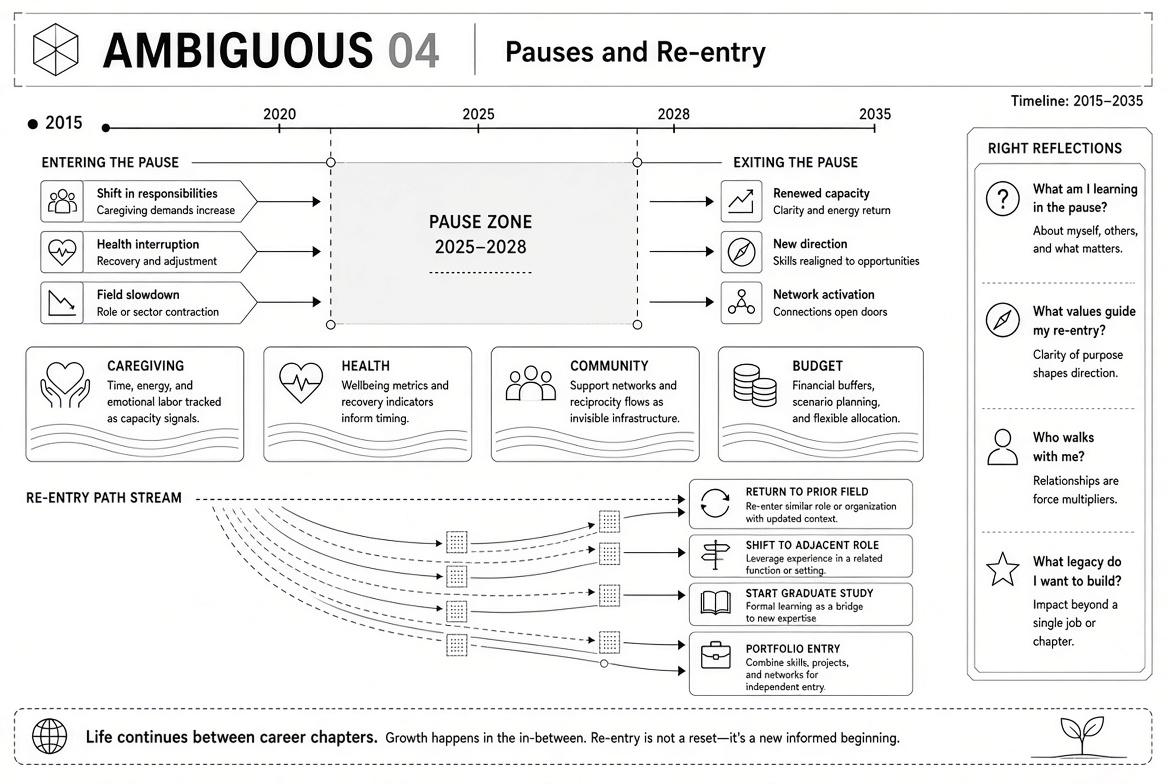
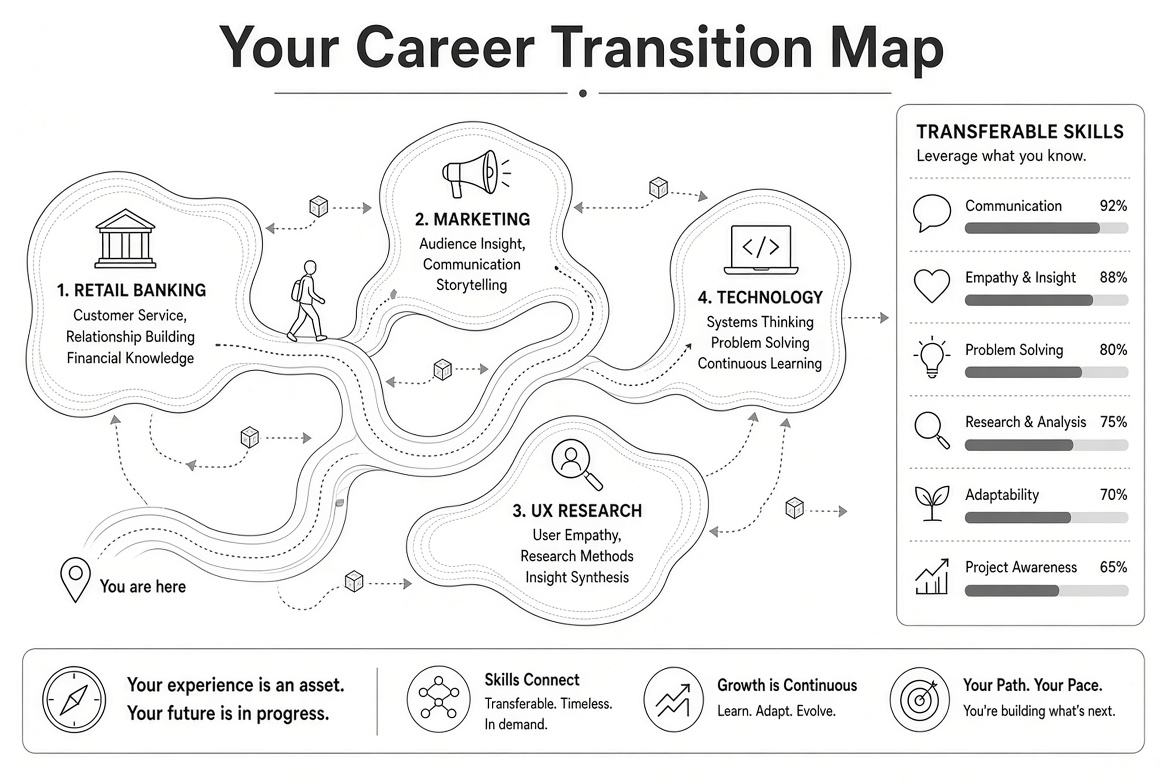
Rather than suggesting that life follows one predetermined sequence, the Life Canvas encourages students to consider alternative pathways, compare trade-offs, and continuously revise their assumptions.
3. KAI — Key Actionable Indicators
We introduced KAI (Key Actionable Indicators) as a framework for transforming long-term aspirations into meaningful actions.
Traditional KPIs measure performance against established goals. KAI is designed to help individuals identify the decisions, behaviors, and opportunities that can influence progress toward those goals.
For example, rather than simply tracking whether a student graduates, KAI could help identify whether they are developing relevant skills, gaining practical experience, exploring professional networks, and making informed decisions about their future.
Together, these systems create a foundation for a different relationship between students, educational institutions, and lifelong learning.
How We Built It 🛠️
We developed our interactive prototype using Base44, an AI-powered application development environment that allowed us to rapidly translate our product concept into a browser-based experience.
Our development process focused on five major areas.
Product architecture: We defined the relationship between student profiles, academic information, life-stage scenarios, and actionable progress indicators.
Experience design: We developed a student-first interface inspired by editorial design, using generous white space, strong typography, and NYU-inspired purple to create a more approachable experience than a traditional administrative dashboard.
Life-stage modeling: We organized the experience around ages 25, 35, 45, 55, and 65, allowing future development to incorporate financial projections, education costs, career transitions, and other variables.
AI-assisted development: We used iterative natural-language prompting and prototype refinement to explore interface layouts, user workflows, and product features.
Institutional architecture: We considered how the system could eventually support different perspectives, including students, academic advisors, faculty, alumni, parents, and university leadership.
Our objective was to establish a functional product prototype and demonstrate how education and career exploration could evolve into a continuous, student-centered experience.
Challenges We Faced 🧩
Modeling a future that cannot be predicted
One of our greatest conceptual challenges was representing the uncertainty of human lives.
No system can accurately predict where a student will be in 20 or 40 years. Economic conditions change, industries evolve, and personal priorities shift.
We addressed this challenge by designing AMBIGUOUS around scenario exploration instead of deterministic prediction.
Our goal is not to tell students what will happen. It is to help them understand what might happen, what assumptions inform those possibilities, and what decisions remain within their control.
Connecting education to real-world outcomes
University curricula are often organized around departments, degree requirements, and academic disciplines.
Students, however, frequently think in terms of careers, interests, financial opportunities, and personal ambitions.
Creating a meaningful connection between academic structures and long-term life decisions required us to rethink how educational information should be organized.
Simplifying a complex experience
A system spanning decades of potential decisions can quickly become overwhelming.
We had to balance the sophistication of our underlying concept with an interface students could understand.
The Life Canvas became our central design solution: a recognizable, chronological framework that organizes complexity without requiring students to understand every variable at once.
Preserving student autonomy
Another important challenge was determining how AI should participate in personal decision-making.
We believe students should never be reduced to a prediction, ranking, or algorithmically assigned career path.
Our design philosophy places students at the center, with AI supporting understanding, exploration, and reflection rather than making decisions on their behalf.
What We Learned 📚
Building AMBIGUOUS taught us that progress is not simply an outcome. It is an ongoing process of making decisions, learning from experience, and adapting to change.
We identified three important lessons.
First, education technology needs to become more longitudinal. Students don't stop learning or making career decisions when they graduate.
Second, effective AI-assisted planning requires transparency. Recommendations and projections are more useful when users understand the evidence, assumptions, and uncertainty behind them.
Third, measuring progress is different from enabling progress. This distinction inspired our KAI framework, which emphasizes identifying useful actions rather than simply reporting historical results.
We also learned how AI-assisted prototyping can accelerate product development, allowing us to explore an ambitious, multidisciplinary concept through an interactive experience.
Accomplishments We're Proud Of 🏆
Our biggest accomplishment is translating a broad question about human progress into a coherent product concept and interactive prototype.
We are especially proud of developing the Life Canvas as an alternative to conventional education and career dashboards.
We also established the conceptual foundation for KAI, a system that connects long-term ambitions to actionable decisions.
Most importantly, we challenged a familiar assumption: that successful education follows a single, linear progression from enrollment to graduation to employment.
AMBIGUOUS introduces a different possibility—education as a lifelong process of discovery, adaptation, and purposeful decision-making.
What's Next for AMBIGUOUS 🌍
Our next phase will focus on developing and validating the platform beyond its initial prototype.
We plan to pursue deeper university curriculum integration, evidence-based financial and career scenario modeling, student and advisor testing, and more sophisticated KAI capabilities.
We also envision integrating verified alumni experiences to help students understand how educational pathways can evolve over time.
Longer term, AMBIGUOUS could support students and lifelong learners across universities, industries, and countries, adapting to different educational systems and economic environments.
We see an opportunity to create an entirely new category of education technology: lifelong decision intelligence.
Reimagining Progress
Progress should not be defined solely by how quickly someone graduates, how much money they earn, or how closely their life follows a predetermined plan.
Progress can mean discovering a new passion, changing careers, starting a company, returning to school, building financial stability, or finding a different definition of success.
We built AMBIGUOUS because we believe students deserve more than a map of existing academic pathways.
They deserve a way to explore possibilities, understand trade-offs, and shape their own futures.
The future is ambiguous. Progress doesn't have to be.
Project Demo: https://ambiguous-life-canvas.base44.app/
Built With
- base44

