-
-
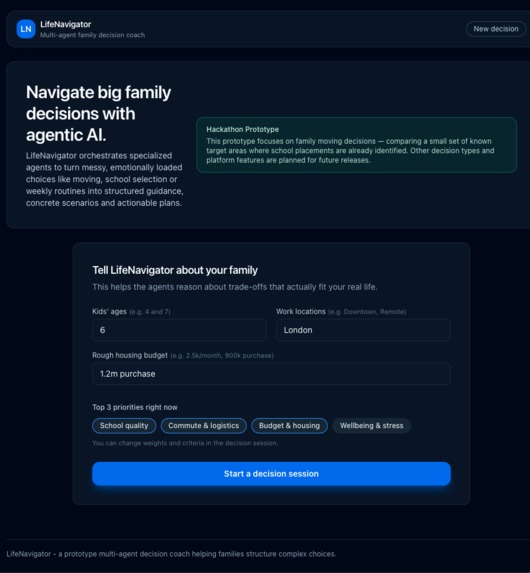
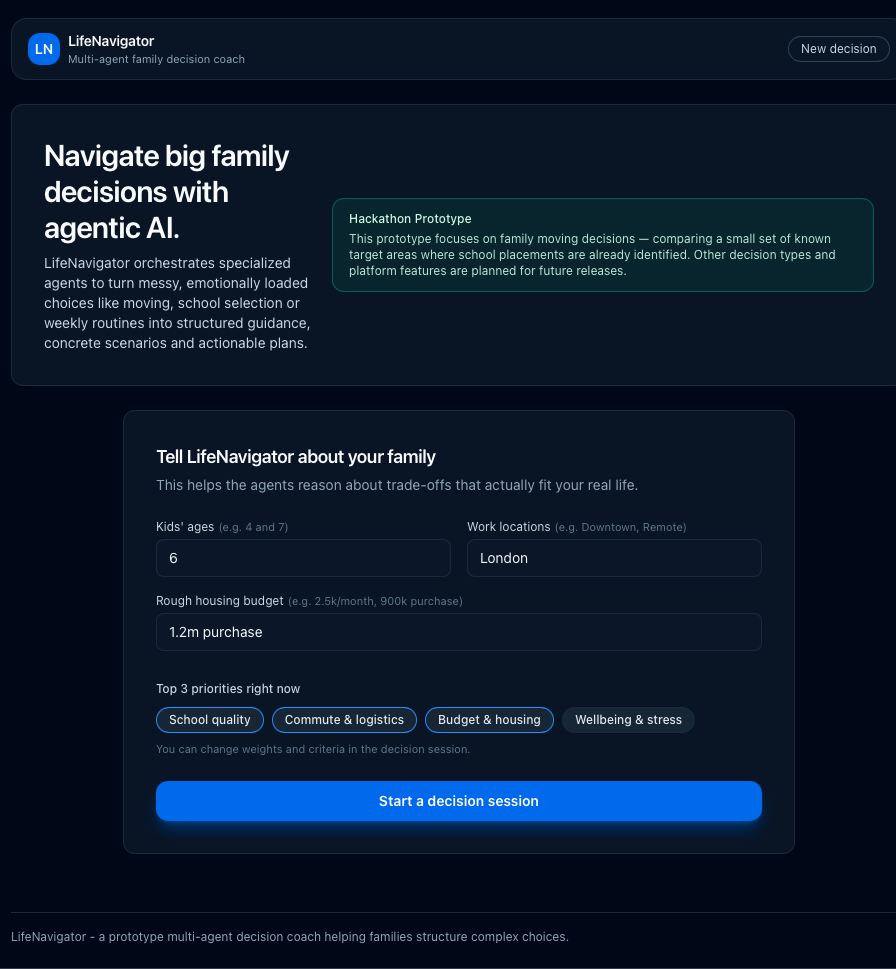
Landing & Onboarding
-
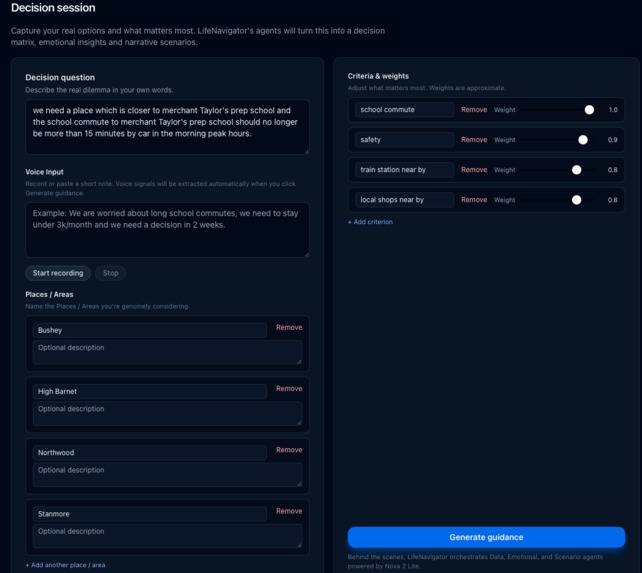
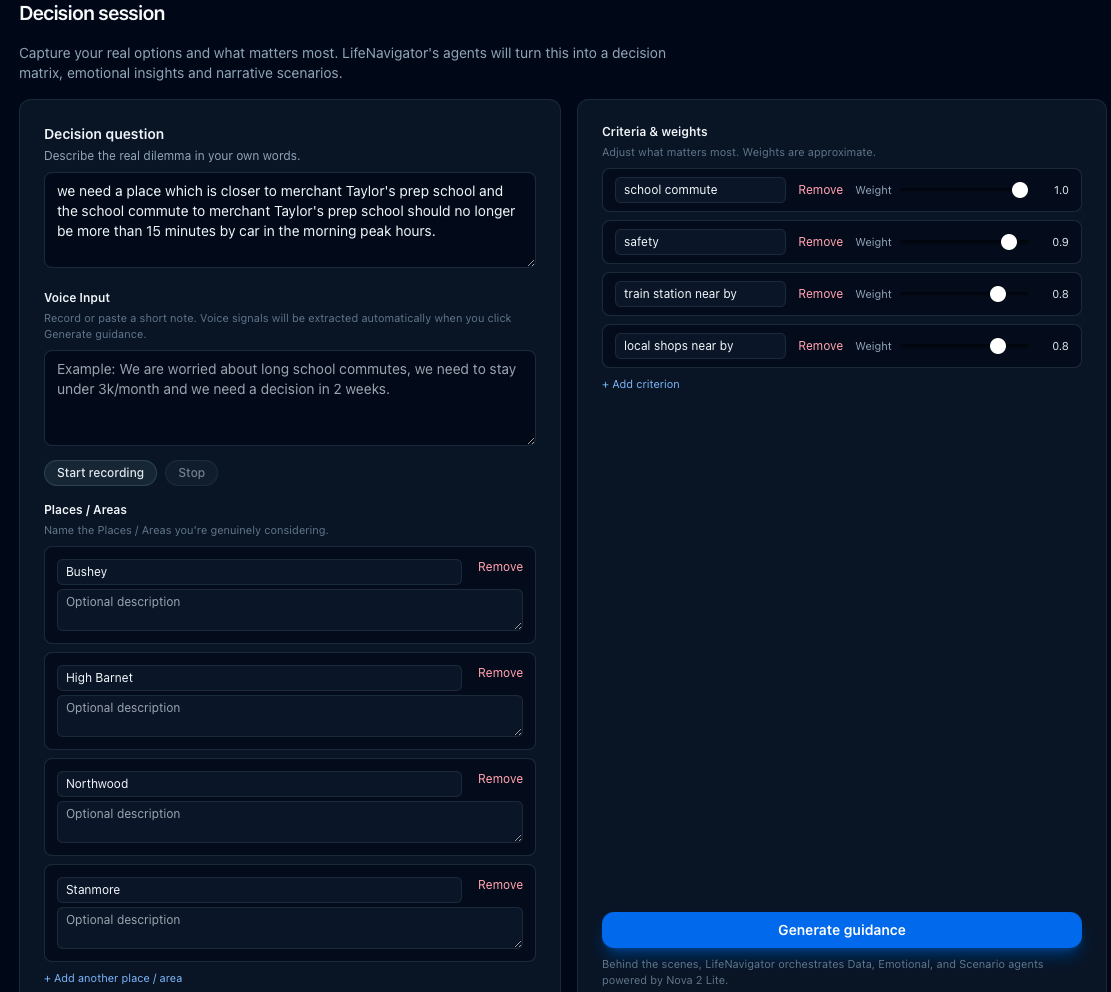
Decision Session and Criteria Weights
-
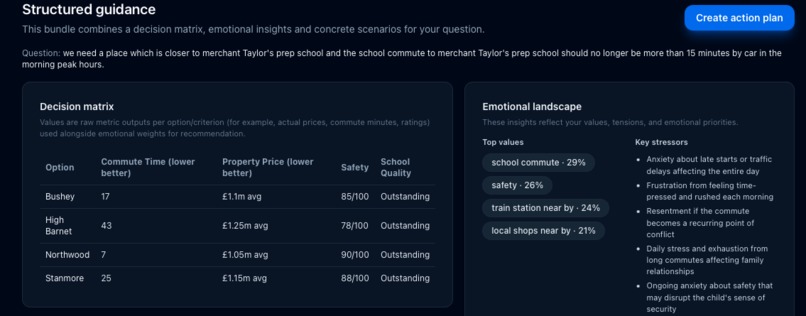
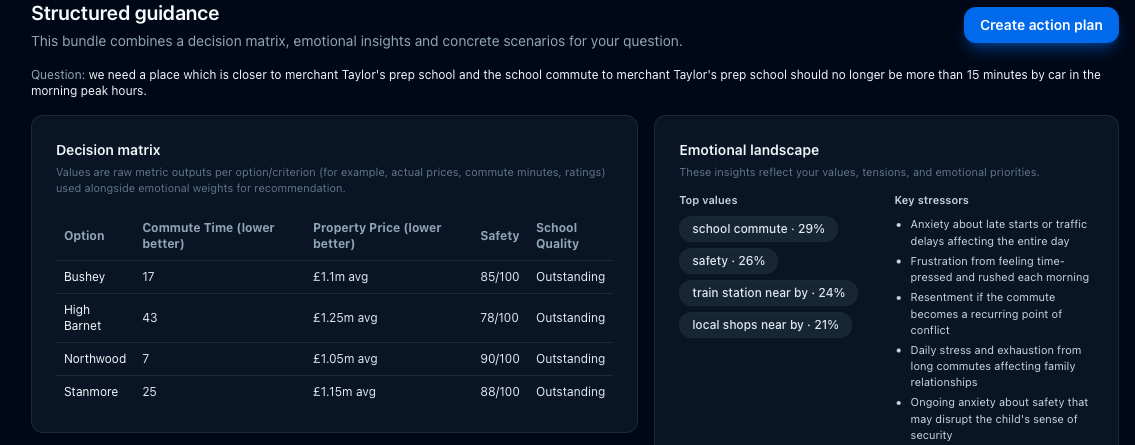
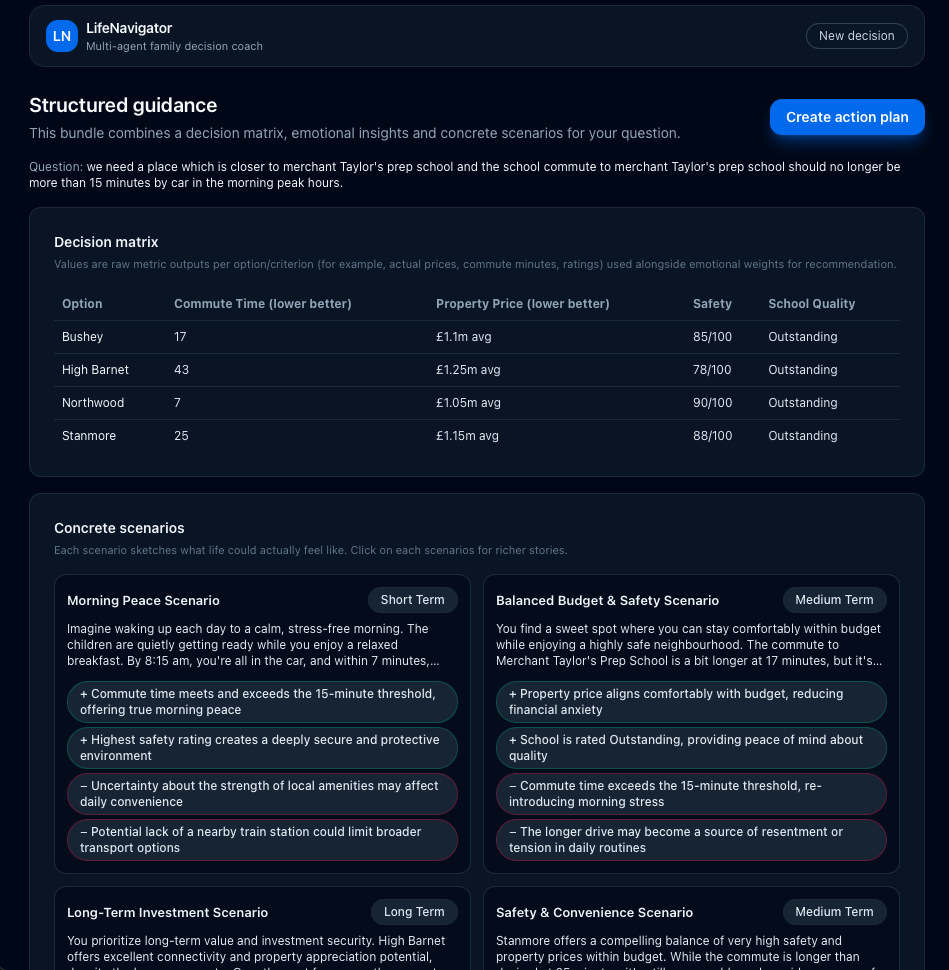
Decision Matrix
-
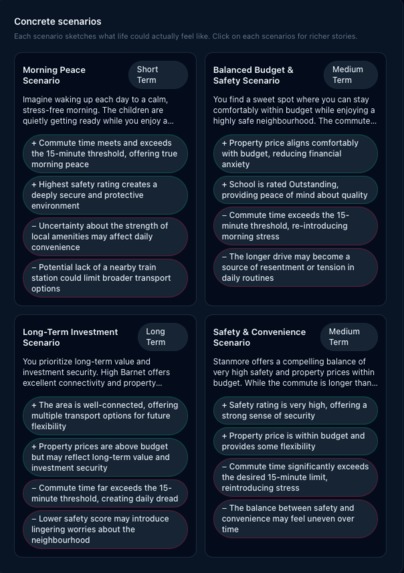
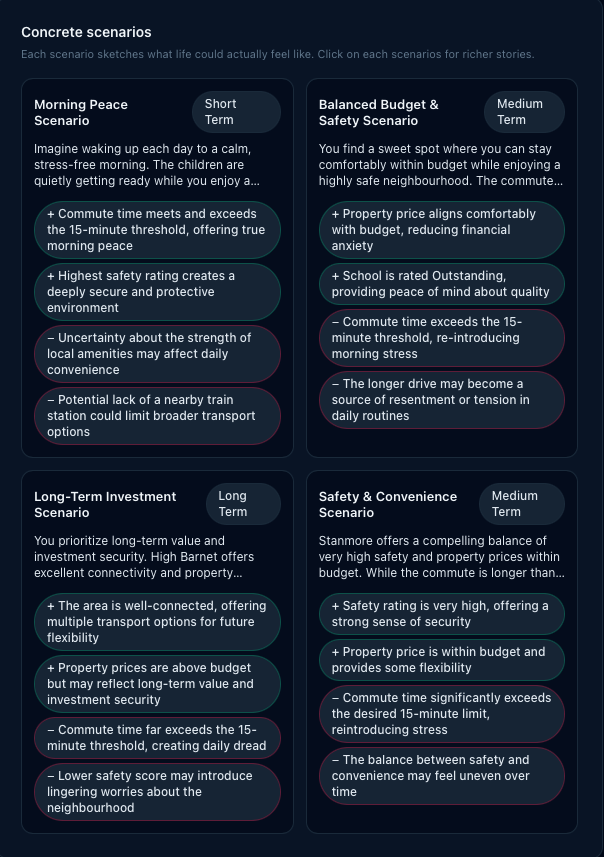
Concrete Scenarios
-
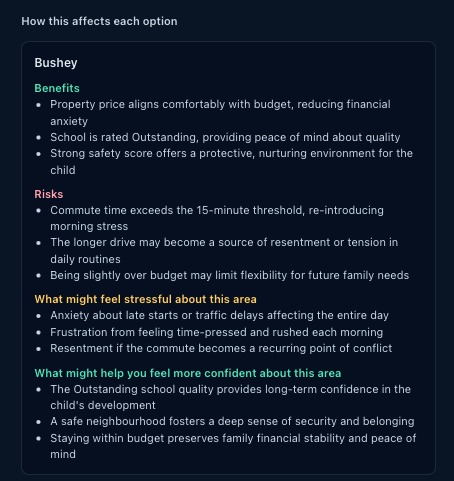
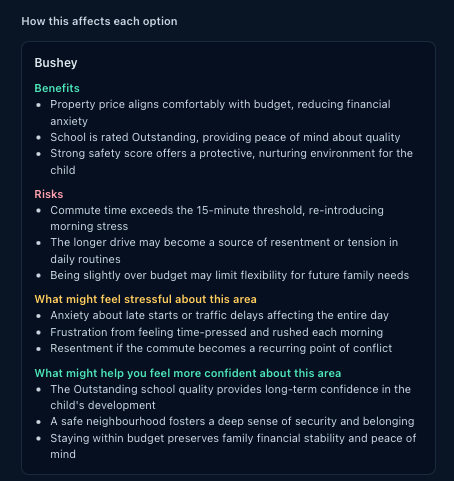
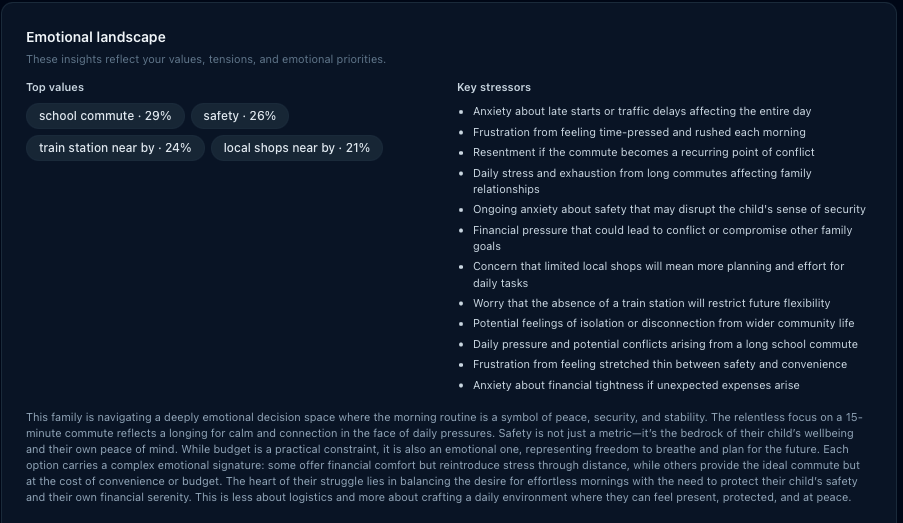
Emotional Insights of options I
-
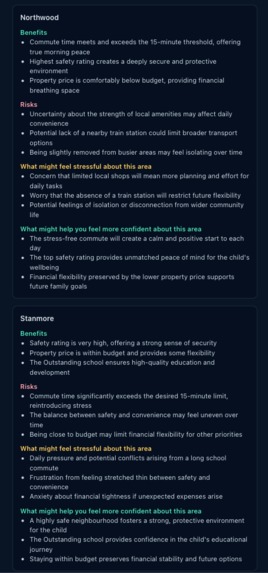
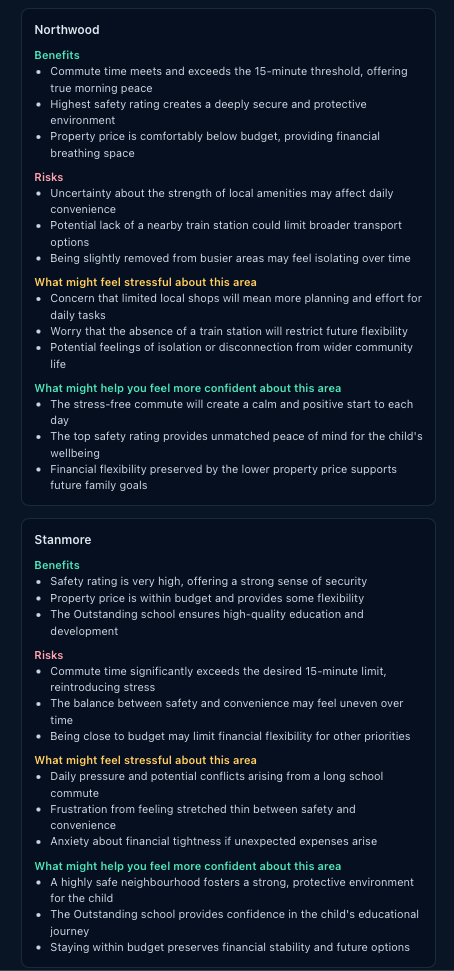
Emotional Insights of options II
-
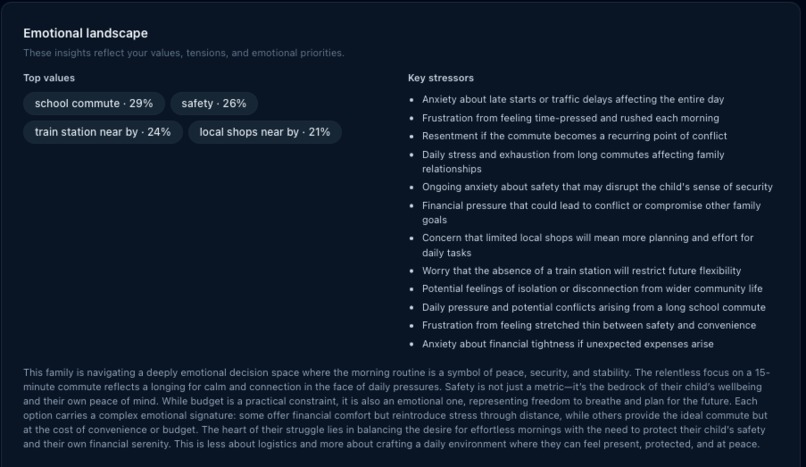
Emotional Landscape
-
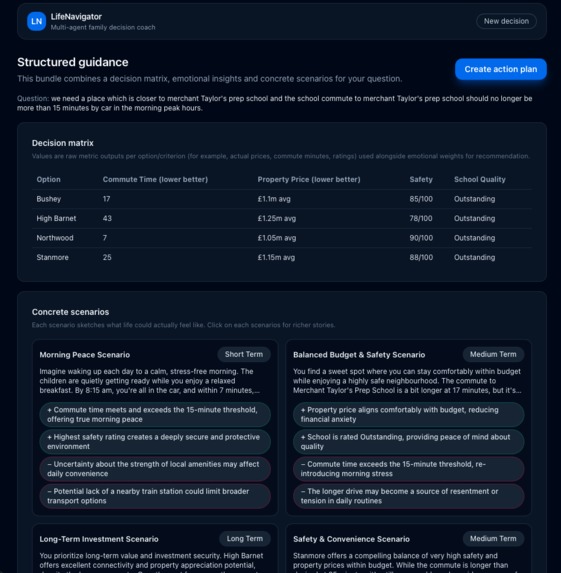
Scenario Cards
-
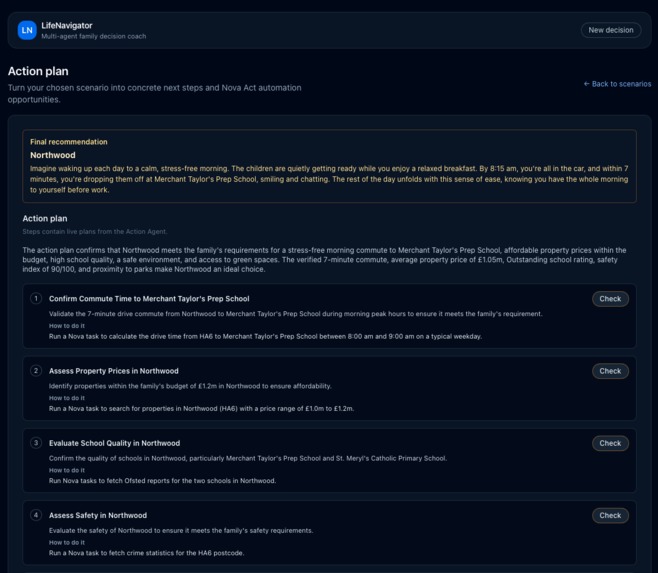
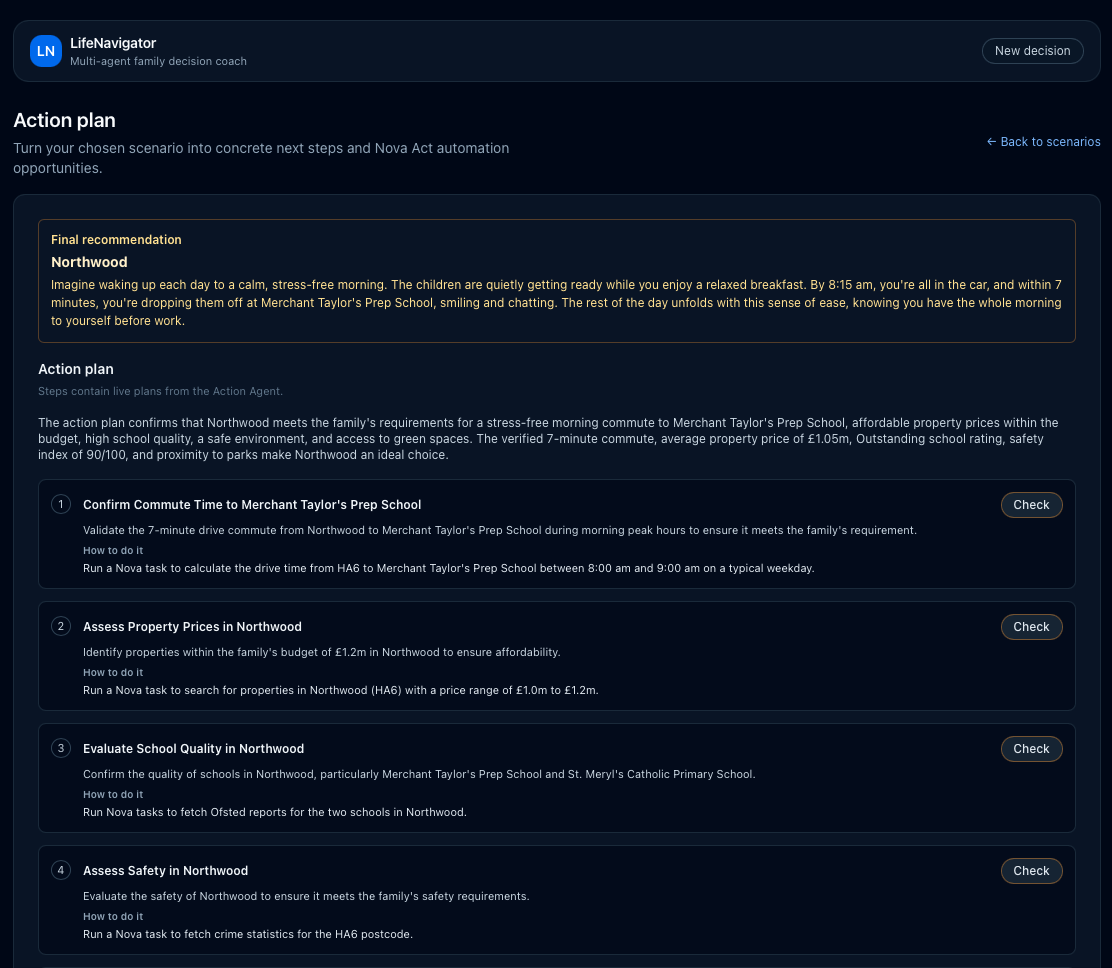
Final Action Plan
-
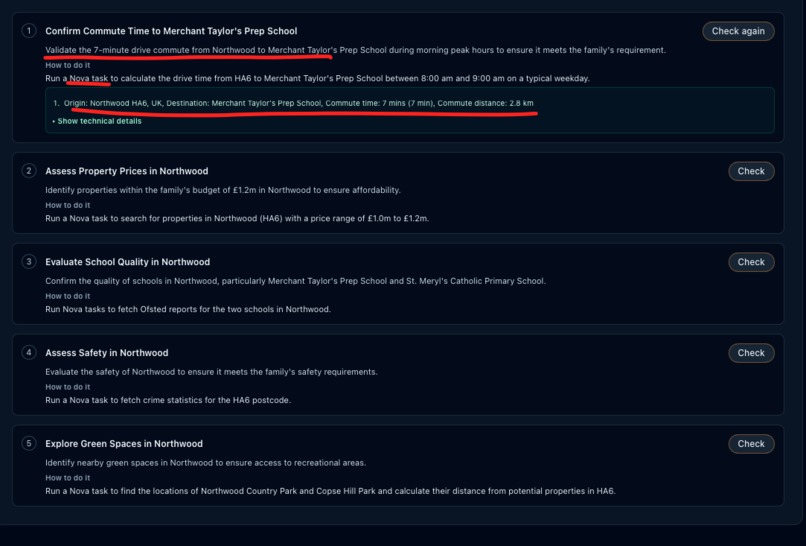
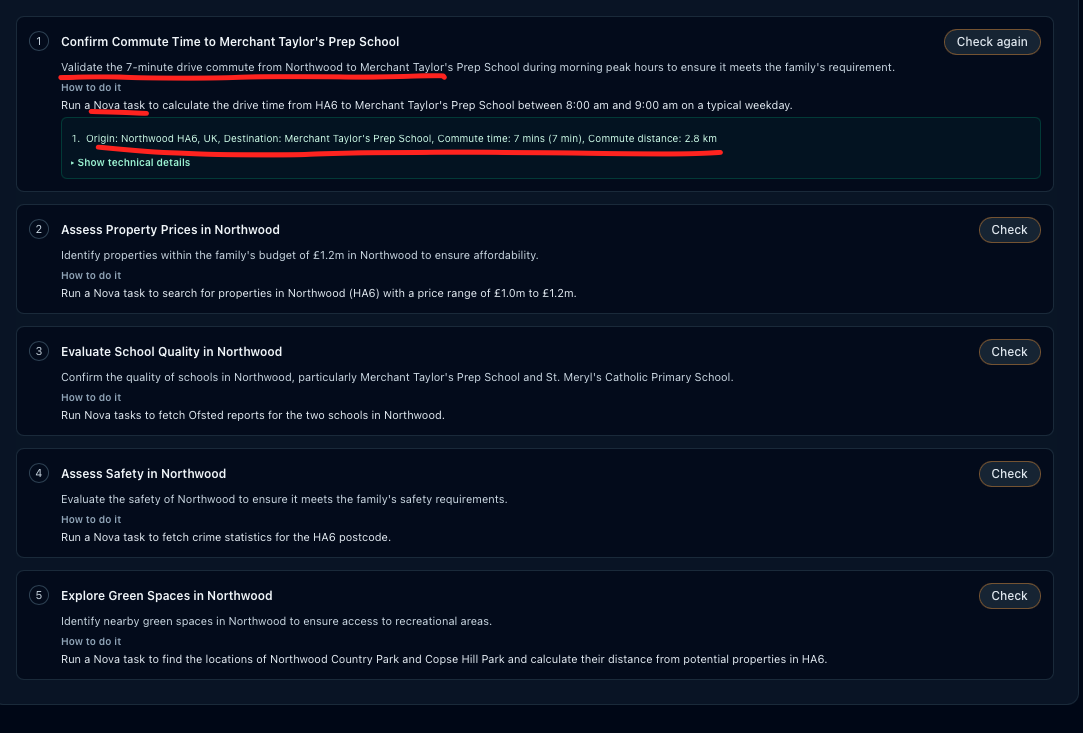
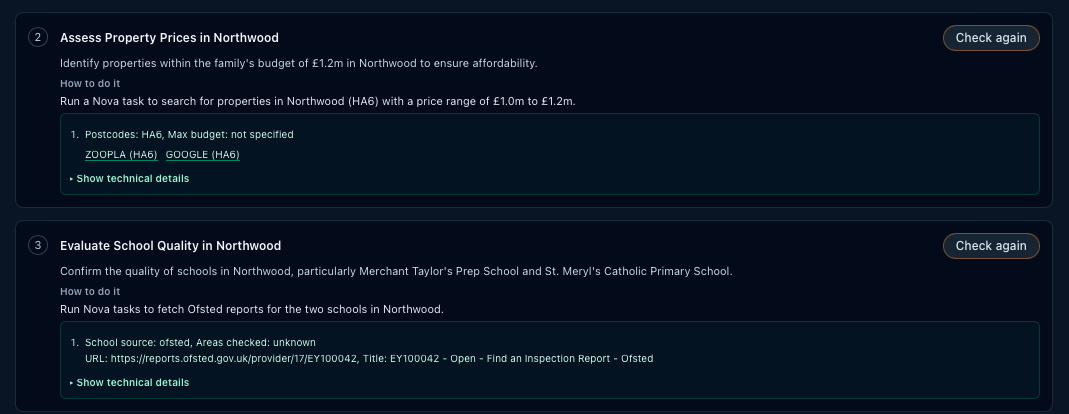
Nova Act commute workflow
-
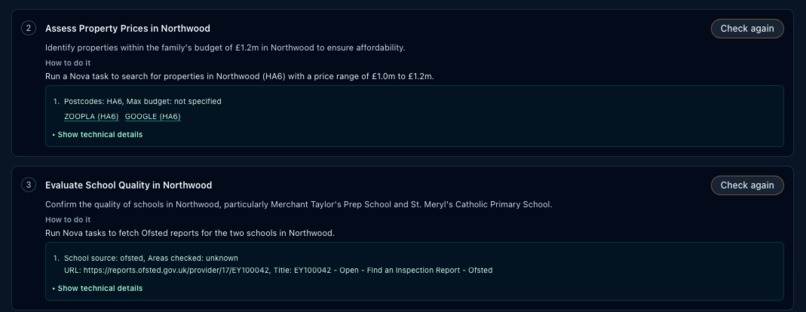
Nova act Property & School checker workflow
-
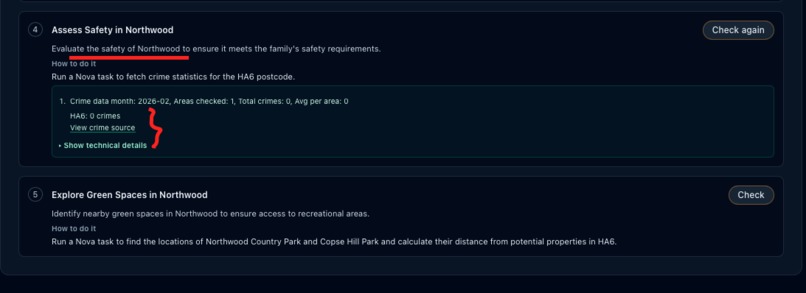
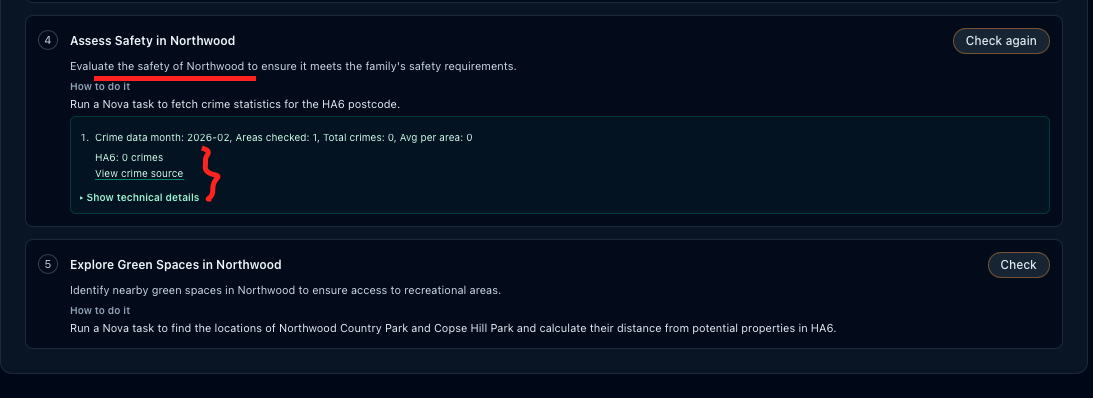
Nova act Safety workflow
-
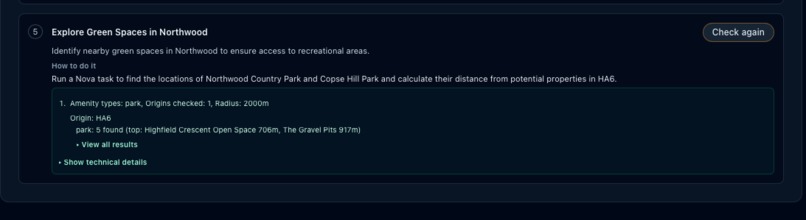
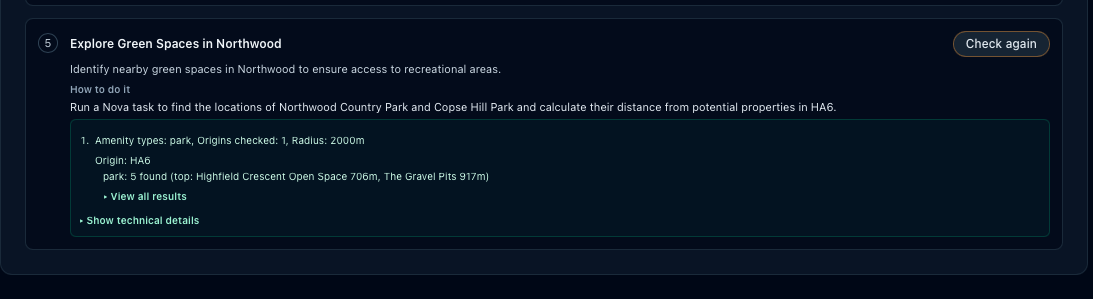
Nova act Green Space check workflow
-
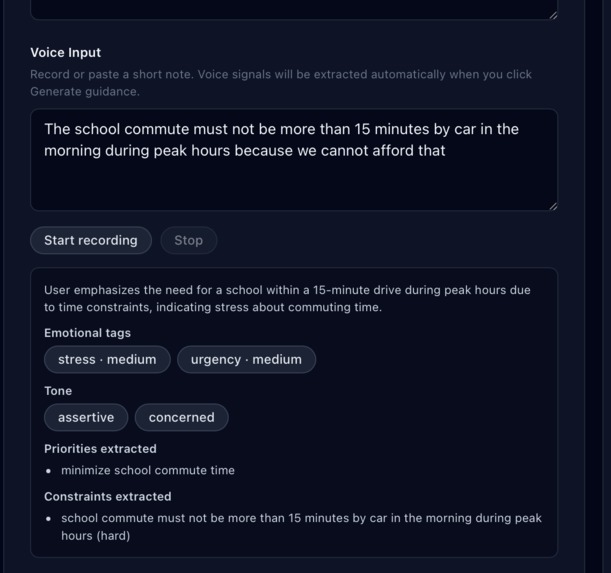
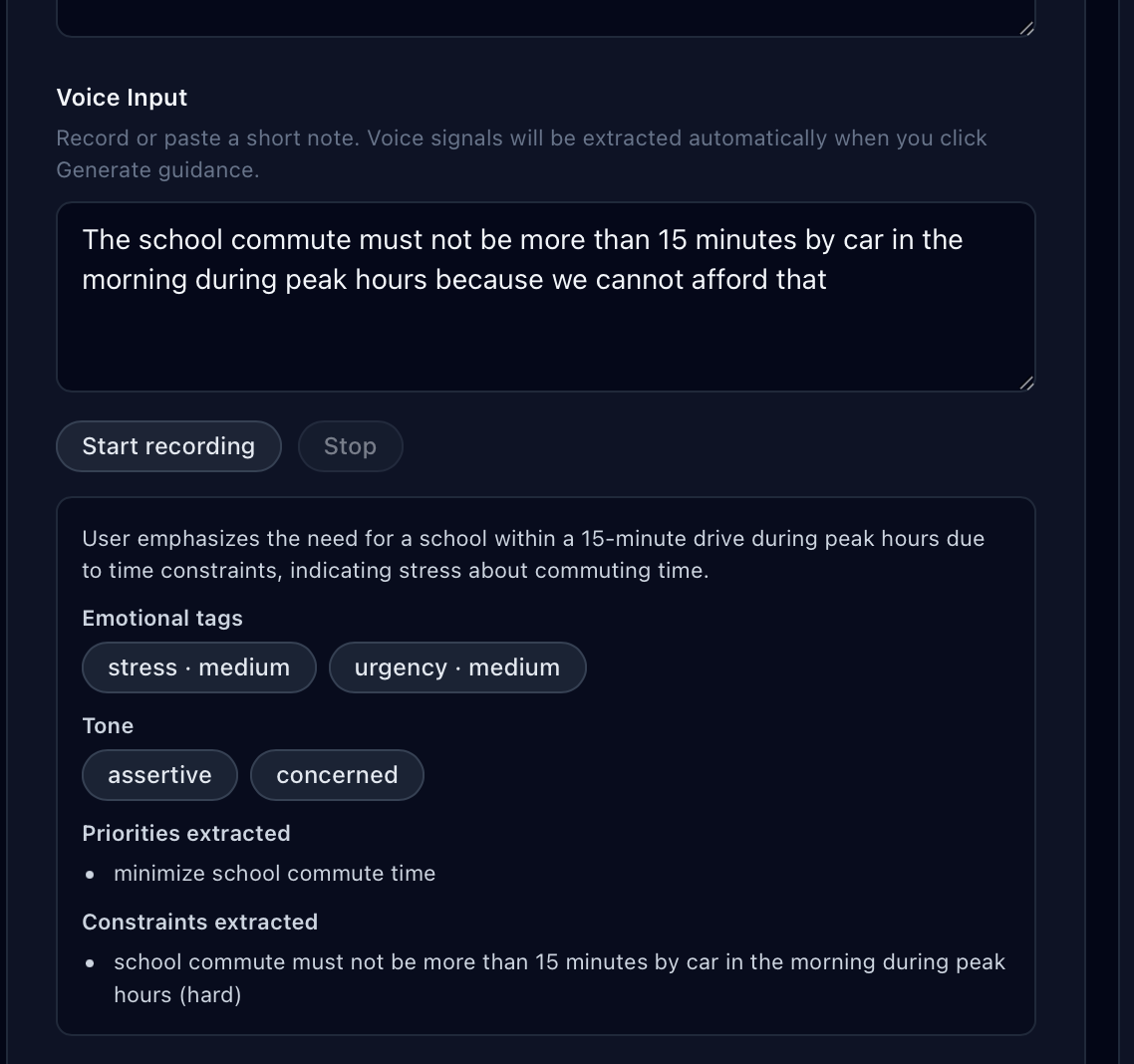
Voice Input Analyser
About the project
LifeNavigator started from a simple frustration: family decisions are rarely just “logical” or just “emotional.” Whether it’s schools, routines, finances or lifestyle questions, families need a way to think clearly together without losing what matters most to each person.
We wanted to build an AI native decision coach that turns uncertainty into a practical plan, without forcing users into rigid templates.
Inspiration
We were inspired by real family conversations that loop for weeks:
- too many options,
- lack of awareness,
- unclear priorities,
- conflicting emotions,
- and no shared framework for moving forward. Most tools either provide raw data or generic advice. We wanted something different - a system that combines structured analysis, emotional context and provides actionable next steps.
What it does
LifeNavigator is an AI powered decision coach for families facing complex choices. It helps users move from uncertainty to action by combining structured analysis with emotional clarity.
Core flow
- Collects family context, goals, constraints and priorities
- Lets users define and weight their own decision criteria
- Uses specialized AI agents to analyze options from different perspectives
- Generates clear scenarios, trade-offs, and recommendations
- Produces an action plan with practical next steps
Why it’s useful
- Adapts to any family decision (not limited to moving)
- Keeps the process transparent by showing how recommendations are formed
- Balances data-driven reasoning with emotional and values-based factors
- Turns “analysis paralysis” into confident, aligned decisions
How we built it
We designed LifeNavigator as a multi-agent architecture, where each agent has a focused role:
- Data Agent: gathers and organises evidence
- Emotional Agent: captures values, stressors, and risks
- Scenario Agent: generates decision paths and recommendations
- Action Agent: turns a selected path into an executable plan
On the product side, we built:
- a guided onboarding flow,
- a decision session for criteria and weighting,
- a result view with scenarios and insights,
- and an action-plan flow for next steps.
Under the hood, we have used a modular service layer so model providers and storage backends can evolve without rewriting the app.
Challenges we ran into
- Balancing logic and emotion without overfitting to either
- Prompt design consistency across specialised agents
- Schema discipline to keep agent outputs structured and composable
- Actionability gap: converting analysis into concrete, confidence-building steps
- Keeping v1 minimal while building for long-term extensibility
Accomplishments that we're proud of
- Built a working multi-agent decision coach with clear role separation (data, emotional insight, scenario generation and action planning).
- Created a decision experience that balances logic + emotion, helping families make choices that are both practical and personally aligned.
- Delivered an end-to-end flow from onboarding to recommendation to actionable next steps, not just analysis.
- Designed the system to be criteria-flexible so users can decide based on what matters most to them.
- Kept the architecture modular, making it easy to swap model providers, tune prompts and extend storage in future iterations.
What we learned
- Clear role separation between agents improves reliability and explainability.
- Users trust recommendations more when they can see why a result appeared.
- Emotional context is not a “nice-to-have”, it changes decisions in meaningful ways.
- Building with modular interfaces early makes experimentation dramatically faster.
What's next for Life Navigator
- Upgrade voice input from speech-to-text + NLP to true audio-level emotional analysis to process tone, pitch and cadence directly using Nova's multi-modal audio capabilities for richer emotional signal extraction.
- Expand support for more family decision types with reusable templates and guided question flows.
- Improve recommendation quality with stronger scoring calibration, feedback loops and scenario diversity.
- Integrate richer automations for action-plan execution and progress tracking.
- Move from in-memory storage to production-grade persistence and add lightweight authentication for multi-user journeys.
Built With
- amazon-nova
- amazon-web-services
- google-maps
- next.js
- nova-act-workflows
- react
- tailwind
- typescript

Log in or sign up for Devpost to join the conversation.