-
-
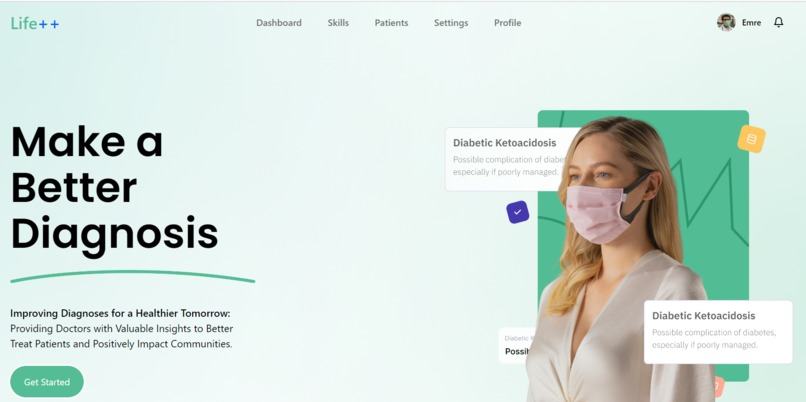
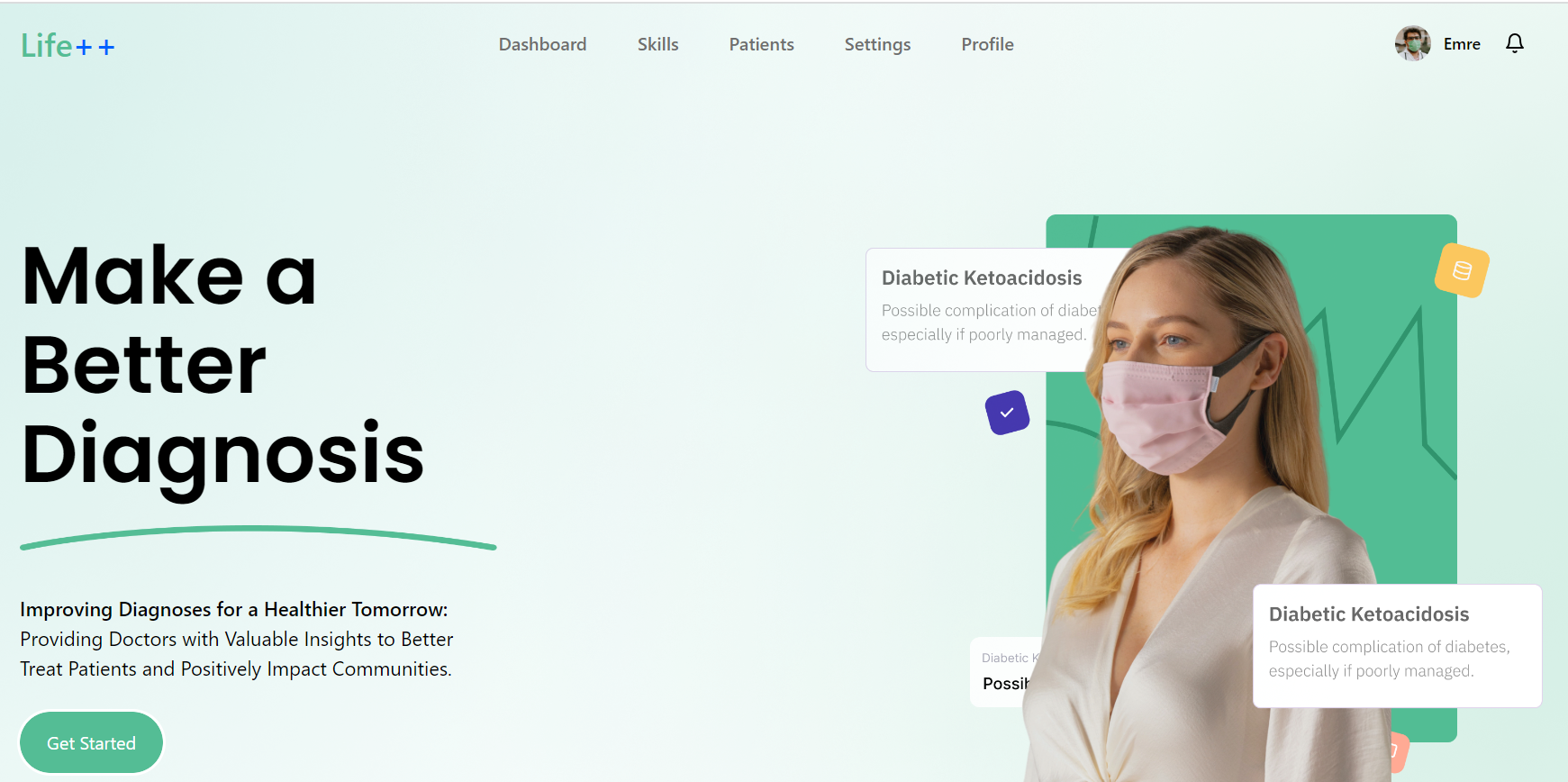
Life++ Homepage
-
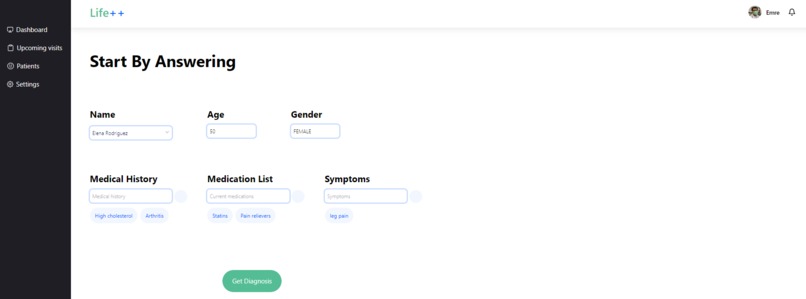
Filling up the details of patient
-
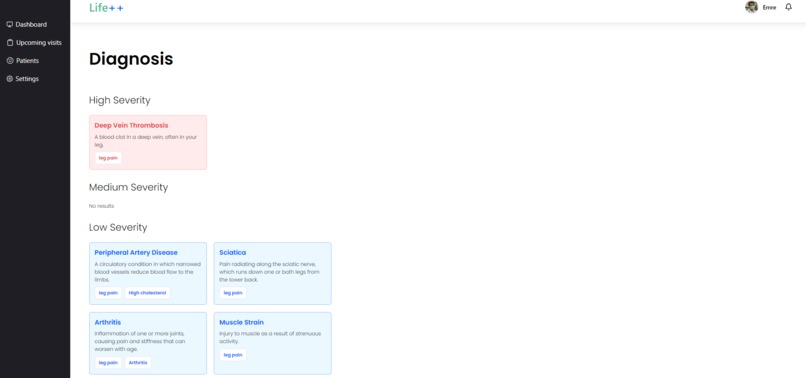
Diagnosis
Inspiration
After a lively discussion within the team, each member contributed a unique and valuable idea for our project. However, a significant moment occurred when one team member shared a personal experience of losing a family member to misdiagnosis. Upon understanding the project's purpose, an unspoken decision rippled through the team, leading everyone to willingly set aside their ideas in favor of a shared commitment to address the real-world impact of misdiagnosis. This collective shift exemplifies our team's ability to prioritize a meaningful cause over individual contributions, uniting us in a purpose-driven endeavor.
What it does
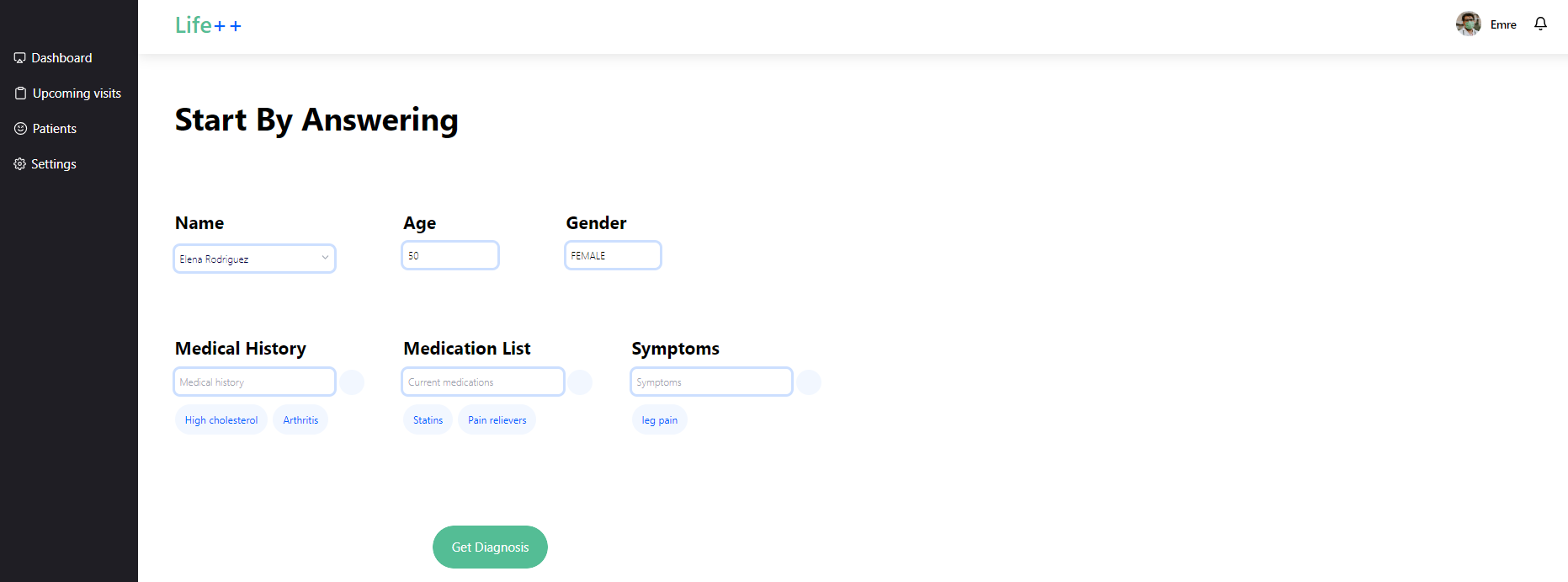
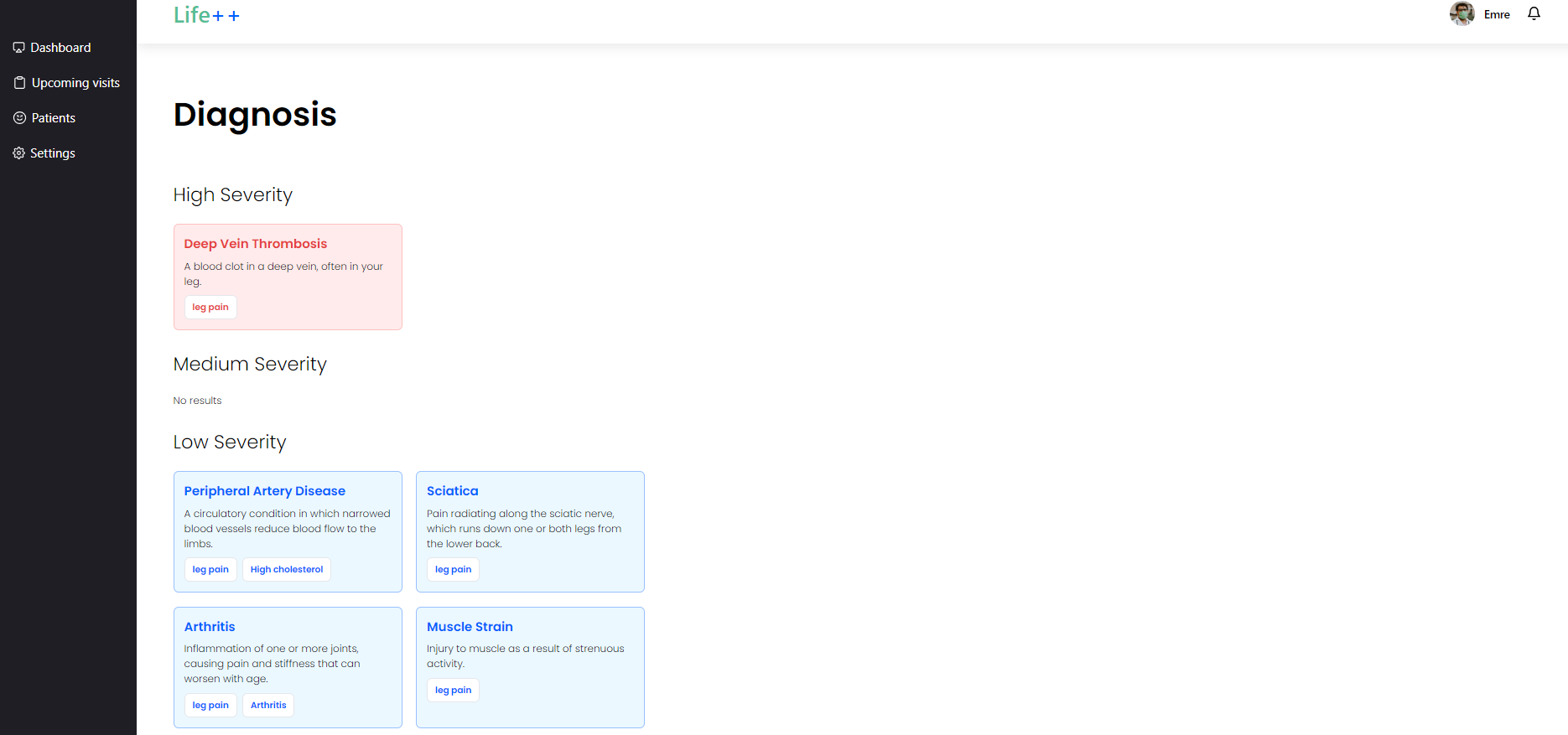
The system acts as an assistant system to healthcare workers such as auxiliary nurse midwife or health assistant who works in the remote part of the world and are the first and only point of contact for patients. The system takes the patients’ details provided by the healthcare workers as input and provides a list of diseases that the patients are likely to have based on the risk factors: high, mid, and low. Based on the information, the healthcare worker can make informative decisions, whether to treat the patient further by themselves or send them to the nearest hospital with better technologies and equipment.
How we built it
The system has been developed using the following technologies:
- front-end: React & Tailwind CSS
- backend: Node.js
- Deployed on: AWS
- CI/CD: Github Action
- IAC: Terraform
- Version Control: GitHub
- AI API: GPT4
- Project management: Notion
- Communication: Discord
Using the above-mentioned technologies we initiated the development in the following fashion:
- Set up the infrastructure for faster development and testing along with the idea to avoid any merge conflicts in the future.
- After that we started researching about the feasibility of the idea.
- The tasks associated with the front-end, back-end, and prompt-engineering are initiated parallelly.
- After completion of each task on each domain the the tasks were deployed in production, and the whole team sat together to evaluate.
- Step 4 has been repeated until the MVP gets ready.
Challenges we ran into
- Establishing trust in the team within a short period of time
- ‘hotdog/not hotdog’ problem
- Working with a new technology
Accomplishments that we're proud of
- The team as a whole has developed a working MVP in a very short period of time.
- Created long-lasting relationships and beautiful memories
What we learned
- Teamwork / Collaboration
- New technologies
- Medical terminologies
What's next for Life++
- Open Source Initiative: Consider transforming Life++ into an open-source initiative. This move could attract contributors globally, fostering collaboration to enhance and tailor the system for various healthcare contexts.
- Expand On-Site Functionality: Extend the system's capabilities to allow healthcare providers to store and manage patient data securely. This expansion would contribute to building a comprehensive healthcare infrastructure.
- Global Impact: Aim to extend the reach of Life++ to benefit healthcare systems in multiple developing nations. Collaborate with local healthcare authorities to tailor the system to specific regional needs.
Built With
- amazon-web-services
- discord
- githubactions
- mongodb
- node.js
- notion
- openaiapi
- react
- terraform
- vite


Log in or sign up for Devpost to join the conversation.