-
-
-
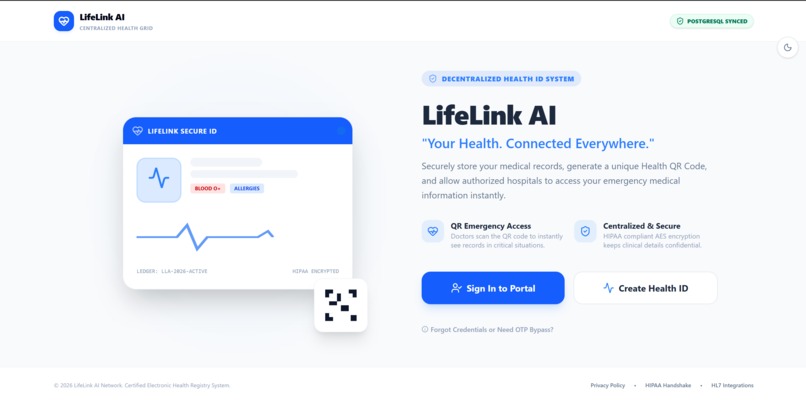
home page
-
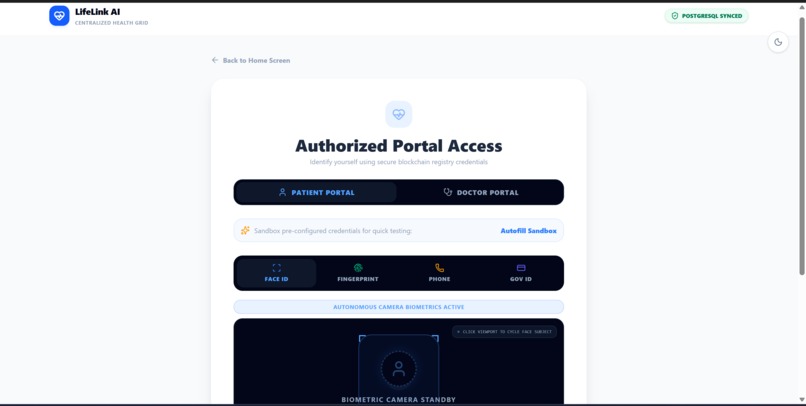
login page
-
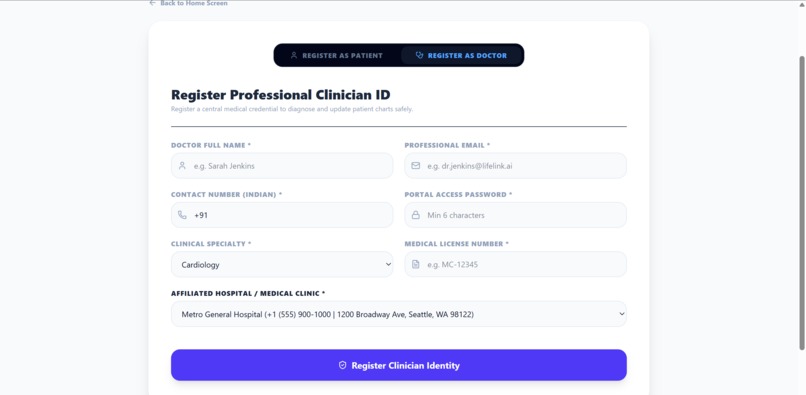
create id page
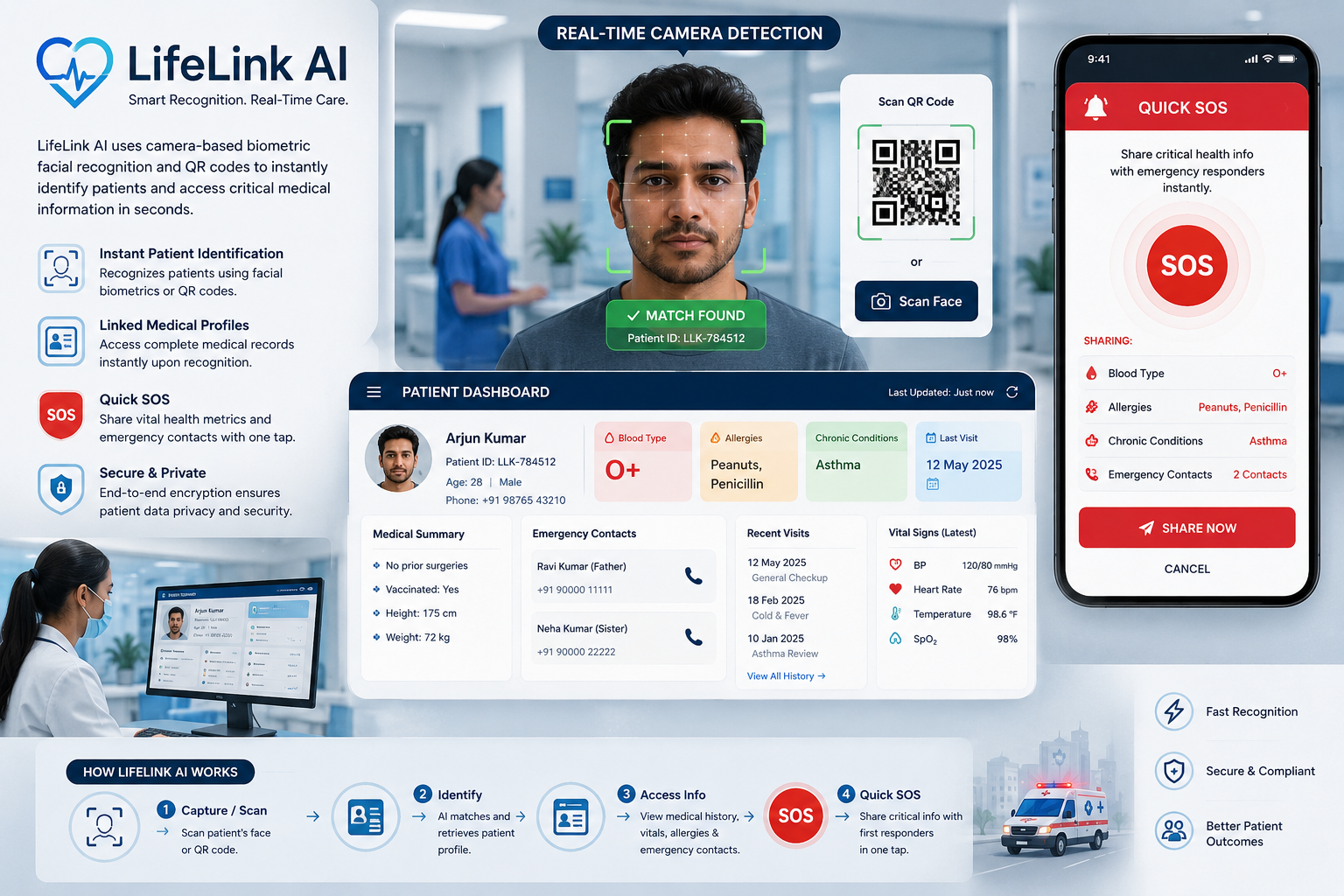
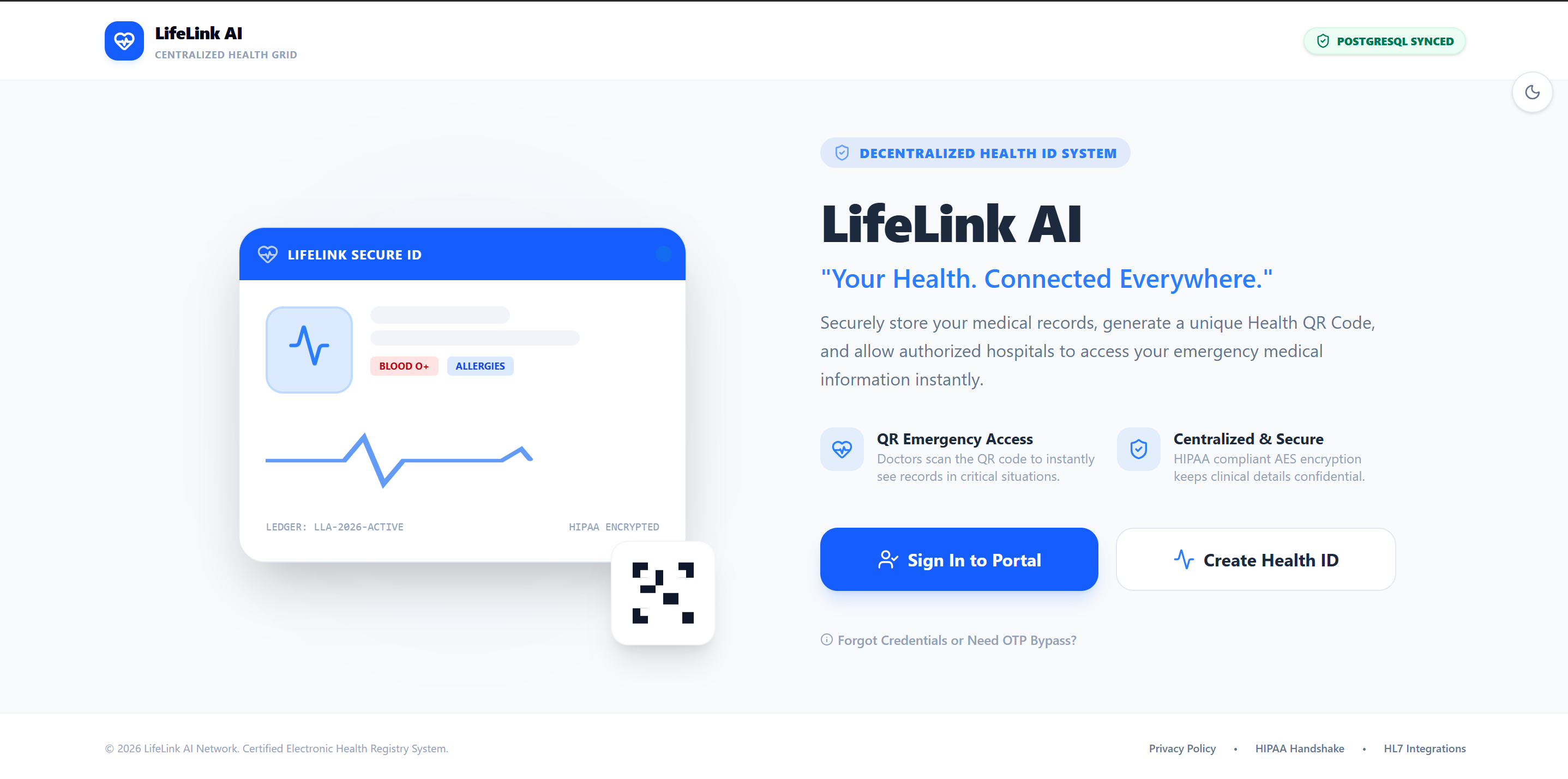
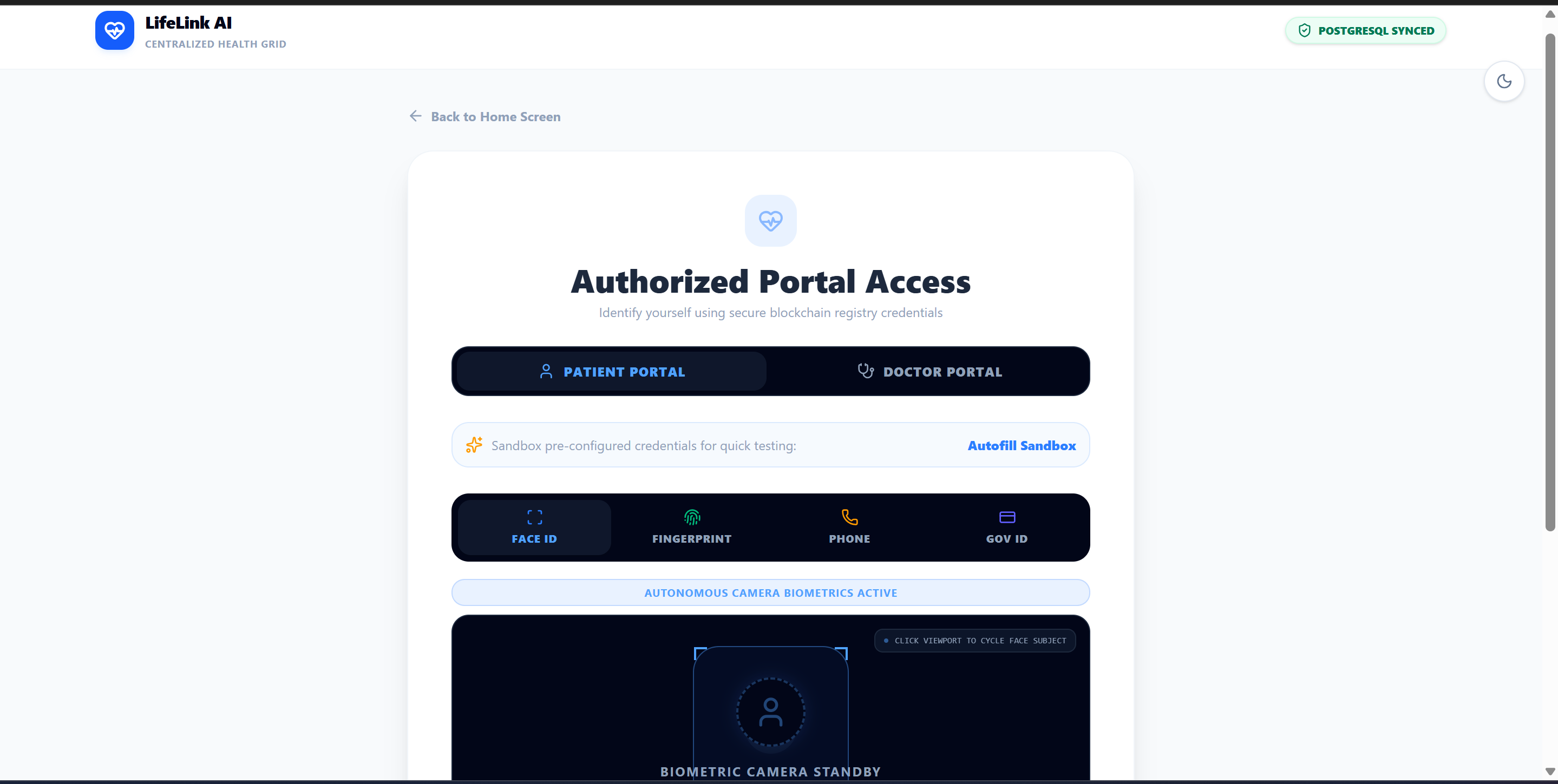
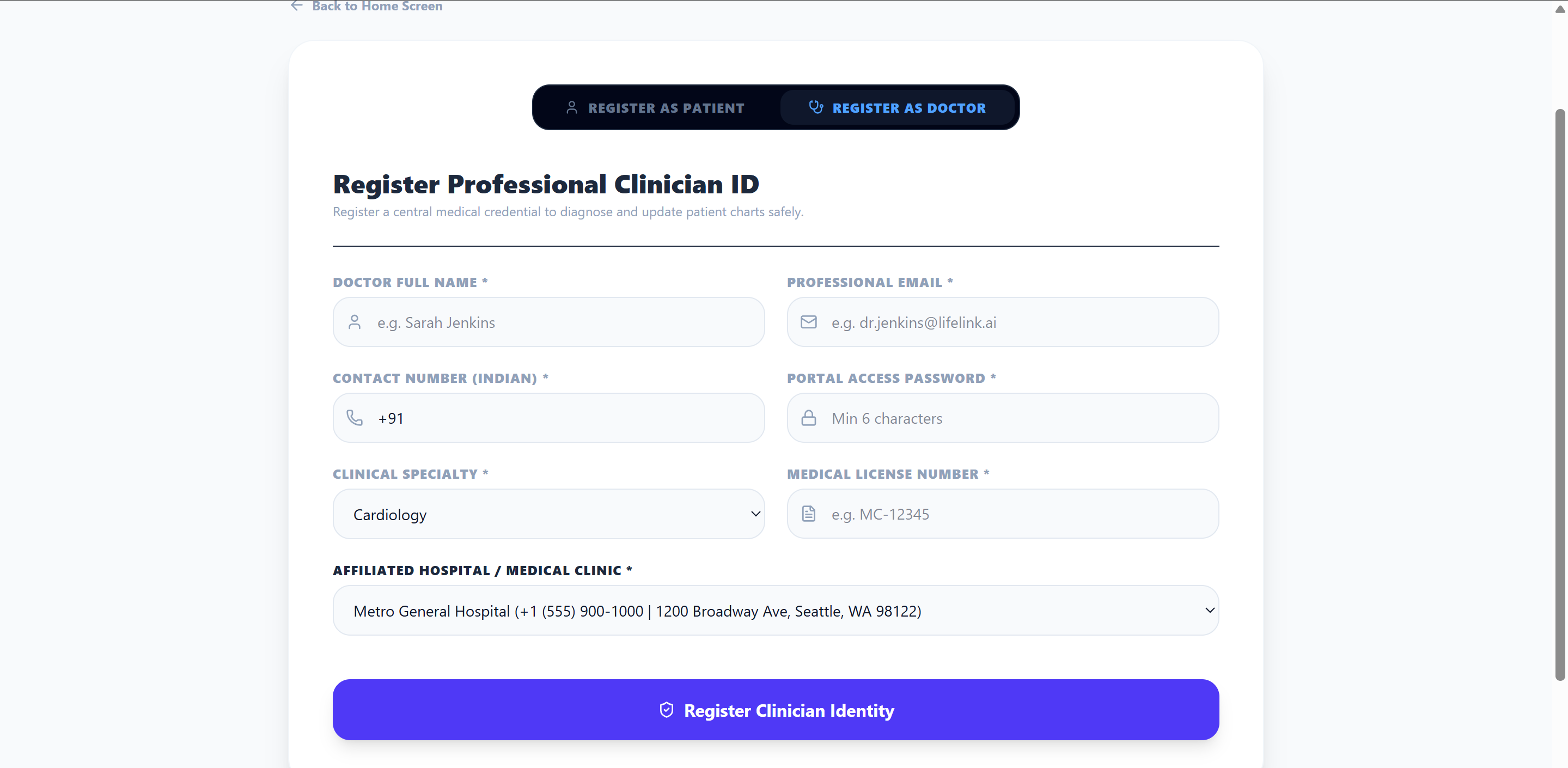
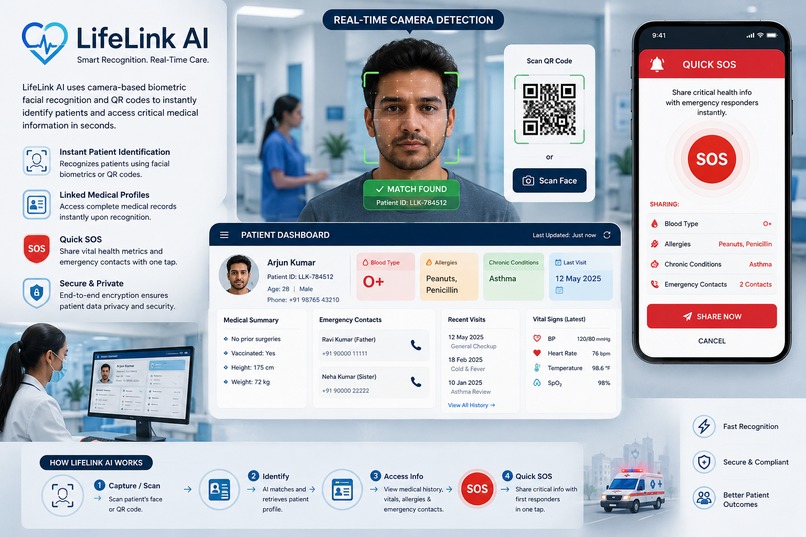
Inspiration Every second counts in medical emergencies. Emergency responders and ER clinicians often face severe hurdles—unconscious patients without identification, missing medical histories, unknown severe allergies, or unrecorded chronic conditions. Administering the wrong medication or delaying treatment due to fragmented hospital records can lead to tragic, preventable outcomes. We created LifeLink AI to bridge this life-saving gap. By unifying biometric identification, encrypted QR health passes, and generative AI triage into a single Centralized Health Grid, LifeLink AI empowers first responders and healthcare providers to make instant, informed, and error-free clinical decisions in critical moments. What it does LifeLink AI is an all-in-one Centralized Health Network and Emergency Response System that links Patients, Doctors, Hospitals, and System Administrators: Encrypted QR Health Passport & Quick SOS: Patients carry a secure, encrypted QR code. In an emergency, first responders scan the code (or patients click the Quick SOS button) to instantly reveal critical baseline data—blood group, severe allergies, active medications, emergency contacts, and insurance details. Biometric Identification: Supports instant Face ID and fingerprint template scanning to identify unconscious or unidentified patients arriving at emergency rooms. Gemini AI Emergency Assessment: Upon QR scan or intake, Gemini 3.5 Flash analyzes the patient's full medical history and generates an immediate, structured clinical summary, high-priority alert flags, recommended urgent diagnostic tests (e.g., EKG, Troponin, CT scan), and step-by-step stabilization guidelines for clinicians. Real-Time AI Drug Interaction Checker: When doctors prescribe new medications, the AI checks proposed drugs against the patient’s active medication history to flag contraindications, assess severity levels, explain physiological risks, and suggest safe alternative medications. Multi-Persona Portals: Patient Dashboard: View medical timeline, digital health card, emergency contacts, prescription history, and book doctor appointments. Doctor Dashboard: Search patient records, scan QR passes, write diagnoses, run AI drug checks, and log clinical encounters. Hospital Dashboard: Manage ER patient intakes, bed allocations, doctor rosters, and emergency admissions. Admin Panel: Real-time system analytics, HIPAA audit logs, QR scan trails, and database backup/restore capabilities. How we built it Frontend Architecture: Built with React 19, TypeScript, Vite, Tailwind CSS v4, Motion (smooth layout animations), Recharts (health analytics charts), and Lucide React icons. Backend & REST APIs: Powered by an Express.js Node.js server handling unified authentication, role-based access control, biometric verification, and data encryption. AI Intelligence: Integrated the official @google/genai SDK utilizing Gemini 3.5 Flash with strict responseSchema JSON formatting to deliver deterministic, hallucination-free clinical assessments and pharmacology checks. Data Security & Encrypted Payloads: Implemented secure symmetric payload encryption for patient QR codes, full audit logging for every scan and record modification, and fail-safe local medical heuristics to ensure emergency access is never blocked even during network disruptions. Challenges we ran into Ensuring Zero-Hallucination AI in Emergency Contexts: Medical triage requires extreme precision. We solved this by using Gemini's structured JSON schemas (responseSchema), constraining the AI to return exact, standardized arrays for critical alerts, required tests, and stabilization steps. Balancing Patient Privacy with Instant Emergency Access: Securing sensitive HIPAA-regulated patient records while enabling 1-click first-responder access required designing encrypted QR payloads paired with granular audit trails logging who accessed what record, when, and where. Multi-Role Synchronization: Building four seamless, distinct dashboard personas (Patient, Doctor, Hospital, Admin) that operate off a synchronized central data grid with real-time audit logging and message dispatching. Accomplishments that we're proud of 1-Second Emergency Triage: Achieving sub-second decryption from a scanned QR pass directly into a comprehensive Gemini AI clinical risk report. Proactive Medication Safety: Building a real-time drug interaction engine that actively prevents adverse drug events before a doctor submits a prescription. Biometric First Responder Intake: Enabling Face ID and fingerprint recognition workflows so ER staff can identify patients when verbal communication is impossible. Robust Enterprise Features: Delivering a complete full-stack solution featuring real-time health grid monitoring, audit trails, automated SMS/email alerts, and 1-click database backup and restoration. What we learned How to leverage structured AI generation with Gemini 3.5 Flash to convert unstructured clinical histories into actionable, emergency-room-ready intelligence. The importance of designing high-contrast, accessible healthcare user interfaces tailored for high-stress emergency conditions. How to structure full-stack TypeScript applications with strict separation of client-side state, server-side encryption, and AI API proxies. What's next for LifeLink AI Ambulance Telemetry Integration: Syncing real-time vital signs (heart rate, SpO2, blood pressure) from pre-hospital transport directly to the receiving hospital ER. Wearable Device Connectivity: Integrating with Apple HealthKit, Fitbit, and Garmin to monitor continuous cardiac rhythms and trigger automated SOS alerts upon fall detection or irregular spikes. FHIR & HL7 International Standards: Expanding API endpoints to seamlessly interface with global Electronic Health Record (EHR) platforms like Epic and Cerner. Multilingual Voice-Guided Triage: Adding voice-enabled AI translation so international first responders can receive spoken emergency guidance in any language.

Log in or sign up for Devpost to join the conversation.