-
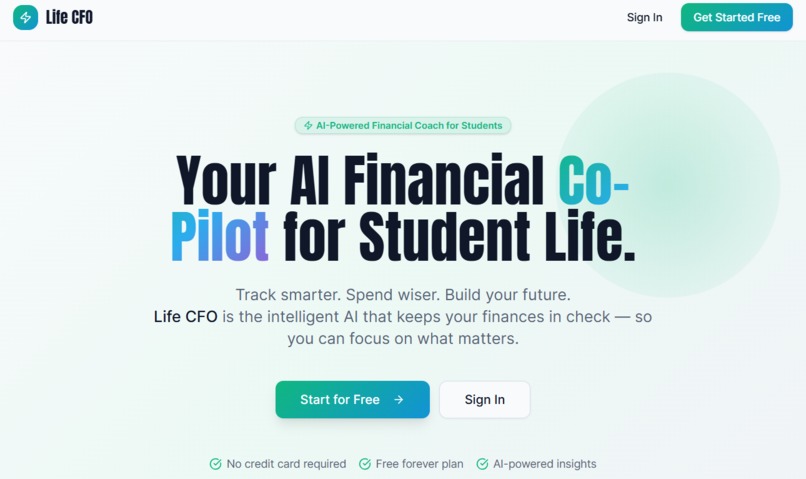
Home Page
-
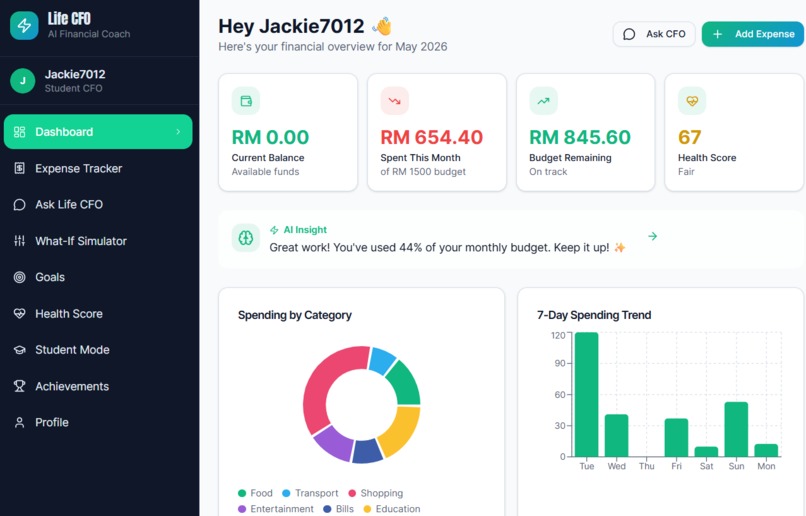
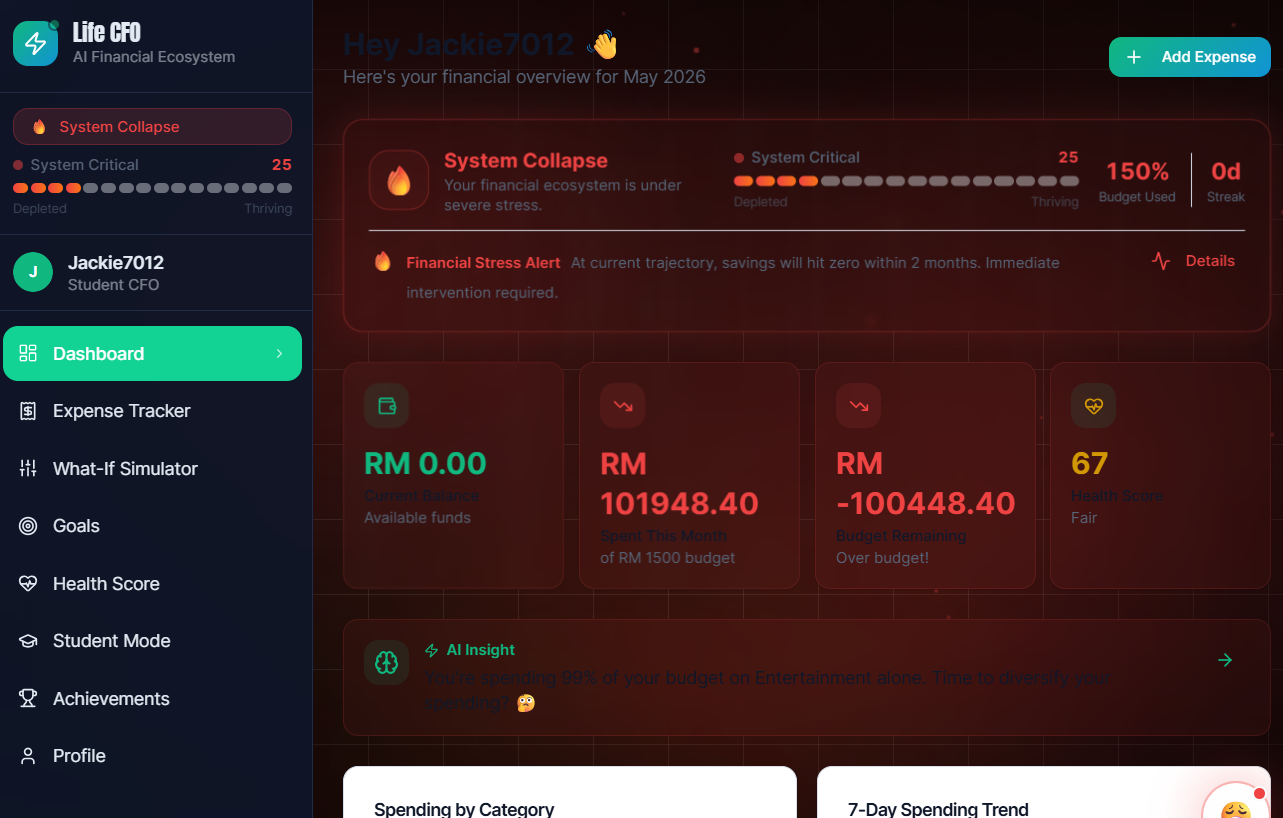
User Dashboard
-
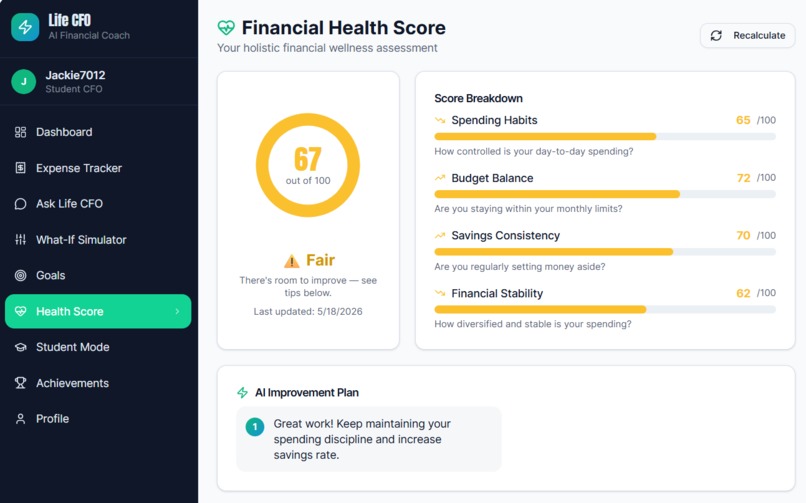
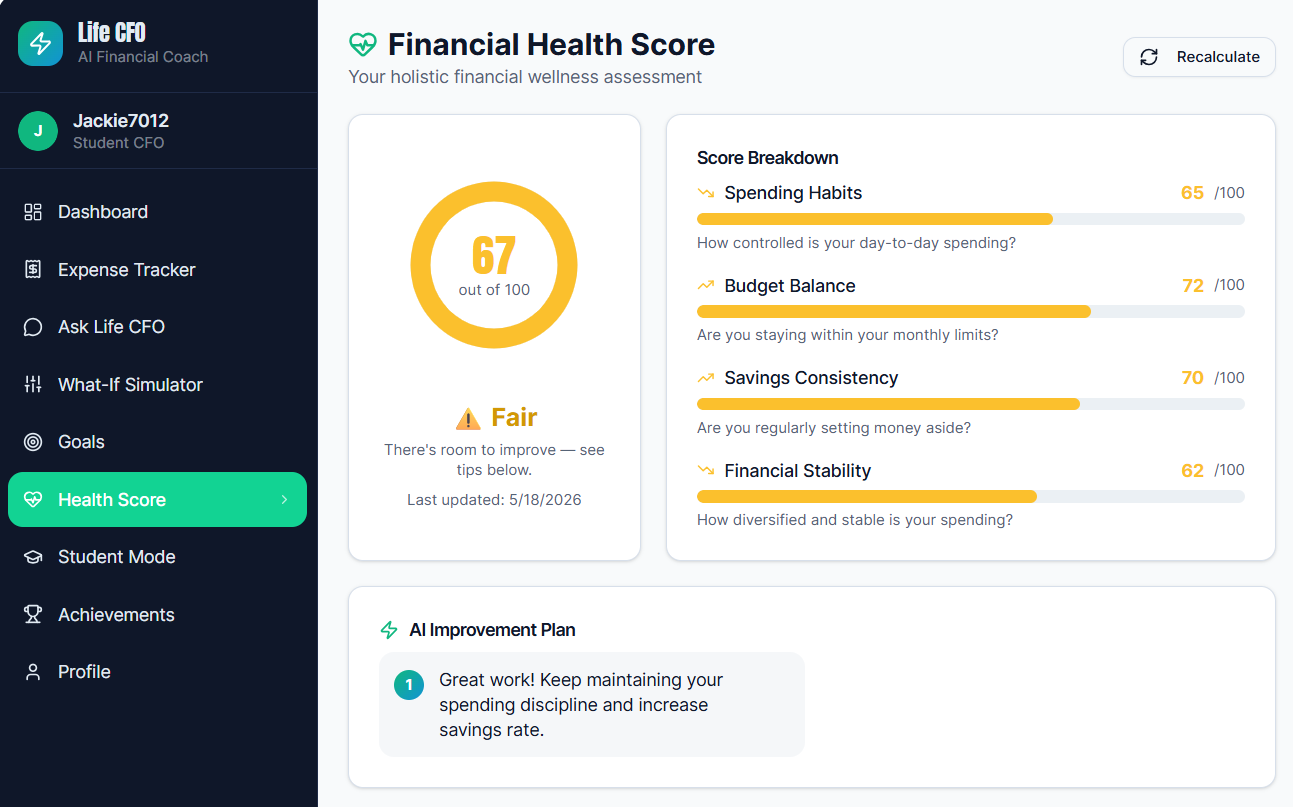
Financial Score
-
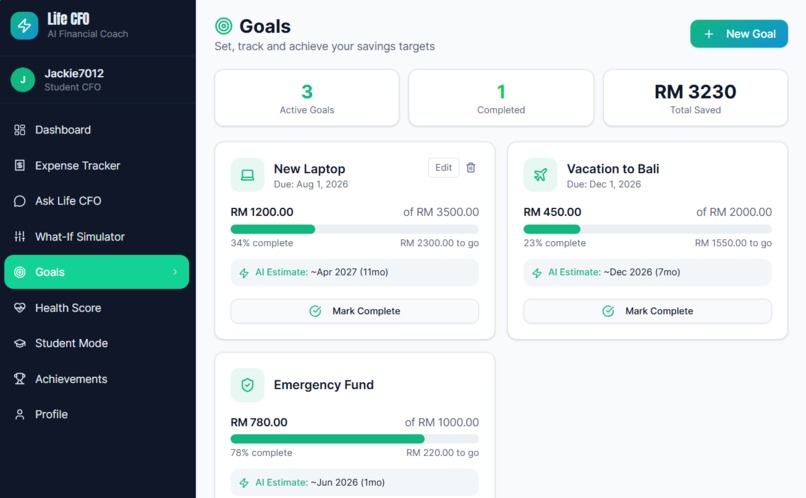
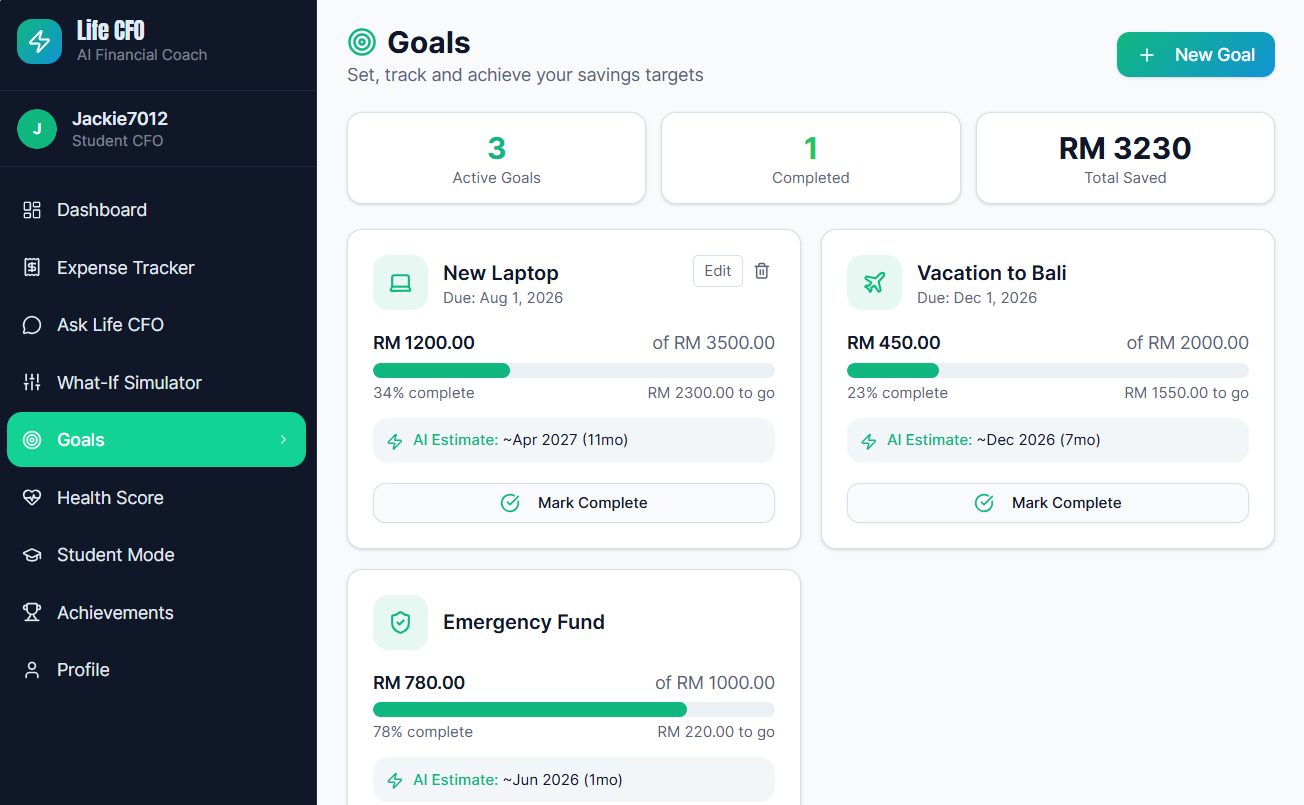
Goals page
-
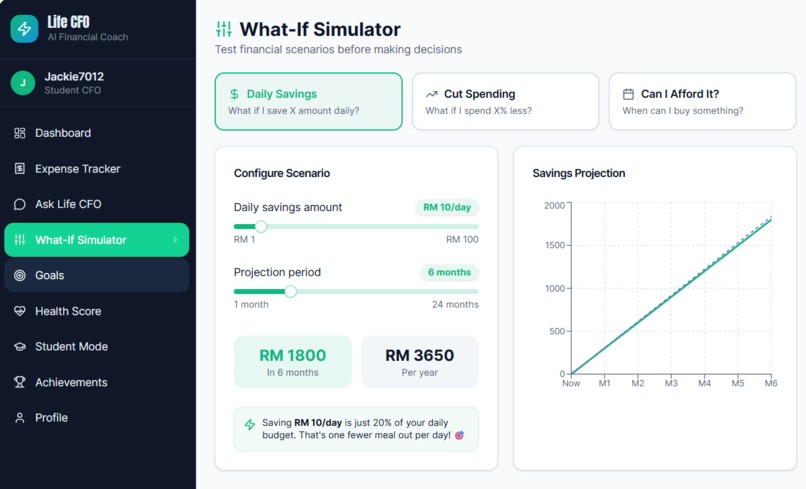
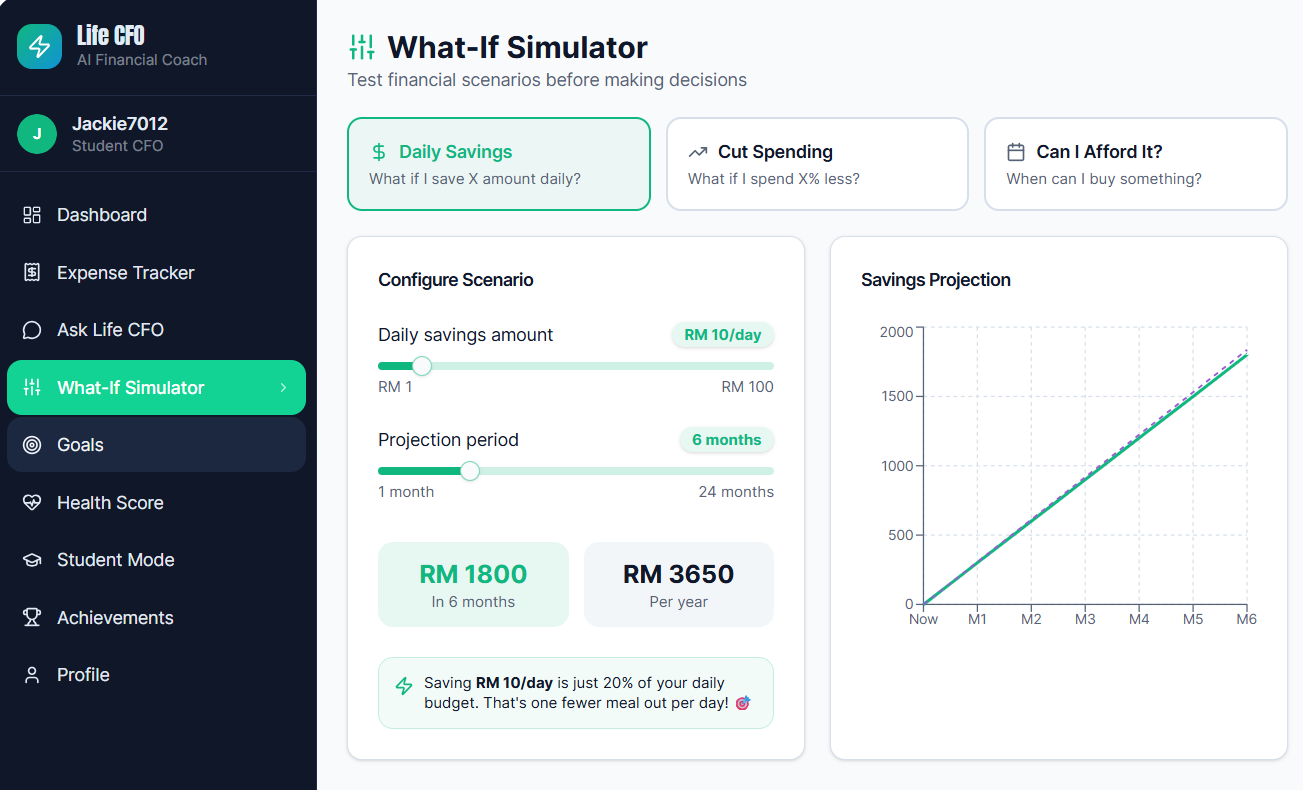
What-if Simulator?
-
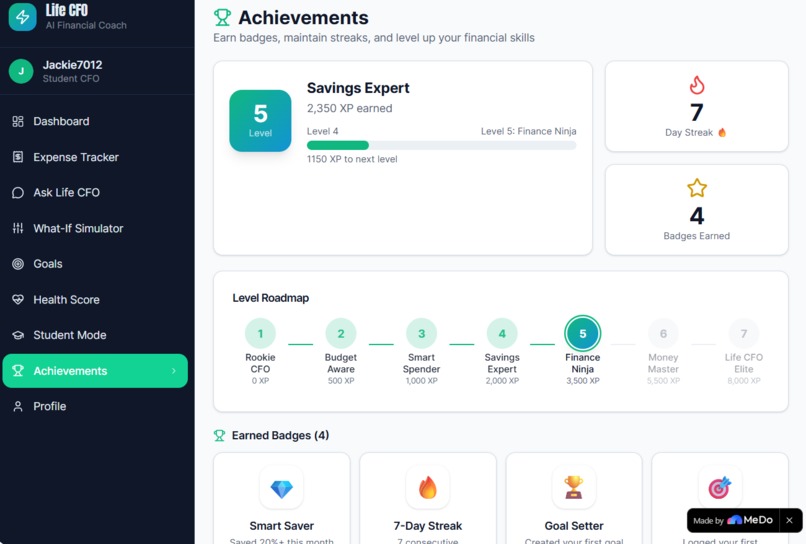
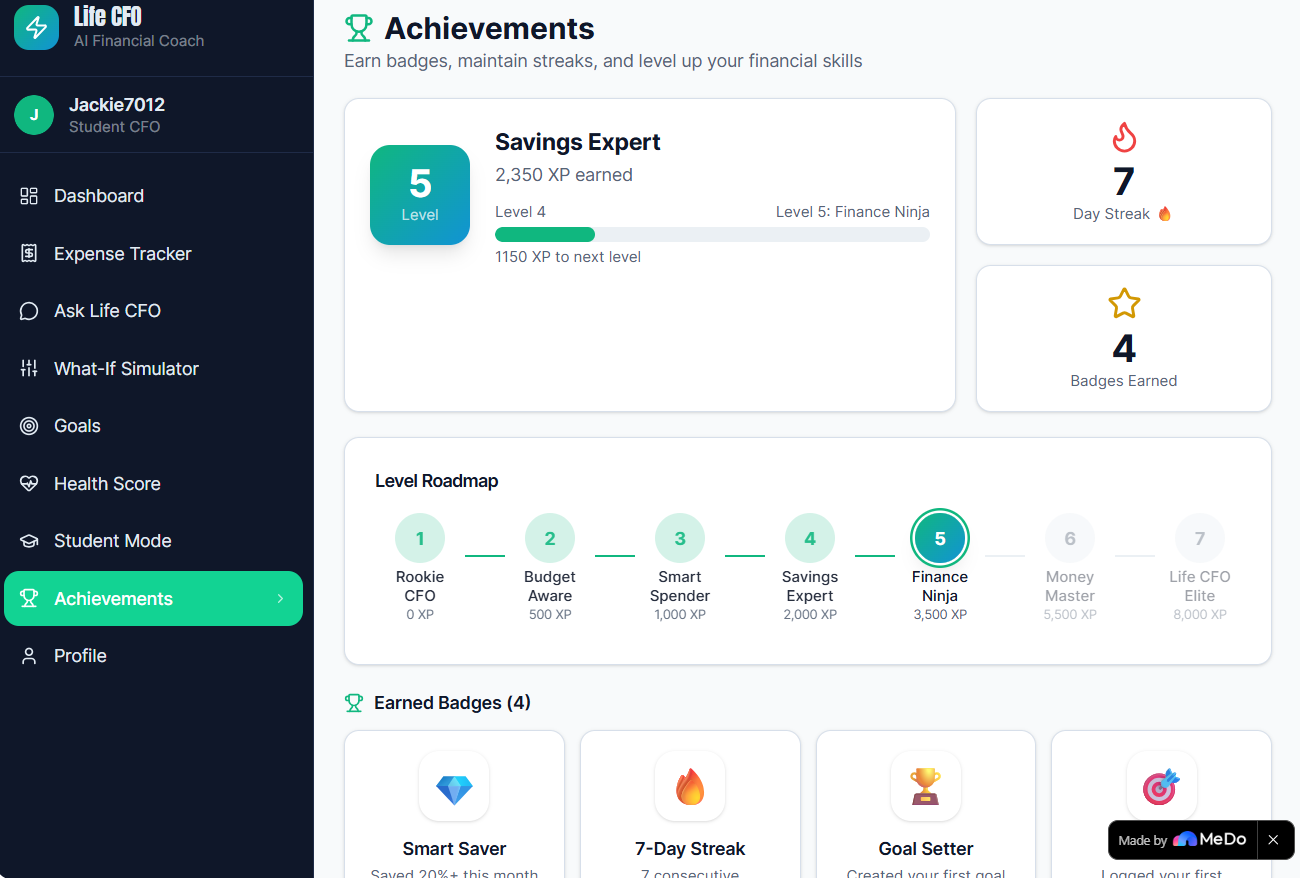
Achievements
-
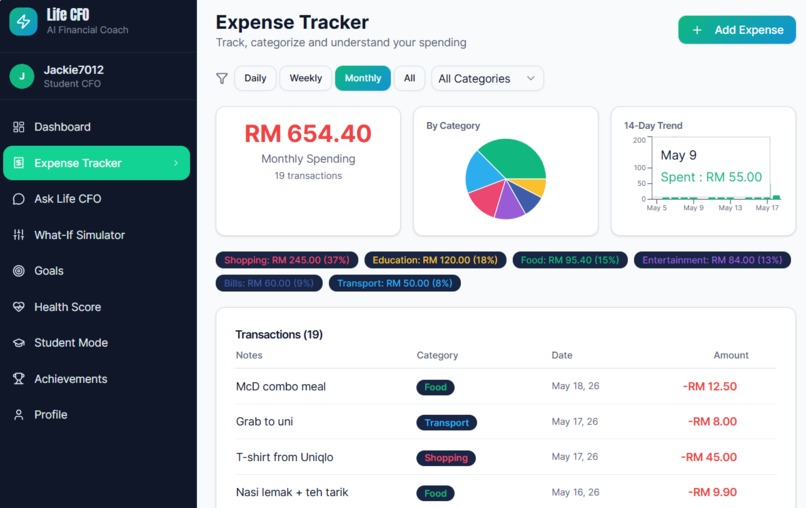
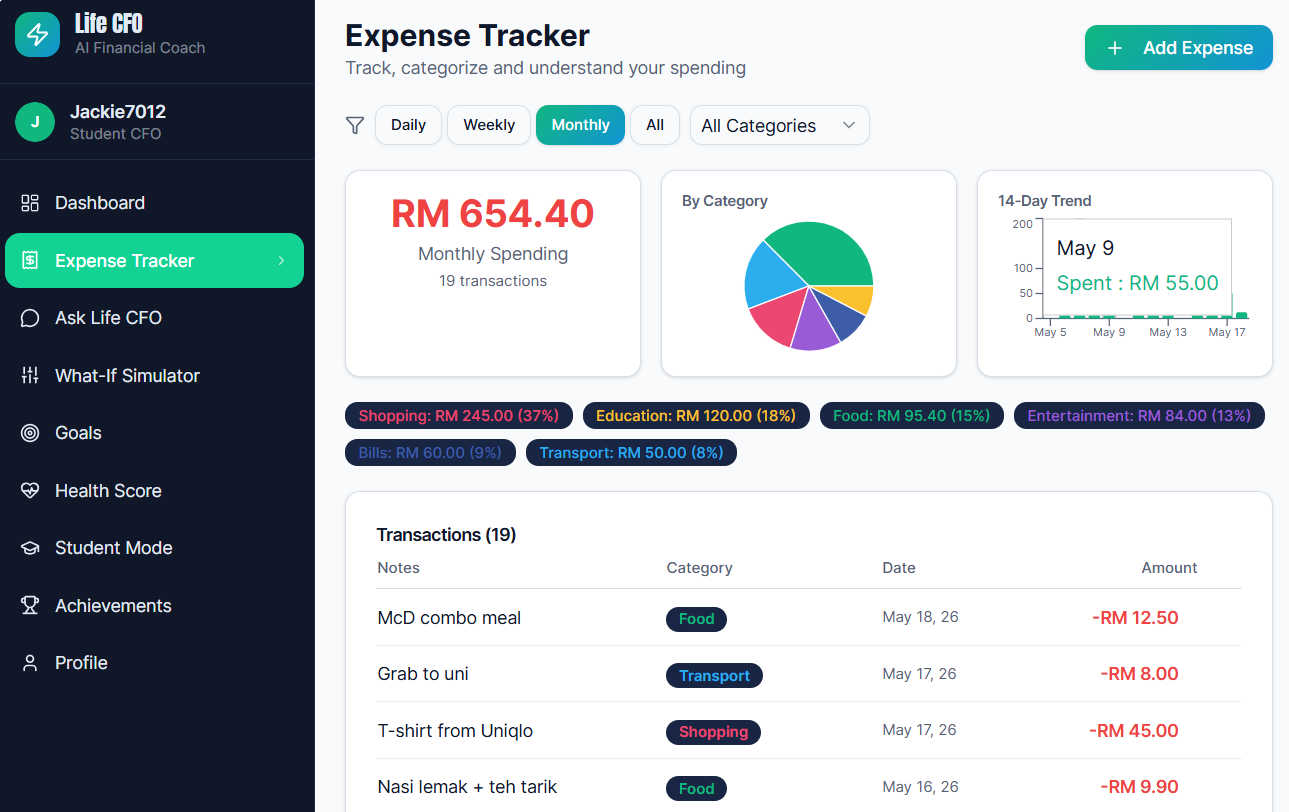
Expense Tracker
-
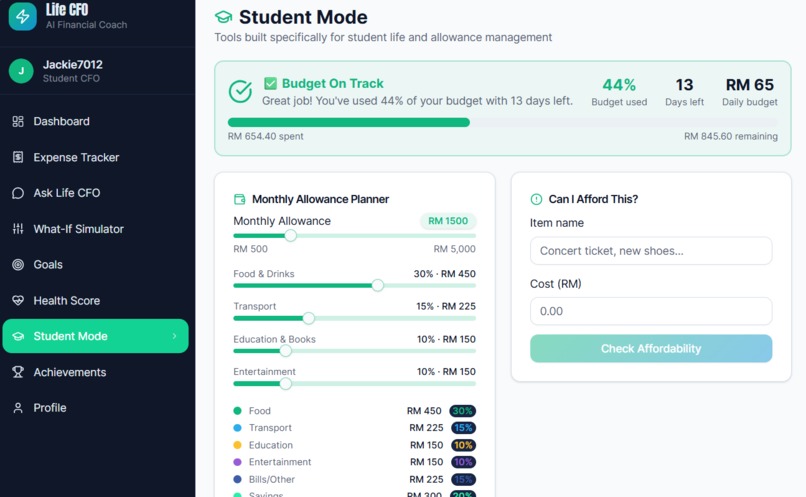
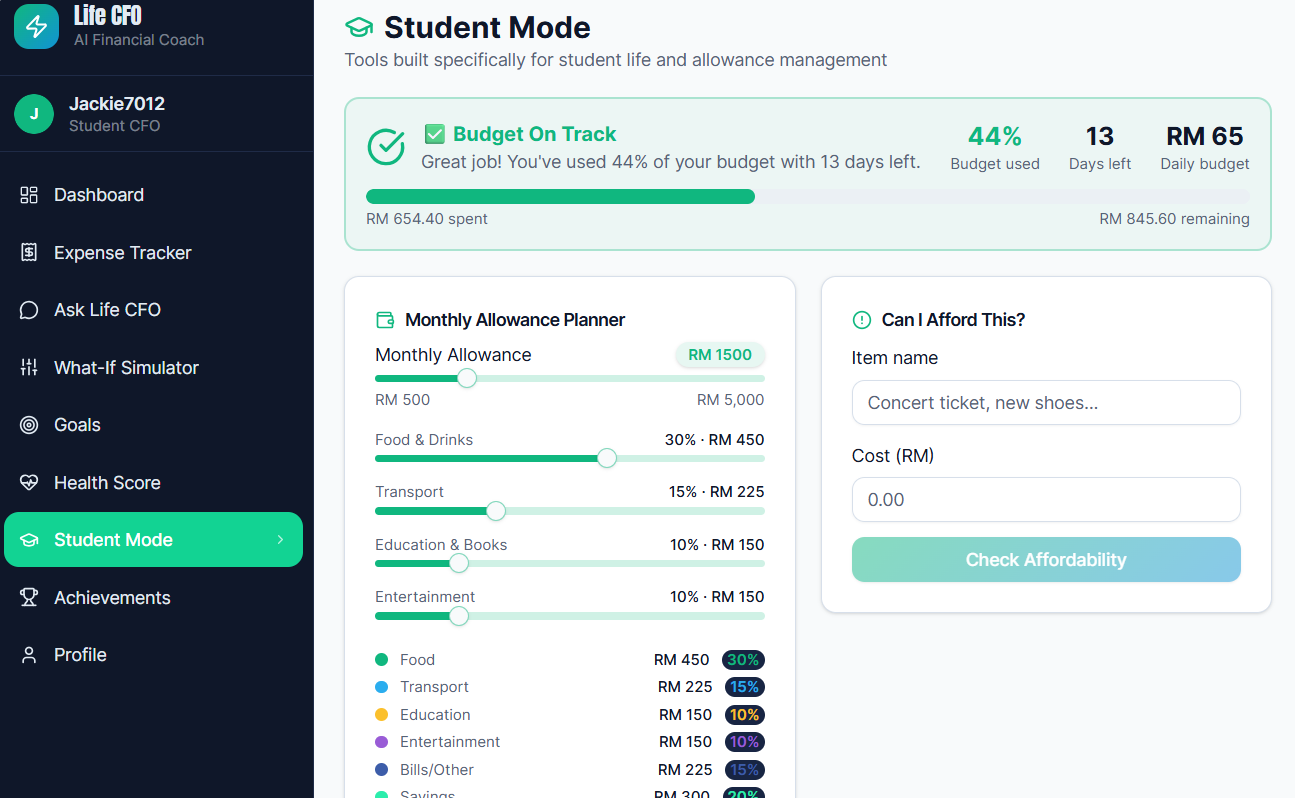
Student Mode
-
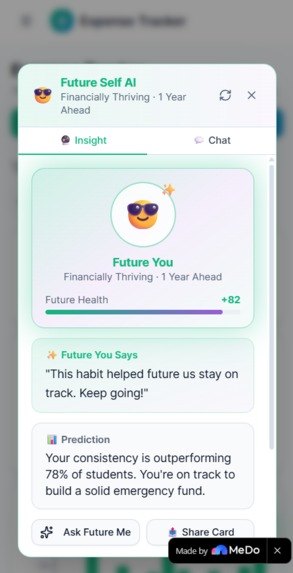
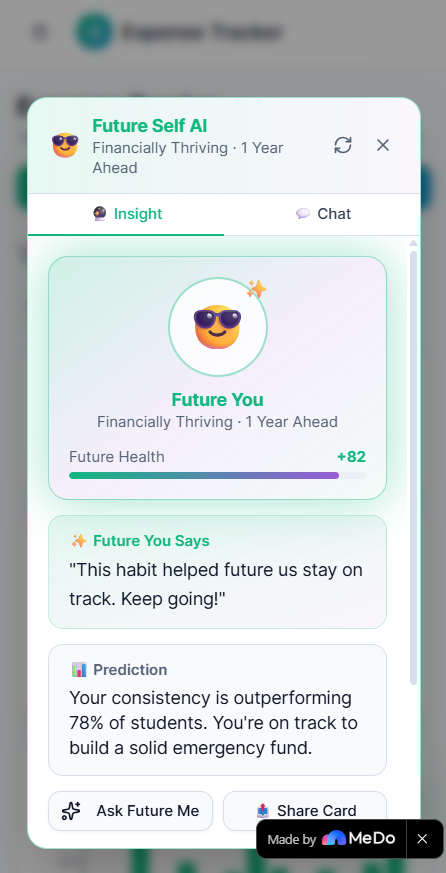
Future Self AI that will pop up and judge your decision every time you make an action
-
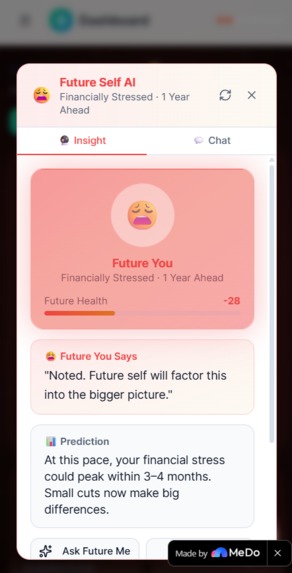
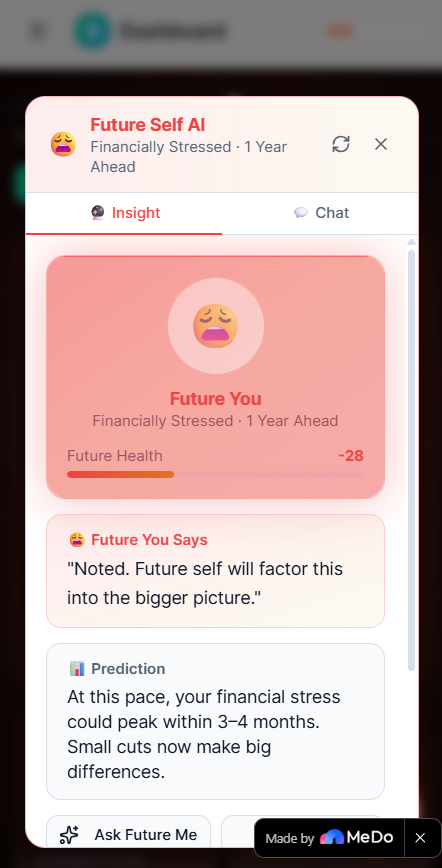
Stress mode Future Self AI
-
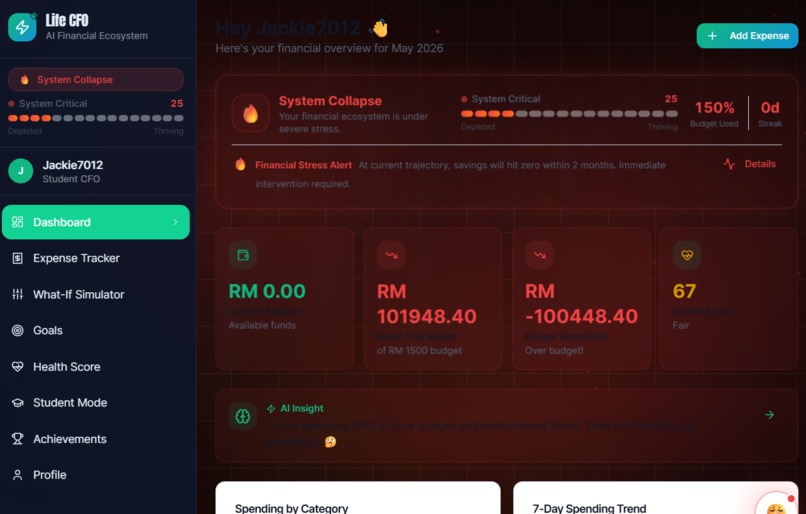
Tab in critical mode

Inspiration
As university students, we realised that most of us are not failing financially because we lack information; we struggle because financial decisions are made emotionally and in daily life. Most budgeting apps only track expenses after the money is already spent. They show charts and numbers, but they rarely guide users on what to do next. I wanted to build something more proactive and intelligent: an AI-powered “financial co-pilot” that acts like a personal CFO for students and young adults.
The idea was inspired by: My own manual spreadsheet. The stress of managing allowances, food expenses, transport, subscriptions, and emergency spending
Instead of another expense tracker, we asked: “What if students had an AI CFO that could guide their financial decisions in real time?”
What it does
helps users: Track expenses Analyse spending habits Predict financial risks Simulate future financial scenarios
Key features include: 🤖 Future Self AI - An intelligent assistant that analyses spending behaviour and provides personalised financial recommendations.
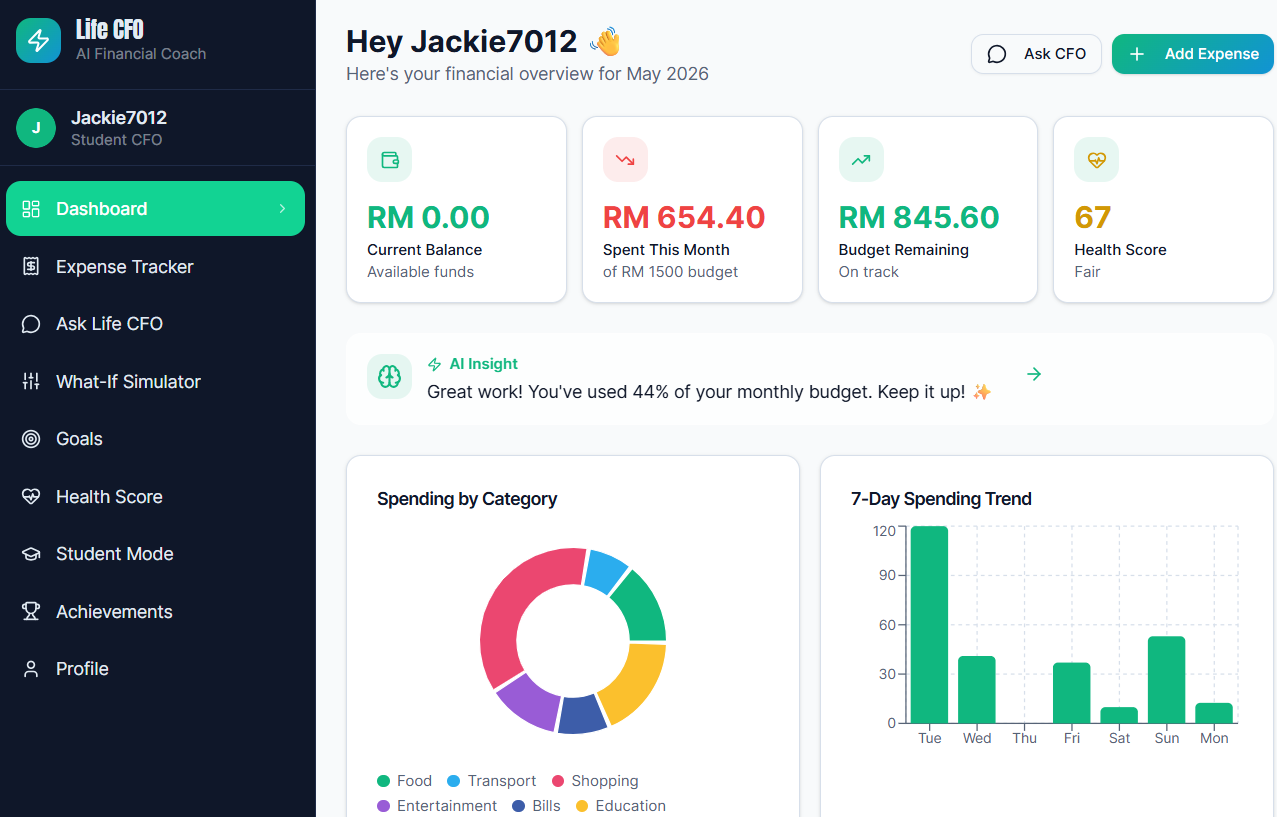
📊 Smart Expense Tracking Users can: Log expenses Categorize spending View analytics dashboards Monitor trends weekly and monthly
🔮 What-If Financial Simulator Users can test financial decisions before making them.
Examples: “What if I save RM10 daily?” “Can I afford a concert next month?” “What happens if I reduce eating out by 40%?”
🎯 Goal Planning System Users can create savings goals such as: Emergency funds Laptops Vacations Tuition fees
The AI predicts completion timelines and recommends strategies, the UI and UX interact as it is A living AI financial companion that emotionally reacts to your life decisions.
How we built it
FrontendResponsive dashboards Interactive charts Glassmorphism-inspired UI AI-native user experience
Backend Expense management Financial calculations Goal tracking User profile management AI recommendation generation
AI Layer The AI recommendation engine was designed using: Spending pattern analysis Rule-based financial insights Predictive budgeting logic Personalised recommendation prompts
Challenges we ran into
One of the biggest challenges was balancing: Simplicity Functionality AI intelligence
Many finance apps become overwhelming due to excessive data and complicated interfaces. We had to carefully design the user experience so that financial insights remained understandable and actionable.
Accomplishments that we're proud of
Building an AI-first financial experience Creating a highly interactive “What-If” simulator Designing a visually polished fintech dashboard Making financial literacy more engaging for students Combining productivity, AI, fintech, and behavioural insights into one platform
The product solves a real problem that many people personally experience.
What we learned
importance of designing AI around user behaviour How personalisation increases engagement How fintech UX must balance clarity with analytics The importance of storytelling in product design How to rapidly prototype and prioritise features under pressure
What's next for Life CFO
Real bank account integration, AI-powered receipt scanning, Predictive financial forecasting, Subscription and bill detection, Voice-based AI financial assistant, Peer comparison insights.
We also want to explore: University partnerships, Financial literacy programs, SME budgeting tools, Gen Z-focused fintech ecosystems.
Built With
- ai
- chart.js
- css
- database
- express.js
- firebase
- frontend
- github
- html
- intelligence
- javascript
- mongodb
- node.js
- openai
- react
- tailwind
- typescript

Log in or sign up for Devpost to join the conversation.