-
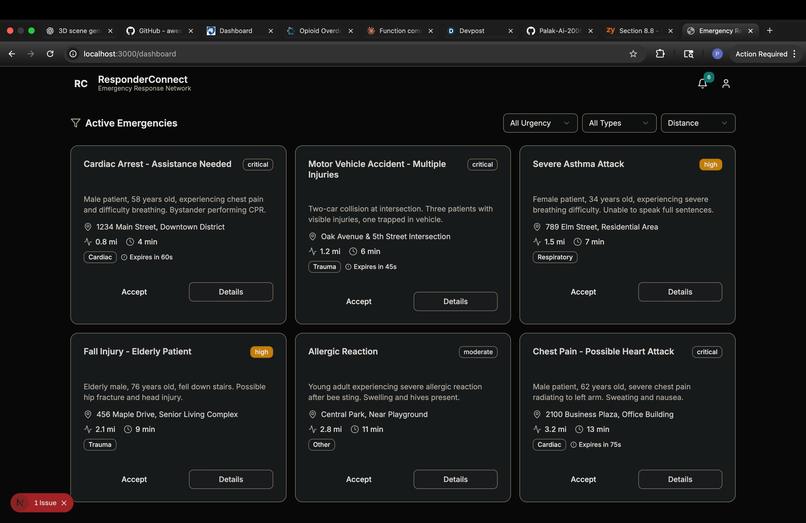
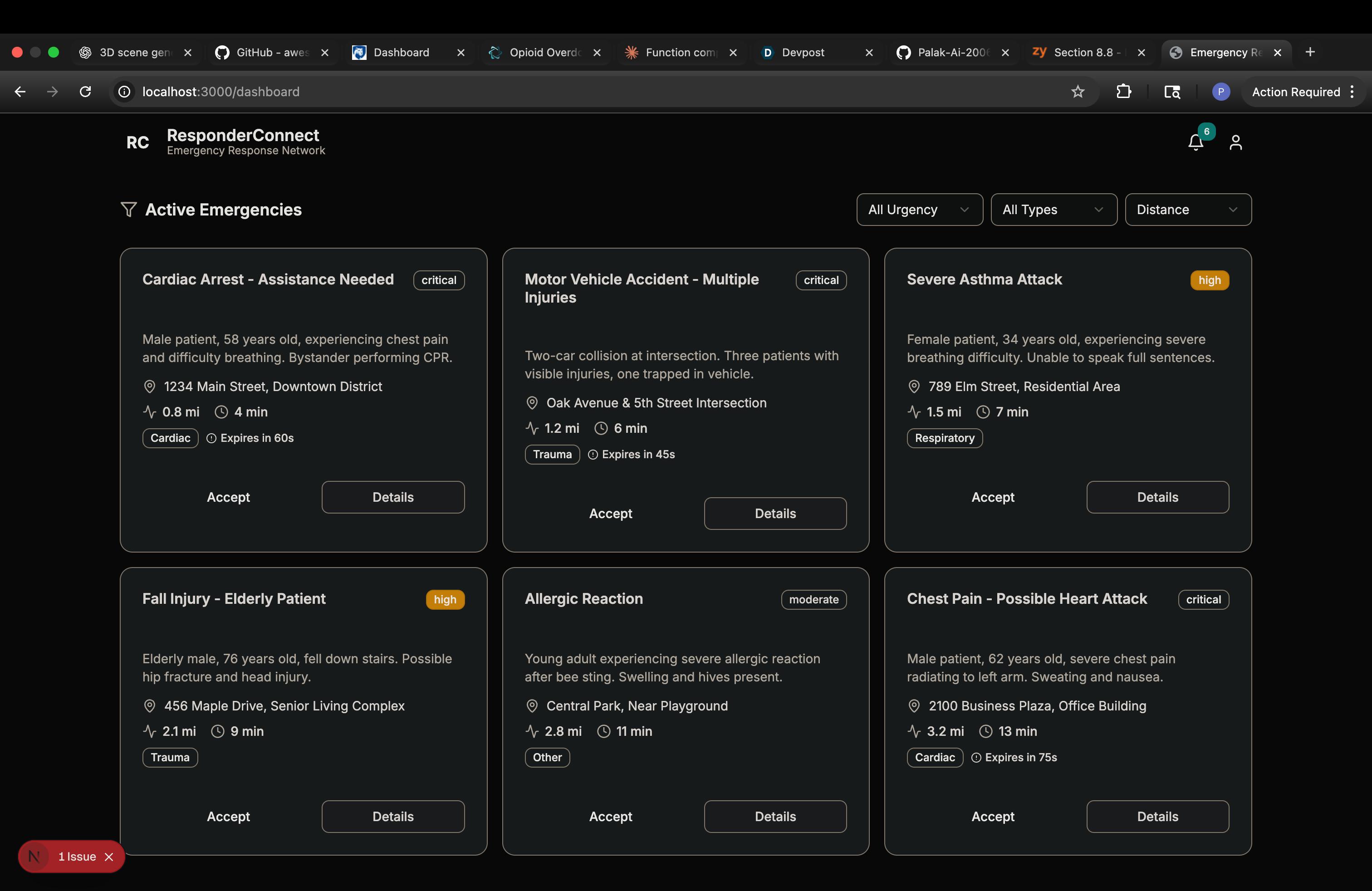
Displays nearby emergency cases with key details so responders can identify where their skills are needed.
-
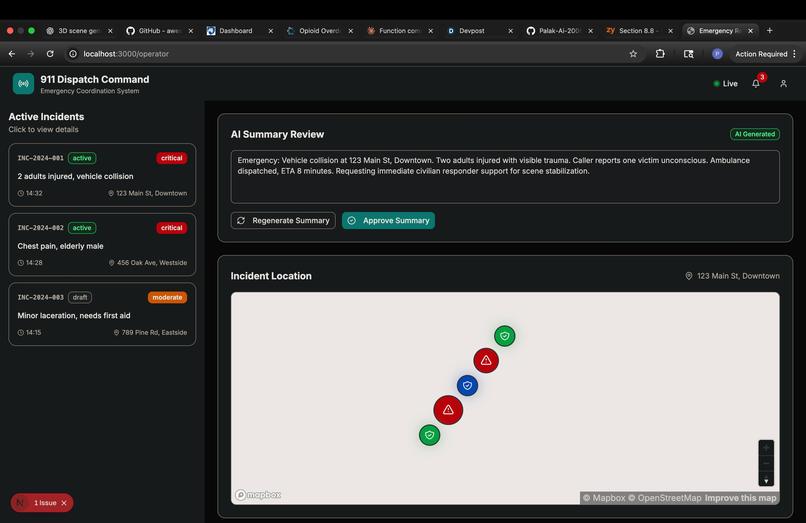
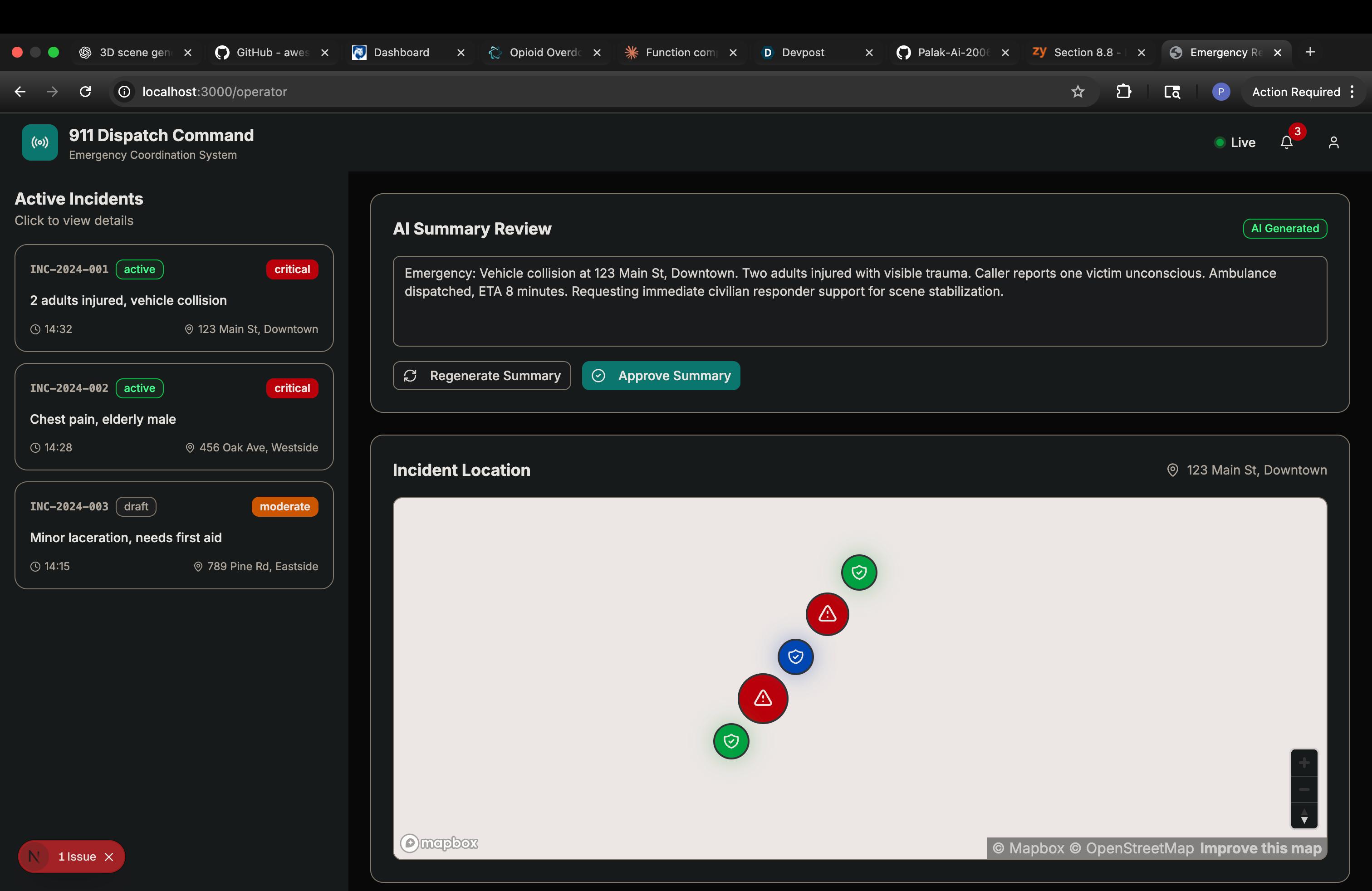
Provides detailed incident information and real-time responder locations to support faster dispatch decisions.
LifeAid is a smart emergency response platform inspired by a simple question: What if lifesaving help is already right around the corner? In emergencies, every minute matters — yet trained medical responders such as EMT professionals, nurses, and certified first-aid providers are often nearby while off duty, willing and able to help but not connected to the emergency. We wanted to bridge that gap.
With approval from 911, Life Aid connects those in need with certified responders who are close to the scene, so care can potentially begin before an ambulance arrives. Responders have secure profiles with verified medical credentials and registered vehicle details (model, color, license plate) to ensure accountability and safety. Our live map — similar to a rideshare interface — displays incident locations and responder positions in real time, helping responders navigate quickly without confusion. They also receive a prioritized feed of emergency cases nearby, including the severity and distance of each call.
We developed Life Aid primarily as a web-based platform. Our front-end was designed using v0.dev by Vercel, allowing us to quickly build an intuitive and responsive interface suitable for high-pressure situations. For the back-end logic and integration work, we used Cursor, which helped streamline development and connect our core features. We implemented Mapbox for real-time mapping and location tracking, enabling responders to see incidents and navigate efficiently. We also integrated the Gemini API to generate concise summaries of emergency case details, helping responders assess urgency faster. Together, these tools allowed us to build a functional emergency-support system in a short time with strong potential to scale.
Participating in this project taught us a great deal about rapid development under pressure. We learned the importance of preparation, clear time management, and scoping technical ambitions realistically. We also gained practical experience in quickly adopting new tools — from AI-assisted development platforms to real-time mapping APIs — and learning how to prompt and collaborate with AI effectively when building complex features in a limited time.
Next, we aim to integrate AI to help predict high-risk zones, enhance communication features within the app, create a strong responder network — and most importantly, partner directly with 911 services for real-world deployment. Life Aid is just the beginning of a faster, more connected future where distance never decides survival.


Log in or sign up for Devpost to join the conversation.