



Inspiration
We were inspired by classic detective stories and interrogation-heavy games, such as Ace Attorney, where tension comes from dialogue rather than action. At the same time, we wanted to explore how modern AI could create more dynamic and unpredictable storytelling.
Most games rely on scripted dialogue. We asked: What if every suspect could respond differently every time, and truly “act” like a person hiding something?
That idea became the foundation of this project.
What it does
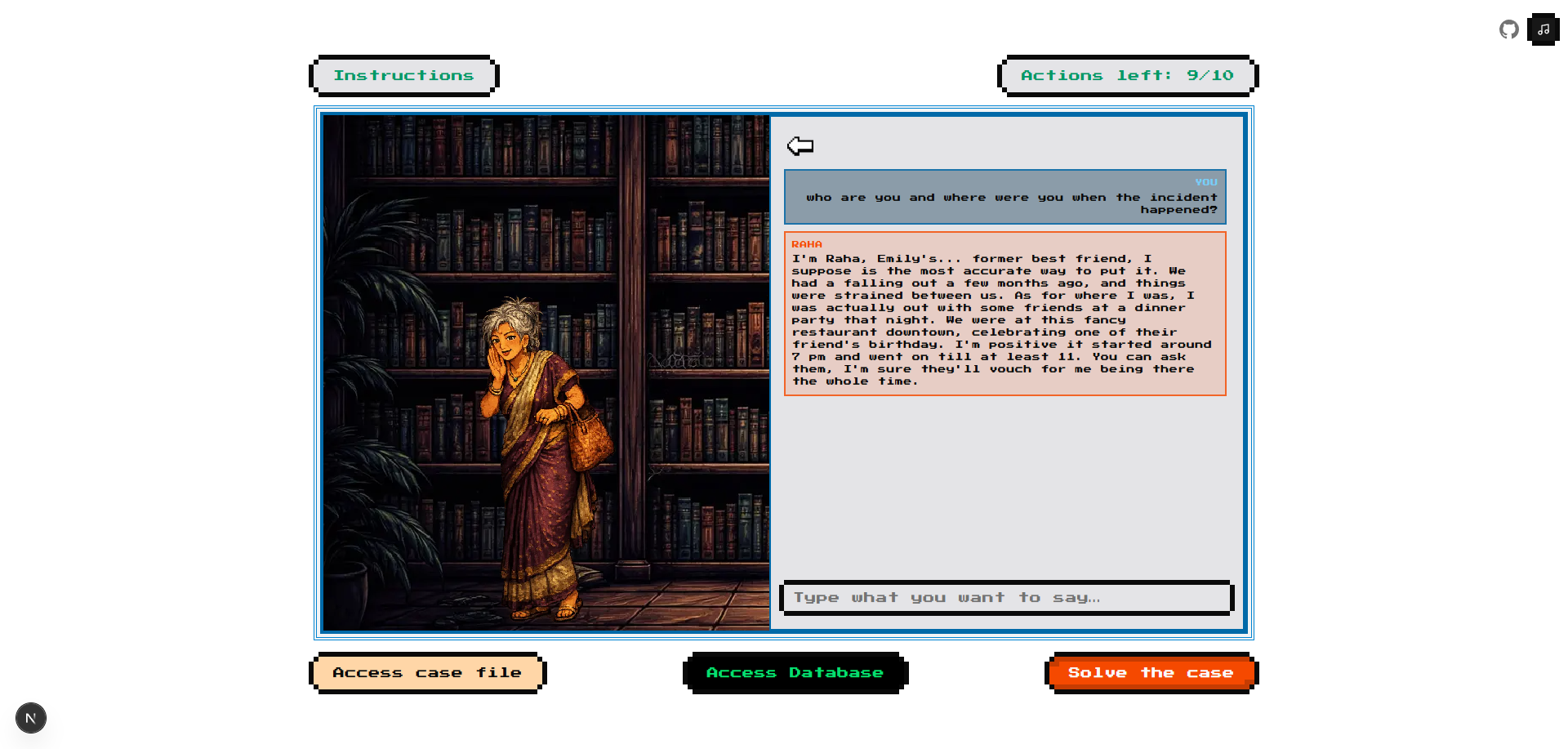
Lies, Lies, Mystery is an AI-powered interrogation game where players take on the role of a detective solving a murder case.
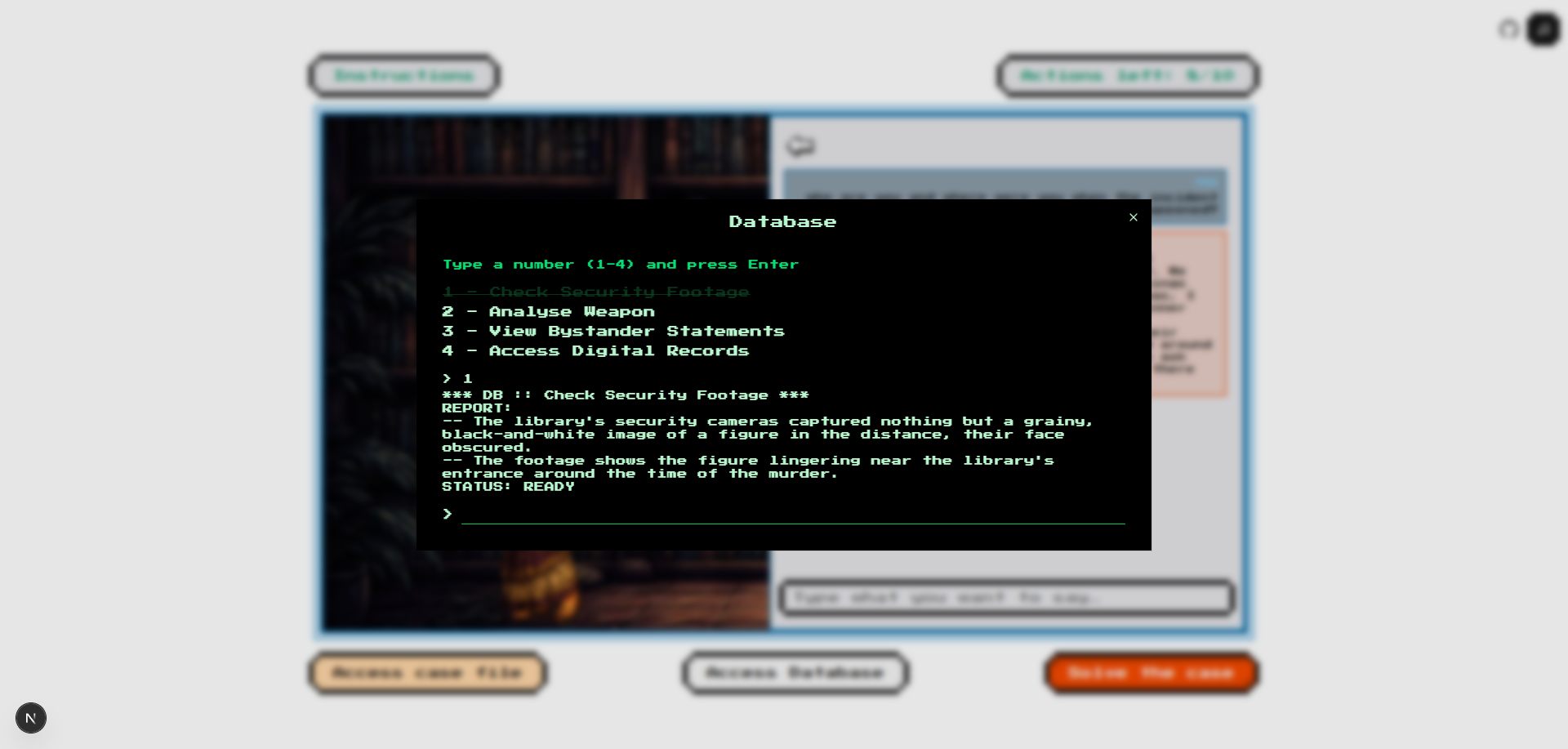
Players are presented with a crime story and three suspects. By talking to each suspect, they gather alibis, motives, and relationships. There is also a database that can be interacted with to retrieve evidence/info. The goal is to spot inconsistencies, uncover hidden truths, and make a final accusation.
Every conversation is dynamic with real-time responses from suspects, making each playthrough slightly different.
How we built it
We built the game as a web application using modern frontend technologies.
Frontend: React / Next.js with a custom 8-bit-style UI to create a detective vibe State Management: Tracks suspect interactions, chat history, and player progress AI System: Each suspect is powered by an AI model integrated via the Groq API with structured prompts defining:
- Backstory
- Evidence and info
- Game Flow: Players interrogate suspects, collect clues through dialogue and database, and choose one final suspect as the murderer.
Challenges we ran into
- AI consistency: Keeping suspects believable while avoiding contradictions was difficult. AI hallucinations also resulted in inconsistent content generation.
- Conversation scaling: Sending full chat history improves context but increases cost and latency
- Game feel: Turning a standard UI into something immersive (like a detective notebook) took a lot of iteration
- Balancing difficulty: Making suspects neither too obvious nor too vague required careful tuning
Accomplishments that we're proud of
- Creating a fully playable AI-driven interrogation system
- Designing suspects with distinct personalities
- Implementing a terminal-like UI for database interaction
- Building a unique dialogue-first pixel gameplay experience
- Achieving a cohesive visual style that supports the game’s mood
What we learned
- Prompt engineering is critical as small changes can completely alter behavior
- AI works best with clear constraints and structured context
- Good UX matters just as much as core functionality in games
- Building interactive AI systems requires balancing creativity and control
What's next for Lies, Lies, Mystery (LLM)
- Add crime scene/location exploration (like a Pokemon game) to make gameplay more engaging
- Improve evidence system with actual items that user can discover and examine to uncover insights and add depth to gameplay
- Introduce a clue tracking or notebook system to help players organize information
- Improve AI memory and consistency across longer conversations
- Explore multiplayer or competitive detective modes
Built With
- 8bit
- groq
- next.js
- shadcn
- typescript


Log in or sign up for Devpost to join the conversation.