-
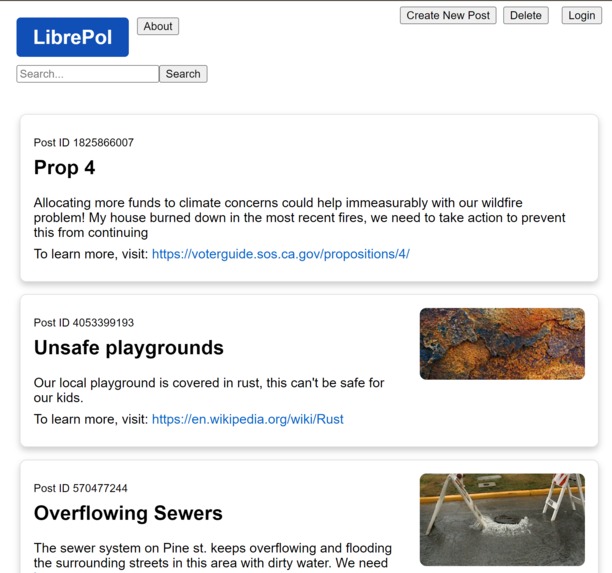
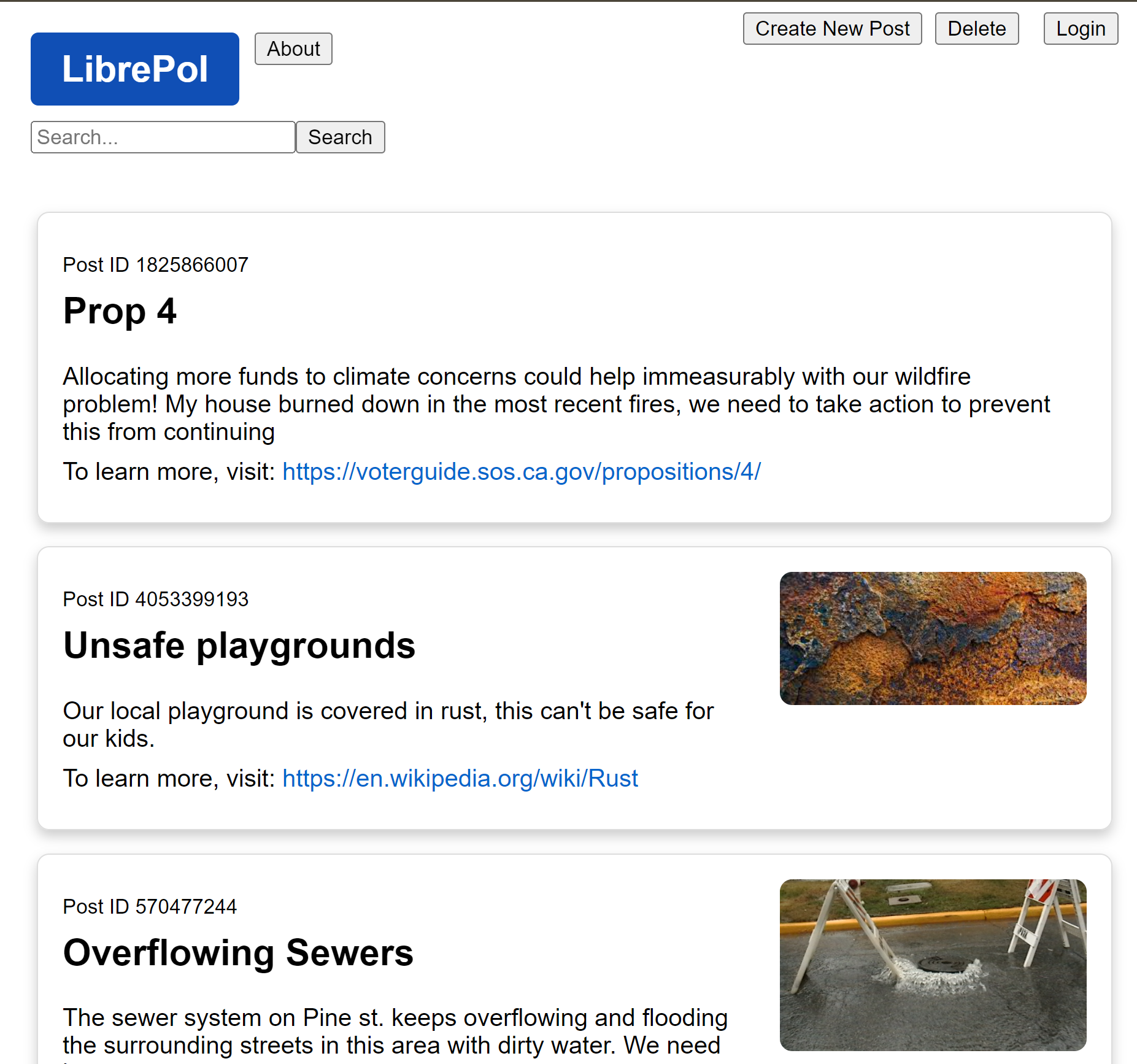
The home page for LibrePol with all posts, ordered by timestamp
-

The LibrePol homepage with no posts
-
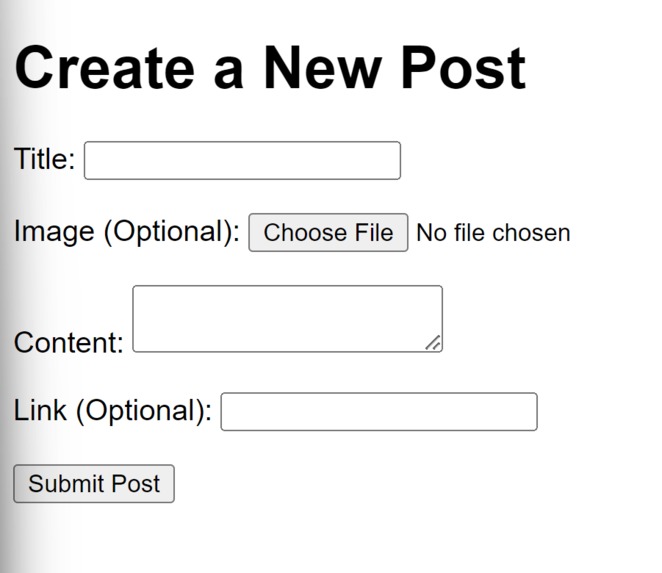
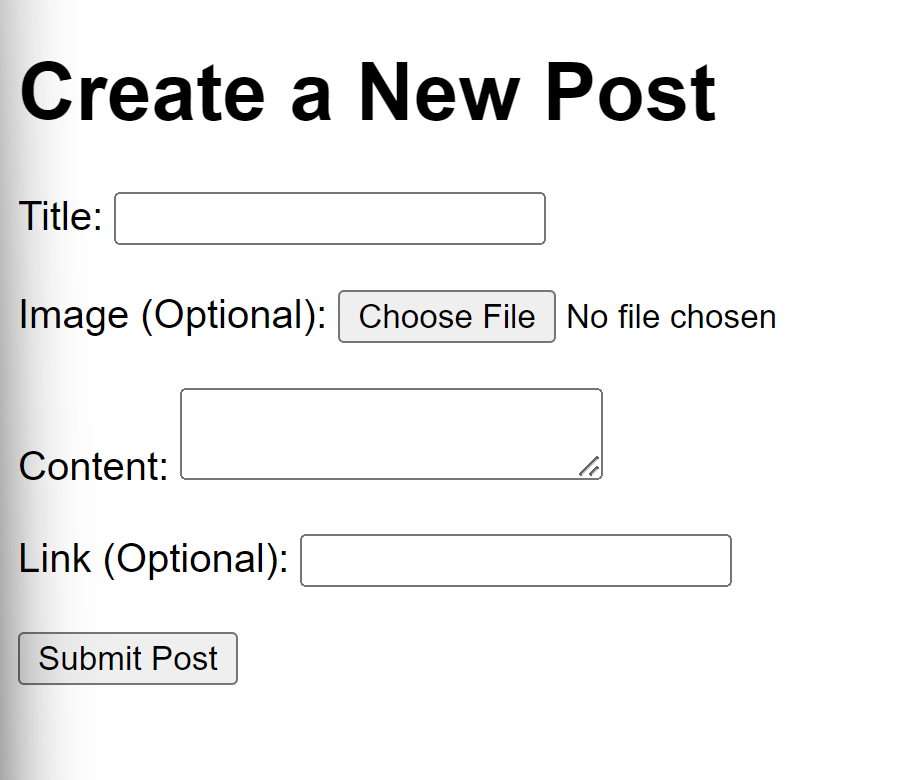
The page to create a new post

The Inspiration Behind LibrePol and What it Does:
When considering what "urban upgrades" meant to us, we thought about urban areas with less access to resources, limited communication with elected officials, and barriers to understanding between citizens and policy makers. Funding and communication are primary elements we consider important in upgrading urban areas. When we asked ourselves "realistically, what could we produce that would help with this," the idea behind LibrePol was born. A website that bridges the communication gap between the people and their local governments, with a focus on simplicity and privacy.
LibrePol is a decentralized and anonymous forum website that is simple to understand and navigate. Users are able to anonymously post about issues in their community in the form of (1) a title, (2) a longer description, (3) an optional image, and (4) an optional relevant link. By streamlining and simplifying the communication process, we bring democracy directly to the people and allow them to showcase what issues they feel strongly about. Maybe people have issues with how long snow removal takes, or the amount of littering in their parks, or the lack of efficient emergency services -- grievances will vary depending on location and people's priorities, and it's important that local governments know what their citizens need and want. LibrePol allows this communication to take place: the things that people care about, streamlined, searchable, and easily readable.
In order to prevent any inappropriate posts or abuse of the platform, LibrePol relies on moderators who have the sole ability to delete posts. Users themselves are unable to delete their previous posts as, due to the anonymous nature of the page, there is no way of tracking which user posted what. These moderators could be volunteers, or employees of local governments. In either case, the moderation raises ethical concerns for censorship. This is a necessary tradeoff for user anonymity. We envision that the website itself will be hosted by local libraries, so it could be possible that librarians would have moderator capabilities. These moderators will be the only people to have a login for the website, and they can login/logout easily from the home page. Other functionality of the website includes: an easy way to create new posts, posts ordered by time created, a search bar which finds word matches in all post titles/content, and an about page with information about the site.
How we built it and Challenges we Encountered
LibrePol is built using Flask, a web framework in Python, with aesthetics being controlled with html and CSS. Due to our lack of experience with web technologies, the learning curve for this project was very steep. Our initial challenges surrounded learning how to use flask to build a basic website. Once we had a skeleton system, we learned how to use html to render our website, and used CSS to format things in a way we liked. Specific challenges include sorting via timestamp, security measures, and form verification.
Accomplishments and things we learned
After completing this project, we both feel much stronger in web technologies and have an improved understanding of the core request response cycle that powers websites. We are proud that we were able to build a functional website with a variety of features in only 24 hours despite our lack of previous experience.
What's next for LibrePol
Since LibrePol was built entirely by a team of two in 24 hours, there are many more features that could be added to it in the future!
- We believe that people like to see results, so at some point we would like to implement an "archive of success" page. This page would be a gallery of previous posts that directly inspired a difference; the original post would be shown as well as a brief summary of what policies were inspired by it, or at least a link to the relevant changes.
- Maybe, other than moderators, local government officials could get their own login information to LibrePol and be able to flag when a post is under consideration/acknowledge when it has been seen. Similarly, they might be able to archive posts that have been considered, but the suggestions were ultimately rejected. These archived posts should still be visible to users on the website so they know what suggestions were ignored (which may influence voting), and can be shown on a different page.
- In order to inspire discourse among people themselves, a 'replies' feature can be implemented on the posts. Other users would be able to view and respond to original posts--either showing solidarity, agreeing that change is necessary, or debating the need for the proposed change. Additionally, we could add functionality to vote in favor or against posts so that policy makers could see what posts are garnering the most support and attention. This would be hard to do though without compromising the anonymity of users, so whether or not it should be considered is debatable.
- Posting about issues is fundamental, but our website could support other features to help citizens get more involved in their local communities. This could include a page that hosts/links to active petitions, any active boycotts in the area, and a schedule of local protests.

Log in or sign up for Devpost to join the conversation.