-
-
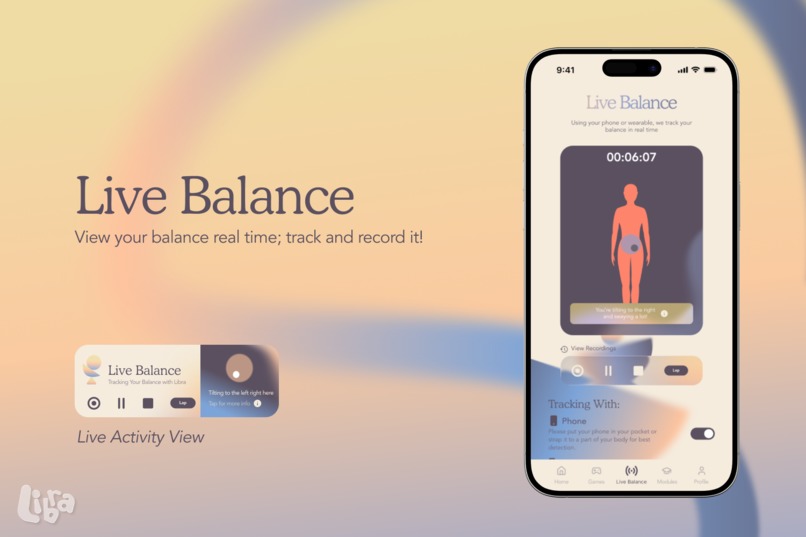
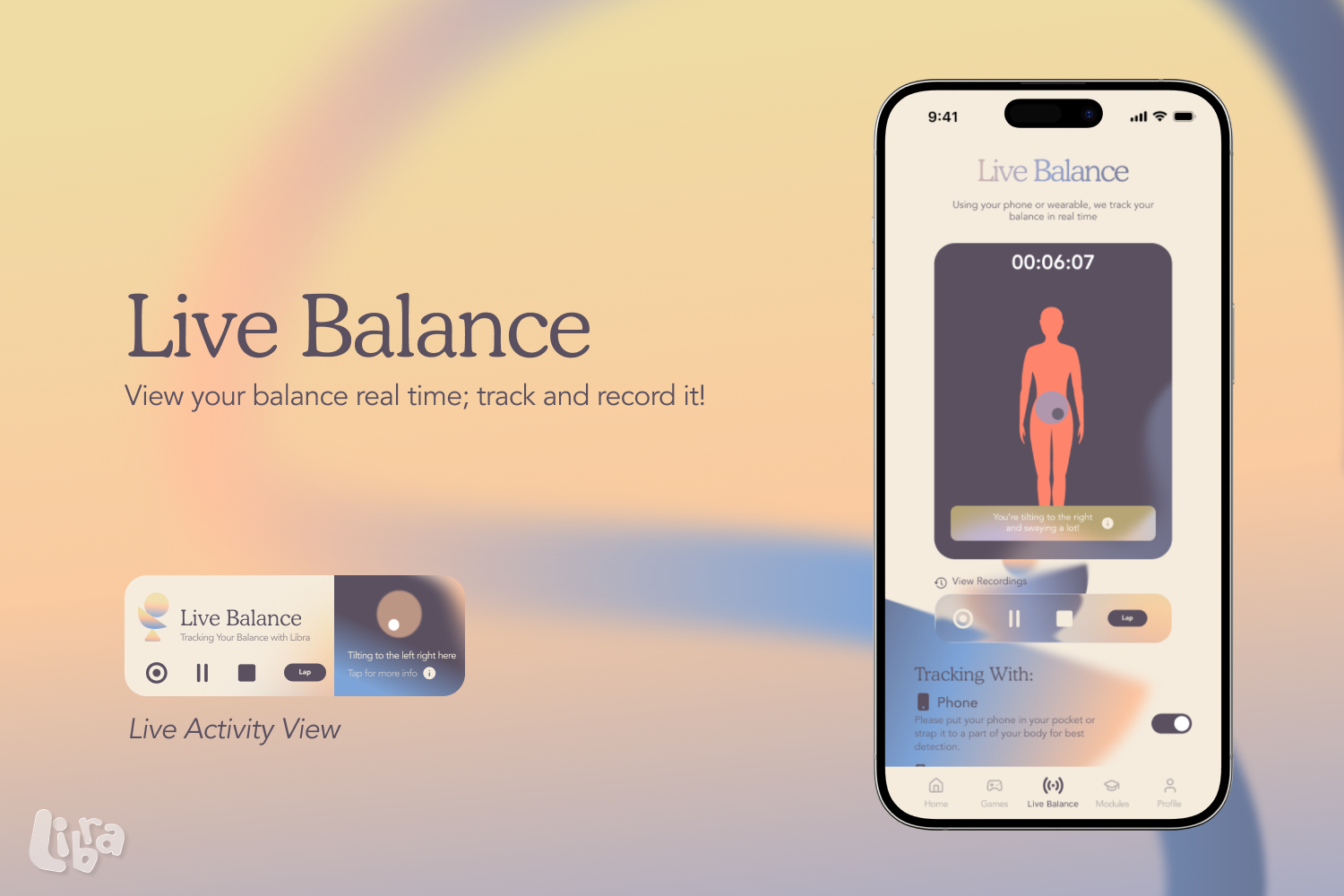
Live Balance
-
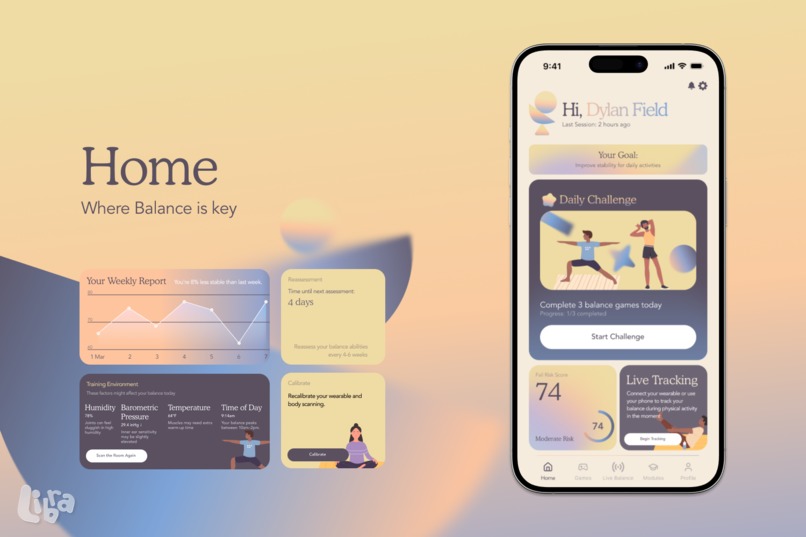
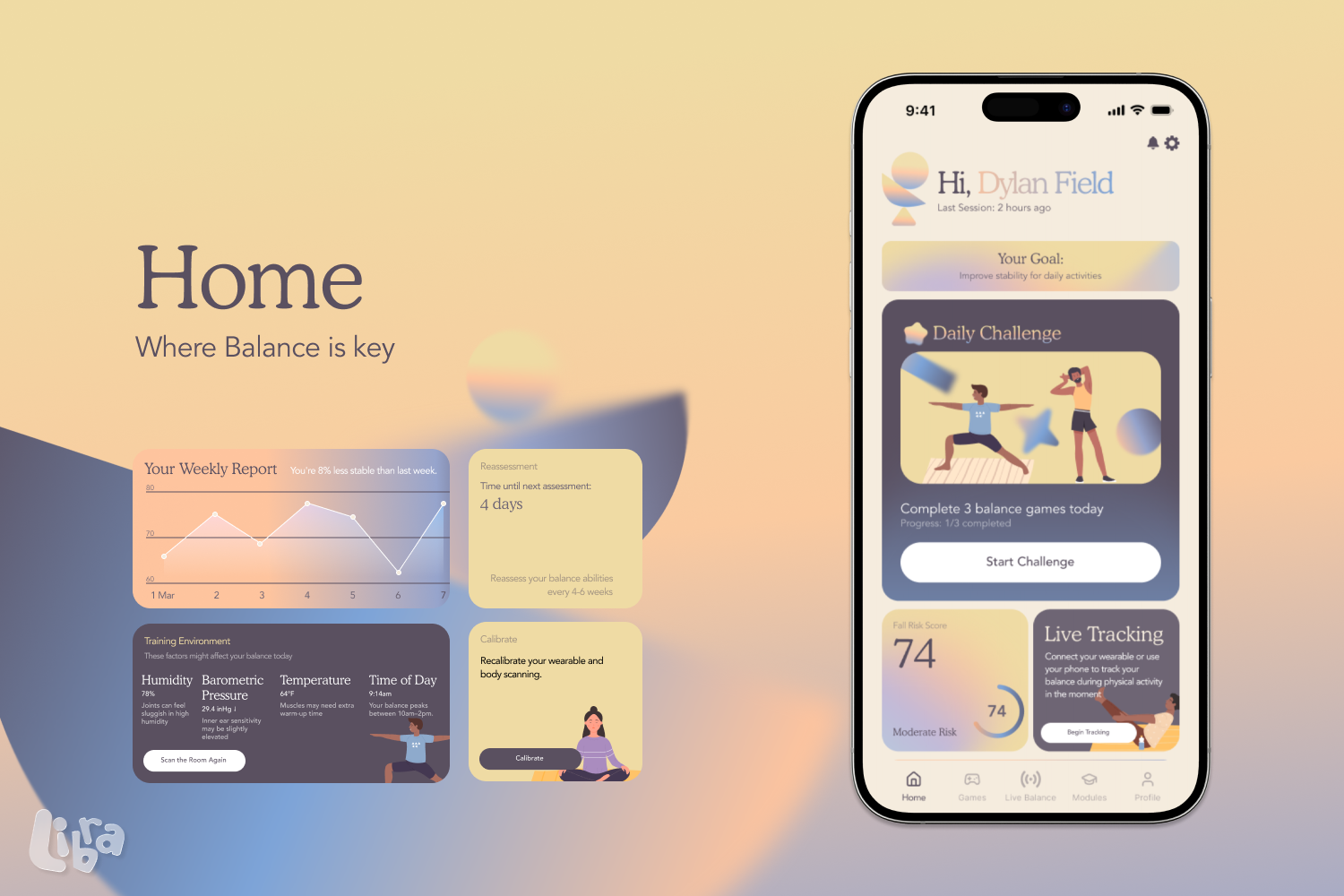
Home Page
-
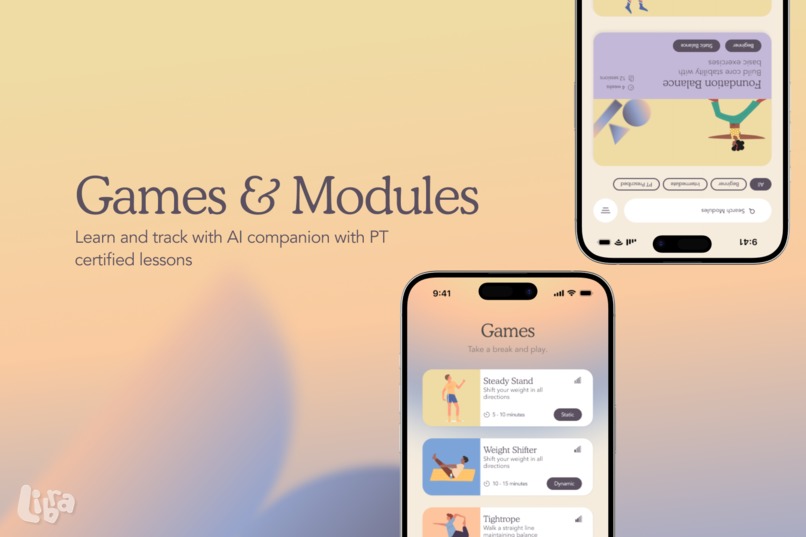
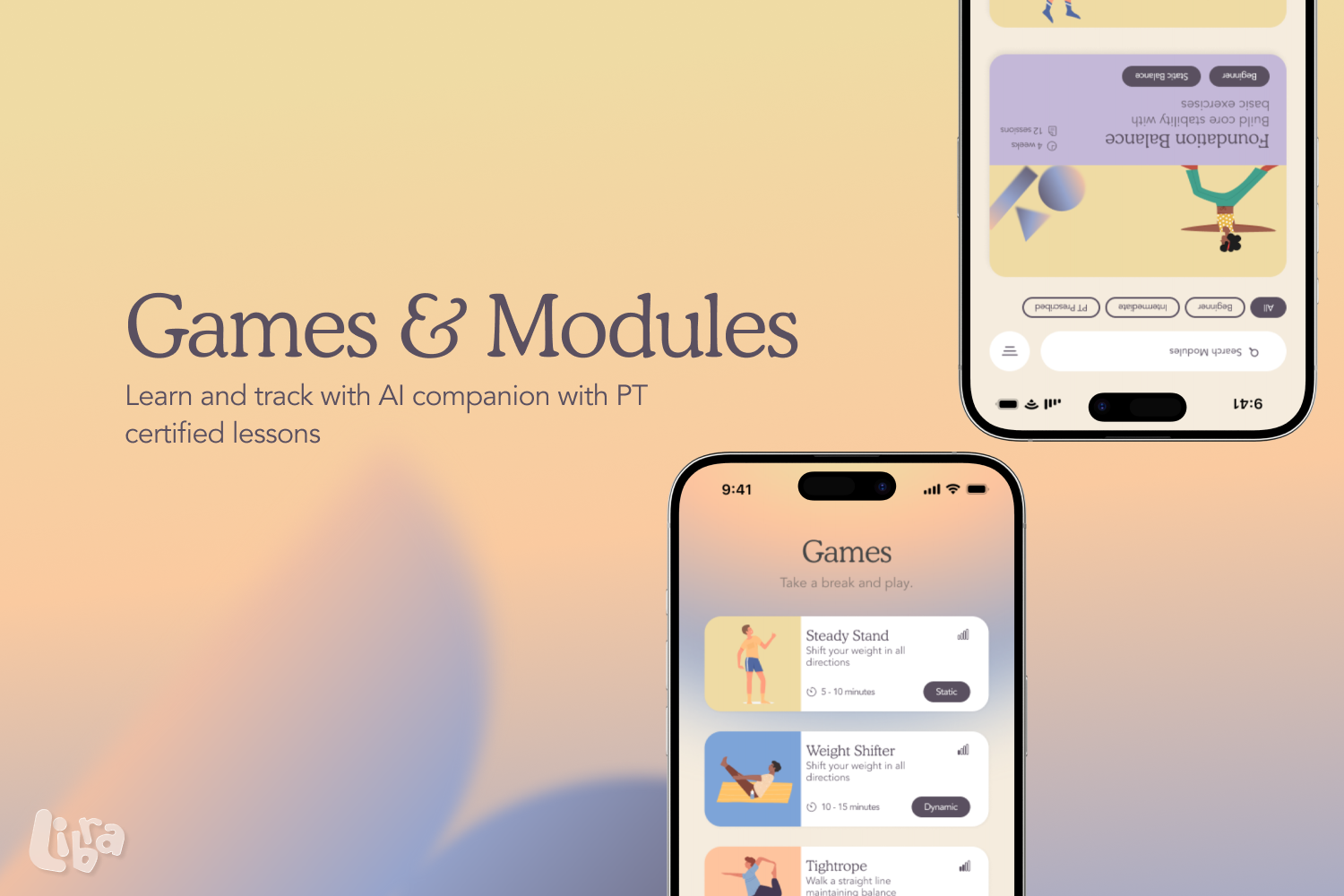
Games & Modules
-
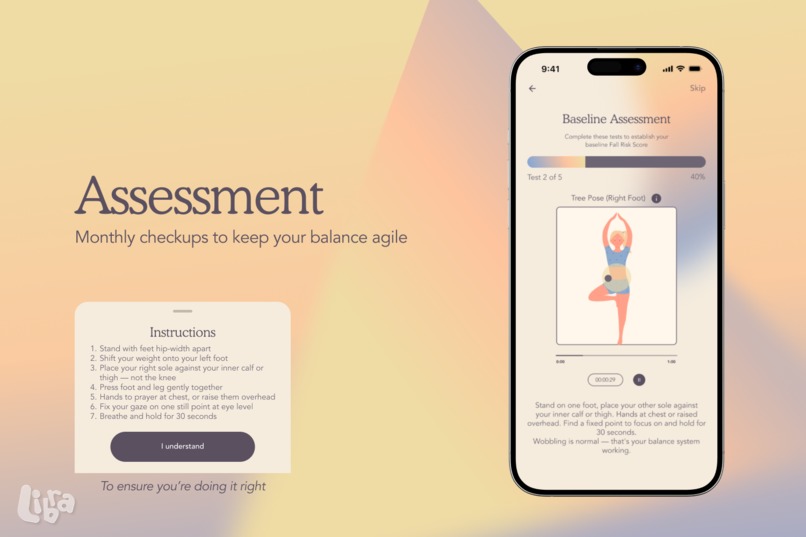
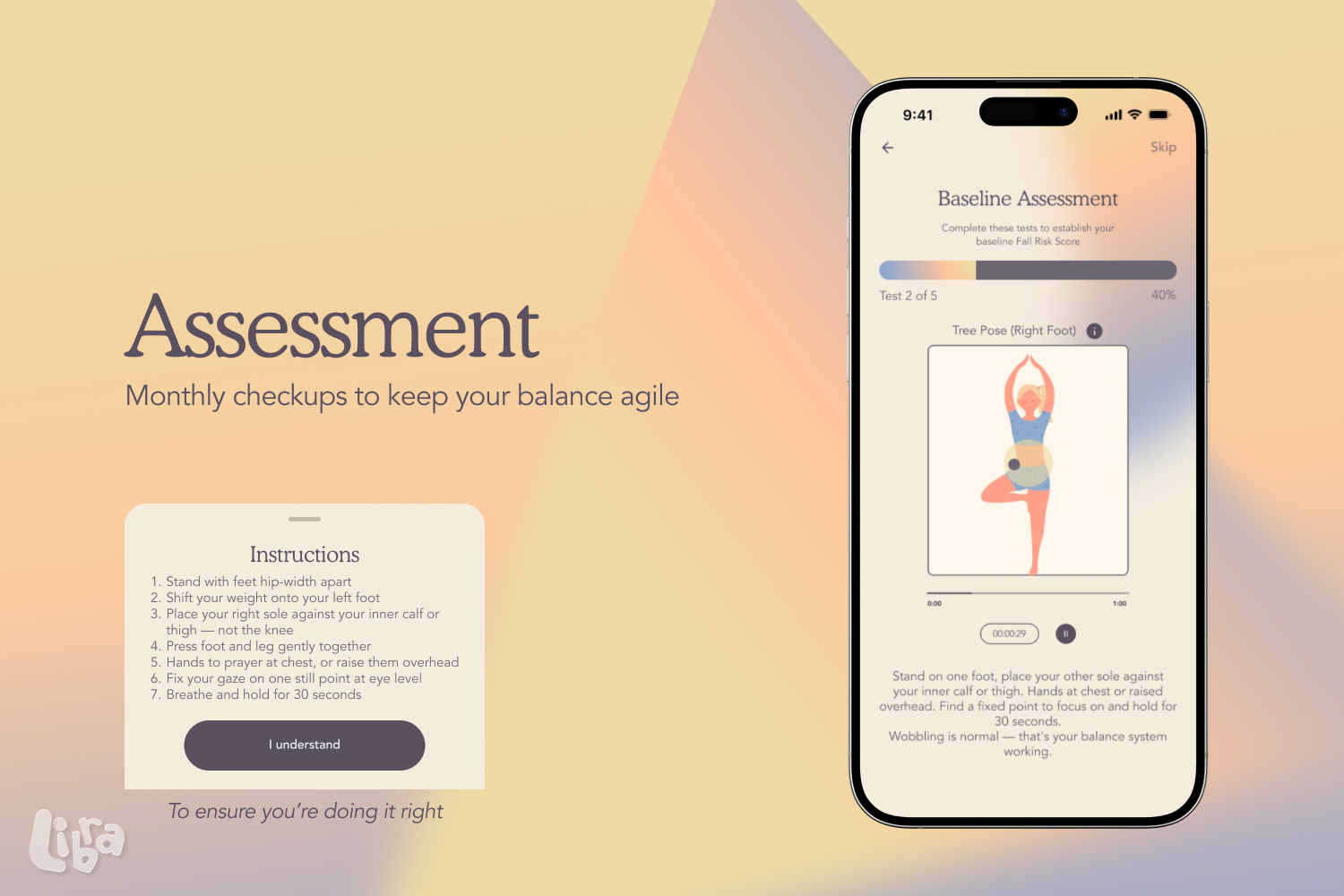
Assessment
Inspiration
Balance is the only major health vital sign that has never made it to your pocket. Heart rate has lived on your wrist for a decade. Blood oxygen is on your phone. Yet balance, responsible for 38,000 American deaths and $80 billion in healthcare costs a year, is still assessed with a printed sheet of exercises and a Wii board from 2007.
There is no measurable unit for balance. Coaches guess. Athletes guess. Patients do their home exercises with zero feedback on whether they're improving, until they fall.
After 30, balance declines roughly 10% per decade. One in four Americans over 65 falls each year, and 70% of those who fall become too afraid to move, accelerating their decline. Elite skaters perform 60 jumps a day with no proprioceptive data, and 79% will face a significant injury. Targeted training cuts that risk by ~50%, yet no consumer tool exists to guide it.
We built Libra because balance deserves what every other vital sign already has: a score, a trend, and a feedback loop.
What it does
Libra lets anyone assess, track, and improve their balance through these key features:
- Balance Score: a single number from your phone's IMU.
- Live Balance View: real-time visualization of sway and stability.
- Replay and Record: capture sessions, rewatch moments of instability, identify weak zones.
- Modules:
- Classes: progressive balance education for improvement and recovery.
- Games: proprioceptive challenges that feel like play.
- Assessment: a standardised baseline test that tracks your score over time.
- Weekly Recap: your balance trend, session highlights, and nudges.
- Fall and Imbalance Detection: passive monitoring that flags sudden balance events.
- Over-Time Tracker: trend analysis with alerts if your balance is measurably declining.
- Wearable Integration: connects to your smart device and phone's motion trackers for richer data.
How we built it
We started with people. We surveyed and interviewed 10+ users across elderly adults, competitive athletes, and people in injury recovery to identify the need for Libra and shape our feature priority.
We built Libra's visual language deliberately against clinical aesthetics. Most health tools look like medical devices. Ours shouldn't, and keeping that consistent from the balance score to the training modules required real systemic thinking.
Then we began translating science into visuals from sway path to sensory reweighting. We used Figma Make to rapidly generate and iterate on our visual concepts and used Figma design to finalize to high fidelity.
Challenges we ran into
Visualizing balance: A static chart loses the motion, a raw number loses the direction. We had to invent a visual language with no consumer reference points and a lot of failed prototypes.
Designing the live view: What is the user watching? What does good look like versus compensation? The view had to communicate quality and risk at a glance for users with very different body awareness.
Accomplishments that we're proud of
The research! Talking to 10+ real users across wildly different life situations and finding the common thread underneath all of them. That insight shaped everything.
The visual language! No consumer product has tried to show balance in real time before. Building that vocabulary from zero, and having it feel intuitive, is something we're really proud of.
The design system! Every colour, type choice, spacing decision, and motion detail was intentional. We wanted our app to feel warm and inviting.
What we learned
The biggest thing we learned is how to conceptualize something that doesn't exist yet. Balance has no consumer reference point, no visual language, no established metric. Every decision had to be built from scratch. That turned out to be the most creatively rewarding part of the process.
What's next for Libra?
We've completed preliminary user testing during the build.
Next we hope to validate with our target cohorts: elderly adults, competitive athletes, and PT patients. We want to test the balance score against clinical baselines and refine the live view based on how each group actually reads and responds to it.
But as a team, we had sooo much fun!
We want to thank Figma and the Edu team for putting this together, huge love from Yale's campus to you ˚ʚ♡ɞ˚ :)
Built With
- figma
- figmamake


Log in or sign up for Devpost to join the conversation.