-
-
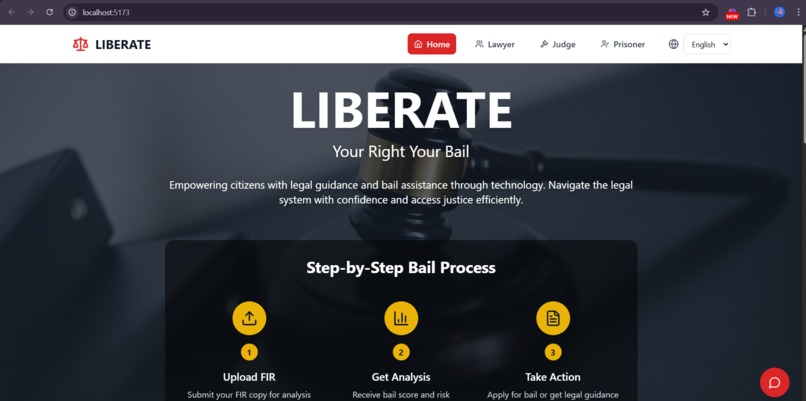
HOME PAGE
-
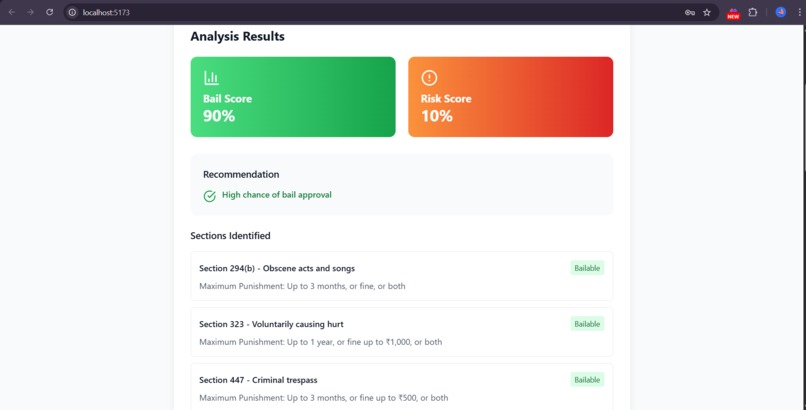
RESULT
-
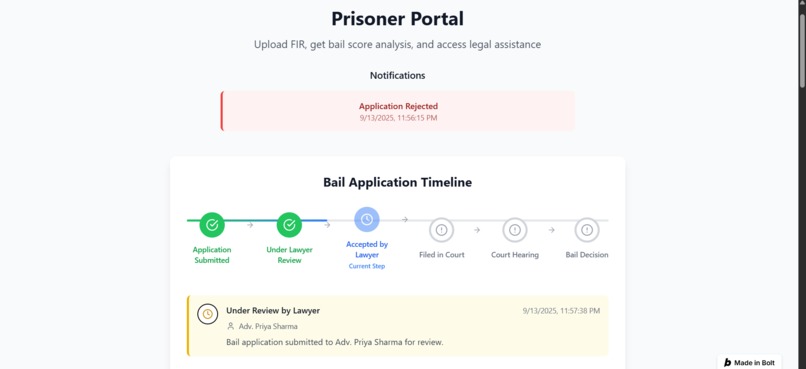
AFTER SUBMISSION
-
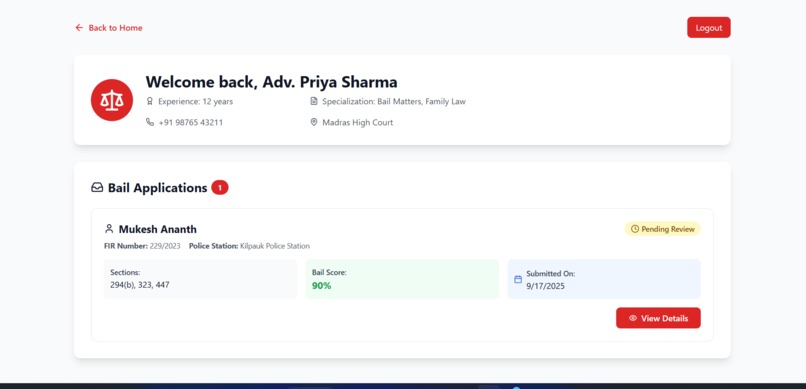
LAWYER PORTAL


What it does: In India, thousands of people get arrested every day, but most of them have no idea about their legal rights, whether their case is bailable, or how to get proper legal support. FIRs are written in complex legal formats, bail procedures are confusing, and many individuals — especially from low-literacy and rural backgrounds — end up in wrongful detention just because they cannot access legal guidance on time.
This inspired us to build Liberate — a simple, AI-powered legal assistance platform that empowers citizens by helping them understand the law without fear or dependency on intermediaries. We realized that justice becomes meaningful only when people can understand what is written against them and respond correctly.
What Liberate Does
Liberate allows users to upload a scanned FIR or enter its number. Using OCR (Tesseract) and NLP (spaCy), the system extracts sections from FIRs, explains IPC/CrPC terms in plain, multilingual language, and identifies whether a case is generally bailable or not. Users can also provide their side of the story, which the system compares with FIR content to detect possible false accusation patterns or missing context.
Liberate also integrates with e-Courts public records, with consent, to verify case history and bail status. Finally, it generates a structured, court-format bail application draft and connects users with verified lawyers or legal aid services for final review — ensuring ethical and judicial compliance.
How We Built It
Frontend: React + Tailwind CSS Backend: Node.js + Express AI Layer: Python (OCR + NLP rule engine) Database: MongoDB with encryption Deployment: Cloud-hosted microservice architecture
Our design ensures simplicity for citizens while maintaining security, legal compliance, and lawyer-in-loop verification.
What We Learned:
We gained deep insights into: Indian criminal law workflow and bail decision factors Ethical AI practices — not replacing but assisting justice Secure handling of sensitive government documents Designing accessible UI for non-technical users Team collaboration using GitLab pipelines and modular work
Challenges We Faced:
Handling multiple languages from FIRs Ensuring OCR accuracy with unclear scanned documents Preventing data manipulation by badly-intentioned users Respecting privacy and DPDP Act compliance We addressed these with multilingual AI models, data integrity checks, and lawyer verification before any real-world submission.
Future Improvements:
Full integration with Digital India & e-Courts Phase-III APIs AI-based Evidence Strength Analyzer for fair trials Victim-protection alerts & mediation support Mobile app & offline legal help kiosks Law student volunteer ecosystem for support
Why Liberate Matters:
We are not replacing the court — we are bridging the gap between citizens and justice. Liberate ensures that no one is lost in the legal system simply because they cannot understand it.

Log in or sign up for Devpost to join the conversation.