-
-

Home Screen
-
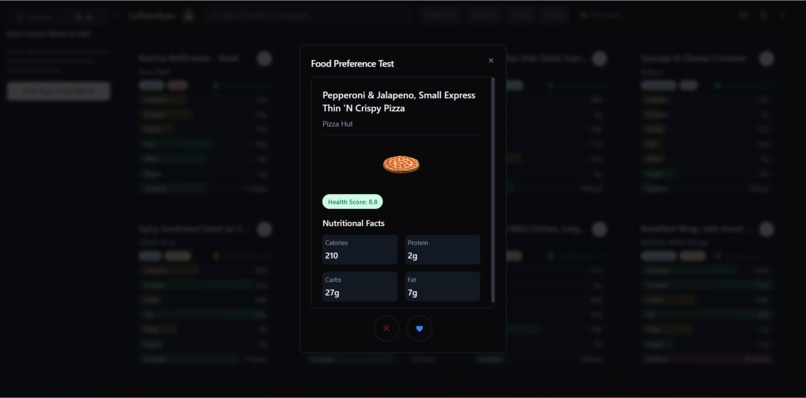
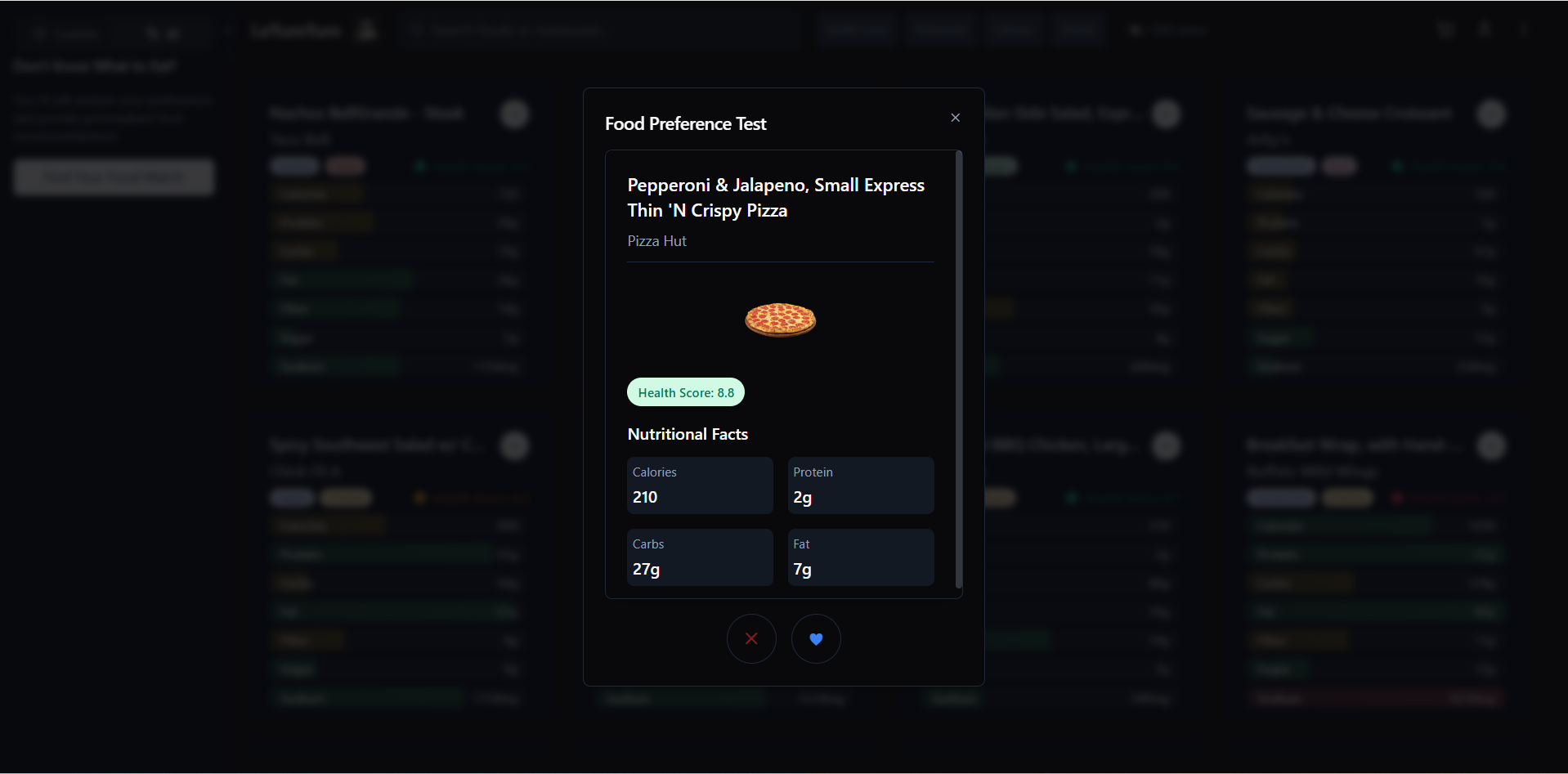
Tinder Feature
-
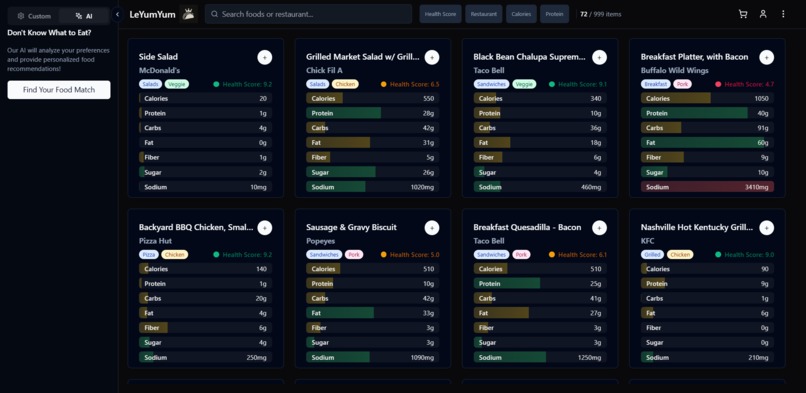
Food Matches
-
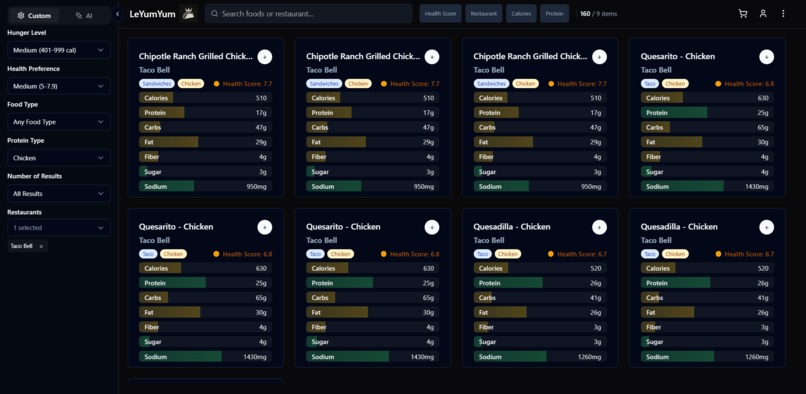
Custom Search

Inspiration
Our inspiration for LeYumYum came from the growing need for personalized food recommendations, especially among college students. We often find ourselves making food choices that don't align with our tastes, preferences, or nutritional needs. The idea was to create a system that could help us and others easily discover food options that fit within their personal preferences and dietary goals, while also considering health factors. By combining machine learning with real-time preference testing, we aimed to revolutionize how people make food decisions.
What it does
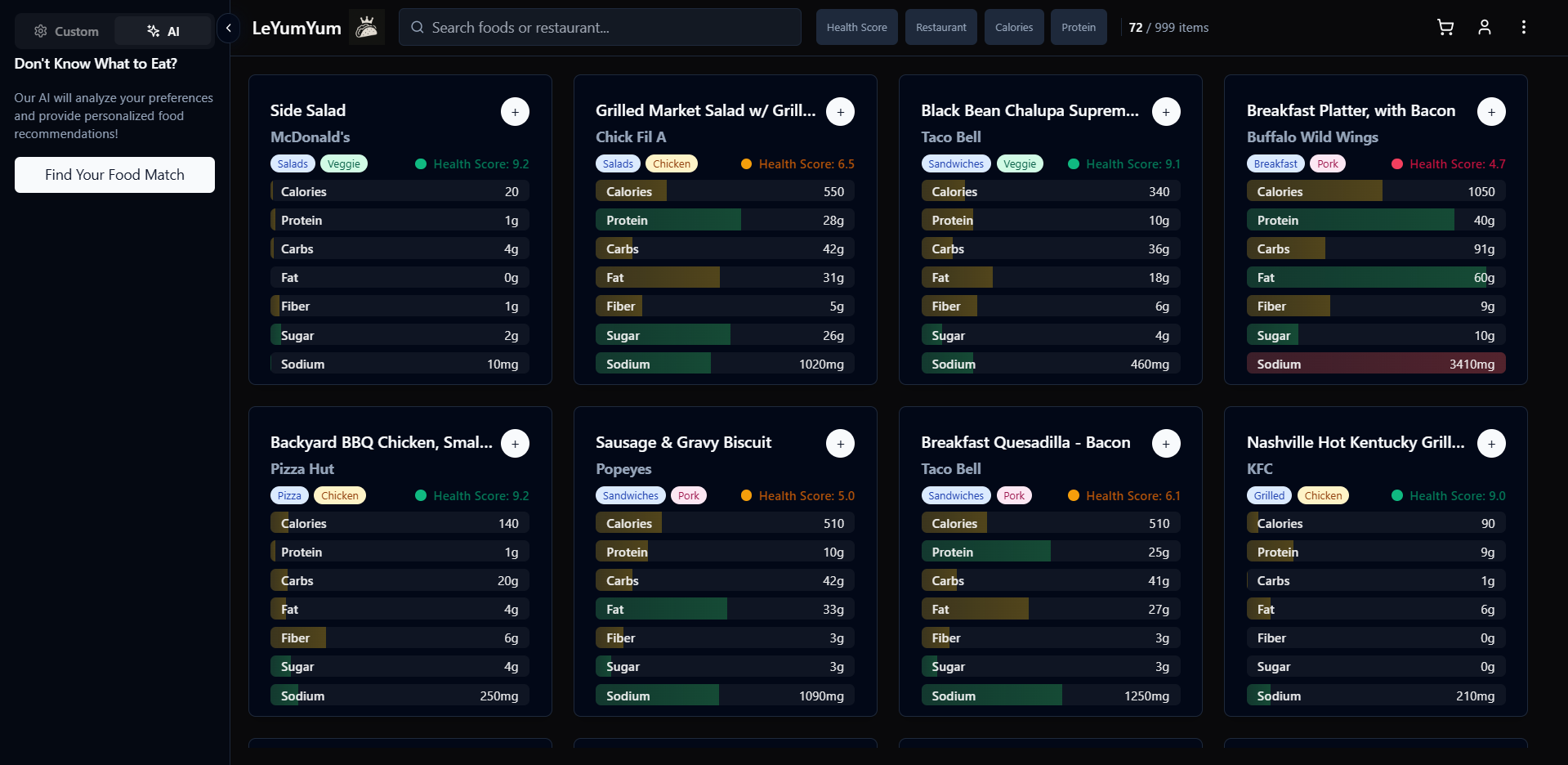
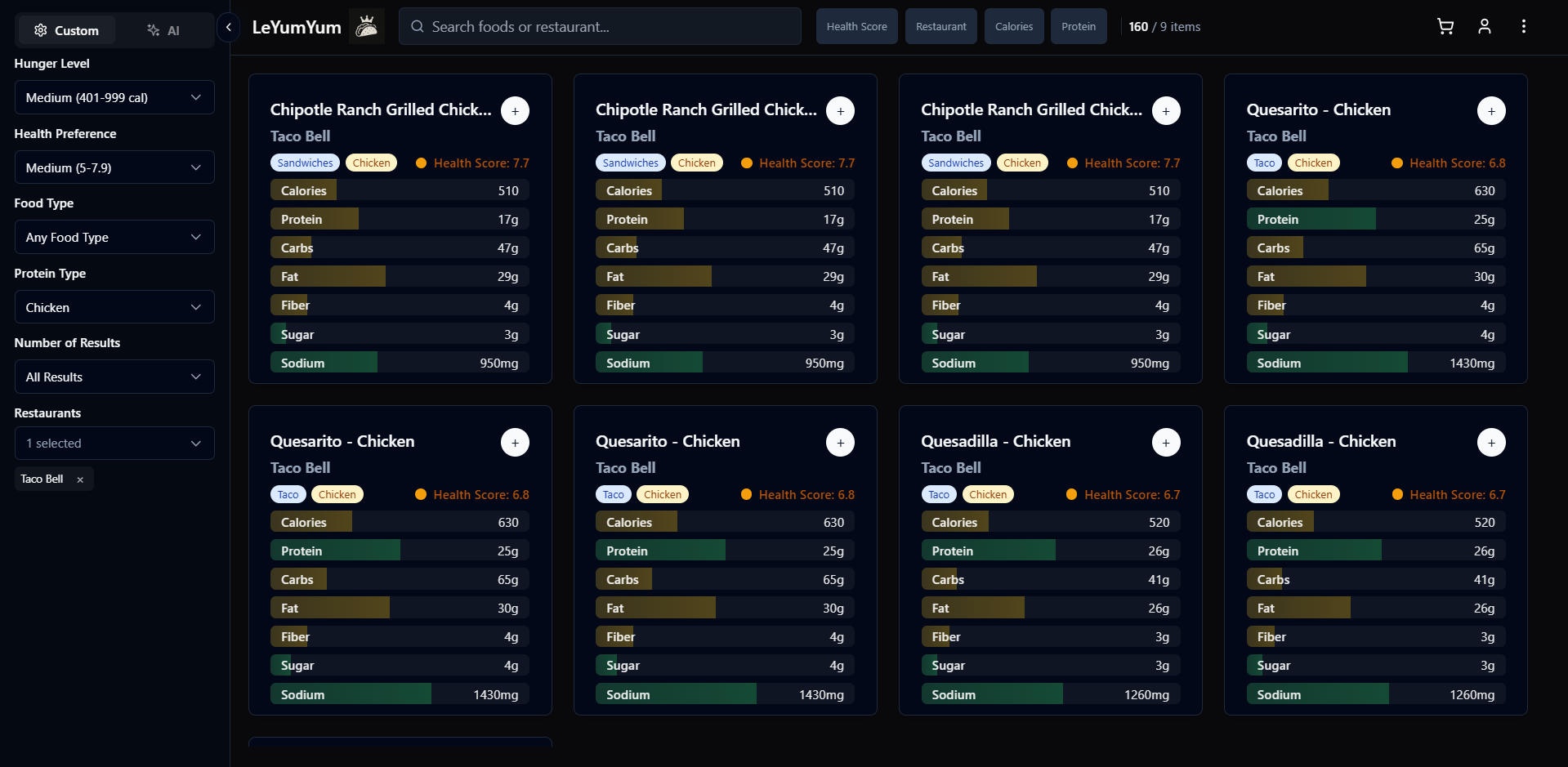
LeYumYum is an AI-powered food recommendation system that offers personalized food suggestions based on users' preferences, nutritional needs, and health goals. The system provides interactive testing features to determine the user’s tastes and delivers customized food recommendations, making it easier for people to make healthier and more satisfying food choices.
How we built it
We built LeYumYum by integrating machine learning algorithms with a responsive web interface. The frontend is developed with React.js, utilizing Tailwind CSS for modern styling and responsiveness. On the backend, we used Python Flask for the server, SQLite for data storage, and Pandas for efficient data processing. Our machine learning components power the personalized recommendations by analyzing food preferences and health data. We also implemented a testing system to continuously improve the accuracy of the recommendations over time.
Challenges we ran into
We had limited time during the hackathon to build the full-fledged system. Additionally, training the machine learning model with enough relevant data was difficult a overfitting occurred with similar variable distributions. Implementing real-time preference testing was also tricky, as we needed to balance both user engagement and accuracy in the recommendations.
Accomplishments that we're proud of
We are proud of successfully building a functional recommendation engine that adapts to individual tastes and dietary preferences. The system's ability to combine health scoring and real-time feedback makes it a valuable tool for anyone trying to make healthier food choices.
What we learned
Throughout this project, we learned a lot about integrating machine learning models with web applications. We gained hands-on experience with React.js and Flask and deepened our understanding of how to train and deploy recommendation systems. We also realized the importance of user engagement in interactive testing systems and how crucial it is to collect quality data to improve recommendation accuracy.
What's next for LeYumYum
Going forward, we plan to expand LeYumYum by incorporating more diverse food datasets and fine-tuning the machine learning algorithms for better recommendations. We aim to add features such as dietary restriction filtering, social sharing, and real-time integration with restaurant menus to make the system even more user-friendly. Additionally, we hope to continue refining the user interface for an even smoother experience.


Log in or sign up for Devpost to join the conversation.