Inspiration
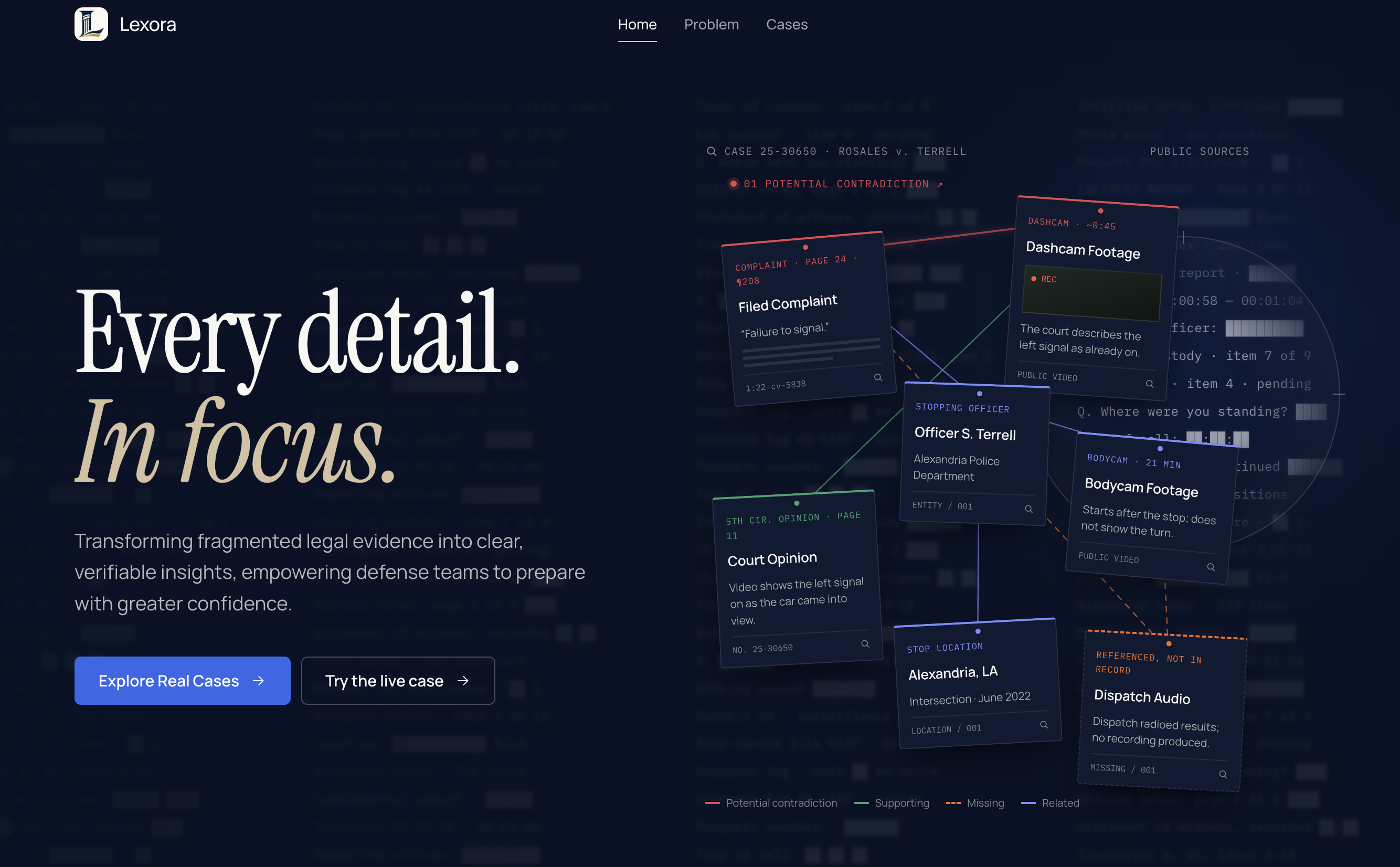
A court filing describes an encounter. A bodycam records it from one angle. A dashcam catches another. If those accounts diverge, a public defender preparing for court has to find the exact sentence and the exact moment in the footage, then establish that both sources are describing the same event.
We built Lexora for that moment in case preparation. We wanted a defender to be able to spot a possible contradiction, open the evidence behind it, and decide whether it deserves a closer look before court.
What it does
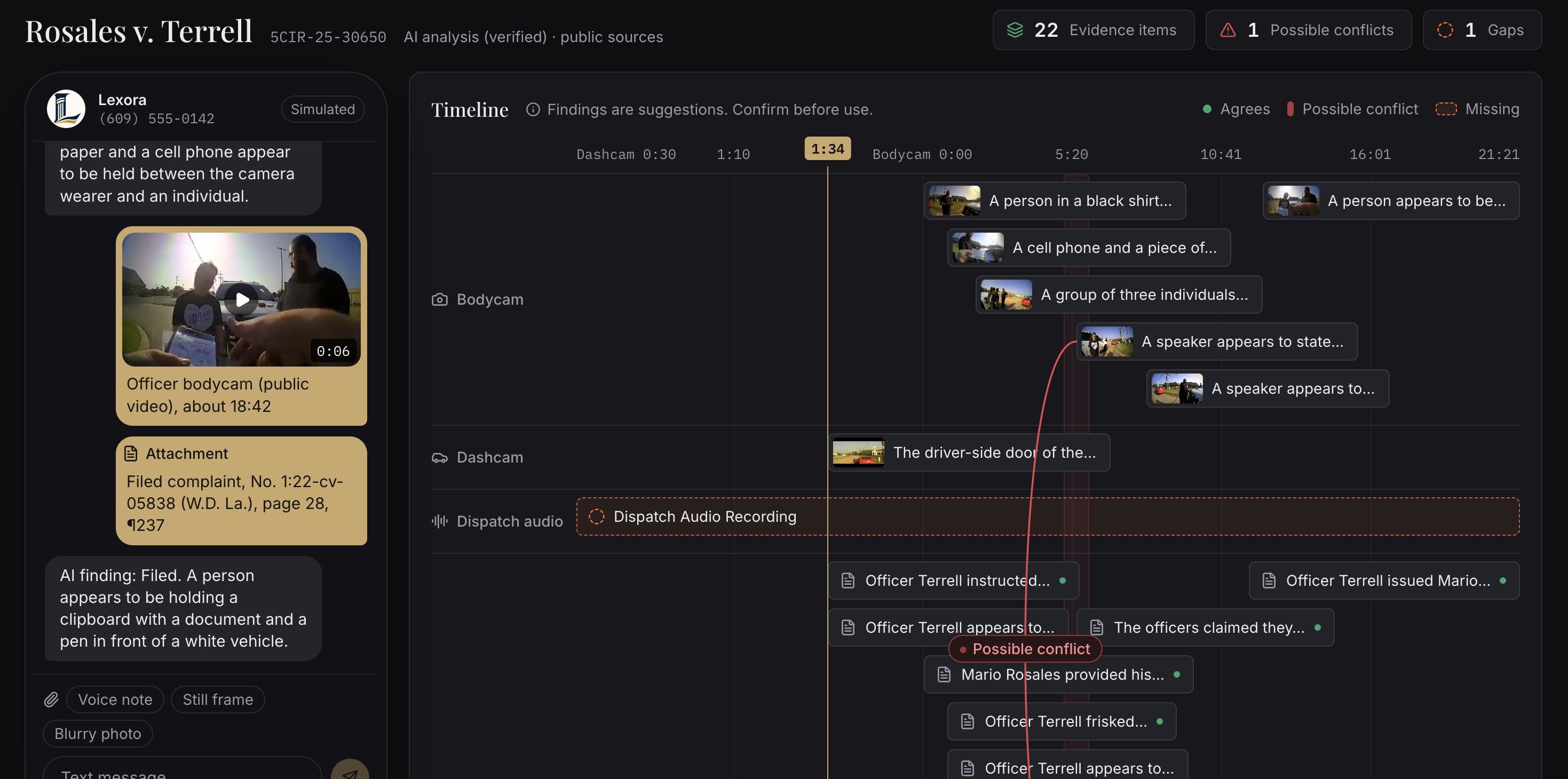
Lexora brings footage, filings, and other records into a shared timeline. It flags possible conflicts and gaps, and clicking a citation opens the source and highlights the relevant passage. A reviewer can confirm a finding, dismiss it, or mark it for follow-up. Only confirmed findings appear in the printable handoff packet.
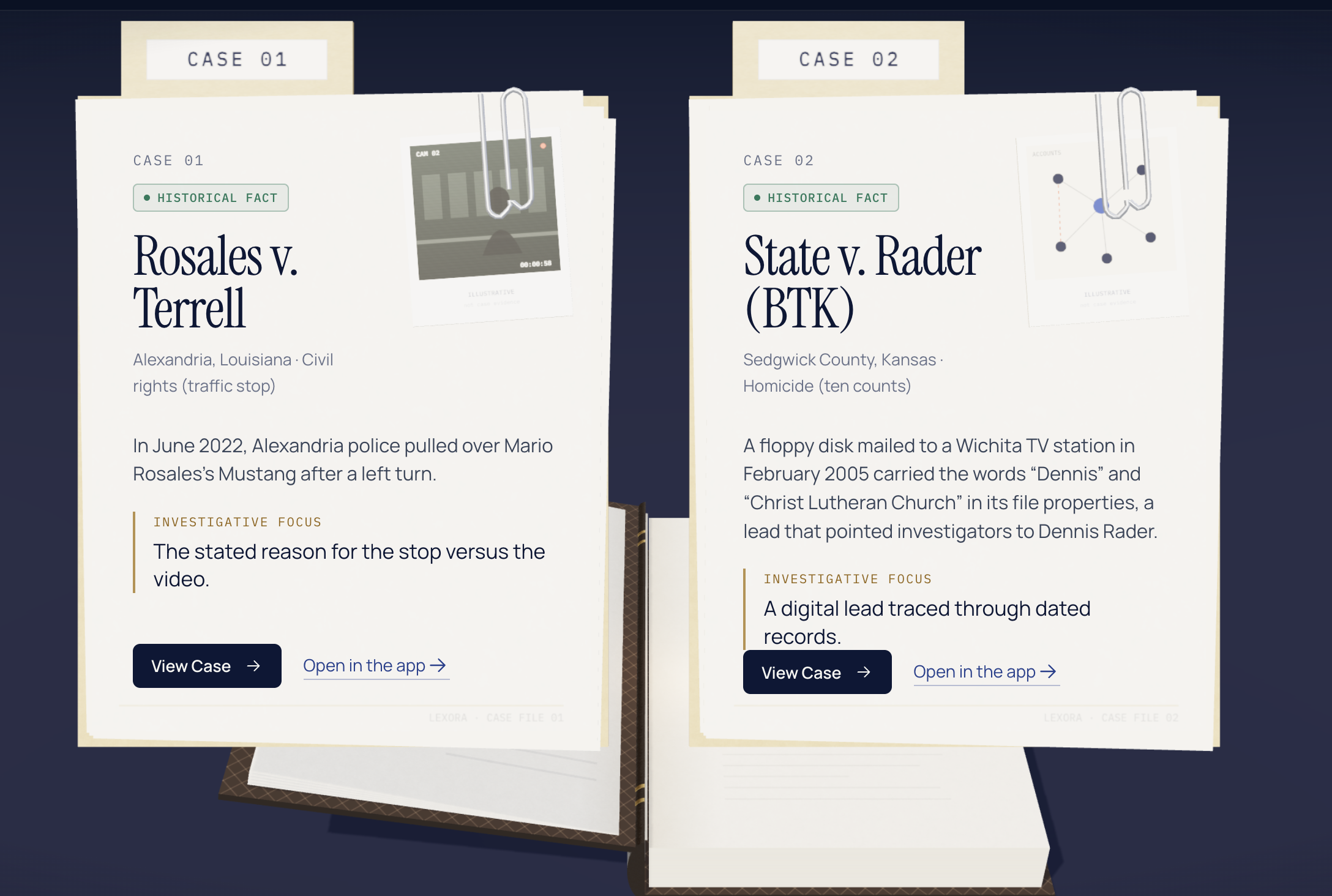
The demo covers two cases. Rosales shows how a defender can review dashcam footage, bodycam footage, and court filings together. BTK lets a user enter their own claim and watch the system search the stored records for evidence.
How we built it
We converted offline case analysis into a shared data model for timeline events, source records, and citations. Case Analysis uses those saved findings to populate the timeline and highlight exact phrases in the document viewer.
In Live Case, submitting evidence through the phone-style chat triggers two server-side Gemini calls. The first describes the submission and proposes where it belongs on the timeline. The second compares it with existing evidence. Before adding the item, our code checks that the suggested timeline lane and referenced items exist and that the response passes confidence and wording checks.
For Investigate, we built a separate service with LangChain Deep Agents. A Lead Investigator breaks down the user’s claim and delegates to a Timeline Researcher and an Evidence Reviewer. They use read-only tools to search and open records, and the interface streams their activity. Before returning a finding, the service checks that the agents opened the cited pages and that the quotes and dates match those pages. If a finding depends on evidence that fails verification, Lexora returns Insufficient evidence.
Challenges we faced
Keeping camera clocks separate. Dashcam and bodycam timestamps can look comparable even when the clocks are out of sync. We gave each camera its own timeline axis so the interface wouldn’t imply that matching timestamps showed the same moment.
Making citations checkable. A citation had to lead somewhere a reviewer could inspect. We linked findings to individual passages, highlighted the quoted text, and checked during live investigations that the agents had actually opened the pages they cited.
What we learned
Verifying a quote and interpreting it are two separate jobs. Code can check that the words and dates appear on the cited page. A reviewer can read the surrounding context, compare it with the other evidence, and decide what belongs in the attorney’s packet. Designing for both jobs changed what we considered a finished finding. It needed an exact source a person could open and assess for themselves.
Built With
- deep-agents
- express.js
- google-gemini-api
- langchain
- node.js
- react
- tailwind-css
- tanstack-router
- tanstack-start
- typescript
- vite
- zod
