-
-
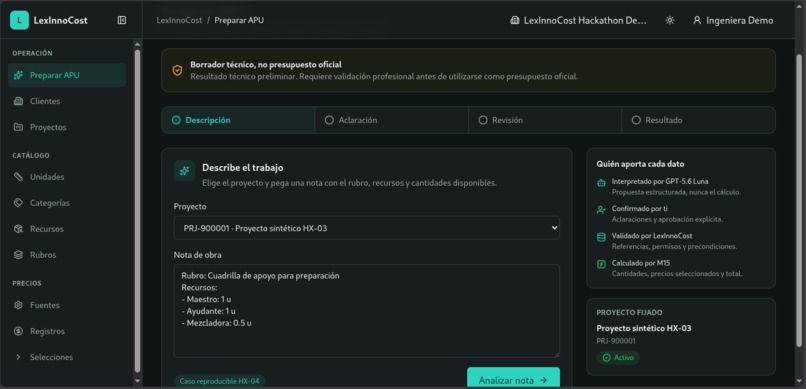
APU Creation
-
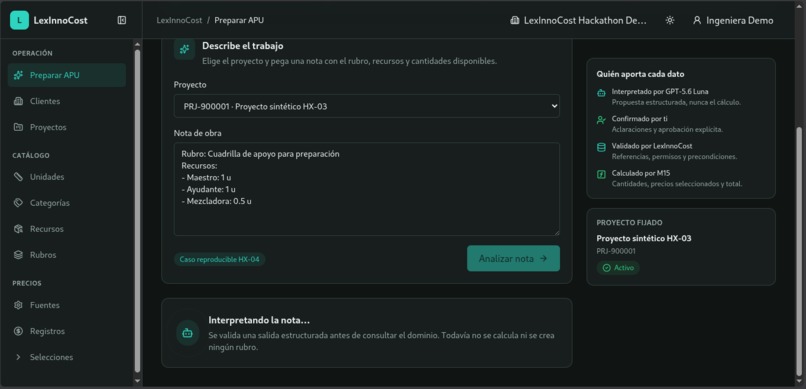
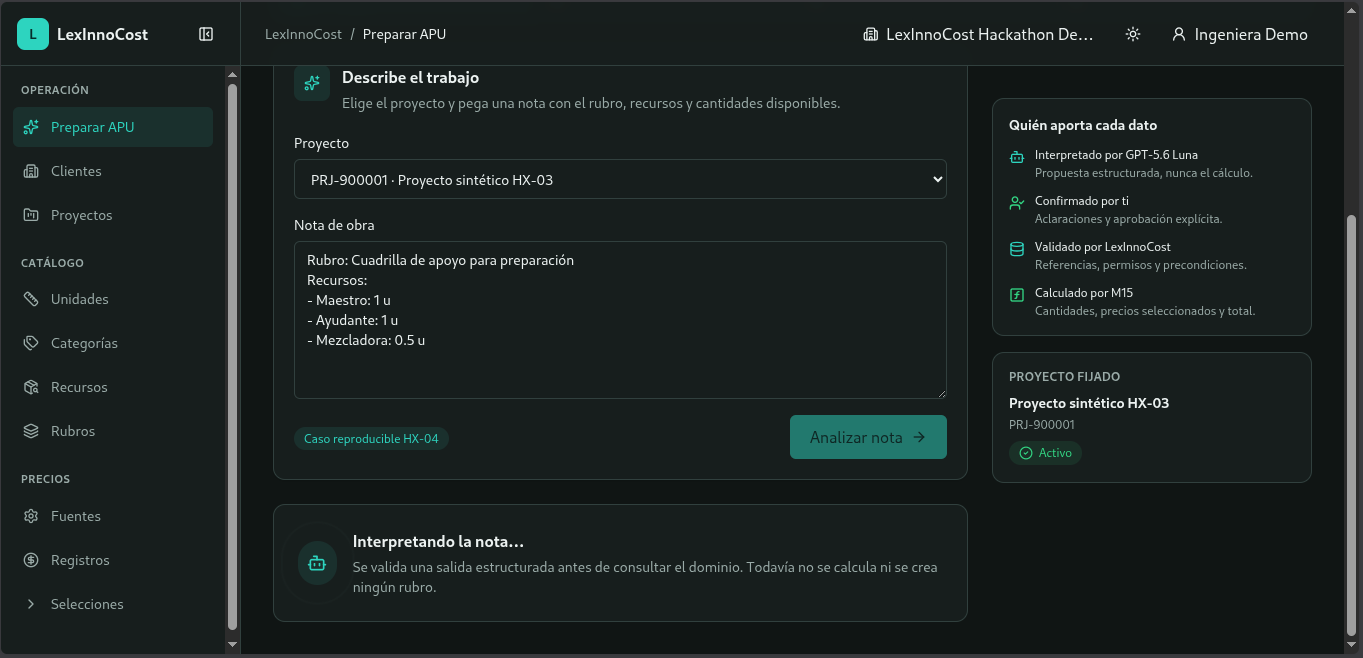
Validating...
-
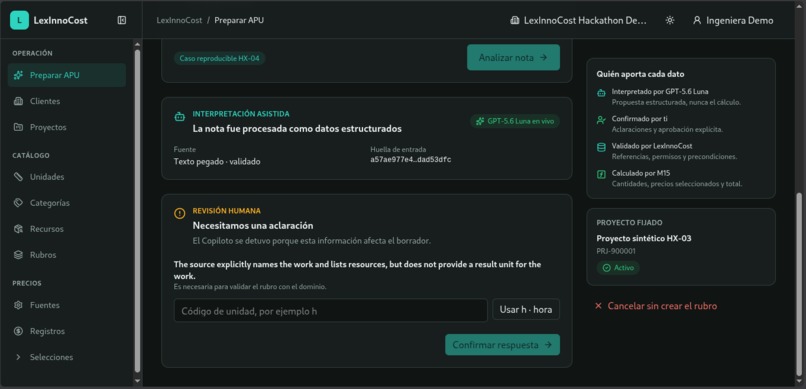
Pipeline flowing
-
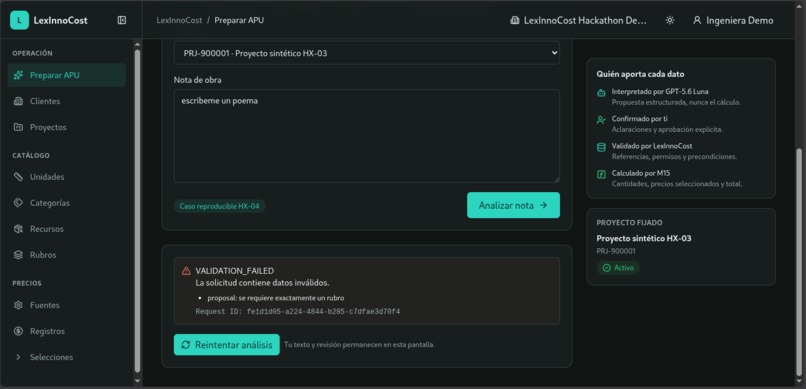
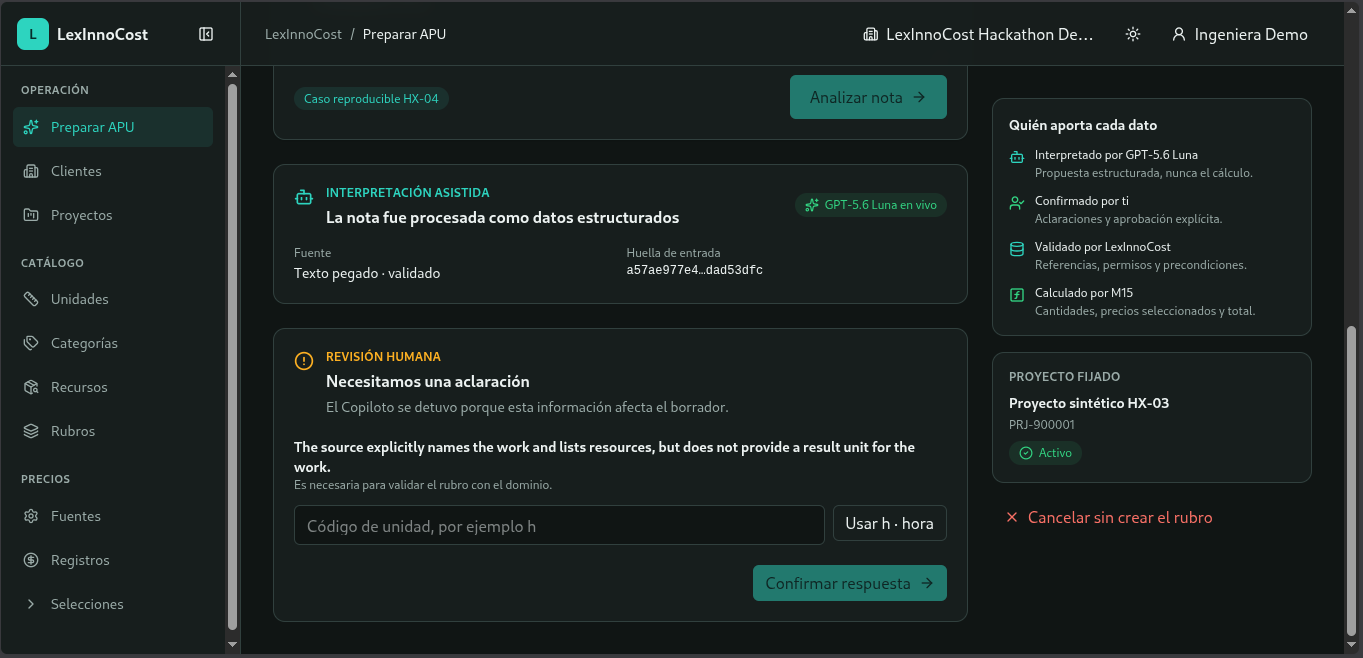
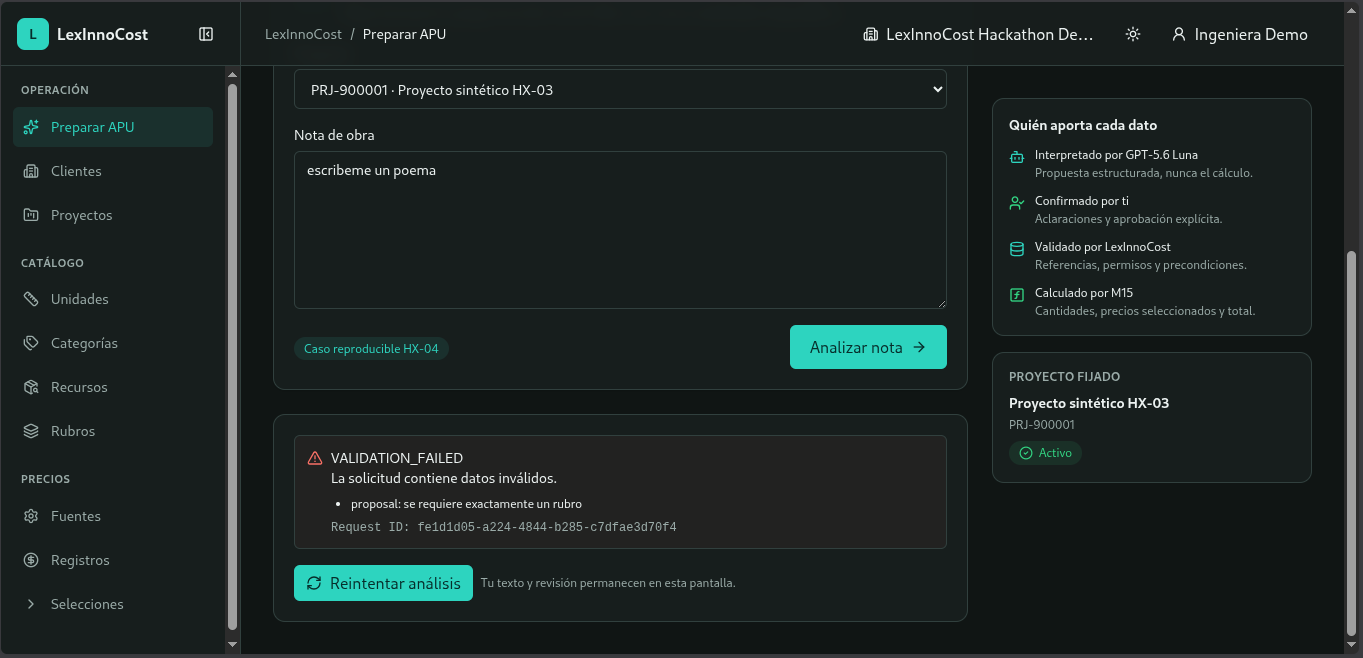
Error Case
-
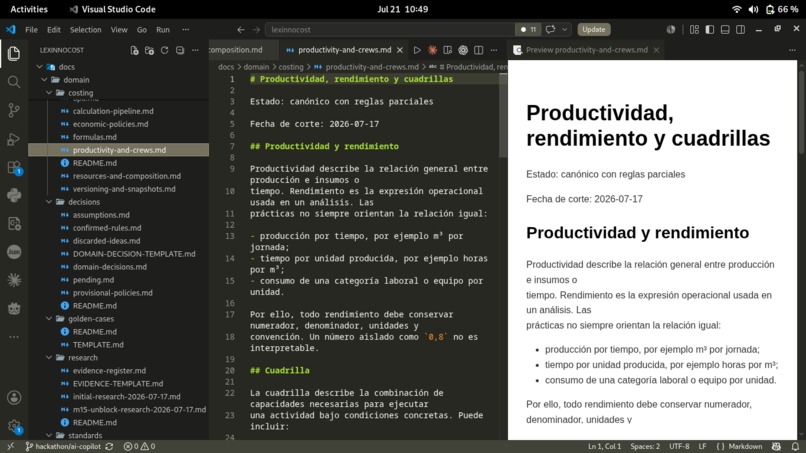
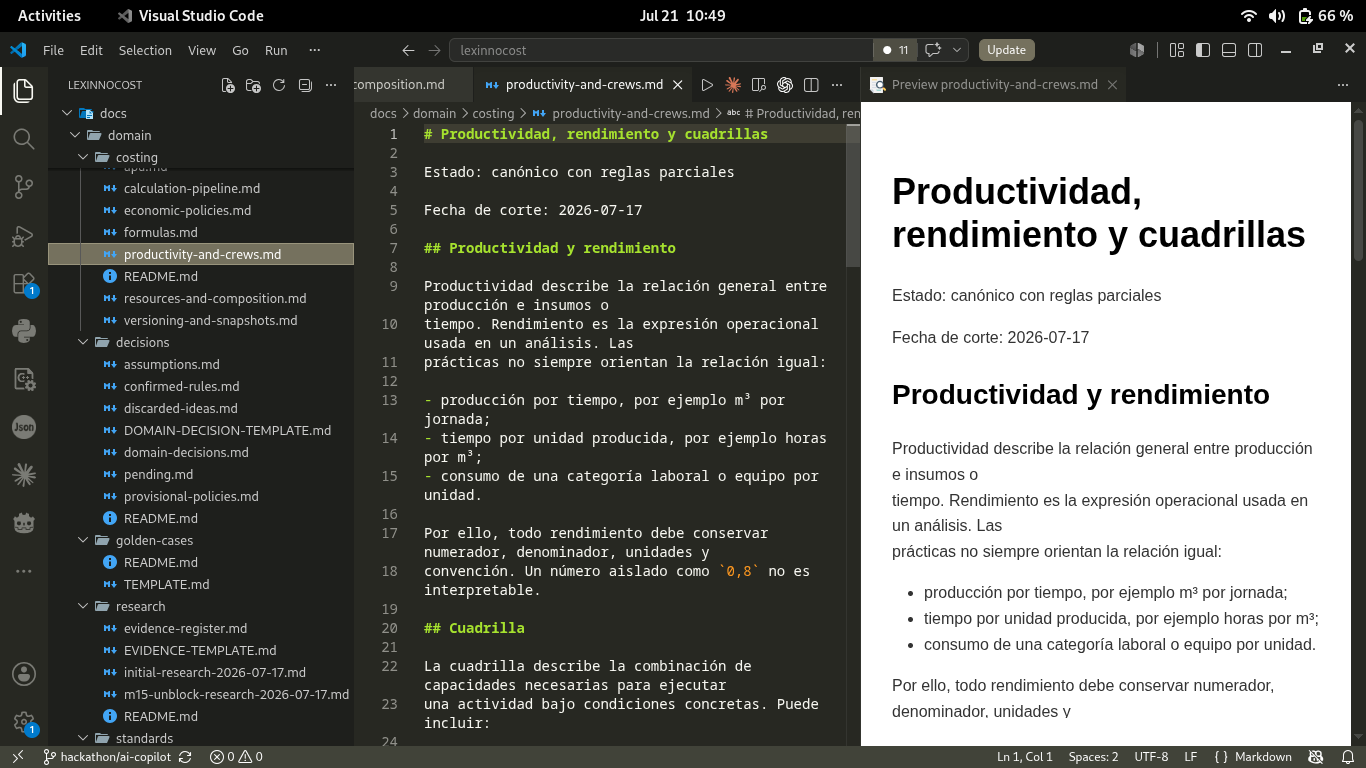
Domain Knowledge Base
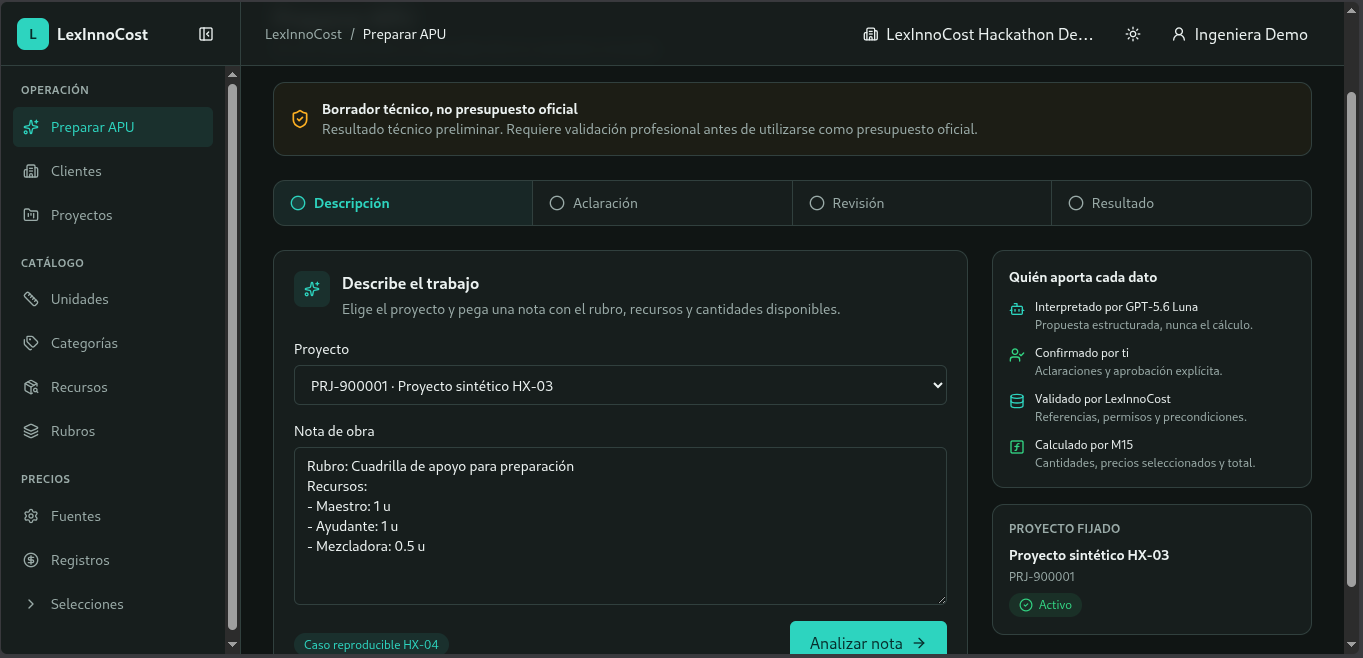
LexInnoCost
Inspiration
The idea was born during a late-night gaming session with a civil engineer. While we were playing, the conversation drifted toward one of his biggest frustrations: preparing construction budgets and Analysis of Unit Prices (APUs) was still a slow, repetitive process that consumed hours of manual work.
He had already experimented with AI assistants. They could certainly speed up parts of the job, but every generated result still had to be reviewed, corrected and validated. As projects grew larger—or several estimates had to be prepared in parallel—that back-and-forth became repetitive, making AI feel more like a helpful assistant than a complete workflow.
That discussion sparked a simple question:
What if AI could collaborate with engineers inside a structured engineering process instead of just generating text?
A few days later, after development had already started, I discovered OpenAI Build Week and decided to use the opportunity to accelerate a product I were already excited to build—one intended to continue growing long after the hackathon.
What it does
The platform accelerates the preparation of:
- Bills of Quantities (BOQs)
- Analysis of Unit Prices (APUs)
- Cost estimates
- Supporting engineering documentation
Instead of asking an LLM to estimate an entire project, responsibilities are intentionally separated.
Deterministic engineering rules remain the source of truth, while GPT-5.6 helps interpret requirements, structure information and generate reviewable proposals. Every AI-generated result must be validated before becoming part of the project.
This hybrid approach delivers faster workflows without sacrificing transparency, traceability or engineering accountability.
How we built it
Rather than treating AI as the system itself, I designed it as one component of a broader engineering workflow.
The foundation is a deterministic cost engine backed by a Domain Knowledge Base (DKB) that captures construction concepts, terminology and engineering rules. GPT-5.6 sits on top of that foundation, helping engineers interpret requirements, structure information and prepare proposals—but never replacing deterministic calculations or human review.
That architecture allows the platform to remain transparent, reproducible and trustworthy while still benefiting from modern AI.
Using Codex during development
Codex became an engineering partner rather than a code generator.
Every milestone followed the same workflow: define the architecture, implement, review, audit, test and refine. That iterative process helped us make better technical decisions while keeping the project aligned with its long-term vision instead of optimizing only for the hackathon.
The repository documents this journey through specifications, implementation reports, audits, Git history and reproducible development environments, providing a transparent record of how the project evolved.
Challenges we ran into
The biggest challenge wasn't building software—it was designing a system that engineers could actually trust.
Construction cost estimation is full of deterministic rules, but also incomplete and ambiguous information. Resources like "Master 1" or "Cement 10" may be obvious to a human, yet they lack the context an AI needs to make reliable decisions. Learning when the system should automate, when it should ask for clarification and when it should defer to the engineer became one of the hardest design problems.
At the same time, I was transforming an actively developed product into a hackathon submission without compromising software quality. Balancing rapid iteration with a solid engineering foundation proved to be just as challenging as building the AI itself.
What we learned
The biggest lesson was learning to think beyond traditional software.
At first, it was difficult to imagine what an AI-native construction platform should look like. Existing applications gave us few references, so designing the interaction between deterministic engineering rules and AI required rethinking the problem from the ground up.
As the project evolved, I realized I wasn't just building a faster estimating tool. I were defining the foundation of a specialized engineering agent—one capable of understanding context, collaborating with professionals and assisting throughout the estimation process while leaving critical decisions under human control.
That shift in perspective may be our most valuable takeaway:
The most exciting AI products won't simply add chat to existing software—they will become domain experts that work alongside people.
What's next
Build Week is only the beginning.
Our roadmap includes:
- Document ingestion from plans and technical specifications
- Richer AI copilots
- Expanded engineering knowledge modules
- Collaborative estimation workflows
- Advanced reporting
- Messaging platform integrations, starting with Telegram
- Broader support for construction professionals
The long-term vision is to build a construction cost engineering platform that professionals can confidently use on real projects—where AI accelerates repetitive work while engineers remain accountable for every decision.
Built With
- chatgpt
- go
- gpt5.6
- postgresql
- react
- redis


Log in or sign up for Devpost to join the conversation.