-
-
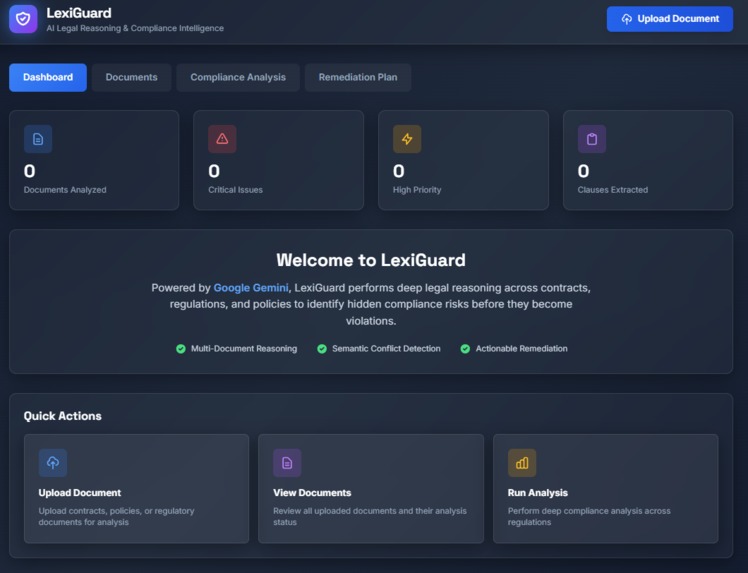
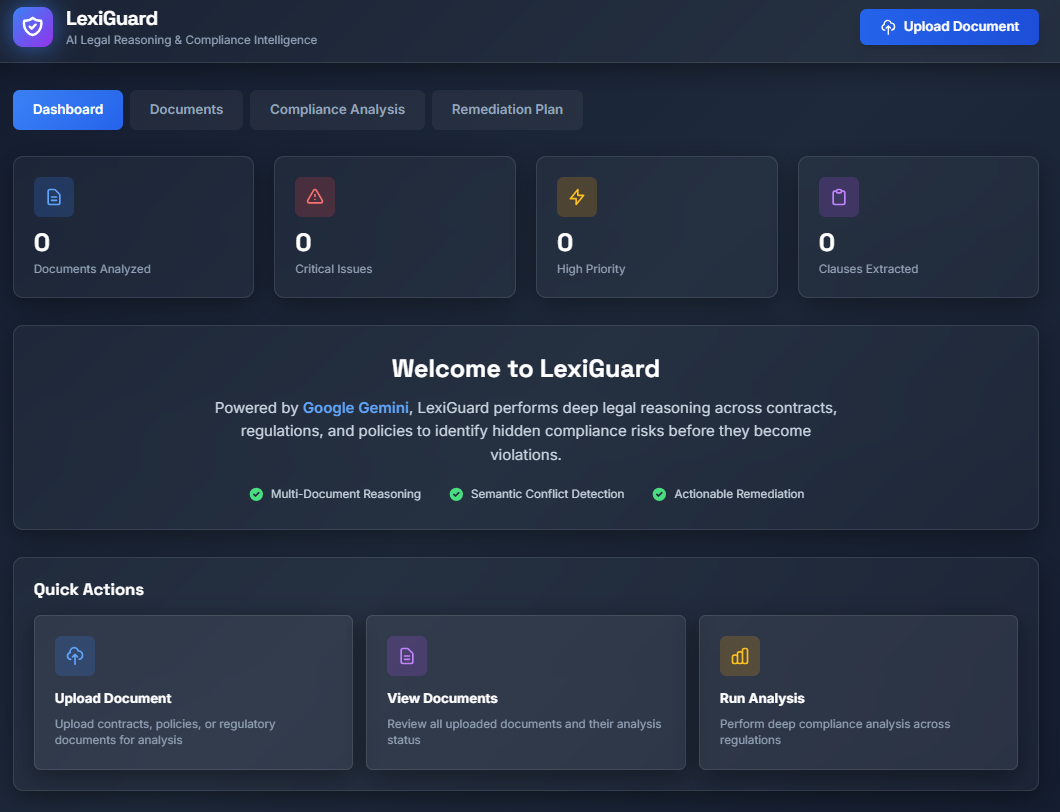
Dashboard Before Uploading documents.
-
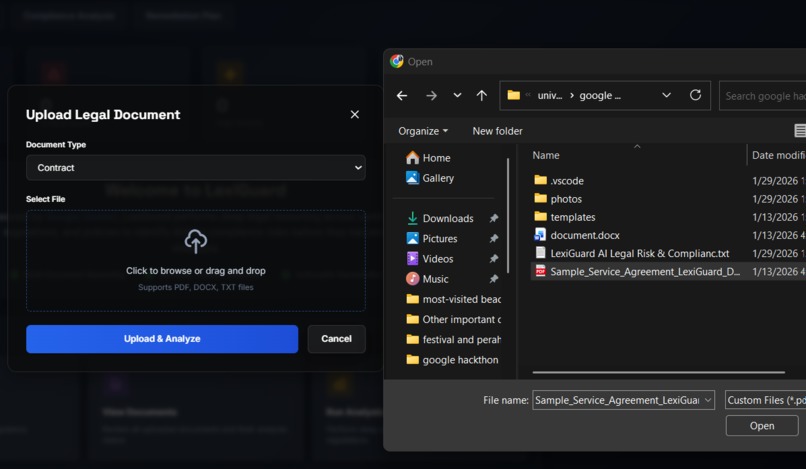
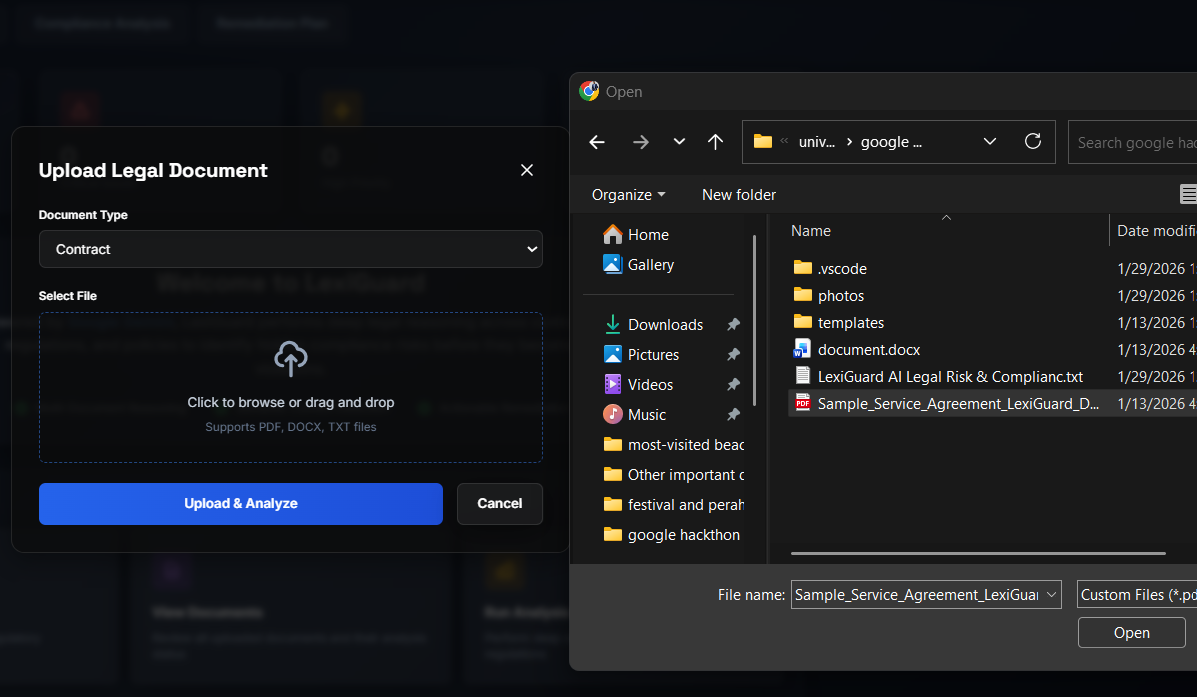
Documents upload.
-
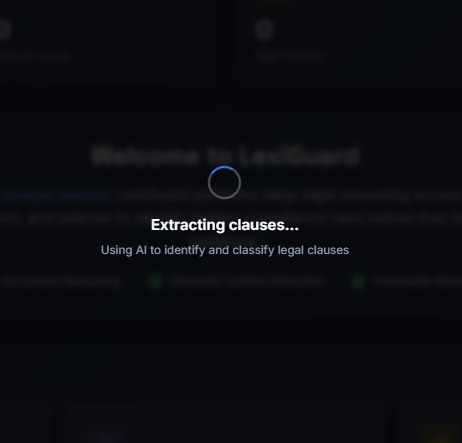
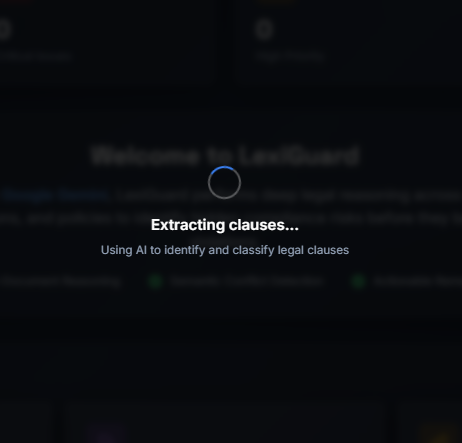
Running Exact details.
-
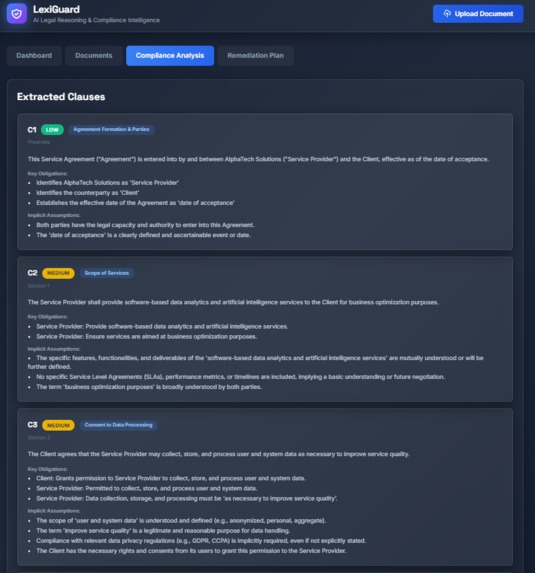
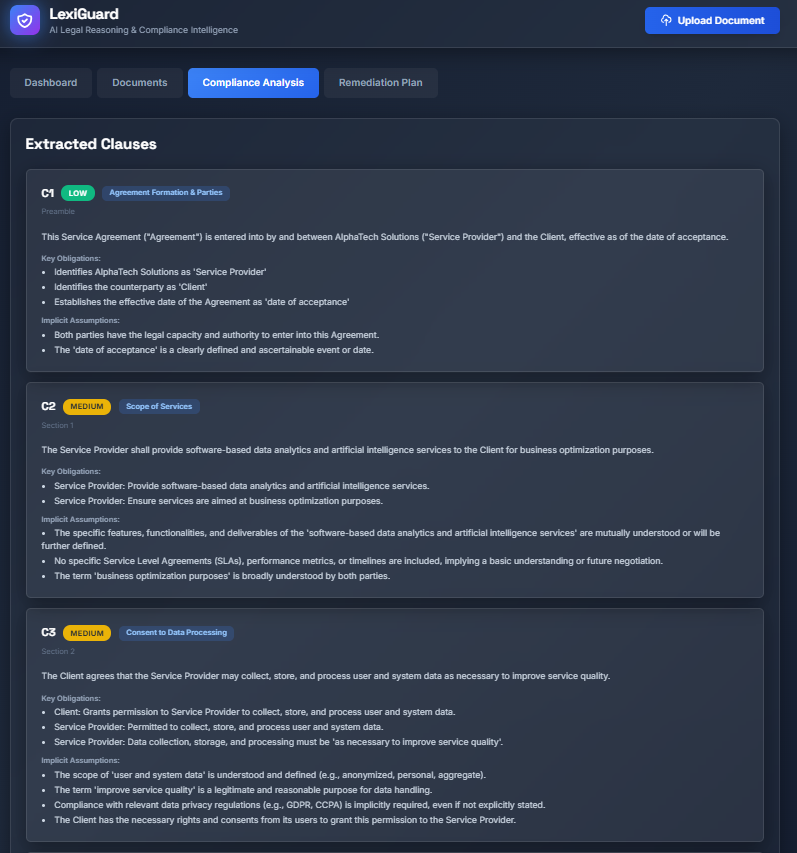
Analysis report exact clause part 01.
-
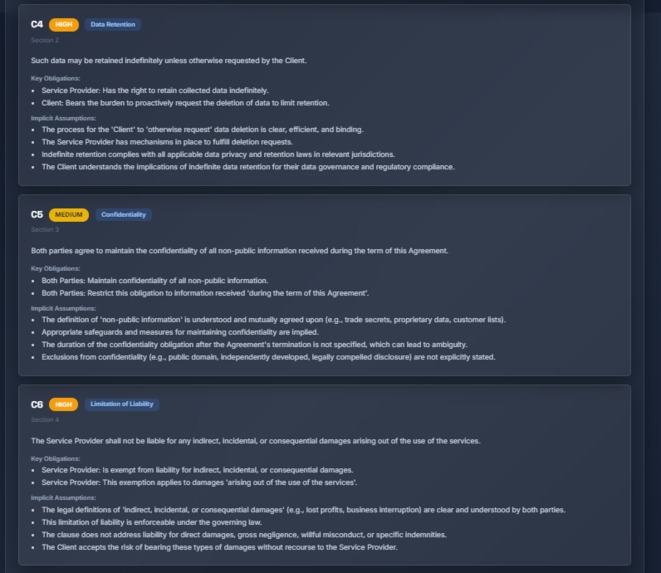
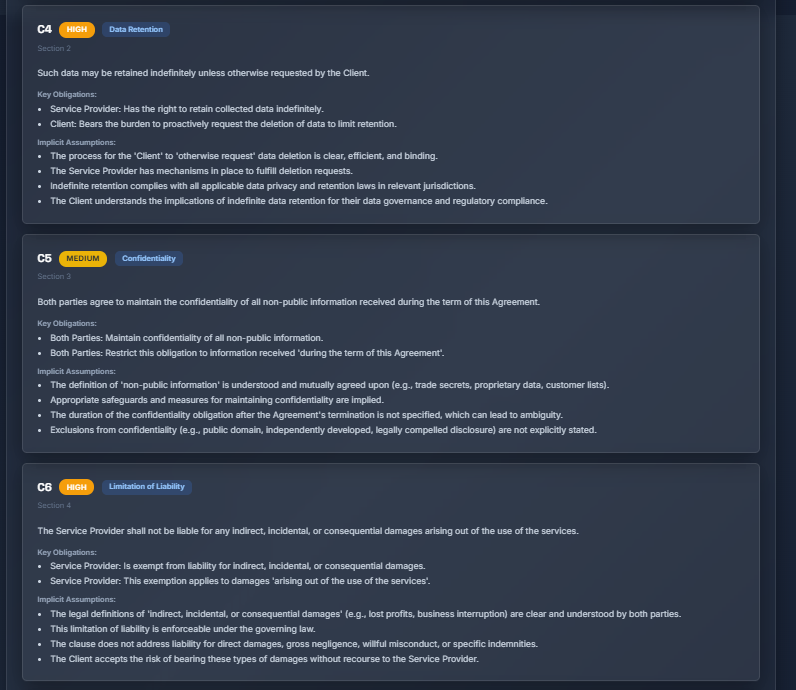
Analysis report exact clause part 02.
-
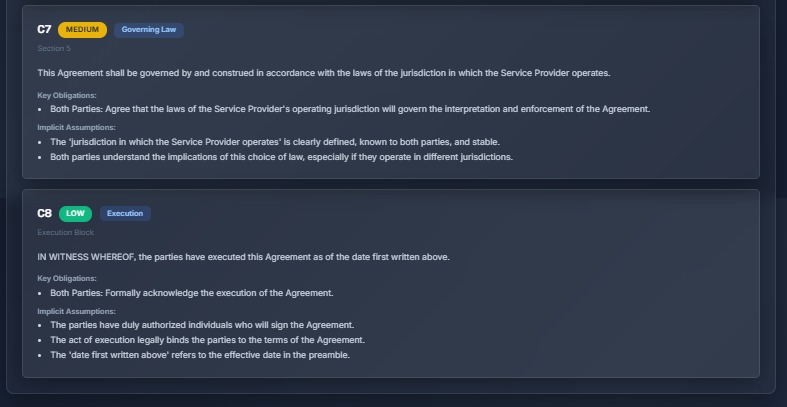
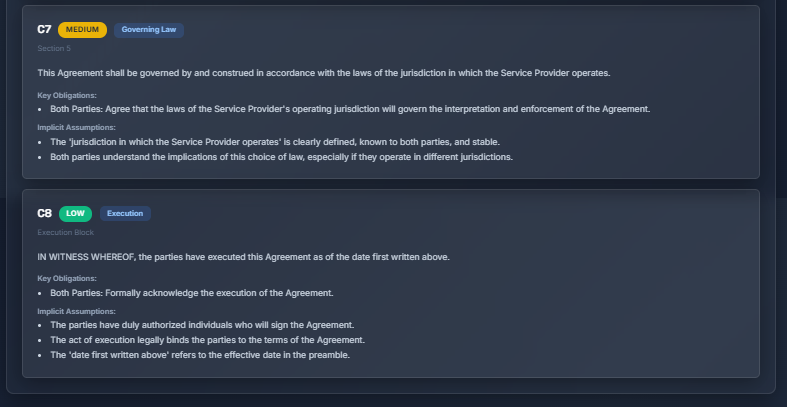
Analysis report exact clause part 03.
-
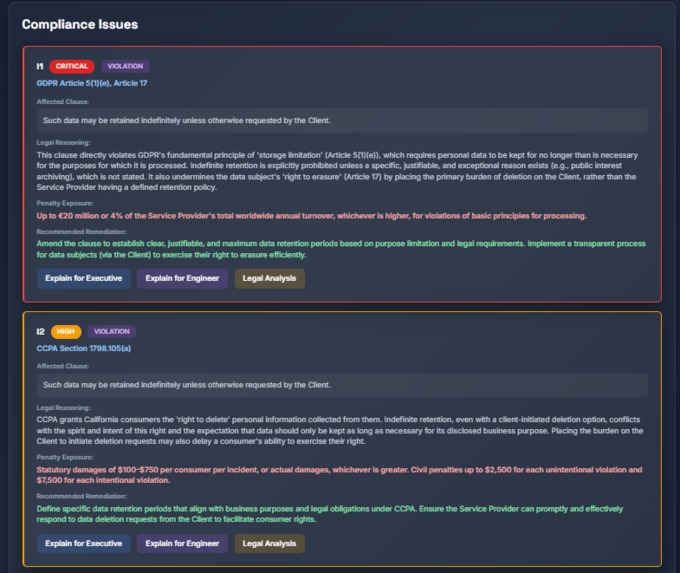
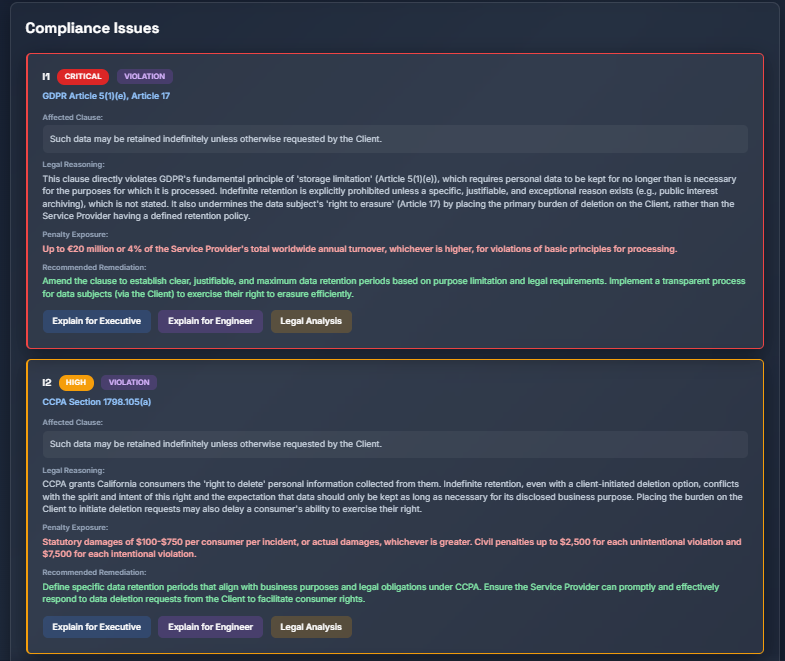
Analysis report compliance issue part 01.
-
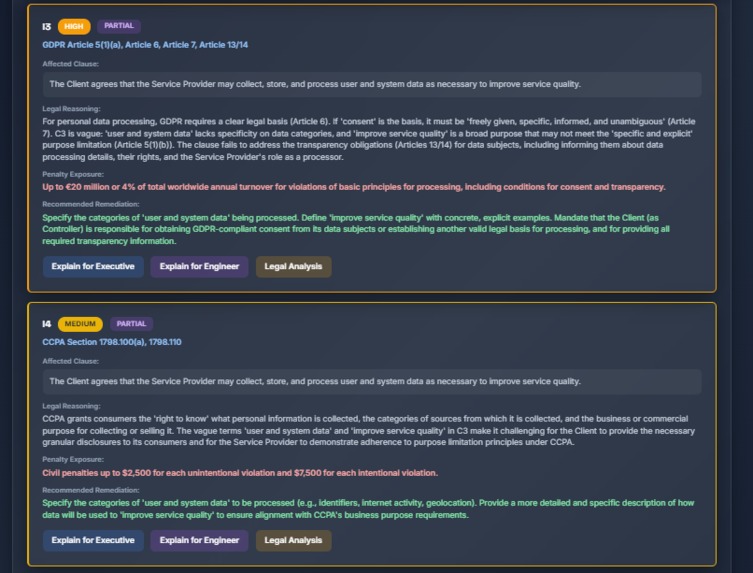
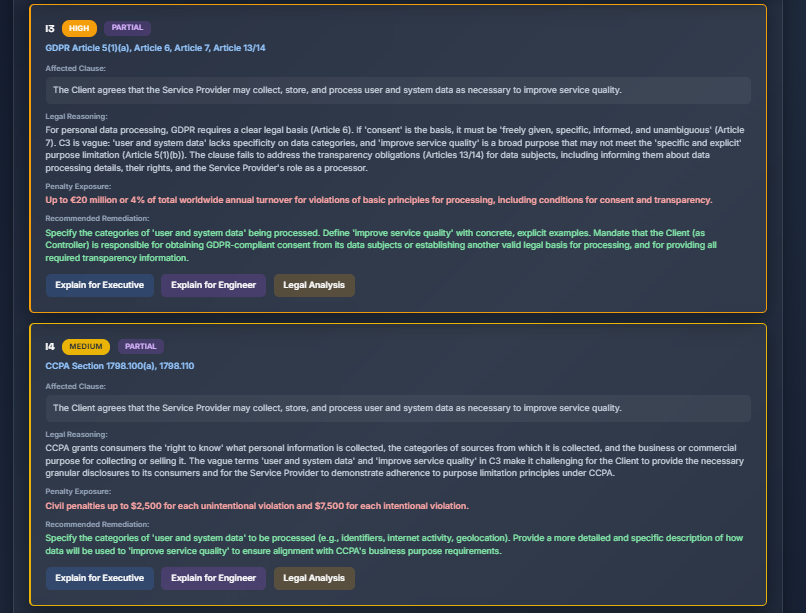
Analysis report compliance issue part 02.
-
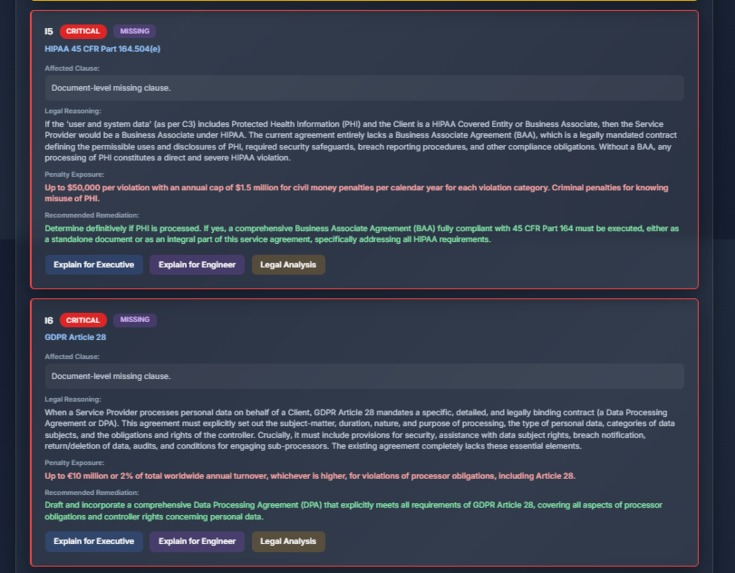
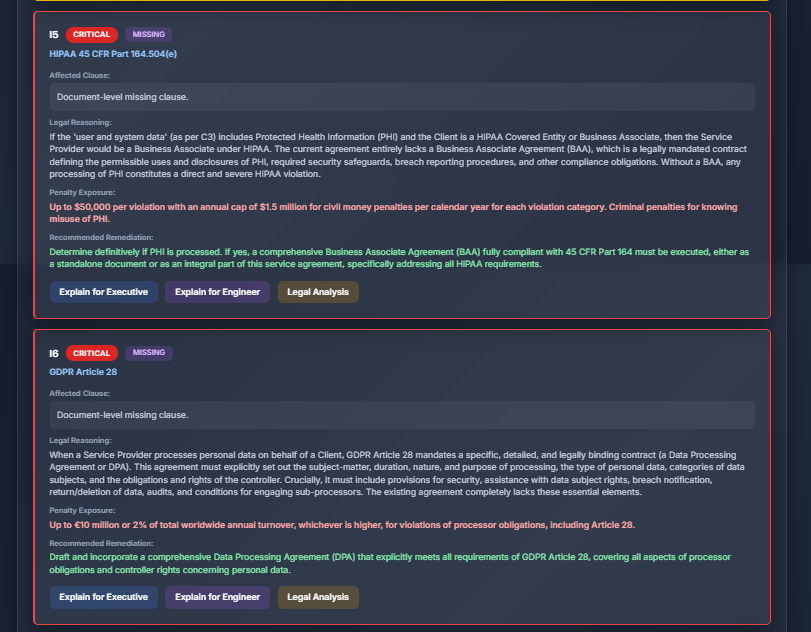
Analysis report compliance issue part 03.
-
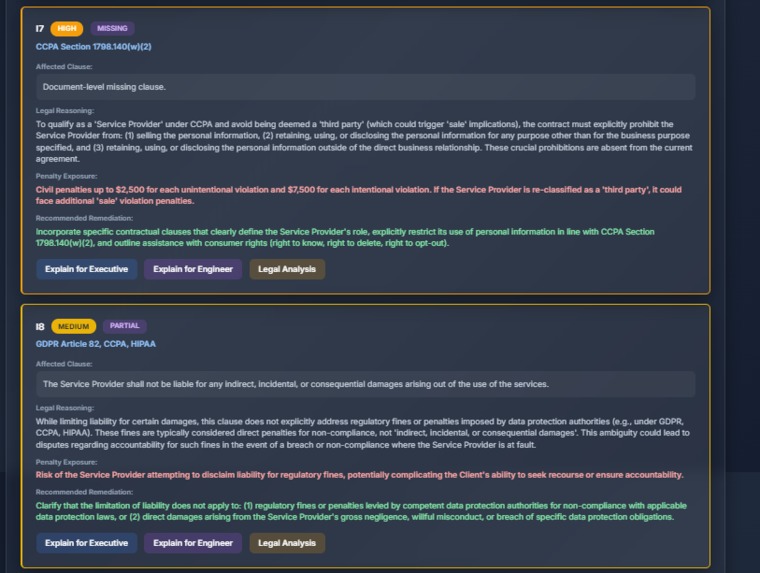
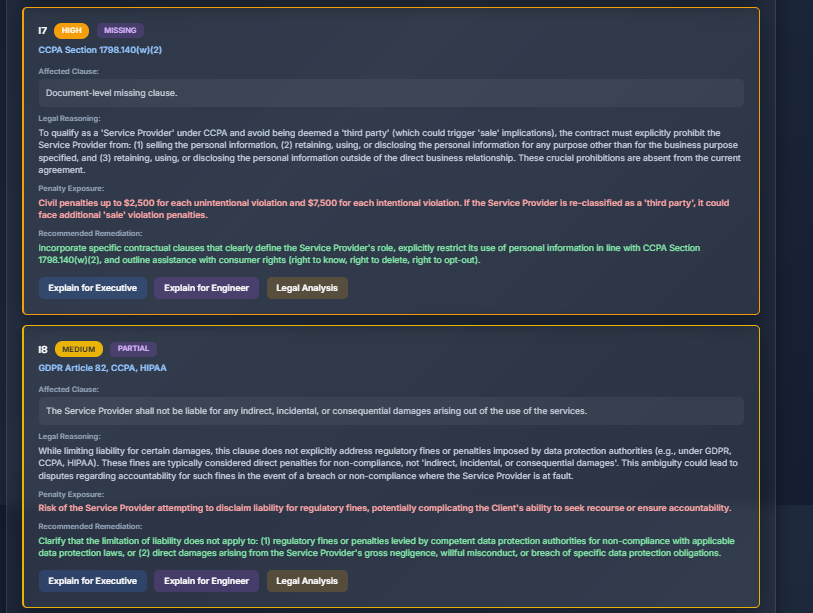
Analysis report compliance issue part 04.
-
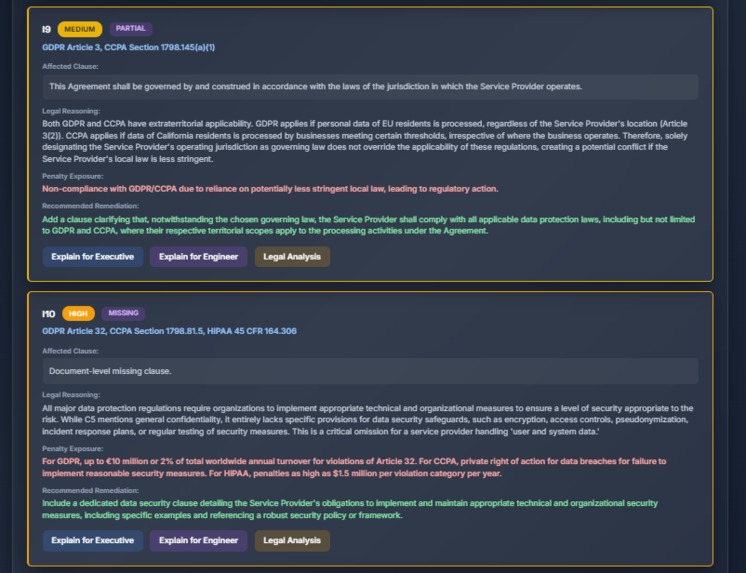
Analysis report compliance issue part 05.
-
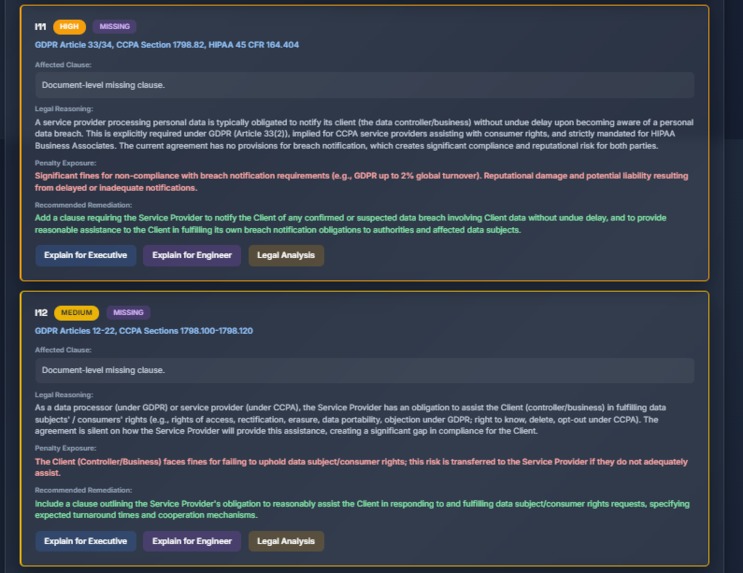
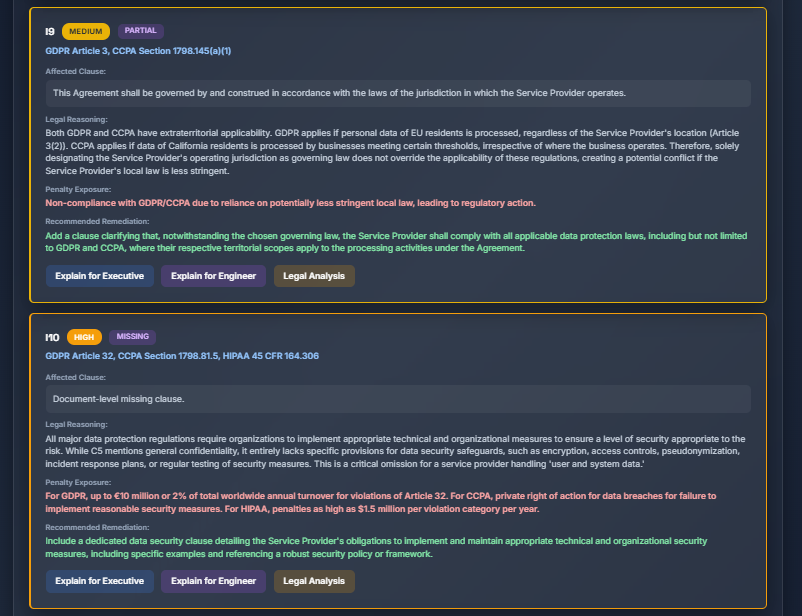
Analysis report compliance issue part 06.
-
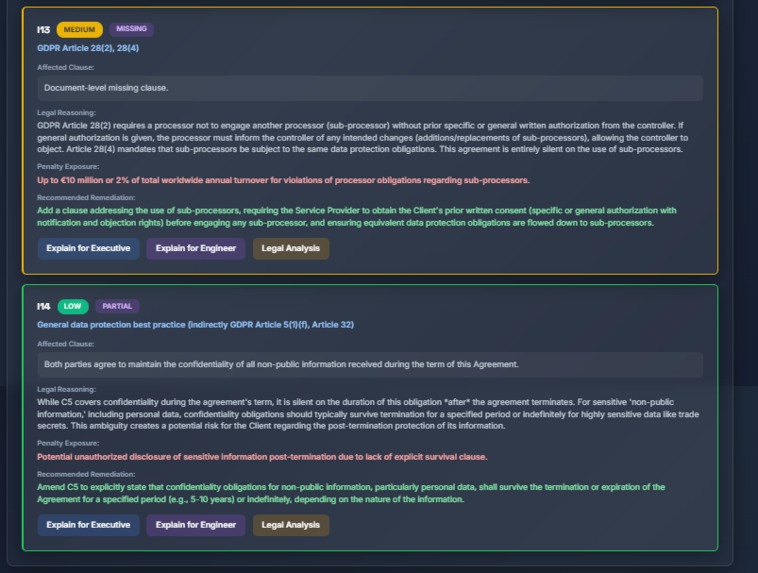
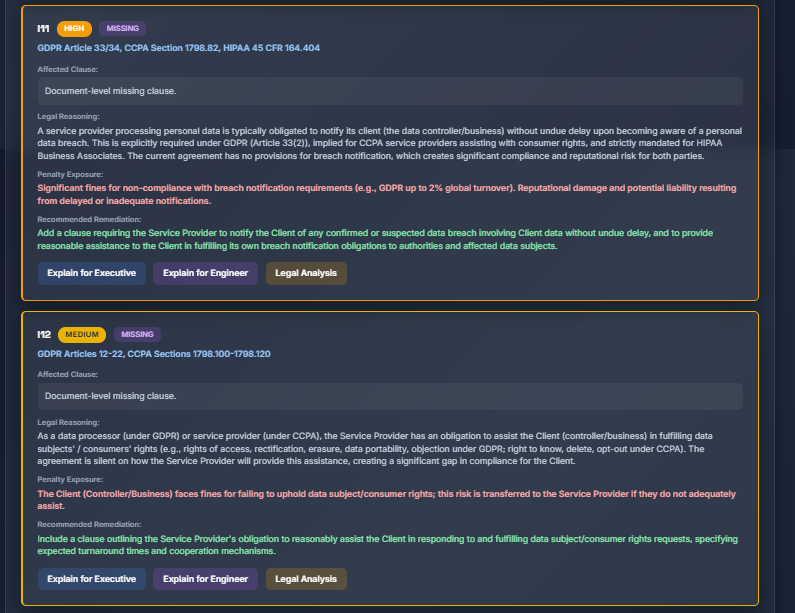
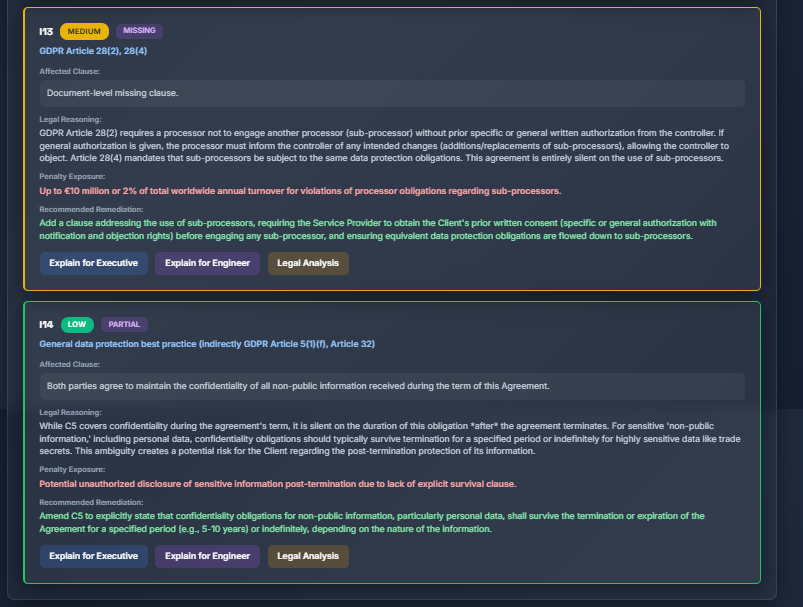
Analysis report compliance issue part 07.
-
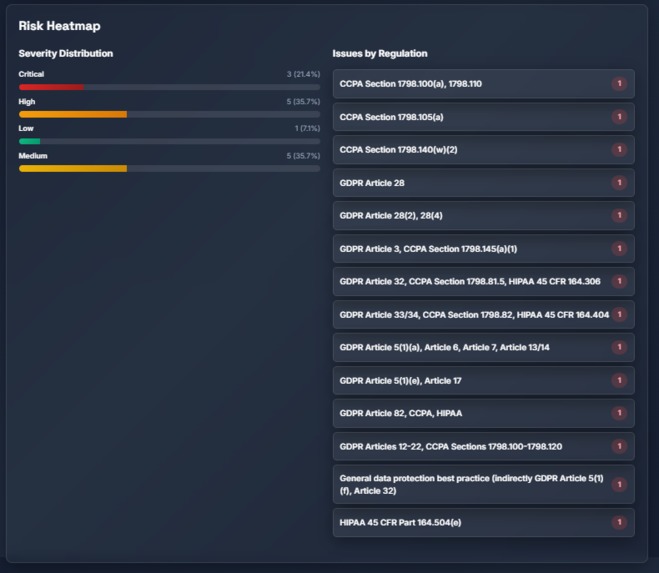
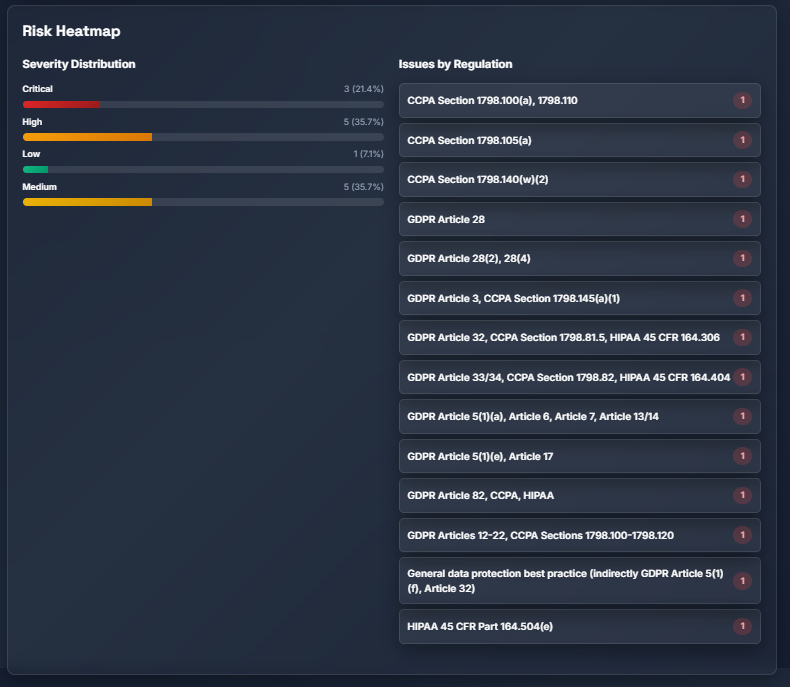
Analysis report Risk heat map.
-
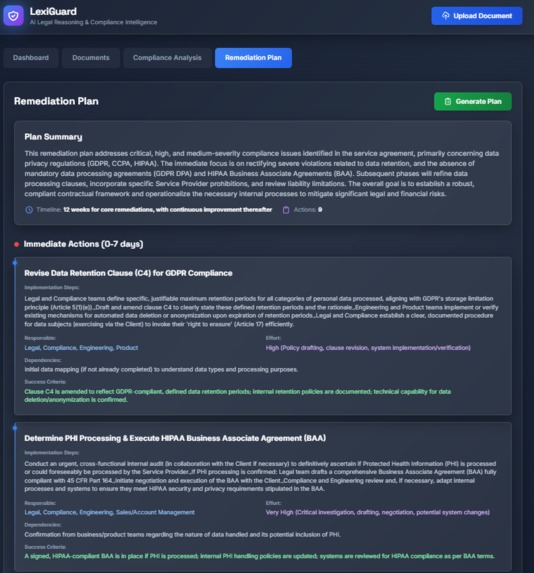
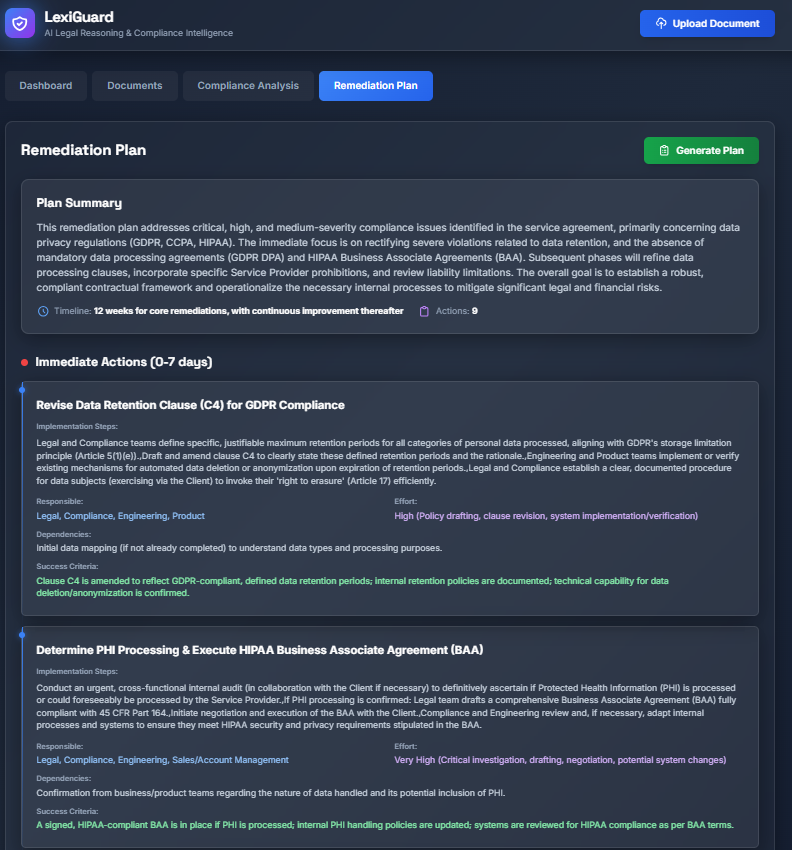
Analysis report Remediation plan part 01.
-
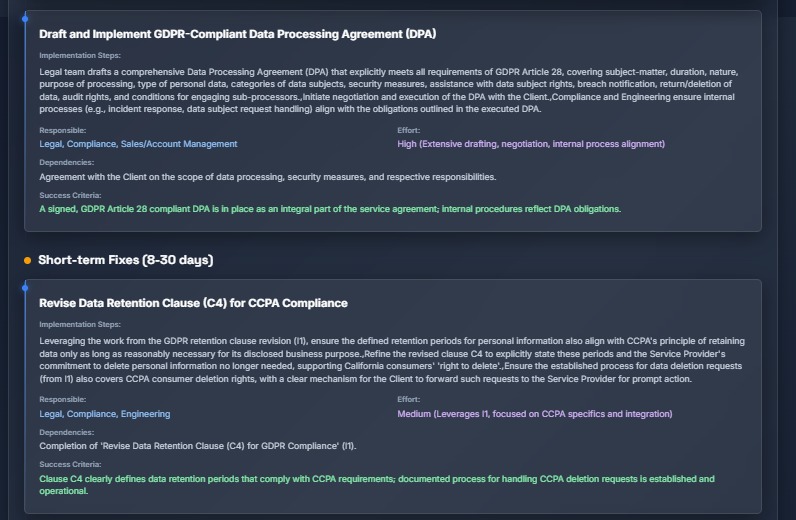
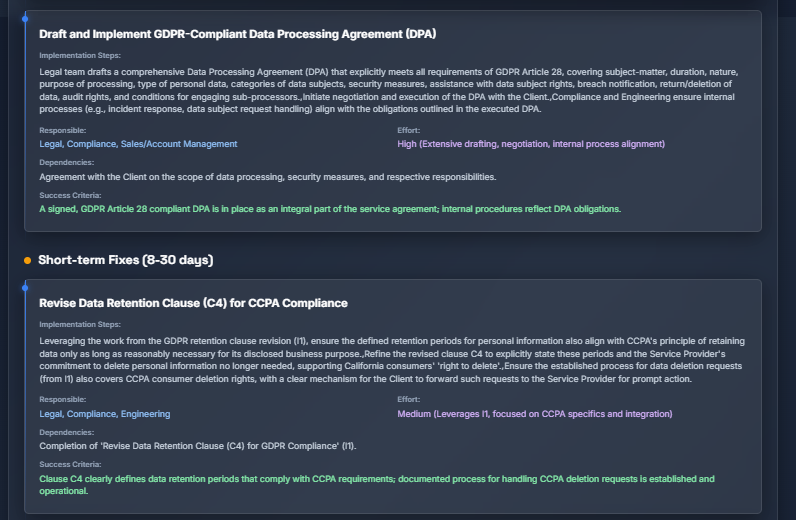
Analysis report Remediation plan part 02.
-
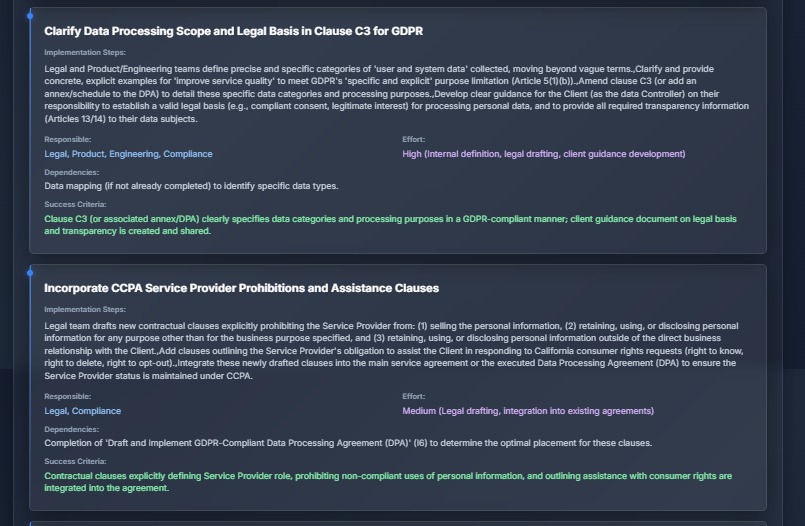
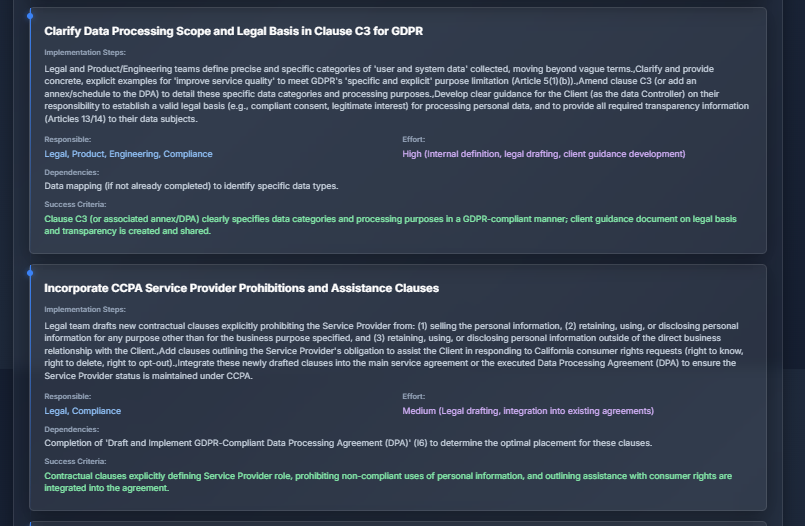
Analysis report Remediation plan part 03.
-
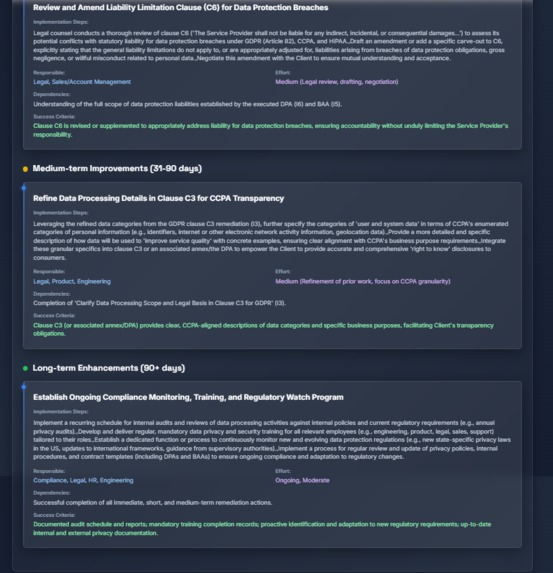
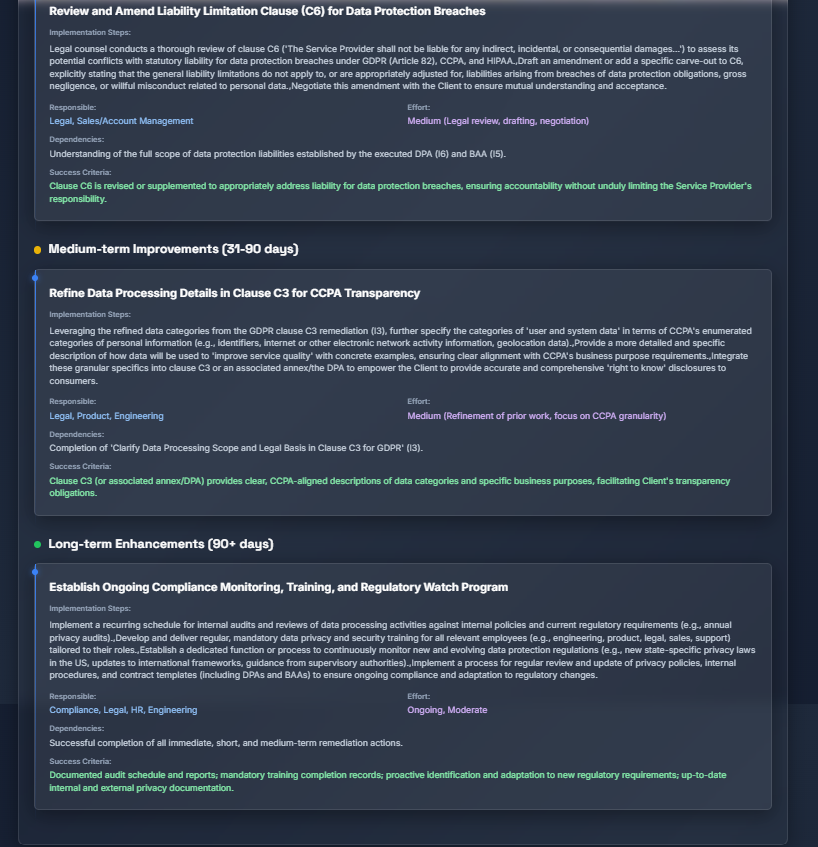
Analysis report Remediation plan part 04.
About the Project — LexiGuard
Inspiration
LexiGuard was inspired by a real gap I noticed in legal-tech tools: most systems either summarize contracts or flag keywords, but fail to explain why something is risky and how to fix it. Compliance failures under regulations like GDPR, CCPA, and HIPAA are expensive, yet legal reviews are slow, manual, and inconsistent. I wanted to build an AI system that reasons like a compliance analyst, not just a text summarizer.
What I Learned
Through this project, I learned how to:
- Design prompt-driven legal reasoning using large language models
- Perform semantic clause extraction without labeled datasets
- Map natural language clauses to regulatory intent, not keywords
- Build a full-stack AI system that converts analysis into execution-ready remediation
- Control hallucinations using grounded prompts and structured JSON outputs
How I Built It
LexiGuard is a full-stack AI application built with:
- Flask for backend APIs
- Google Gemini for long-context legal reasoning
- PDF/DOCX/TXT parsers for document ingestion
- Structured JSON pipelines for clause extraction, compliance analysis, and remediation planning
- Tailwind CSS + JavaScript for an interactive, real-time UI
The system follows a clear pipeline:
- Upload legal document
- Extract semantic clauses
- Perform cross-regulation compliance analysis
- Generate risk heatmaps
5. Produce a prioritized remediation roadmap
Challenges Faced
One major challenge was preventing AI hallucination in legal outputs. I solved this by:
- Constraining Gemini with explicit regulatory context
- Forcing schema-validated JSON outputs
- Tying every finding directly to extracted document text
Another challenge was translating complex legal risks into actionable steps, which led to the remediation engine that breaks fixes into 7-day, 30-day, and long-term actions.
Outcome
LexiGuard doesn’t just analyze legal documents — it explains risks, prioritizes them, and tells organizations exactly how to fix them before regulators do.


Log in or sign up for Devpost to join the conversation.