-
-
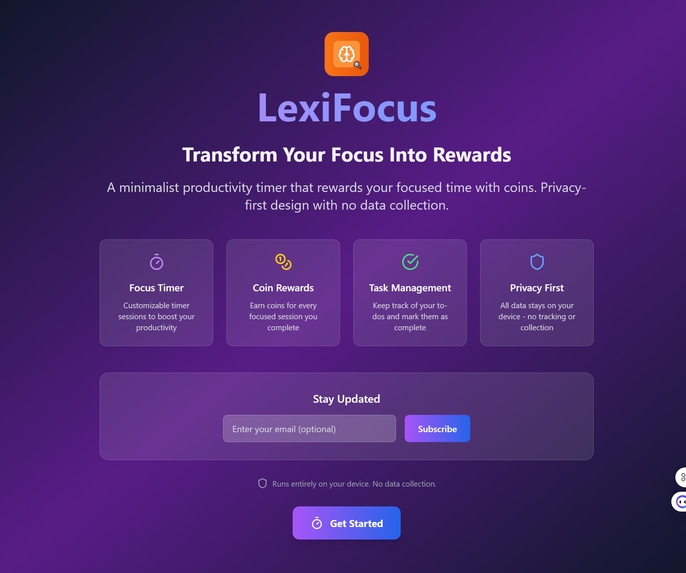
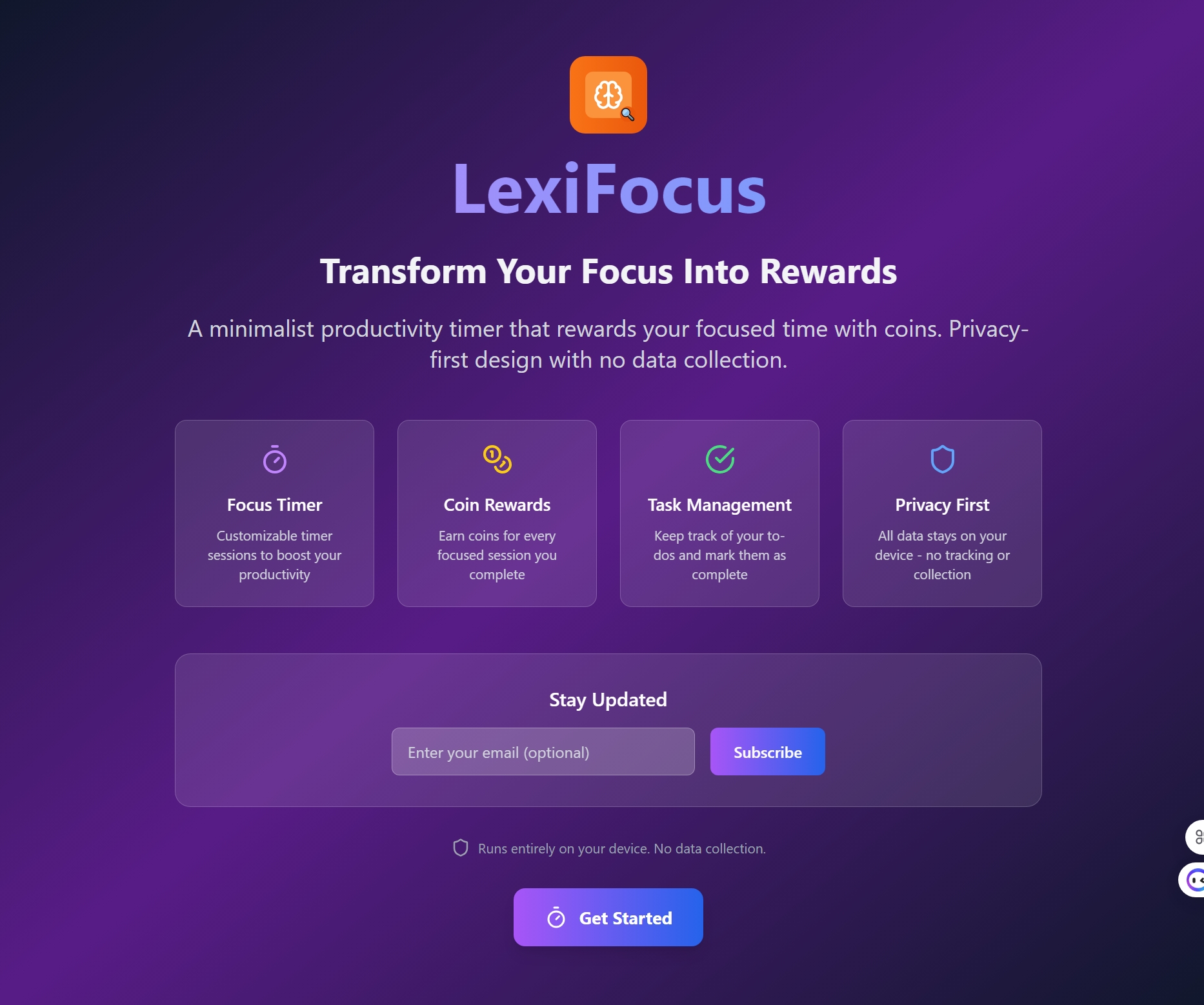
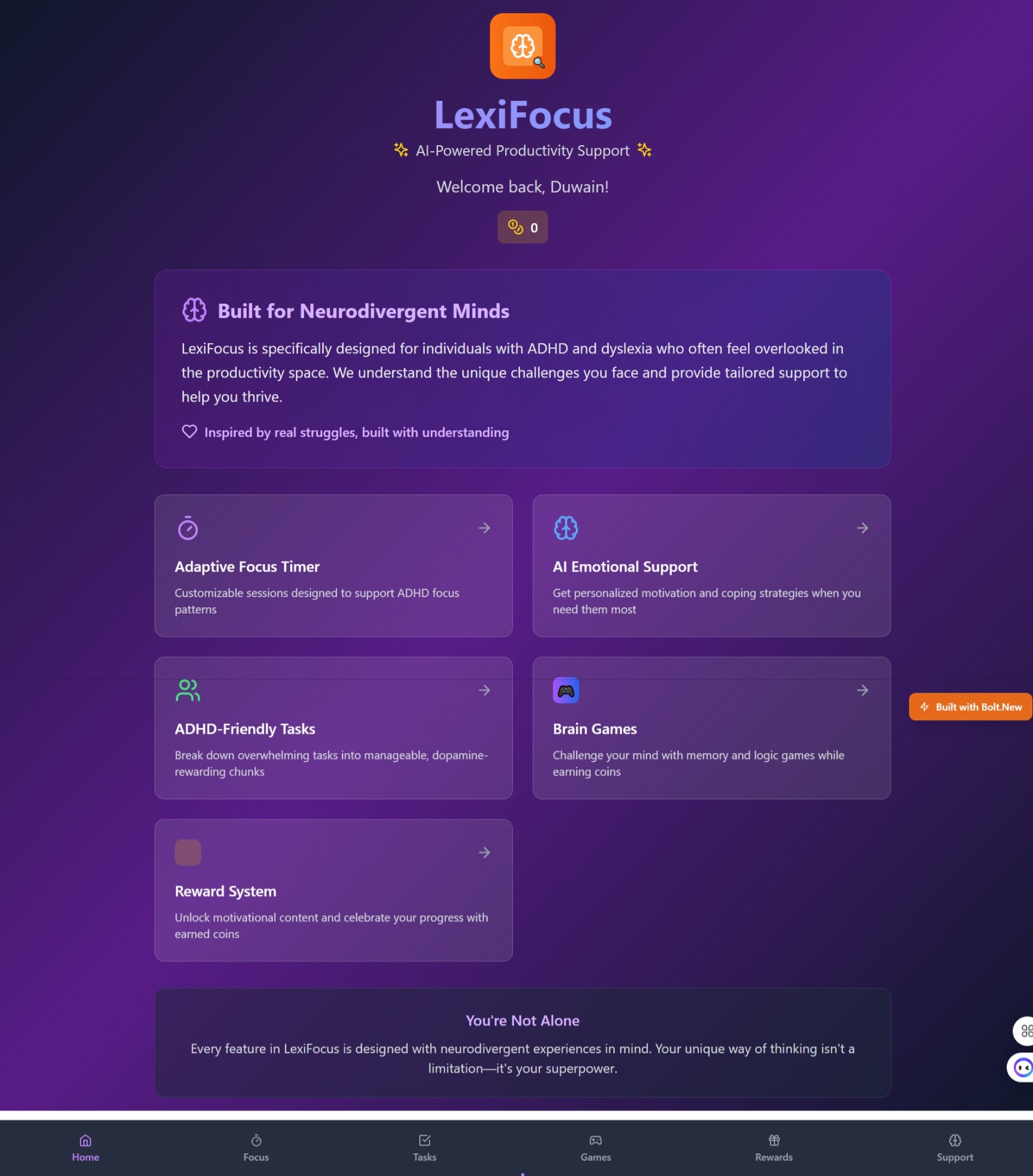
Landing page
-
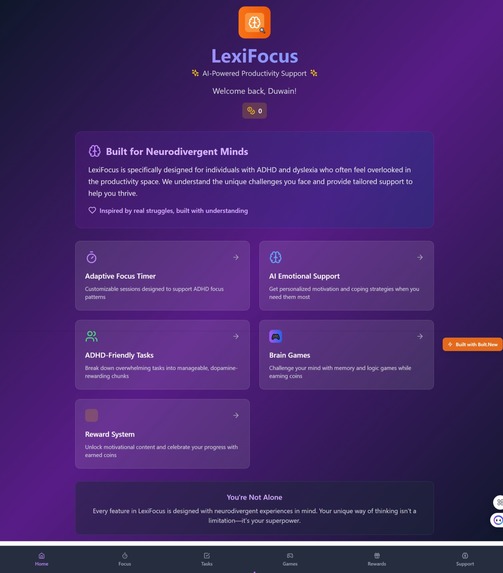
Home Screen
-
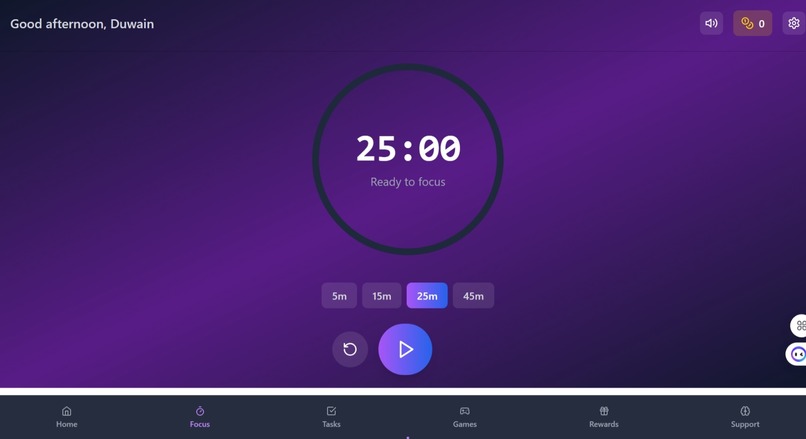
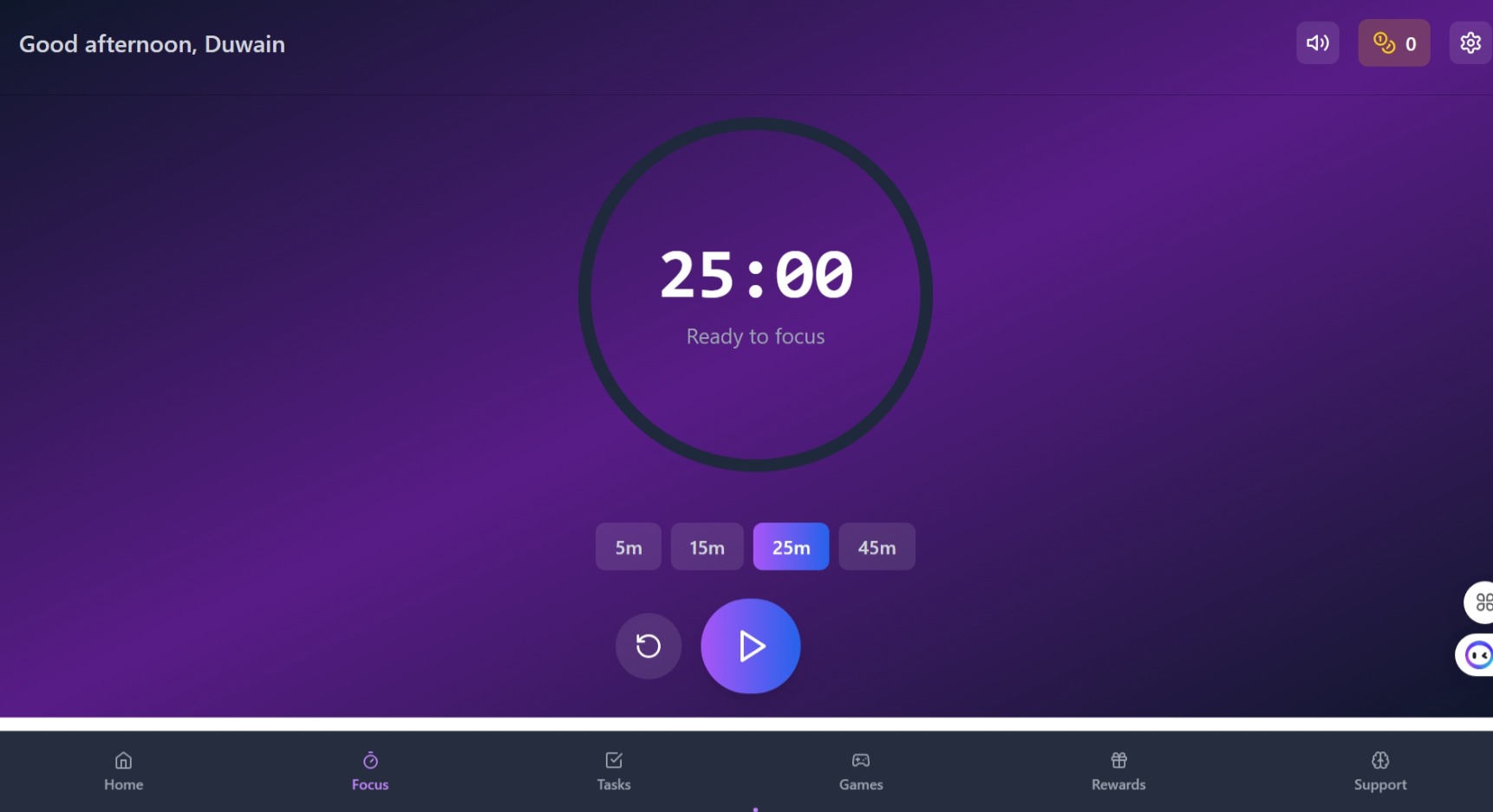
Focus Timer
-
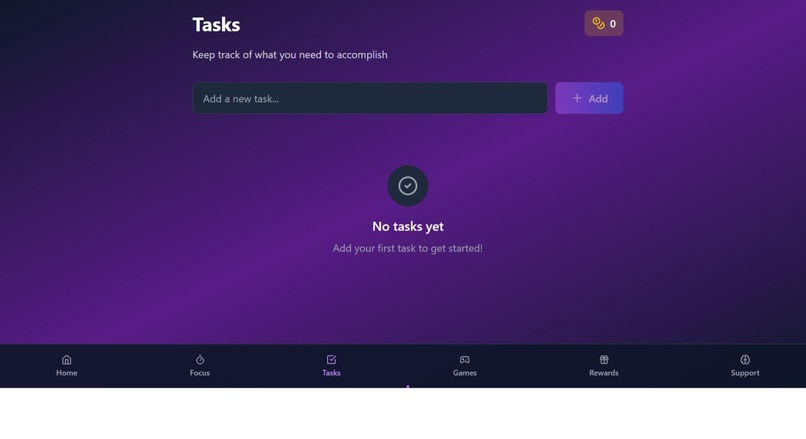
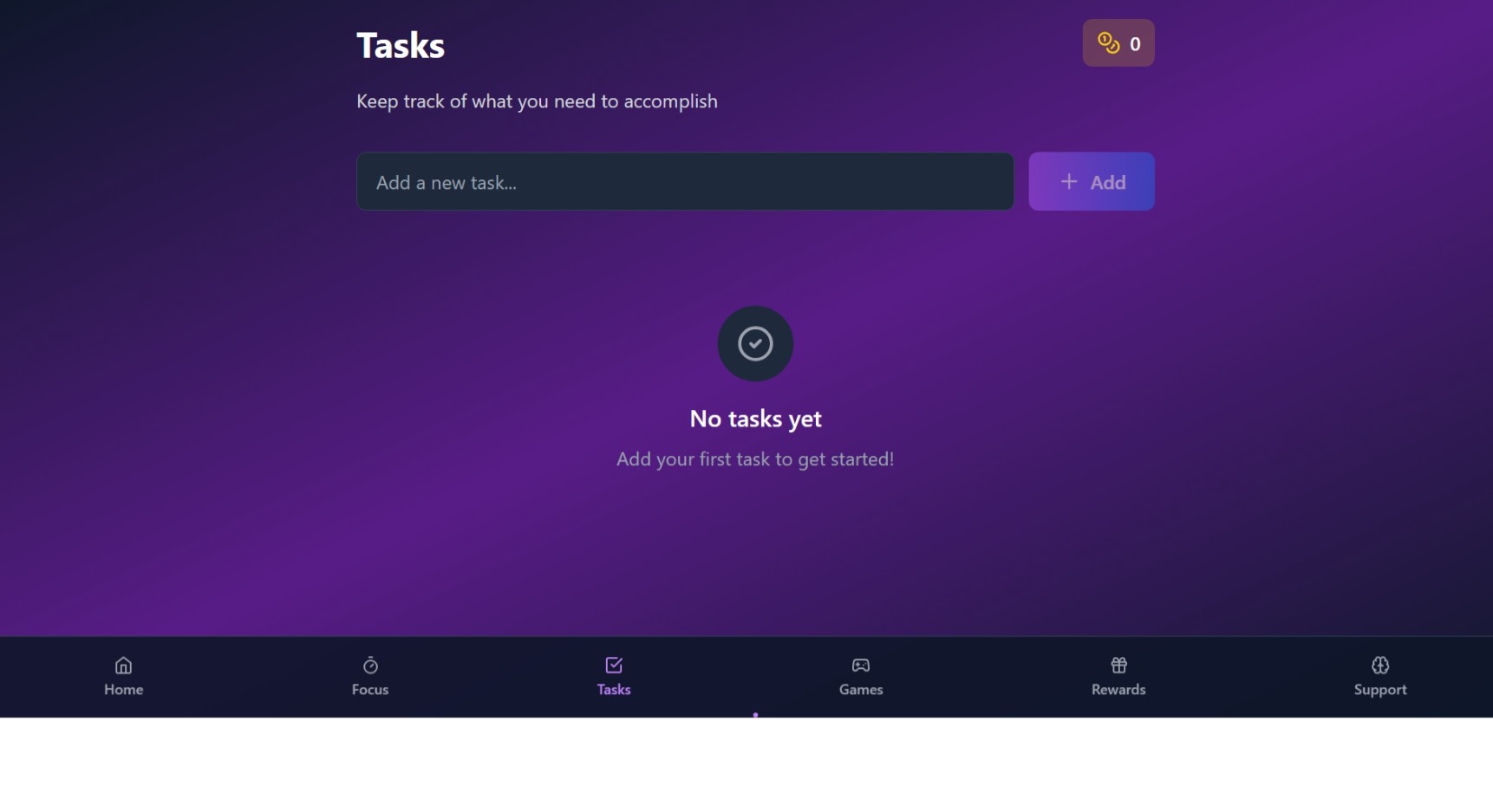
Tasks
-
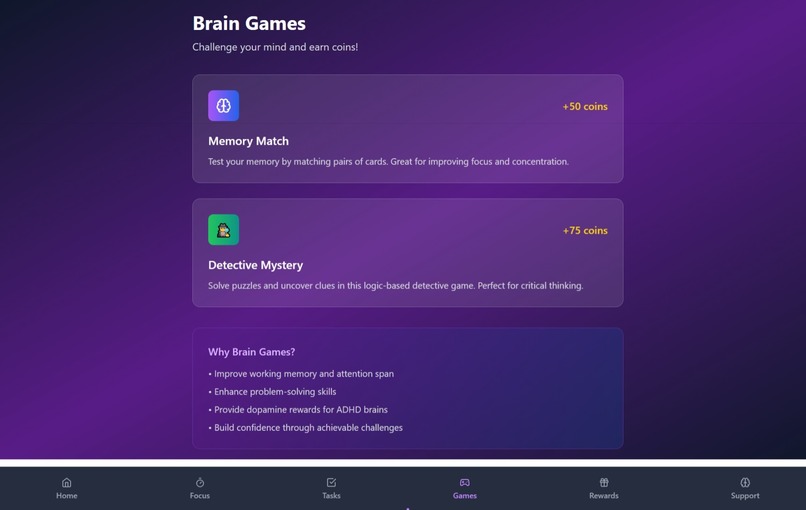
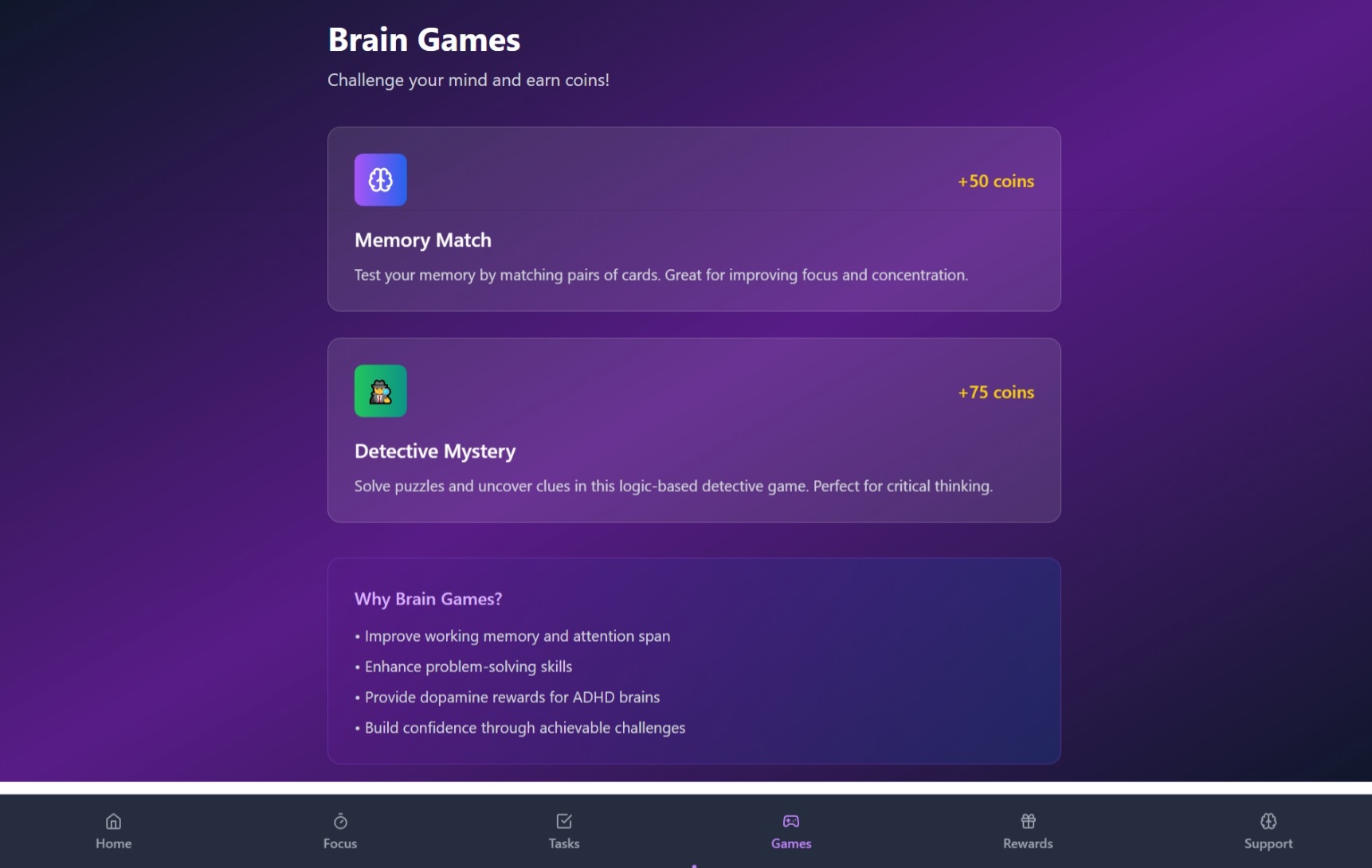
Cognitive/ADHD Games
-
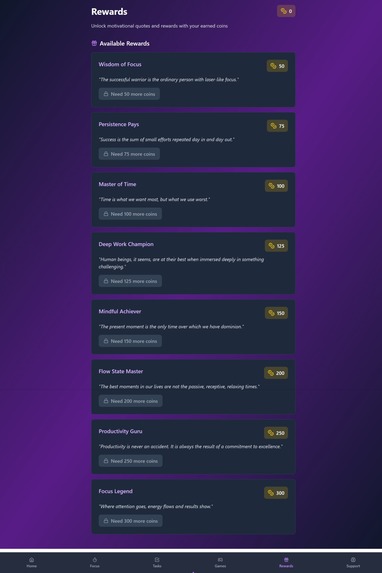
Rewards
-
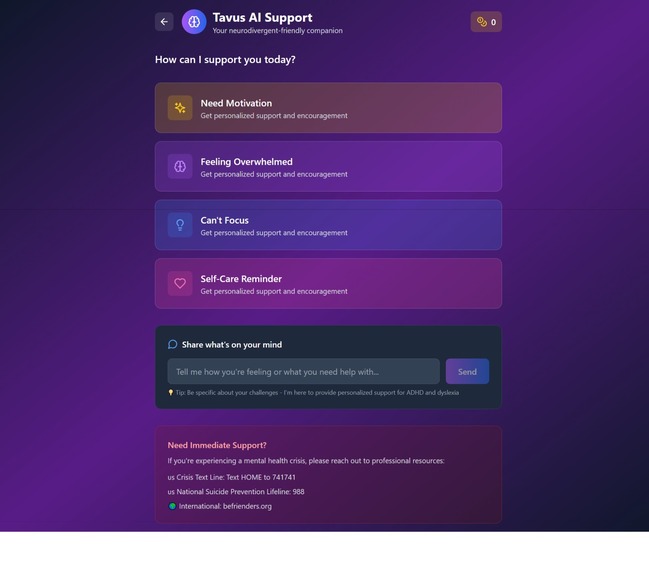
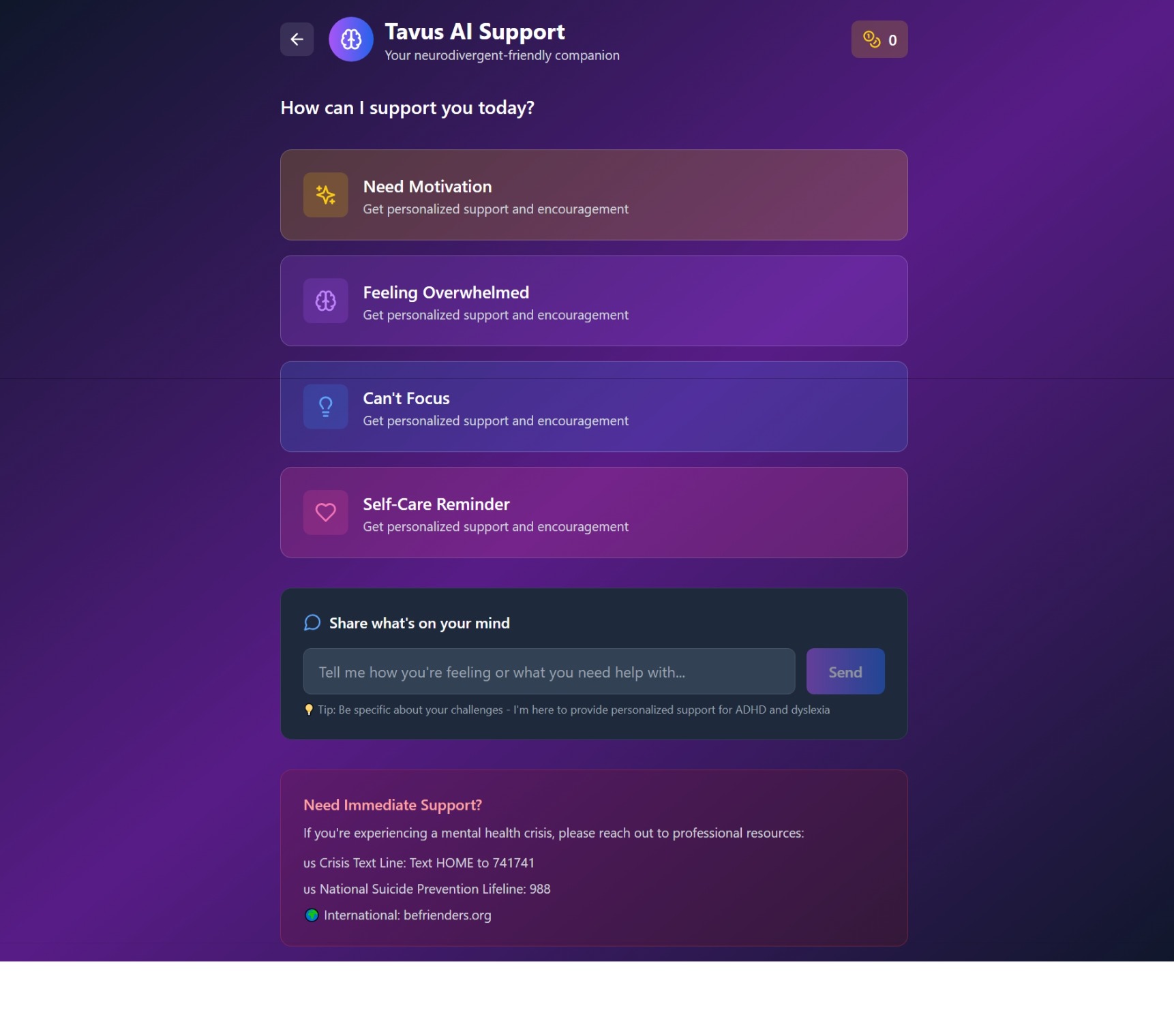
Support/Tavus AI for emotional support
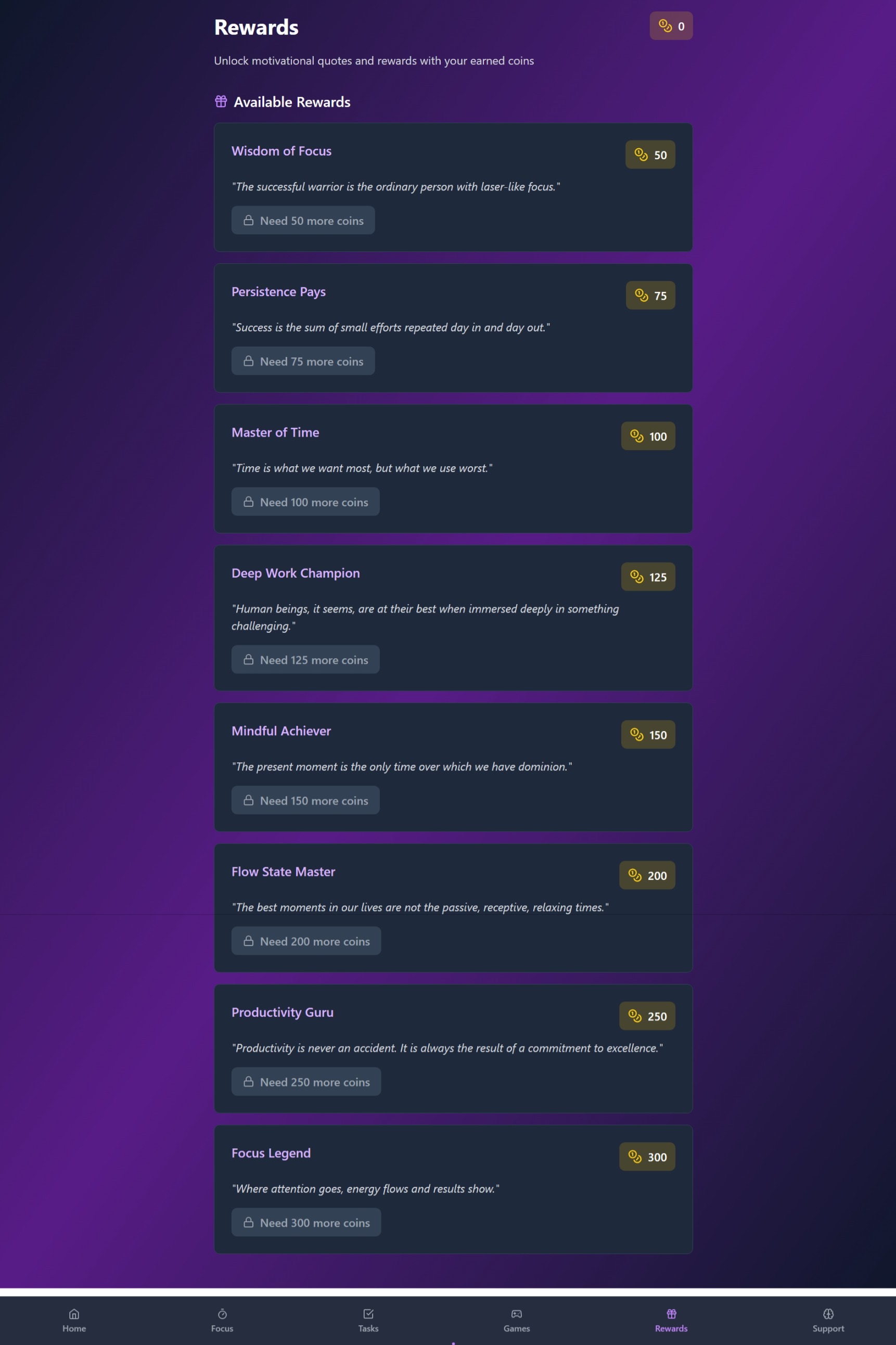
Inspirational
As a child, I struggled with both dyslexia and ADHD—conditions that weren’t well understood at the time. I often fell behind in schoolwork, was teased and bullied, and felt like I was constantly fighting to catch up in a system that wasn’t designed for minds like mine. Those experiences shaped me deeply.
LexiFocus is my way of turning that struggle into support. I built this app so that others—kids, teens, and even adults—don’t have to go through the same isolating and overwhelming challenges I did growing up. I want them to feel seen, supported, and empowered.
What it does
LexiFocus is a web-based, mobile-first app that offers cognitive support tools for individuals with ADHD and dyslexia. It includes:
- A calming home dashboard with daily focus tracking
- A timer-based Focus Mode with Pomodoro sessions
- Cognitive Games like the Memory Match and Mindcase Detective Game to sharpen your brain while you relax and stimulate dopamine
- An empathetic AI assistant named Travus for organizing tasks and offering check-ins
- A Learn & Train section with dyslexia-friendly reading tools, phonetic games, and vocabulary boosters
- Full accessibility settings like font toggles, dark mode, and text-to-speech placeholders
- All designed in a calming gradient theme using dyslexia-friendly fonts to ensure ease and comfort for neurodivergent users
How we built it
LexiFocus was built using HTML, CSS, and JavaScript with a modular architecture and a mobile-first approach. We used localStorage to store user preferences and progress without needing a backend. Components like Travus, MindCase, and Learn & Train were designed to be lightweight but expandable post-hackathon. UX/UI was guided by accessibility principles and input from neurodivergent users.
Challenges we ran into
- Balancing simplicity with functionality for users who are easily overwhelmed
- Designing a color palette and UI that is soothing but still engaging
- Simplifying logic for features like MindCase and Travus to stay within token and time limits
- Finding ways to simulate accessibility features like TTS in a lightweight, offline-first environment
Accomplishments that we're proud of
- Creating a focus and learning app that reflects real lived experience with ADHD and dyslexia
- Building a full, modular, and responsive web app from scratch
- Designing a game and assistant that not only work—but genuinely feel friendly and helpful
- Keeping the user at the center of every design and development decision
What we learned
- How important intentional design is for neurodiverse audiences
- How to scope and prioritize features to create a functional MVP under pressure
- That small, thoughtful touches—like a friendly greeting or smooth animations—make a big impact on usability and comfort
- How powerful tech can be when it's informed by empathy and real experience
What's next for LexiFocus
We plan to:
- Add voice support for Travus and real-time TTS
- Expand MindCase with more stories and AI-driven scenarios
- Add offline support and parental controls
- Launch a feedback loop with neurodivergent testers to iterate and grow
Built With
- ai
- bolt.new
- canva
- css
- html
- javascript
- netlify
- no-code
- ondevicestorage
- opensourceassets
- promptengineering

Log in or sign up for Devpost to join the conversation.