-
-
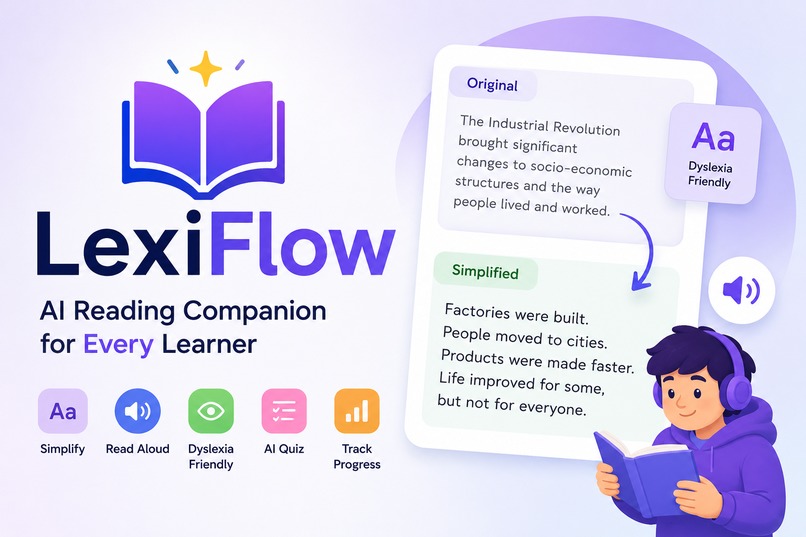
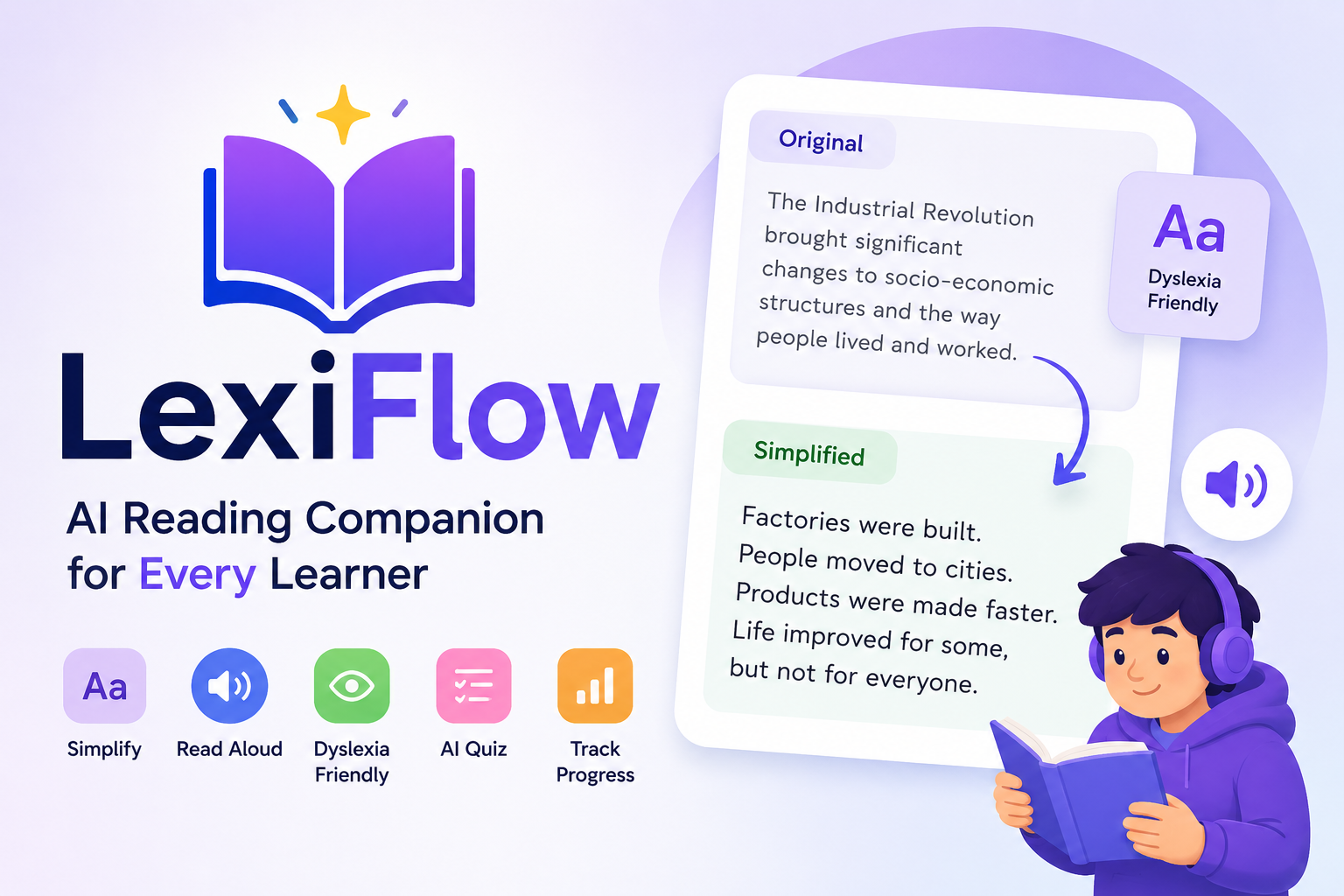
Thumnail- LexiFlow – Read It Your Way
-
-
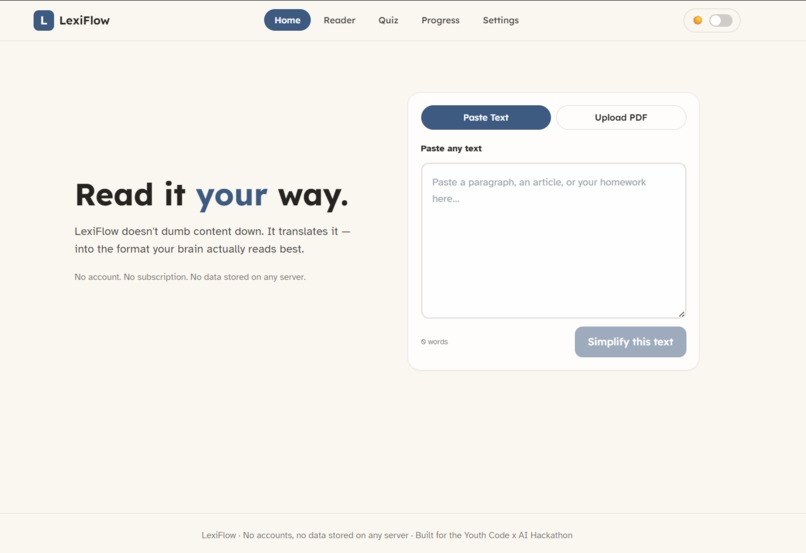
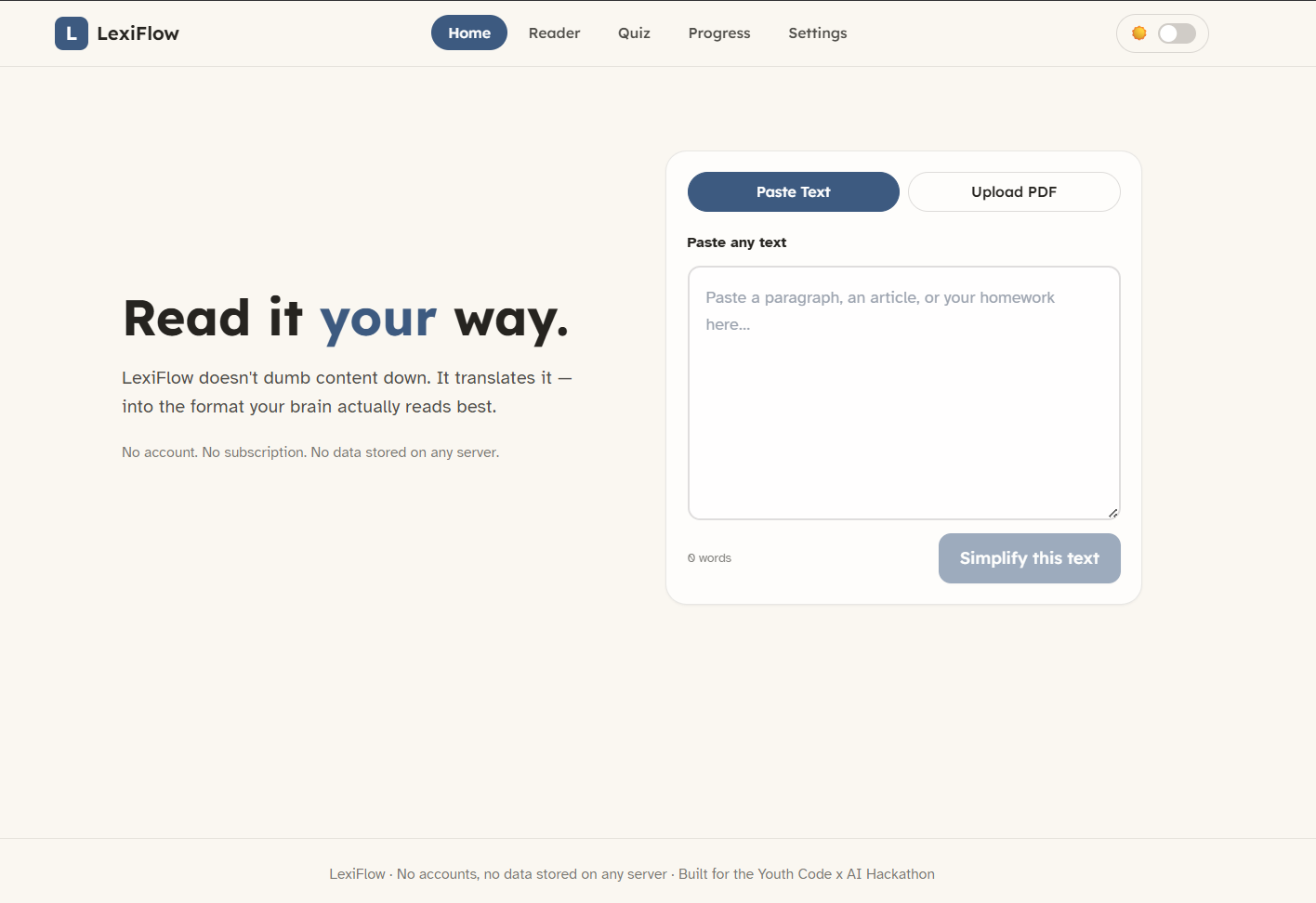
Home page - Paste text or upload a PDF to get started.
-
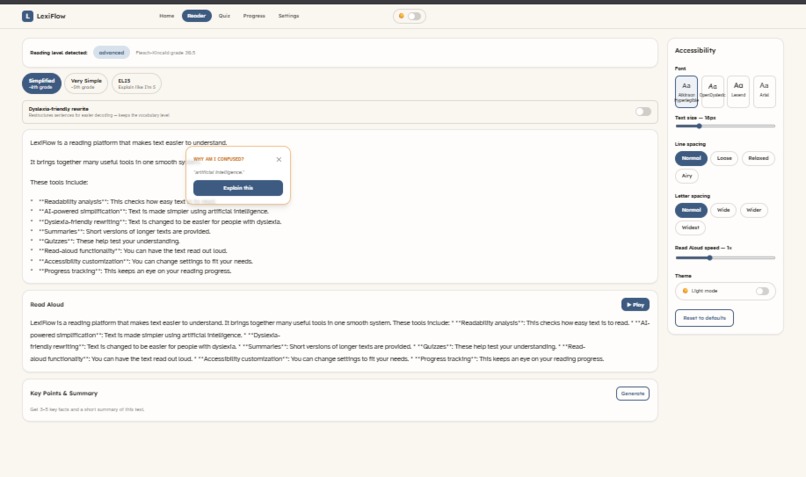
simplified text with AI-powered accessibility features.
-
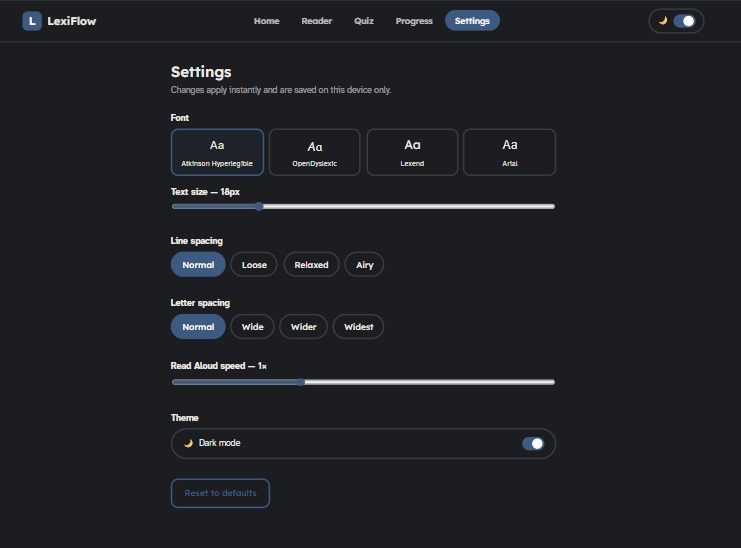
Customize fonts, spacing, theme, and reading speed.
-
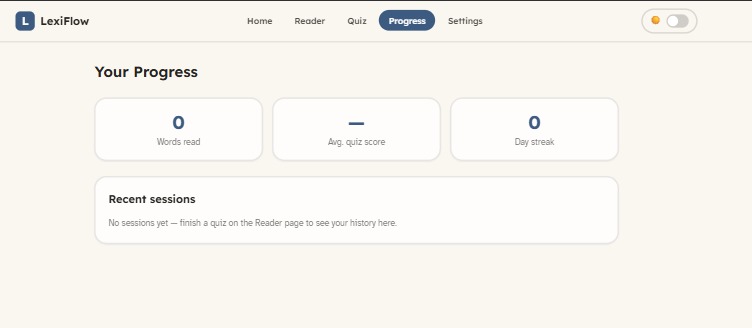
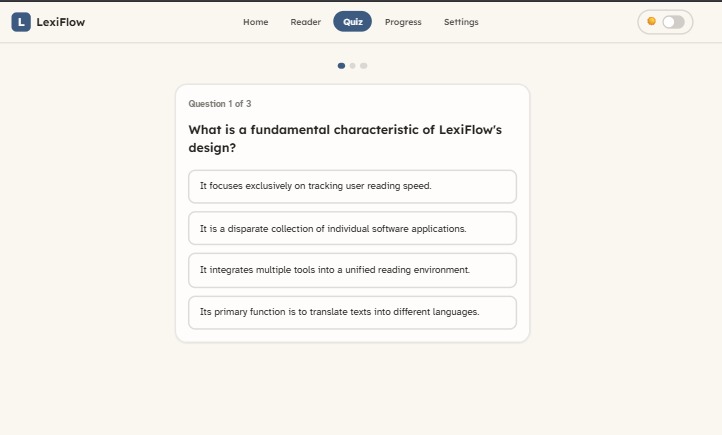
Track your reading and quiz progress over time
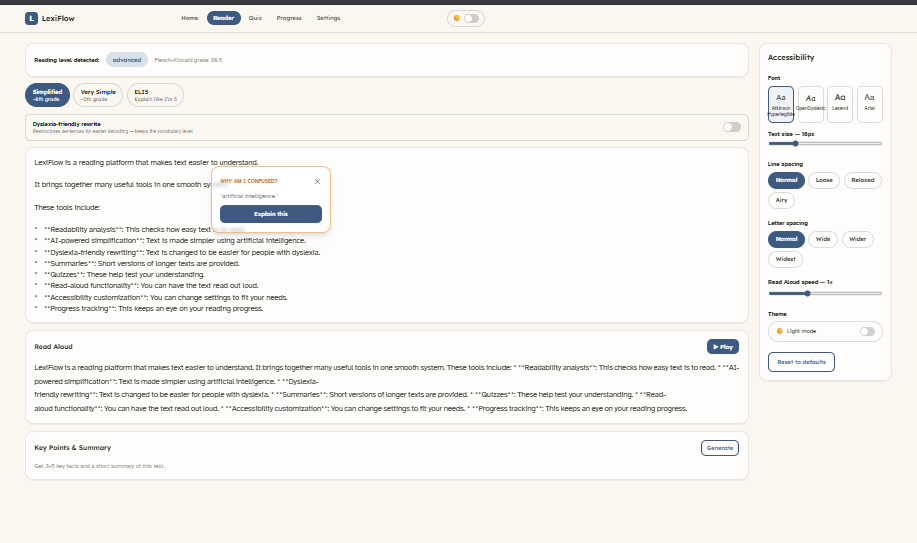
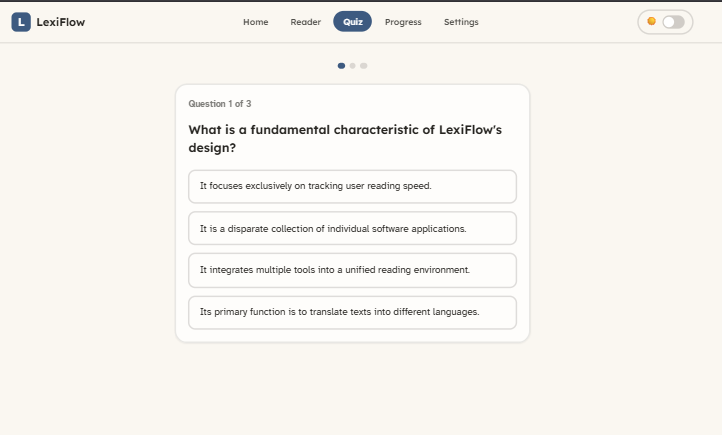
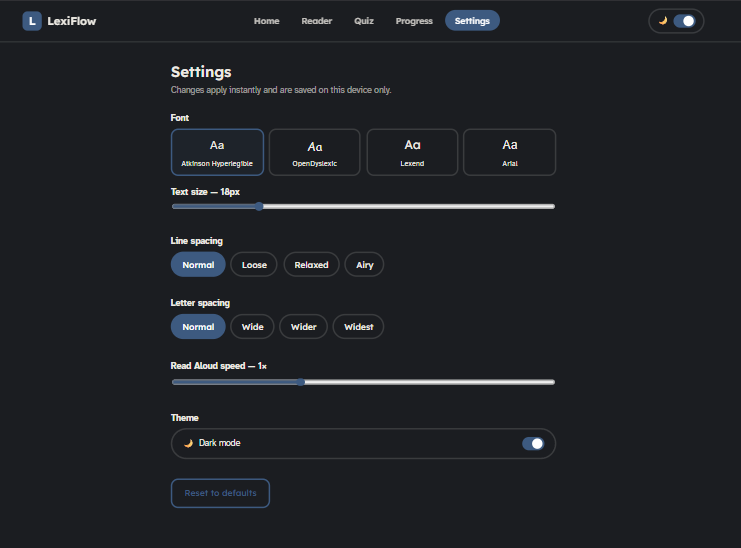
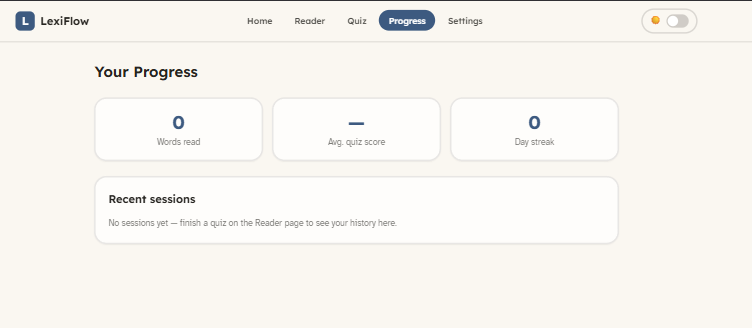
Inspiration
Reading should never be a barrier to learning. However, many students, including people with dyslexia, ADHD, English language learners, and struggling readers, often find complex text difficult to understand. Existing AI tools can simplify text, but they usually require users to write prompts and don't provide a complete accessibility-focused workflow.
We wanted to build a platform that removes this friction by making reading more accessible through AI. This led to the creation of LexiFlow, a tool that transforms complex content into personalized reading experiences.
What it does
LexiFlow is an AI-powered accessibility platform that helps users understand complex text more effectively.
Users can paste text or upload PDFs, analyze readability using the Flesch-Kincaid Grade Level, simplify content at multiple reading levels, generate dyslexia-friendly rewrites, listen using built-in text-to-speech, create summaries, extract key points, generate comprehension quizzes, and personalize their reading experience through accessibility settings.
The platform also includes a progress dashboard to help users track their learning over time.
How we built it
The frontend was built using React, Vite, and Tailwind CSS, providing a responsive and accessible user interface.
The backend was developed with FastAPI and Python, exposing stateless REST APIs for text processing.
Google's Gemini API powers text simplification, summaries, quizzes, key-point extraction, and contextual explanations.
PyMuPDF is used for PDF text extraction, while TextStat calculates readability metrics without requiring AI.
The application is deployed using Vercel and follows a lightweight architecture without requiring a database or user authentication.
Challenges we ran into
One of our biggest challenges was designing prompts that consistently produced structured, high-quality responses from the language model.
We also spent considerable time improving the deployment workflow, configuring frontend-backend communication, handling CORS correctly, and ensuring reliable API integration on Vercel.
Another challenge was designing accessibility features that remained simple and intuitive while supporting a variety of reading preferences.
Accomplishments that we're proud of
We're proud of building a complete accessibility workflow instead of a single AI feature.
LexiFlow combines readability analysis, AI-powered simplification, dyslexia-friendly rewriting, summaries, quizzes, read-aloud functionality, accessibility customization, and progress tracking into one seamless experience.
We're also proud that the application is lightweight, stateless, easy to deploy, and focused on solving a real-world educational problem.
What we learned
This project helped us gain practical experience with prompt engineering, FastAPI development, React application architecture, REST API design, deployment on Vercel, and building AI-powered accessibility tools.
More importantly, we learned that accessibility should be considered from the beginning of product design rather than being added as an afterthought.
What's next for LexiFlow
Our future plans include OCR support for scanned documents, EPUB support, multilingual text simplification, browser extensions for webpage accessibility, offline AI capabilities, teacher dashboards, classroom analytics, and personalized learning recommendations.
Our long-term goal is to make LexiFlow a comprehensive accessibility platform that enables every learner to access information in the way that works best for them.


Log in or sign up for Devpost to join the conversation.