-
-
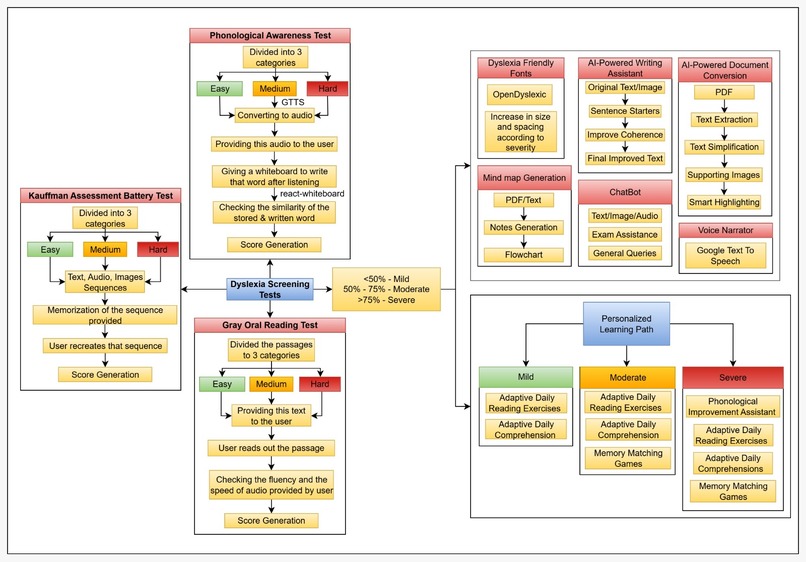
System Architecture
-
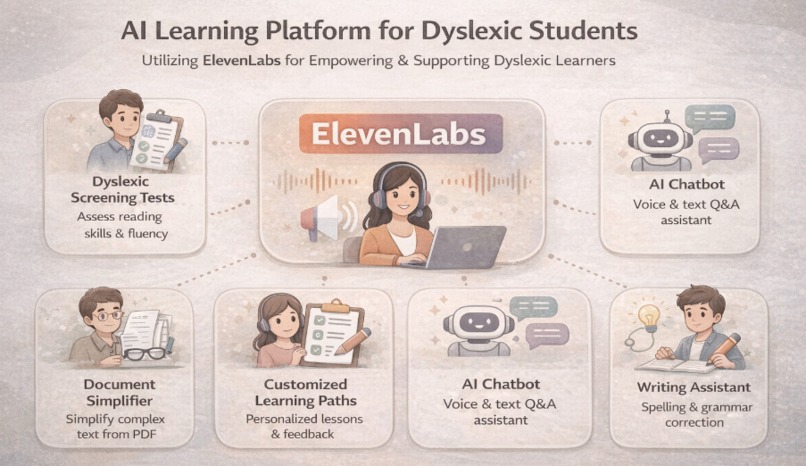
Usage of ElevenLabs
Inspiration
Dyslexia doesn’t reflect a person’s intelligence, it reflects how their brain processes language. Yet most digital learning tools still rely heavily on text, quietly pushing many capable learners aside. When we saw how natural, human-like AI voices have become, it clicked: voice could remove one of the biggest barriers to learning. That realization led to LexiEaseAI, a platform built on the belief that accessibility should be the default, and voice should lead the learning experience.
What it does
LexiEaseAI is a voice-first AI learning platform created specifically for dyslexic learners. It helps users learn, practice, and grow through:
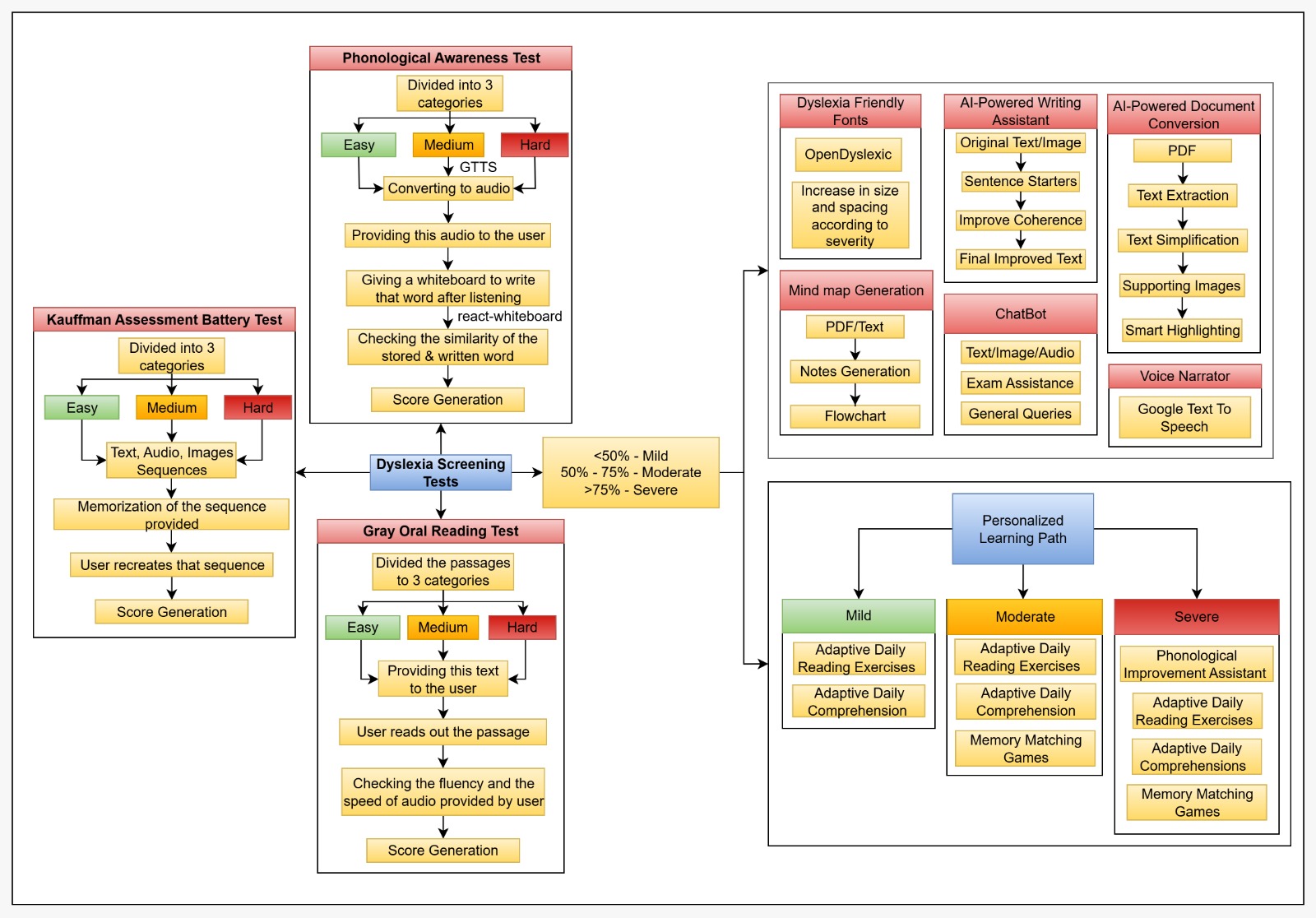
- AI-assisted dyslexia screening
- Personalized learning paths tailored to individual needs
- Natural text-to-speech reading support
- Voice-guided comprehension and phonological practice
- Memory games enhanced with audio cues
- AI-powered writing help and document simplification
At its core, voice is not an add-on in LexiEaseAI, it is the primary learning medium, turning reading from a source of frustration into a source of confidence.
How we built it
We designed LexiEaseAI with accessibility in mind from the very first line of code:
- React & Tailwind CSS power a clean, calm, distraction-free interface
- Flask (Python) handles scalable and reliable backend APIs
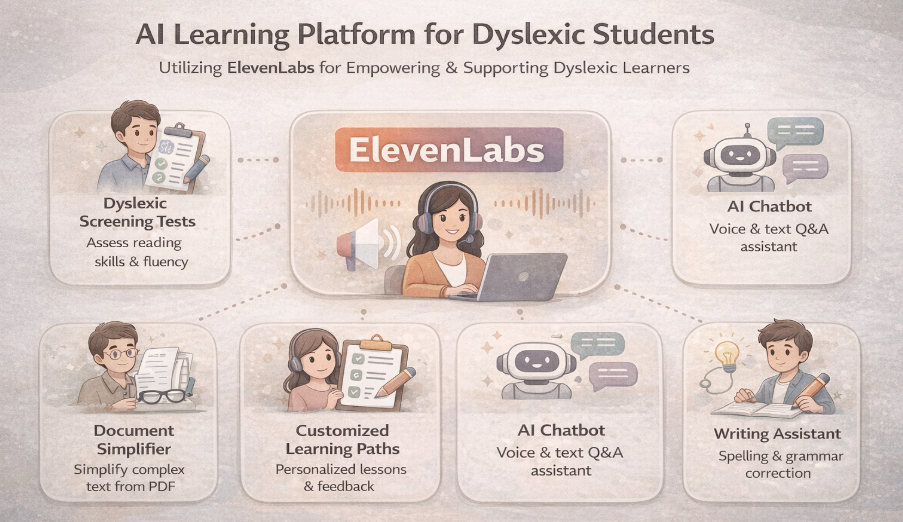
- ElevenLabs Text-to-Speech brings natural, expressive voice to every interaction
- DistilBERT and NLP pipelines support writing improvement and simplification
- Speech recognition, OCR, and PDF processing enable multimodal learning
- Retrieval-Augmented Generation (RAG) ensures explanations are accurate, grounded, and context-aware
- A rule-based personalization engine adapts content using screening results
Everything is built around an audio-first user journey to reduce cognitive load and stress.
Challenges we ran into
- Designing a platform that is truly voice-first, not just text with narration
- Translating dyslexia screening results into meaningful, personalized learning paths
- Keeping AI explanations supportive, simple, and non-judgmental
- Finding the right balance between clarity, depth, and engagement
Accomplishments that we're proud of
- Created a fully working voice-centric learning platform
- Made AI speech the main way users interact and learn
- Built tools specifically for dyslexic learners and not generic education features
- Designed an experience that reduces anxiety and builds confidence
What we learned
- Accessibility works best when it’s designed from the start, not added later
- Voice can significantly improve understanding and retention
- Small details like tone, pacing, and phrasing make a big difference
- Thoughtfully applied AI can truly empower neurodiverse learners
What's next for LexiEaseAI – An AI Powered Dyslexic Support System
- Expand dyslexia screening tests to cover spelling, visual processing, memory, and attention
- Build richer learning paths with progressive difficulty, age-based tracks, and clear milestones
- Introduce adaptive learning paths that evolve based on user performance
- Support co-occurring needs such as ADHD and ESL learners
- Provide better progress insights for learners and educators
- Expand LexiEaseAI across web and mobile platforms
Our goal: to build a scalable, voice-first learning ecosystem that adapts to every learner’s needs.
Our vision: To make voice-first learning the new standard for accessible, inclusive education.

Log in or sign up for Devpost to join the conversation.