Inspiration
Managing digital podcast brands and Instagram content platforms requires a relentless output of high-quality clips to keep audience engagement high. Manually cutting these clips, syncing agency-style typography, and tweaking safe zones for different social feeds is an incredibly tedious bottleneck.
Lexicut was born out of the need to automate this workflow. We wanted to build an engine that doesn't just act as a timeline scrubber, but actually understands the context and language of a video to automatically generate cinematic, agency-level edits—literally "Editing by Words."
What it does
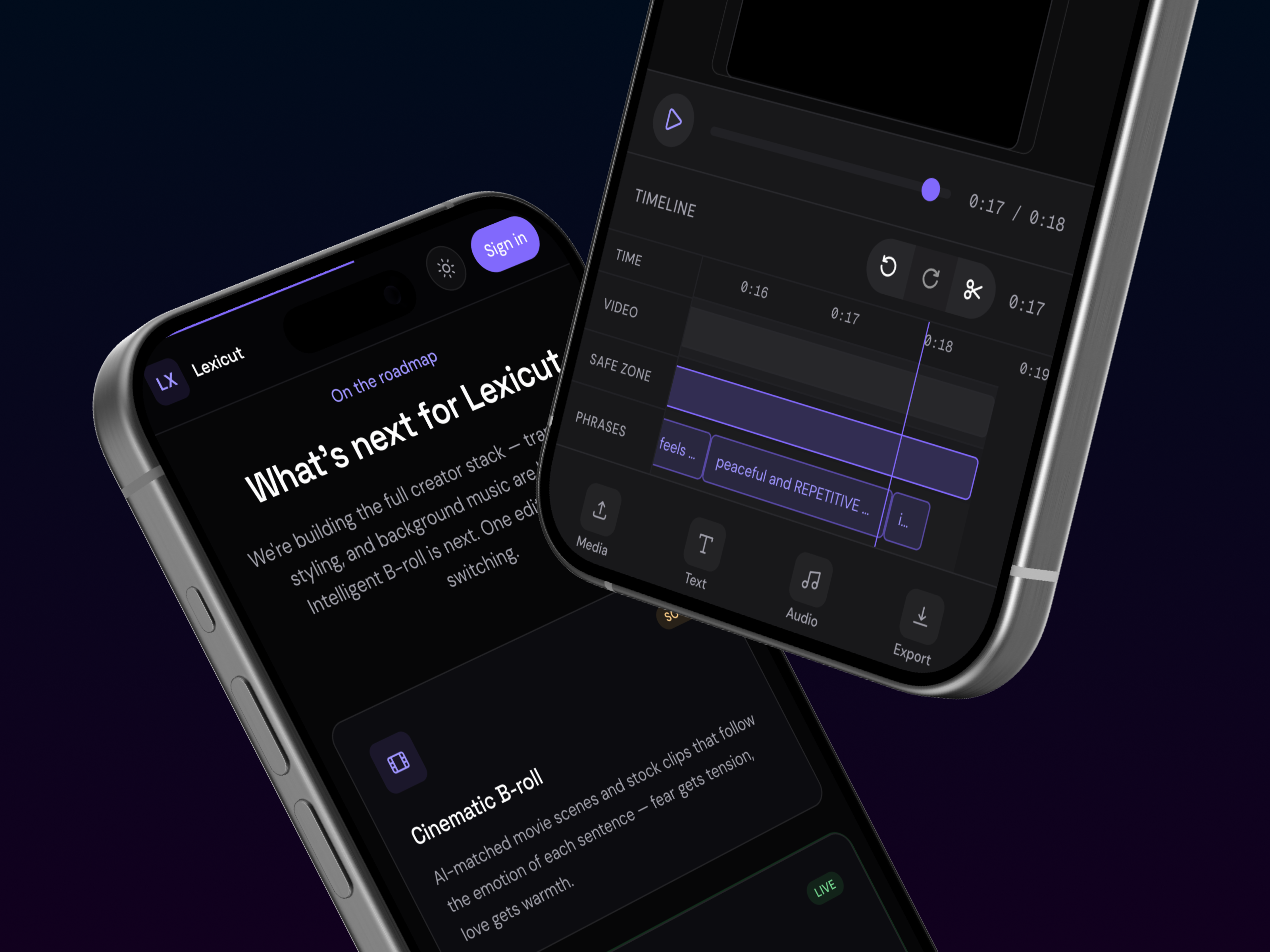
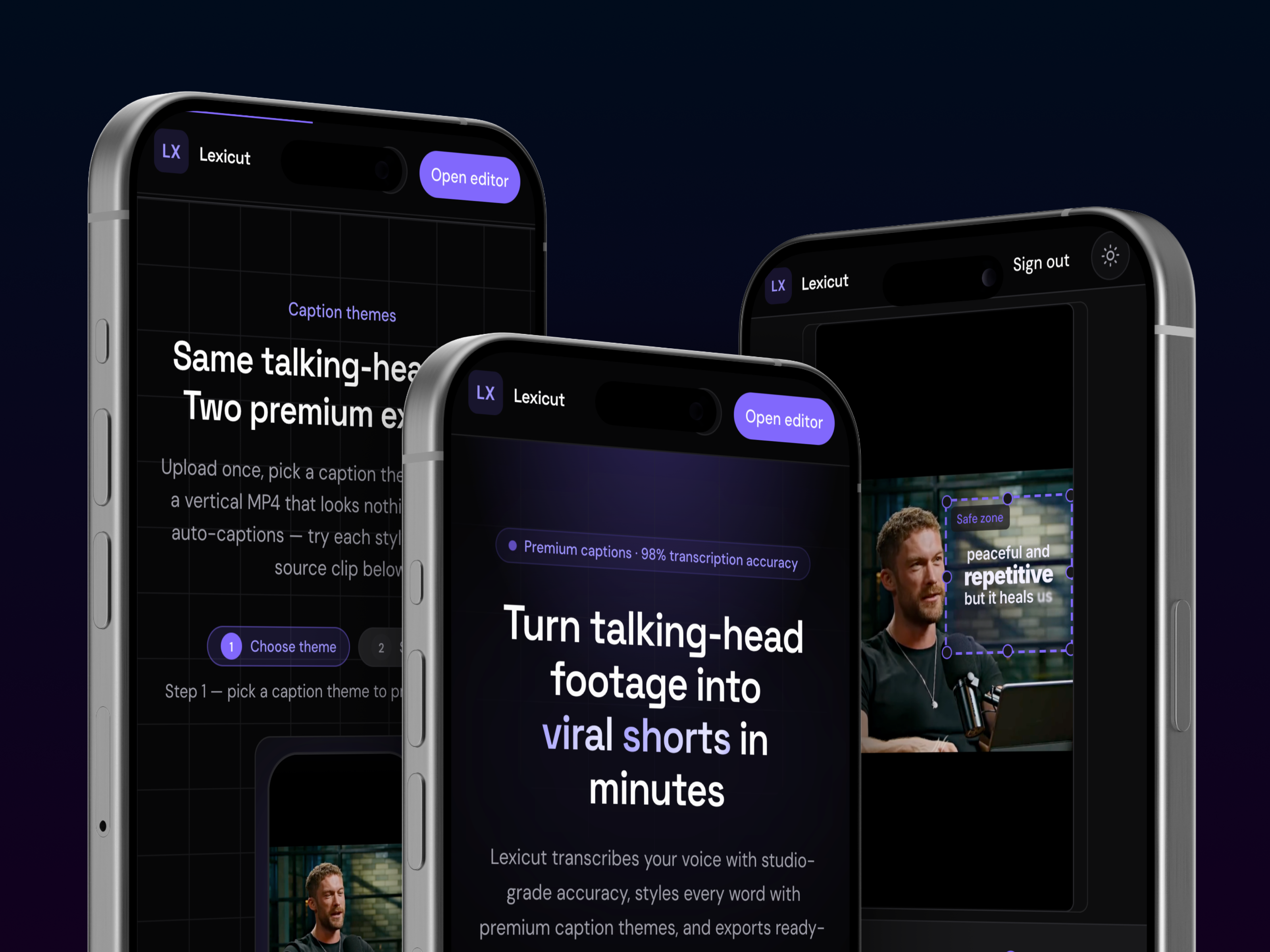
Lexicut is a multi-tenant SaaS application and AI-native video editor. Users simply upload a video, and the platform utilizes an AI transcription pipeline to drive the entire editing layout. It automatically applies high-end visual themes—such as the kinetic, centered editorial-collage or the dual-font, Jay Shetty-style mixed-collage—complete with micro-pop physics, SFX synchronization, and baseline-aligned text layouts.
How we built it
The application is built on a modern, highly modular full-stack architecture:
- Frontend & API: Next.js (App Router) serves as the core framework, providing a responsive SaaS dashboard (featuring a fixed desktop sidebar and mobile bottom navigation) and handling server-side API routes.
- Database: PostgreSQL managed via Prisma handles our multi-tenant data, linking users to their respective workspaces, video files, and project metadata.
- Rendering Engine: The heavy lifting is done by Remotion, which allows us to programmatically generate hardware-accelerated video compositions using React and Tailwind CSS.
- Theme Engine: We built a custom registry-driven theme engine that isolates frontend styles from backend compilers, allowing us to seamlessly swap visual aesthetics.
Challenges we ran into
Transitioning Lexicut from a standalone tool to a scalable SaaS platform presented several complex architectural challenges:
- Theme-Aware Chunking: We had to refactor the backend to support dynamic
maxWordsandpauseThresholdlogic that changes based on the specific typography theme selected. - Audio & Visual Synchronization: Perfecting the visual refinements for our
mixed-collagetheme required highly precise synchronization of sound effects using Remotion's<Audio>sequences alongside strict baseline-aligned text layouts. - UI/UX Architecture: Ensuring a completely fluid, zero-layout-shift experience across devices required careful state management and responsive CSS grid architectures.
What we learned
Building Lexicut pushed our limits in programmatic video rendering. We deepened our expertise in utilizing Remotion for complex, state-driven media generation, orchestrating backend queues for heavy rendering jobs, and designing modular, scalable Next.js architectures.
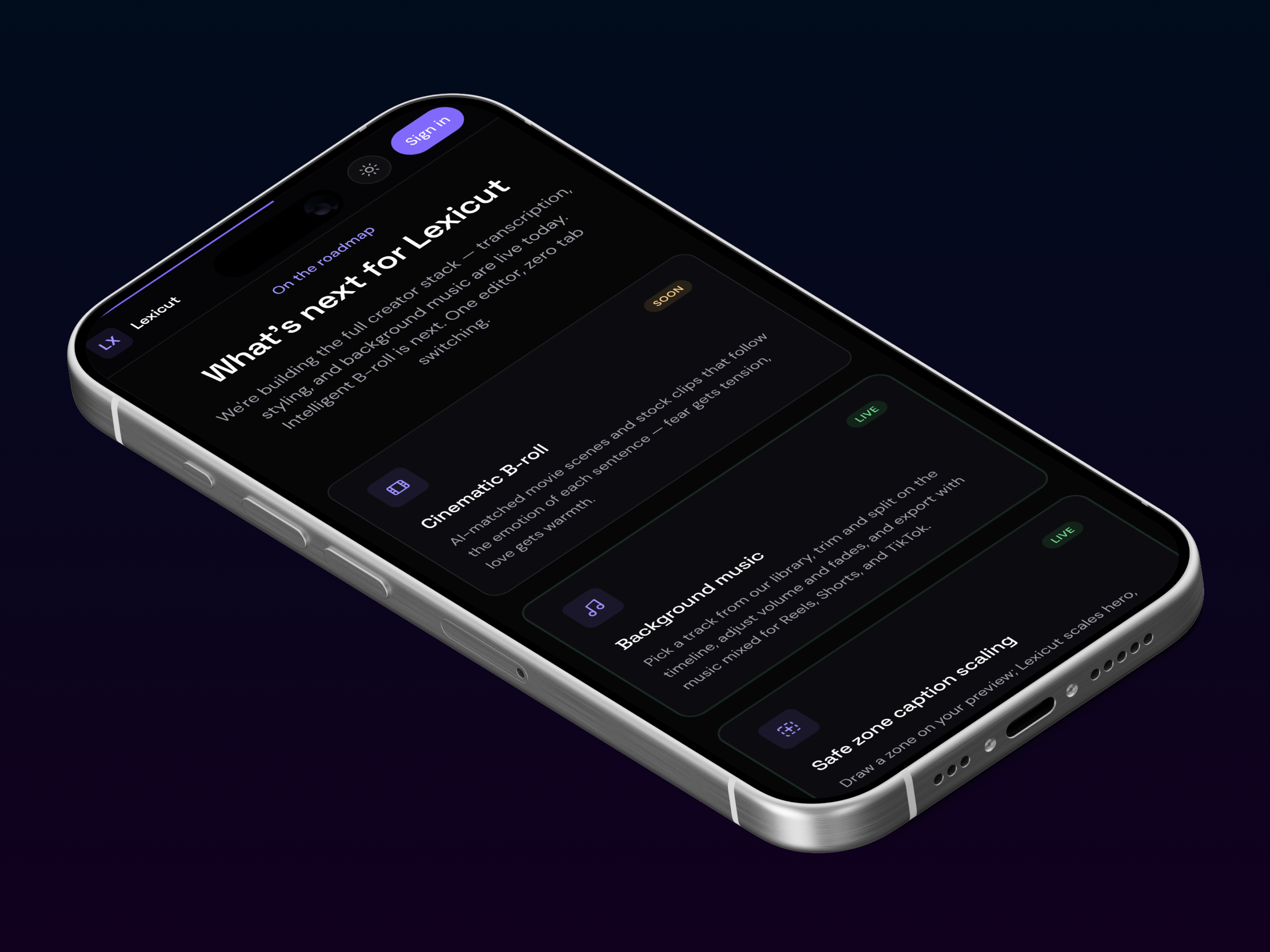
What's next for Lexicut
Phase 3 is actively underway, focusing on expanding the SaaS dashboard capabilities. We are finalizing the seamless "Create Project" flow, expanding file upload limits, and preparing to support multi-language transcription and rendering beyond English.
Built With
- artificial-intelligence
- ffmpeg
- next.js
- postgresql
- prisma
- react
- remotion
- saas
- tailwind-css
- typescript

Log in or sign up for Devpost to join the conversation.