-
-
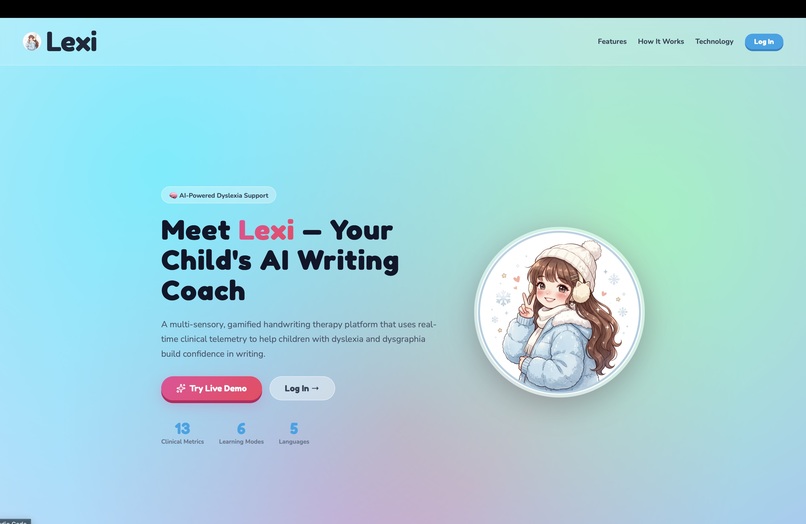
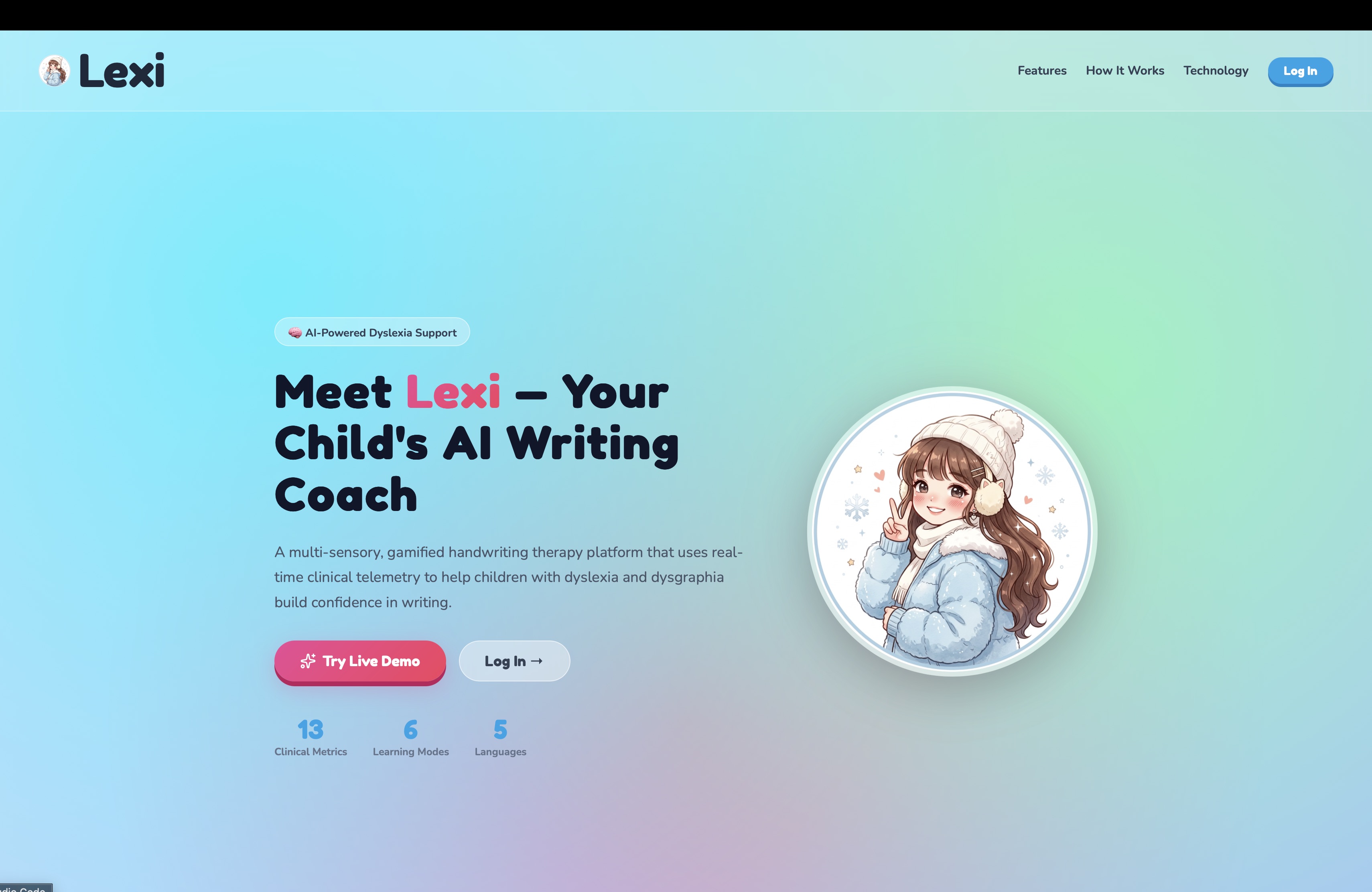
Landing Page: Meet Lexi - Your child's AI writing coach.
-
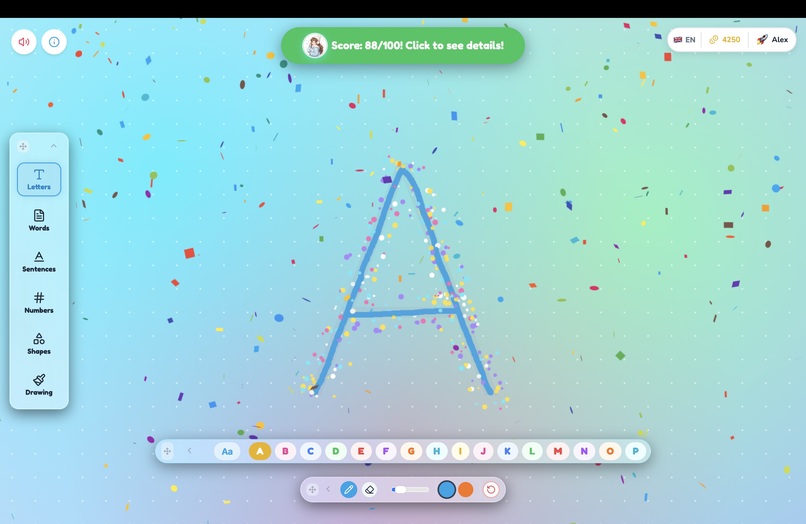
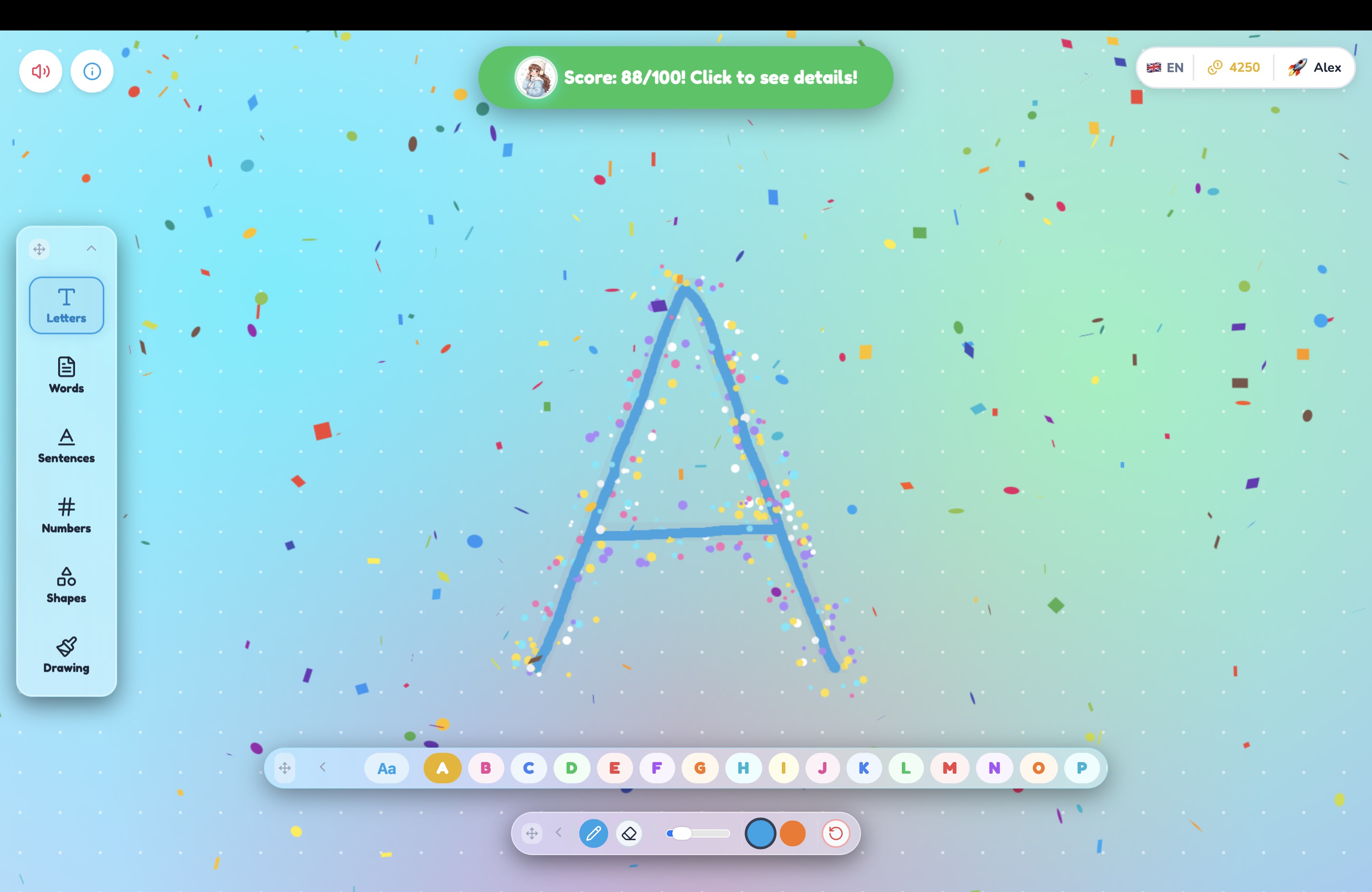
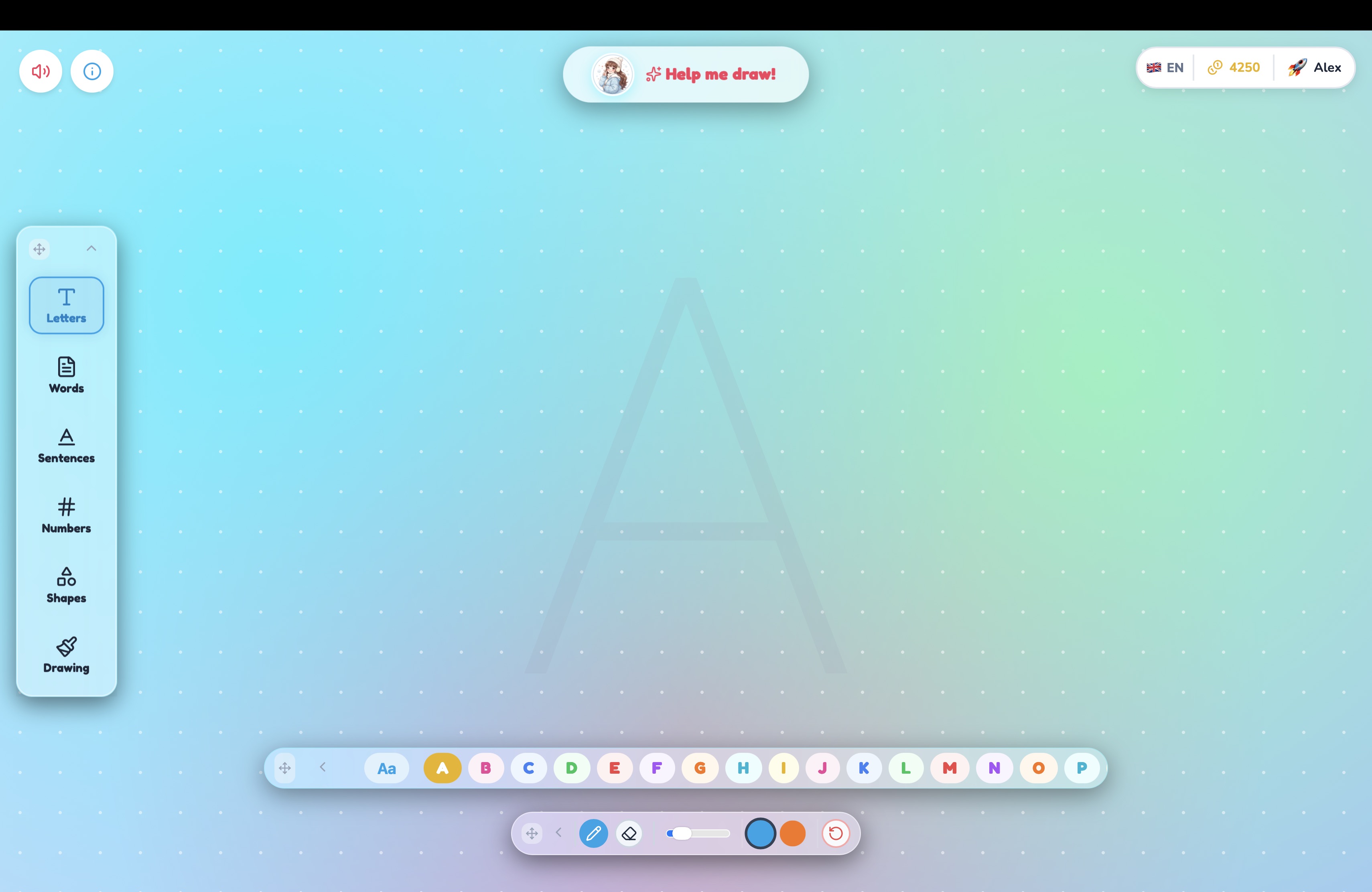
Drawing Canvas (Letter A): Real-time tracing with multi-sensory feedback and confetti.
-
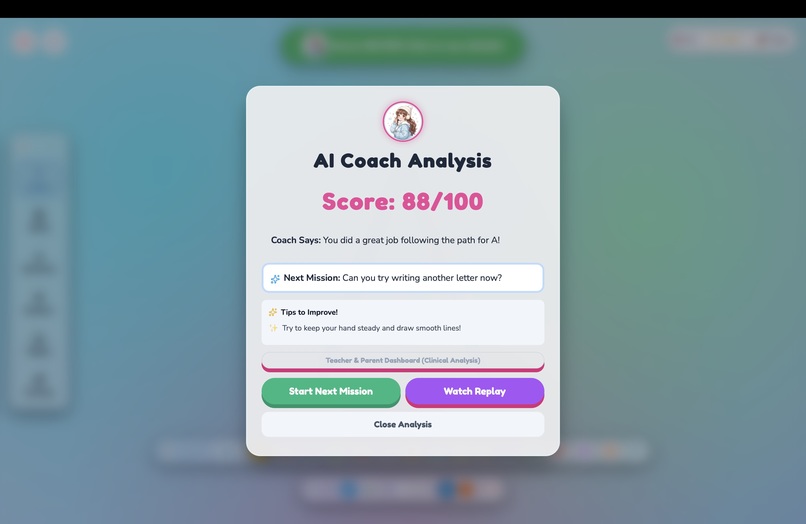
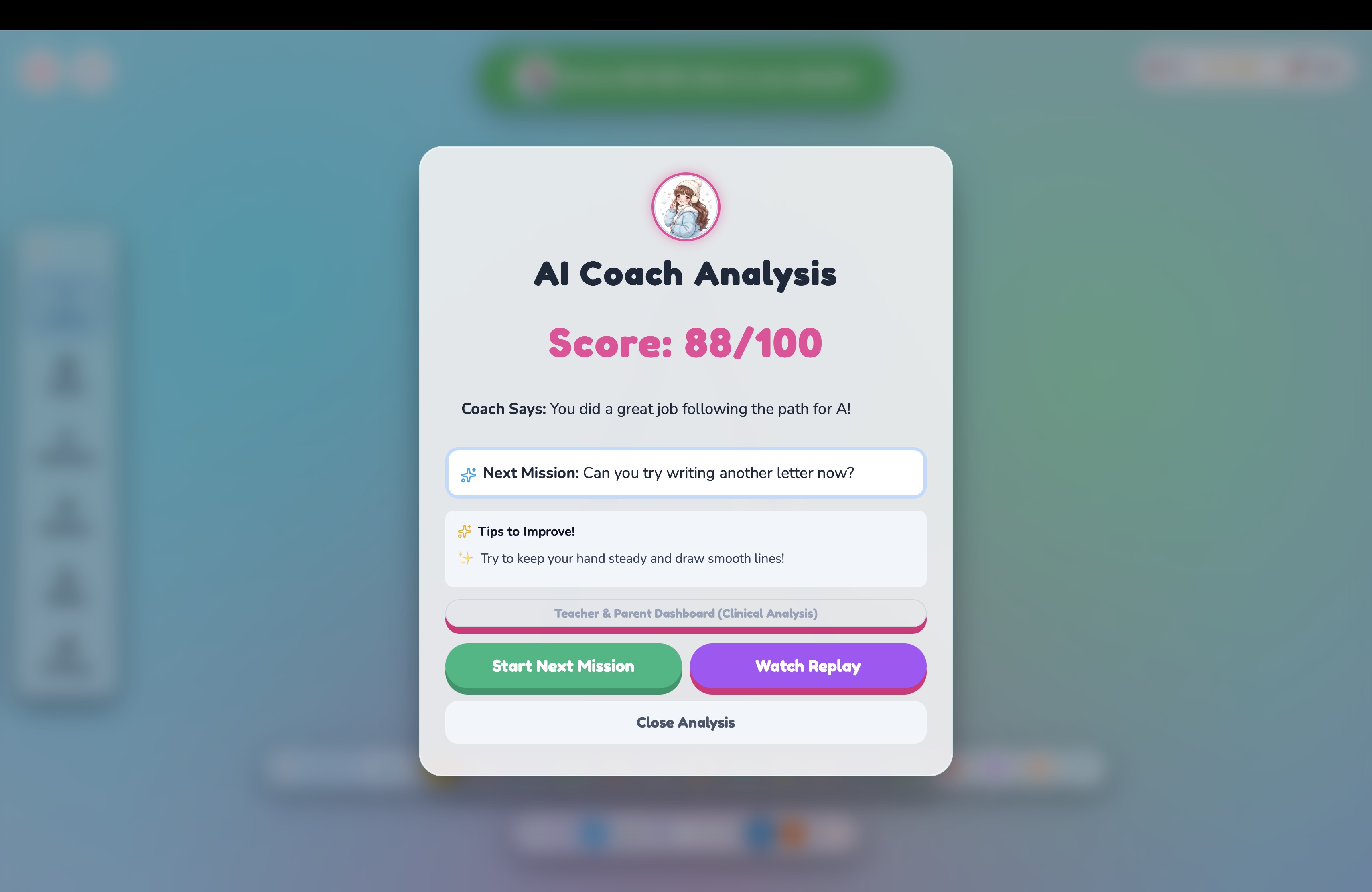
Clinical Grading: Instant grading on mechanics like tremor, speed, and accuracy.
-
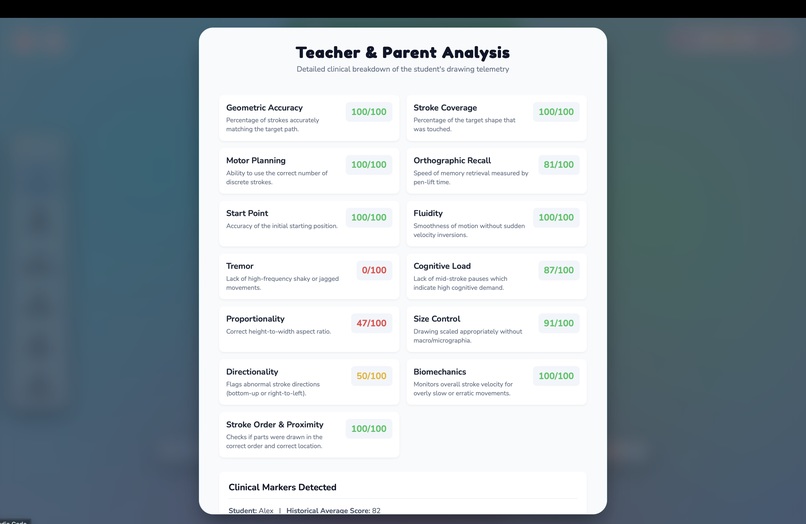
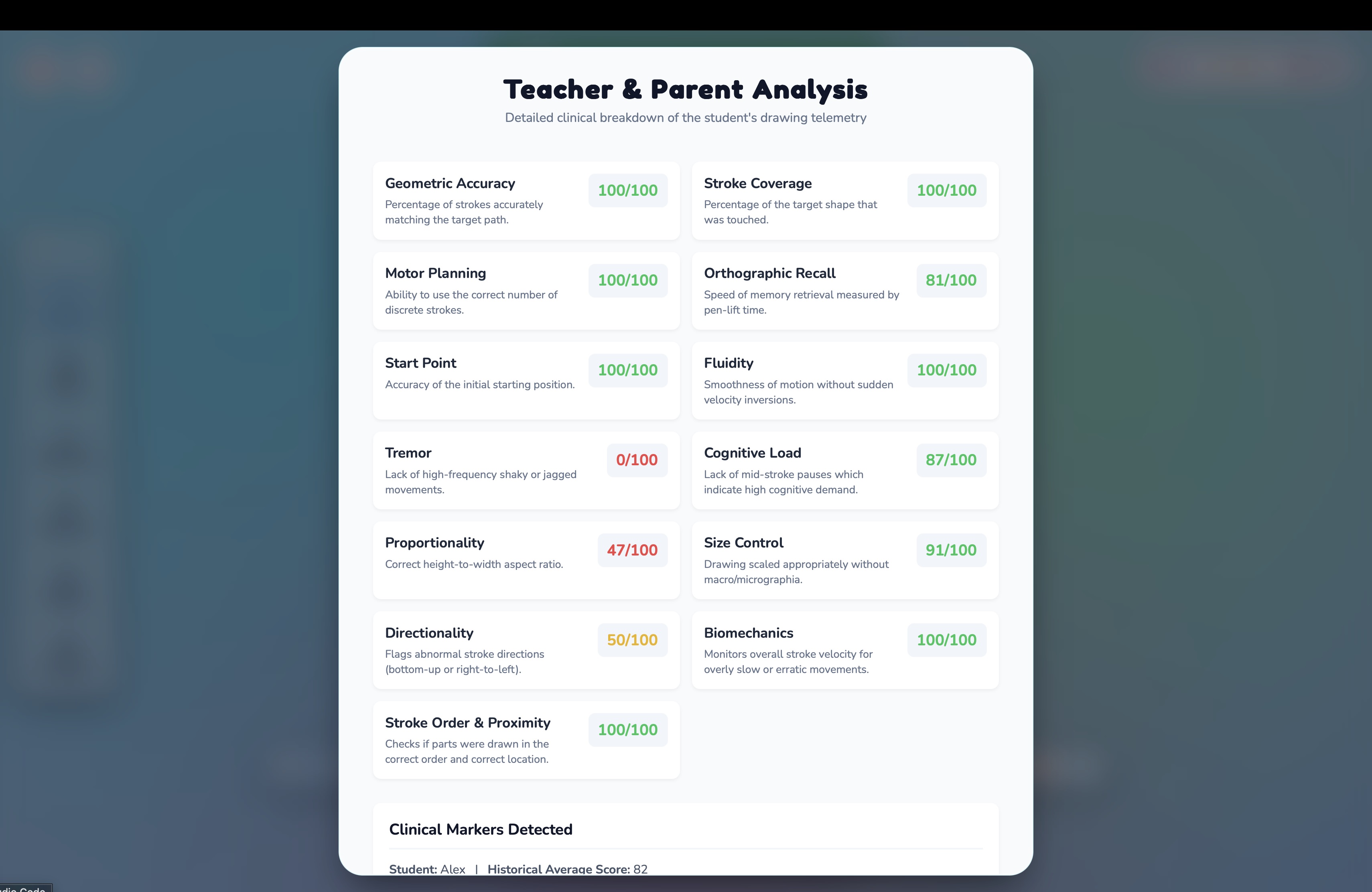
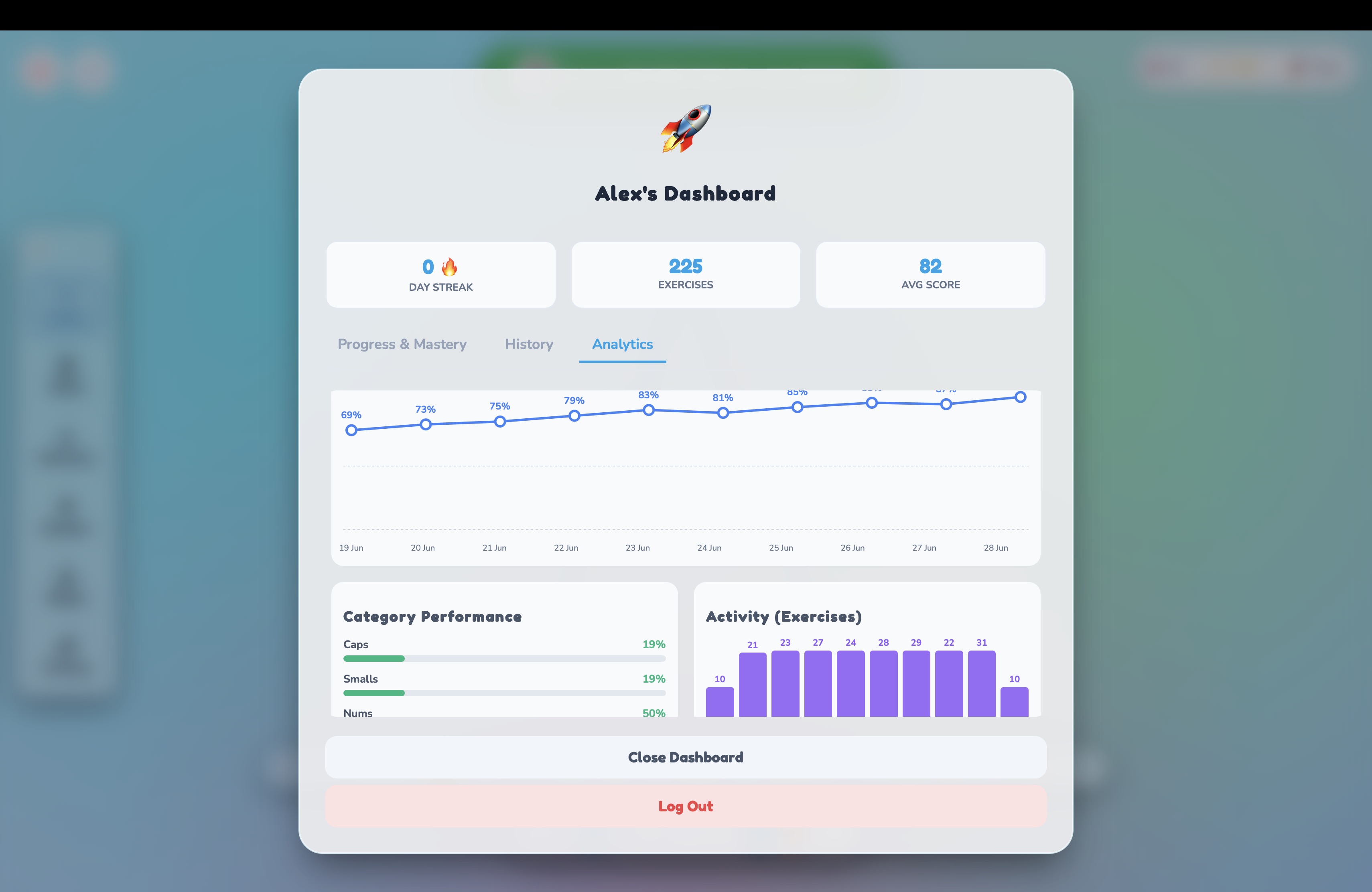
Telemetry Dashboard: Clinical analytics and history for occupational therapists.
-
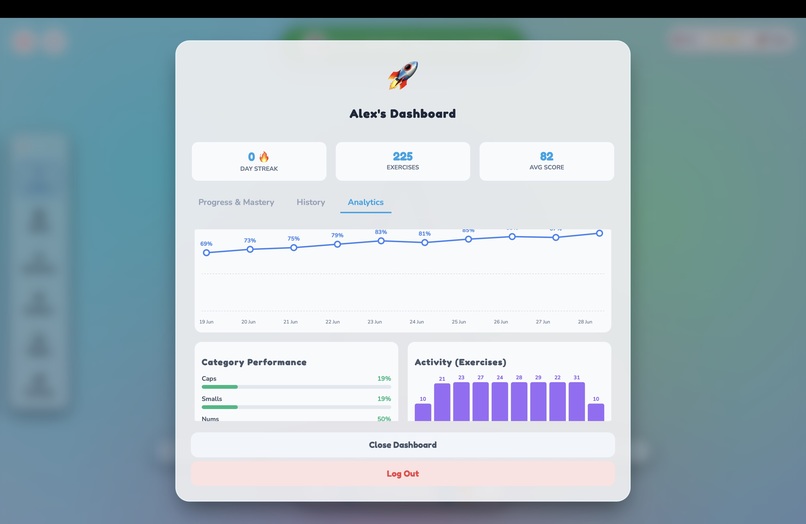
Alex's Clinical Dashboard: Track historical progress, tremor frequency, and overall grading over time.
-
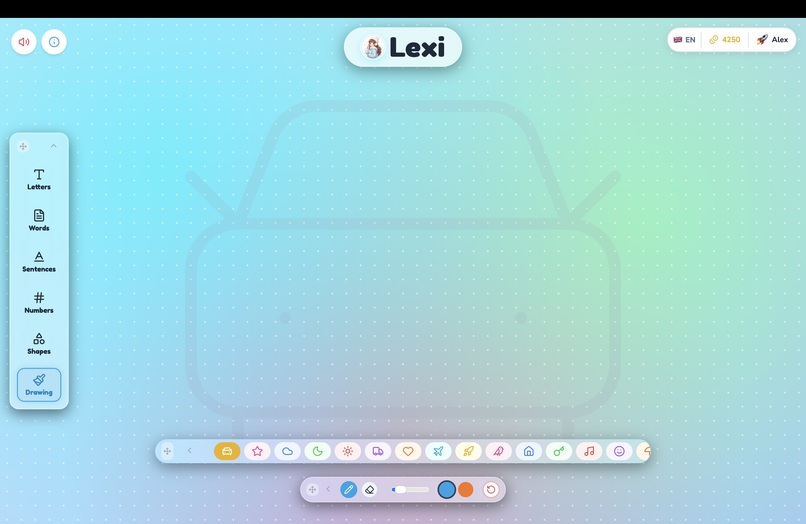
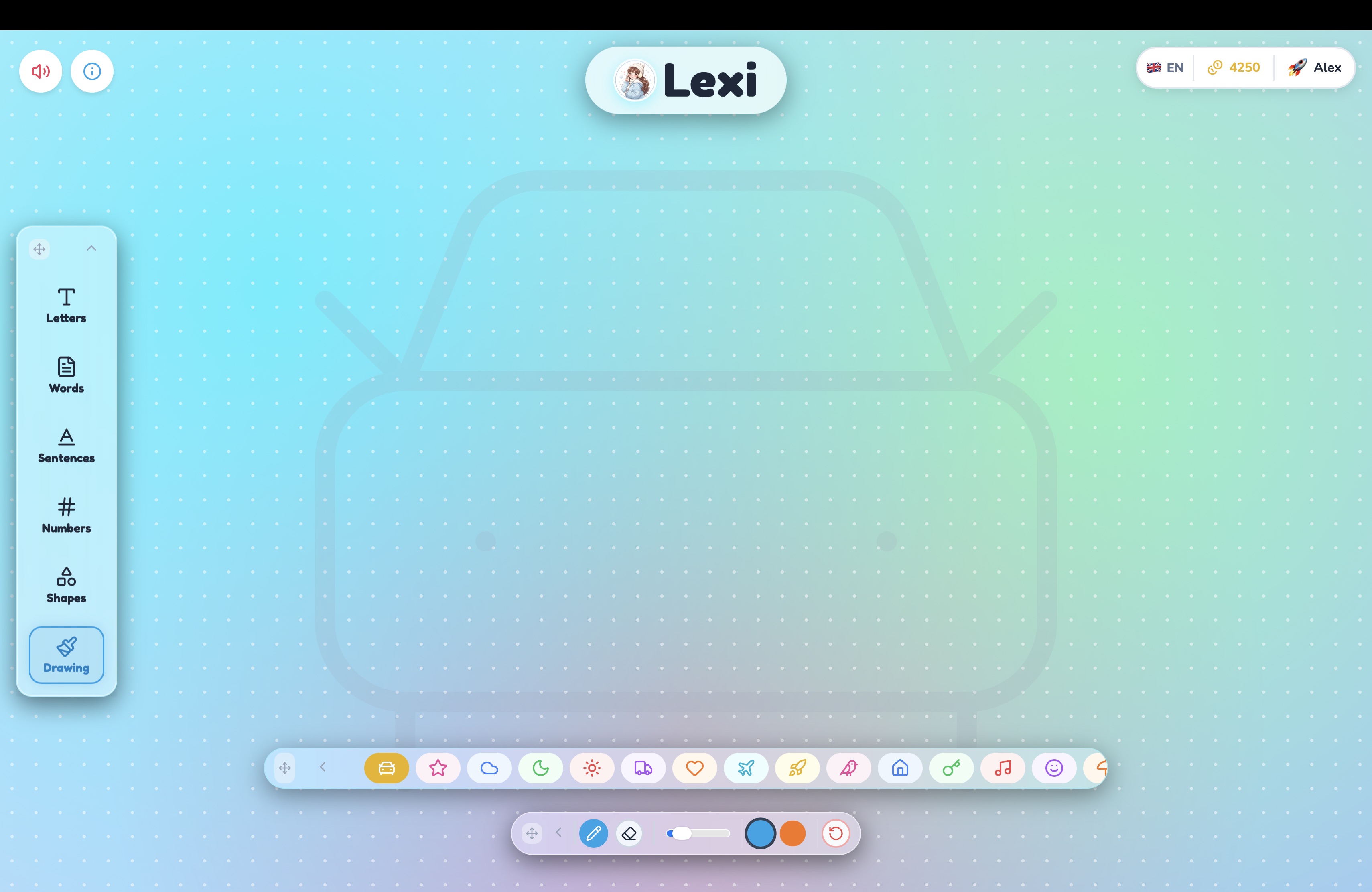
Drawing Mode: Practice different drawings
-
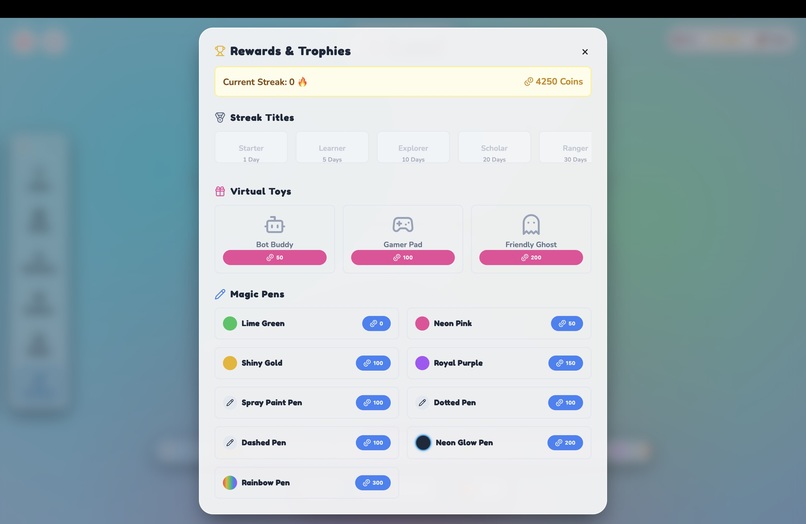
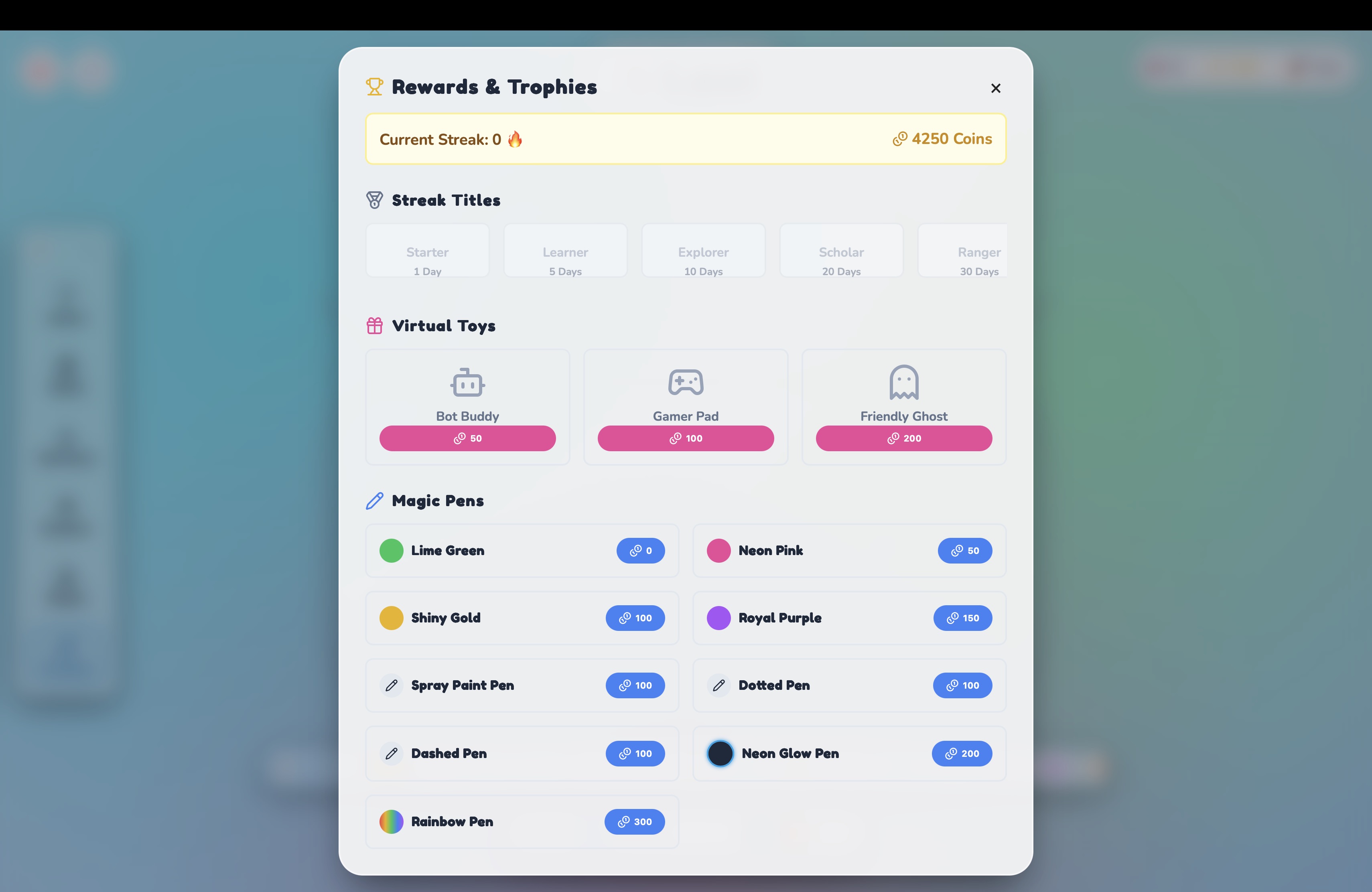
Rewards Store: Earn coins to unlock colors and gifts for your avatar.
-
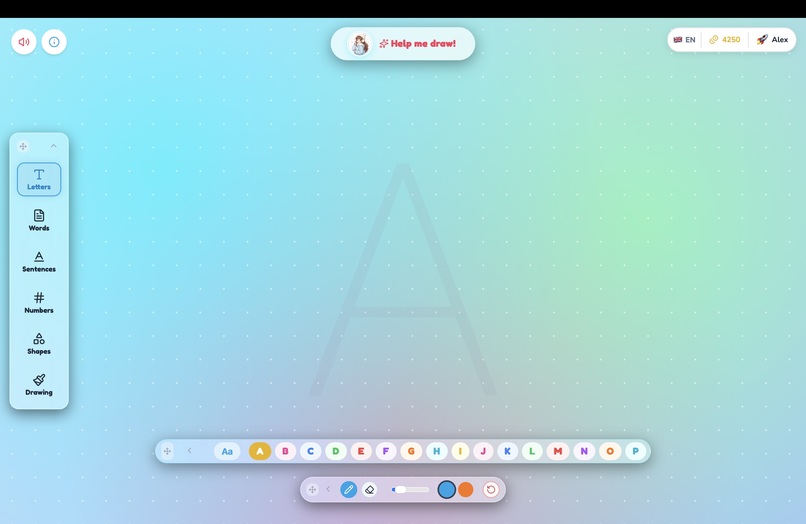
"Help Me Draw" feature: Lexi's AI automatically traces the letter on the canvas to visually teach the child the correct stroke mechanics.
💡 Inspiration
Dyslexia affects 15-20% of the population. If you look at the AI and accessibility tools available today, they are severely limited—they almost entirely focus on reading (like text-to-speech or specialized fonts). But they completely ignore the physical mechanics of writing. Children with dyslexia often also struggle with dysgraphia, meaning the physical act of tracing and drawing letters is incredibly difficult and frustrating. We realized that to truly solve this, we had to build a clinical-grade occupational therapy tool right in the browser. That realization is what inspired us to create Lexi.
🚀 What it does
Lexi is a gamified, multi-sensory handwriting therapy platform. Guided by a friendly AI avatar named Lexi, children are encouraged to practice their fine motor skills in a fun, positive environment.
Instead of just checking if a letter "looks right," our custom engine tracks 13 real-time clinical metrics while the child draws—including stroke velocity, tremor frequency, angle changes, and time-on-task. As children practice across our 6 learning modes (Shapes, Letters, Numbers, Words, Sentences, and Free Draw), Lexi provides real-time audio encouragement and grades their mechanics to help them build lasting neural pathways for writing confidence.
🛠️ How we built it
We built the frontend using React 19 and Vite to ensure lightning-fast performance. Because standard HTML canvas isn't smart enough to grade handwriting mechanics, we engineered a custom Vector Engine from scratch. This engine records hundreds of (x, y) coordinate data points per second.
We integrated the Web Speech API to bring our AI coach, Lexi, to life with dynamic text-to-speech. To ensure the platform is accessible to all children, the entire UI is styled using CSS3 Glassmorphism and the OpenDyslexic font, and we built in localization for 5 different languages.
⚠️ Challenges we ran into
One of our biggest hurdles was designing the grading algorithm to differentiate between intentional sharp corners (like the letter "W" or "M") and actual hand tremors (a key clinical indicator of dysgraphia). We had to mathematically tune our stroke-analysis engine to allow a baseline of natural sharp angle changes before it started penalizing for tremors.
🏆 Accomplishments that we're proud of
We are incredibly proud of successfully gamifying a clinical methodology (Orton-Gillingham). Seeing the reward system work—where children earn stars, coins, and unlockable avatar colors based on their actual handwriting improvement—proves that therapy doesn't have to be boring.
📚 What we learned
We learned a massive amount about the clinical side of occupational therapy. Before this hackathon, we didn't realize how much the Orton-Gillingham methodology relies on physical, multi-sensory feedback. We also learned how difficult it is to mathematically track hand tremors; we had to dive deep into vector mathematics and coordinate tracking to build an engine that could accurately grade the mechanics of a child's handwriting in real-time.
⏭️ What's next for Lexi
We plan to implement backend cloud-syncing for occupational therapists, allowing them to log in to a dashboard and view a child's clinical telemetry (tremor, speed, and accuracy charts) remotely over time!
Built With
- css3
- html5
- javascript
- react
- vite
- web-audio-api

Log in or sign up for Devpost to join the conversation.