-
-
Lexi's logo
-
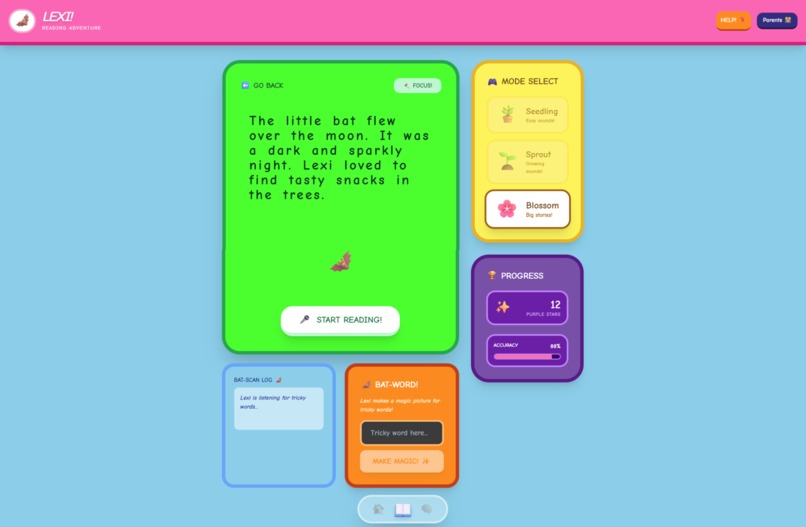
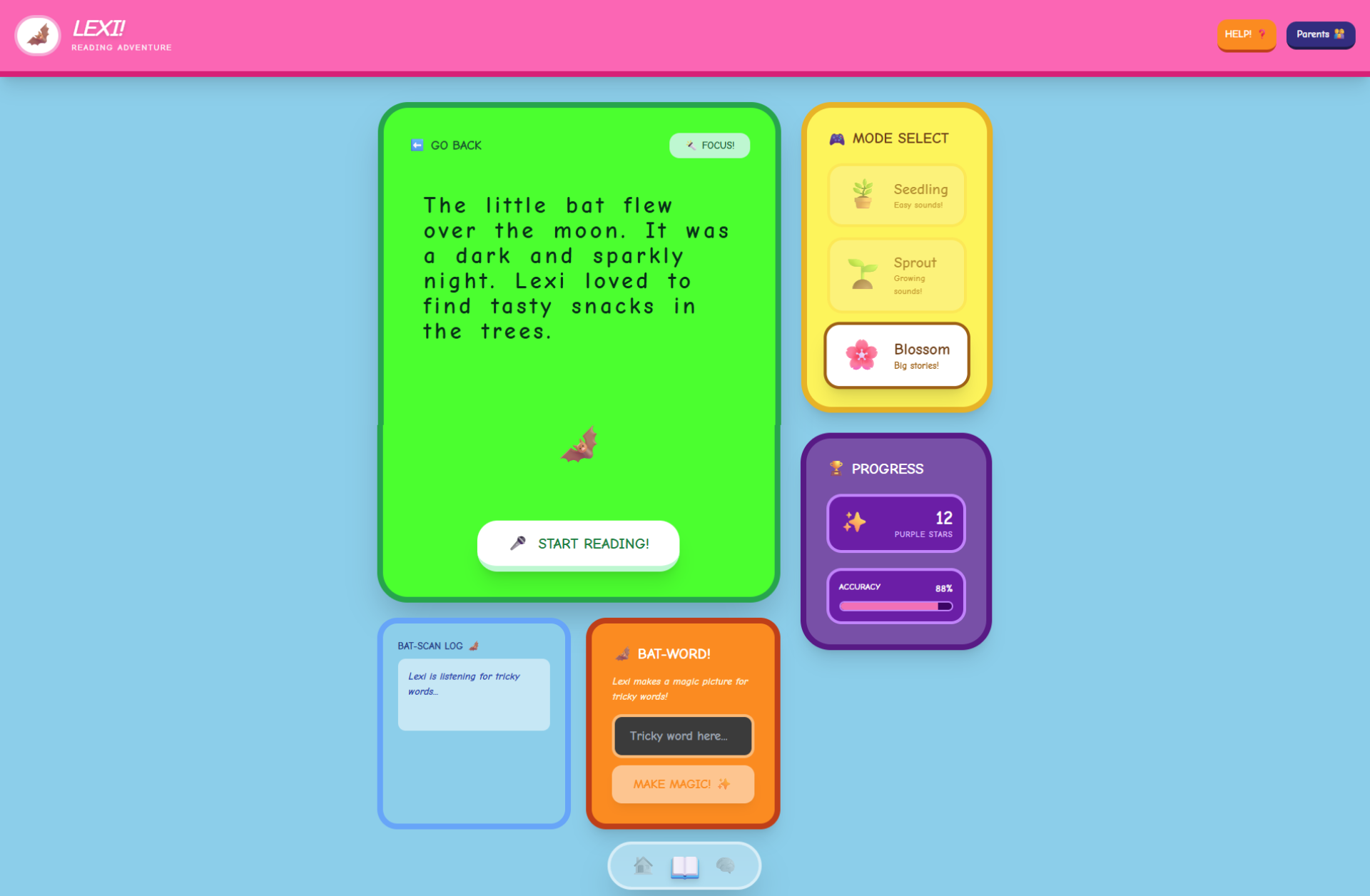
Learning Interface
-
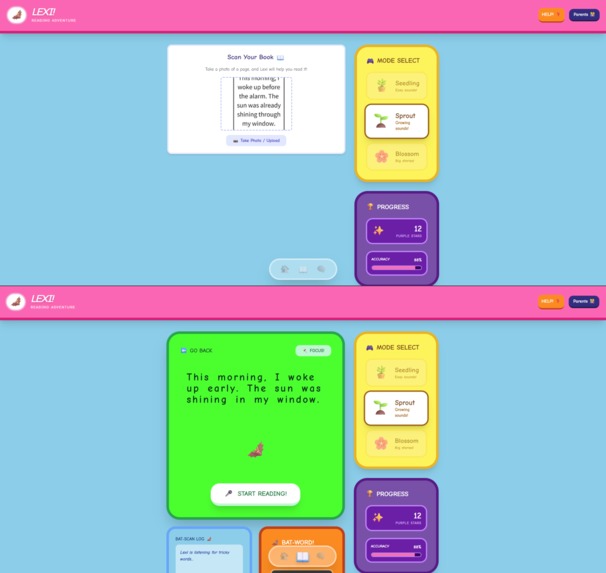
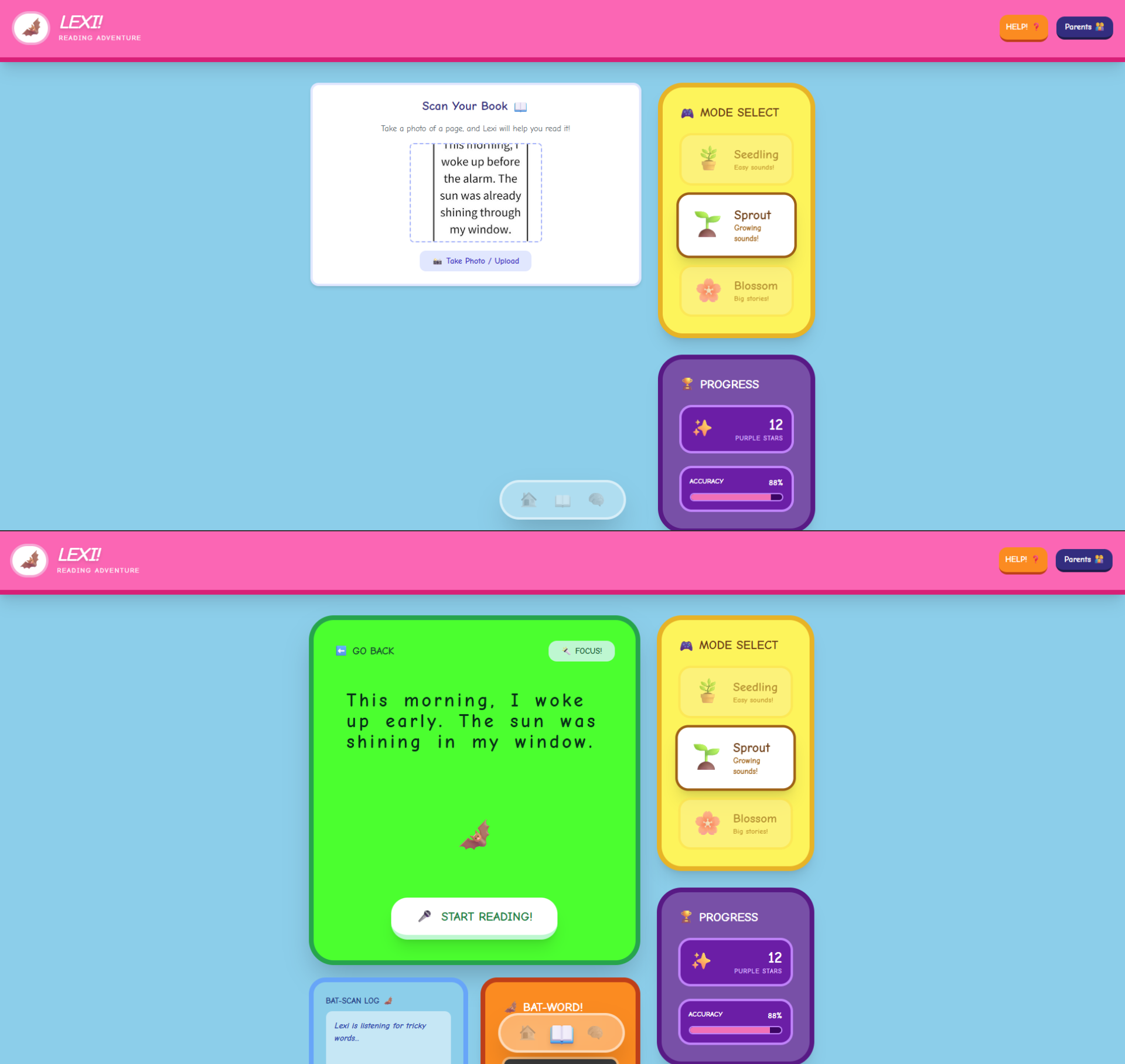
Book Scanning Workflow
-
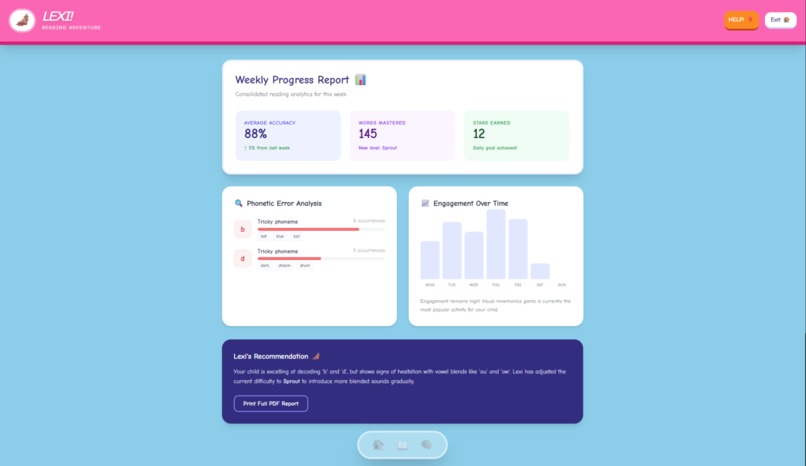
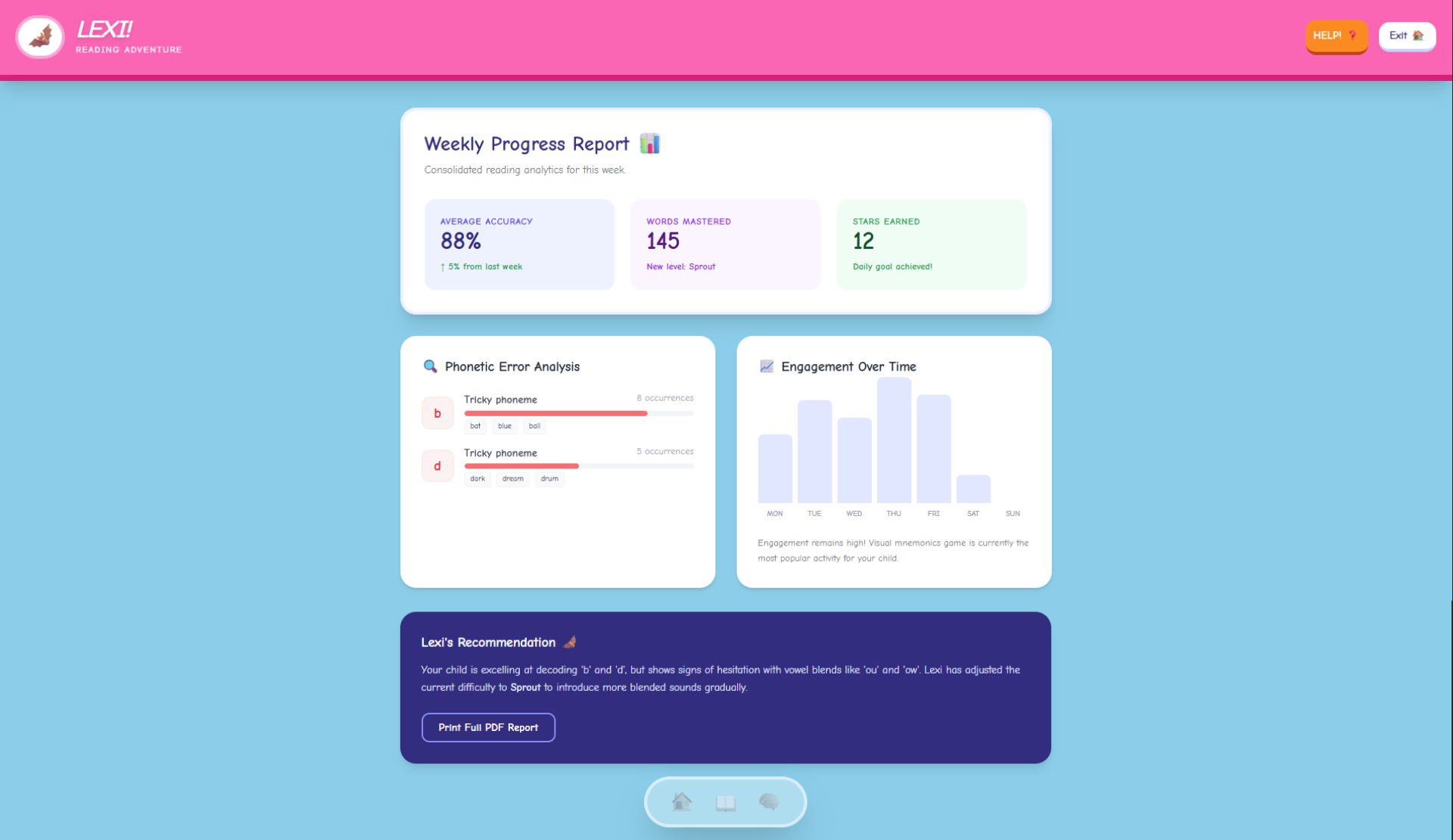
Parent Analytics Dashboard
Lexi: AI-Driven Neuro-Phonetic Decoder for Dyslexia
Inspiration
The inspiration for Lexi comes from a stark, uncomfortable reality: for a child with dyslexia, a classroom is often a place of silent trauma. I have witnessed children, brilliant in their logic and creativity, crumble into tears because a simple sentence felt like an impenetrable fortress. As a Biomedical Engineer, I realized that we were failing these children by providing static tools for a dynamic neurological challenge. Dyslexia is not a broken brain; it is a brain forced to use a map that does not match the terrain. I felt a profound responsibility to use my technical background to bridge this gap. I wanted to build more than an app; I wanted to build a "neuro-prosthesis" that restores the dignity of reading to every child who has been told they "just aren't trying hard enough."
Features
- Real-Time Phonetic Echolocation: Leveraging Gemini 3 Flash's low-latency inference to provide instantaneous phonetic correction, preventing the neural encoding of decoding errors.
- Generative Scaffolding & Mnemonics: Dynamic generation of visual and auditory memory aids tailored to the specific phonetic struggle of the moment, moving beyond pre-programmed responses.
- Multimodal Syntactic Simplification: Real-time re-rendering of physical text into dyslexia-friendly structures, adjusting the cognitive load ($L_c$) without sacrificing narrative depth.
- Emotional Bio-Feedback Loop: A reasoning-based system that analyzes prosody and speech patterns to detect frustration and automatically recalibrate the instructional tone.
- Cross-Sensory Mapping: A system that links visual graphemes with spatial and auditory cues to reinforce the phonological loop in the brain.
How we built it
Lexi was engineered within the Google AI Studio ecosystem, pushing the boundaries of the Gemini 3 Flash model. The technical implementation followed a strict architectural pipeline:
- Google AI Studio Prototyping: We utilized Google AI Studio as our primary development environment to rapidly iterate on system instructions and refine the model's neuro-pedagogical reasoning.
- UX/UI Neuro-Design: We implemented a "User Experience for Neurodiversity" (UXN) framework. This involved a high-contrast chromatic palette (Sky Blue background with specific Pink, Yellow, and Green zones) to minimize visual stress and improve focus-tracking for ADHD and Dyslexic learners.
- Cognitive Load Optimization: We integrated parameters based on Cognitive Load Theory to ensure that the AI-generated interventions do not overwhelm the student's working memory ($W_m$).
- Vision-Language Bridging: We integrated Gemini’s vision capabilities to handle "Cold Start" reading sessions from physical media, converting raw image data into structured, simplified text streams.
- Adaptive Response Latency: By leveraging the optimized inference speed of Gemini 3 Flash, we ensured that the feedback loop occurs within the critical millisecond window.
Scalability and Stability
The architecture of Lexi is natively scalable due to its reliance on Google’s robust API infrastructure and the high-efficiency Gemini 3 Flash model. The stability is guaranteed by the model's high context window, which allows the application to maintain a deep history of the child's specific phonological errors across hours of practice. This "Long-Term Pedagogical Memory" is key to its stability. Furthermore, the system is designed to be hardware-agnostic, allowing for easy porting from web-based prototypes to specialized educational devices or integration into existing hospital and school management systems.
What we learned
This hackathon has been a masterclass in the intersection of AI and Neuroscience. We learned that:
- Latency is a Clinical Variable: In neuro-education, a delay in feedback is not just a technical flaw; it is a barrier to learning. Gemini 3 Flash’s speed is a fundamental requirement for inclusive tech.
- Reasoning over Retrieval: We discovered that a model that "reasons" through an error is far superior to a system that simply "retrieves" a correction. The generative nature of Gemini allows for personalized mnemonics that actually resonate with a child's unique interests.
- The Importance of Multimodal Fluidity: Learning to balance audio, text, and vision inputs simultaneously allowed us to create a truly multisensory experience that mimics the way the human brain actually learns to read.
Challenges we faced
The primary challenge was the "Syntactic Compression" paradox: simplifying text enough for a dyslexic child to read while maintaining enough complexity to actually improve their reading level. We solved this by implementing an adaptive difficulty curve. Another significant hurdle was the environmental noise handling in audio inputs; we had to refine our prompting in Google AI Studio to ensure Gemini could distinguish between a child's phonetic struggle and background classroom sounds.
Accomplishments that we're proud of
We are proud of creating a tool that transforms a source of anxiety into a source of play. We successfully demonstrated that LLMs can do more than generate text—they can provide a sophisticated, empathetic, and scientifically-grounded intervention for neurodivergent learners through a robust UX design.
What's next for Lexi
We are moving toward integrating real-time EEG data to monitor cognitive load directly from the brain. Our goal is to expand Lexi into an Open-Source framework for neuro-inclusive education, where every child has access to a personal tutor that understands exactly how their mind works.

Log in or sign up for Devpost to join the conversation.