The Problem
Most people encounter Terms and Conditions, Privacy Policies, and other legal agreements every day, but very few read them in full.
The problem isn't always a lack of interest. Legal agreements can be long, technical, and difficult to understand. Important information about data collection, data sharing, automatic renewal, cancellation, payments, user rights, and dispute resolution can be buried inside pages of legal text.
This creates a simple problem:
People often agree to things they don't fully understand.
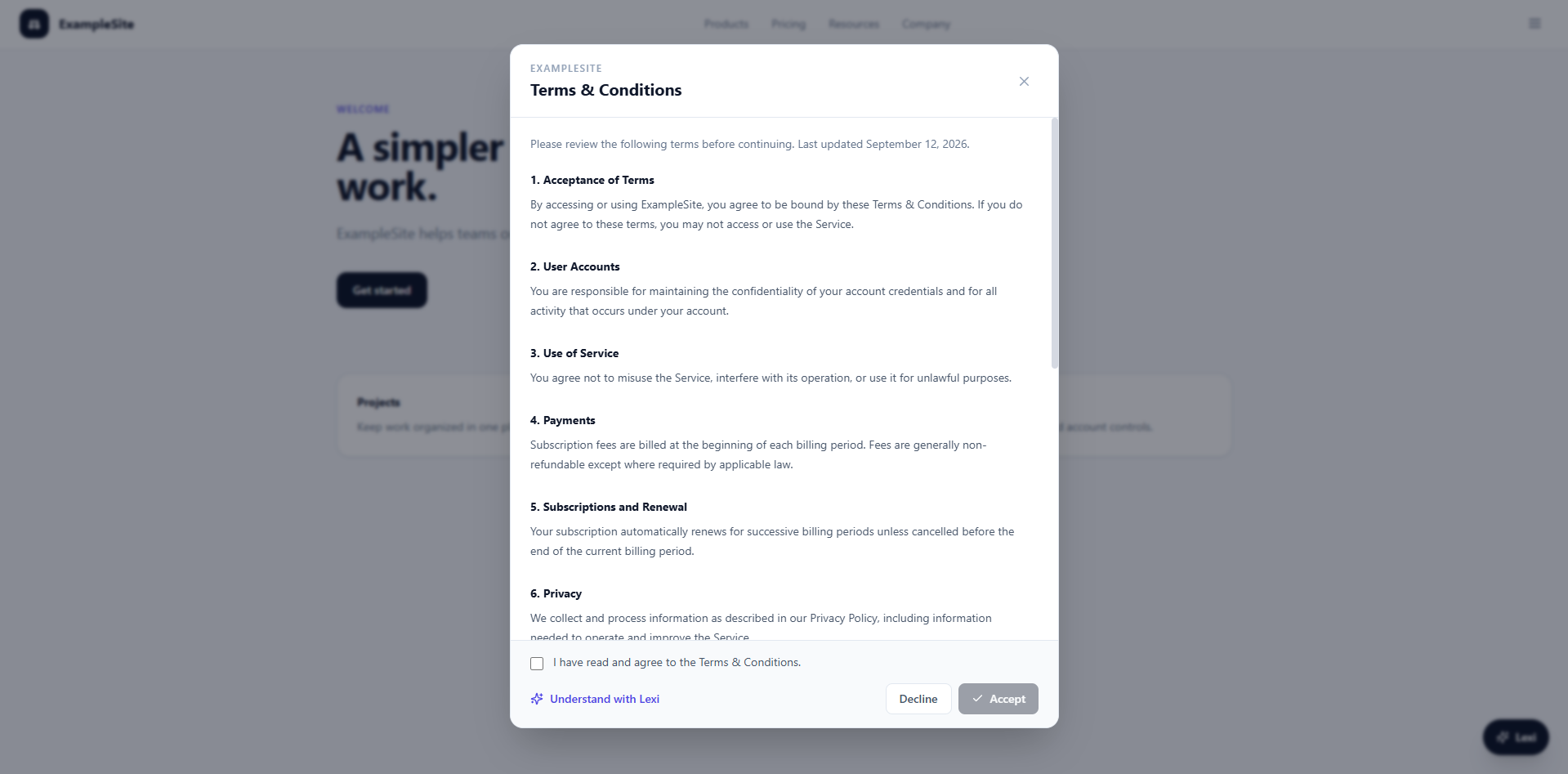
We wanted to make that information easier to access and understand at the moment the user is making a decision.
Our Solution
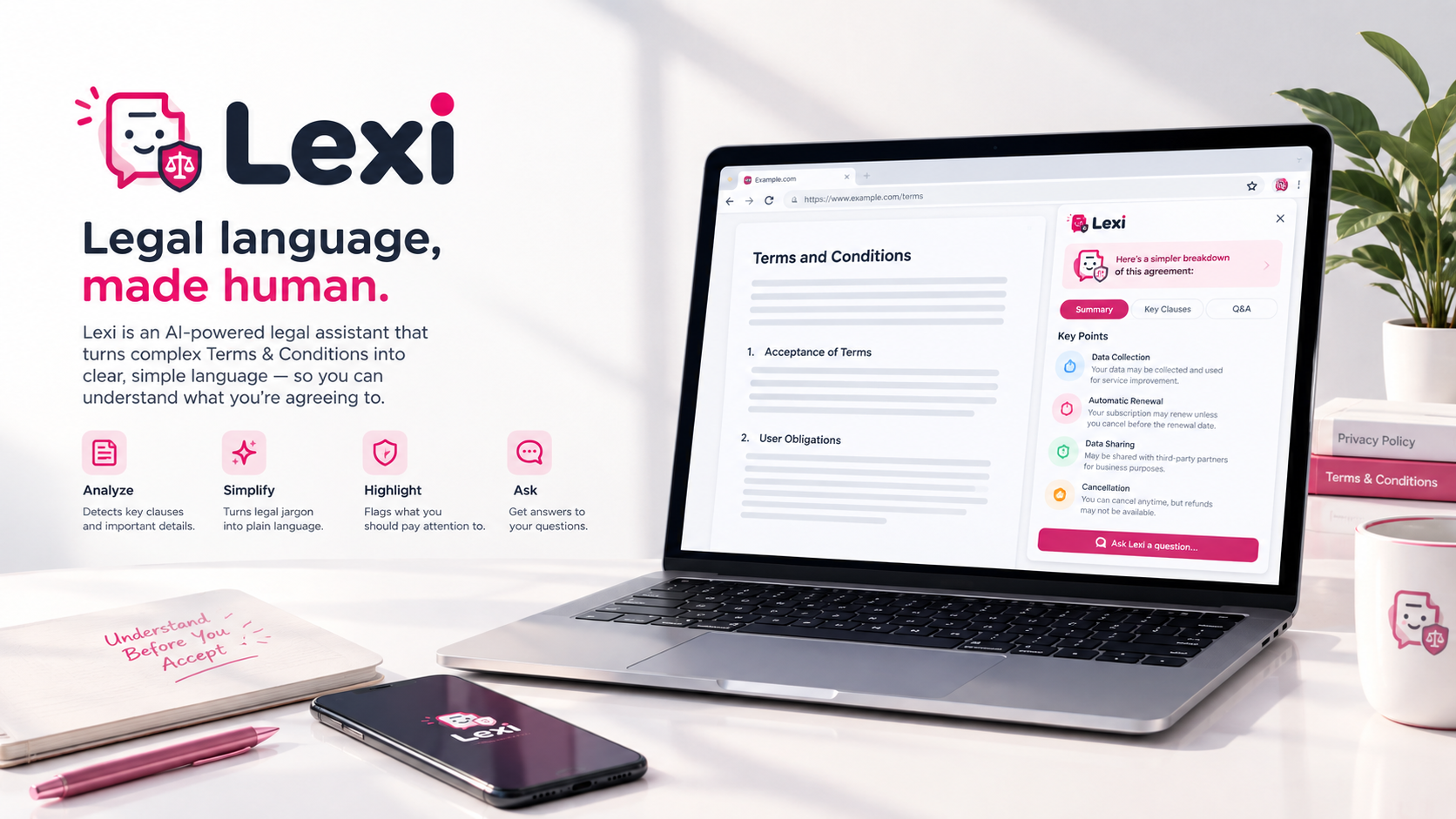
Lexi is a browser-based legal assistant that helps users understand Terms and Conditions, Privacy Policies, and other legal agreements before they agree to them.
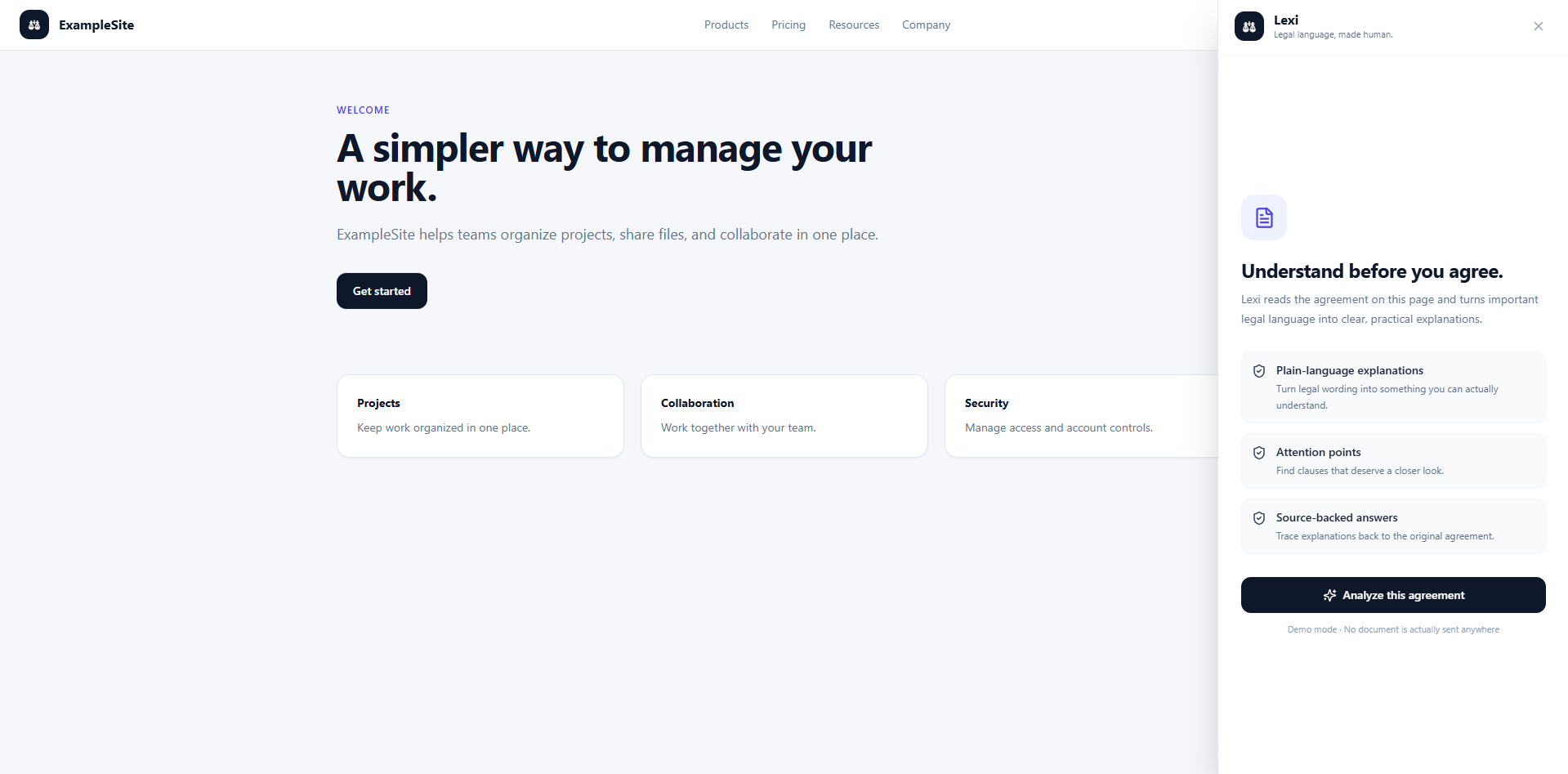
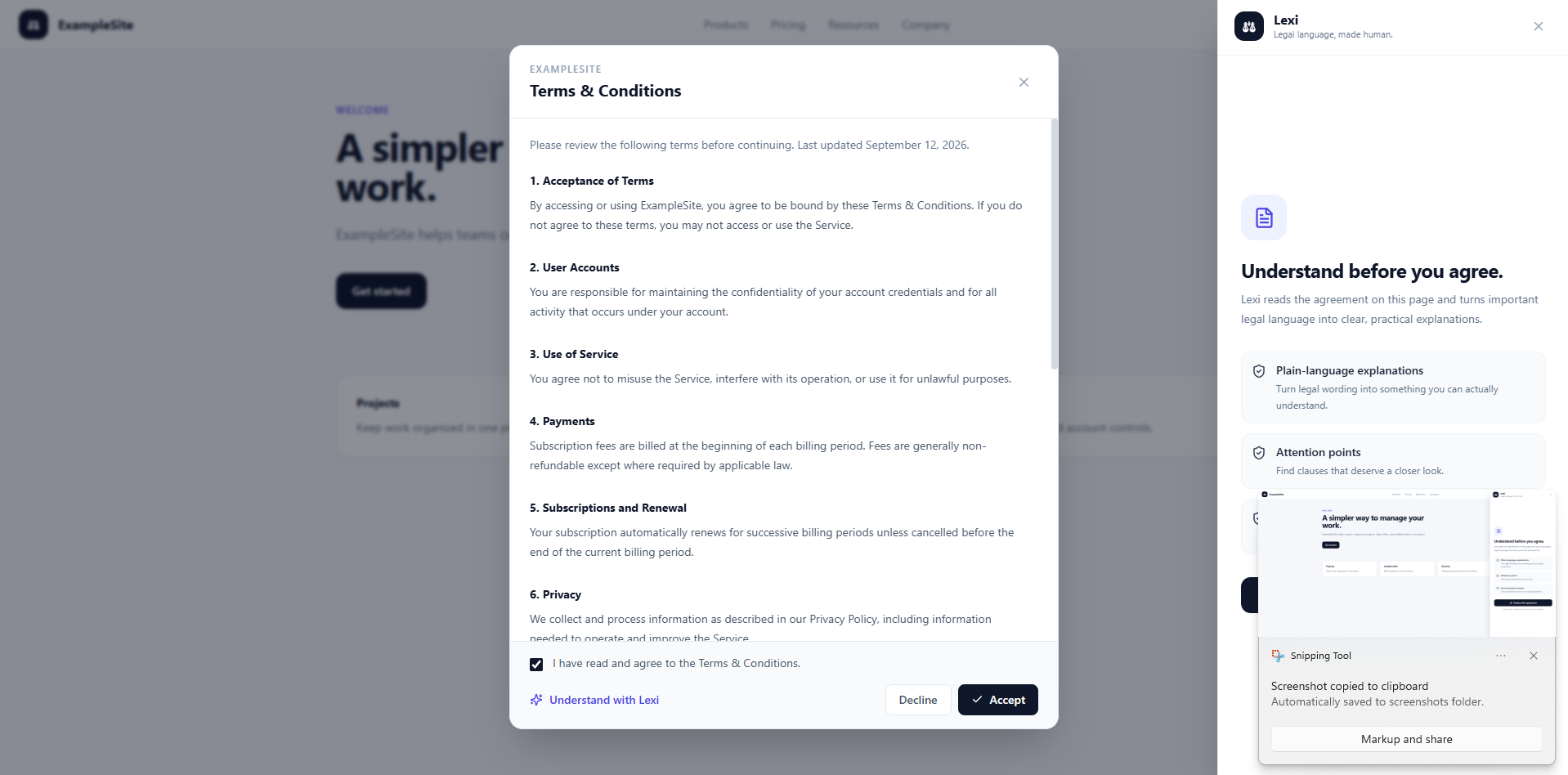
Instead of requiring users to leave the website and copy an agreement into another tool, Lexi works alongside the webpage through a browser side panel.
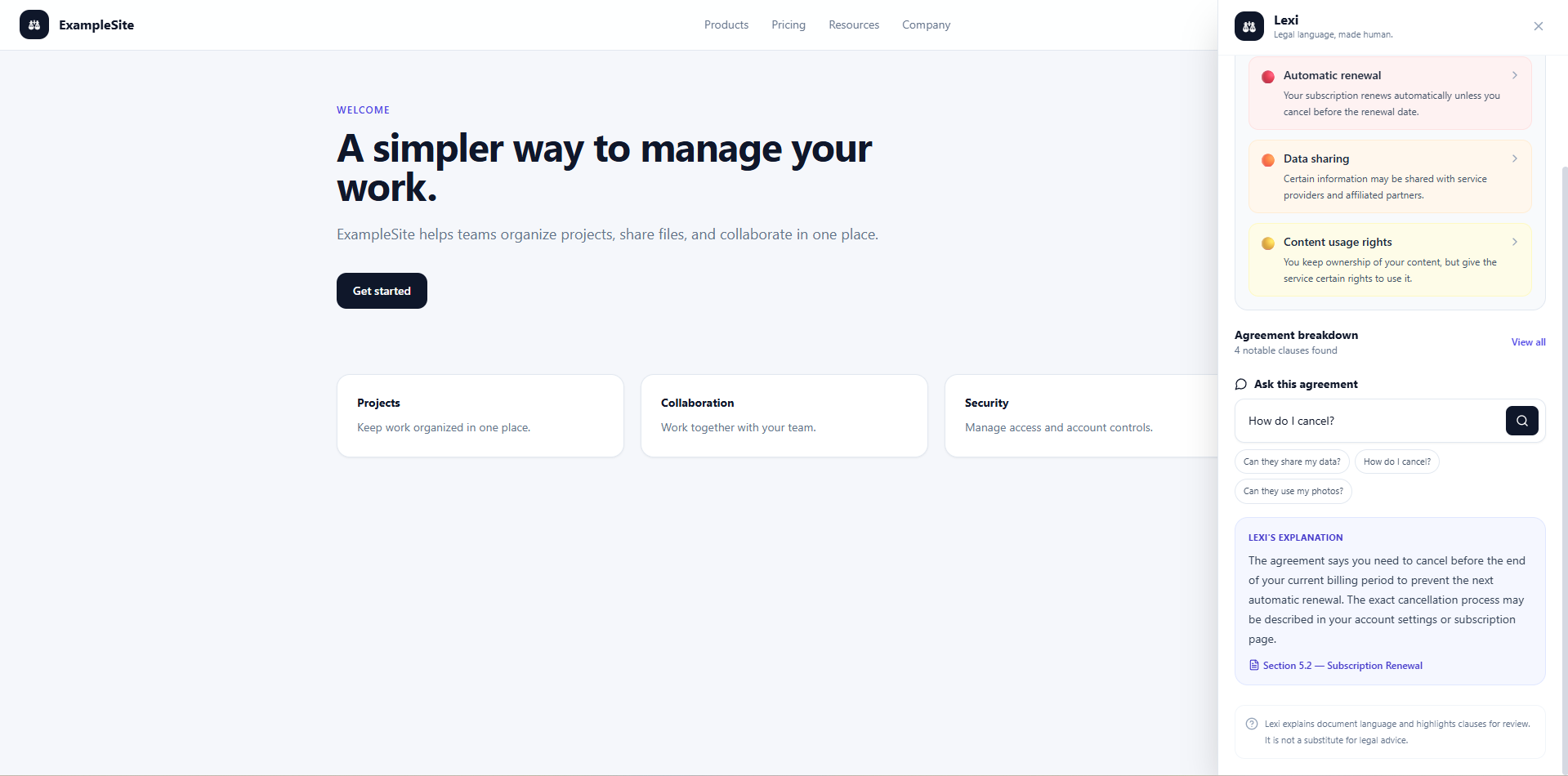
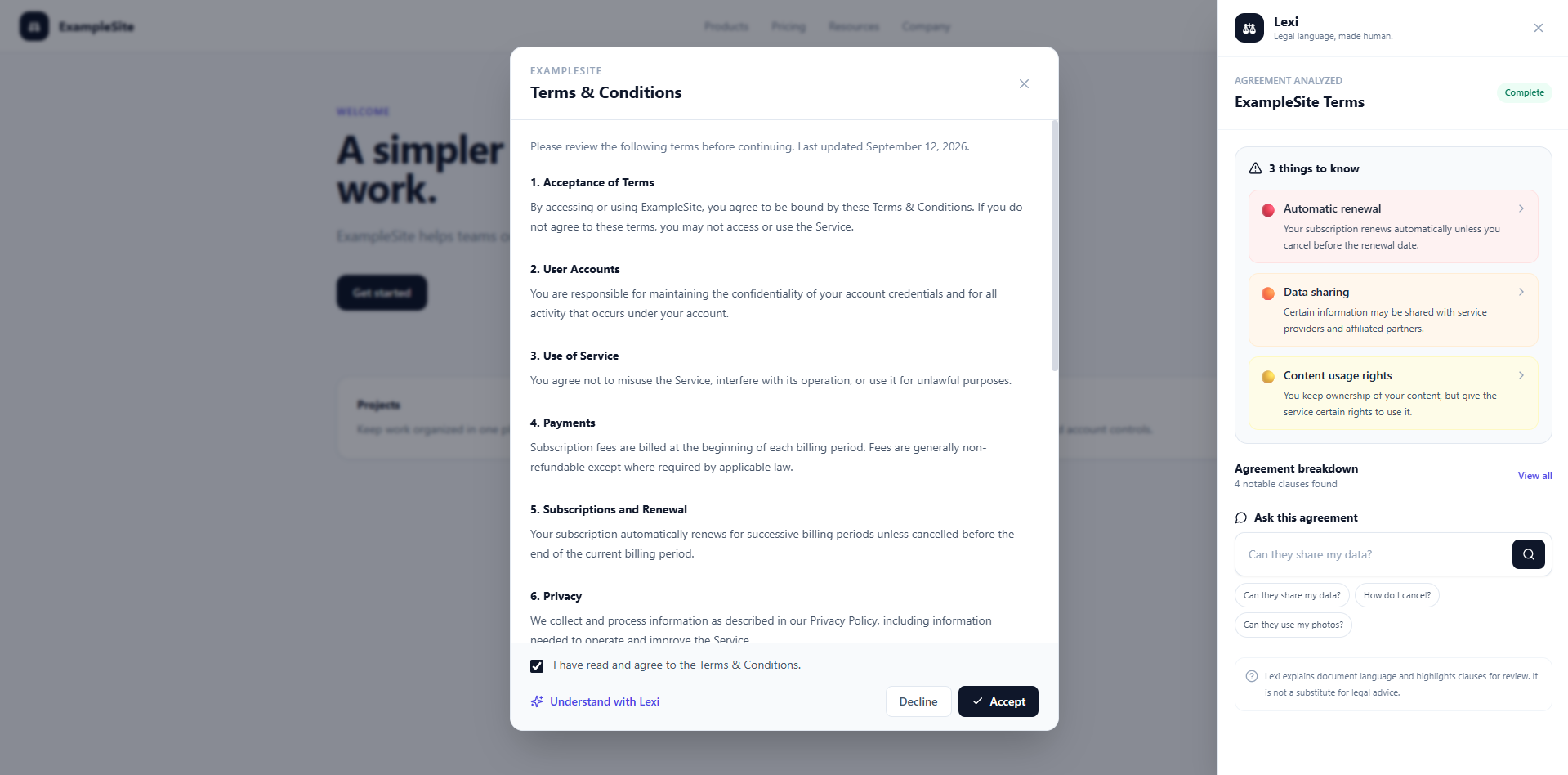
Users can analyze the current page, identify important clauses, translate legal language into plain language, review clauses that may deserve closer attention, and ask questions about the agreement.
Key Features
T&C / Legal Text Analyzer
Lexi analyzes Terms and Conditions, Privacy Policies, and other legal agreements and extracts the sections that are most relevant to the user.
It can identify areas such as:
- Data collection
- Data sharing
- Automatic renewal
- Cancellation
- Payments and refunds
- User rights
- Content ownership
- Arbitration and dispute resolution
Plain-Language Translation
Lexi converts complicated legal wording into simpler language while keeping the original clause available for reference.
For example:
Legal:
"The service may terminate your account at its sole discretion."
Plain language:
"The company can close your account whenever it decides."
The goal is not to replace the legal agreement, but to make its meaning easier for a non-lawyer to understand.
Risk / Attention Highlights
Lexi identifies clauses that users may want to examine more closely.
These may include automatic renewal conditions, broad data-sharing permissions, cancellation restrictions, payment obligations, and other important provisions.
Rather than simply labeling a clause as "bad," Lexi provides an explanation of why the user may want to pay attention to it.
AI Q&A
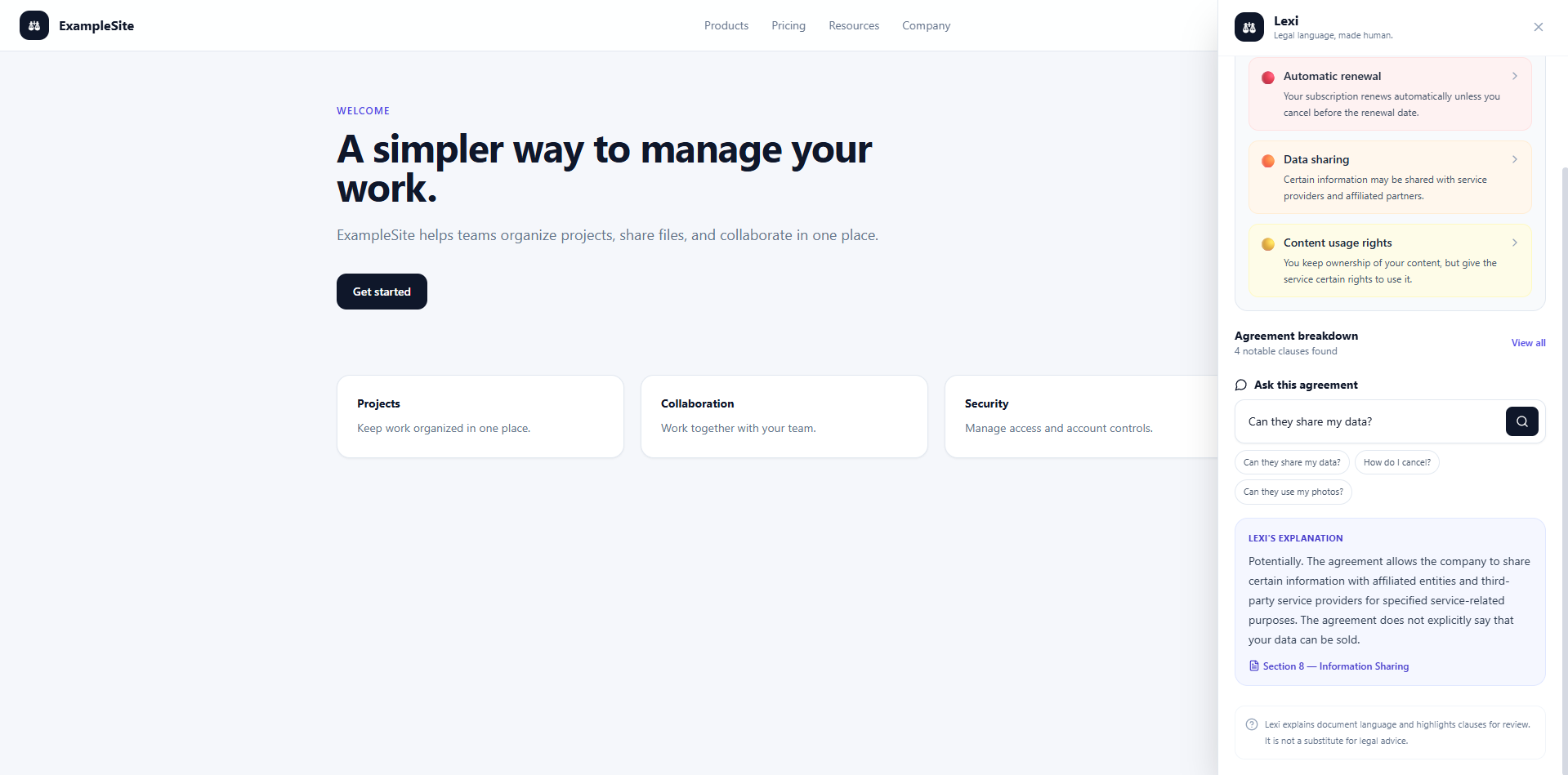
Users can ask questions about the agreement in natural language.
For example:
"Can they sell my data?"
Lexi answers based on the analyzed document, helping the user locate and understand relevant information without manually searching through the entire agreement.
Browser Extension
Lexi is designed to work directly inside the browser.
The side-panel interface allows users to analyze the current webpage without leaving the site.
The agreement can also be opened in a dedicated document view for easier reading and review.
How It Works
The basic workflow is:
Open → Analyze → Understand → Ask → Decide
A user encounters a legal agreement online and opens Lexi.
Lexi analyzes the available legal text and organizes important clauses.
The user can then read plain-language explanations, review attention highlights, or ask questions about the agreement.
The original document remains available so users can compare the explanation with the source text.
Why We Built It
We built Lexi around a simple idea:
Understanding an agreement shouldn't require a law degree.
Legal agreements affect everyday decisions, from signing up for online services to accepting privacy policies and subscription terms.
We wanted to create a tool that makes those agreements easier to navigate without making the decision for the user.
Lexi doesn't tell users what they should agree to.
It helps them understand what they're agreeing to.
Challenges
One of our biggest challenges was simplifying legal language without losing the meaning or context of the original clause.
Because of this, Lexi keeps the original wording available alongside the plain-language explanation.
Another challenge was designing the experience around how people actually encounter these documents.
Rather than creating another website that users have to visit separately, we chose a browser side-panel approach so Lexi can be available alongside the agreement itself.
What We Learned
We learned that making legal information accessible is not simply a matter of shortening a document.
Context matters.
A useful tool needs to help users find the important sections, understand unfamiliar language, and return to the original text when they need more context.
That shaped Lexi into an assistant for understanding legal documents rather than simply a document summarizer.
What's Next
Future versions of Lexi could support additional document formats, more jurisdictions and languages, stronger source references, improved clause classification, and deeper browser integration.
We also see opportunities to improve how Lexi connects explanations directly to the original clauses so users can easily verify where an answer comes from.
Our goal is simple:
Make legal information easier to understand at the moment people need to make a decision.


Log in or sign up for Devpost to join the conversation.