-
-
Lexfall: advanced English for people who already speak it well.
-
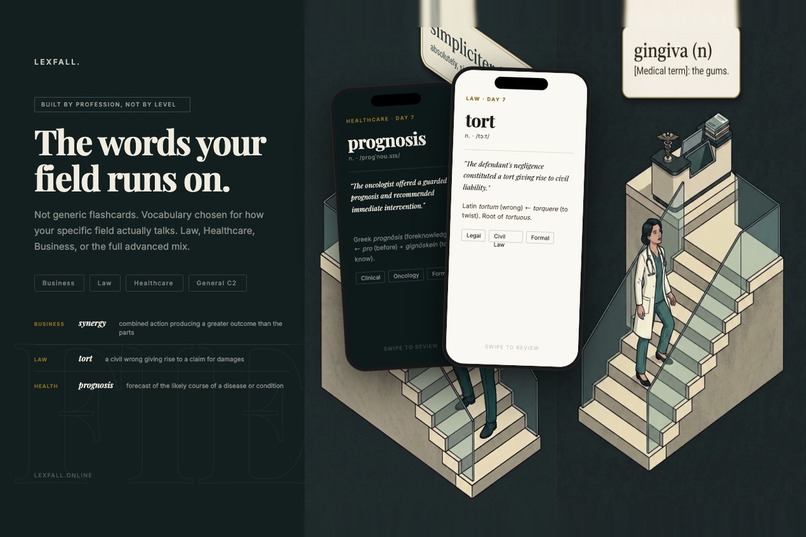
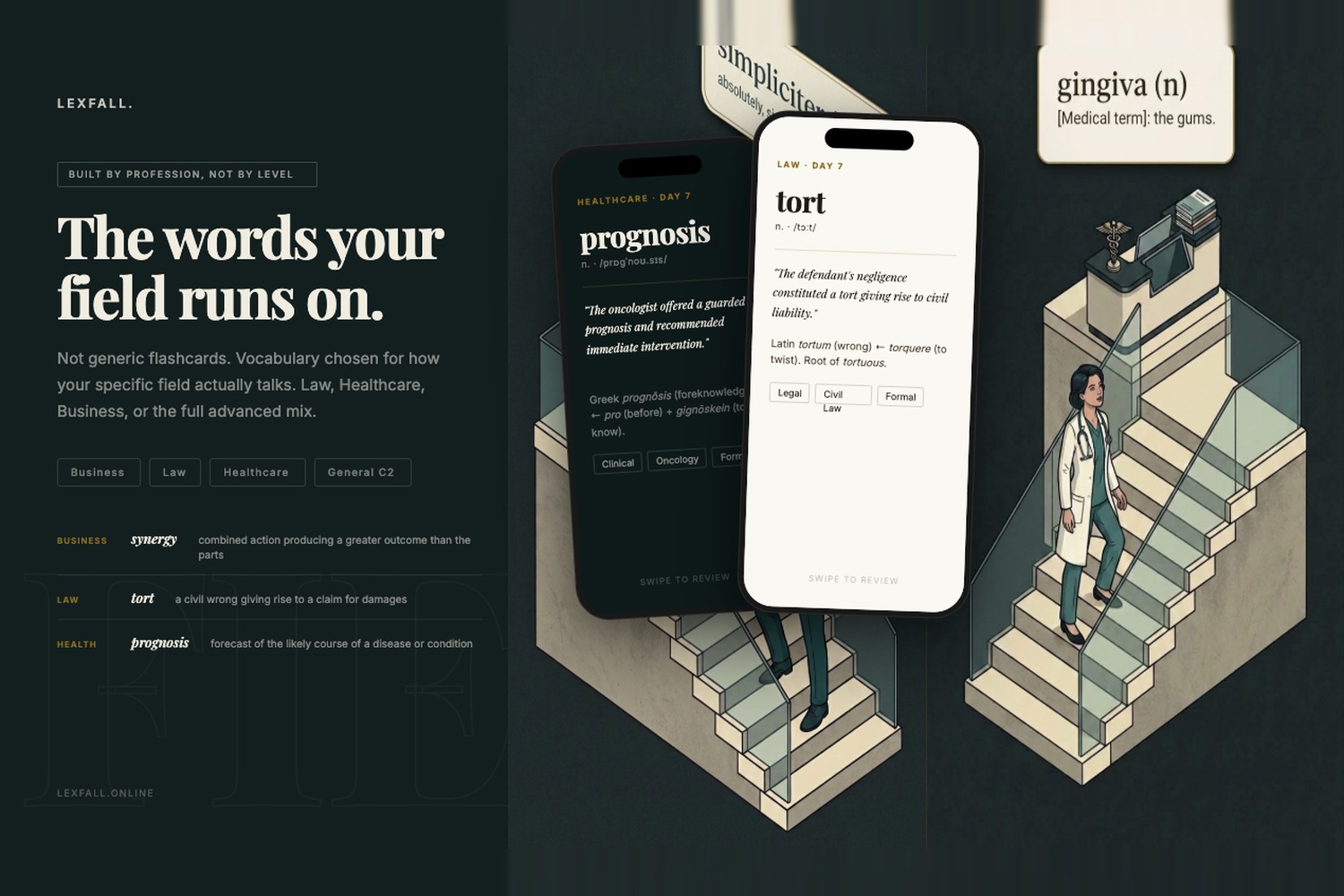
Built by profession: Law, Healthcare, Business or General C2.
-
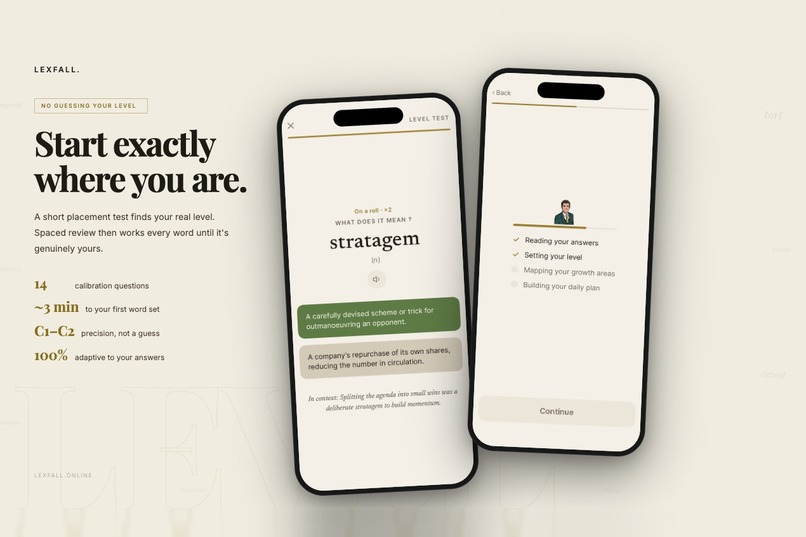
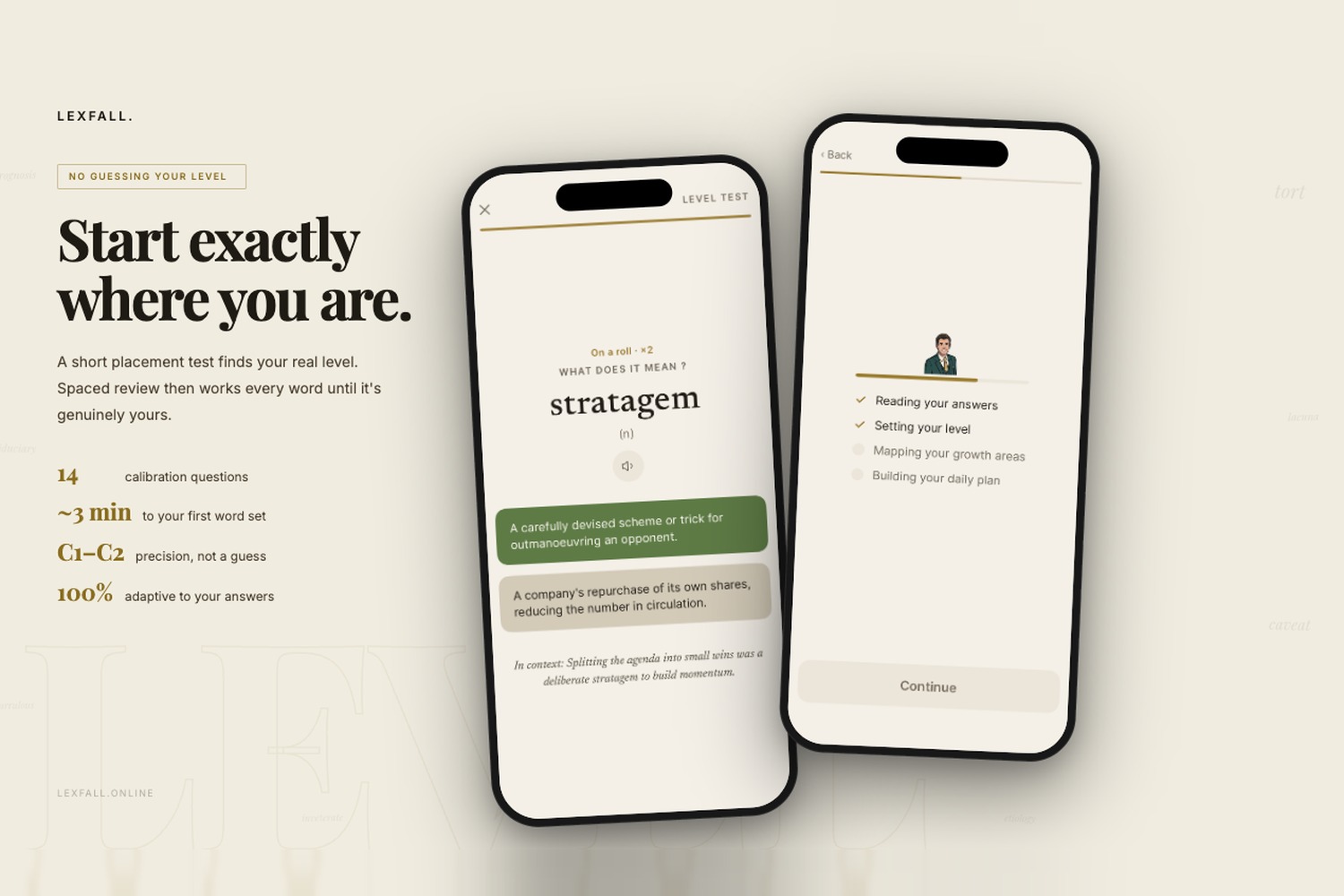
No guessing your level: a short placement test finds where you really are.
-
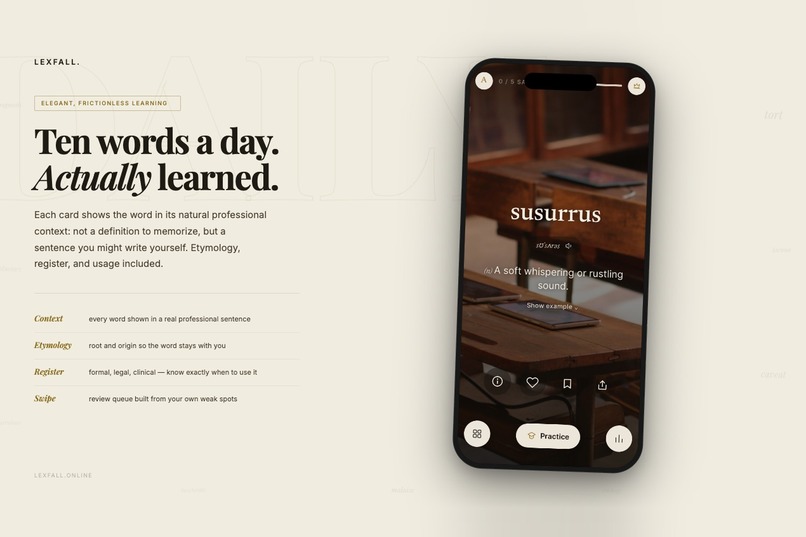
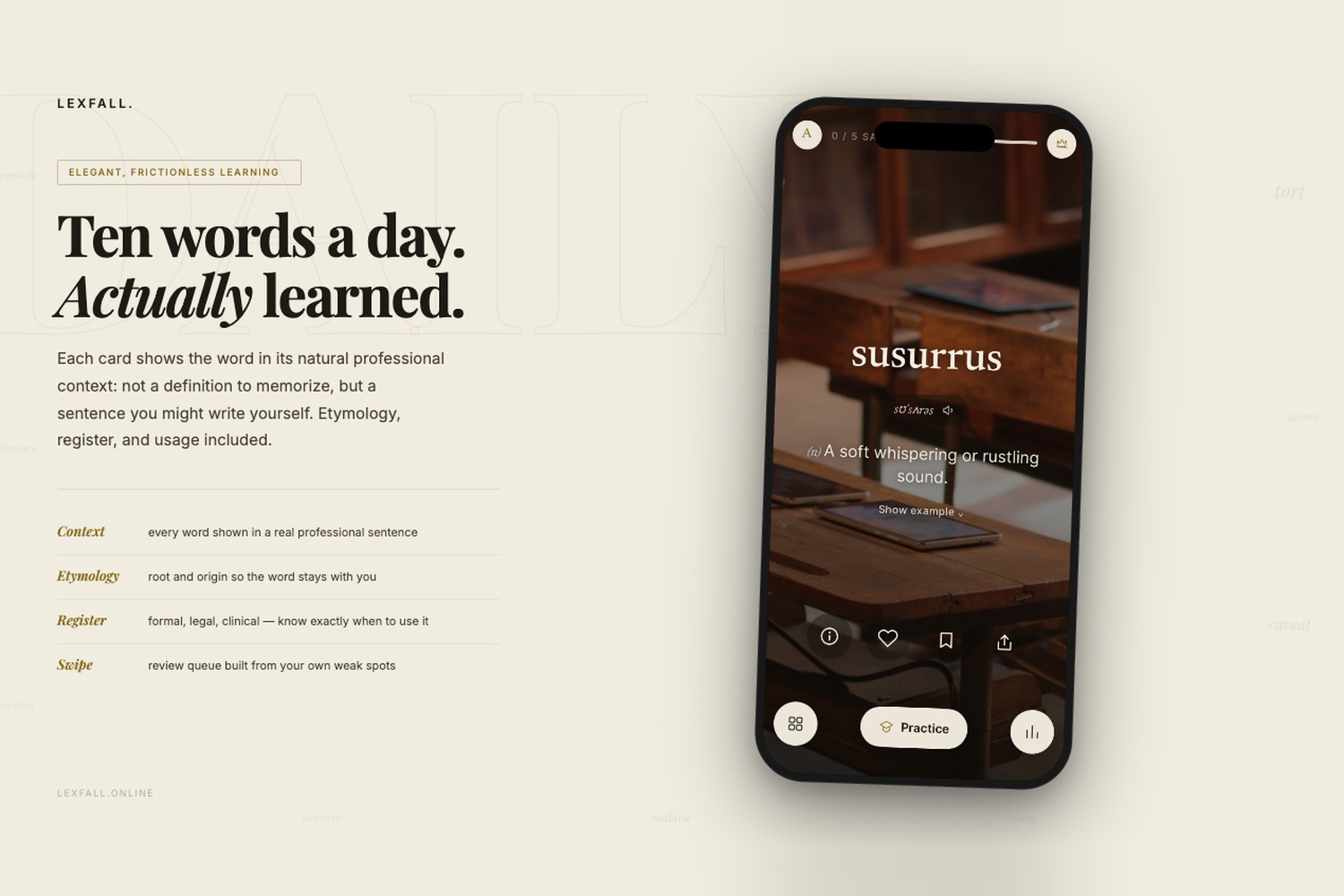
Ten words a day, each in a real professional sentence with native audio.
-
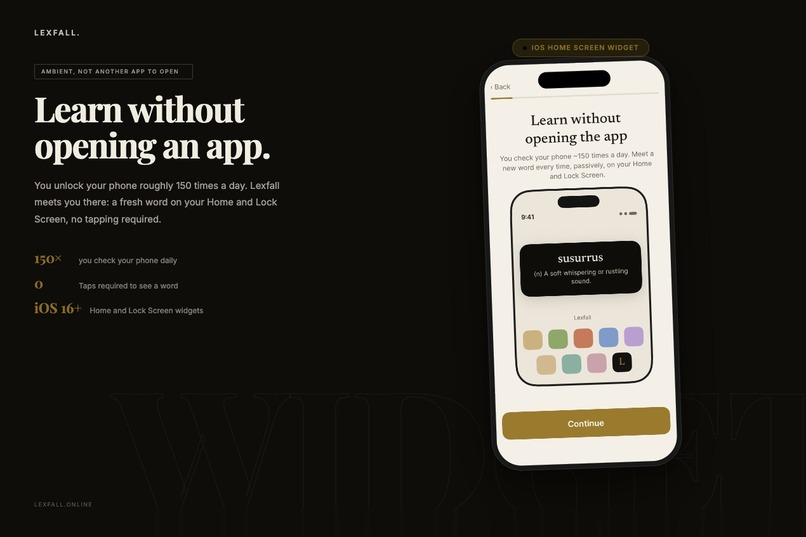
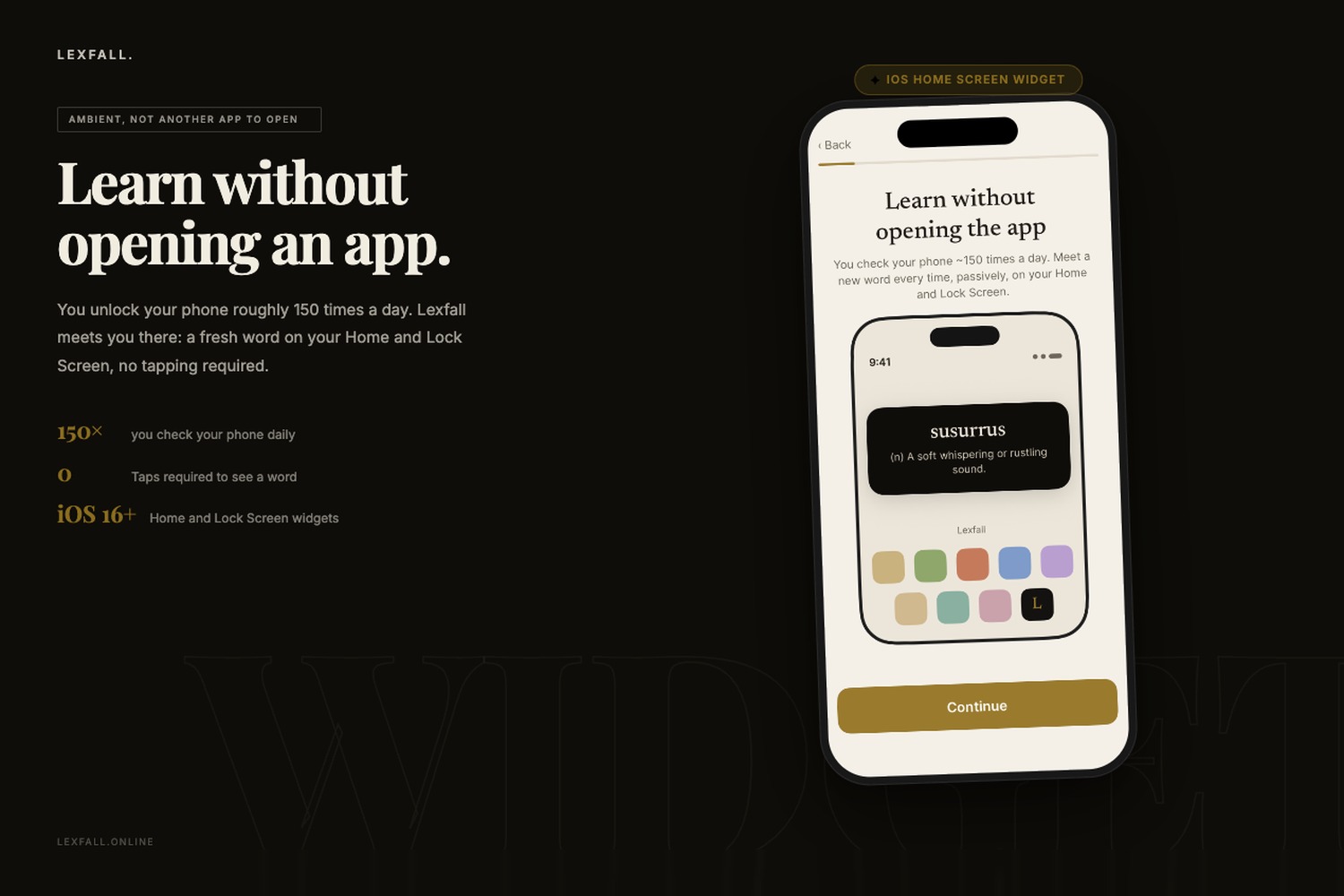
Learn without opening the app: Home Screen and Lock Screen widgets.
-
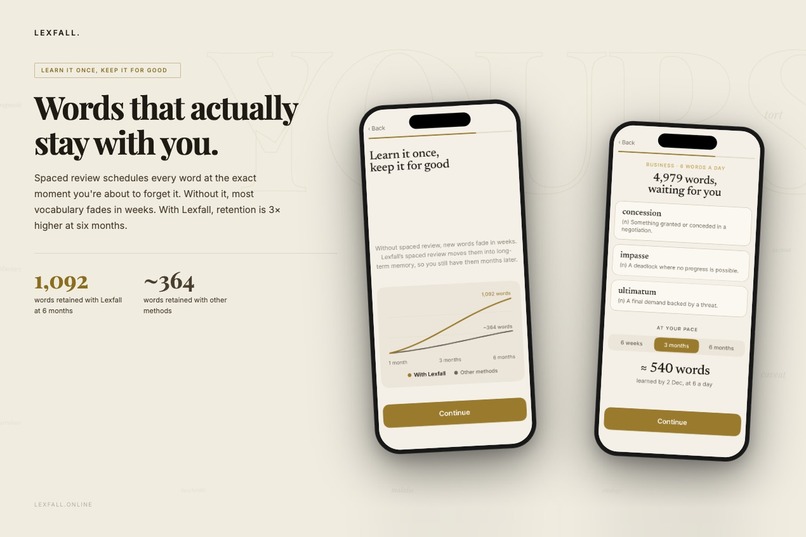
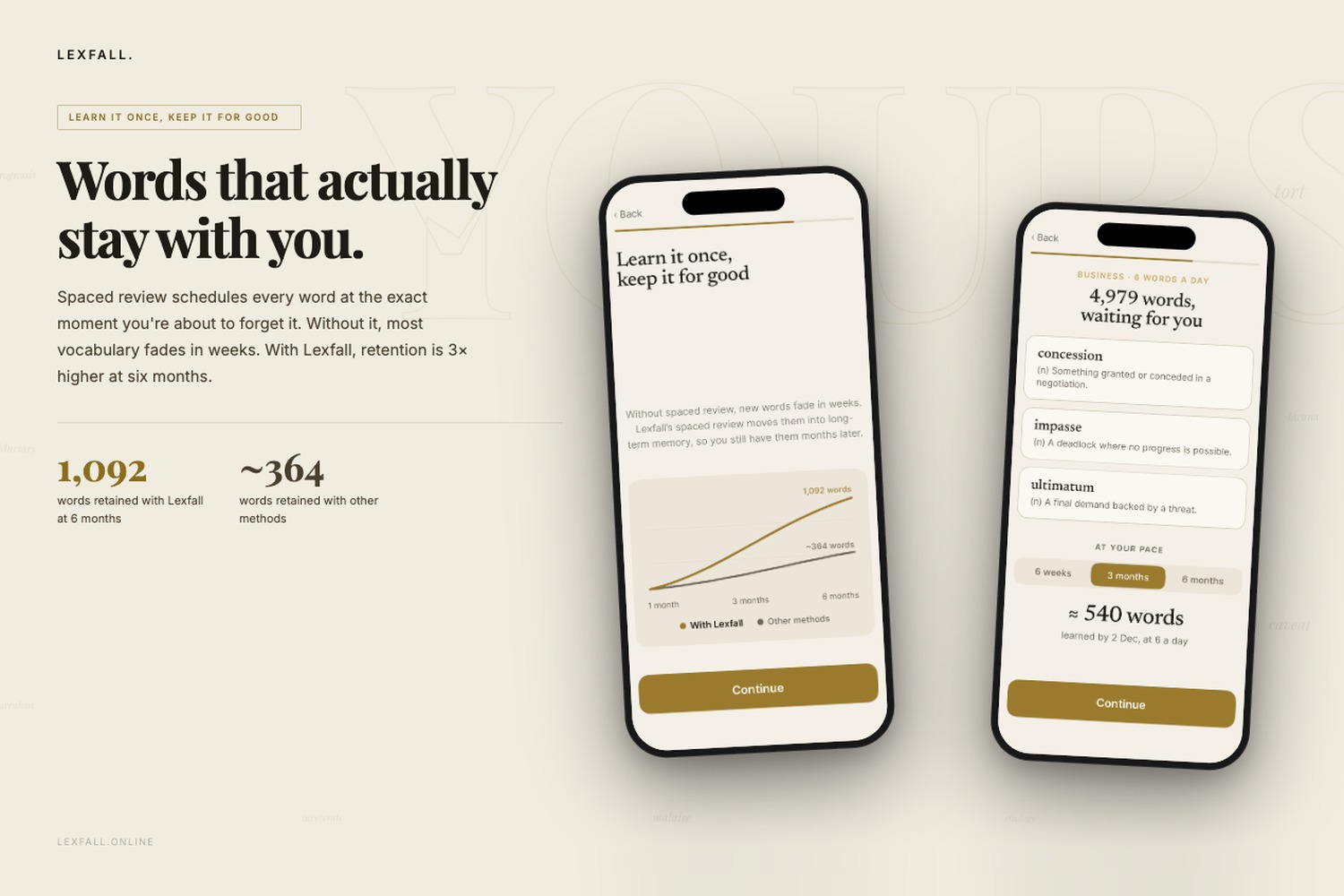
Spaced review brings words back right before you'd forget them.
-
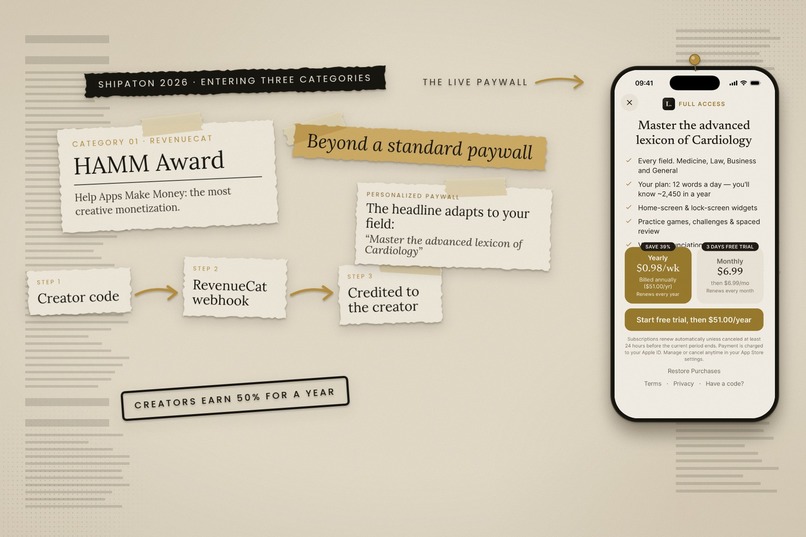
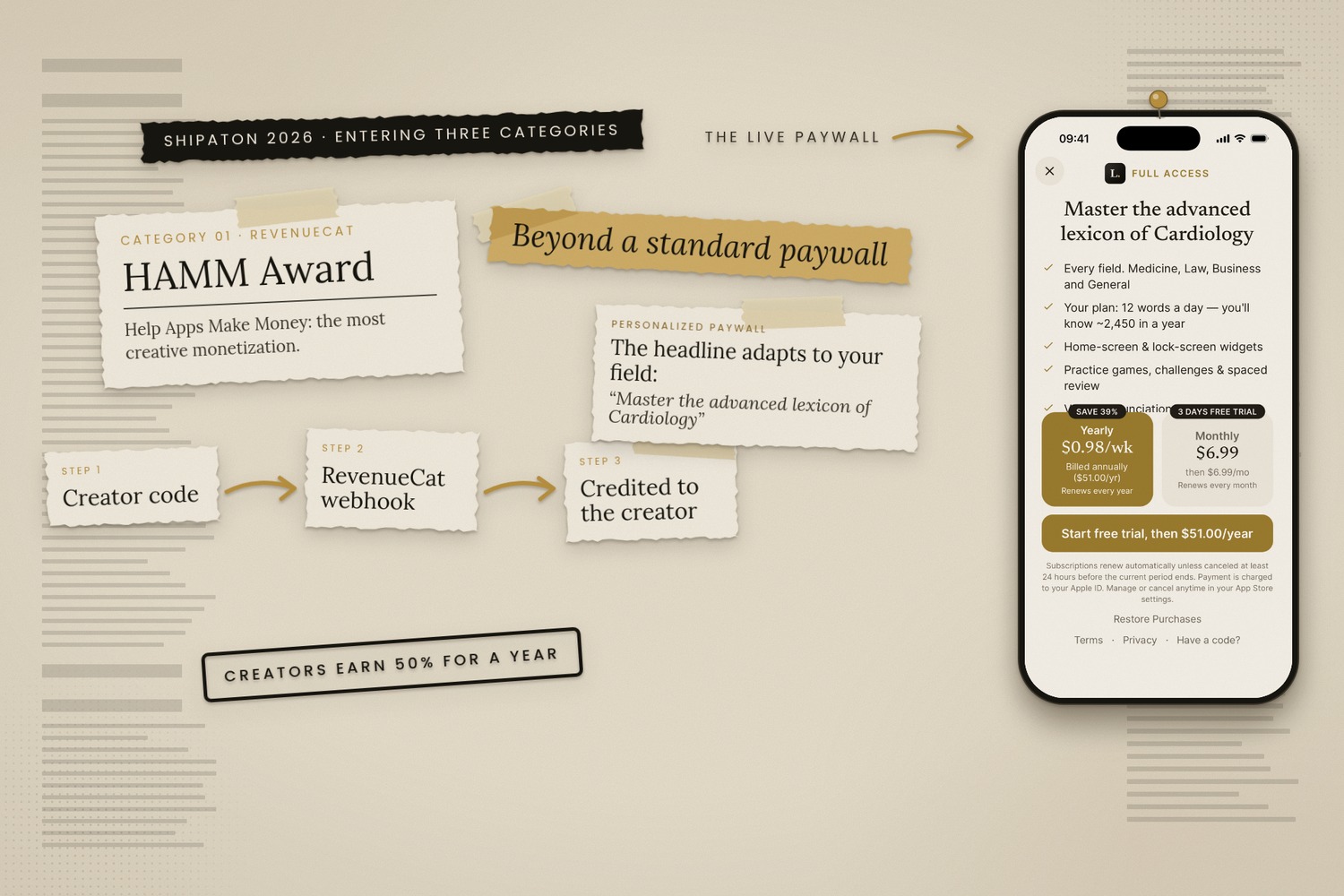
HAMM: a personalized paywall whose headline adapts to your field, priced live from RevenueCat.
-
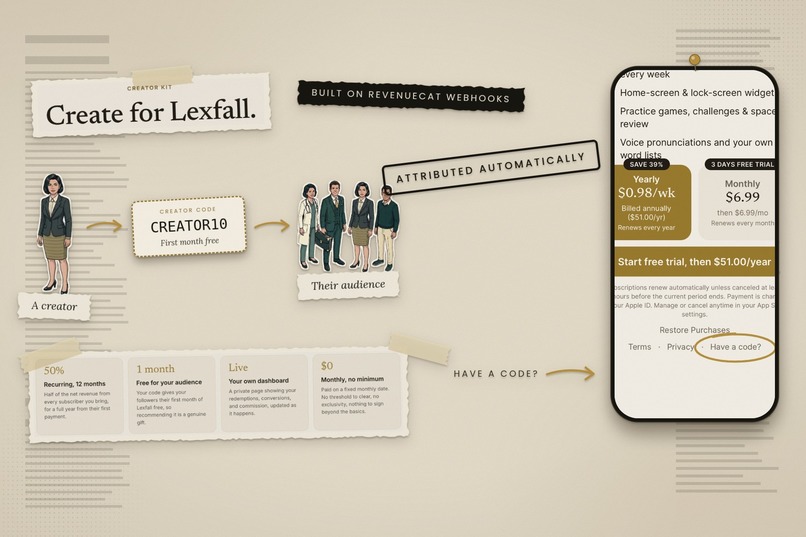
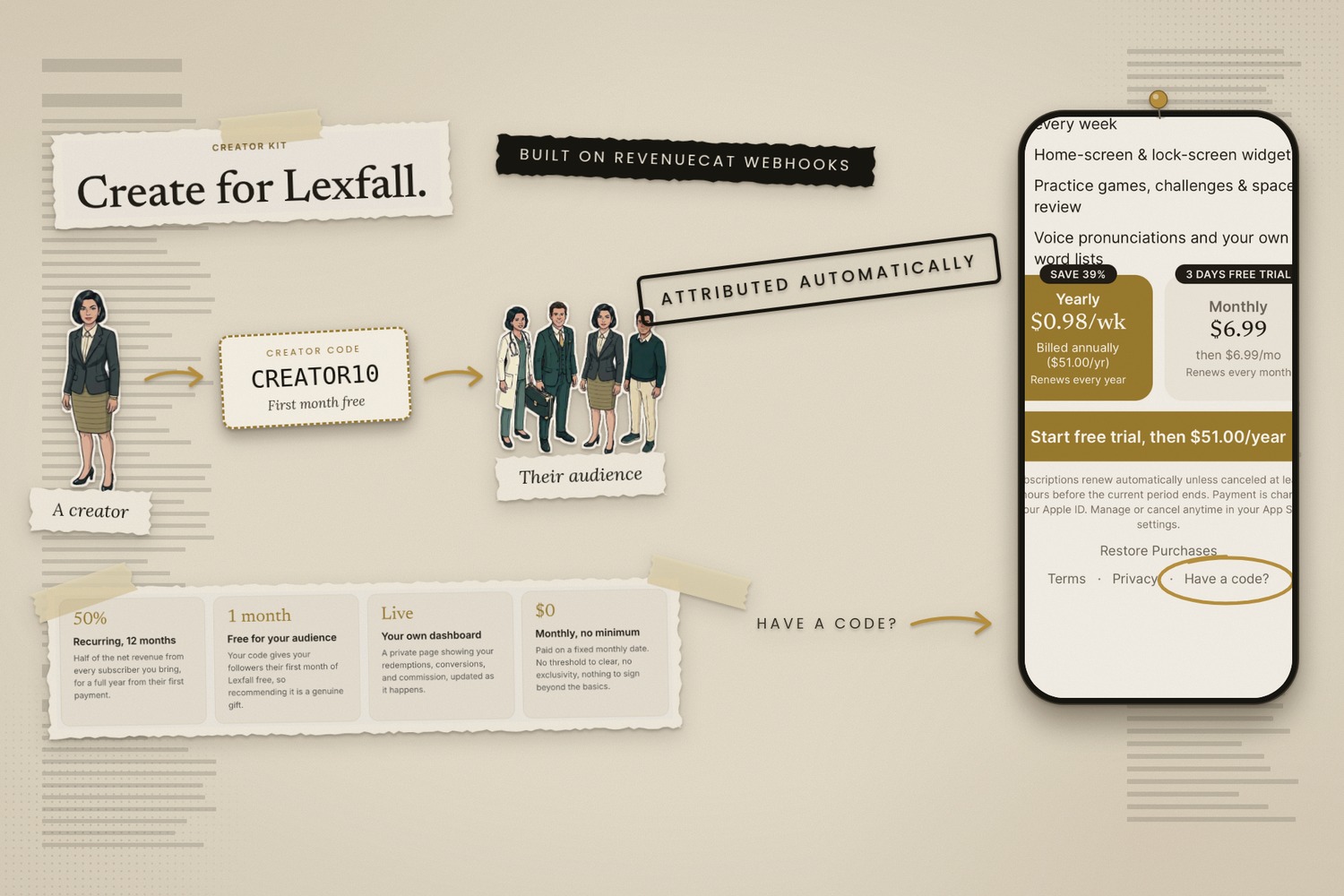
Creator program on RevenueCat webhooks: codes, automatic attribution, 50% for a year.
-
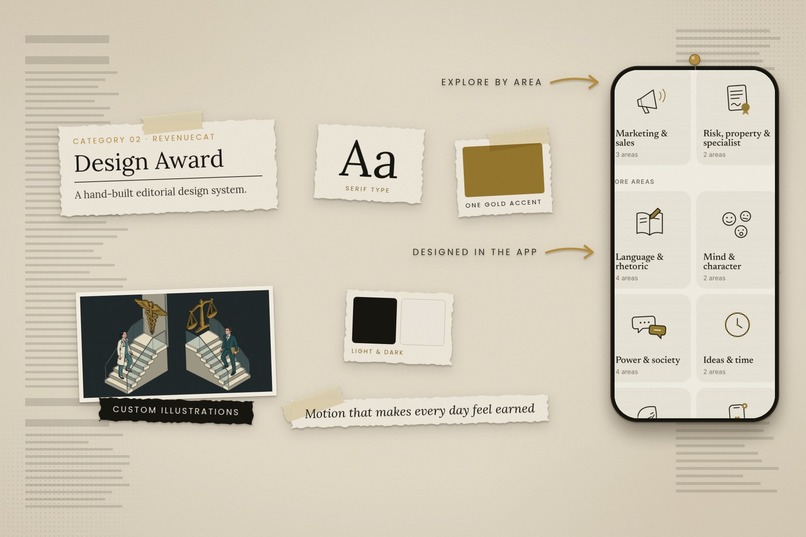
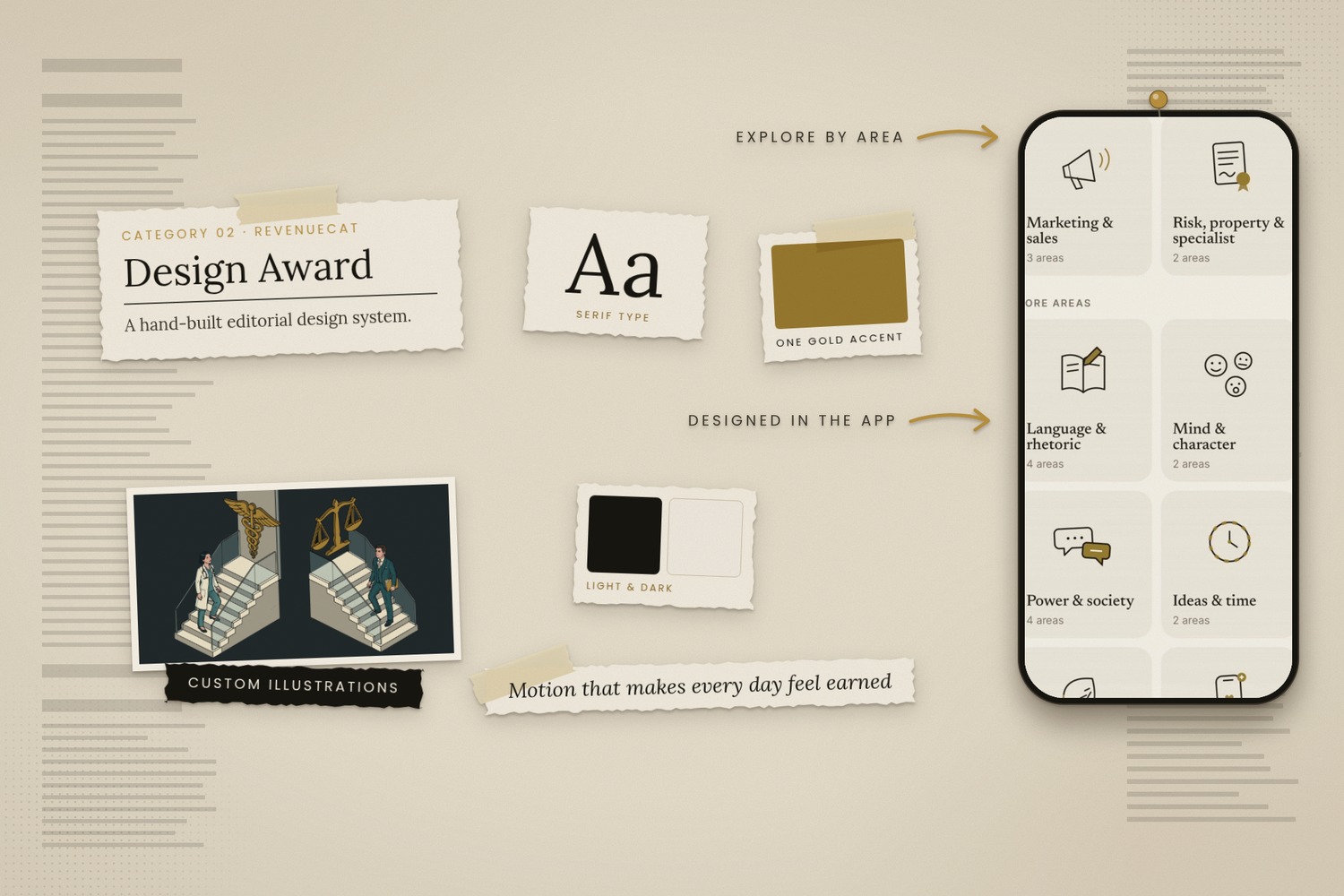
Design: serif type, one gold accent, custom illustrations, light and dark.
-
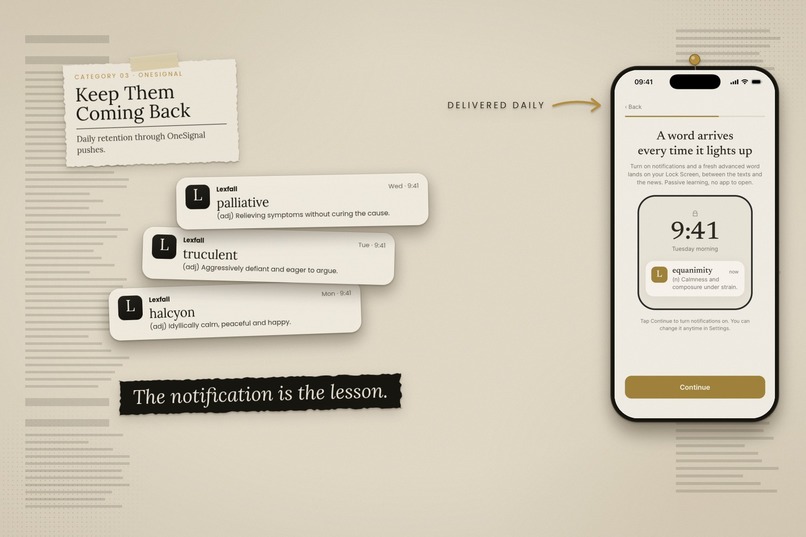
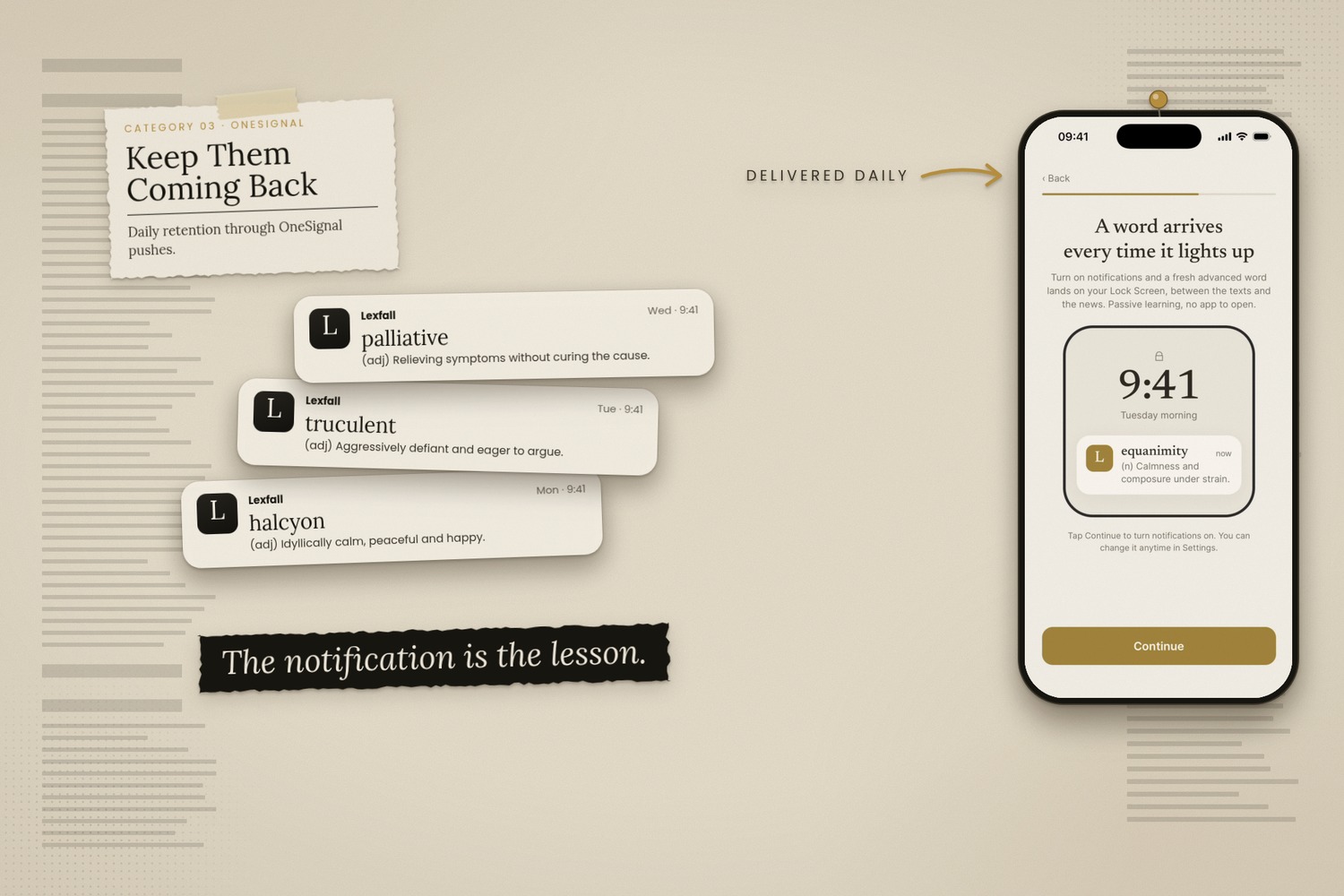
Keep Them Coming Back: daily words and OneSignal streak-saver pushes.
-
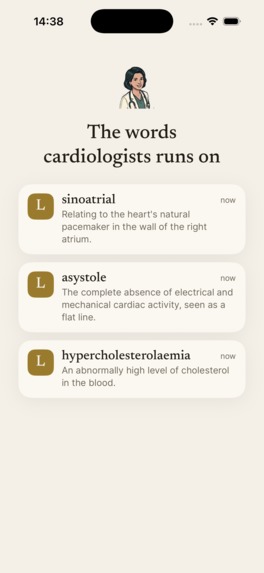
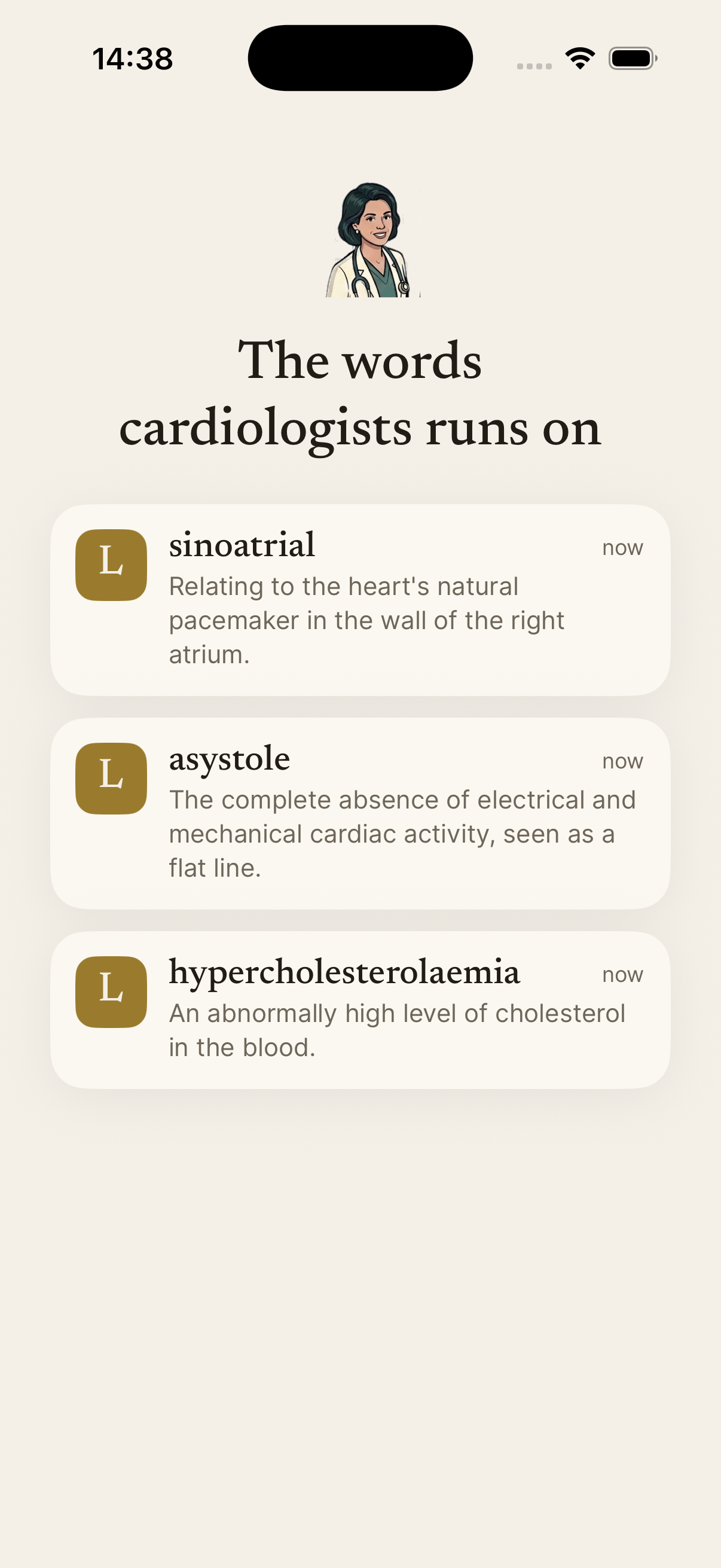
Screenshot without device frame: onboarding personalised for cardiologists.
-

App icon, 1024 x 1024.

Inspiration
Vocabulary apps have millions of users, but they all teach the same "word of the day" to everyone. A cardiologist, a litigator and a founder don't need "happy". They need palliative, indemnify and accretive. I'm a non-native speaker who works in English every day, and I wanted an app for the people who already speak it well and want to sound exceptional at work. So I built Lexfall, solo, end to end.
What it does
Lexfall is a premium C1–C2 vocabulary app, personalized to your profession.
- Onboarding that tests instead of asks. People misjudge their own level, so a short placement test finds your real level, then builds a plan for your field (Law, Healthcare, Business or General English, plus exam tracks like OET, IELTS and TOLES).
- A swipeable word feed. One editorial card at a time: the word, its meaning, a real professional example and native audio.
- A weekly path and a 2-minute daily test that quizzes yesterday's words right before you'd forget them. Missed words come back until they stick, and finishing the test keeps your streak alive.
- Learning without opening the app. Home Screen and Lock Screen widgets plus daily word notifications put a fresh word where you already look.
- Explore by area. A library of 11,000+ curated words organised by field and sub-area (negotiation, contracts, risk, mind & character and more).
- Make it yours. Light and dark themes, accent colours and pronunciation voices.
How I built it
Expo + React Native (expo-router) and TypeScript; RevenueCat for subscriptions, offerings, paywall pricing and webhooks; OneSignal for behaviour-based push; Supabase + on-device SQLite for the 11,000-word corpus and sync; ElevenLabs for pre-generated pronunciation audio; react-native-svg for the custom UI and illustrations; and native WidgetKit widgets in Swift.
Monetization (RevenueCat)
- A hard paywall after a short free taste, shown at the moment the user has a plan for their field and a day-one streak, so subscribing protects progress they've already earned.
- Personalized paywall: the headline adapts to your field ("Master the advanced lexicon of Cardiology") and your plan ("12 words a day, you'll know ~2,450 in a year").
- A Yearly plan as the hero (anchored per week) and a Monthly plan, with a 3-day free trial and a pre-paywall "How your 3 days work" timeline plus a reminder before the trial ends. Every price is pulled live from the RevenueCat offering, never hardcoded.
- Creator program on RevenueCat webhooks: a creator's code gives their audience a free first month, every purchase is attributed back to the creator automatically, and creators earn 50% for a year.
Results so far
Lexfall is live on the App Store with paying subscribers. In the last 28 days: 84 new customers, 95 active customers, and trials converting to paid (live in RevenueCat).
Challenges I ran into
Being designer, engineer and lexicographer at once. The hardest parts: making 11,000+ definitions each read as one crisp sentence, mapping words to fields and sub-areas so personalization actually means something, getting pronunciation audio to play reliably on real devices, and a subtle bug where the daily test skipped some words so streaks never counted (fixed by guaranteeing every word is asked once).
Accomplishments I'm proud of
A real, live, paying subscription app, built solo, that feels like a magazine you can study from, with onboarding, paywall and retention designed as one product rather than three screens.
What I learned
Personalization has to be earned. Asking people their level gets you a guess; testing it gets you a plan they trust, and that trust is what the paywall rests on. And design is a feature: a streak medallion or a word card that simply looks beautiful is part of why people come back.
What's next
Deeper exam tracks (OET, IELTS, TOLES), more professions, scaling the creator program, and a web-to-app funnel.
Built With
- elevenlabs
- expo-router
- expo.io
- ios
- onesignal
- react-native
- react-native-svg
- revenuecat
- sqlite
- supabase
- swift
- typescript
- widgetkit

Log in or sign up for Devpost to join the conversation.