Inspiration
When coming up with the project, we avoided taking the direct approach to a socioeconomic issue, but making it easier for others to do so. There are currently many great non-profits and public defendants working hard to make life better for communities in need, so we decided to make something so that legal professionals have an easier time connecting with each other and non-profits.
What it does
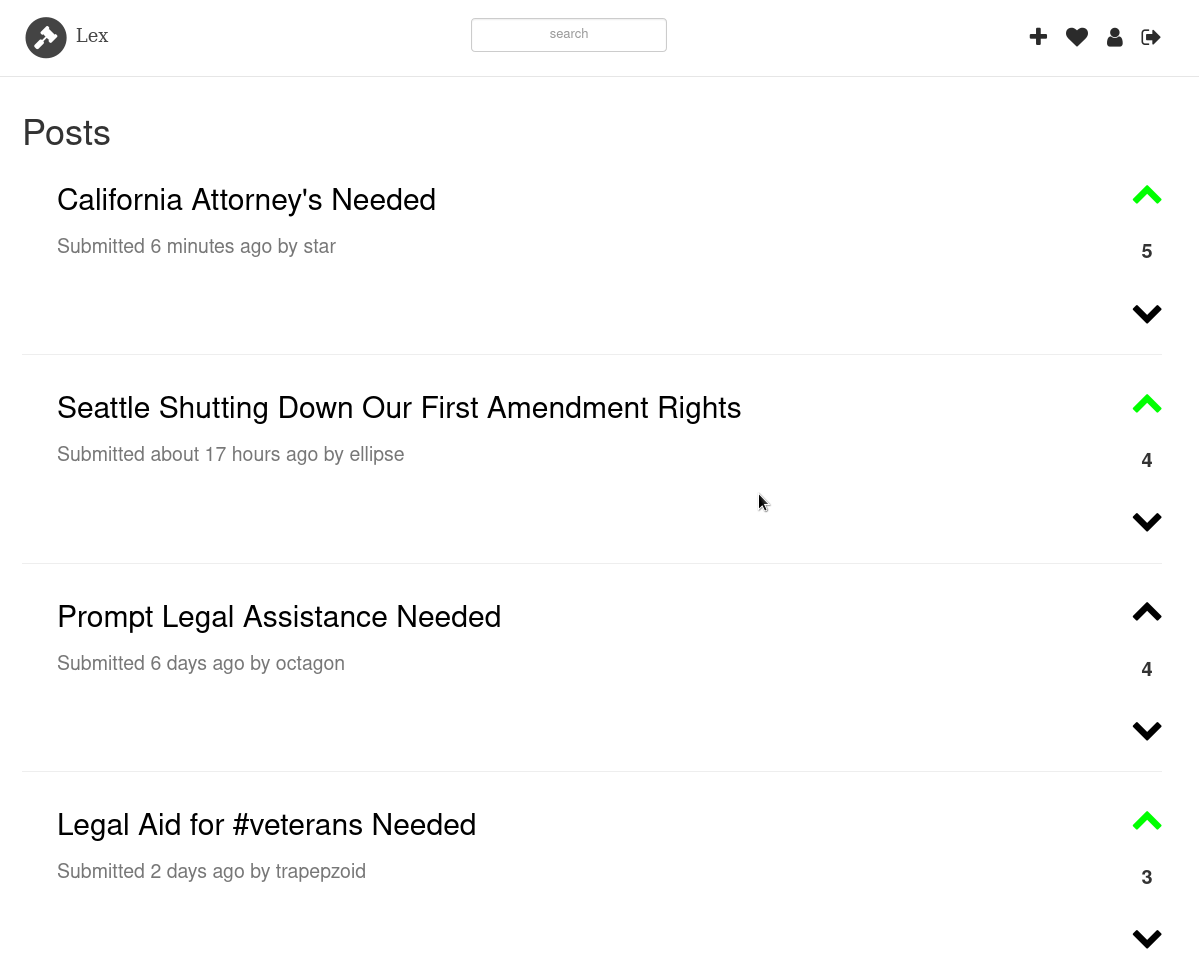
At this point, we have not accumulated any user data, so we don't have much on the process or data access front. For the most part, the site functions as any other forum.
How I built it
Lexary was built using Ruby on Rails.
Challenges I ran into
This was the first hackathon that any of us have attended and our average skill level is between "hello world" and for loops (admittedly hyperbolic).
Accomplishments that I'm proud of
Very happy to have a working application with a framework that we've never used before and I'm especially to have a "real" website that faces people other than my teammates or whoever I can get to look at my laptop. We're using Heroku, which was incredibly convenient (other than a bit of postgres hassle).
What I learned
Learning rails was the big thing. Also increased familiarity with SQL databases, GPT2, and HTML + CSS.
What's next for Lexary
We have a strong mathematical background and would like to explore the data science opportunities that managing a social media platform provides. First, we want to improve our post tagging system and have it automatically determine what terms are important and make it easier to find similar posts. Once, that system is reliable we can start assigning the Lex points (think Reddit karma) as a measure of knowledge in specific domains. In addition, we want to make a portal to access legal documents so that we can see what resources are used and perhaps make a recommender system.

Log in or sign up for Devpost to join the conversation.