-
-
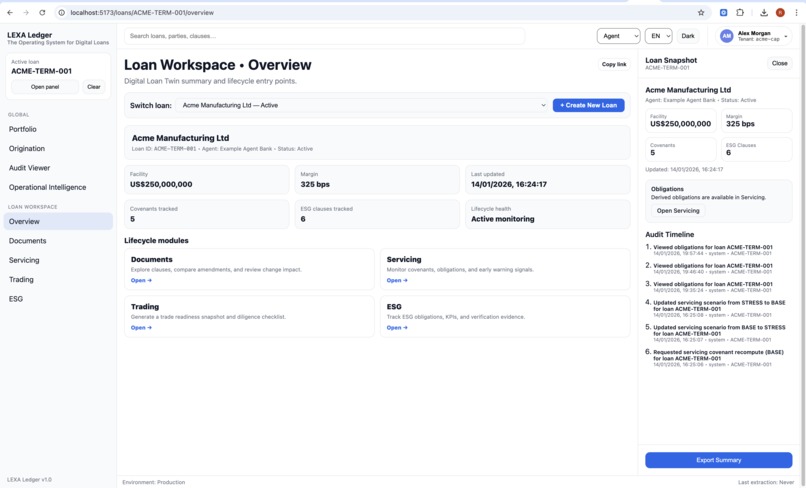
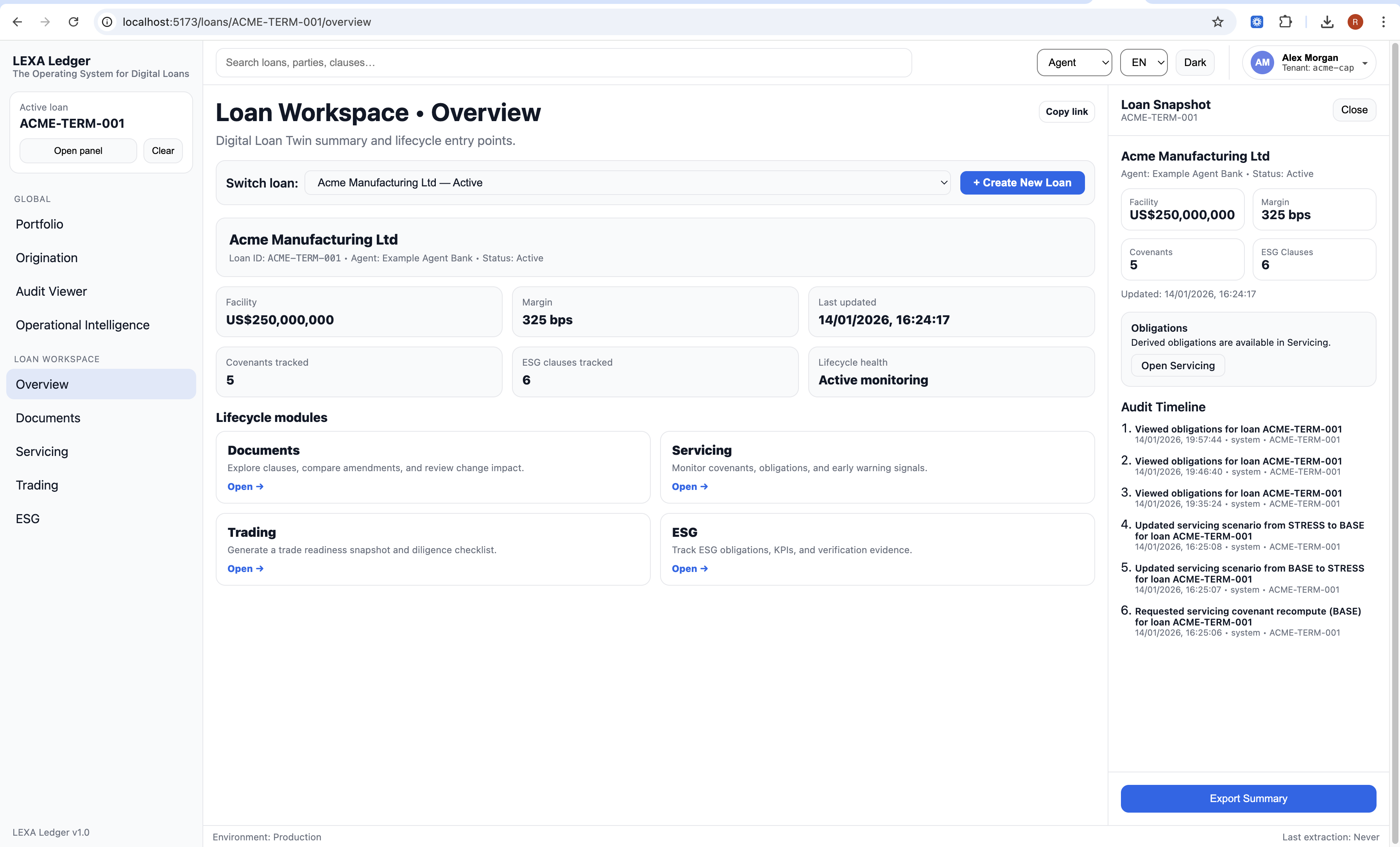
Single loan workspace summarizing facility terms, lifecycle status, tracked covenants, ESG clauses, and entry points to all loan modules.
-
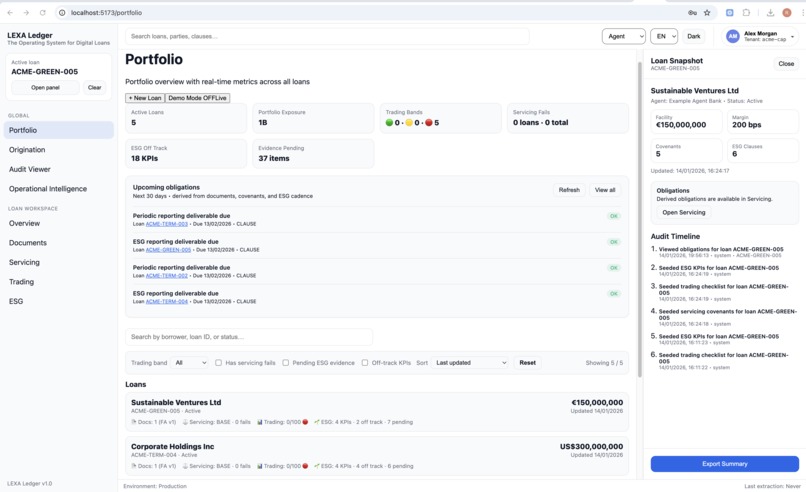
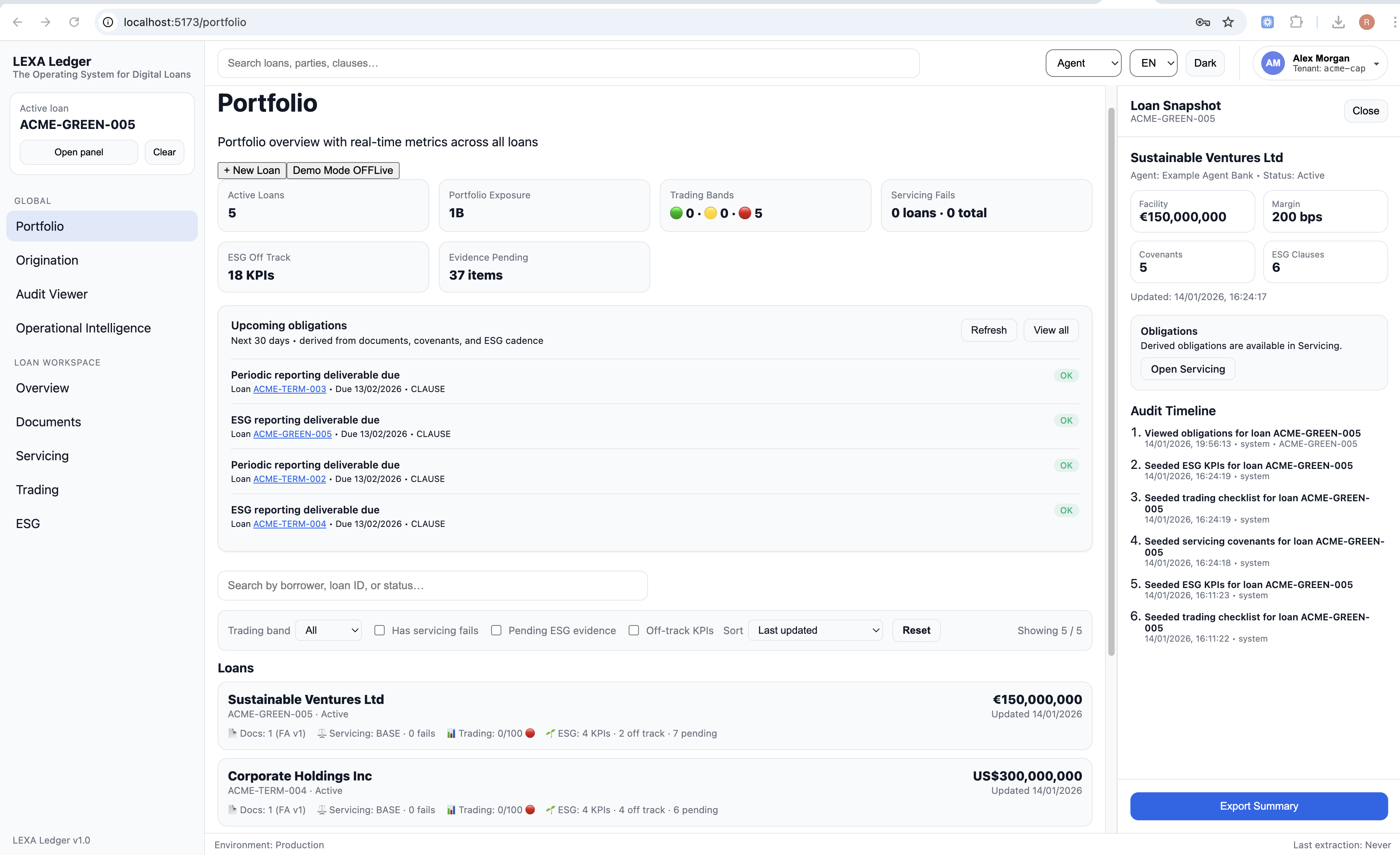
Portfolio view showing live exposure, trading bands, ESG status & upcoming obligations across all active loans in one operational dashboard.
-
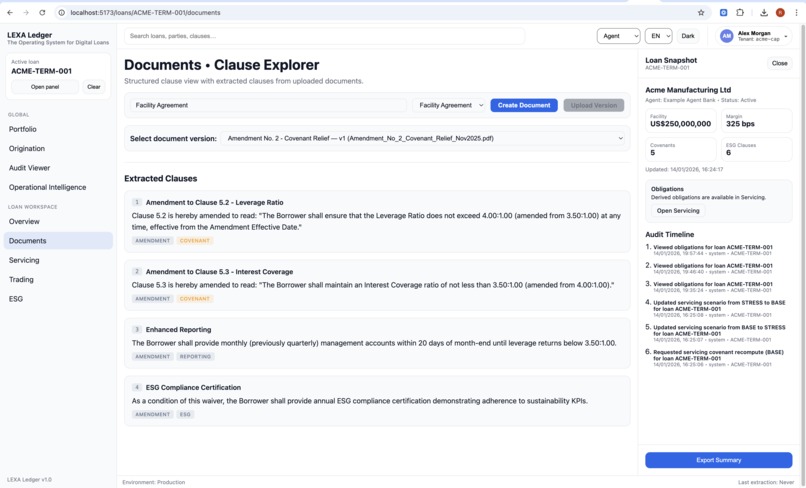
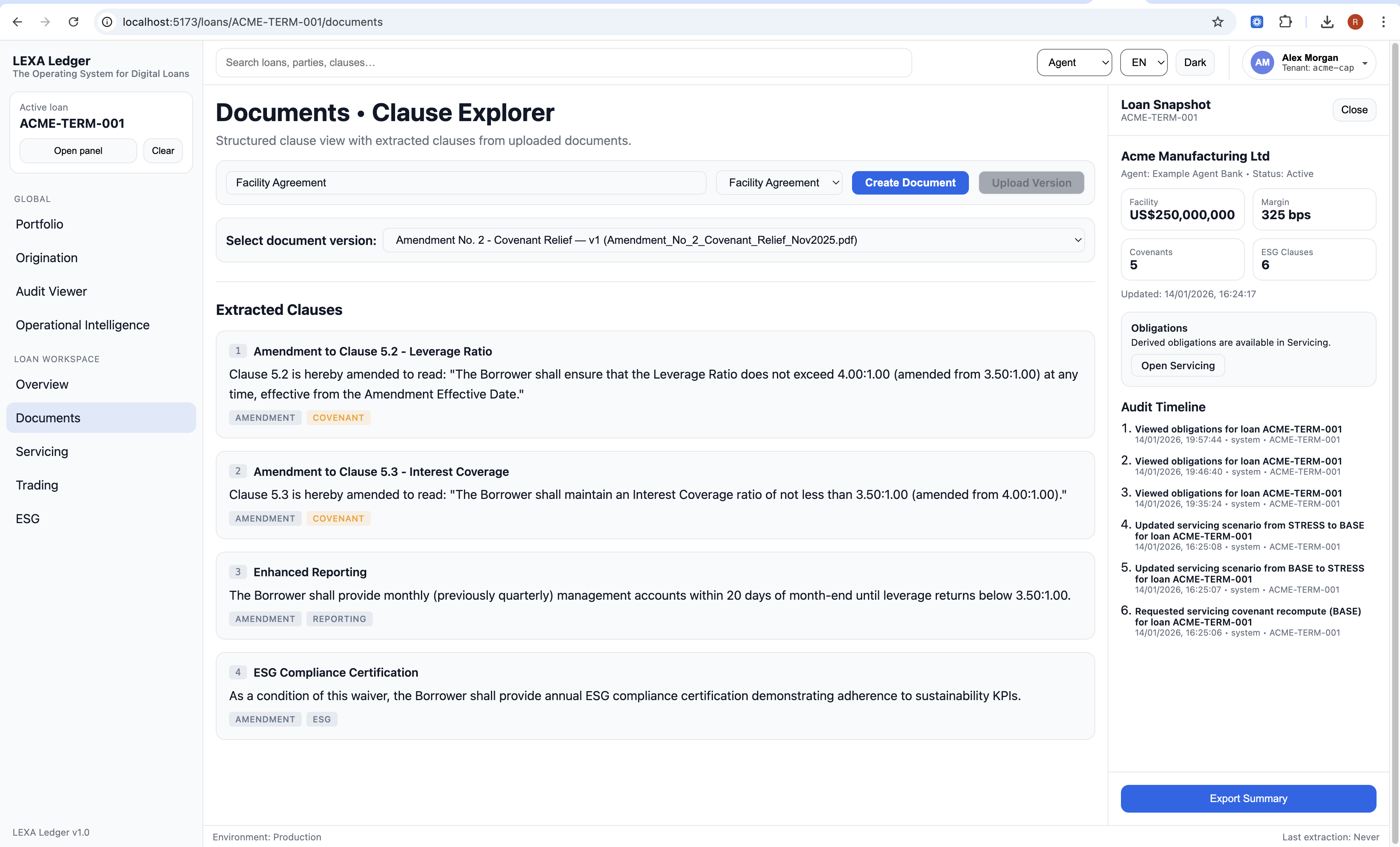
Structured document and amendment explorer converting legal clauses into machine-readable facts used downstream in servicing and trading.
-
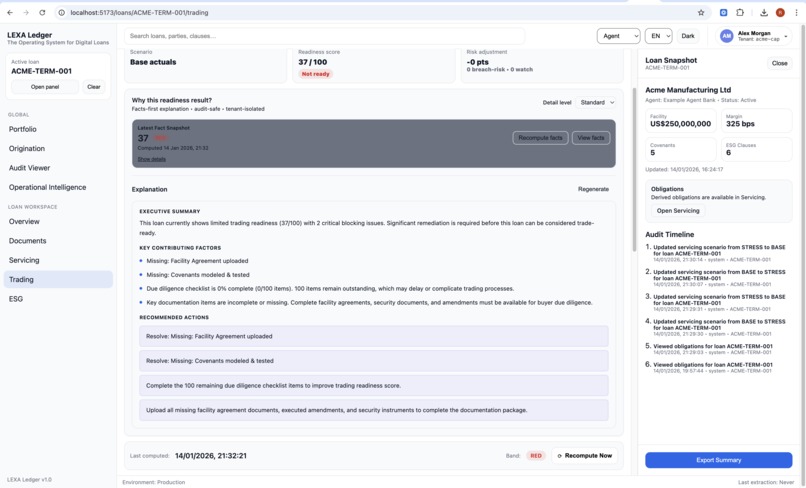
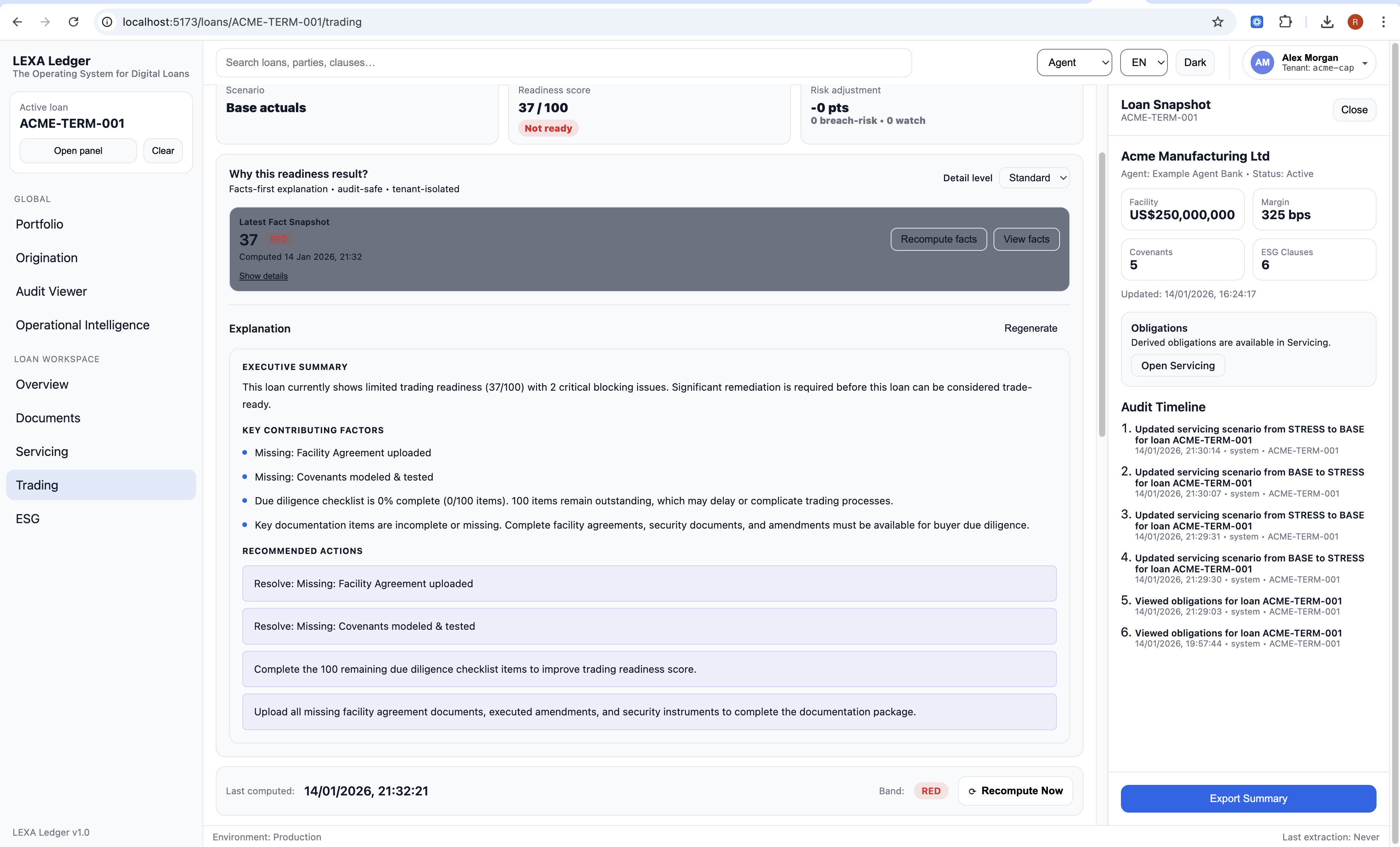
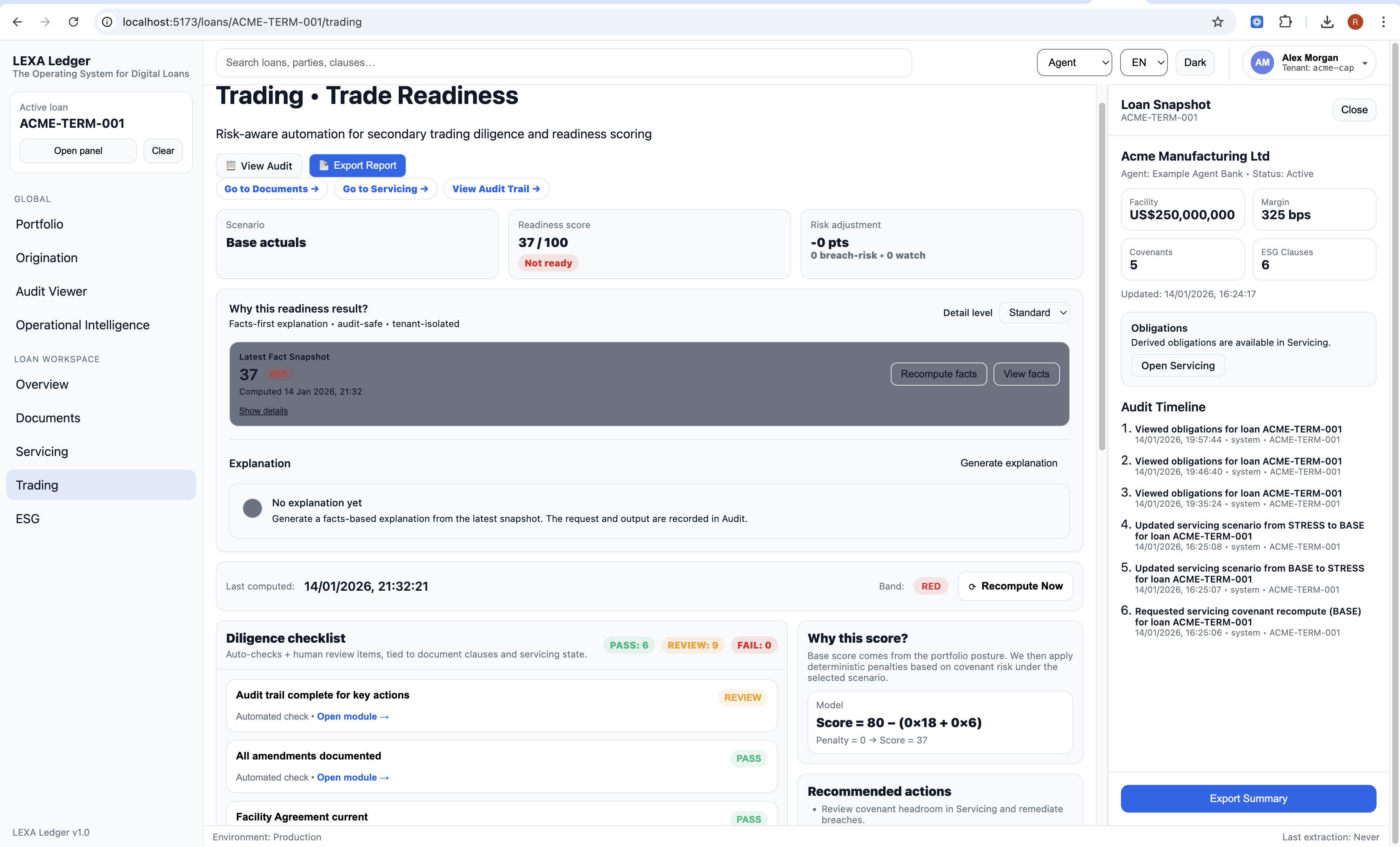
Explainable trading readiness with facts-first AI output, key blockers, and recommended actions recorded in a full audit trail.
-
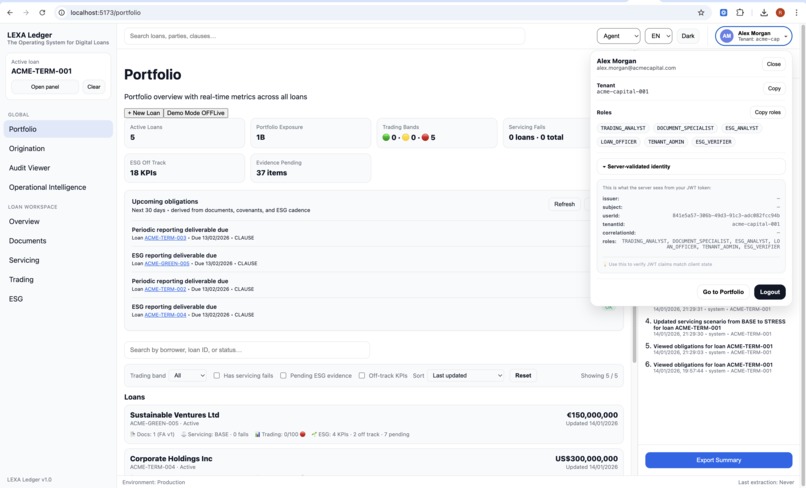
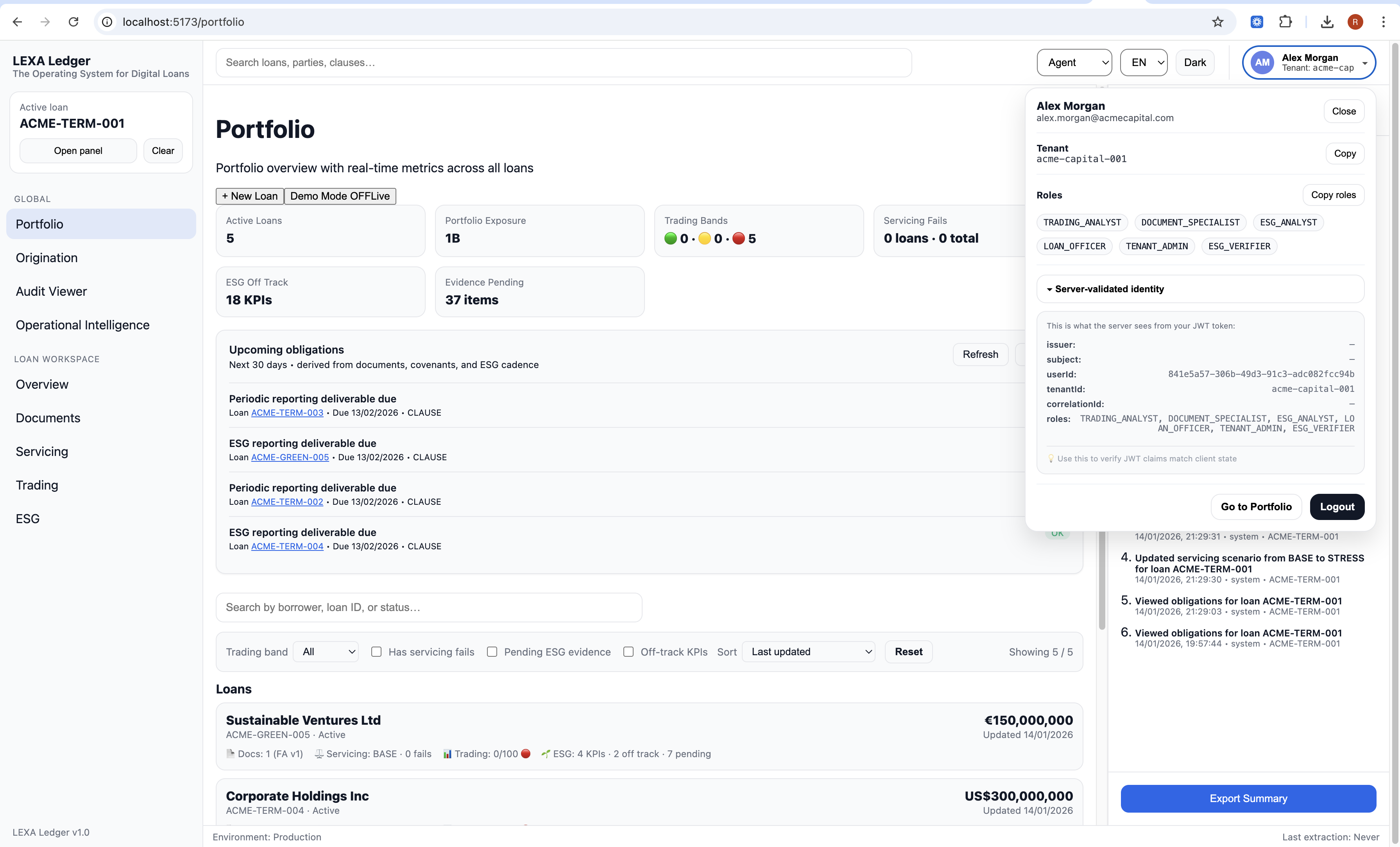
Secure, server-validated identity with RBAC, tenant isolation, and role transparency—every action is authorized, auditable, and trusted.
-
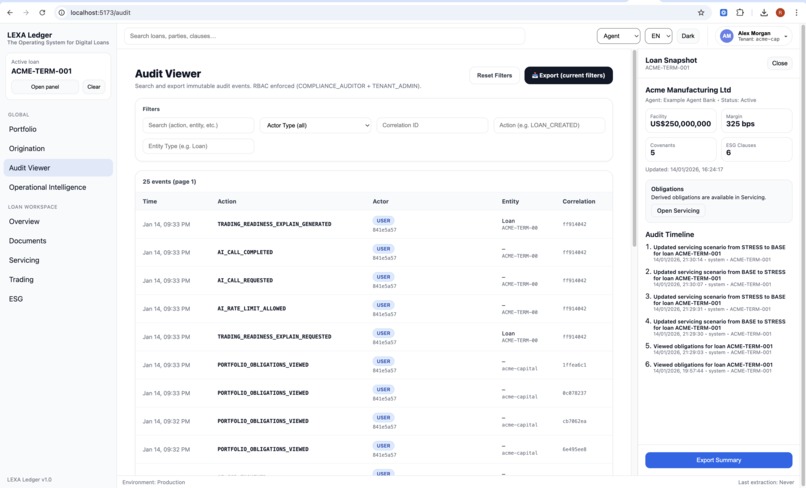
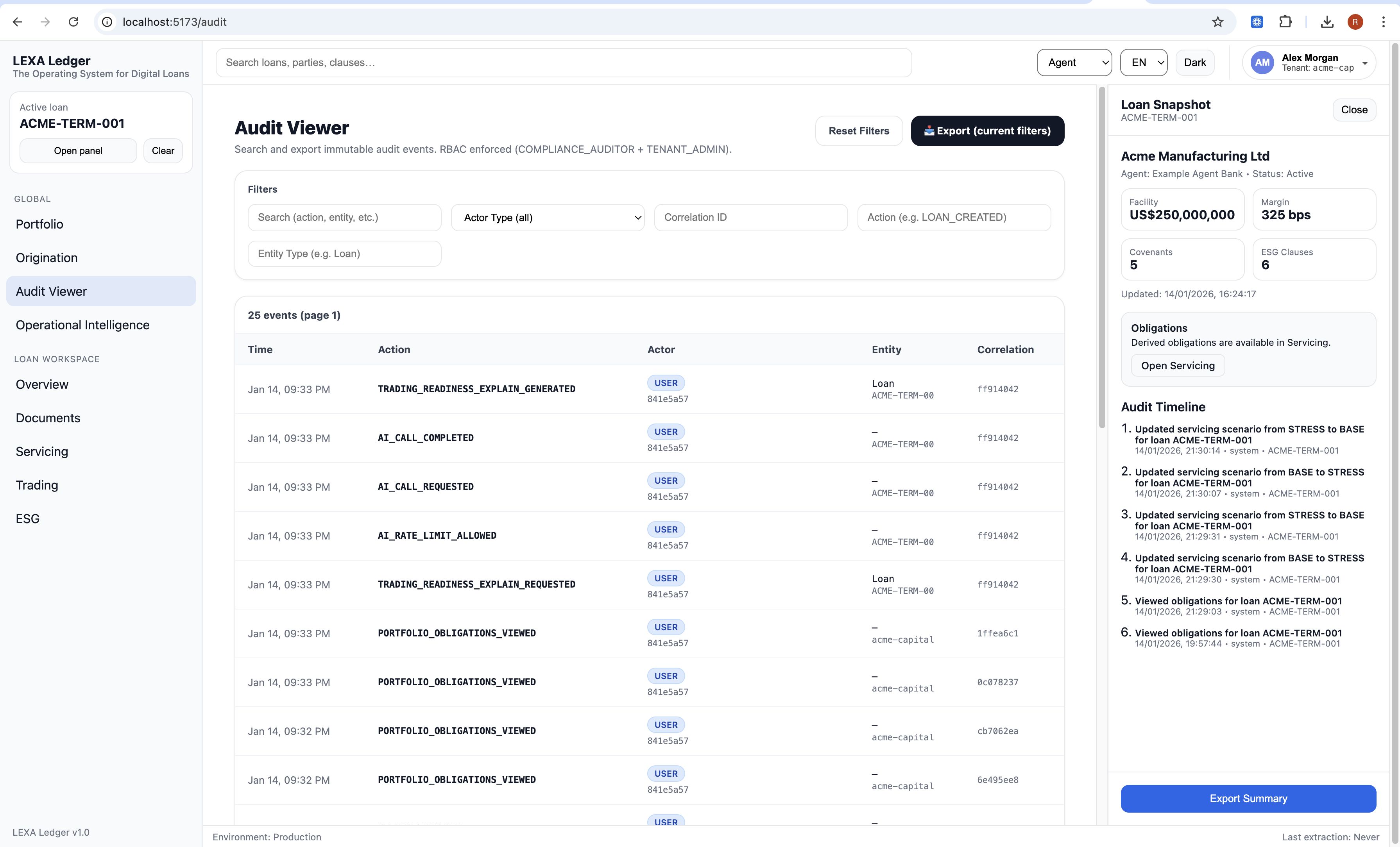
Immutable audit trail capturing every user and AI action with correlation IDs—ensuring full compliance, traceability & regulator confidence.
-
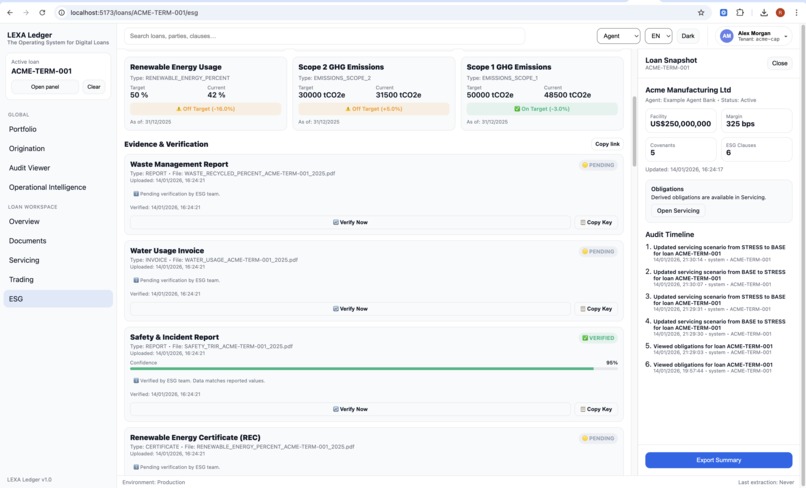
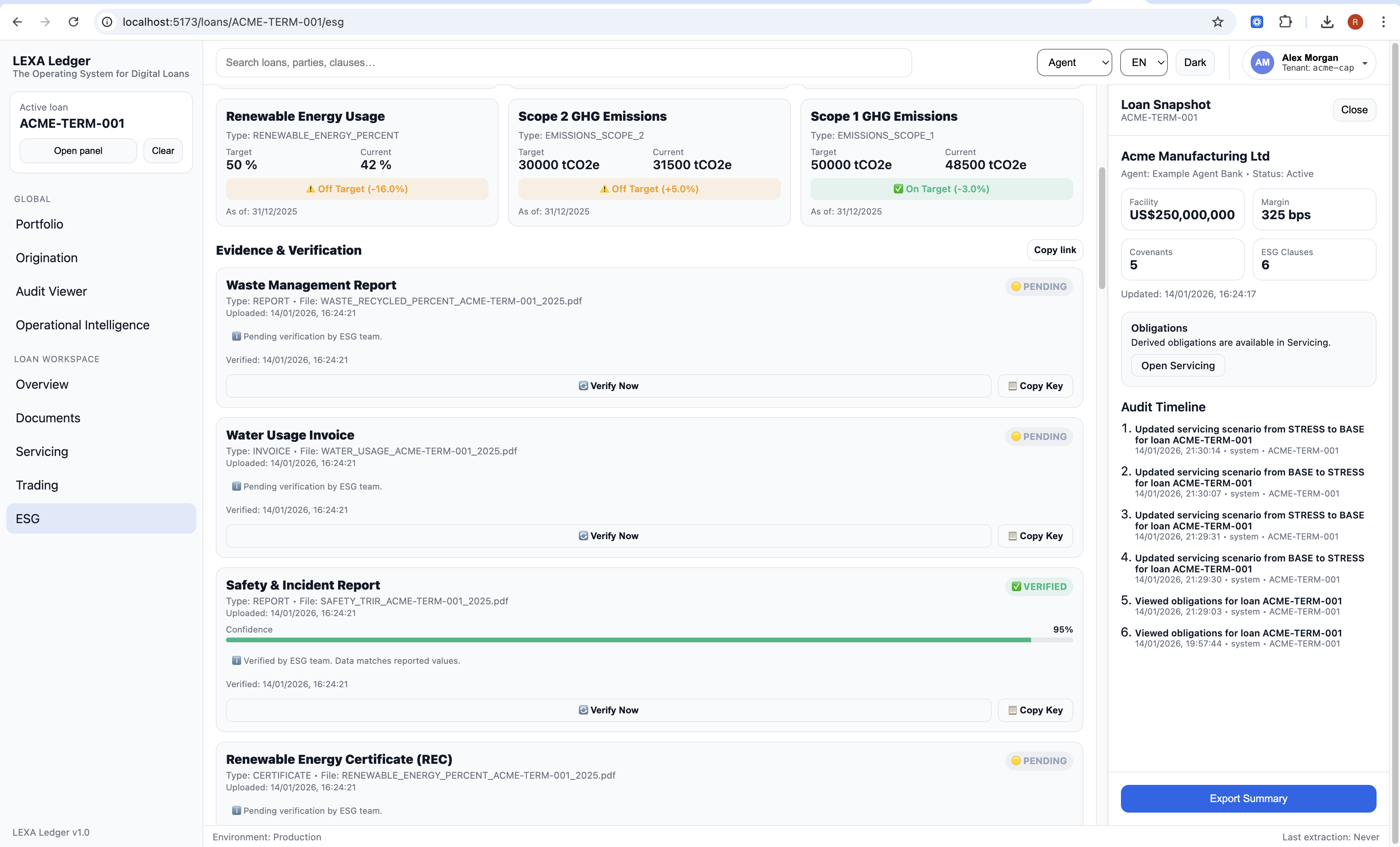
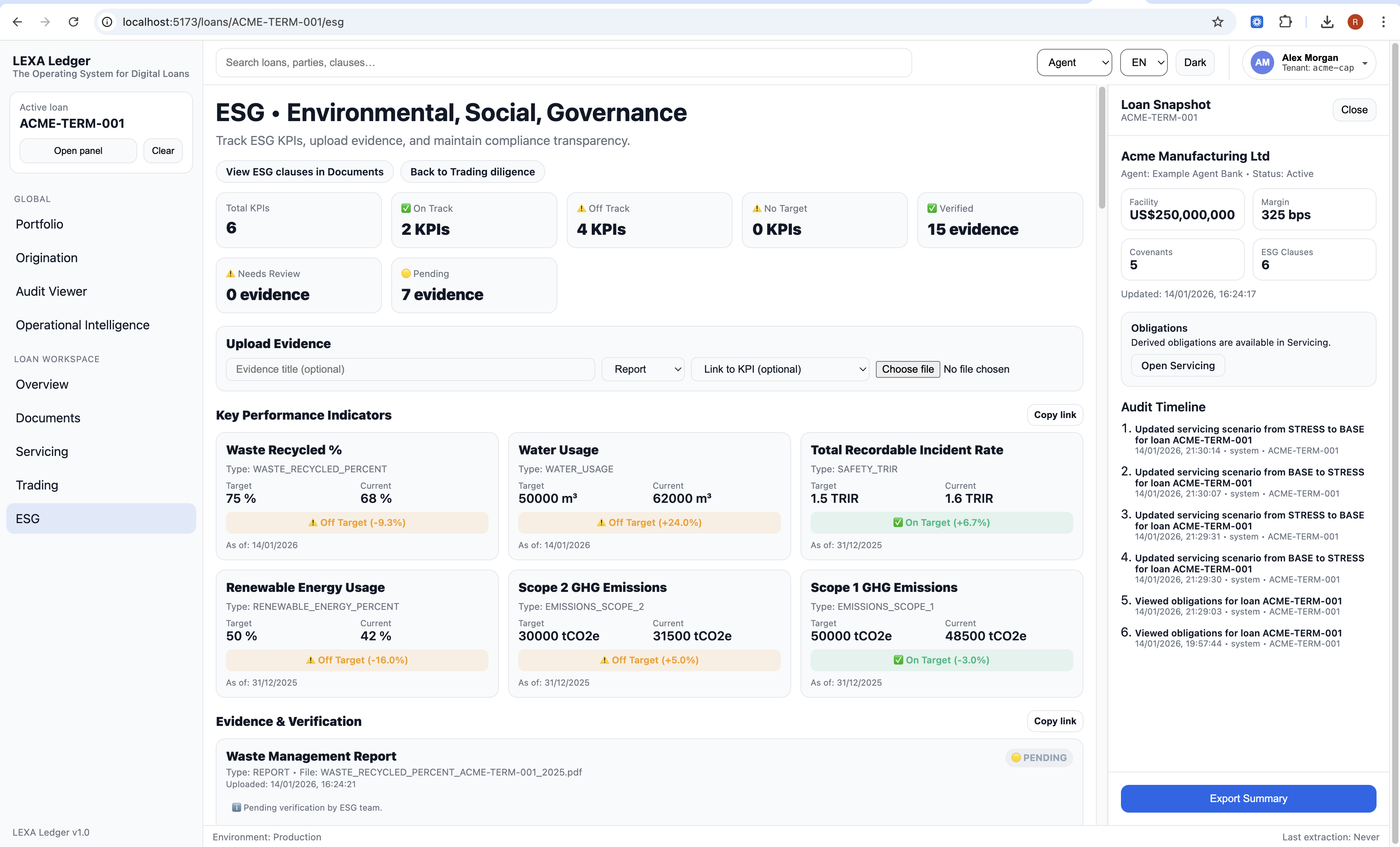
ESG evidence management with verification workflows, confidence scoring, and audit-ready documentation linked directly to KPIs
-
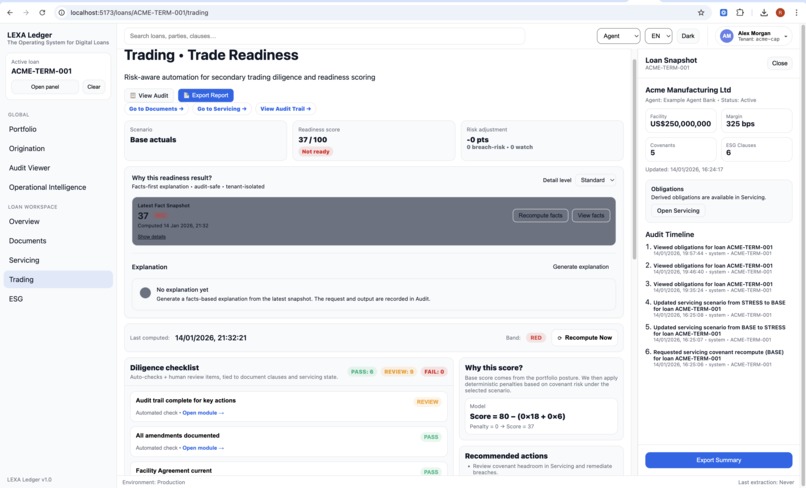
Trading readiness dashboard showing risk-aware scoring, diligence checklist, and navigation across documents, servicing, and audit trail.
-
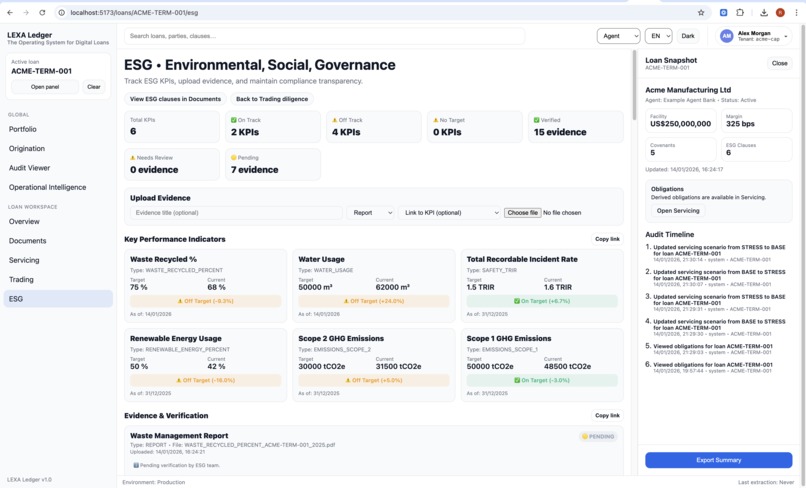
ESG KPI tracking with clear targets, real-time status, and evidence visibility—turn sustainability commitments into measurable outcomes.
-
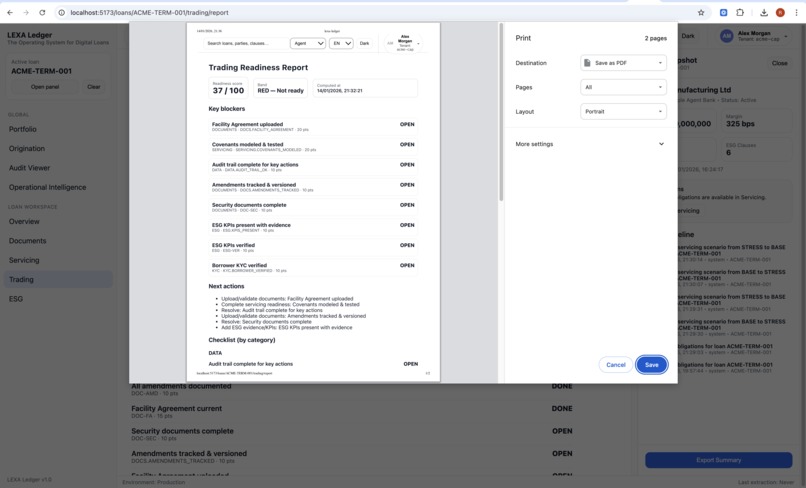
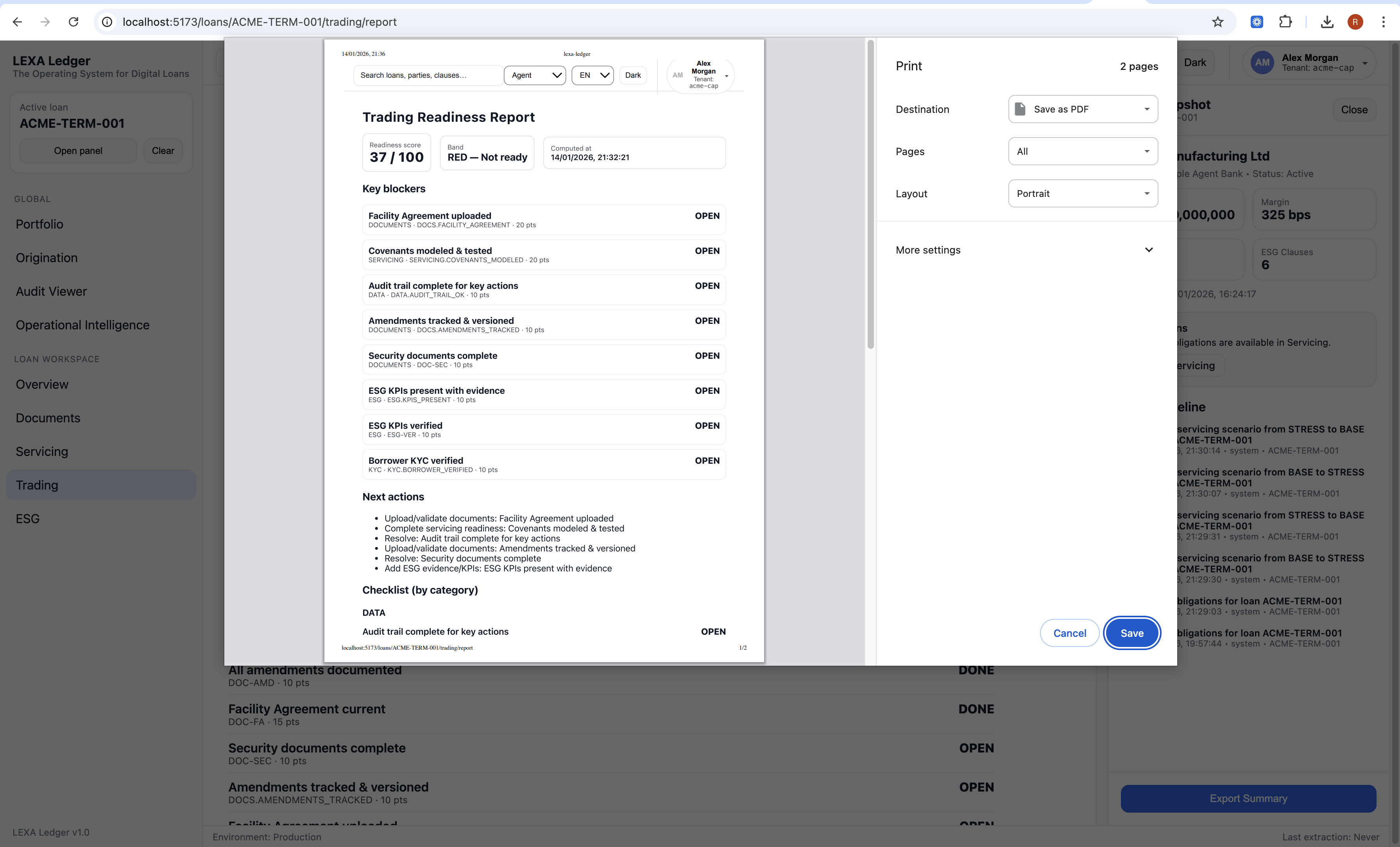
Exportable trading readiness report with score, blockers, checklist status, and next actions—ready for PDF sharing and diligence.
-
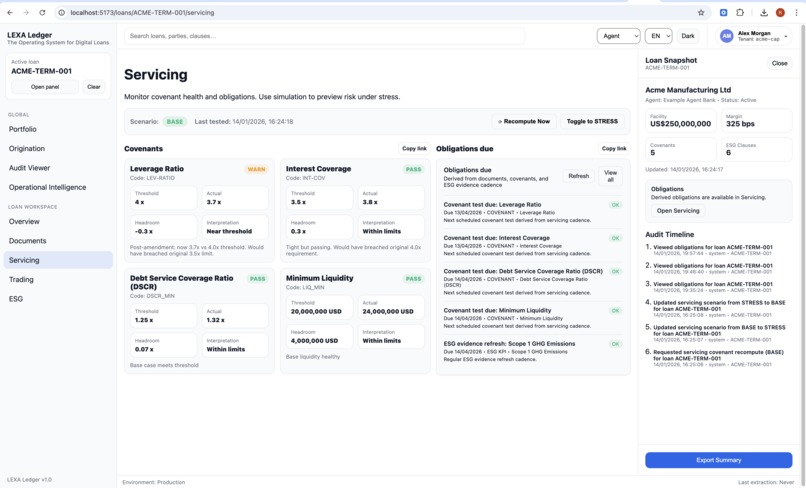
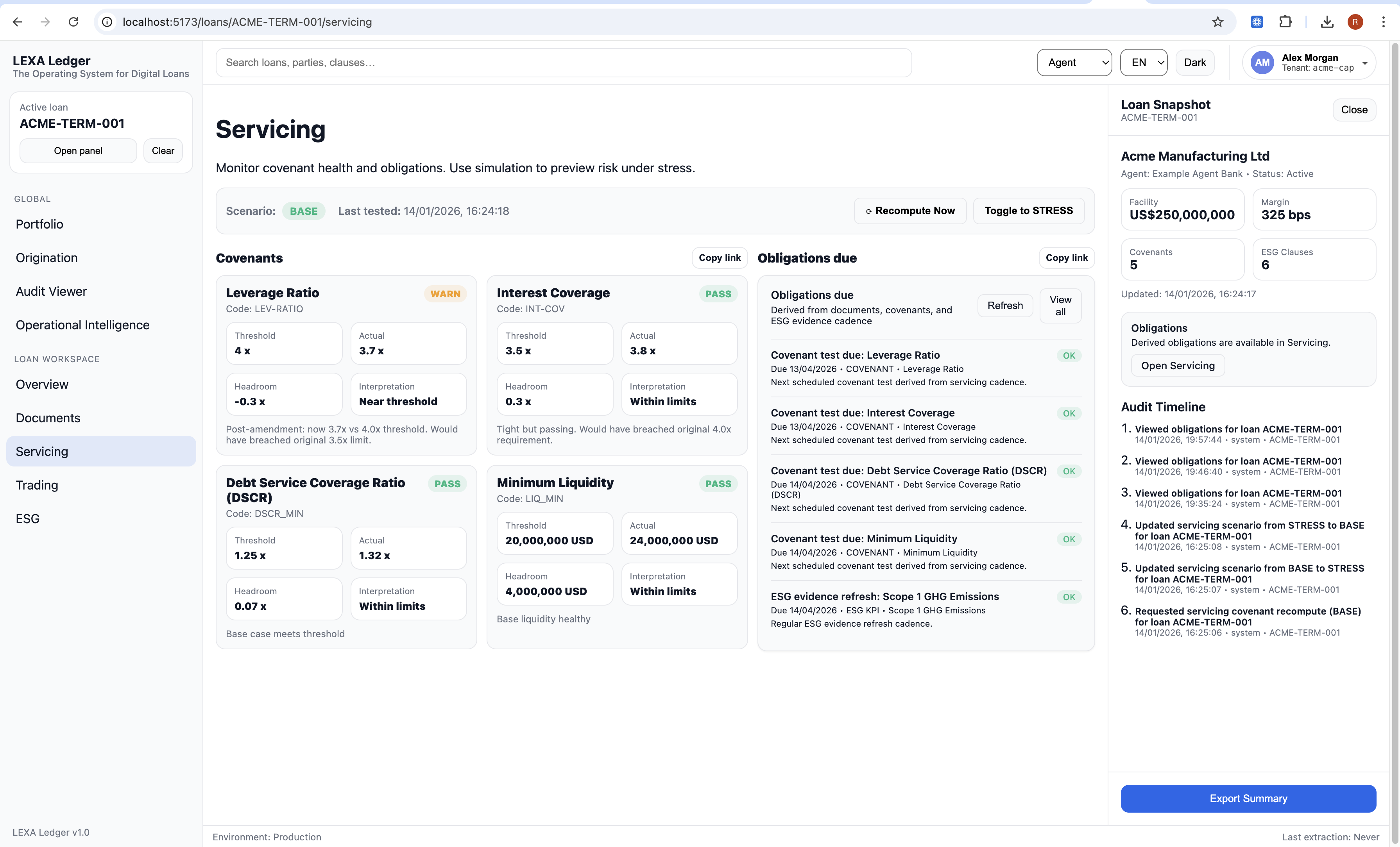
Servicing view monitoring covenant health, stress scenarios, and automatically derived obligations from documents and ESG cadence.
-
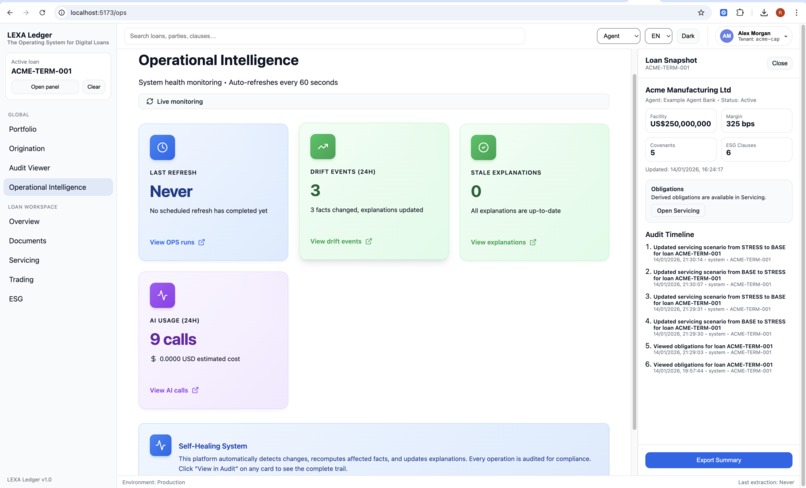
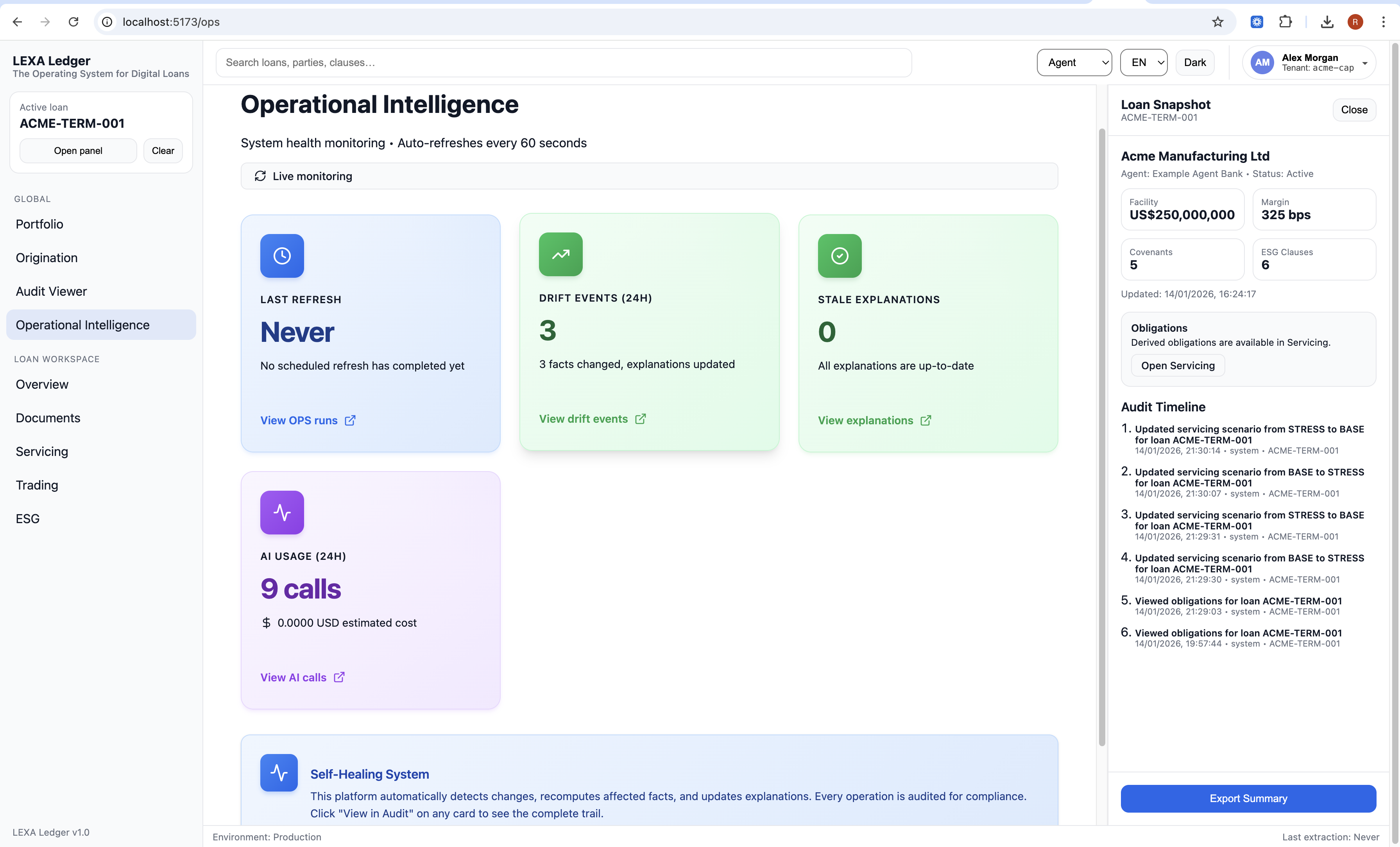
Operational Intelligence dashboard monitoring system health, AI usage, and data drift with explainable, self-healing updates
-
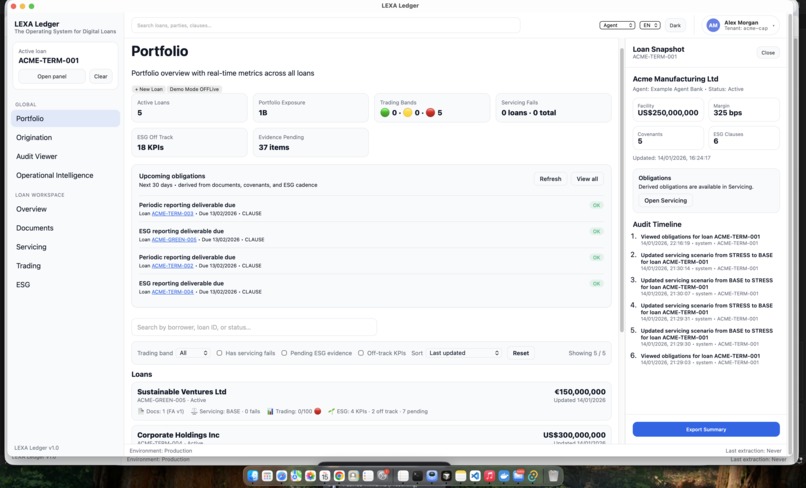
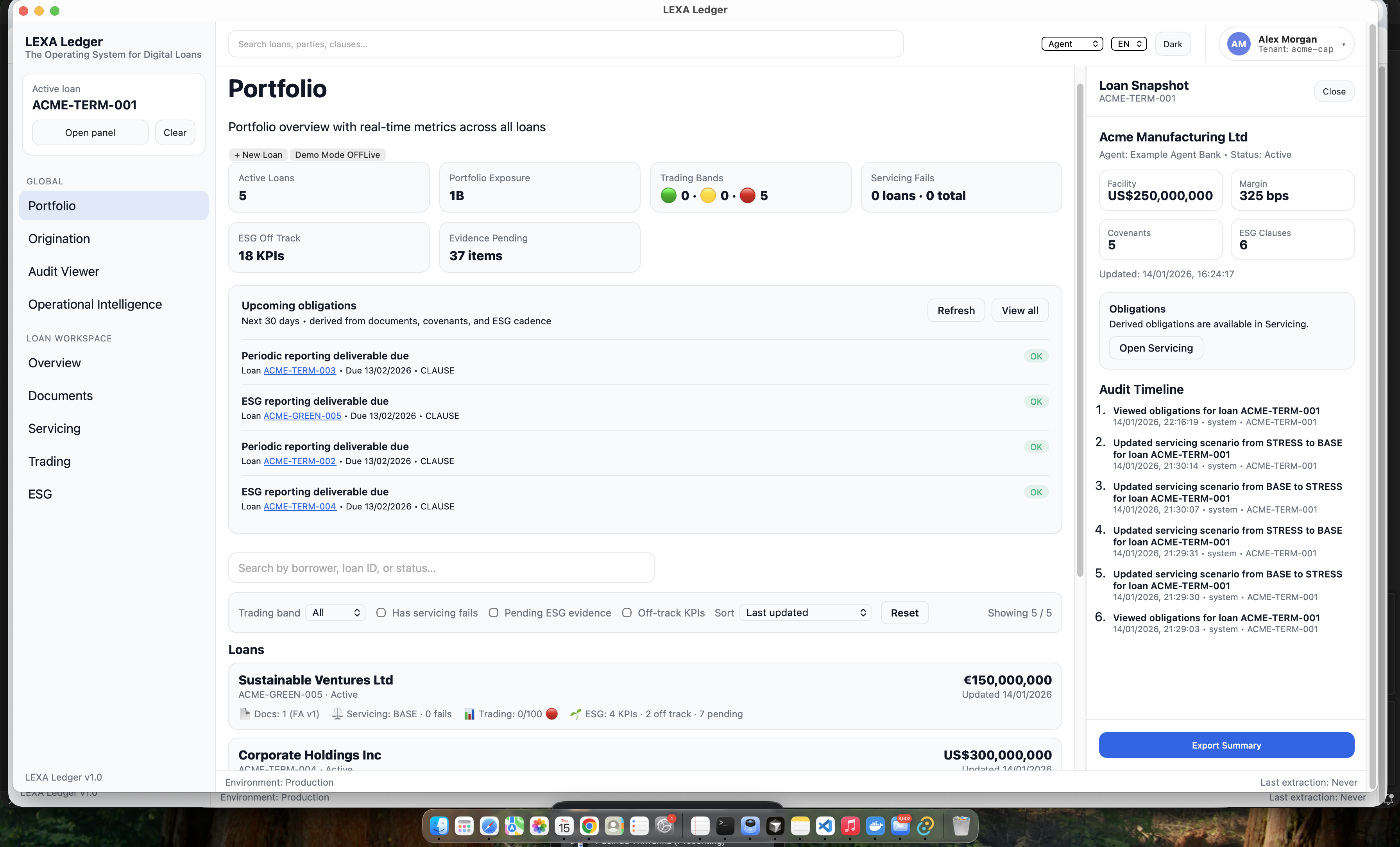
Native desktop portfolio view with secure session storage, live exposure metrics, risk bands, ESG status, and upcoming obligations.
-
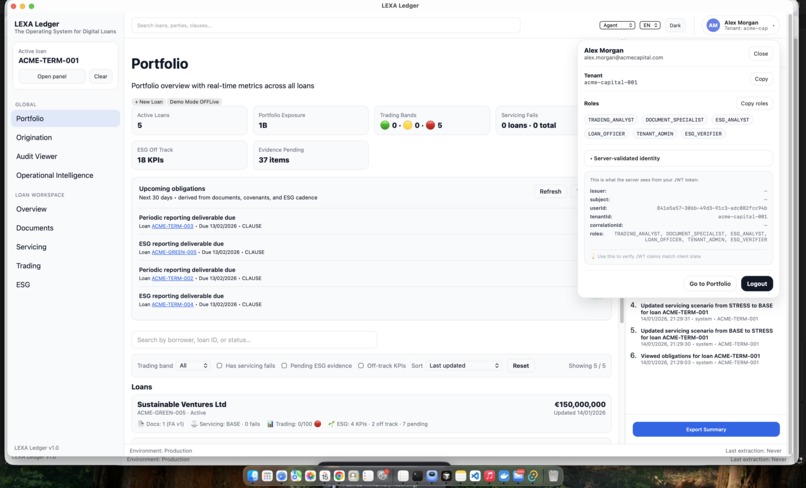
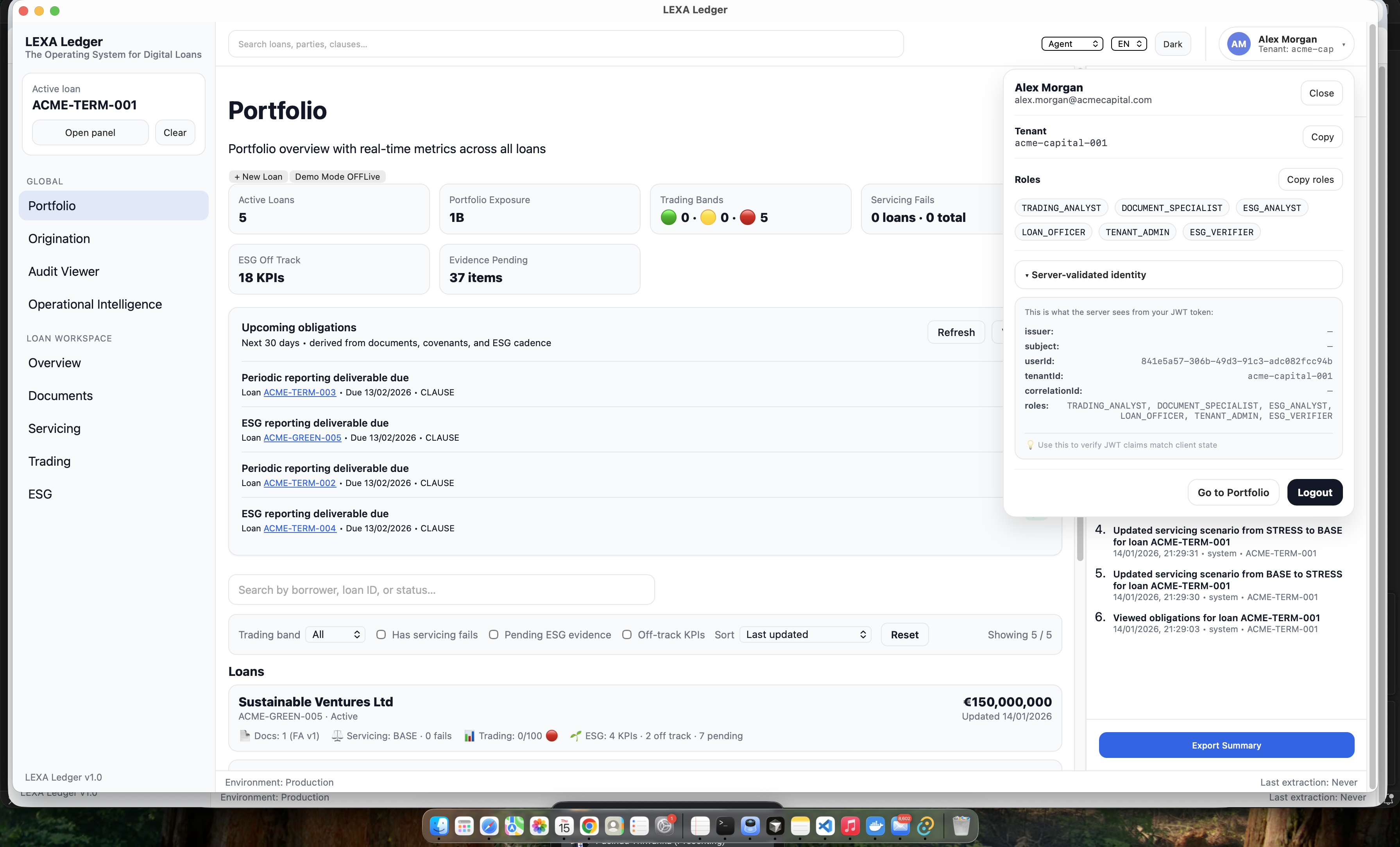
Identity panel displaying authenticated user, tenant isolation, and active roles—proving secure, role-based access across the platform.
-
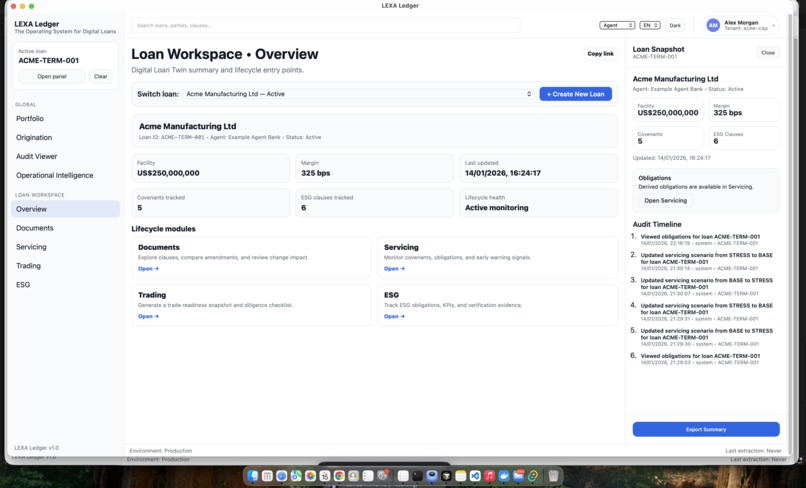
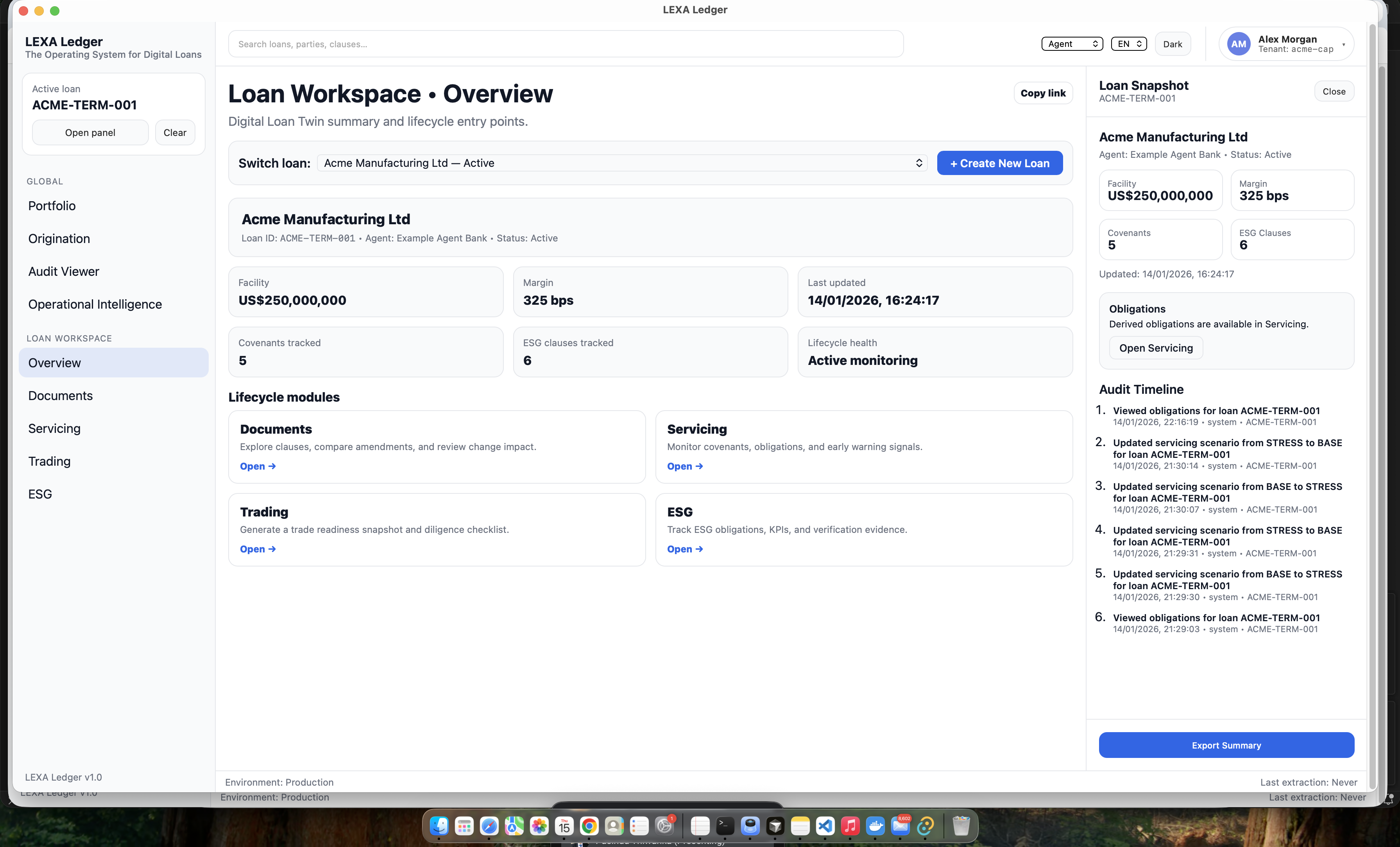
Loan overview consolidating facility terms, lifecycle status, covenant and ESG counts, with one-click access to servicing and trading.
-
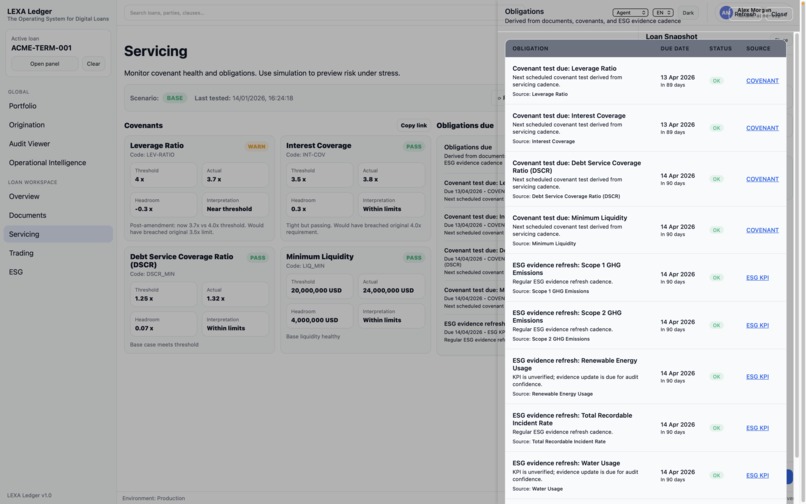
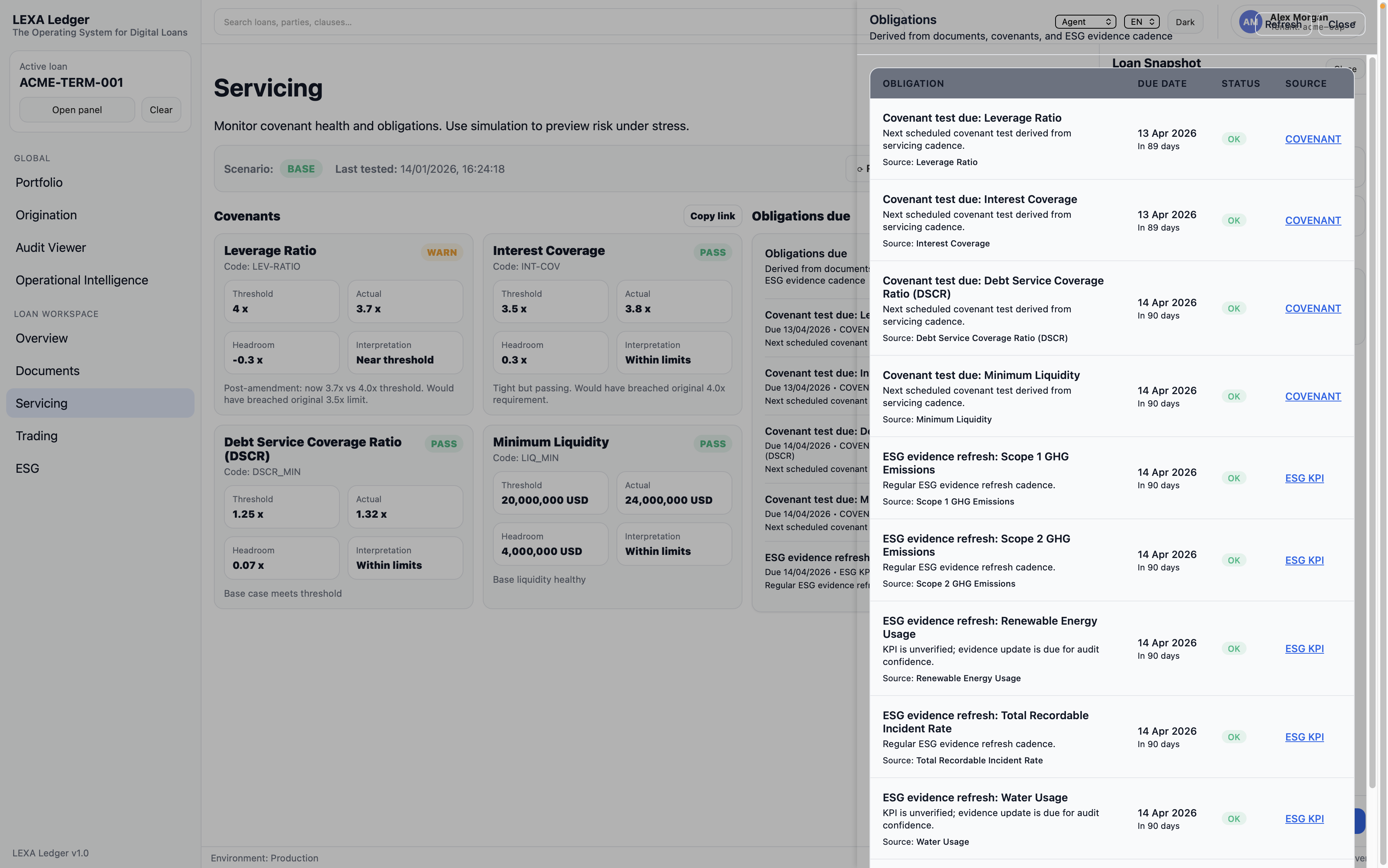
Servicing view showing covenant health and a detailed obligations drawer derived from documents, covenants, and ESG cadence.
LEXA Ledger – The Operating System for Digital Loans Inspiration
Loan markets still rely heavily on documents, spreadsheets, emails, and manual trust. Yet loans are not static — they evolve through amendments, servicing events, covenant tests, trading decisions, and ESG obligations.
What inspired LEXA Ledger was a recurring industry problem: Once a loan is signed, there is no single system that keeps its facts, obligations, risk, and explainability connected over time.
Common questions remain difficult to answer: Which obligations are coming due across the portfolio? Why is a loan considered trade-ready or risky? What changed, when, and who saw it? Can decisions be proven to auditors, regulators, or investors?
LEXA Ledger was built to treat a loan not as a document, but as a living digital system.
What it does
LEXA Ledger is a desktop-first and web-based enterprise platform that manages the entire loan lifecycle in one coherent, explainable system.
Documents → Structured Facts → Living Loan → Explainable Intelligence
It brings together:
Documents: loan agreements and amendments structured into machine-readable facts Servicing: covenant monitoring, obligations, and risk visibility Trading: explainable readiness scoring grounded in verified facts ESG: KPI tracking, evidence, and verification Portfolio Intelligence: rollups, obligations, and risk across loans Audit and Compliance: full traceability of every action and AI explanation
Instead of spreadsheets and black-box models, LEXA Ledger delivers trust-first intelligence that can be explained, audited, and acted upon.
How we built it
LEXA Ledger was built as a production-grade system from day one.
Architecture principles:
Desktop-first security with encrypted local storage Web parity for accessibility and demos No black-box AI — AI explains facts but never overwrites them Auditability built into every workflow Tenant isolation and role-based access enforced end-to-end
Core stack:
Frontend: React and Vite Backend: NestJS, Prisma, PostgreSQL Security: OIDC, RBAC, rate limiting, hardened APIs Async processing for recompute and drift detection
Desktop delivery using Tauri
Centralized audit service for all user, service, and AI actions
Key highlights:
Obligations are derived automatically from documents, covenants, and ESG cadence Trading readiness explanations are facts-first and audit-safe Portfolio views show real operational signals One-click export produces compliance-ready summaries with audit history
Challenges we ran into
Avoiding black-box AI while still delivering intelligent insights Managing downstream impact from amendments and servicing changes Balancing enterprise-grade depth with hackathon time constraints Designing a UI that communicates clearly to non-technical users
Accomplishments that we're proud of
Built a full loan lifecycle system, not a point solution Delivered explainable and auditable AI instead of opaque automation Implemented enterprise-grade IAM, RBAC, and tenant isolation Created operationally useful outputs such as obligations rollups and exportable summaries Produced a demo that feels production-ready rather than experimental
What we learned
Trust is the real currency in loan markets Audit trails are product features, not compliance overhead AI is most effective when it augments human judgment Industry experts value systems that feel usable immediately
What's next for LEXA Ledger
Beyond the hackathon, LEXA Ledger can evolve into a full industry platform: Automated obligation scheduling and reminders Portfolio-level stress testing and scenario analysis Deeper secondary market workflows ESG verification pipelines and reporting Integration with agent banks, trustees, and trading venues
LEXA Ledger aims to become the operating system that keeps loans trustworthy, explainable, and alive throughout their lifecycle.
Built With
- bullmq
- connect
- css
- docker
- html
- jwt)
- keycloak
- minio
- nestjs
- node.js
- oidc)
- openid
- postgresql
- prisma
- query
- react
- redis
- s3-compatible
- storage)
- stronghold
- tailwind
- tanstack
- tauri
- typescript
- vite
- zod
- zustand


Log in or sign up for Devpost to join the conversation.