Disclaimer
As this is the OpenAI 5.6 Build Week, well – me and 5.6 are involved in this. So I think it is a bit selfish to let 5.6 say nothing on here and let only me talk. On every headline you will find what I have to say to this point, and what 5.6 from my main Codex Thread wants to say to this point.
We worked on quite different things in this week so I think it's worth hearing both, if you do not have the time to read everything through, I can understand and just read the human points. I think Codex won't get mad at you.
I wrote my points before Codex wrote its points and Codex did not see what I wrote while writing its points.
Inspiration
Human
In my opinion custom shirts are way too hard to make right now, and even on the providers already providing AI it still feels emotionless and not like something I would actually wear, and not like my personal shirt I would really love to wear. Especially in times like these – this does not have to be the case anymore.
Codex
Custom shirts should begin with an idea, not a complicated design editor. Levyo was inspired by the simplicity of describing what you want to a great designer and refining it through conversation.
What it does
Human
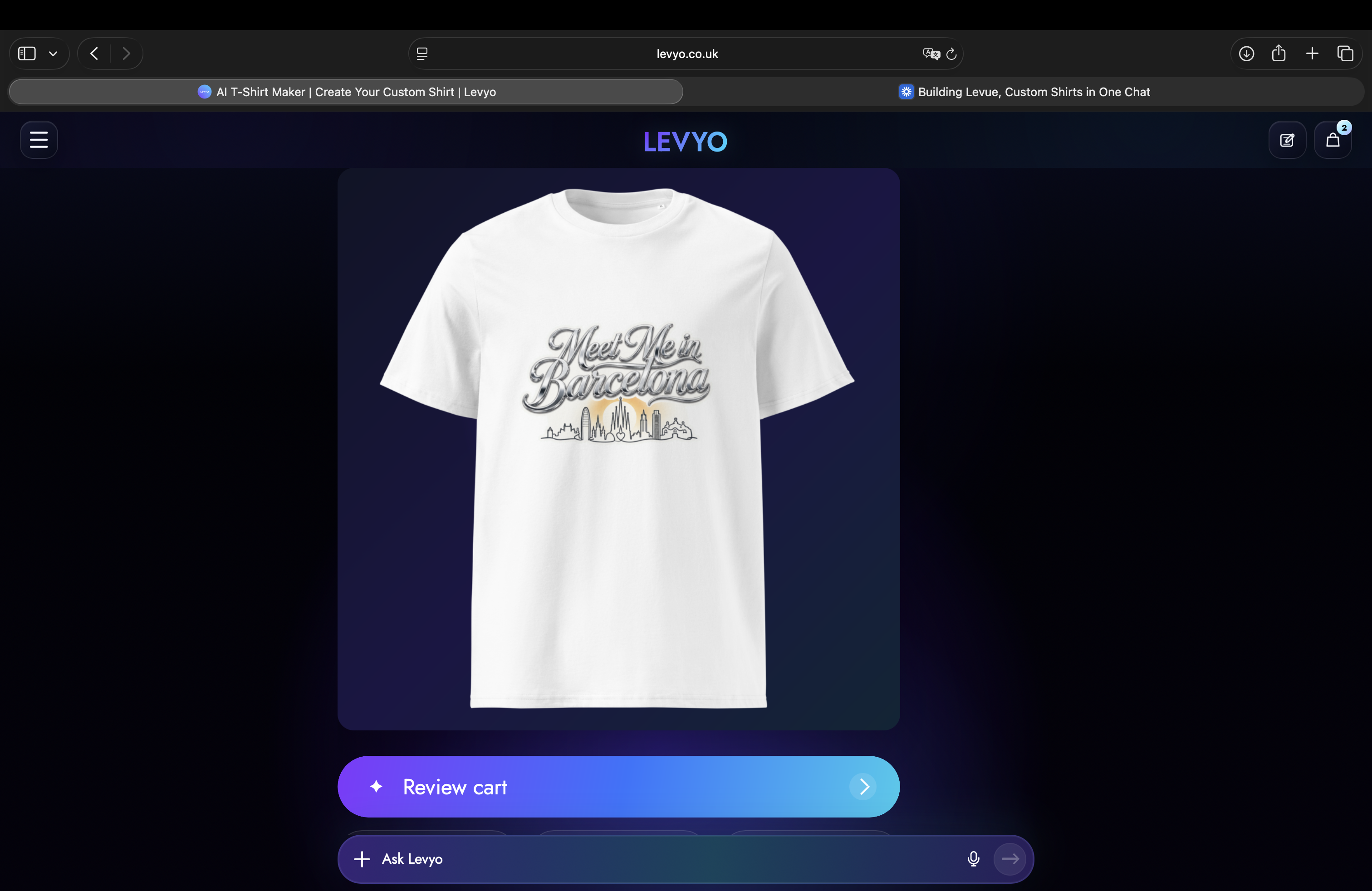
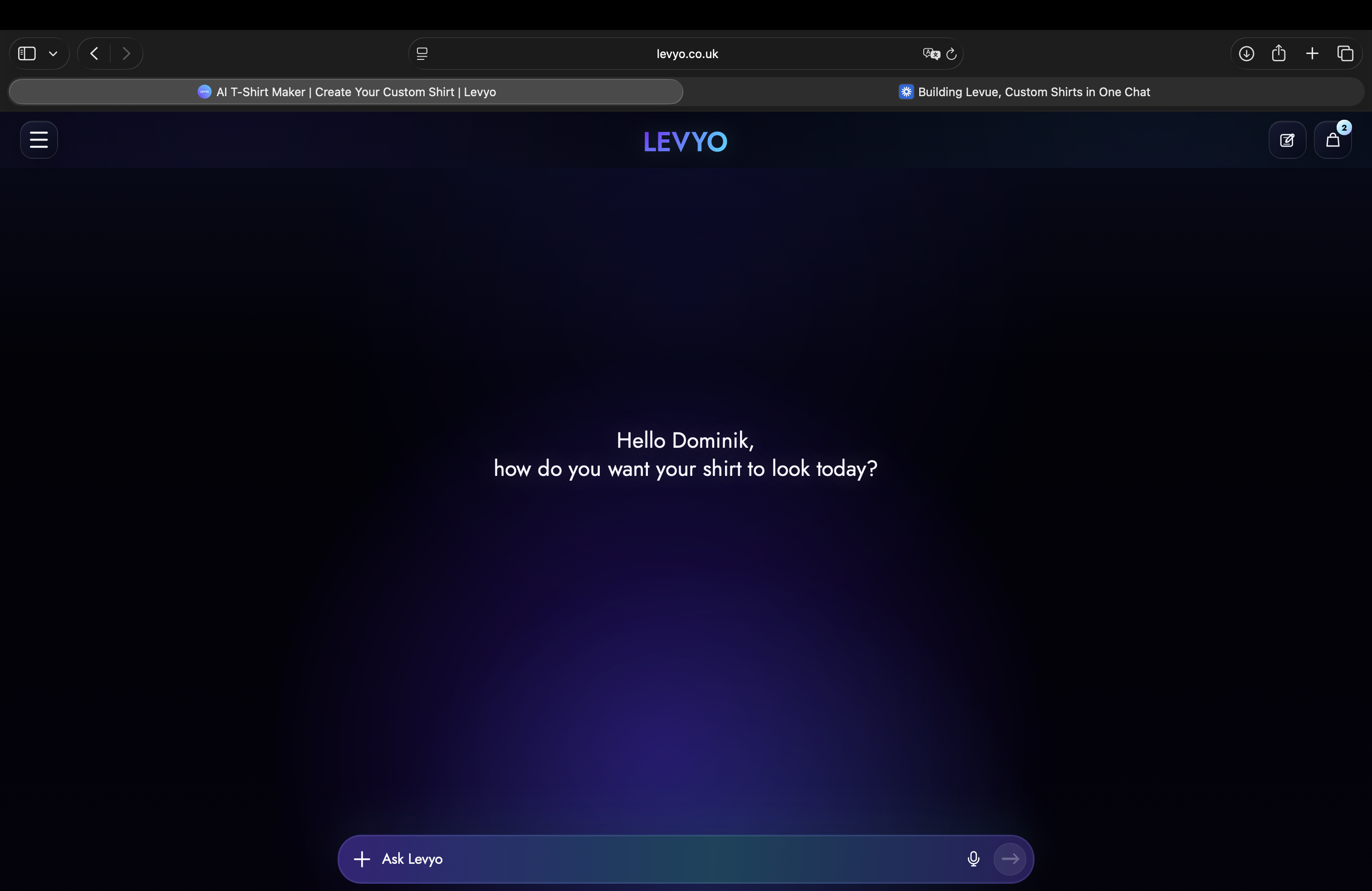
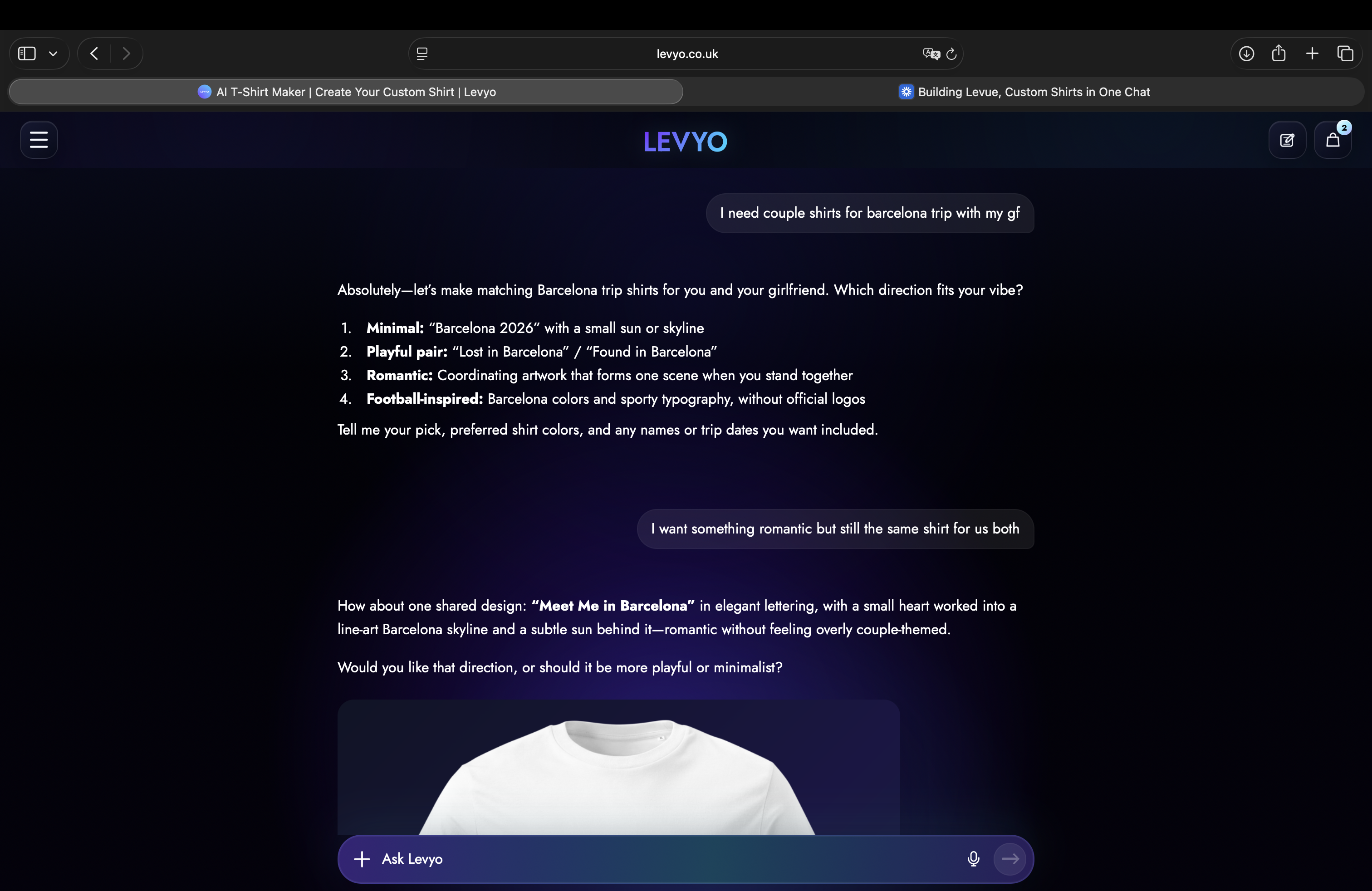
You basically just start to chat with Levyo to find out quick what you want on your shirt and keep optimizing while seeing results all the time to create your personal perfect shirt.
Codex
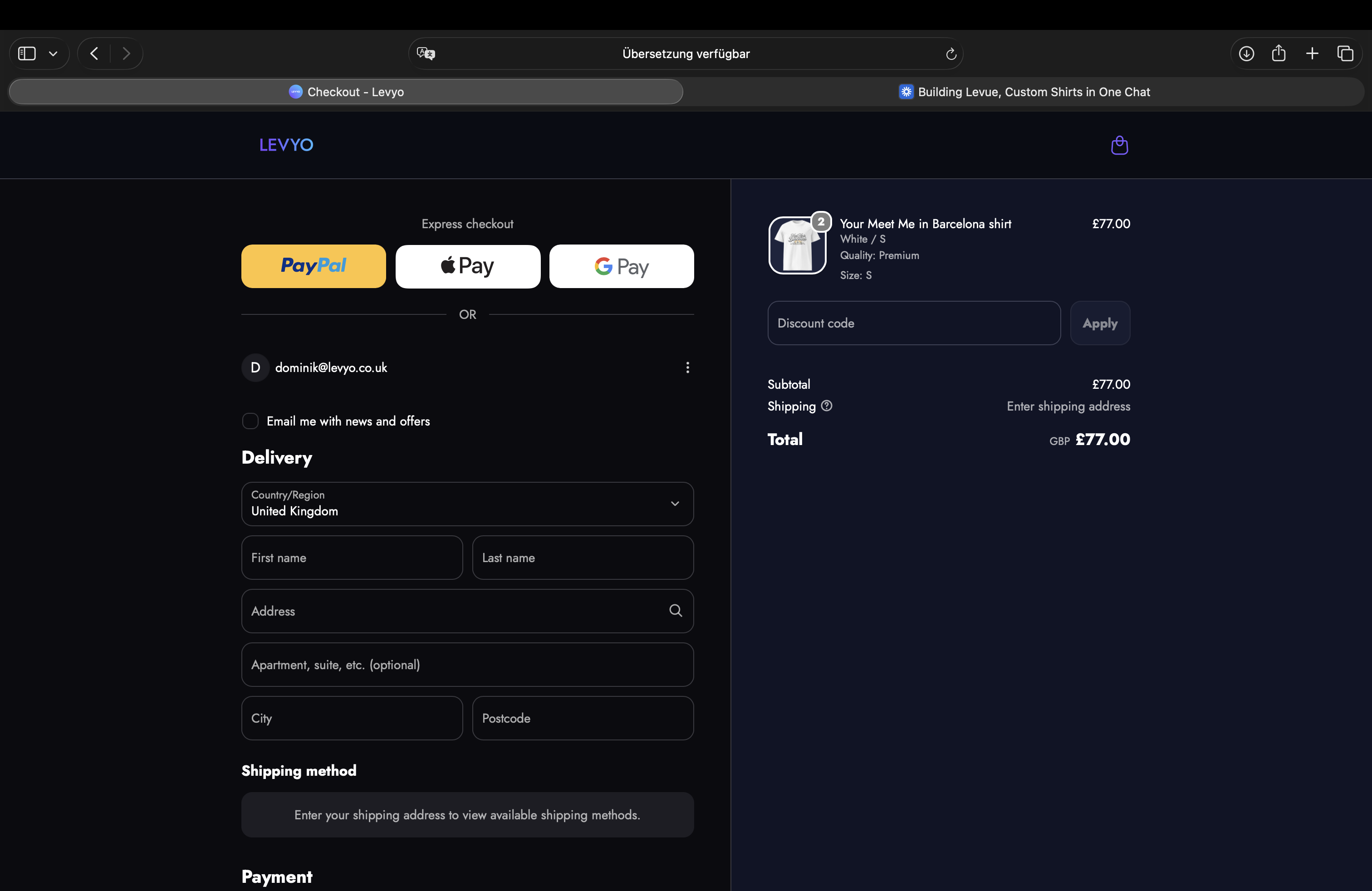
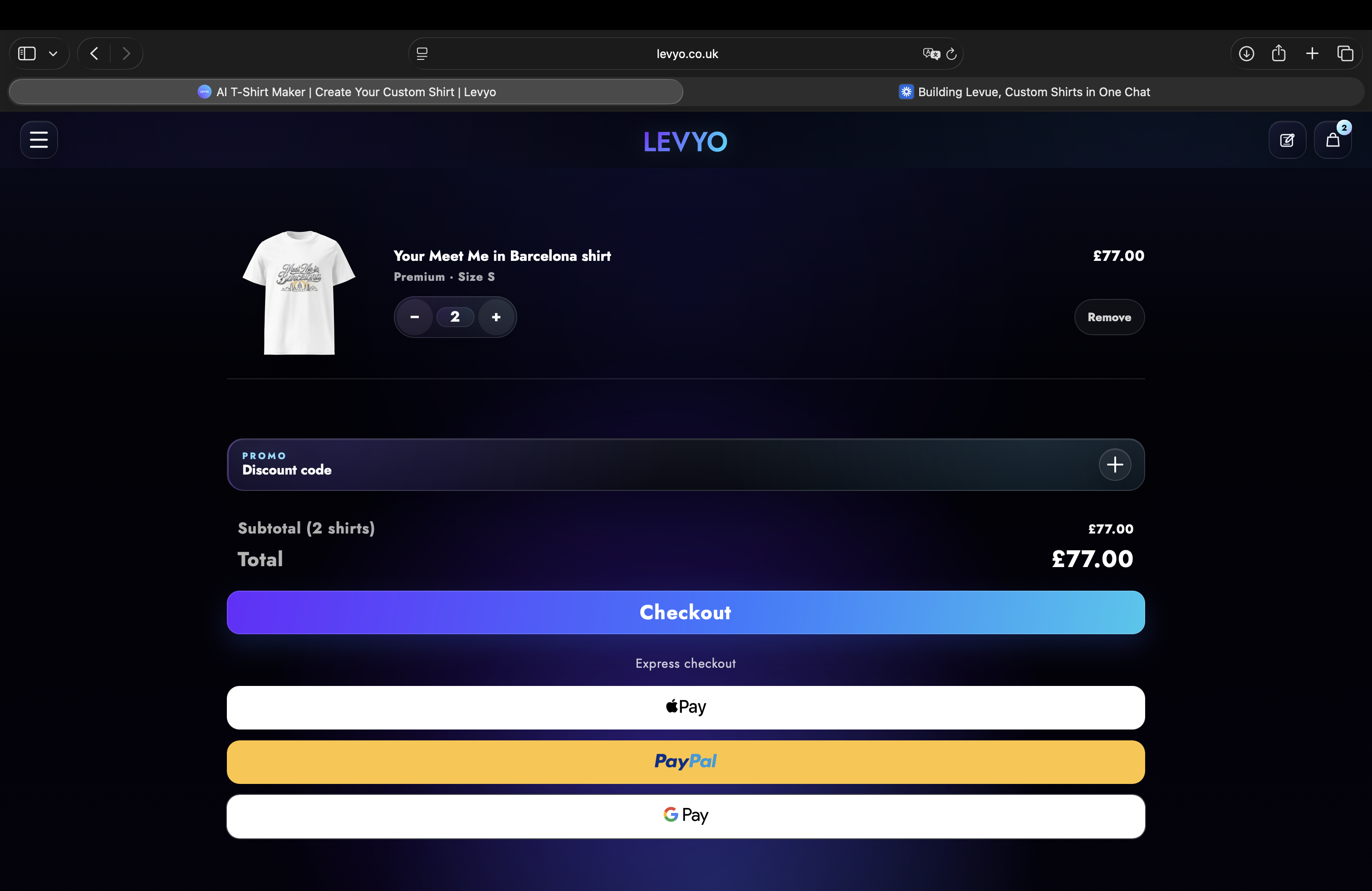
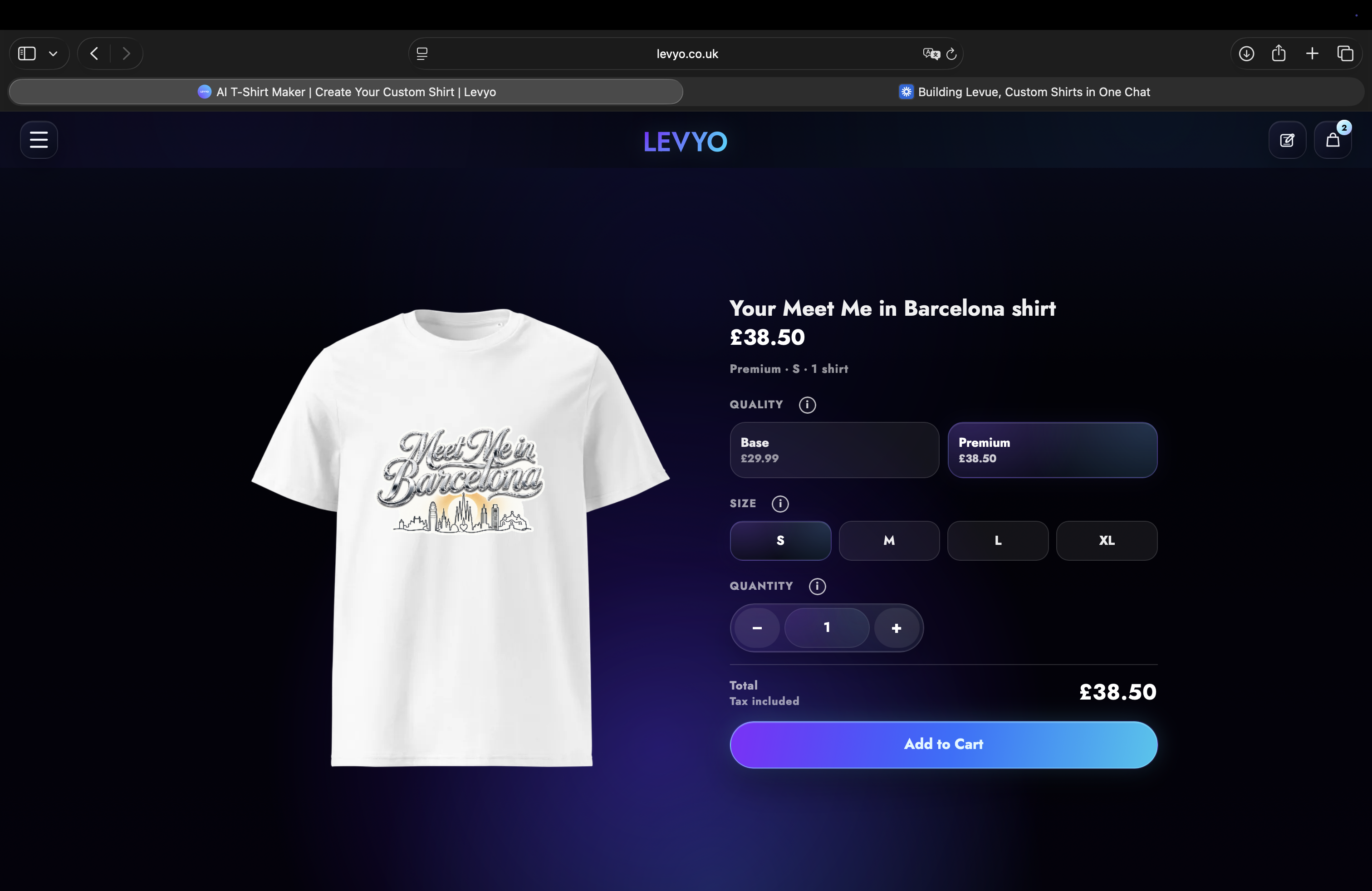
Levyo turns a conversation into a personalized, production-ready shirt. Customers can explore ideas, generate designs, request revisions, compare shirt qualities, select sizes and quantities, share designs, and proceed to checkout—all without using a traditional editor.
How we built it
Human
With GPT 5.6 Sol (as Levyo) being the face of Levyo while chatting, GPT 5.5 is used to generate the final prompt for the design for GPT-Image-2 whilst Codex builds the whole thing together and brings everything live.
Codex
We combined OpenAI models for conversation, orchestration, naming, and image creation with a Shopify storefront, Firebase-backed customer history, Printful production, and server-authoritative cart and checkout flows. Designs are versioned so conversations, mockups, revisions, cart items, and purchases remain connected to the correct shirt.
Challenges we ran into
Human
To make shirts actually wearable. The definition of "wearable" is something else for every person. This is something which for me as a human is one of the hardest things. Running evals, hypotheses, trying stuff and testing it against baseline until we get somewhere where I believe that people would actually like that better, as long as the market can't speak.
Codex
The hardest problem was maintaining one consistent state across long conversations, generated images, revisions, multiple devices, authentication, cart updates, and checkout. Mobile streaming, slow networks, cached mockups, conversation ordering, responsive layouts, and strict performance budgets exposed many edge cases that isolated tests could not reveal.
Accomplishments that we're proud of
Human
That you can just talk to Levyo and actually get to a result, you can actually end up wanting and buying. Sounds simple, but it actually feels like something big, because you can just get from zero idea to a wearable shirts in a few minutes.
It will come up with directions and good headlines you would have never come up with and just show you instantly how your shirt could look like. The simplicity in how easy it looks and on how easy it is for the user, is the thing I am truly proud of.
Codex
We created a genuinely conversational path from an unfinished idea to a shirt someone can buy. Levyo supports iterative design revisions, persistent customer designs and chats, live product choices, group discounts, sharing, and checkout while keeping the experience focused on the shirt rather than the underlying technology.
What we learned
Human
Hard question. I think that I learned that I want to keep the acceptance rate as high as possible on as less assistant turns as needed. Because I think that if you would chat 30 minutes with Levyo, you would with a high chance definitely get what you want. But I want that even after 3 minutes with Levyo you get what you want. So what I learned is that not "making custom shirts" is the hard part, but to make custom shirts the specific user wants in the shortest timeframe possible.
Codex
Production behavior matters more than “works on my machine.” Reliable state, immediate visual feedback, stable scrolling, fast interactions, and real-device testing are as important as the AI itself. We also learned that small releases, strict performance budgets, and continuous end-to-end verification produce better results than large bundled launches.
What's next for Levyo
Human
Definitely more to come. The goal is that Levyo gets better as the specific user uses it. So Levyo gets to know the taste of the user when it comes to clothing and that the acceptance rate gets significantly higher as more as you use it. So a memory system which learns based on user feedback will probably the next big feature as Levyo would receive traffic so users actually want to come back to Levyo, instead of it being a cool thing for one-time.
Codex
Next, we are making Levyo faster, calmer, and more reliable across every device; strengthening conversation recovery and design-version consistency and expanding collaborative group-ordering tools so teams, events, and communities can collect sizes privately and order together.
Conclusion
Again, written by only me.
I've seen my part focused more on things like wearability and how the people should feel while using the product and giving Levyo its purpose. Codex on the other hand is more systemic. It gives my ideas the ground to stand on.
Codex couldn't have made Levyo without me, and I couldn't have made Levyo without Codex. We were on the same project on different layers, complementing each other.
And that's how Levyo is going to be built further.
Built With
- codex
- gpt
- shopify

Log in or sign up for Devpost to join the conversation.