-
-
Problem Statment
-
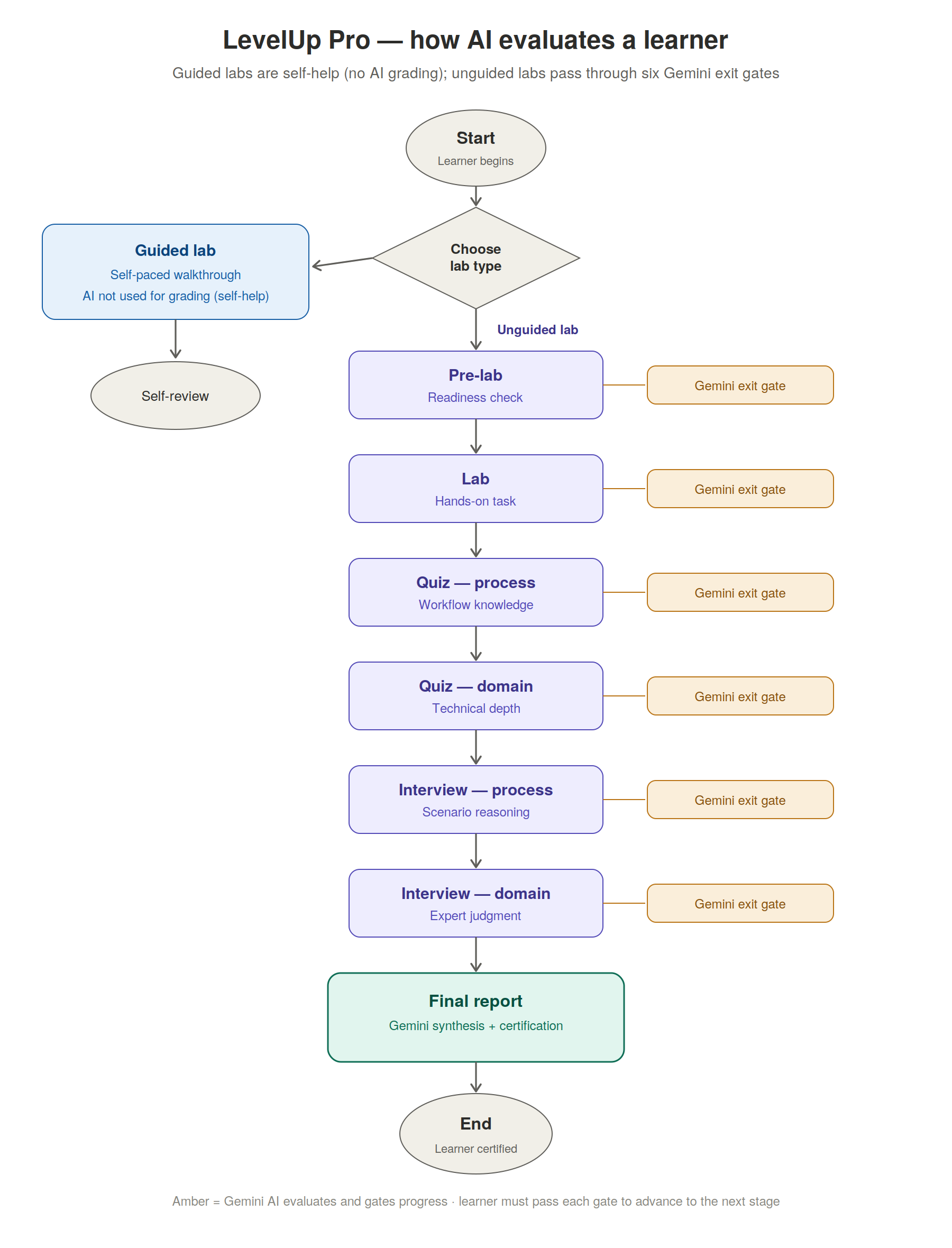
Different stages of unguided labs
-
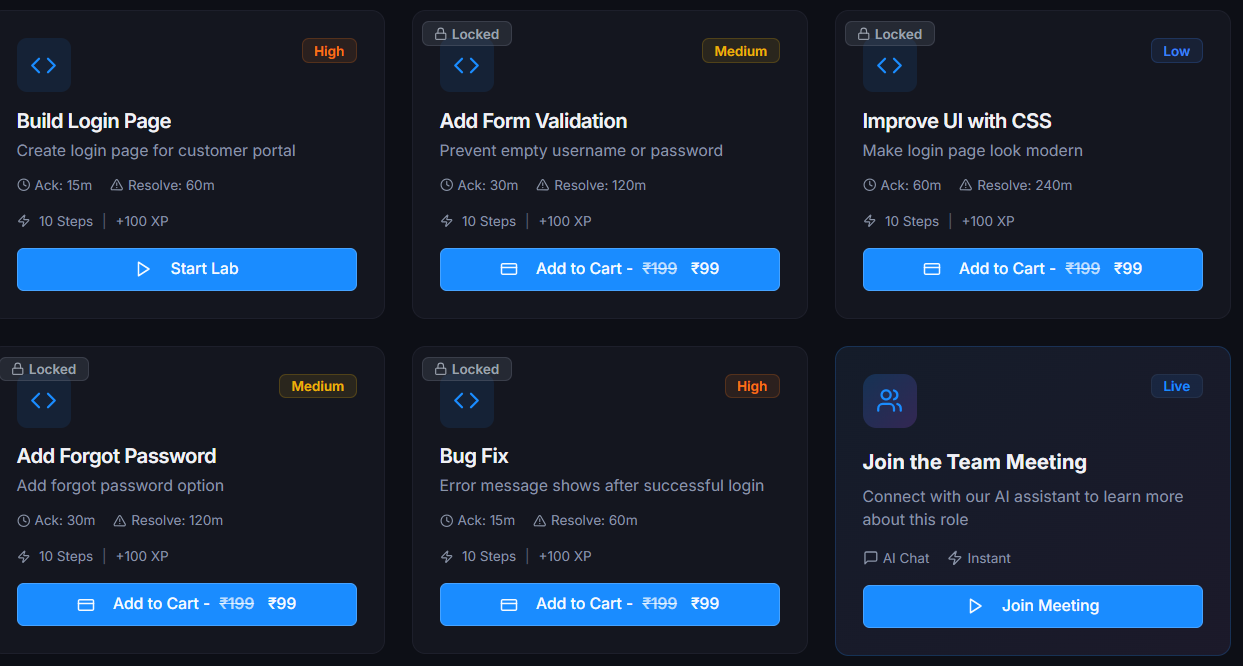
Guided Labs
-
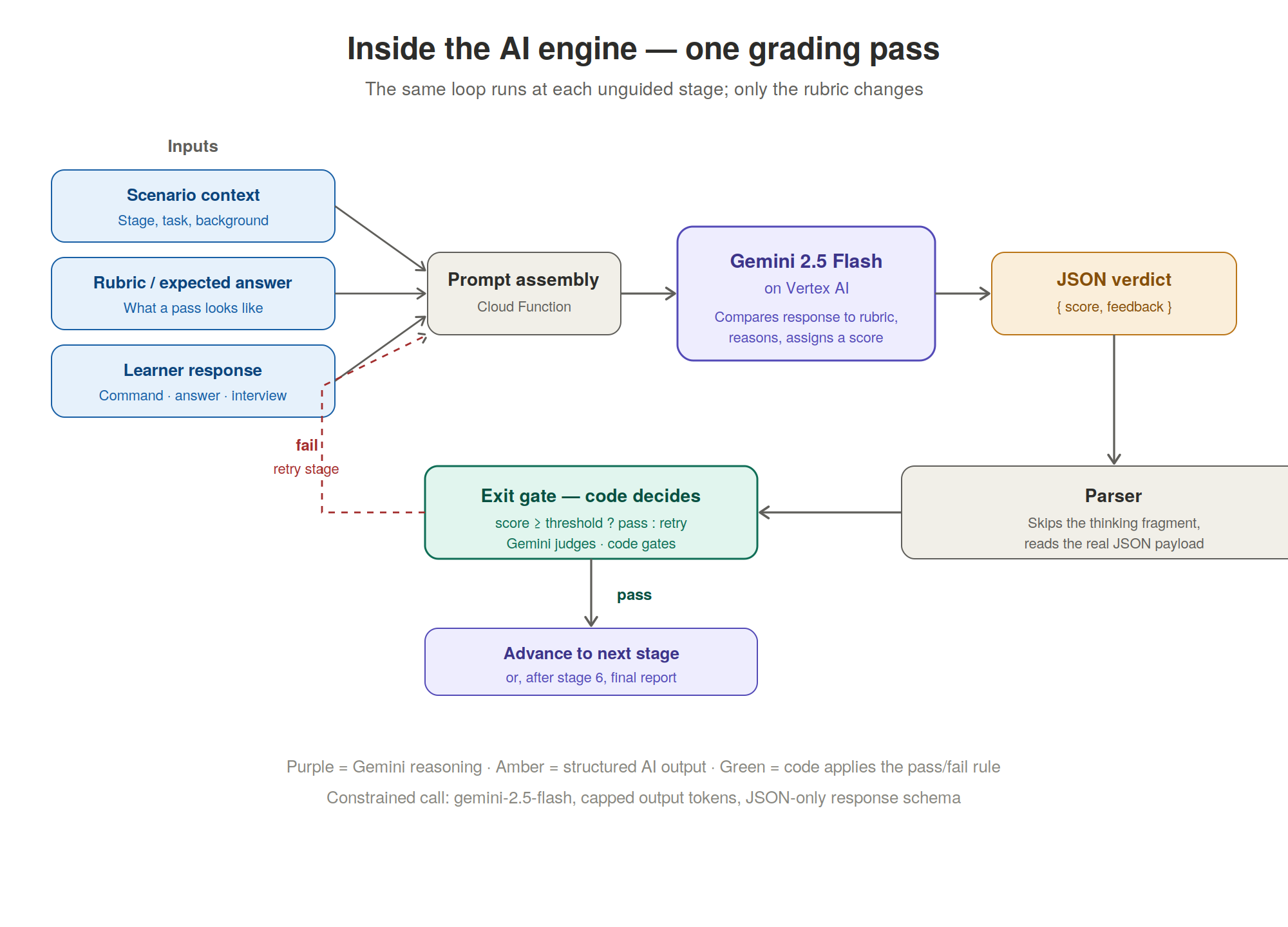
How AI works
-
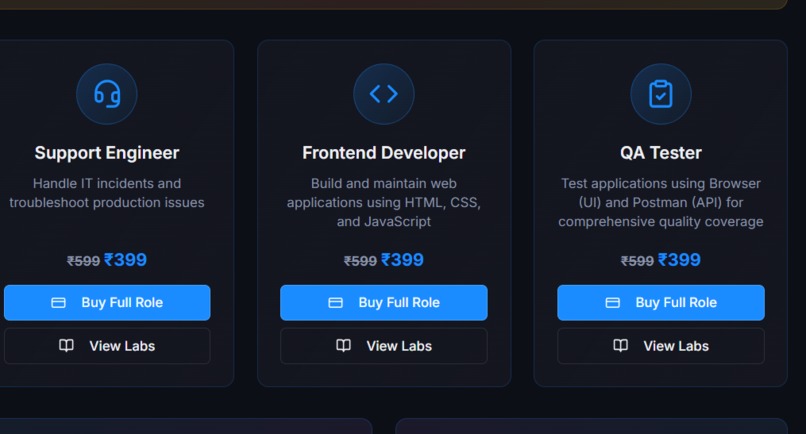
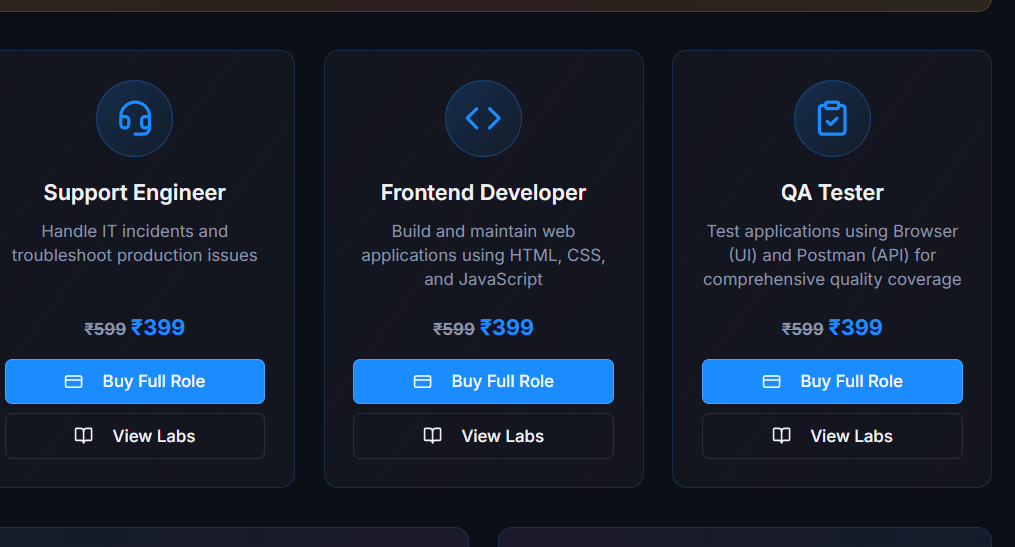
different roles
-
-
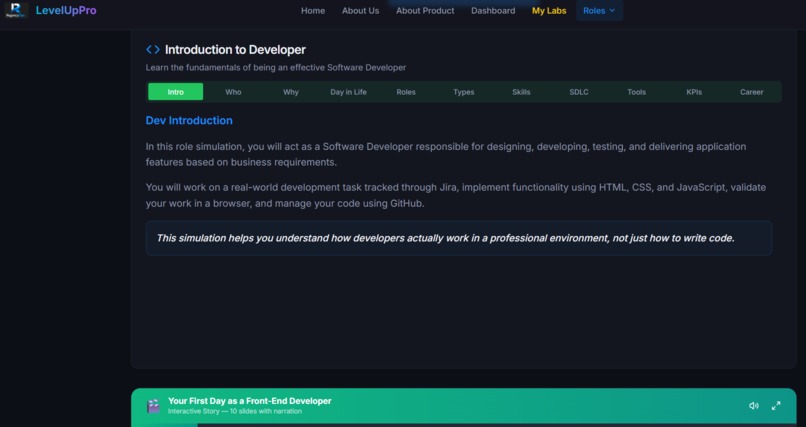
Intro
-
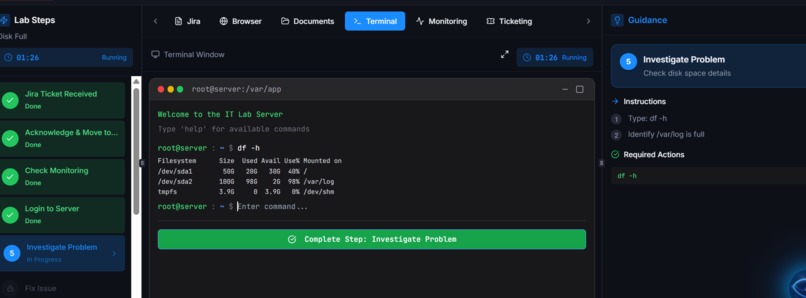
Sample simulated lab
-
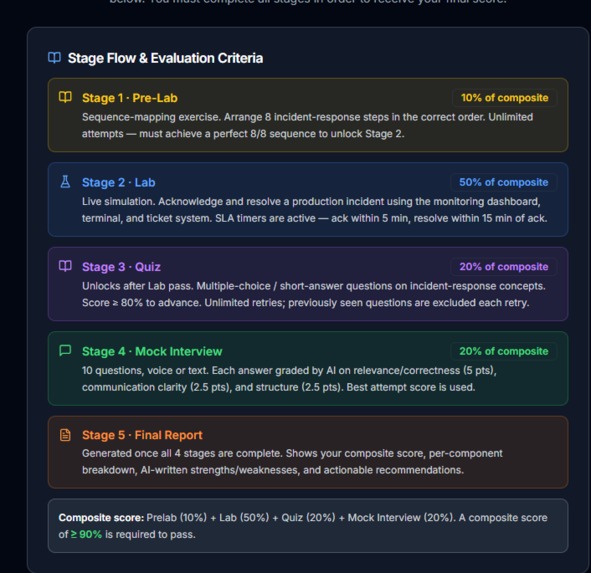
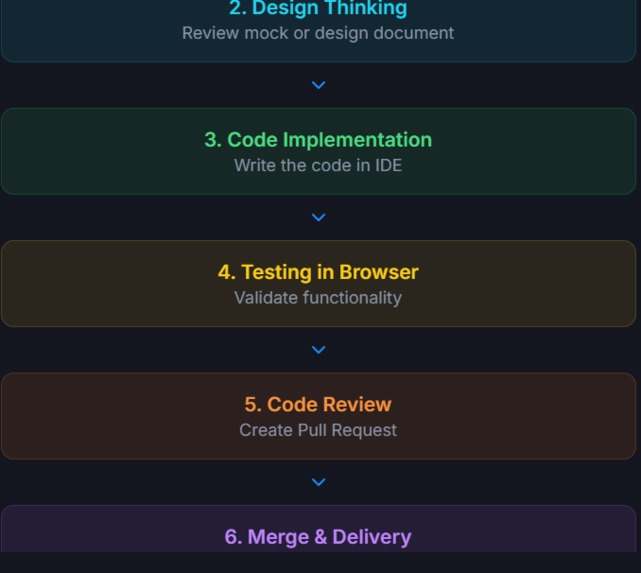
Unguided labs - 6 stages
-
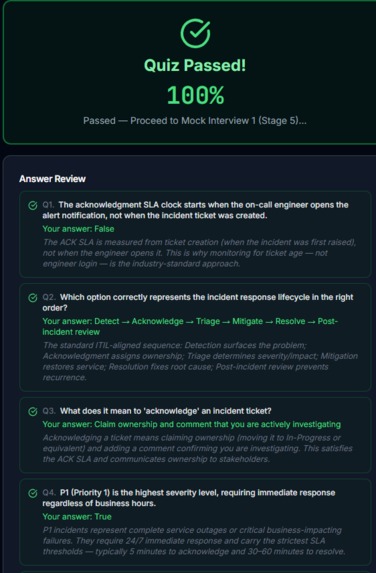
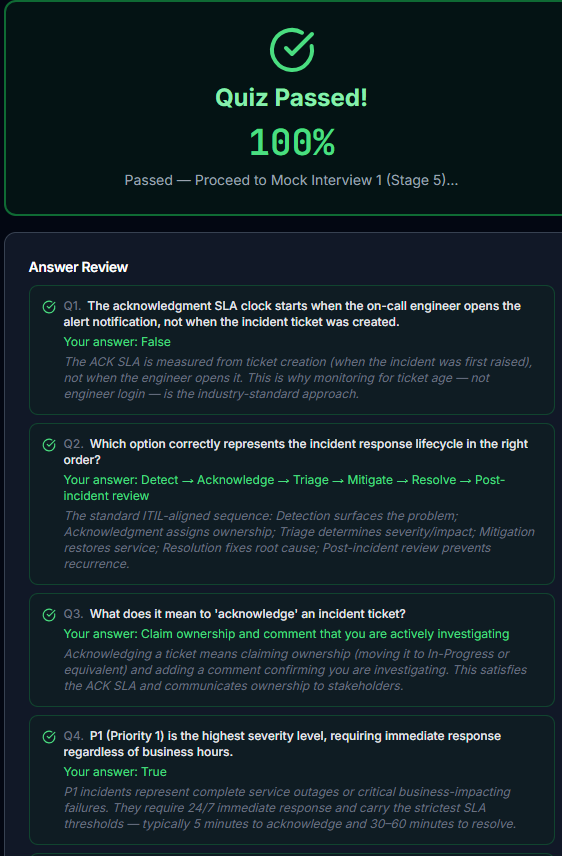
Review after quiz
-
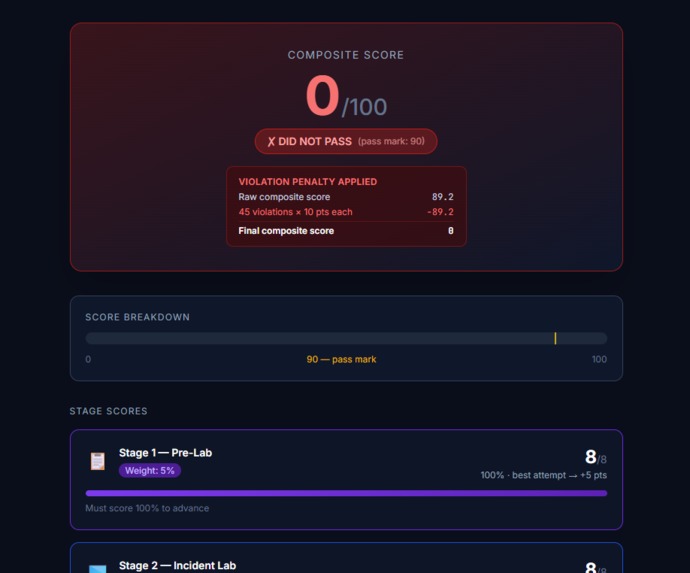
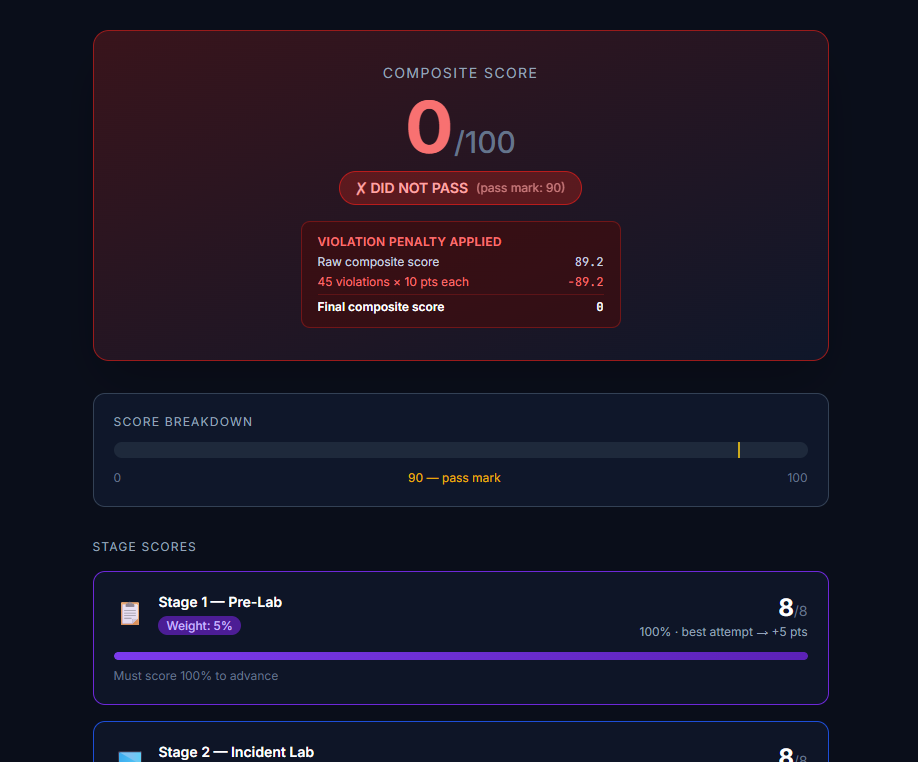
Final score across different stages + violation
-
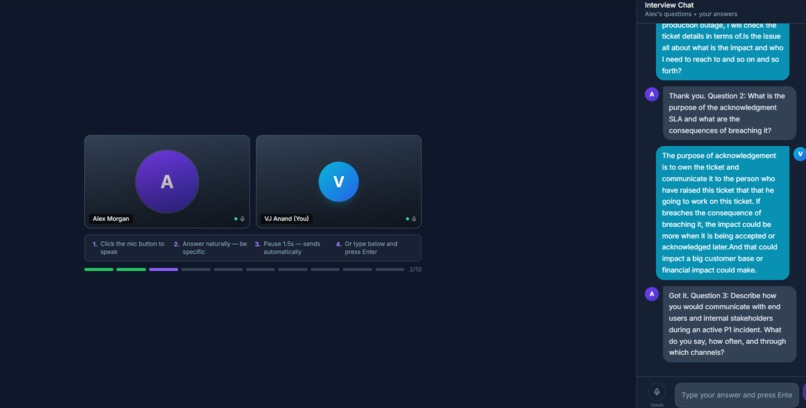
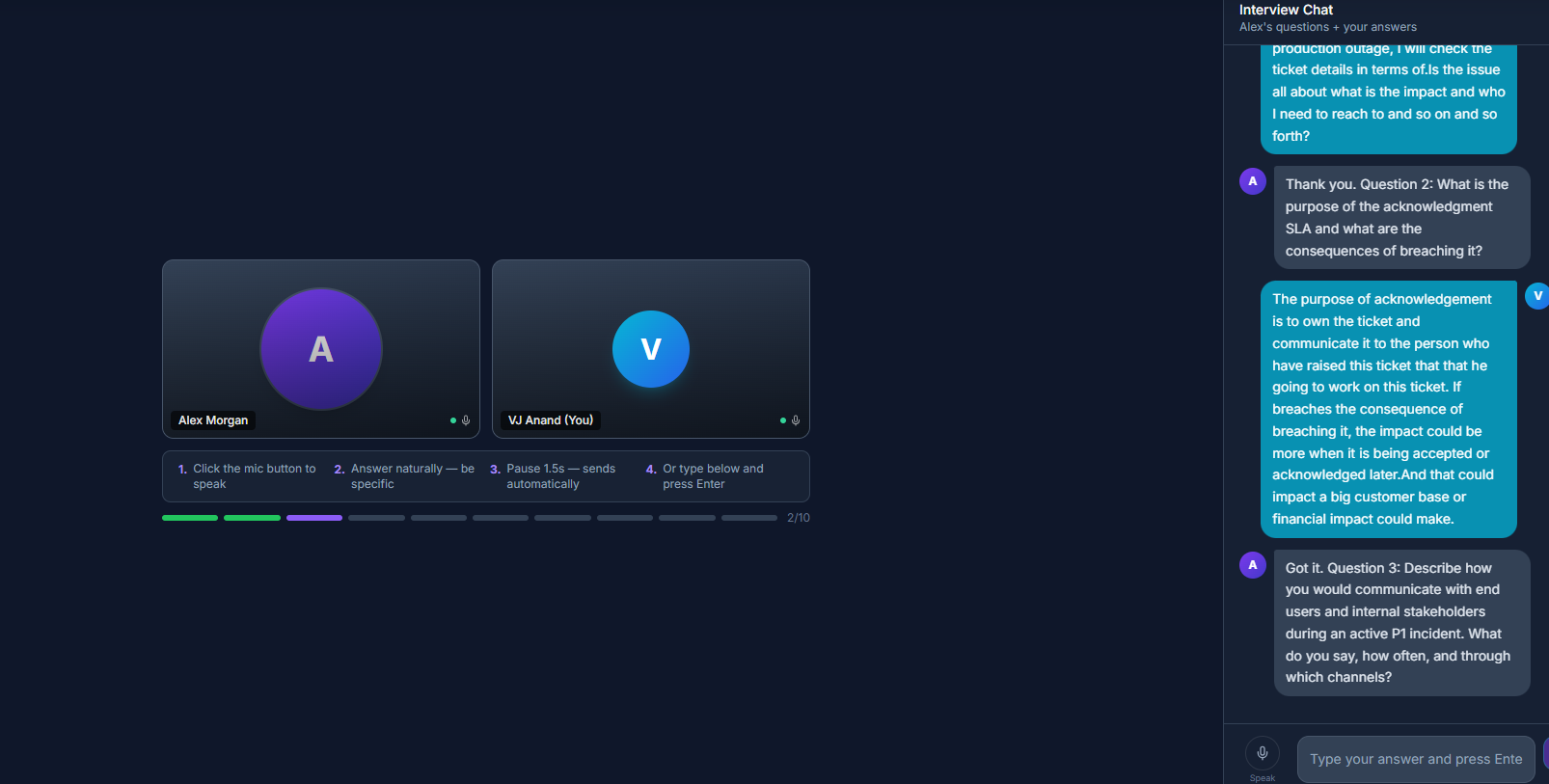
Mock interview
-
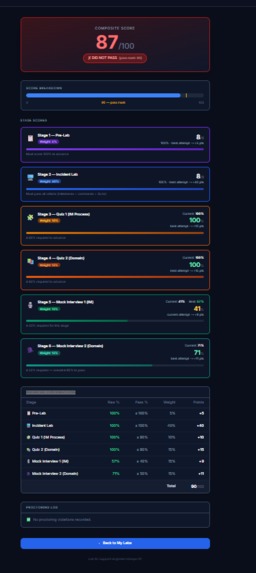
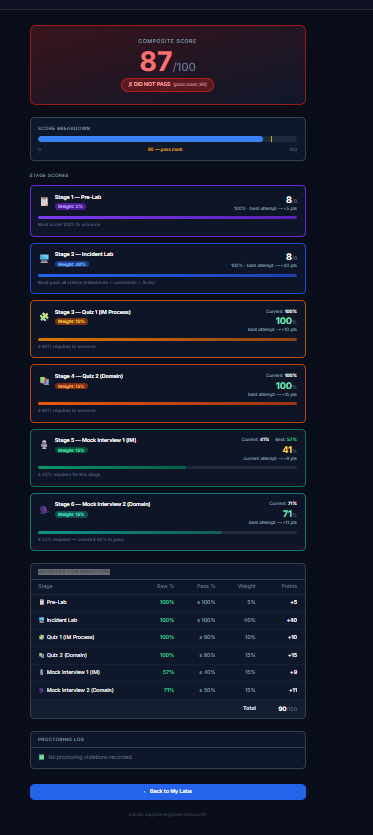
Final scores
-
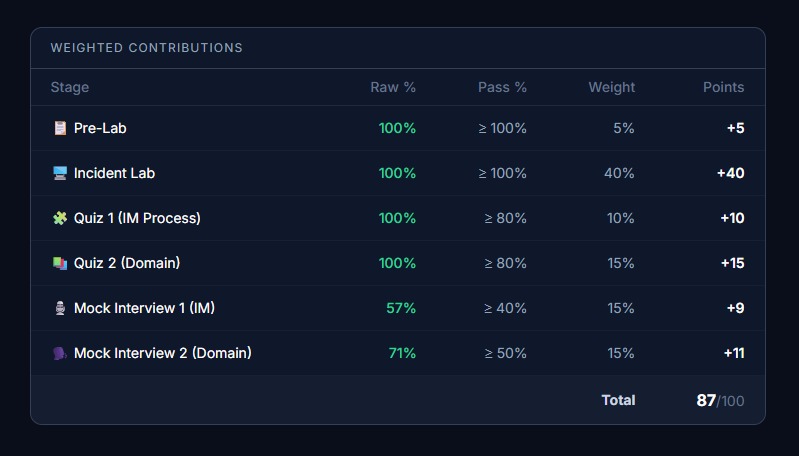
Rubric
-
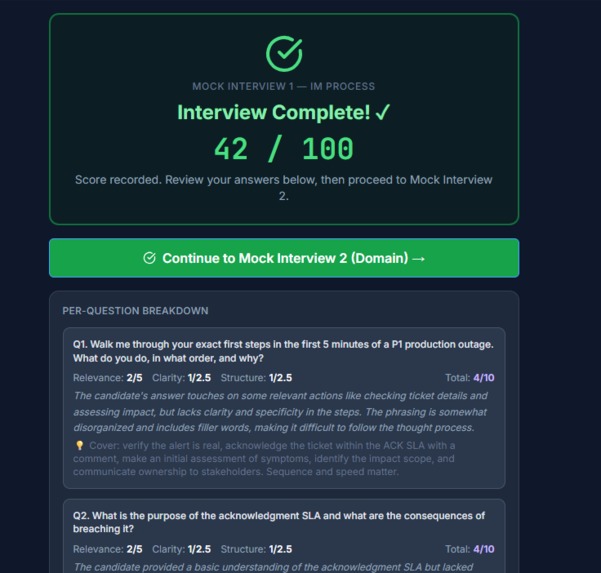
Sample score
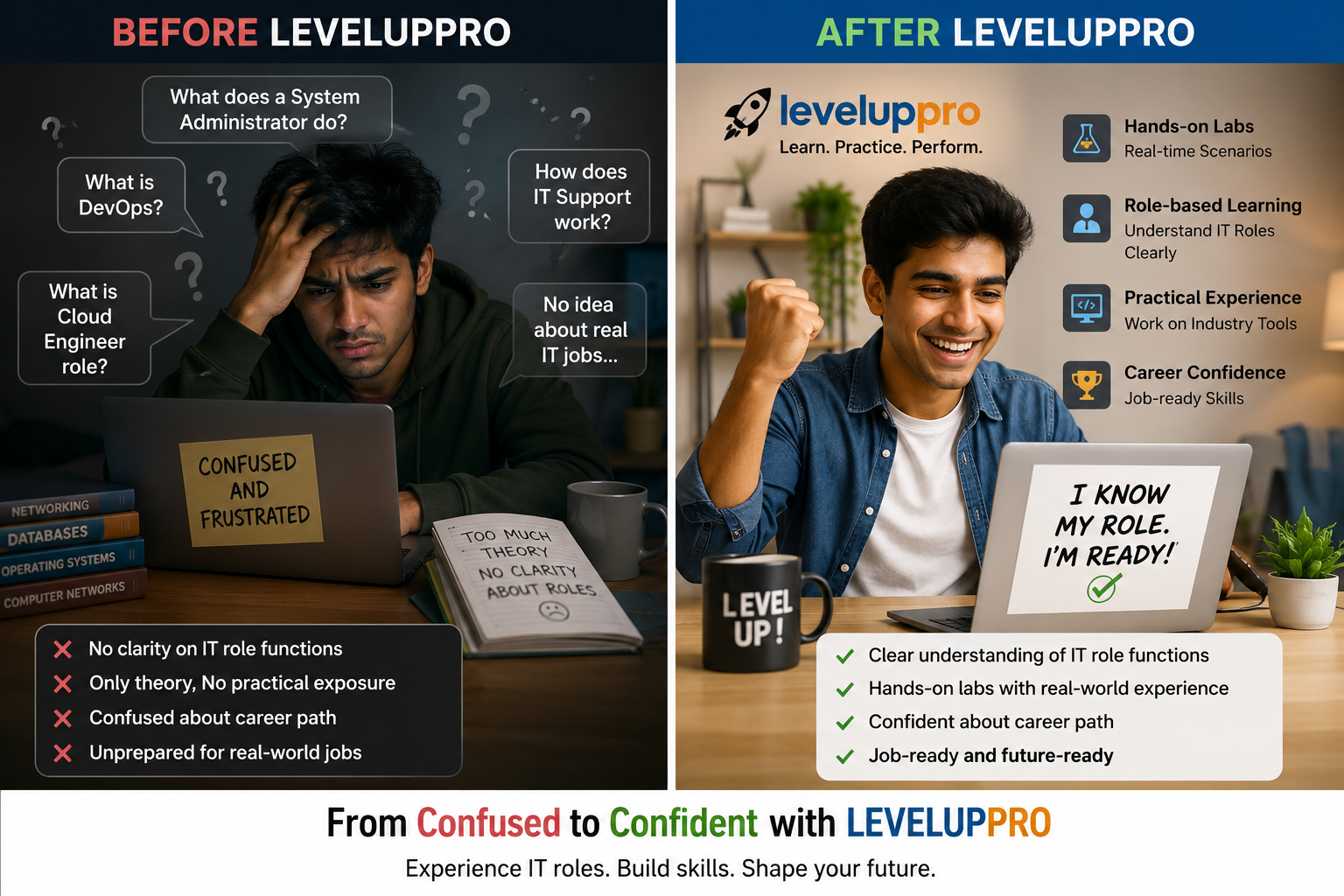
LevelUp Pro — Experience the Job Before You Choose It
💡 Inspiration
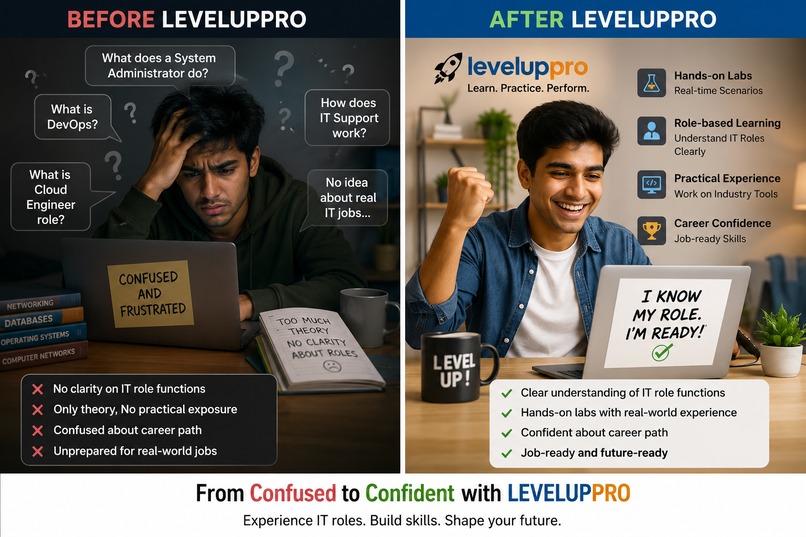
Most people pick a career on guesswork. They watch tutorials, finish courses, collect certificates — and still have no idea what the job actually feels like, or whether they'd be any good at it. After 30 years in enterprise IT, I watched capable people wash out of roles they'd never truly tried, and watched hiring managers struggle to tell "completed a course" apart from "can actually do the work."
The gap isn't content — there's infinite content. The gap is proof of performance: a way to do the real work of a role and get honest, senior-level feedback on how you did, before committing years to a path.
That's what LevelUp Pro is built to close.
🎯 What it does
LevelUp Pro is Role Simulation — and it runs in two tracks.
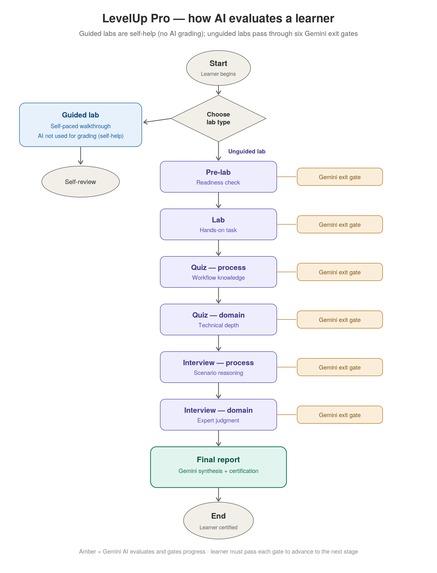
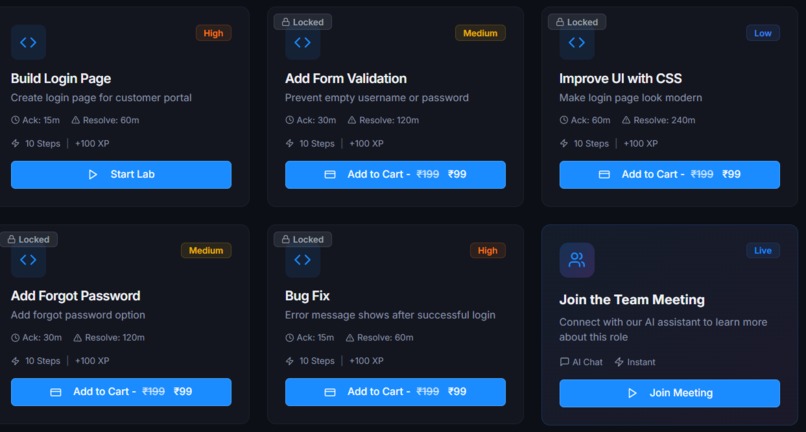
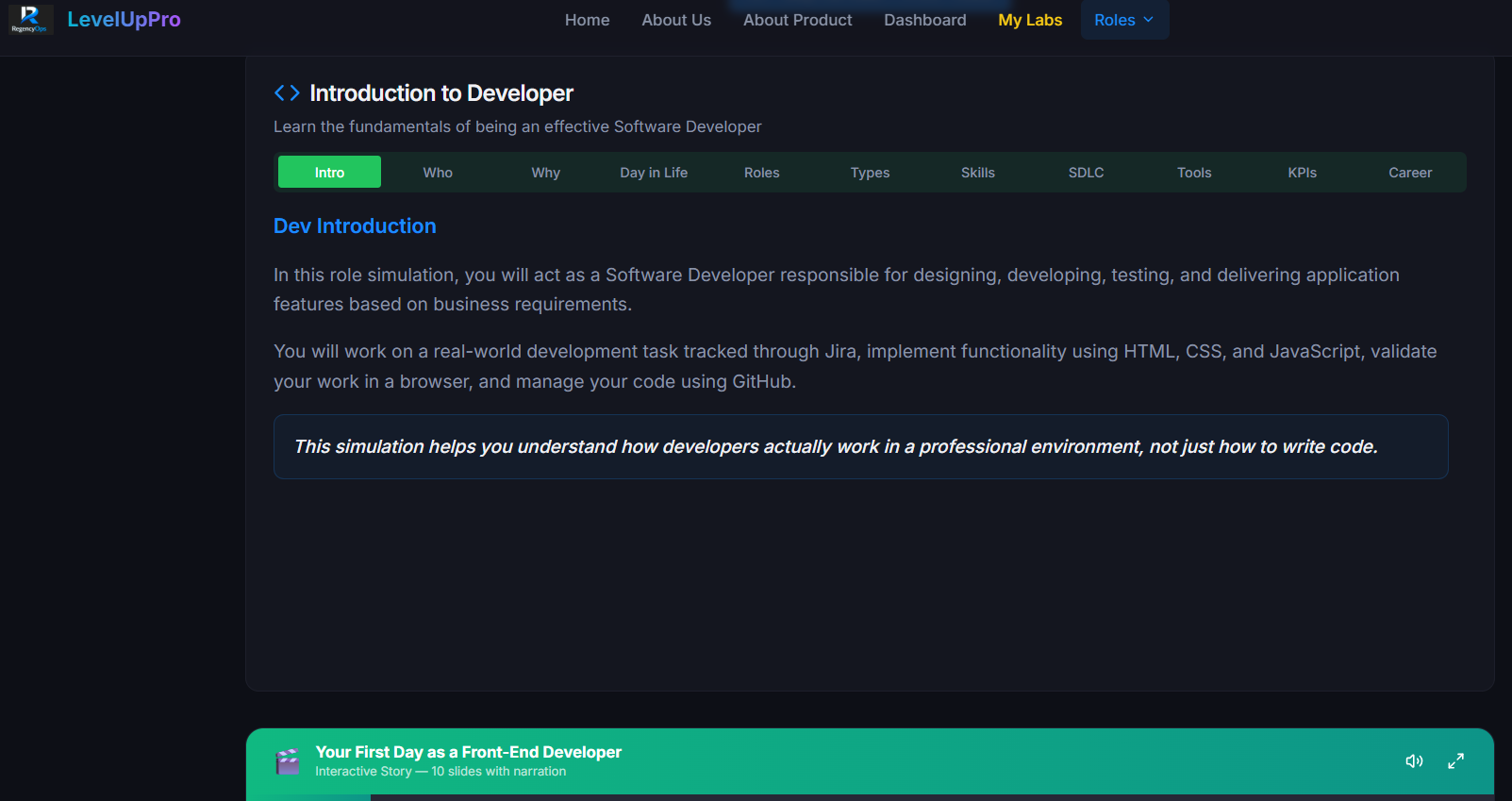
Guided labs walk a learner through a scenario with step-by-step support, ending in a quiz and a certificate. This is the on-ramp.
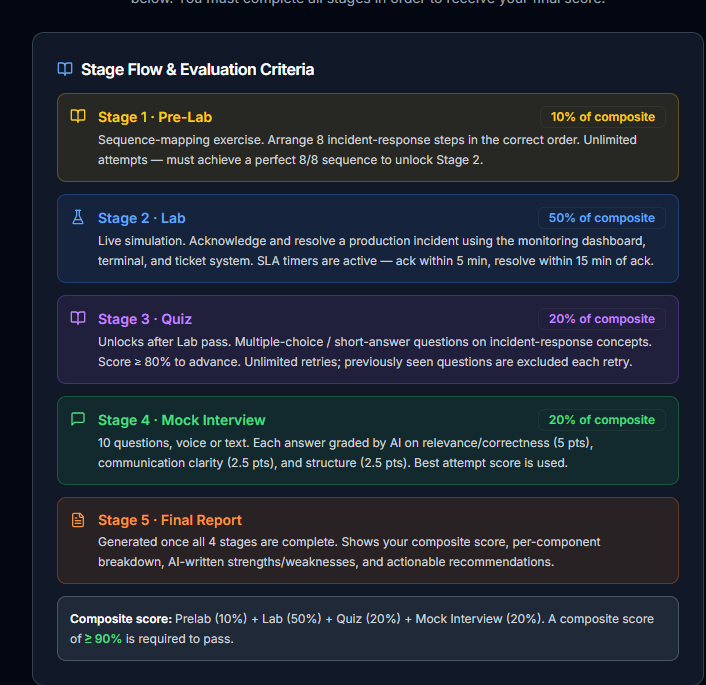
Unguided labs (SimOps) are the real test — a 6-stage assessment that simulates real enterprise incident response, with no hand-holding:
- Pre-Lab — sequence the correct response procedure
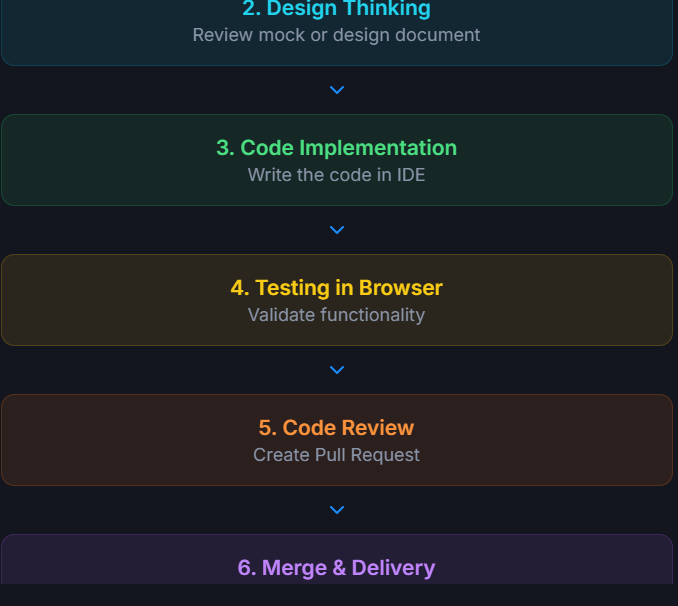
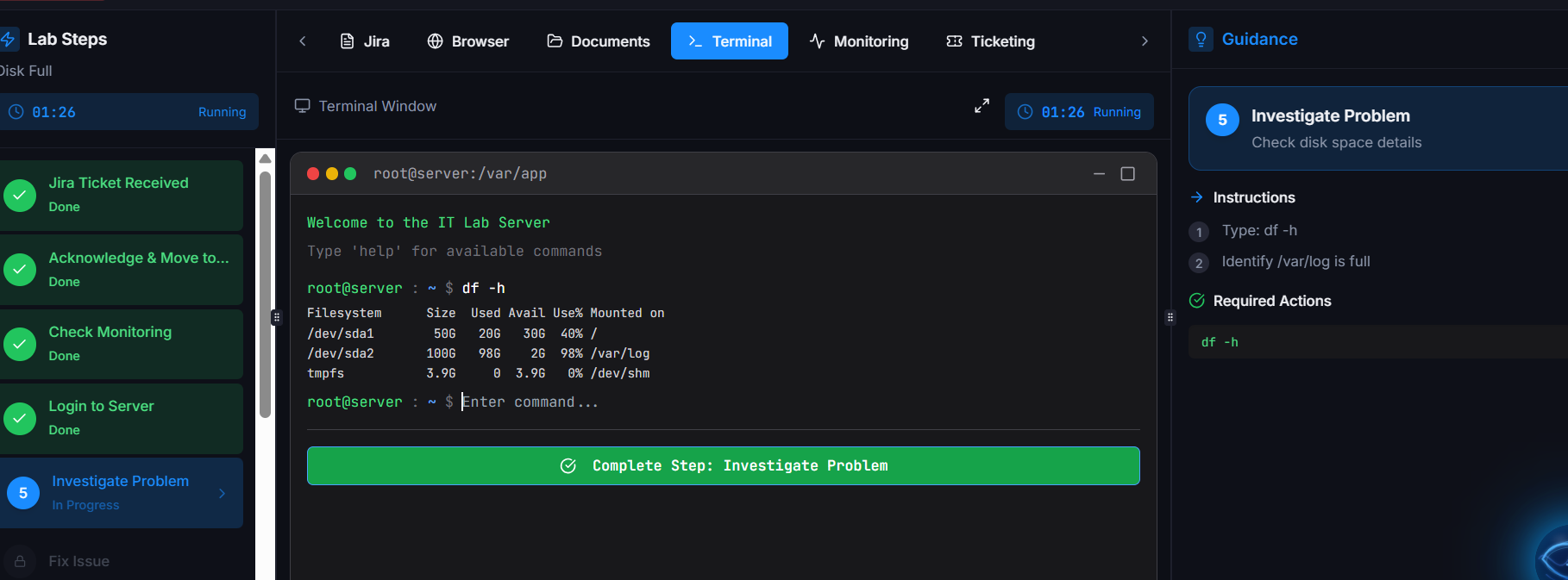
- Role Lab — a simulated terminal where you work on task or fix a live incident or complete a Dev task.
- Quiz 1 (Process) and 4. Quiz 2 (Domain) — process and domain knowledge
- Mock Interview (Process) and 6. Mock Interview (Domain) — open-ended scenario questions
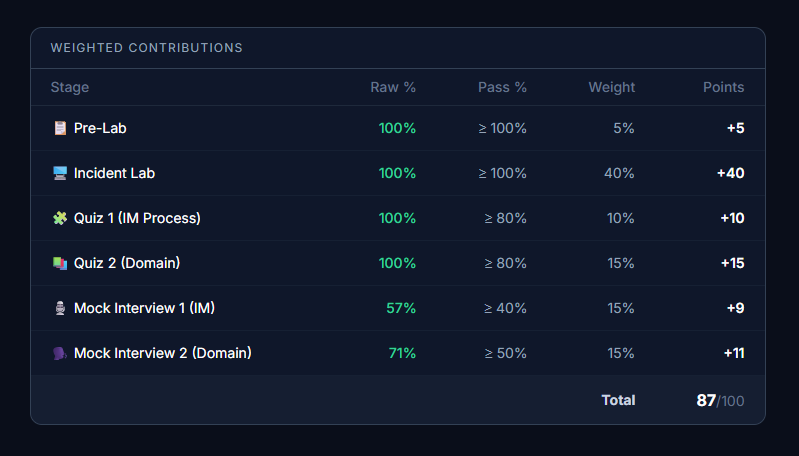
The unguided track is where the AI does its most important work — judging open-ended solutions with no answer key to match against. Every stage feeds a proctored, weighted composite score, and a learner must reach ≥ 90% with all stages complete to earn certification — a real bar that people genuinely fail. Clear it, and you earn a downloadable certificate with a unique ID, a LinkedIn-shareable credential, and a public verify URL.
🤖 Where AI makes the call
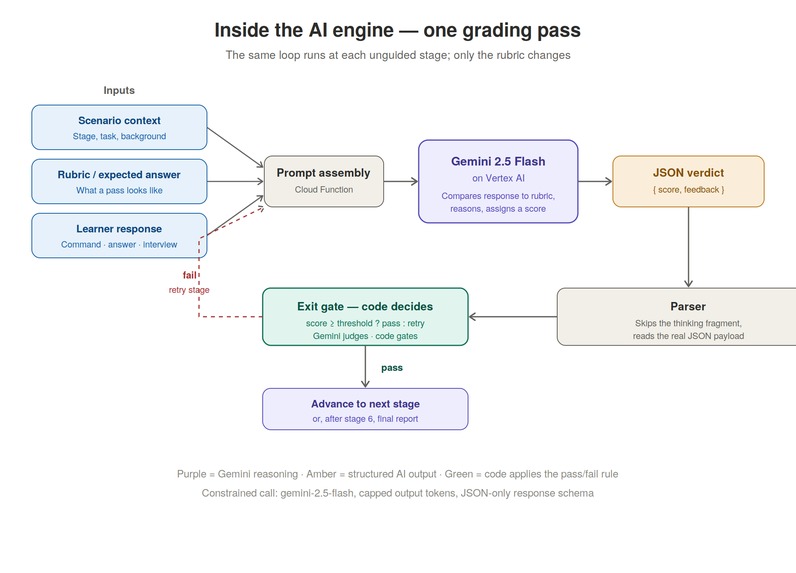
The key judgment — did this person perform like a professional? — is made by Google Gemini 2.5 Flash, live in production. For e.g.
- In the Incident Lab, Gemini evaluates each terminal command you run against a real scenario — a crashed Node.js/PM2 app, an exhausted PostgreSQL connection pool, a DNS resolution failure, NTP clock drift breaking JWTs, a TCP SYN flood — and returns pass / fail / pending-review with reasoning.
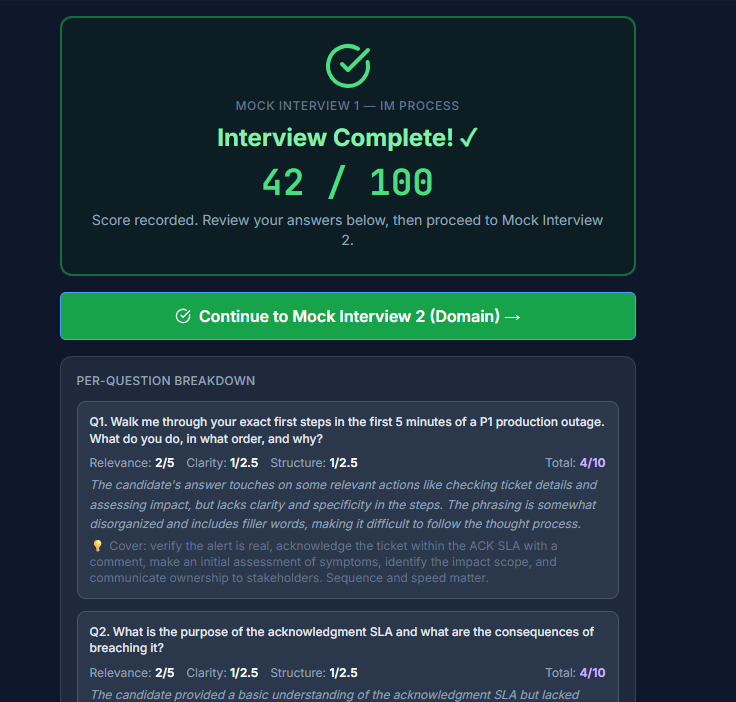
- In the two Mock Interviews, Gemini reads your free-text answers to scenario questions (e.g. "Walk me through your exact first steps in the first 5 minutes of a P1 outage") and scores each on relevance, communication, and structure, with written feedback on what a strong answer covers.
No human reviews these. Gemini grades every submission in seconds, feeding the weighted composite that gates certification.
🏗️ How I built it
A TypeScript monorepo where one Node.js process serves both the API and the React SPA:
- Frontend: React 18 + TypeScript, Wouter, TanStack Query, shadcn/ui + Radix, Tailwind, Framer Motion, Recharts, Vite 7
- Backend: Node.js 20 + Express, Passport.js (Google/GitHub/Yahoo/LinkedIn OAuth), Firebase phone OTP, express-session
- AI evaluation: Google Gemini 2.5 Flash via
generativelanguage.googleapis.com(server/gemini.ts) - Data: PostgreSQL + Drizzle ORM for users/commerce/certificates; Firebase Firestore for high-frequency SimOps lab data
- Payments: Razorpay (primary, INR/USD, HMAC SHA-256 verification) + Stripe
- Proctoring: tab-switch and copy-paste detection logged to Firestore, with score penalties
Humans design each role scenario once. Everything at the point of learning — grading commands and answers, generating feedback, computing composites, enforcing proctoring — runs on Gemini and Google Cloud. That's why one founder serves learners across India, Indonesia, and South Africa with no grading team.
📚 What I learned
- AI grading only earns trust when it's specific. Vague feedback got ignored. Scoring on named dimensions with a concrete "here's what a strong answer covers" line is what made it feel like a senior engineer, not a black box.
- Weighting is a product decision, not a formula. Making the hands-on lab worth 40% and requiring 100% to advance shapes learner behaviour more than any content.
- Integrity matters the moment scores mean something. Once a composite gates a certificate, people try to game it — so proctoring and violation penalties had to be real.
🧗 Challenges I faced
- Consistent AI grading. Open-ended answers are hard to score reproducibly; getting stable, fair Gemini scores took real prompt and rubric engineering — plus a graceful fallback (pending-review, never auto-fail) when a grading call errors.
- An honest composite. Per-stage rounding was needed so the displayed total always matches the weighted-contributions table students can verify by hand.
- Solo, end to end. Design, build, AI integration, payments, proctoring, and going live — all as one founder.
💰 Real product, real users, real revenue
LevelUp Pro is live today, with real learners and paid transactions through Razorpay. Pricing starts at ₹399 for an individual lab — deliberately low, because for a first-generation jobseeker, being able to try the role before committing years to it is a fundamentally different kind of access.
🌍 Why it matters — Education & Human Potential
LevelUp Pro changes how people learn, grow, and reach their best work: they stop guessing what a job feels like, get senior-level feedback on real performance, and can prove they've already done the work — before they ever apply for it.
Built With
- drizzle-orm
- express.js
- firebase
- firestore
- framer-motion
- gemini
- google-cloud
- node.js
- passport-js
- postgresql
- razorpay
- react
- stripe
- tailwindcss
- typescript
- vite
- zod

Log in or sign up for Devpost to join the conversation.