Inspiration
For my whole life I have always wanted to be able to fly and if I was ever to be reincarnated as anything I would love it to be a bird. So to make that dream a reality I though why not make it in virtual reality!
Let's Flock! began on 14 October 2025 as a tiny 3D pipe-dodging game. Two days later it ran in a headset, and within a week I was moving a bird by flapping my real arms. Everything since has grown from that one idea: you don't steer a bird, you are one.
What it does
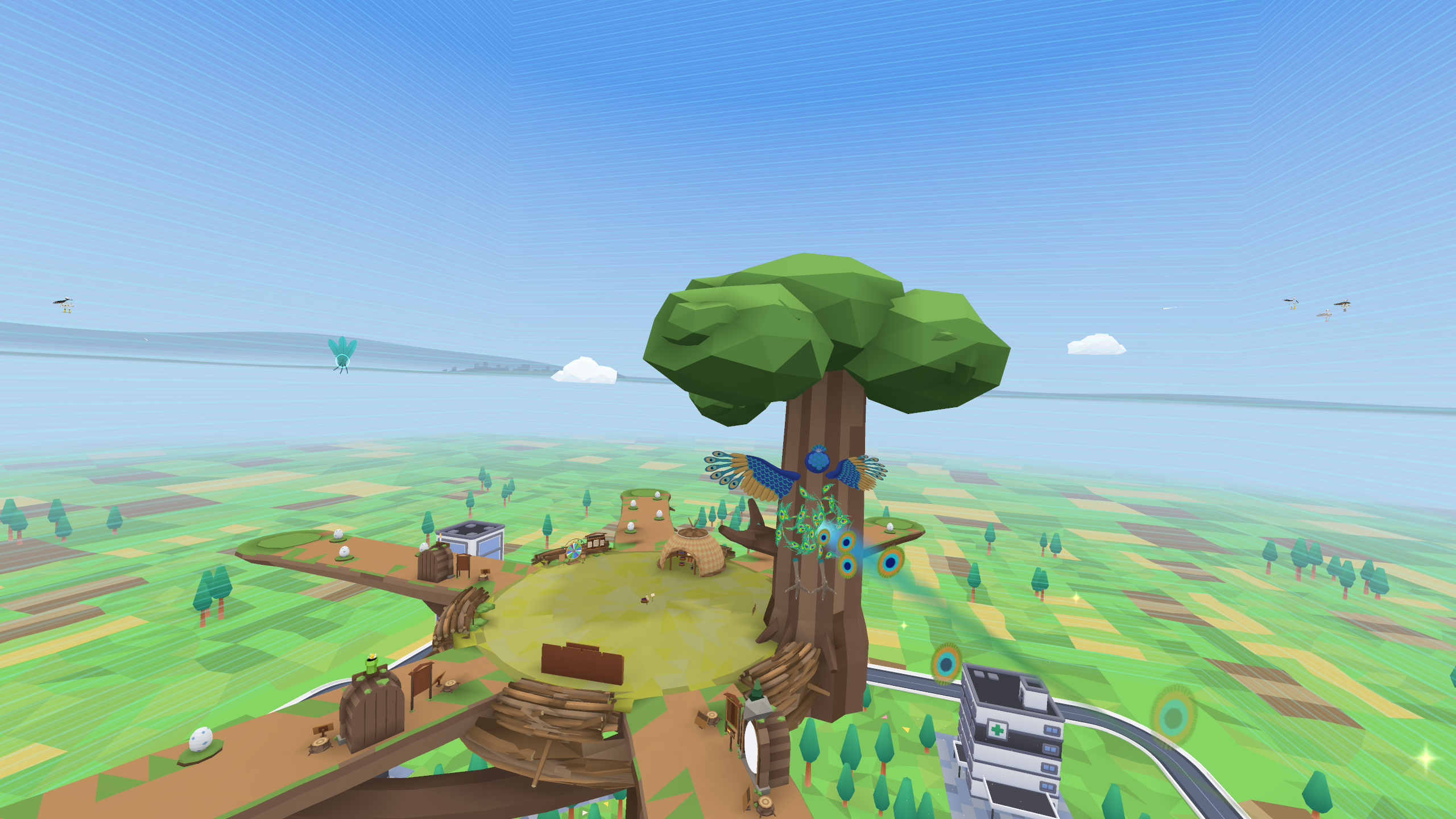
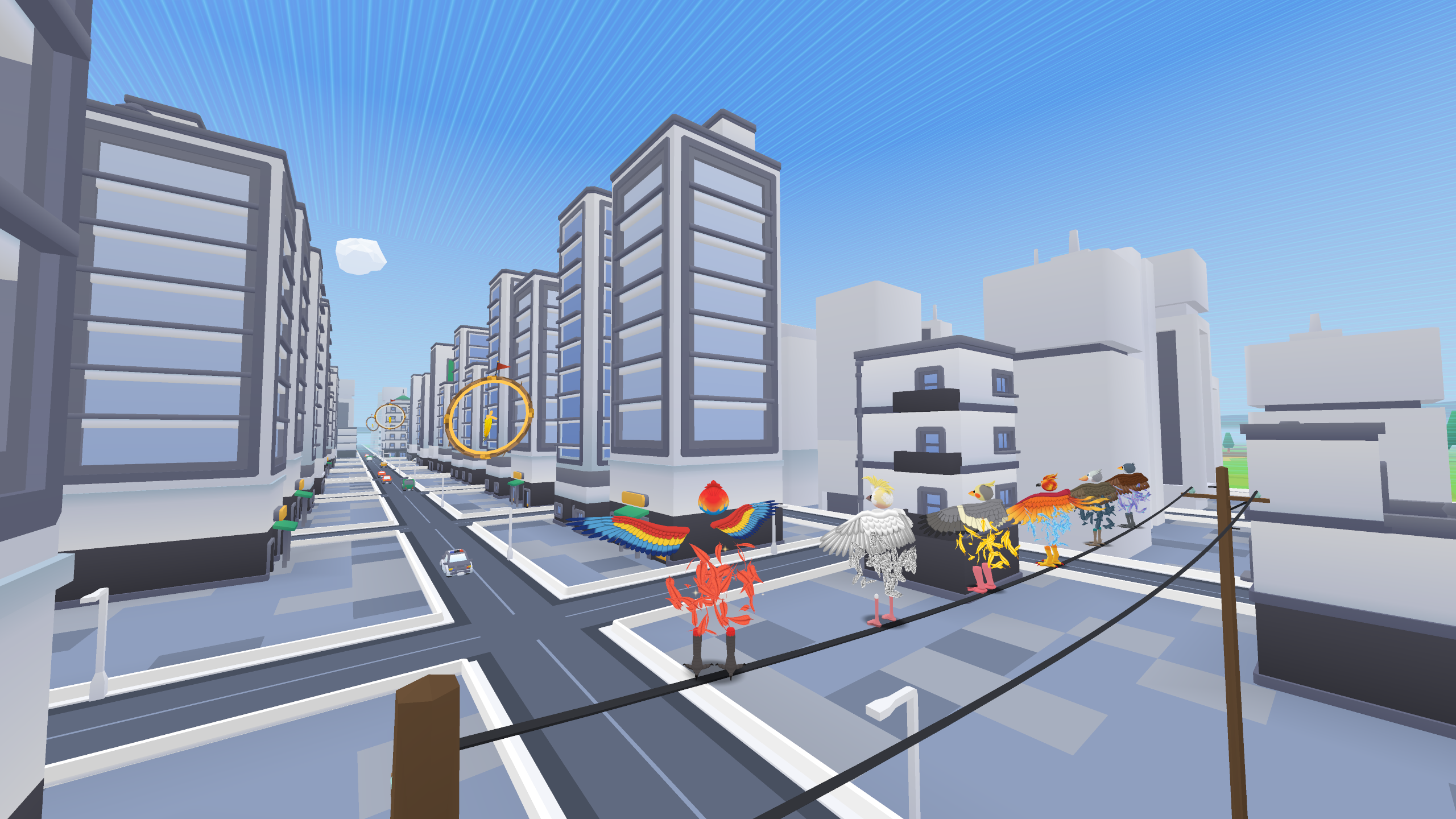
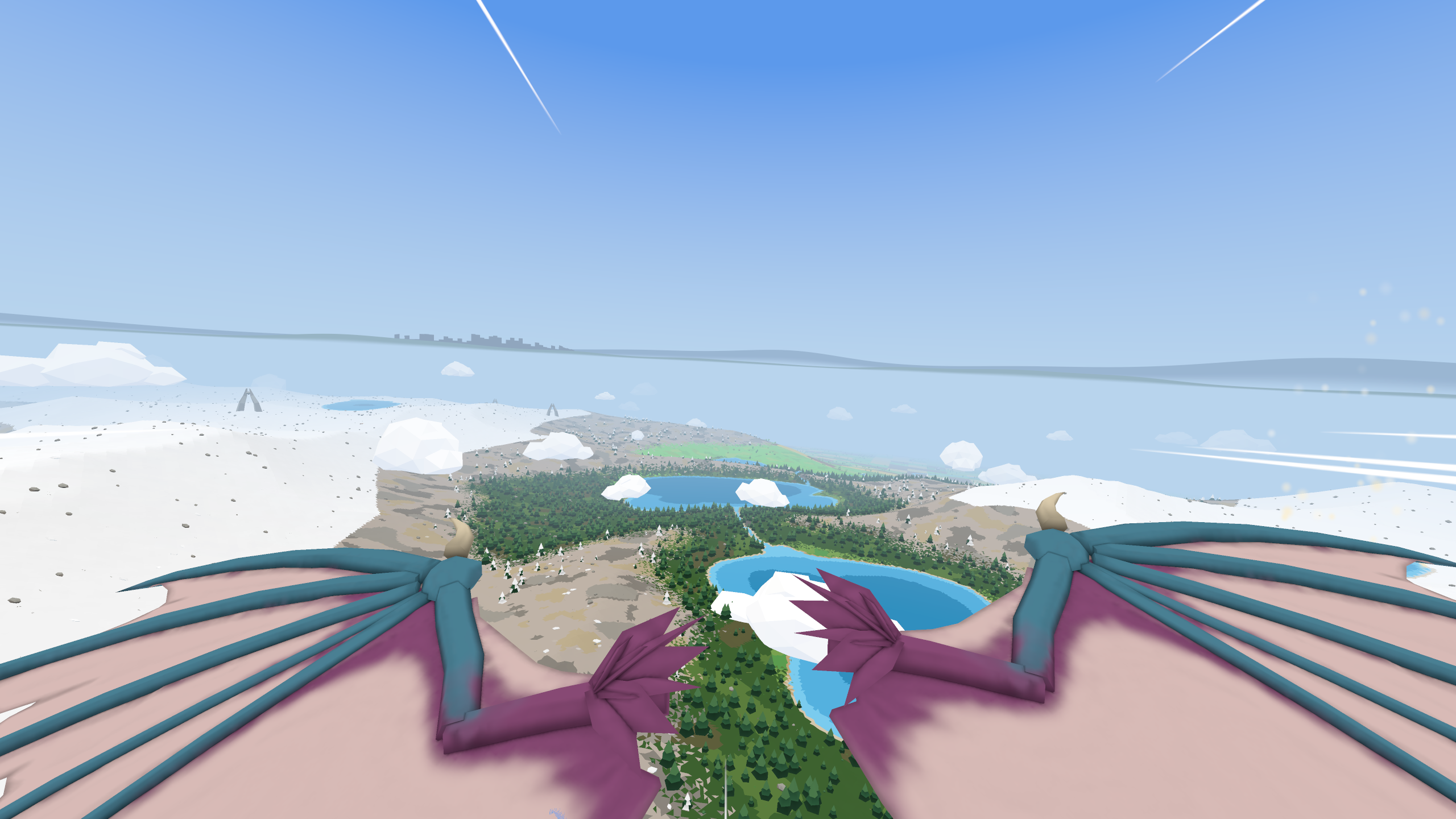
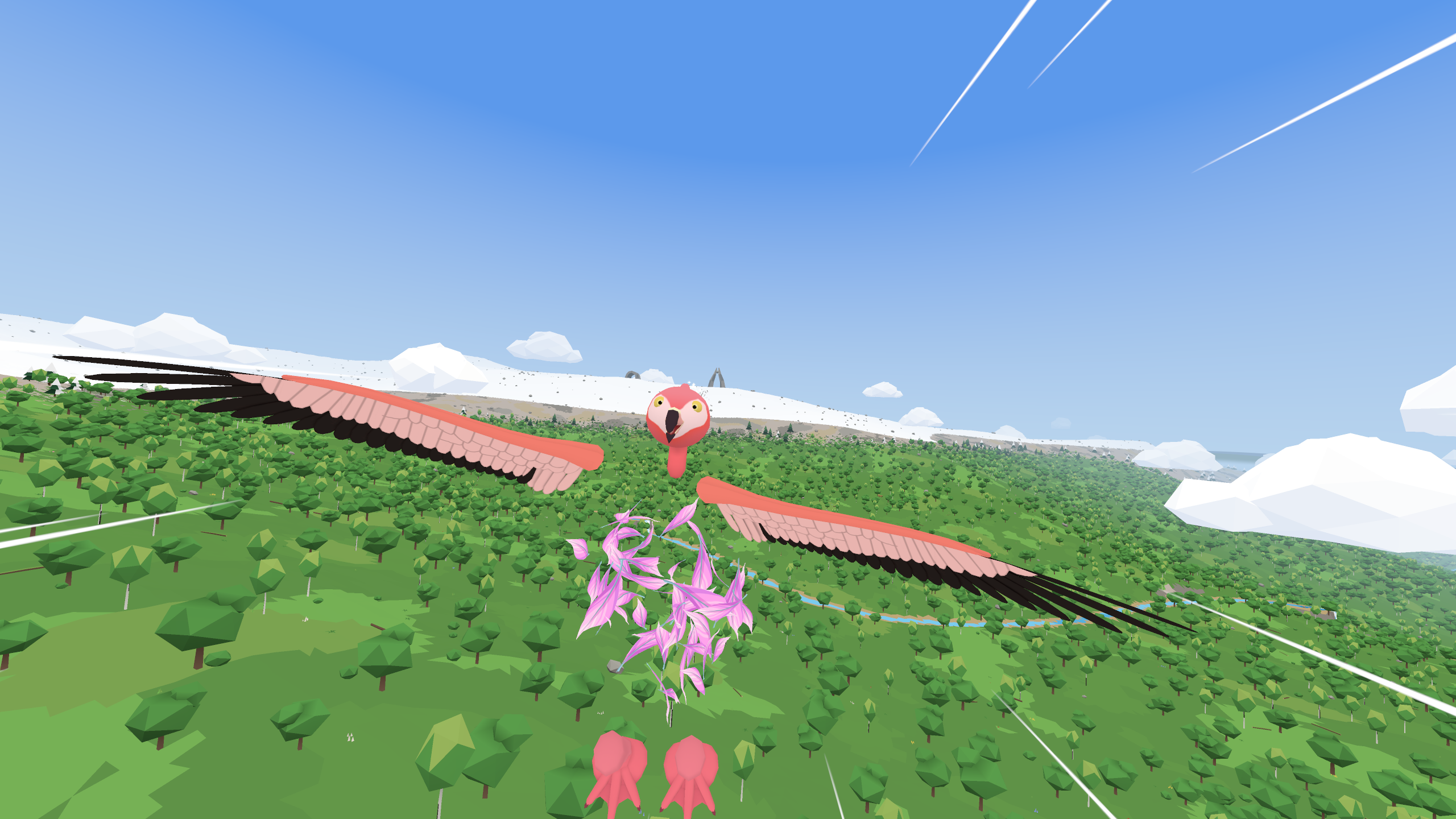
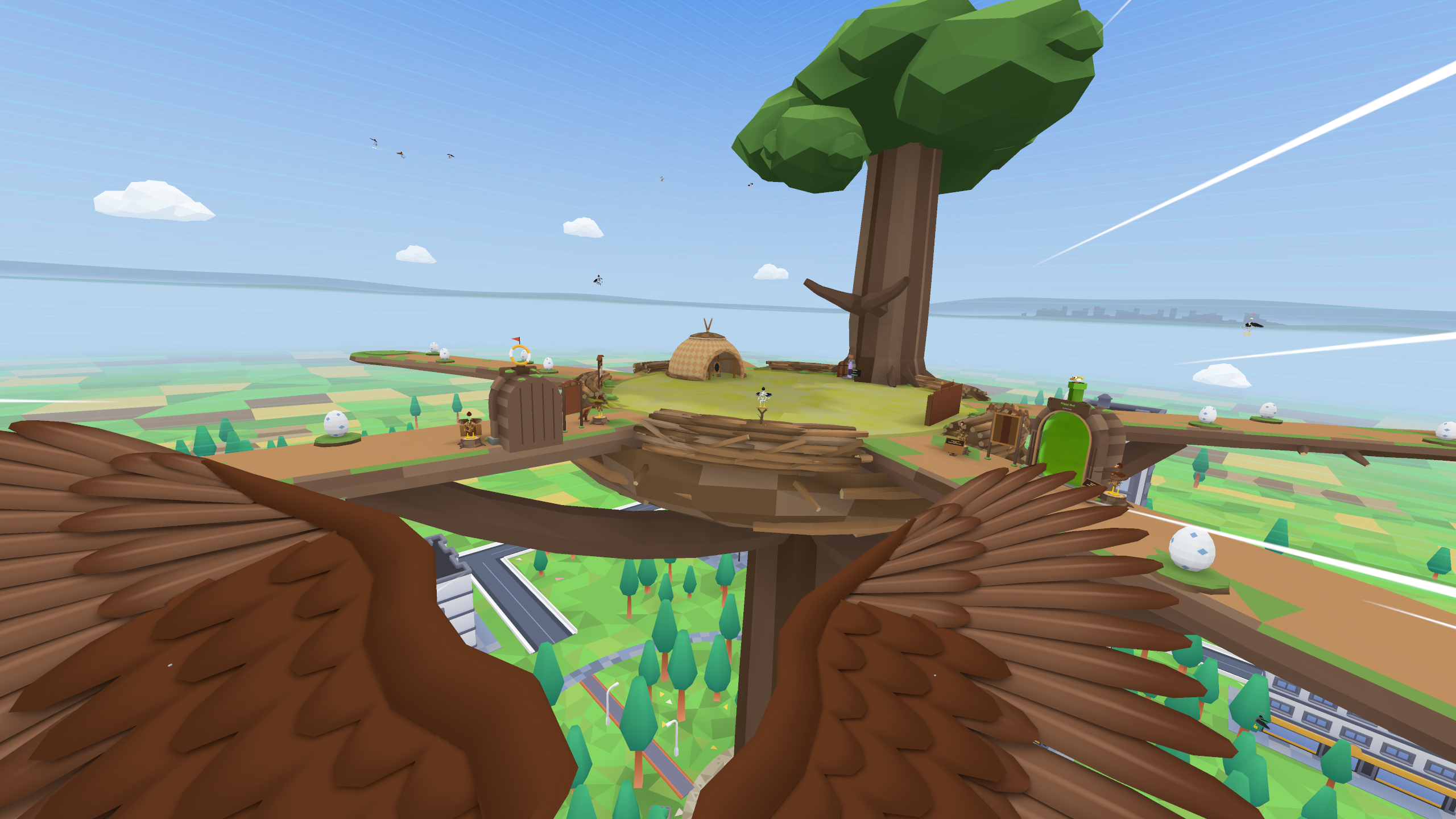
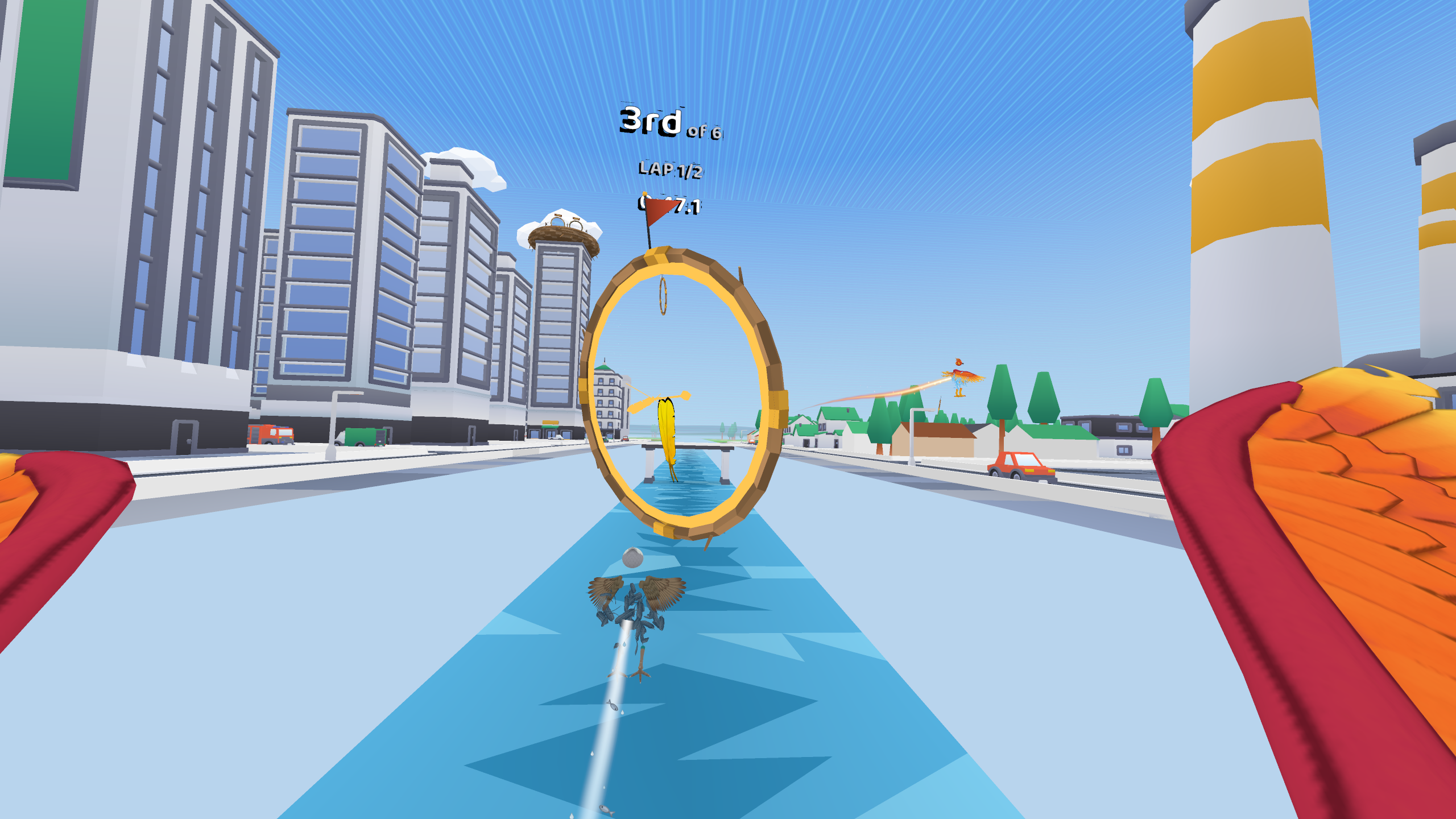
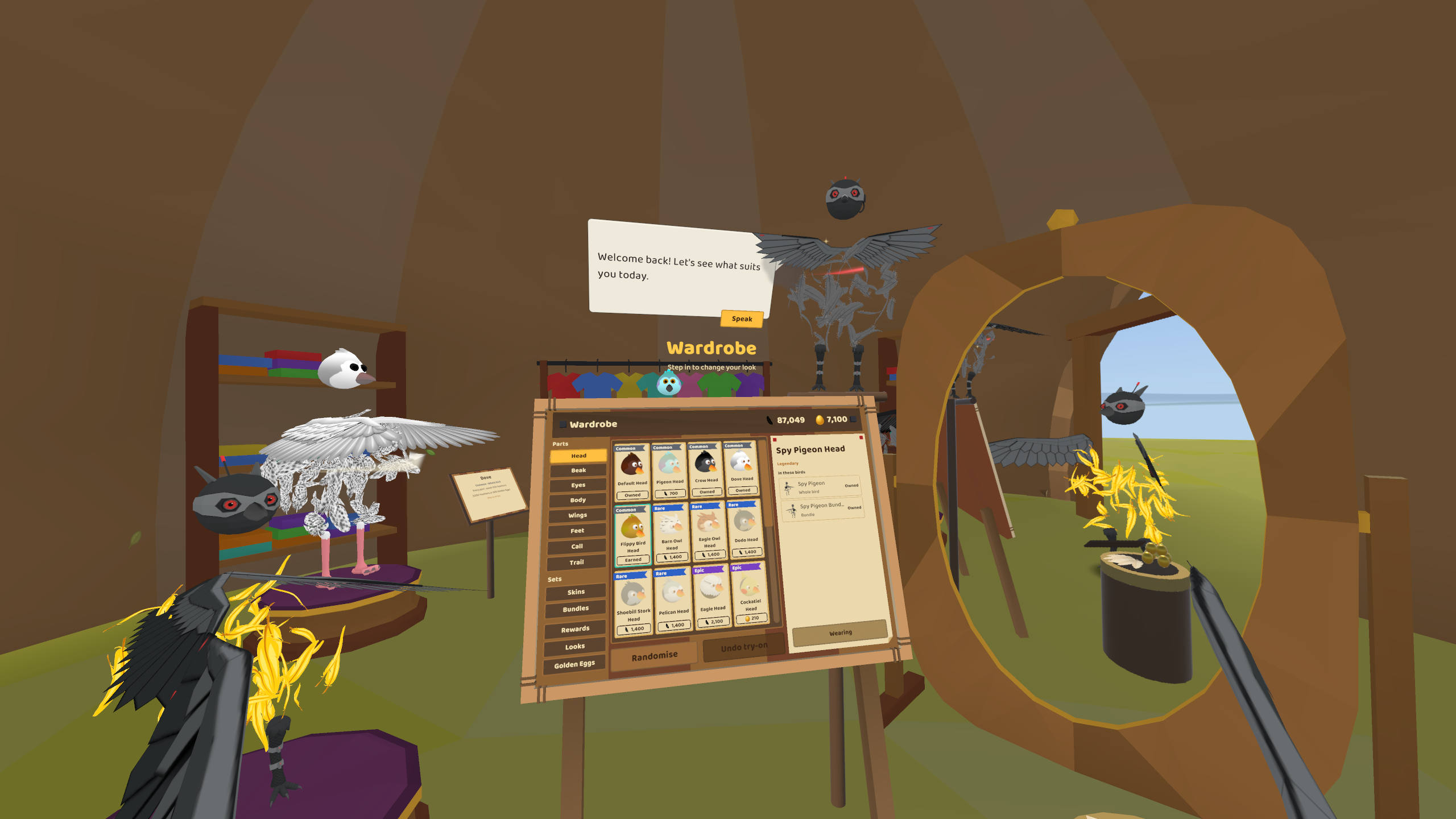
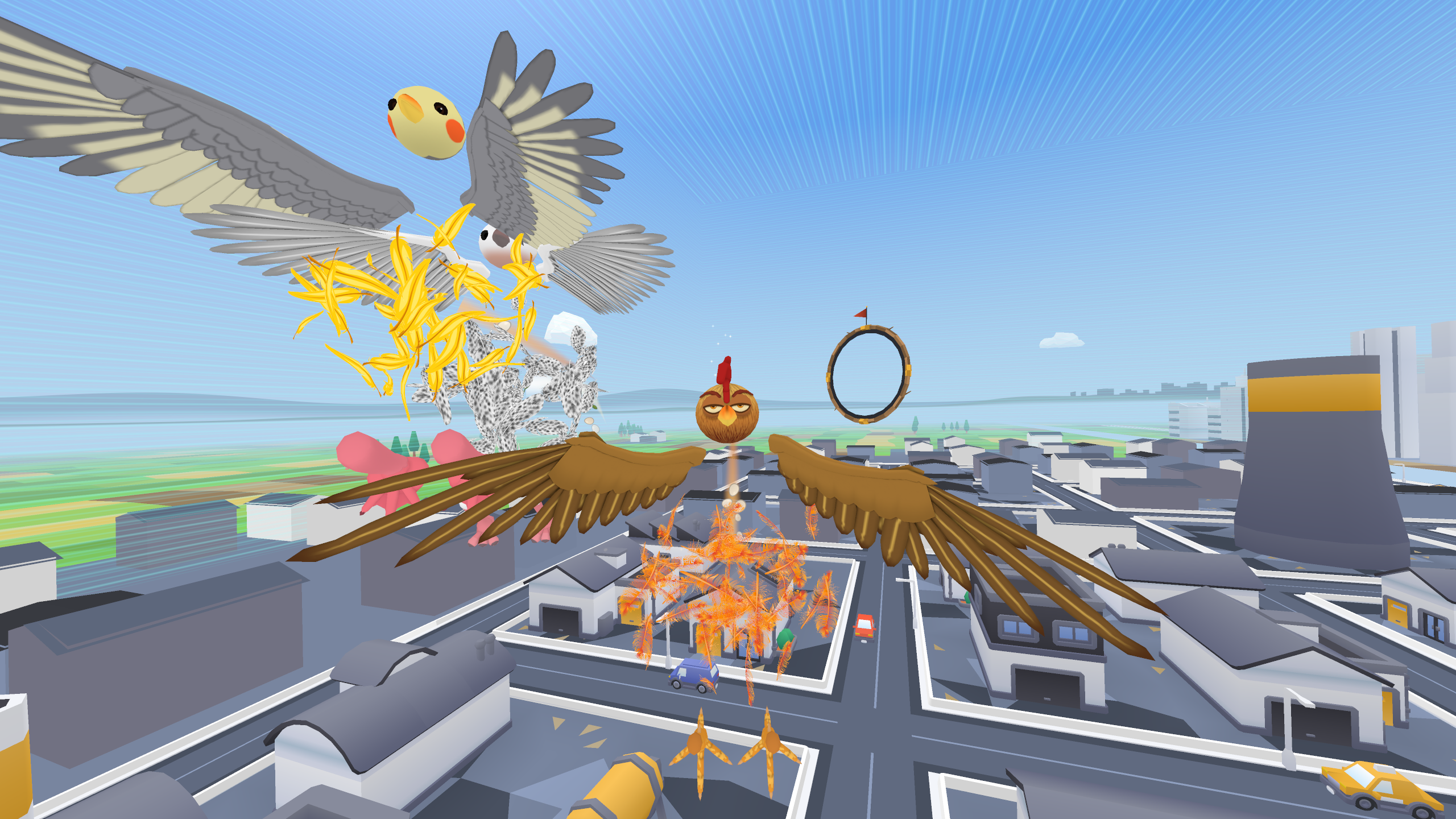
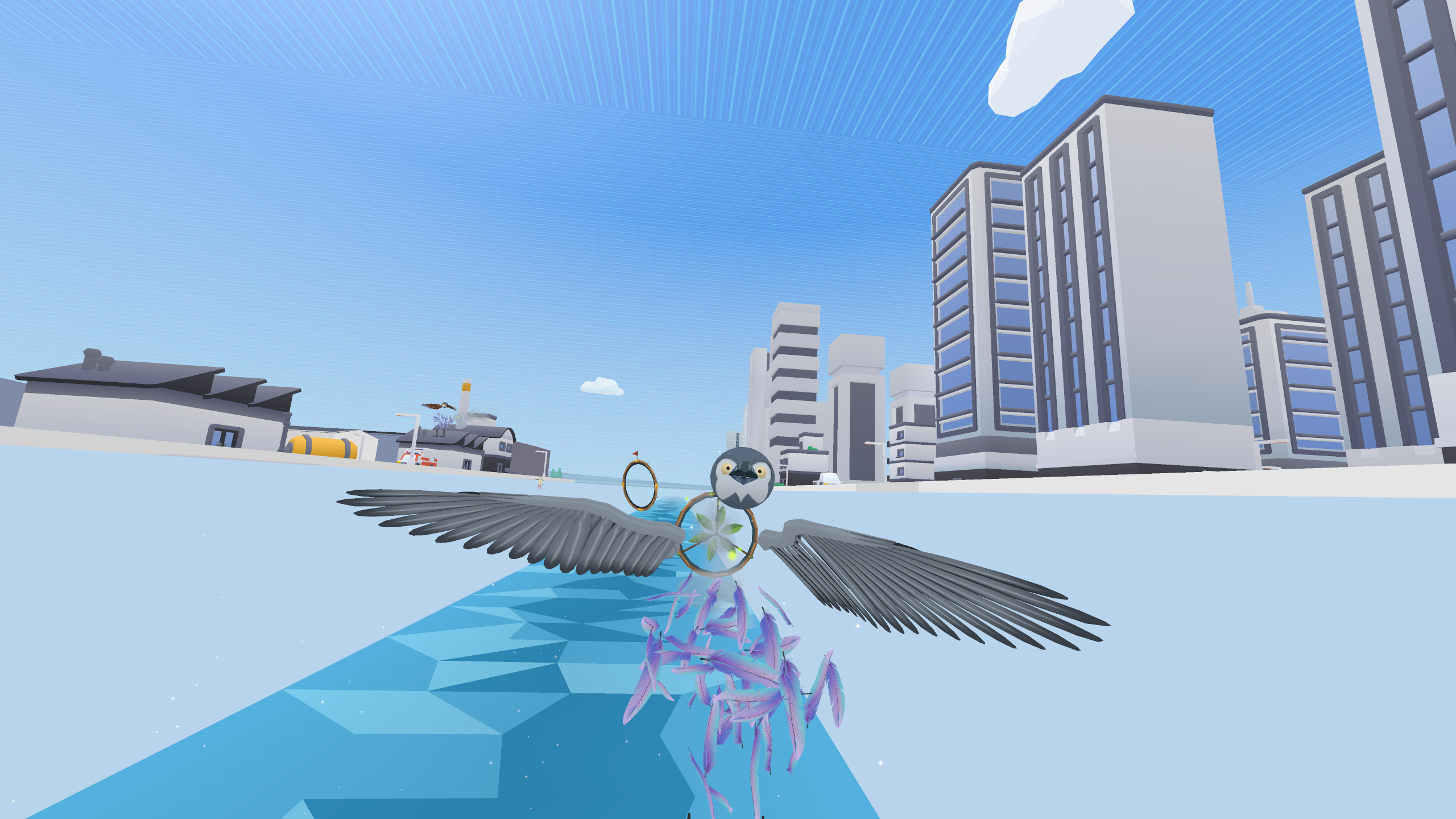
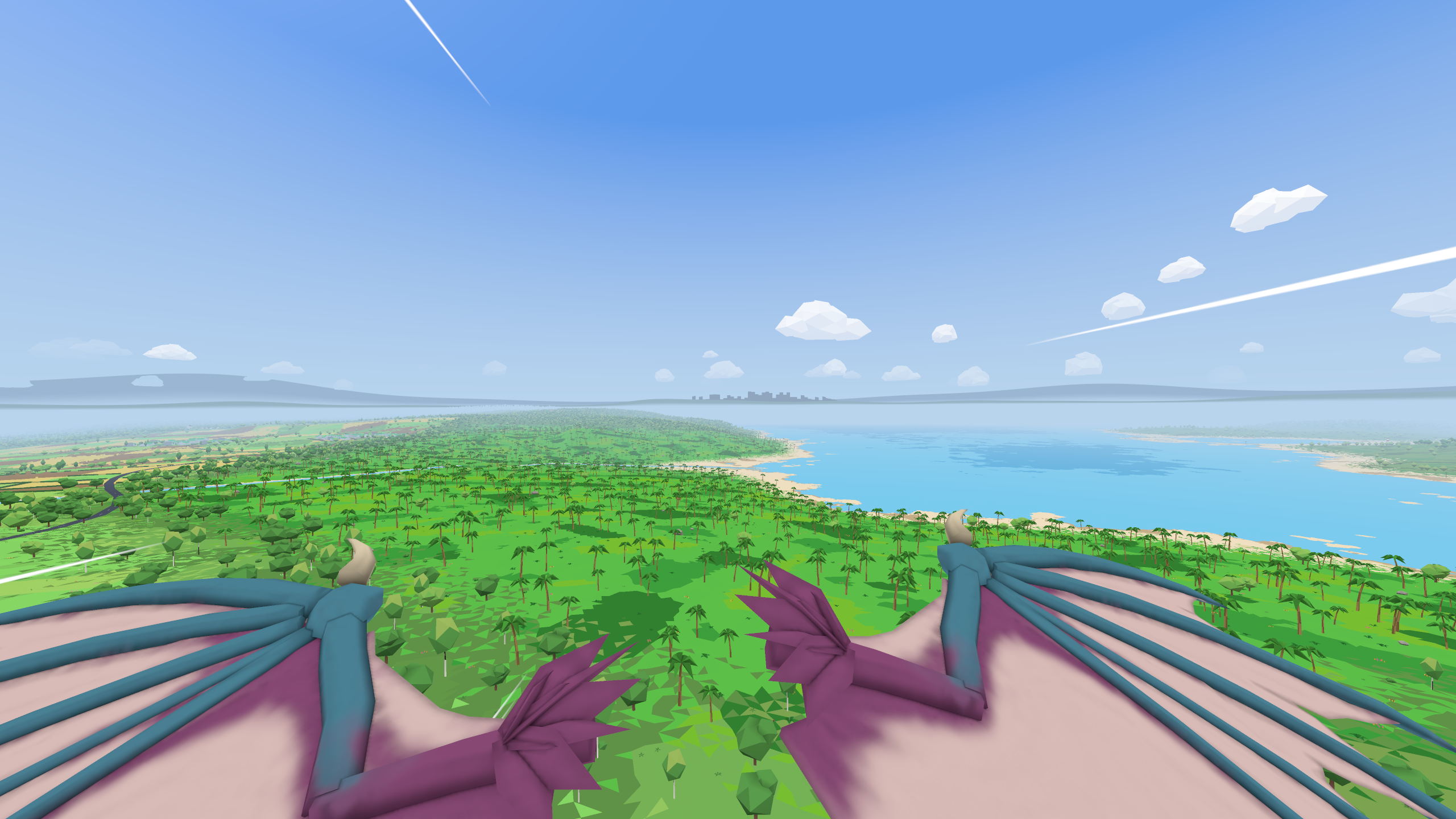
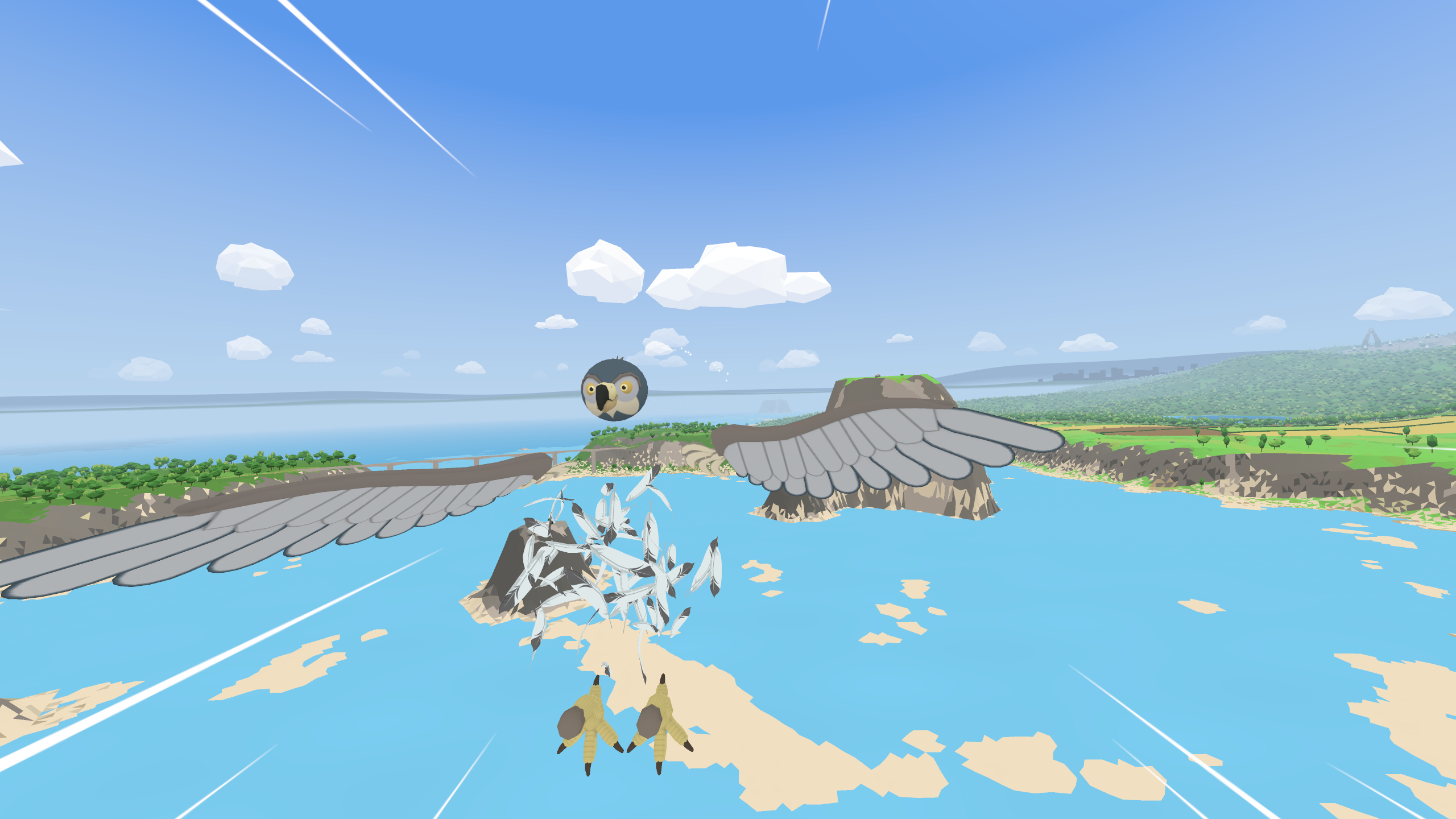
Let's Flock! is a social VR game where your arms are your wings. Flap to climb, hold your arms wide to float, tuck them in to go fast and point your hands forward to dive. You meet other birds in the Great Nest, a giant nest high above a city, and talk with proximity voice. Portals on its branches lead to the "Ring Race", "Flippy Bird" and "Procedural World" gamemodes. You build your own bird from heads, beaks, eyes, wings and calls, and you can start a poop fight outside the safe zone.
The whole game is playable with bare hands. Controllers are optional.
There is also no HUD. In VR, a floating number costs you whatever you were looking at, so everything lives in the world:
- Health is your bird's feather body, which sheds as you're hit, while your vision reddens at the edges.
- Boost is the speed lines, which thin out as it drains.
- The kill feed is a gossiping magpie on a post.
- The shop tutorial is a shopkeeper bird that talks, nods and shakes its head.
- The friends list is the Flock Tree: a glowing ring per friend. Fly through one to join them.
What's new for this competition
Let's Flock! is an existing project although it has never released to the public. During the competition window I added:
- Hands-only play, end to end: every control now works without controllers.
- Perch Hop: a pinch-to-aim hop that replaces the thumbstick for walking and turning.
- A rebuilt flight model: your arm posture now shapes how you fly.
- The Great Nest: a new social hub.
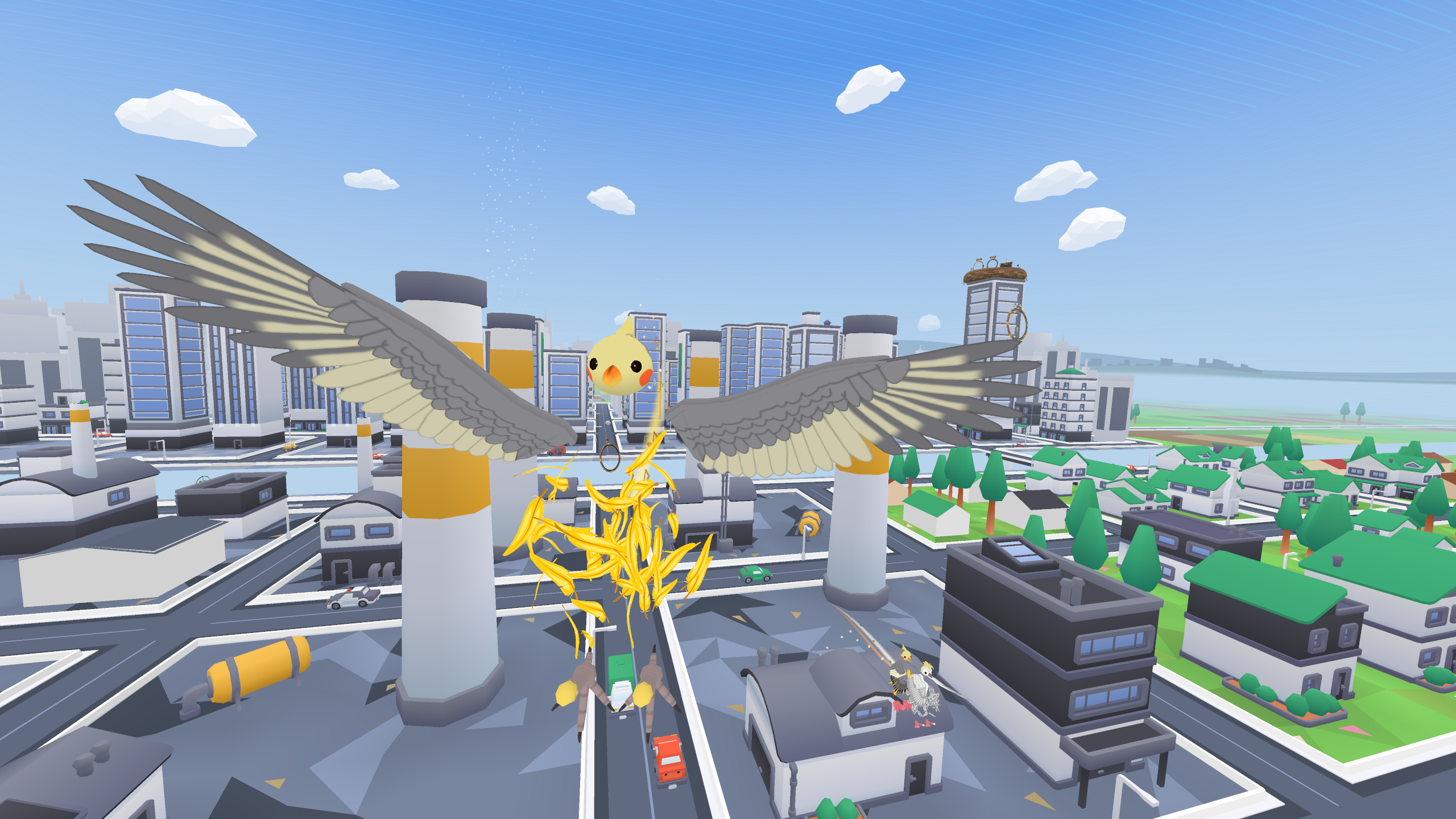
- Ring Race: a multiplayer race through rings over a rooftop city.
- Friends and achievements: the Flock Tree, friends-only rooms and a Trophy Shelf.
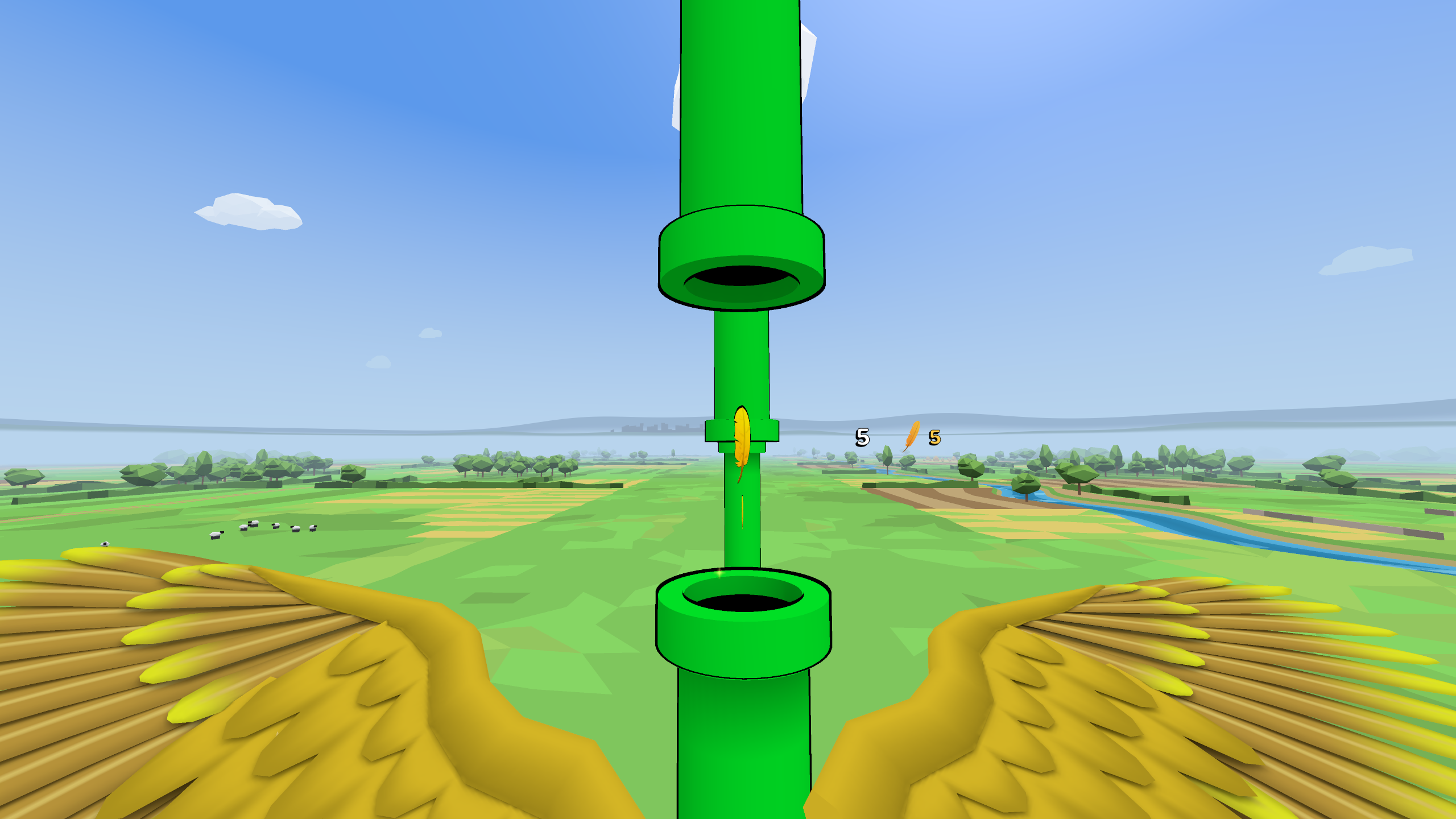
- A new look for flippy bird.
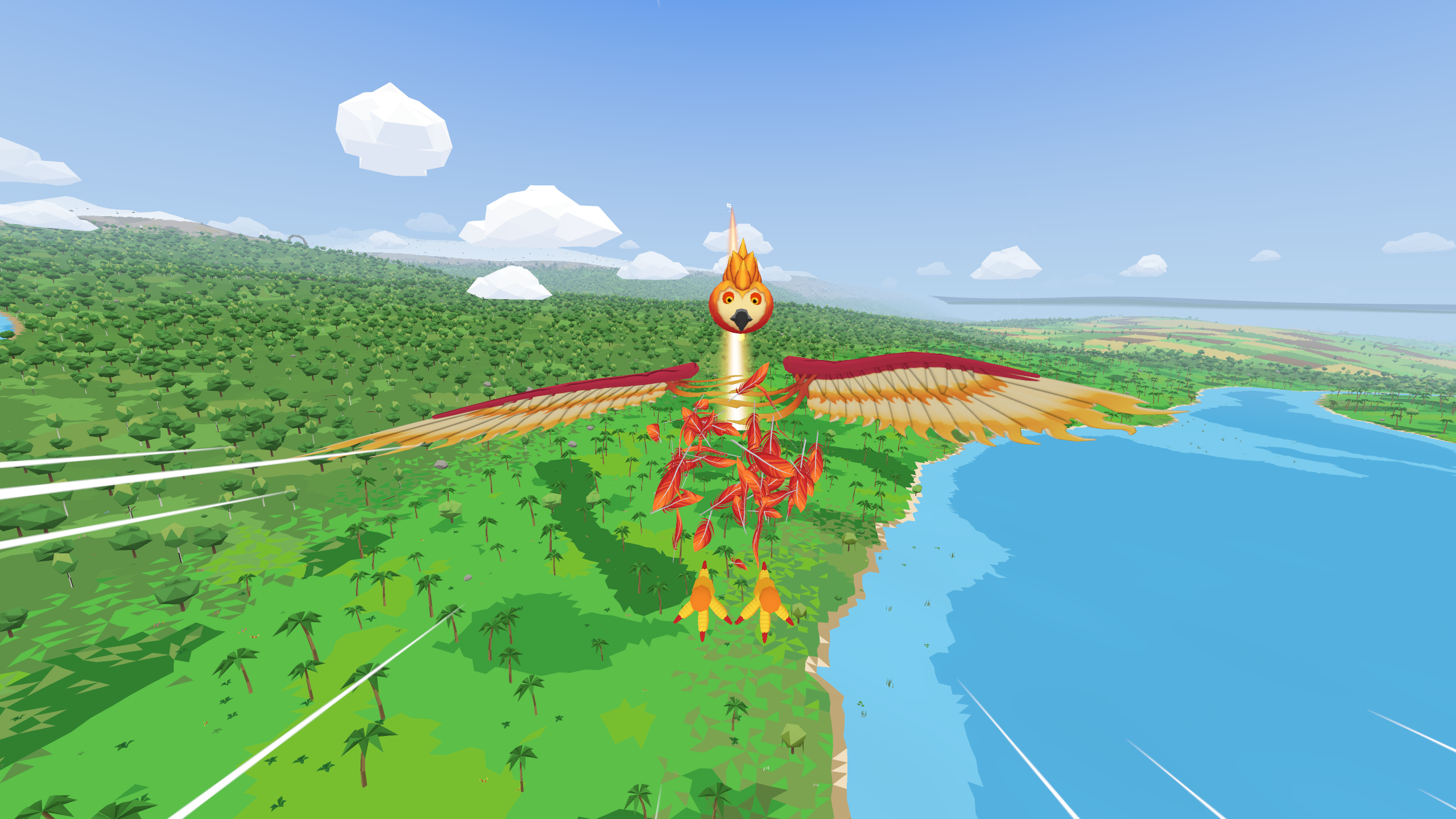
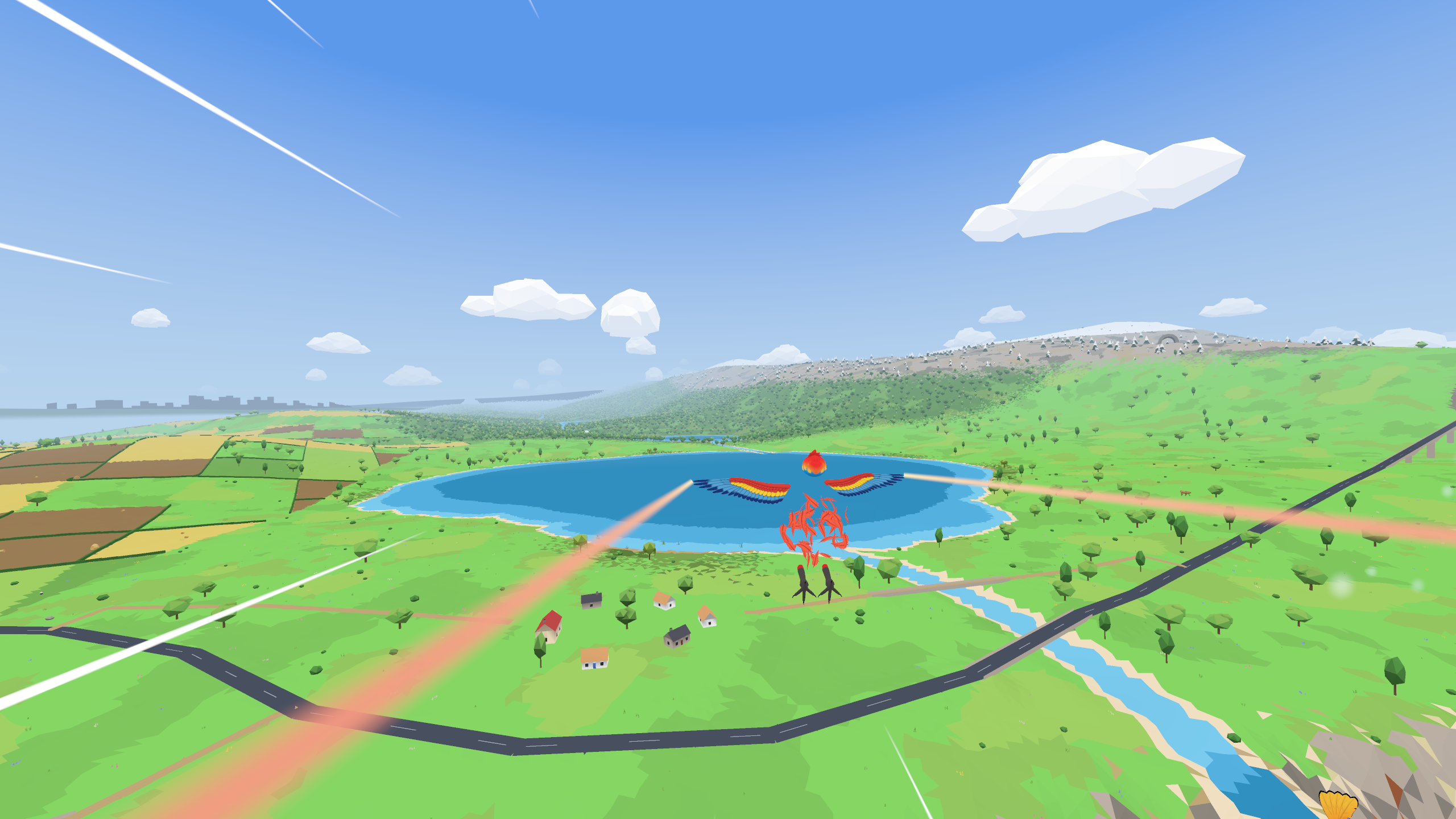
- A new procedural world gamemode: That uses seeds like minecraft to generate completly unique enviornments.
- plus player Report and Block system.
How I built it
I built Let's Flock! alone in Unity 6.2. I made the first prototype by hand and have since used Claude Code to polish the code, create tools and create low poly 3D models from my concepts.
- Hands: OpenXR and XR Hands, with Meta Hand Tracking Aim and Fast Motion Mode. Every pinch passes one shared check, then feeds a small virtual input device, so a new hand control is usually one more input binding.
- Multiplayer: Photon Fusion 2 in Shared mode, with Photon Voice 2 for positional voice.
- Backend: PlayFab, plus my own Azure Functions, which verify Meta sign-in and work out rewards on the server.
- Platform: Meta's Platform SDK for friends, Group Presence, leaderboards, achievements, in-app purchases and reporting.
- Art: low-poly unlit models on one shared palette, made in Blender and with Python generators, alongside Kenney kits.
The no-HUD rule stays cheap by networking almost nothing new. Each headset reads a value that's already shared, like health, and draws the effect locally. The feather body is about 40 to 80 feathers in one draw call. In the hub and Ring Race, the game holds a solid 72fps on Quest.
Challenges I ran into
Your hands are your wings. A hand moving down fast is a flap, so reaching for a shop item could launch you off the ground. Anything you reach for now holds that wing still. Hand tracking also glitches: a hand the cameras lose freezes, then jumps to a new spot, and that jump can look like a flap. The game has to tell the two apart.
Walking with no thumbstick. Arms were already taken by flying, so I built Perch Hop. You pinch, aim an arc at the ground, and let go. The arc snaps gold to stations, and other birds see a puff of your feathers where you left and landed.
Flight is a feeling. I rebuilt flight over six rounds of test flights in a headset, retuning from how each flight felt, because numbers alone couldn't say whether it was fun.
Bots in a game with no server. In Shared mode, a bot belongs to the human hosting it. When a host leaves, their bots vanish too, so the next host restores each one in place, in the same look, still in the race.
A sky the size of a city on a mobile chip. On Quest's 24-bit depth buffer, with near plane \( n \), one depth step at distance \( z \) is about:
$$\Delta z \approx \frac{z^2}{n \cdot 2^{24}}$$
With \( n = 0.01 \) m, that's about 6 cm at 100 m. Flat layers a few centimetres apart flicker when you look down from the nest, so the world's layers are stitched together or offset instead.
What I learned
- A rule like "no HUD" makes design better. Each time a menu was the easy answer, the world got a new idea instead, like the gossip magpie.
- Testing in a headset beats testing on paper, especially for flight.
- I started Blender from zero during this project, and learned networking and server code as I went.
What's next
Free Early Access on Meta Quest is planned for 10 December 2026. Every empty portal slot on the nest's branches holds an egg: that's where the next game modes will hatch.


