
Inspiration
Scams rarely succeed because the technology is sophisticated. They succeed because they reach people at the right moment, create urgency, fear, or trust, and push them into making a decision before they have time to question it.
That insight inspired Lethi.
We wanted to build something that goes beyond traditional scam detection. Instead of only telling users whether something is suspicious after the fact, Lethi is designed to intervene at the moment a risky situation is happening.
The name comes from Aletheia, the ancient Greek concept of truth as something that is uncovered or revealed. That idea became central to Lethi: helping people distinguish what is real from what is trying to manipulate them.
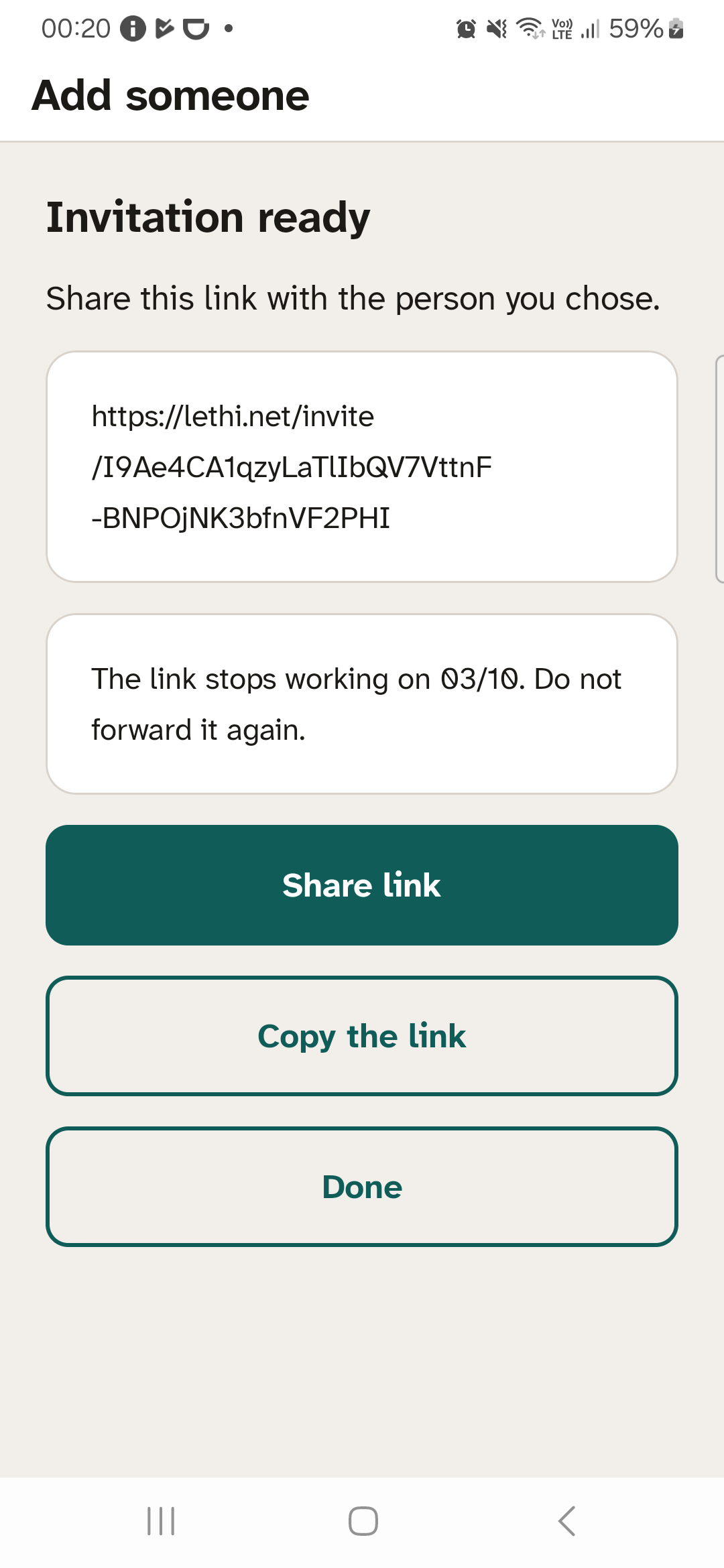
We also wanted protection to be social. Many people already call a family member or friend when something feels suspicious, so we turned that behavior into a core feature through a Trusted Contacts network.
What it does
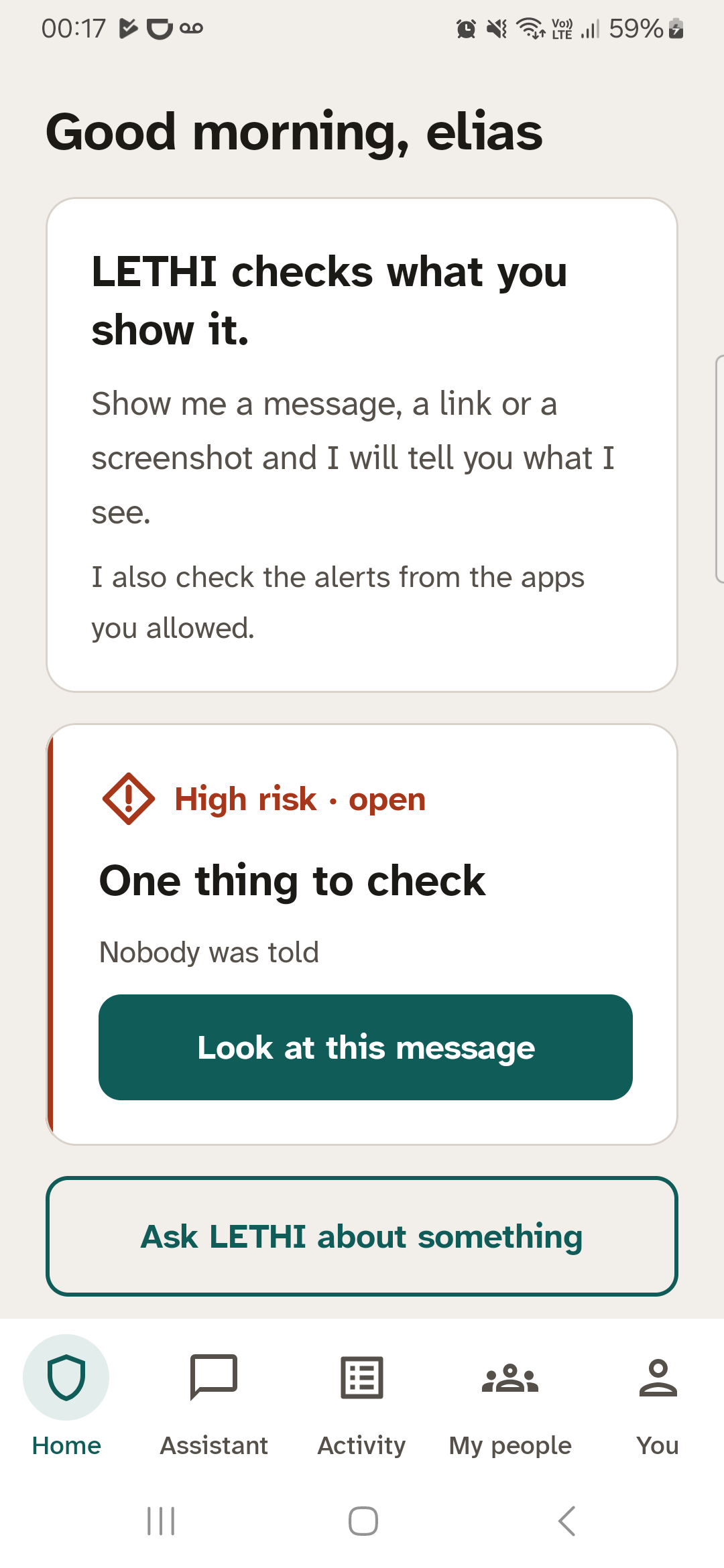
Lethi is a real-time anti-scam protection platform designed to help people recognize and stop social-engineering scams before they take harmful actions.
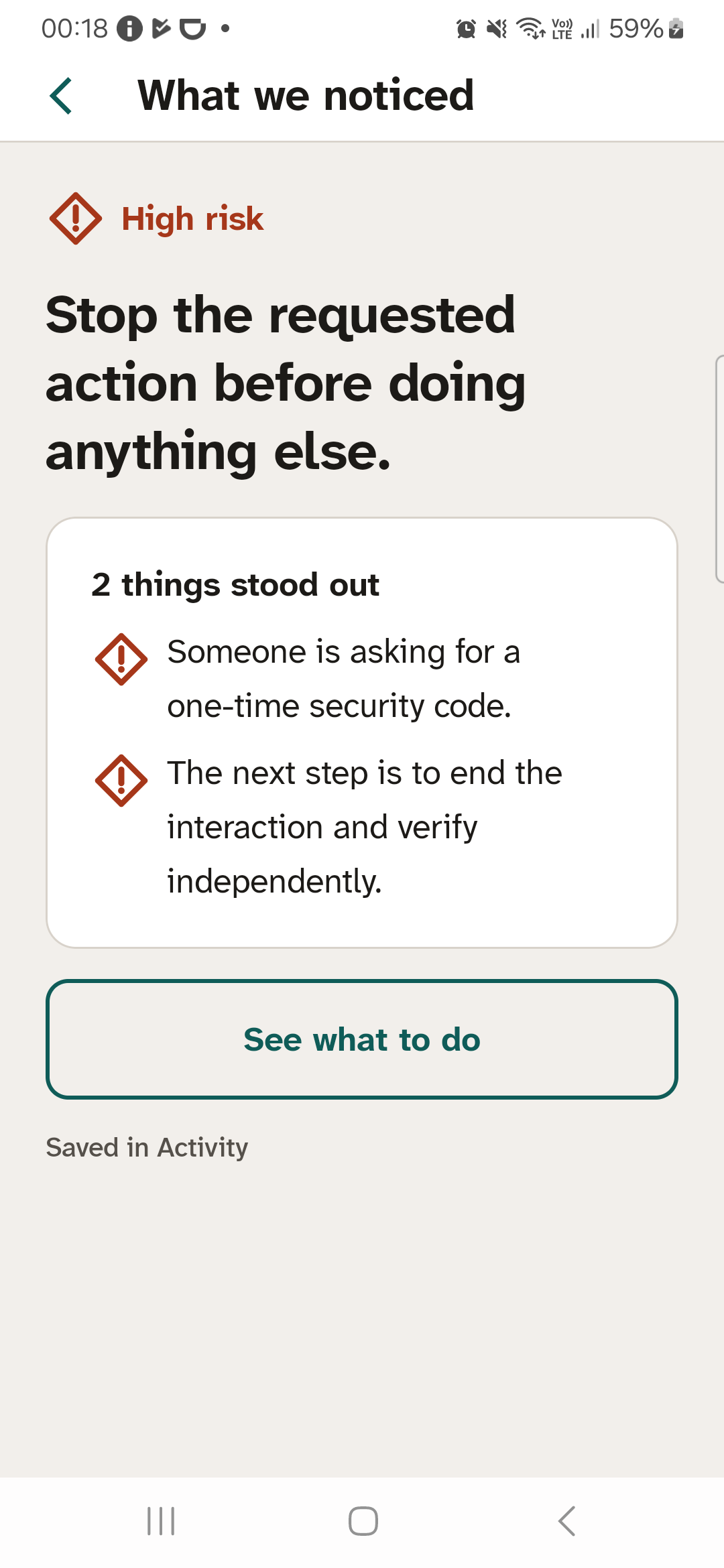
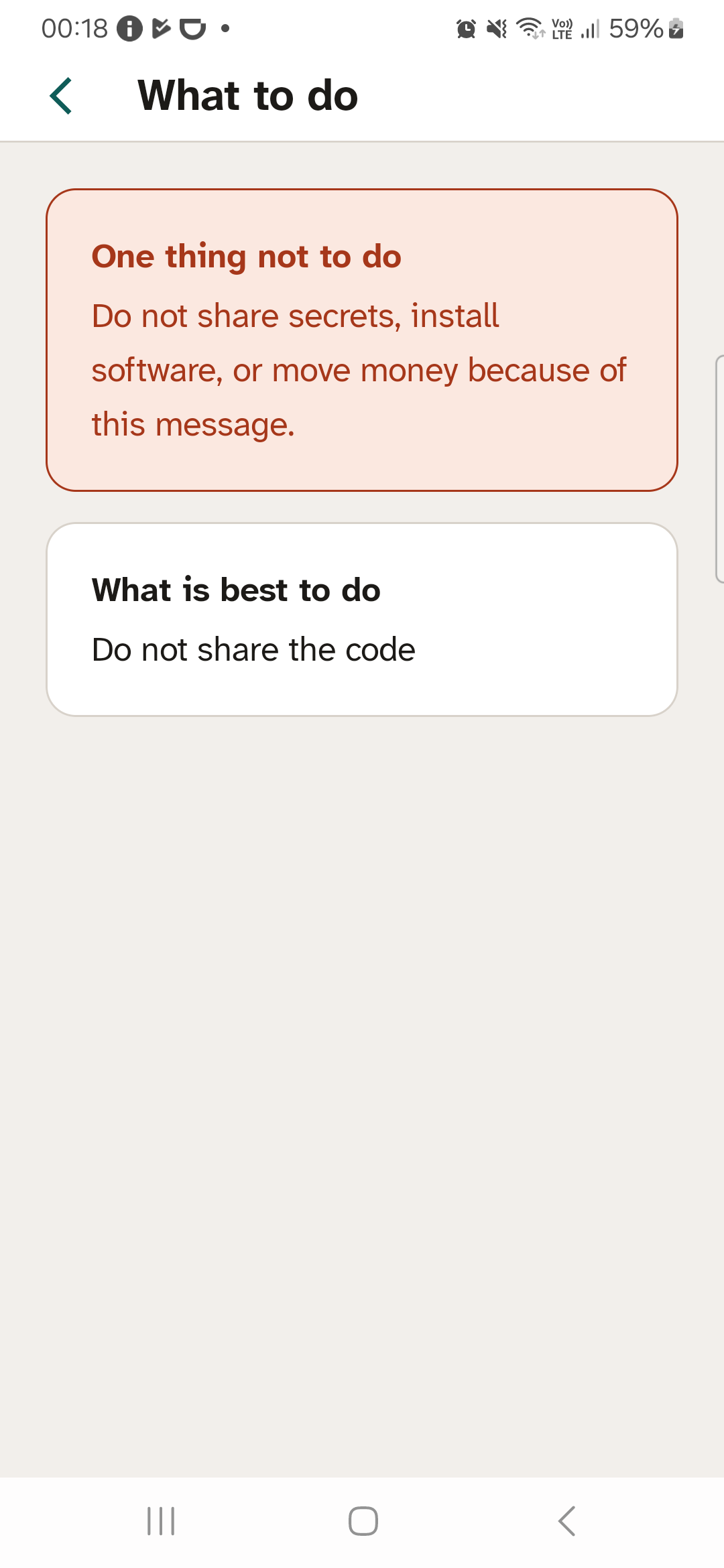
On Android, Lethi can monitor notifications from apps selected by the user and analyze suspicious messages in the background. When a potentially dangerous situation is detected, Lethi can immediately display a warning over the current screen so the user sees the risk before clicking a malicious link, sending money, sharing credentials, or following suspicious instructions.
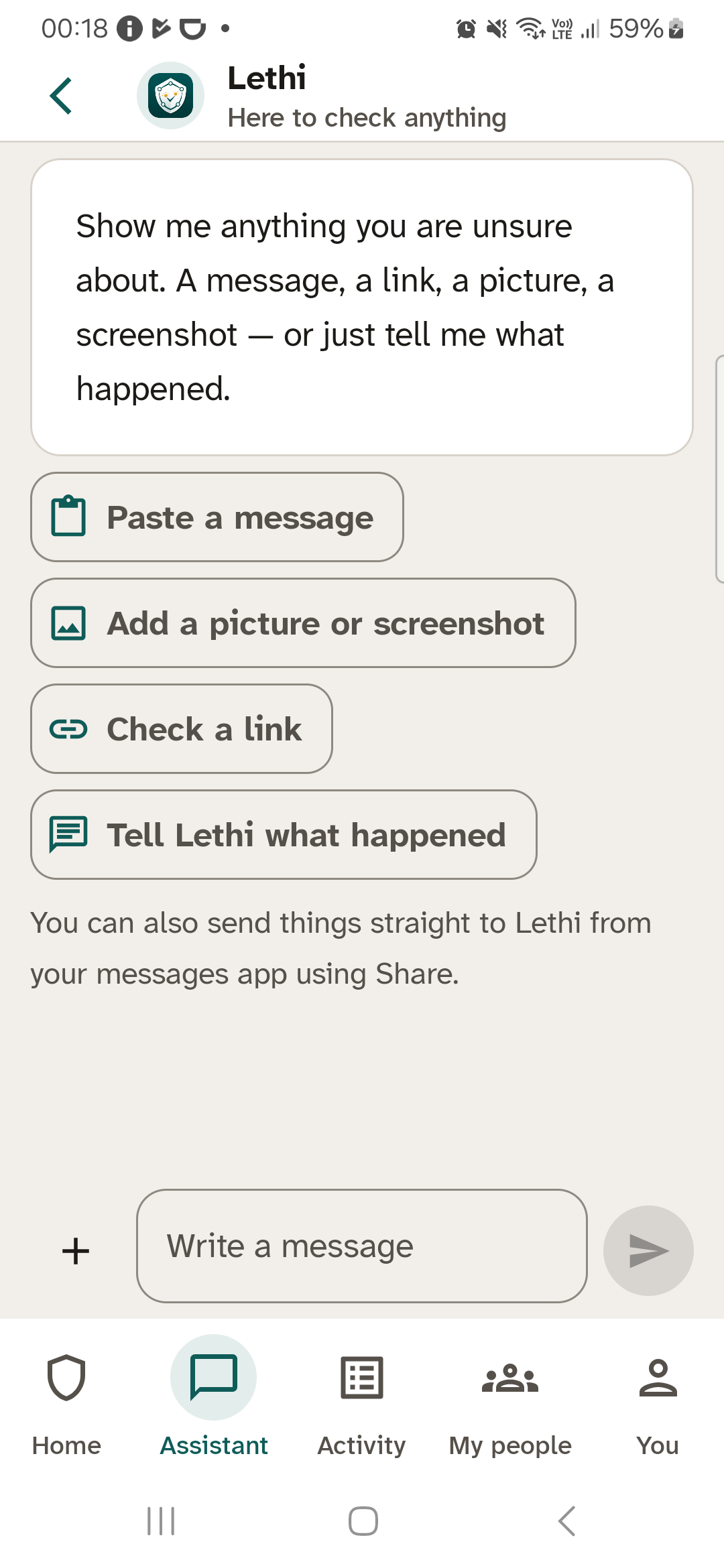
Users can also manually analyze:
- Messages and text
- Links
- Screenshots and images
- Audio
- Emails or other suspicious content
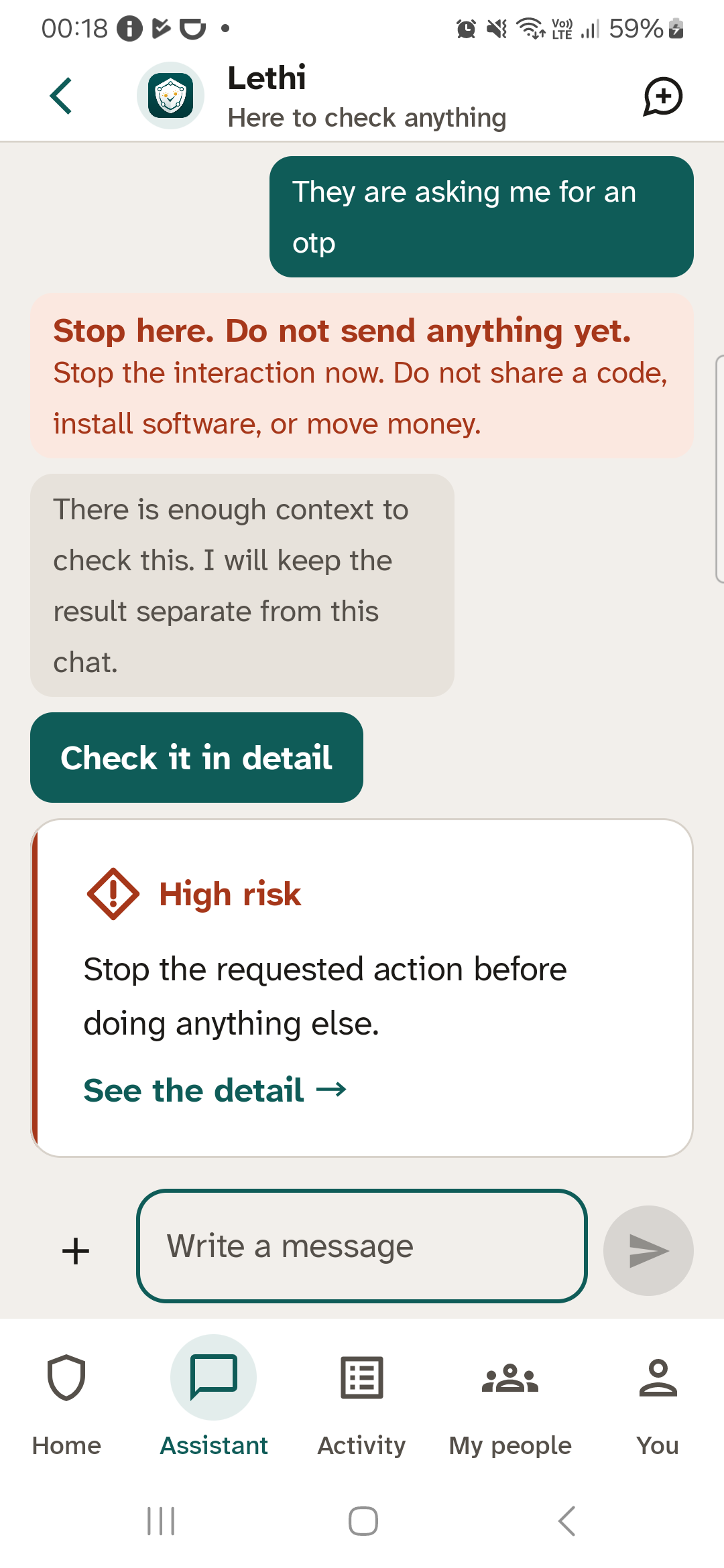
Lethi includes an AI-powered assistant where users can describe a situation, provide evidence, and ask whether something could be a scam.
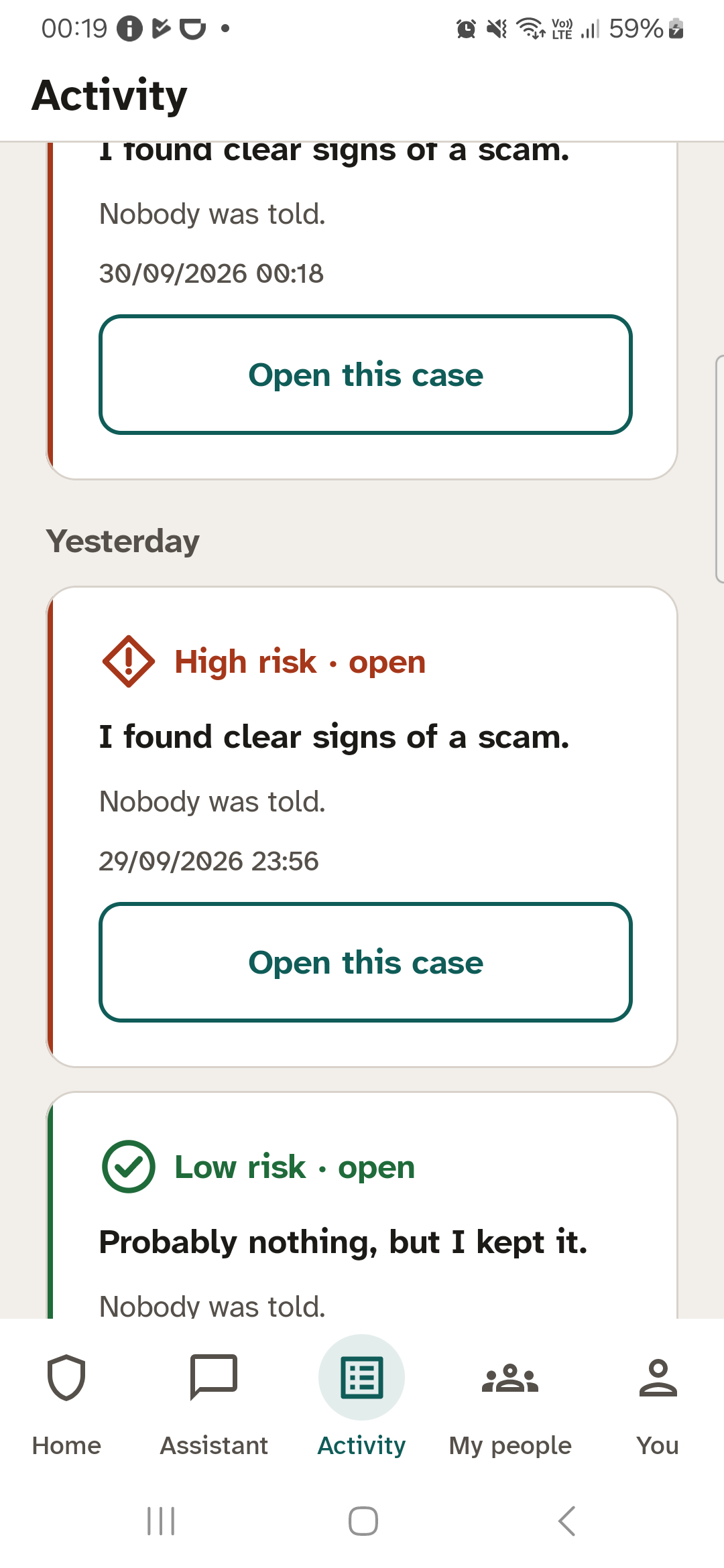
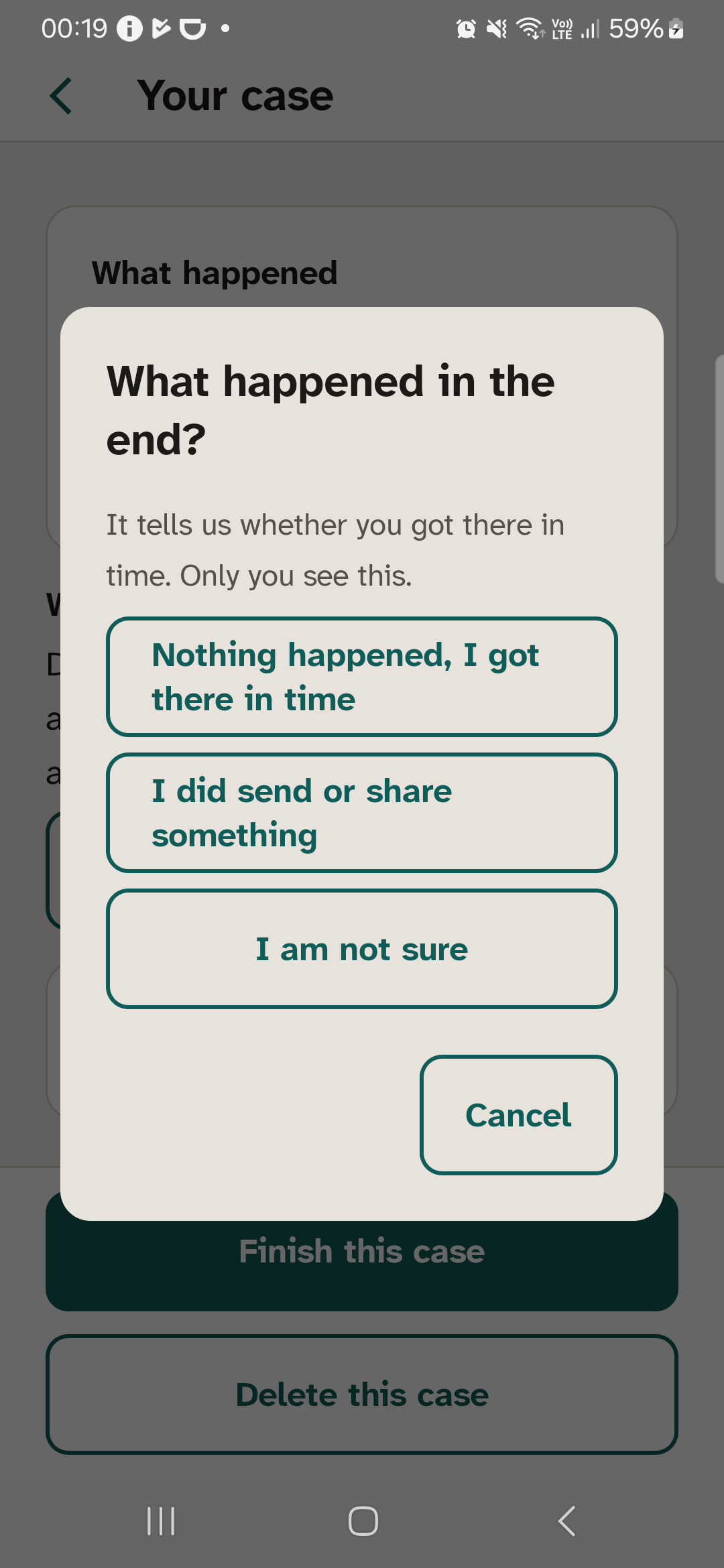
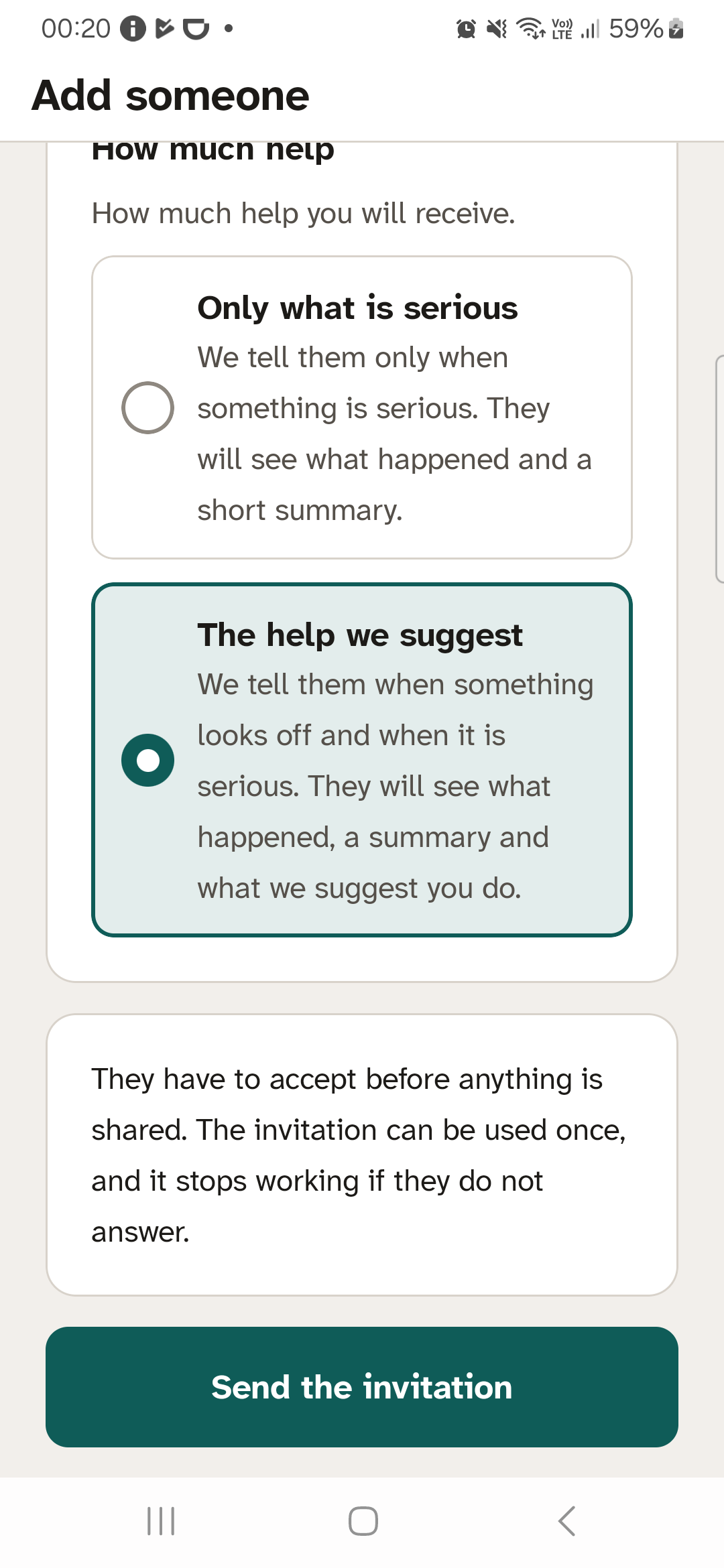
One of its most important features is the Trusted Contacts network. A user can connect with someone they trust, such as a family member or caregiver. When a serious risk is detected, that trusted person can also receive an alert, understand what is happening, and quickly contact the protected user.
The goal is not simply to classify content as safe or dangerous. It is to create a layer of protection around the user's decision-making moment.
How we built it
Lethi combines native mobile development, cloud infrastructure, AI analysis, and real-time security mechanisms.
The Android application is built natively using Kotlin and Jetpack Compose, following a modular architecture designed to separate the detection, analysis, user interface, and protection layers.
For real-time protection, we use Android's NotificationListenerService to process notifications from explicitly selected applications. Suspicious content can then be analyzed by our detection pipeline.
When a high-risk situation is identified, Lethi uses a foreground protection service and Android's overlay capabilities to display an immediate warning, even when the user is currently using another application.
For the backend and account infrastructure, we use Firebase, including authentication, cloud services, notifications, and security mechanisms.
Our AI layer analyzes different types of evidence and conversational context to identify common social-engineering patterns such as urgency, impersonation, credential theft, suspicious payment requests, malicious links, and other manipulation techniques.
We also built the system around a relationship model between protected users and trusted contacts so alerts and risk events can be shared securely between them.
Challenges we ran into
One of the biggest challenges was building protection that works outside the application itself.
Mobile operating systems intentionally restrict what apps can observe and do in the background, so implementing real-time detection required carefully working within Android's notification access, foreground-service, overlay, battery, and privacy restrictions.
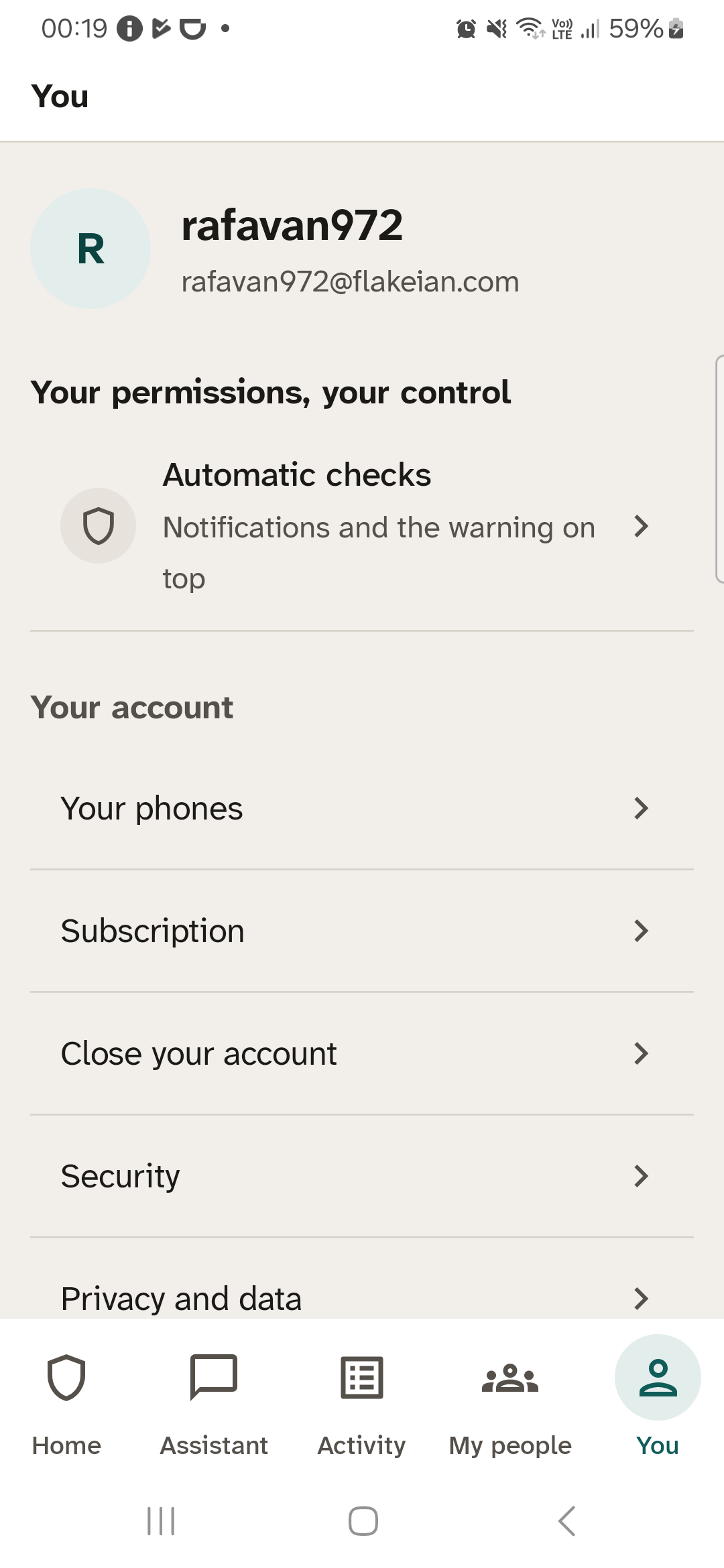
Another challenge was avoiding excessive intrusion. A security app cannot simply monitor everything. We had to design Lethi around explicit permissions, user-selected applications, limited data collection, and clear explanations of why each permission is necessary.
Scam detection itself was another difficult problem. Social-engineering attacks are highly contextual. A message saying "send me money urgently" could be completely legitimate in one situation and extremely suspicious in another. This pushed us toward contextual analysis instead of relying exclusively on keywords or static rules.
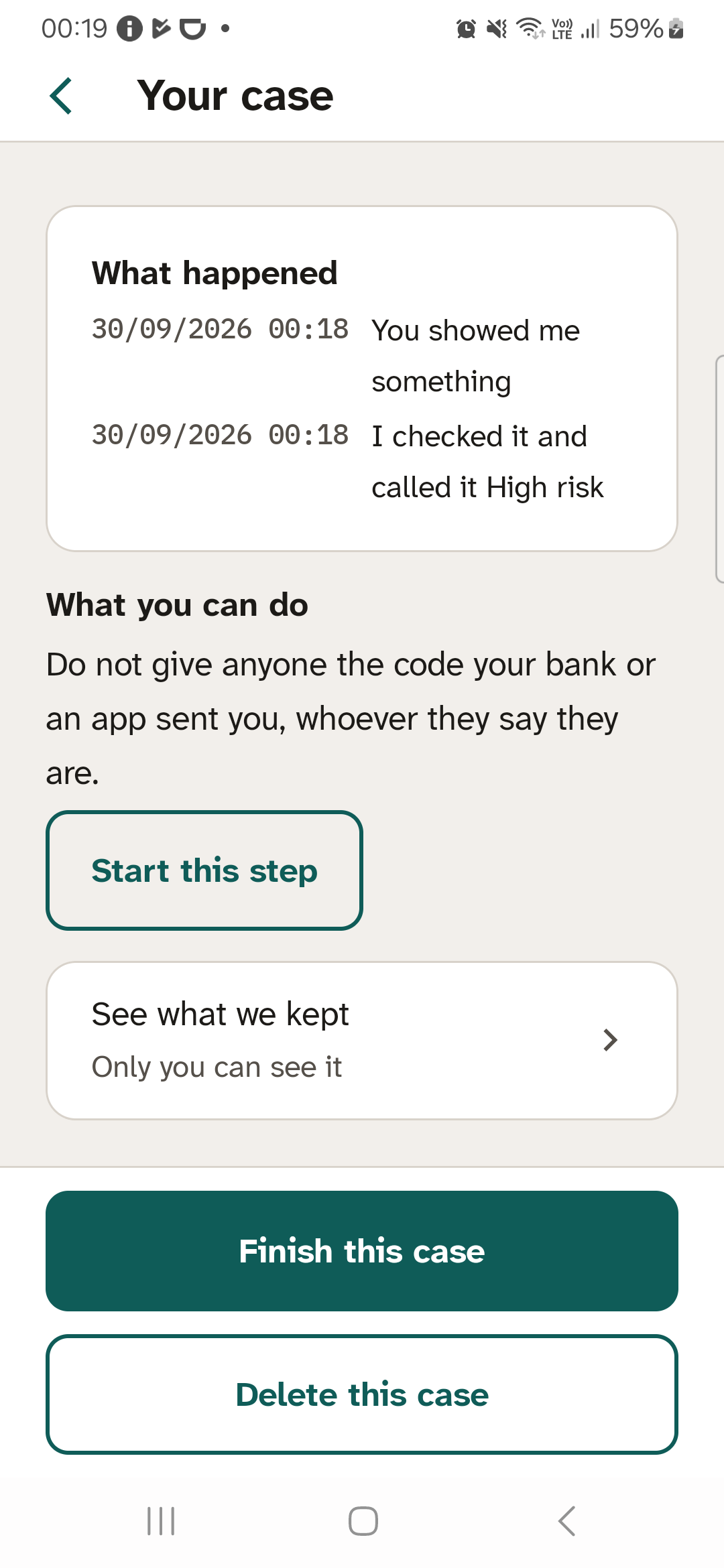
We also had to design for users who may not be technically experienced. Security information needs to be understandable immediately, especially during stressful situations. That meant simplifying warnings, reducing technical language, and making the next safe action obvious.
Finally, designing the trusted-contact system introduced additional challenges around privacy, invitations, permissions, alert escalation, and deciding exactly what information should be shared between users.
Accomplishments that we're proud of
We are particularly proud that Lethi evolved from a simple scam-detection idea into a more complete real-time intervention system.
Instead of waiting for users to manually check suspicious content, we built a system capable of detecting potential threats while users are interacting with other applications and warning them at the moment it matters most.
We are also proud of the Trusted Contacts concept. Scam prevention is usually designed as an individual experience, but in reality people often rely on family and friends when they are unsure about something. Lethi turns that existing behavior into part of the security architecture.
Another important accomplishment was designing a single experience that combines automated protection, manual analysis, AI assistance, evidence analysis, and human support without requiring users to understand how the underlying security systems work.
Most importantly, we built the product around a simple principle: detecting a scam is useful, but preventing the harmful decision is even more valuable.
What we learned
Building Lethi taught us that scam prevention is as much a human-behavior problem as it is a cybersecurity problem.
Technical indicators such as suspicious URLs, unusual domains, or known attack patterns are important, but many successful scams rely primarily on psychological techniques: urgency, authority, fear, scarcity, trust, and emotional manipulation.
We also learned that timing is critical. A warning delivered several minutes later may technically be correct but practically useless. Effective protection has to appear before the user completes the risky action.
Another major lesson was that security products require a careful balance between protection and privacy. More data can potentially improve detection, but collecting more information also increases risk and user distrust. Designing the minimum necessary access became an important principle for the project.
Finally, we learned that explaining risk clearly can be just as important as detecting it. Users should understand why something appears suspicious and what they can safely do next.
What's next for Lethi
Our next step is to make Lethi's protection increasingly contextual and proactive.
We want to improve the risk engine so it can combine multiple signals over time instead of evaluating every message independently. A conversation may look harmless one message at a time while clearly showing a scam pattern when viewed as a sequence.
We also plan to expand the Trusted Contacts system with better risk context, configurable alert levels, and easier communication between protected users and the people helping them.
Another major area of development is expanding protection beyond text by improving analysis of screenshots, documents, voice messages, calls, websites, and other evidence commonly used in scams.
We are also exploring privacy-preserving and on-device detection so more analysis can happen directly on the user's device with less information leaving it.
Long term, we want Lethi to become a real-time safety layer for digital interactions: something that quietly watches for manipulation, intervenes when necessary, and connects people with someone they trust when the situation becomes serious.
Built With
- android
- android-studio
- compose
- kotlin
- revenuecat
- typescript

Log in or sign up for Devpost to join the conversation.