-
-
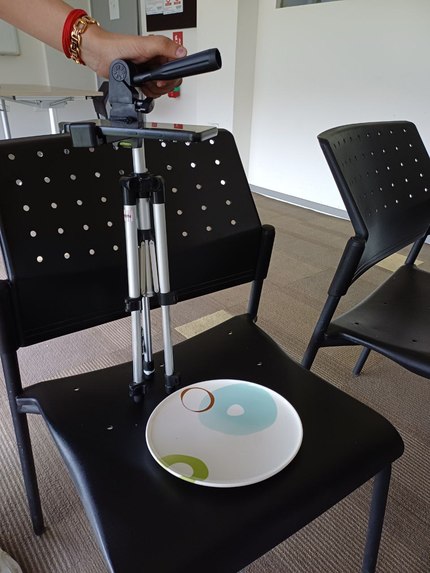
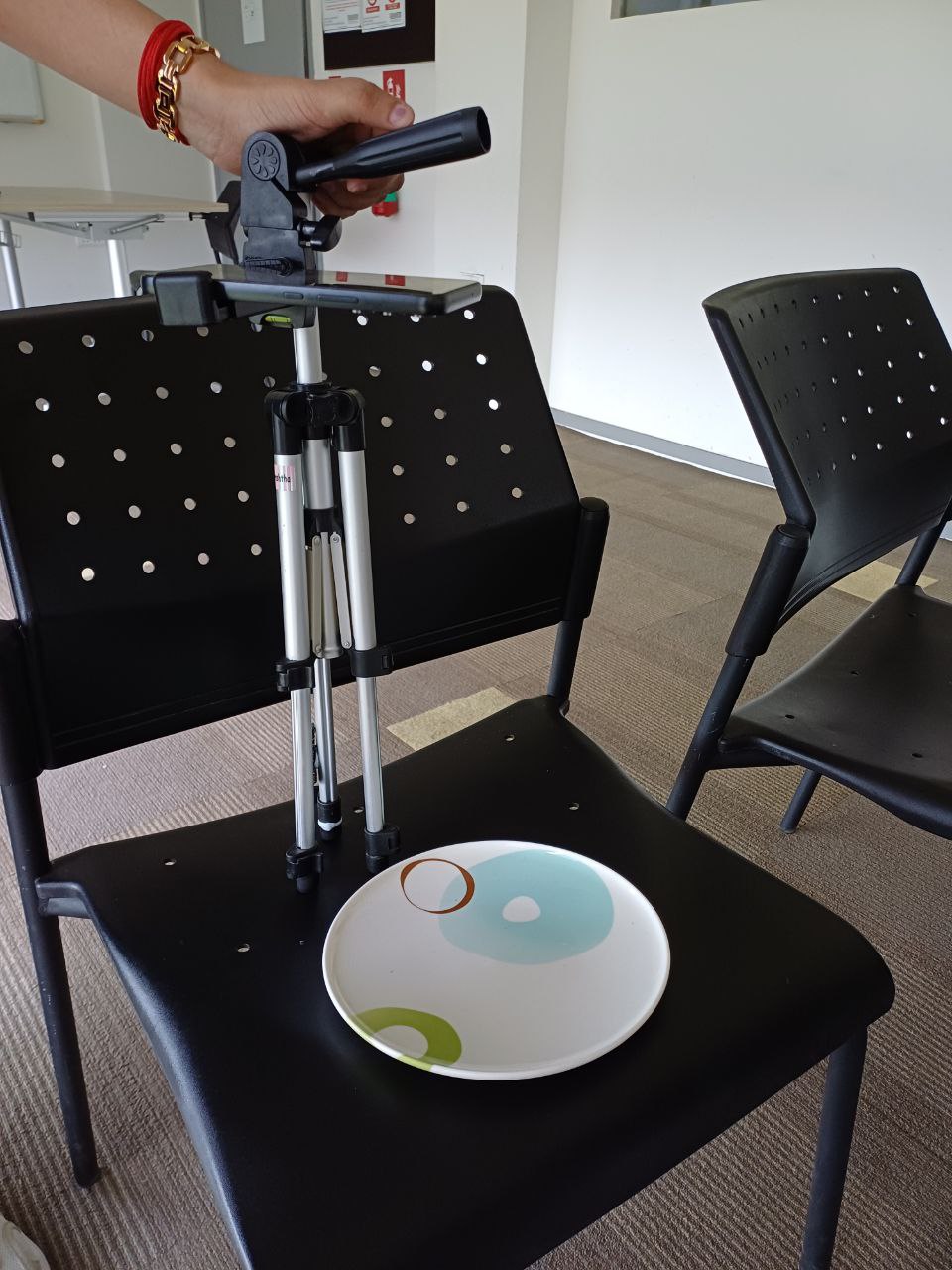
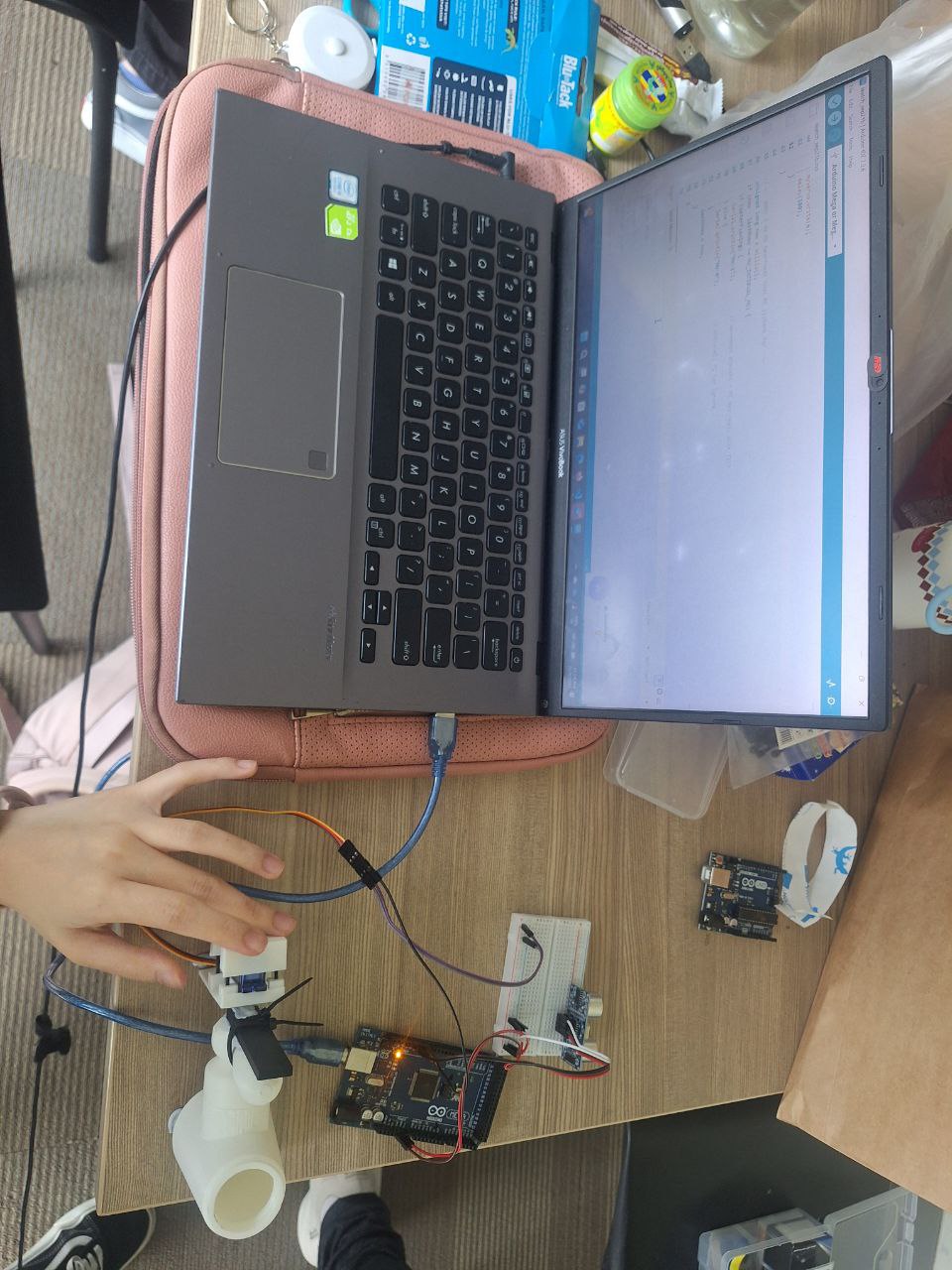
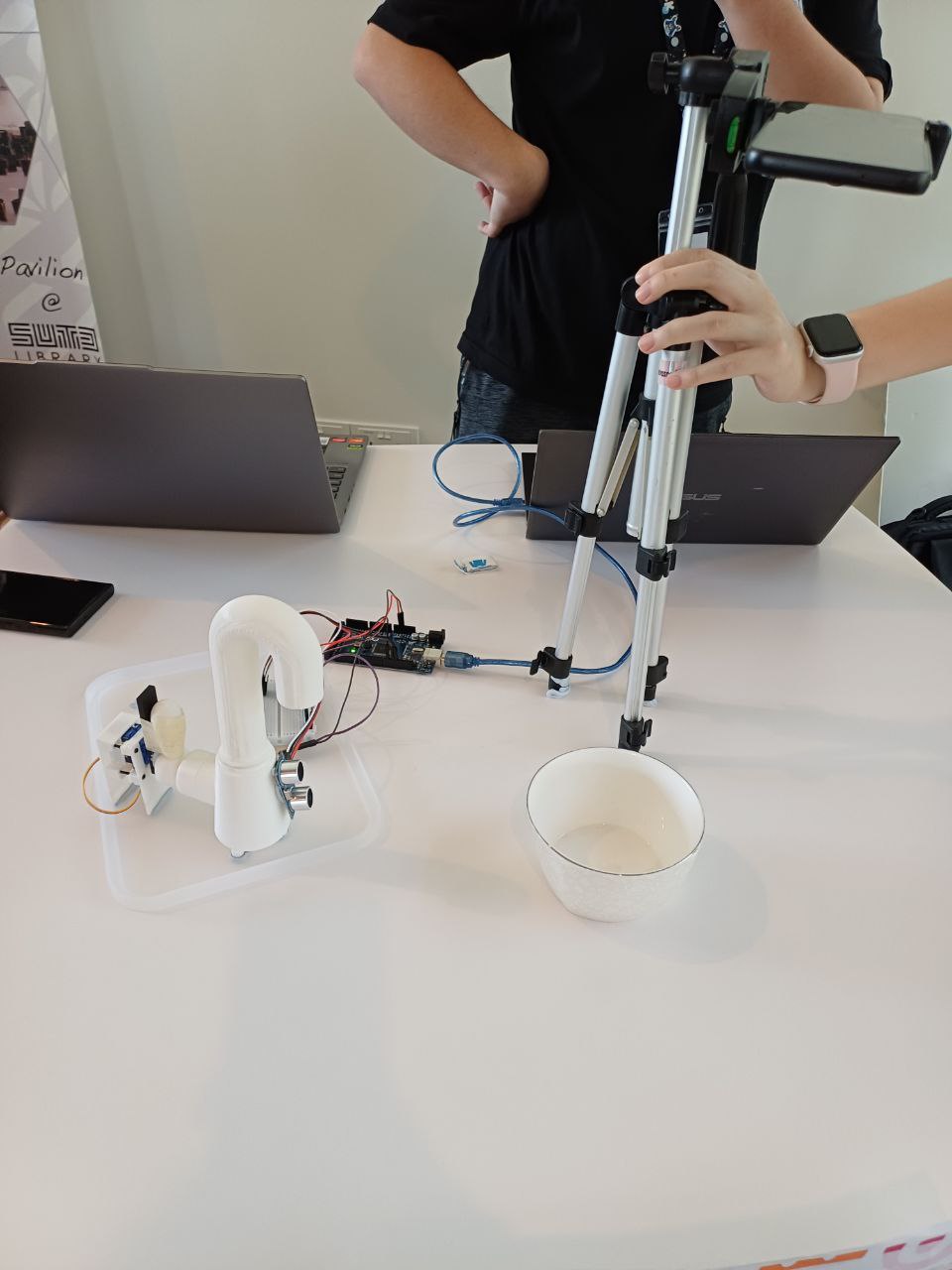
set up of prototype for detection system
-
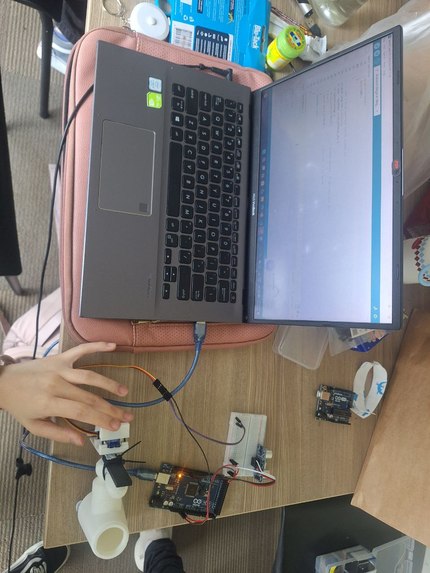
mechanism with code for faucet tilt adjustment
-
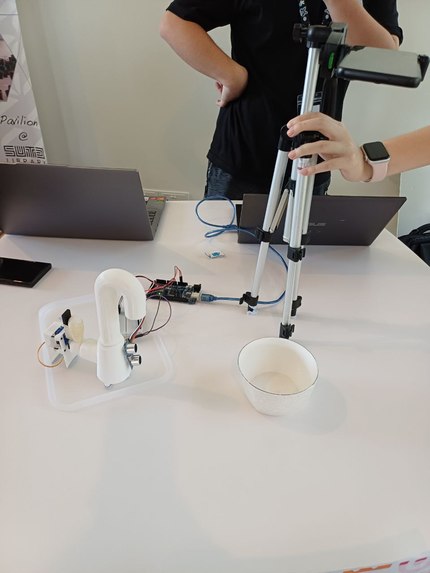
set up
Inspiration
We noticed that when people wash dishes at home, they rarely adjust the tap water flow to match the type of dish being washed. A small saucer doesn’t need the same water intensity as a large dinner plate — yet most users keep the faucet on maximum flow. This inefficiency adds up, wasting water and energy. How might we enhance the water usage efficiency of manual dishwashing in domestic households?
What it does
Let That Sink In is an attachable contraption for faucet handles that automatically controls water strength. Using computer vision and sensors, the system detects the type of dish being washed and adjusts the faucet handle tilt accordingly.
If no plate is detected → tap stays off.
If plate detected but no movement → tap stays off.
If plate detected and movement present → tap turns on, with water strength optimized to the plate size.
This ensures water only flows when needed and at the right intensity.
How we built it
The plate detection system was built using OpenCV in combination with a primitive AI model to determine the presence of a plate. Frames were captured from an IP Webcam and preprocessed through grayscale conversion, Gaussian blurring to reduce noise, and histogram equalization to enhance edges. The HoughCircles algorithm was then applied with pixel-to-centimeter calibration to detect circular shapes within expected plate size ranges. When multiple circles were found, they were scored based on proximity to the frame center and expected radius, with the best candidate selected. The detected circle’s radius was converted to centimeters, checked against a maximum reasonable threshold, and used to calculate diameter and area, which were then mapped to one of five size bins and translated into a preset faucet tilt angle between 10° and 80°. To integrate hardware, an Arduino Mega equipped with an ultrasonic sensor and servo motor was used: the sensor detects movement in the sink, triggering the Python script to capture a frame and process plate detection. Based on the computed tilt angle, the Arduino sends commands to the servo motor to adjust the faucet handle accordingly, closing the loop between detection, decision logic, and mechanical actuation.
Challenges we ran into
One of the main challenges was that the detection code was not always consistent, with plate recognition accuracy varying under different lighting and positioning conditions. On the hardware side, we faced difficulties because we did not have access to licensed CAD software, which limited our ability to design and simulate precise mechanical components for the faucet tilt mechanism. These challenges pushed us to rely on iterative testing, open-source tools, and creative problem-solving to move the project forward.
Accomplishments that we're proud of
We are proud to have successfully integrated computer vision and IoT sensors into a single working prototype, achieving real-time faucet control with accurate plate classification. Most importantly, we managed to construct a fully functional prototype with working detection systems within just 1.5 days, proving that our concept is both feasible and impactful. This rapid development gave us a practical and scalable solution with strong potential to significantly reduce household water wastage
What we learned
Through building Let That Sink In, we developed stronger technical skills in computer vision, particularly by making effective use of the OpenCV library for plate detection and classification. On the hardware side, we gained valuable experience in Arduino prototyping, designing and testing the faucet tilt mechanism, and learning how to translate digital outputs into reliable mechanical actions. This project also taught us how to synchronize sensor data with real-time logic, ensuring smooth integration between hardware and software. Beyond the technical aspects, we deepened our understanding of how small inefficiencies in daily routines can add up to significant environmental impacts, and how thoughtful design can drive more sustainable household practices.
What's next
For future improvements, we plan to extend detection beyond plates to include irregularly shaped dishes, utensils, and even bare hands, ensuring the system covers the full spectrum of dishwashing scenarios. In addition to faucet tilt, we will integrate duration-based control to regulate how long the tap should remain open depending on the dish type. To enhance accuracy and adaptability, we will collect washing data from households and apply machine learning to refine classification and dynamically optimize water flow. On the hardware side, we aim to prototype a more durable, universally compatible faucet tilt mechanism, while user trials in real households will allow us to test usability, measure water savings, and further refine the system.

Log in or sign up for Devpost to join the conversation.