
Inspiration
We often found ourselves struggling with a simple but frustrating problem: deciding what to cook with what we already had. Like many people, we would find a recipe online, get excited to try it, and then realize we were missing a key ingredient—something as basic as a tomato or a potato.
This led to constantly jumping between recipes, trying to find one that matched our pantry, which felt like searching for a needle in a haystack.
As full-time students working part-time jobs, we don’t always have the time or energy to plan meals or shop frequently. We wanted a smarter, more intuitive way to cook with what’s already available—so we built Let’sCook.
What it does
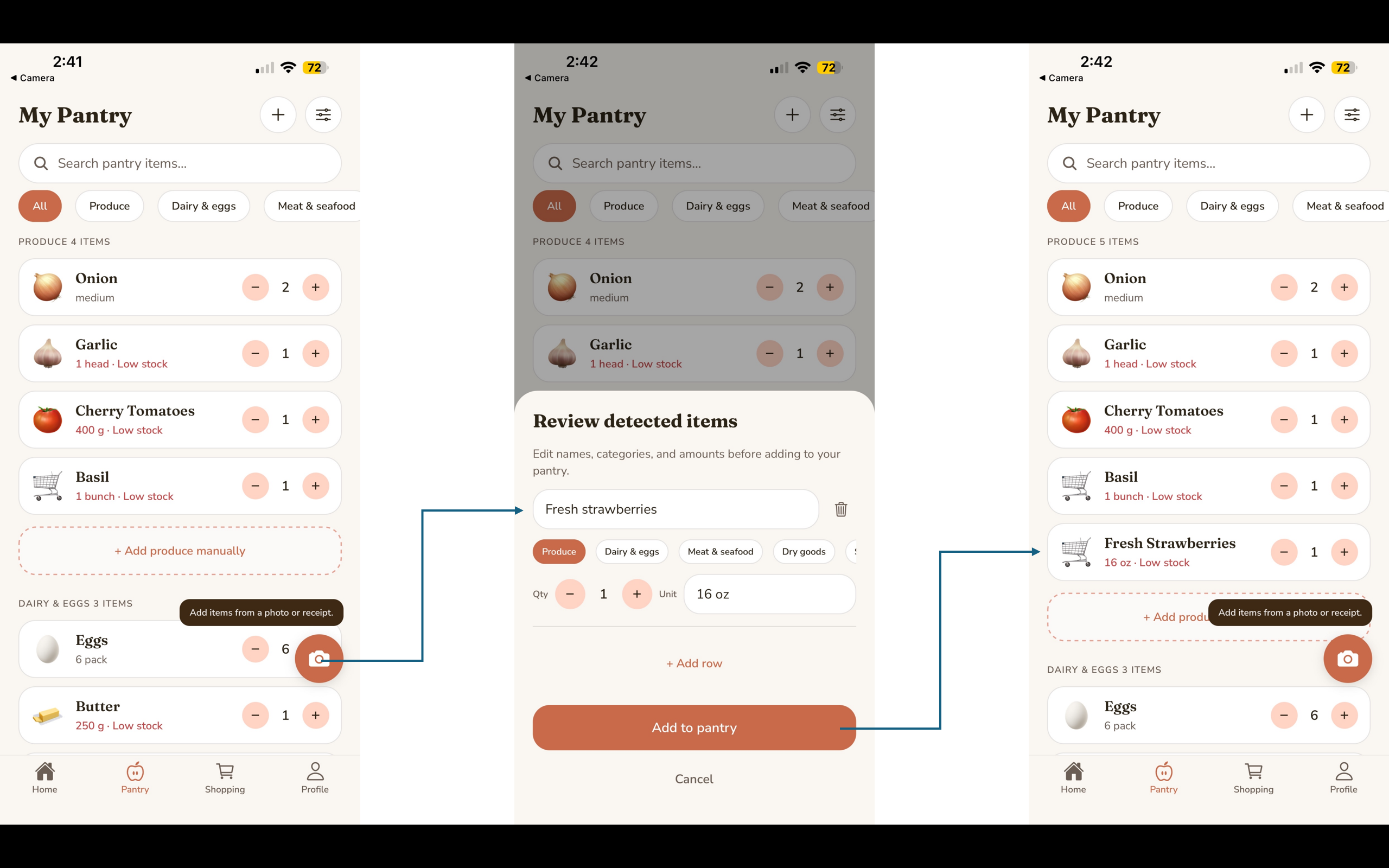
Let’sCook helps users decide what to cook based on the ingredients they already have. Instead of searching through countless recipes, users can simply input their pantry items and receive tailored recipe suggestions that actually match what’s available.
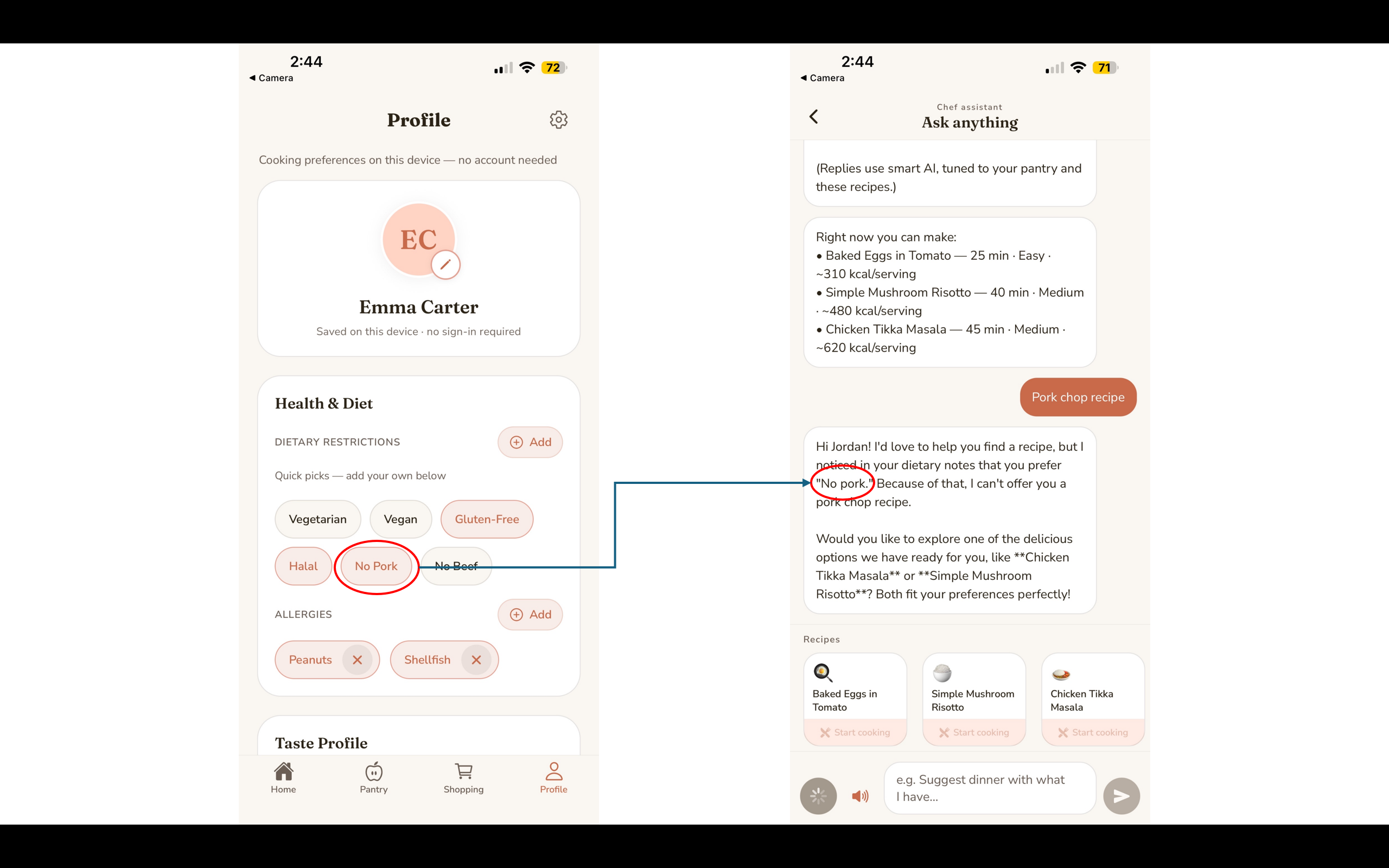
The app also personalizes recommendations based on each user’s profile, taking into account their preferences to suggest recipes that better fit their tastes and needs.
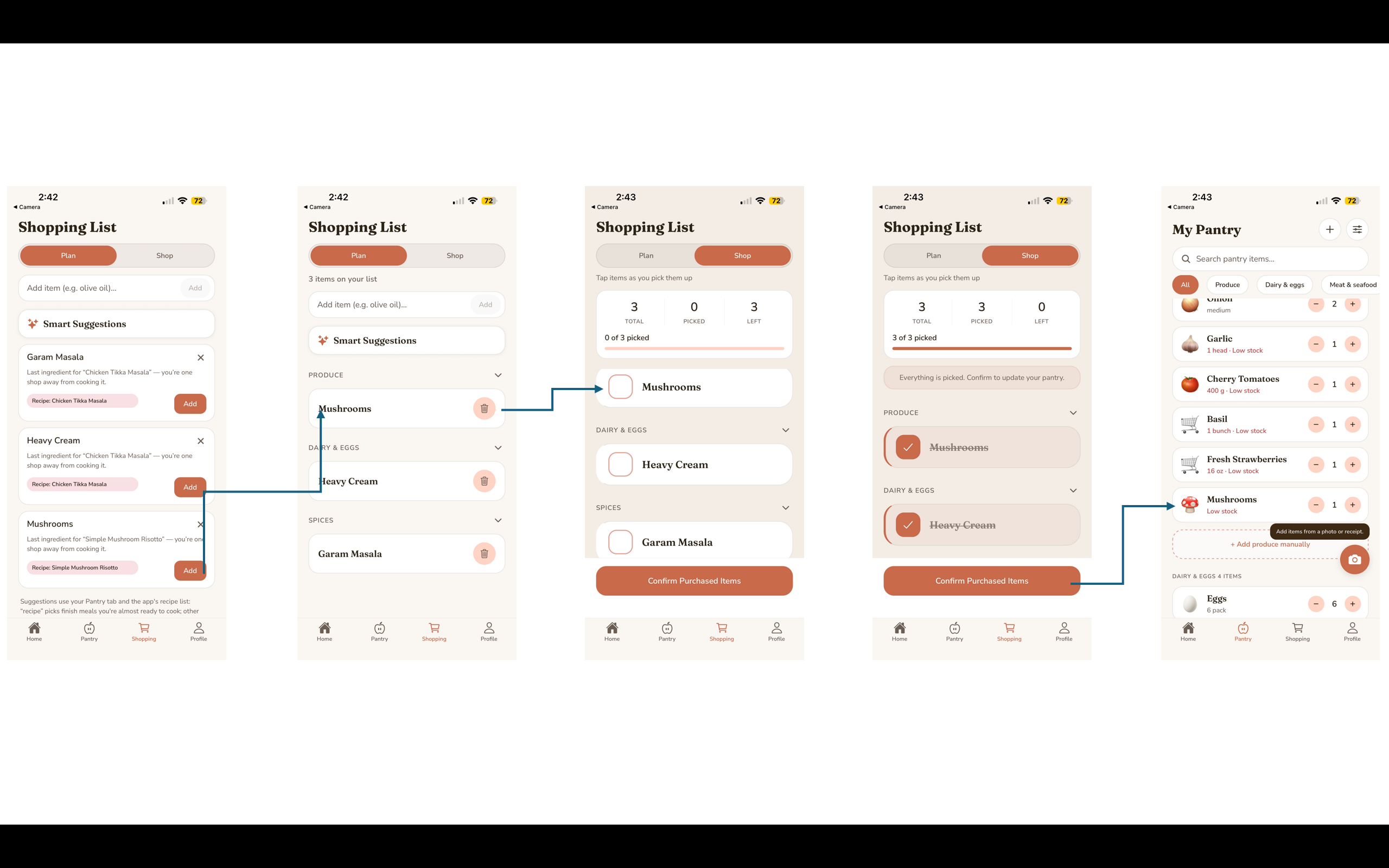
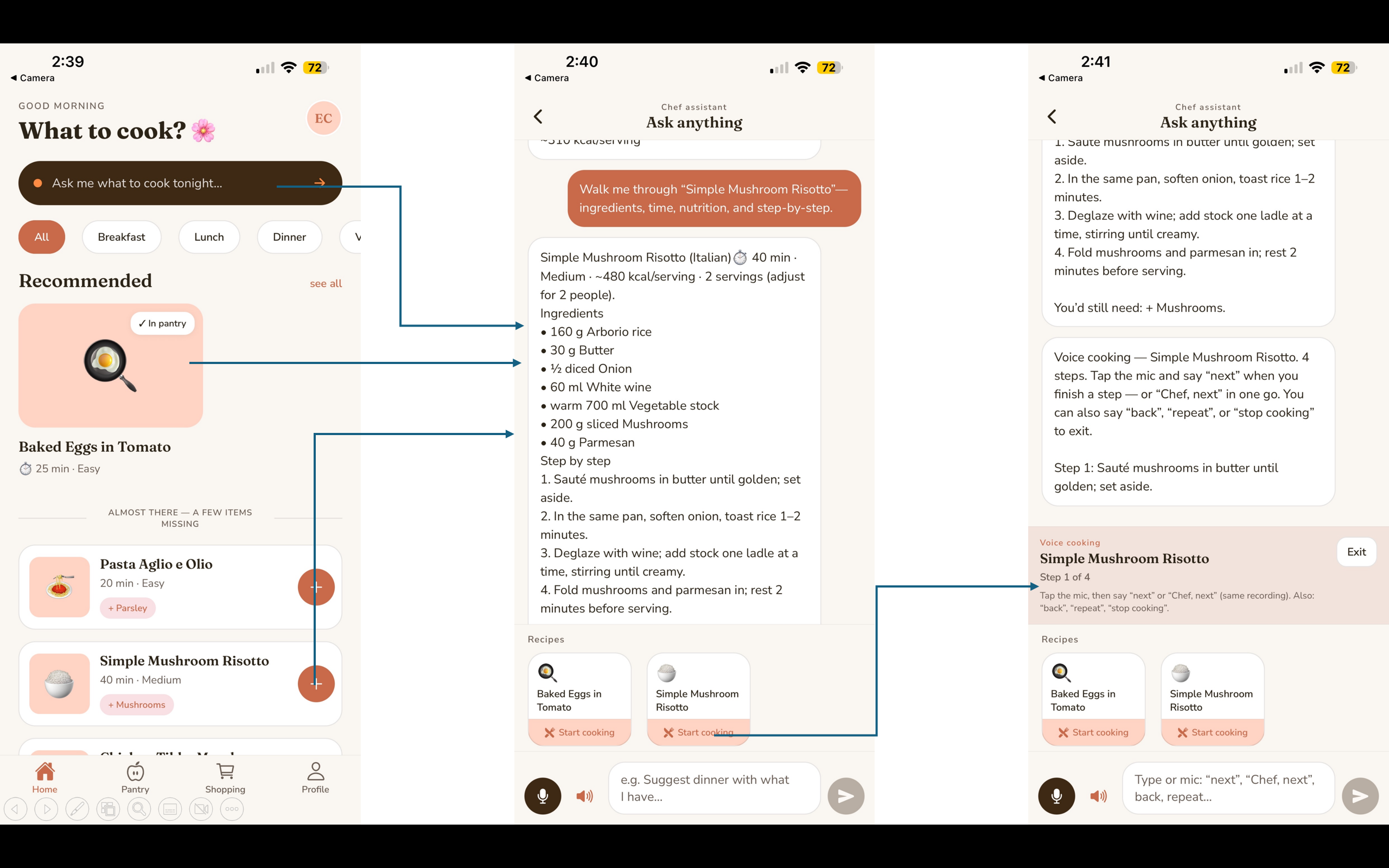
In addition, Let’sCook streamlines the cooking process by automatically generating a shopping list for any missing ingredients and providing voice-guided instructions while cooking.
By combining pantry-based recommendations, personalized suggestions, smart shopping assistance, and hands-free cooking guidance, Let’sCook makes everyday cooking simpler, faster, and more intuitive.
How we built it
We started by focusing heavily on the problem space and user experience. A significant part of our time went into designing how different features—pantry-based recipe discovery, automated shopping lists, and voice-guided cooking—could work together seamlessly in a single app. Our goal was to create something more cohesive and practical than existing solutions.
Once we had a clear direction, we moved into implementation. We used modern development tools, including Cursor’s AI-assisted coding capabilities, to efficiently build and iterate on the application.
Throughout the process, we continuously refined both the idea and the product to ensure it remained simple, useful, and aligned with the real-world problem we set out to solve.
Challenges we ran into
Accomplishments that we're proud of
We’re proud of turning a common, everyday frustration into a cohesive and functional product within a short timeframe.
One of our biggest accomplishments was successfully combining multiple features—pantry-based recipe suggestions, personalized recommendations, automated shopping lists, and voice-guided cooking—into a single, seamless experience.
We’re also proud of the thought and effort we put into designing a solution that feels practical and user-focused, rather than just building isolated features.
What we learned
Through building Let’sCook, we learned the importance of deeply understanding the problem before jumping into implementation. Spending time on design and user experience helped us create a more cohesive and meaningful product.
We also gained experience working with modern AI-assisted development tools, which allowed us to iterate quickly and bring our ideas to life more efficiently.
Overall, this project reinforced how powerful it is to combine thoughtful design with the right tools to solve real-world problems.
What's next for Let'sCook
We envision Let’sCook evolving beyond a personal cooking assistant into a vibrant social platform for food lovers. Our goal is to build a community where users can share their own recipes, showcase their creations, and discover dishes from others around the world.
We plan to introduce features such as user profiles, recipe feeds, and the ability to post and explore cooking content.
By combining smart pantry-based recommendations with a social experience, Let’sCook can become a space where cooking is not just convenient, but also creative, collaborative, and inspiring.

Log in or sign up for Devpost to join the conversation.