-
-
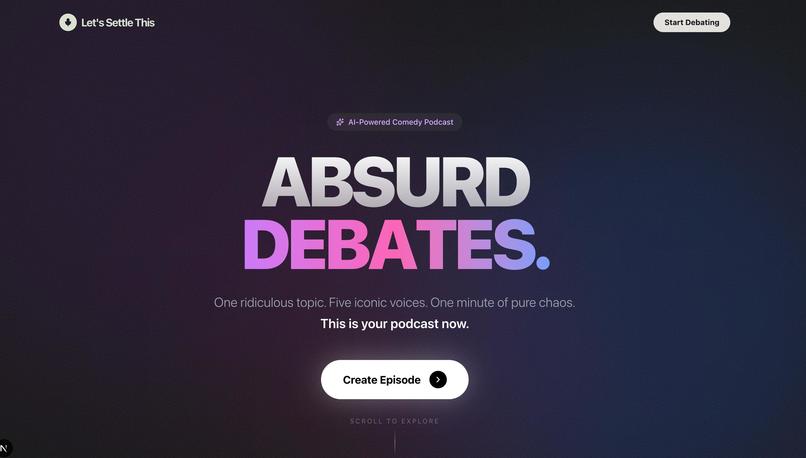
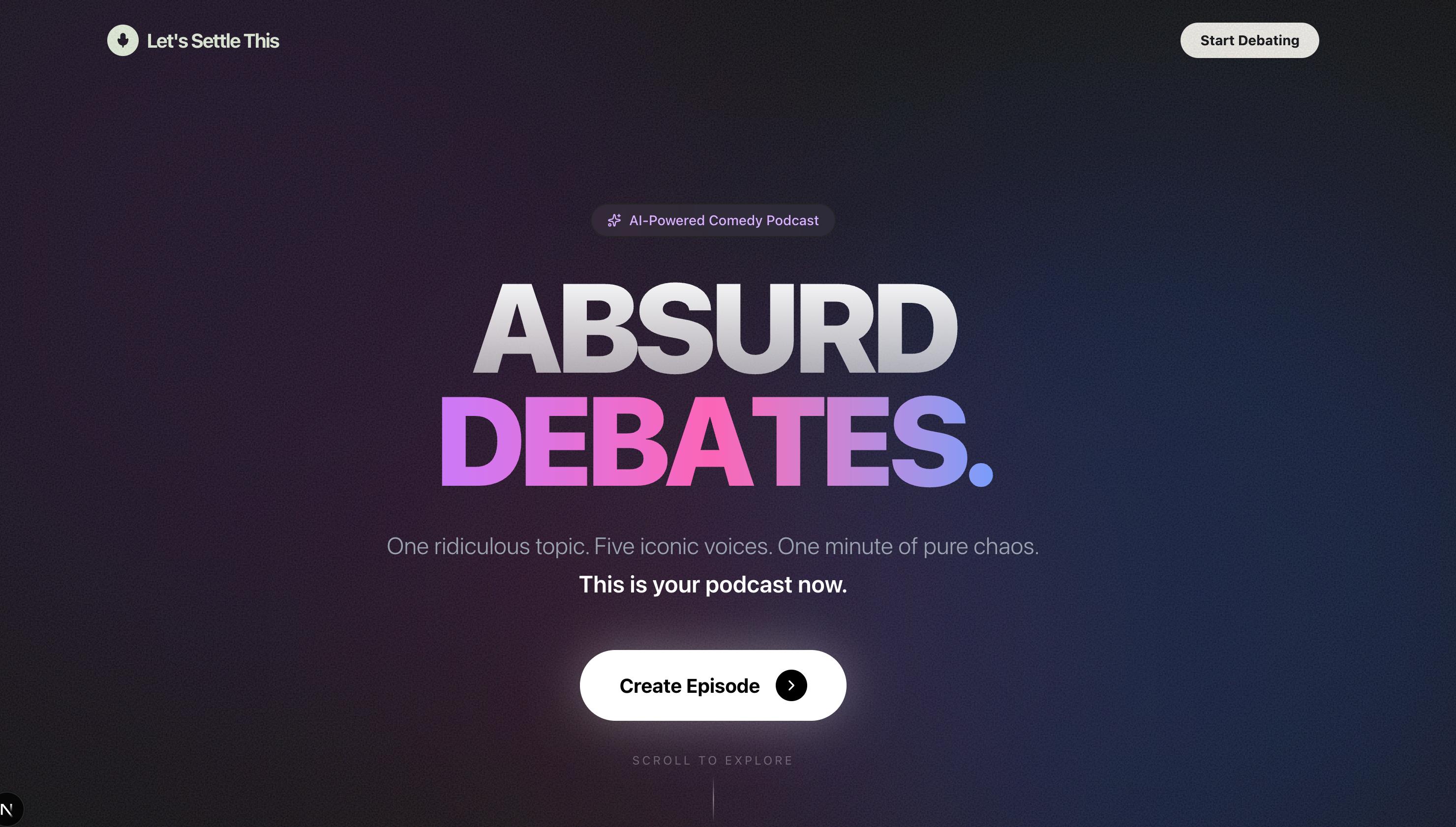
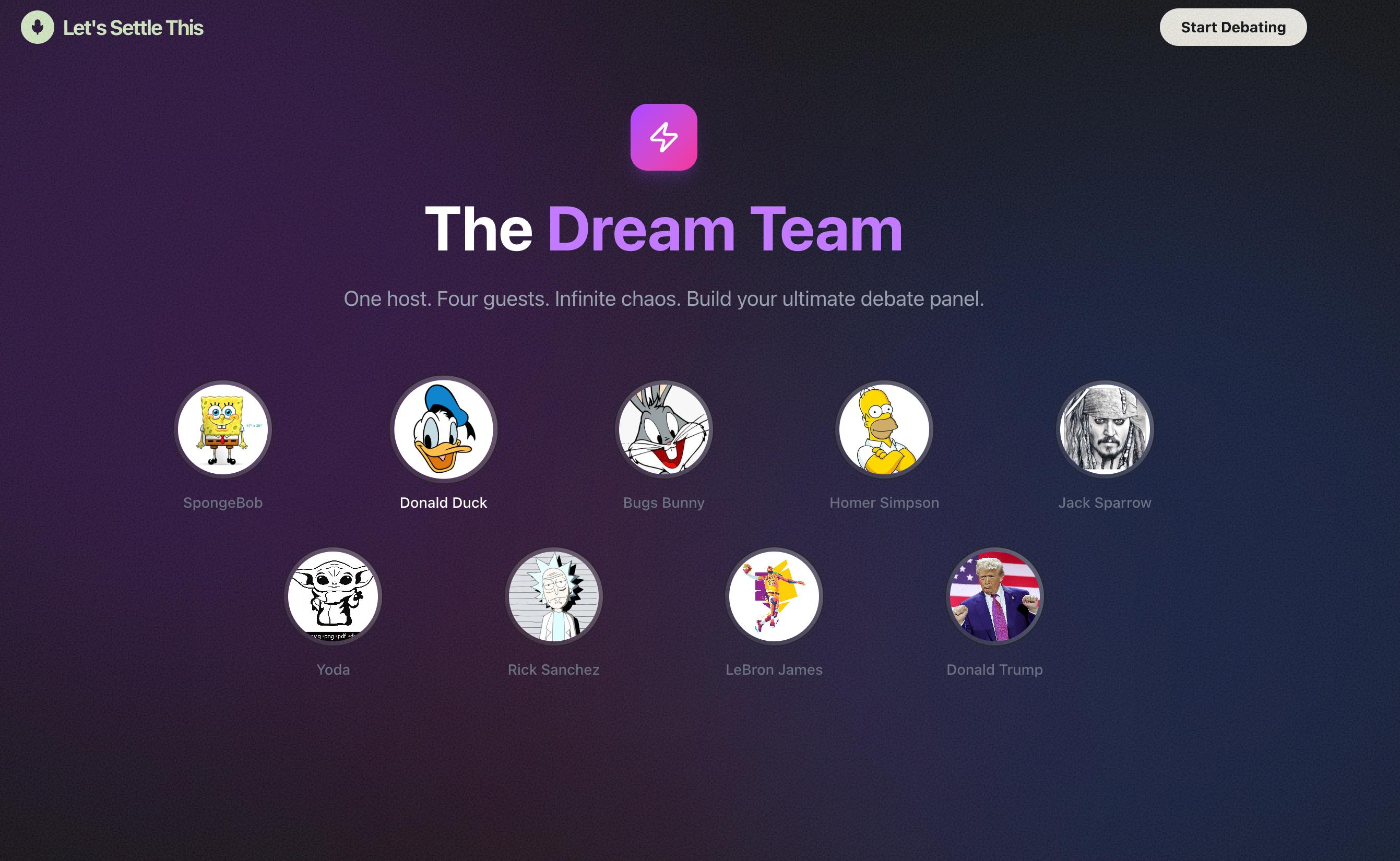
HERO section
-
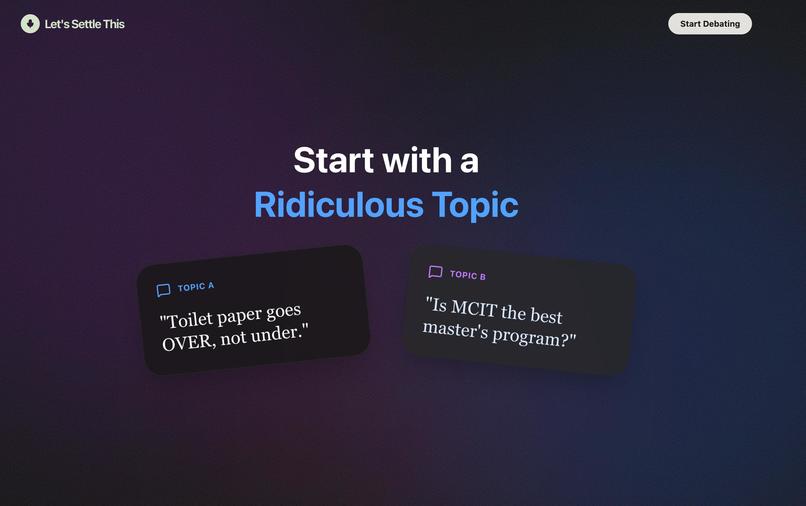
introduction page
-
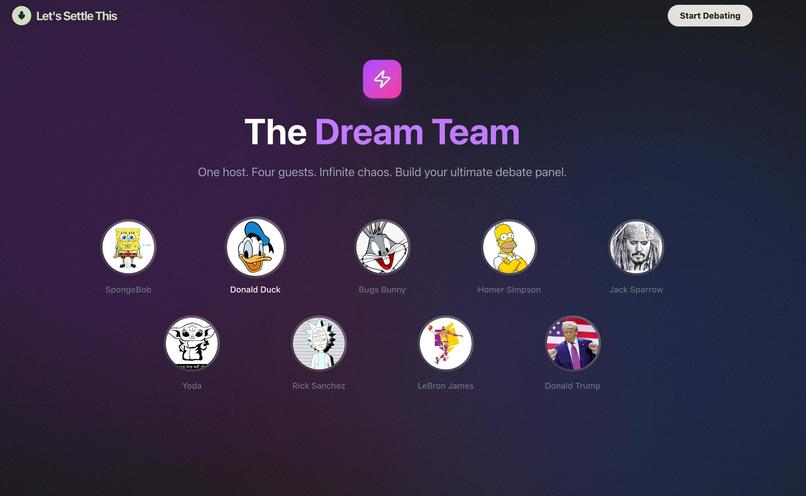
dream team
-
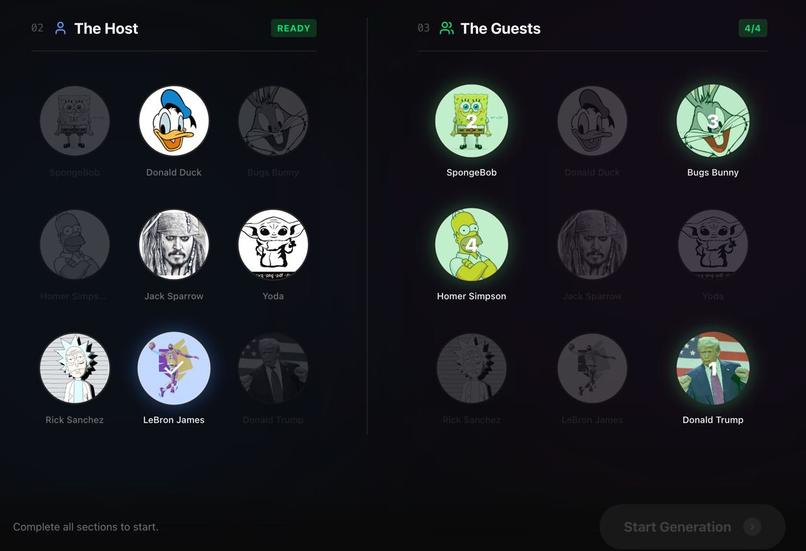
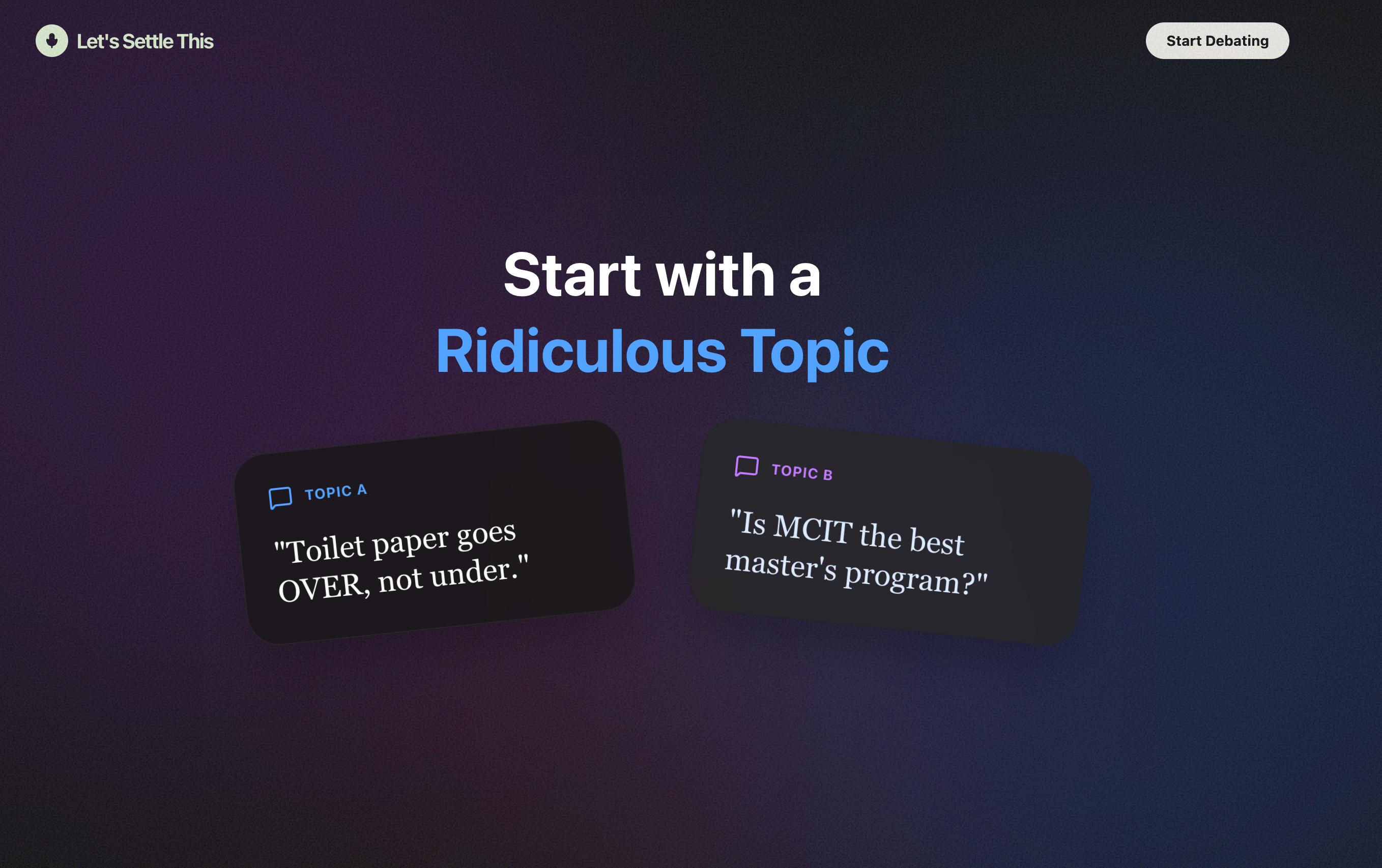
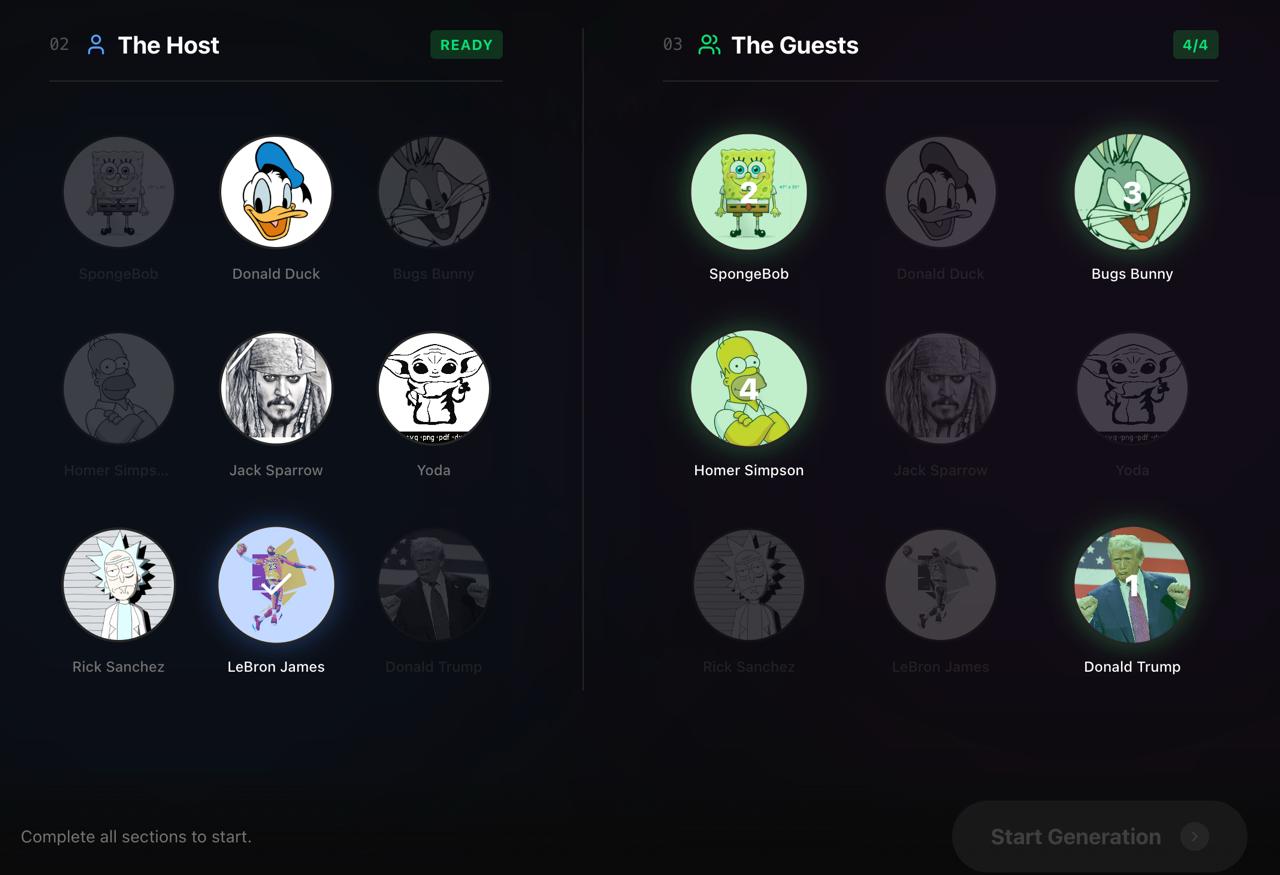
setup page
-
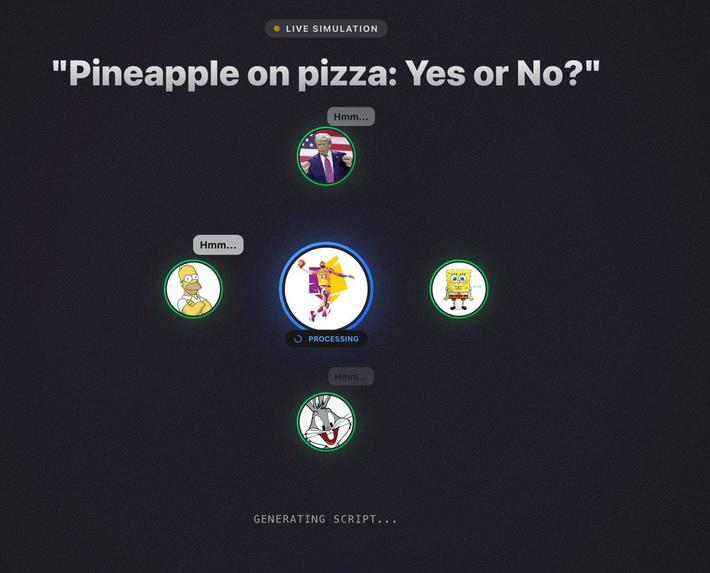
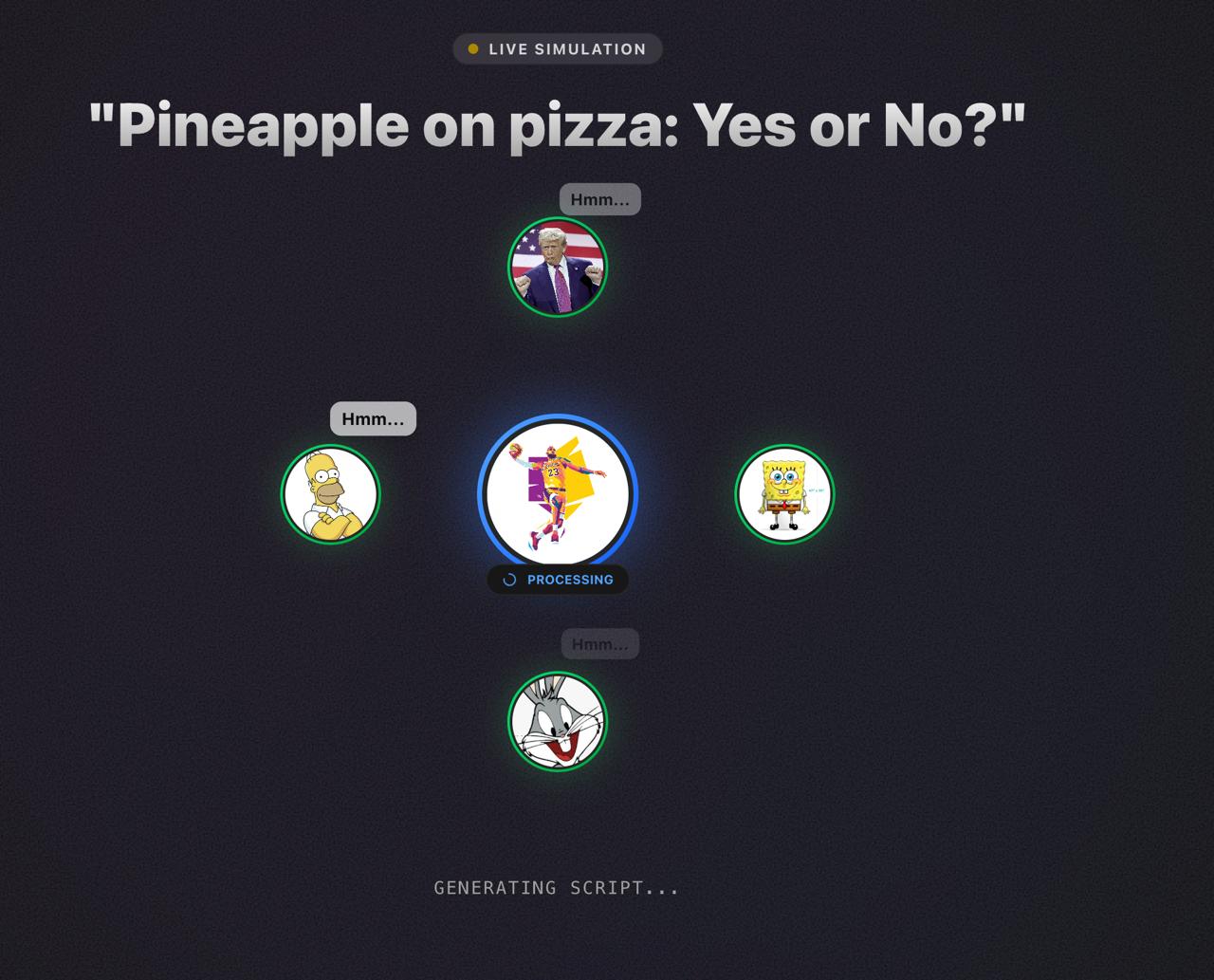
processing page
-
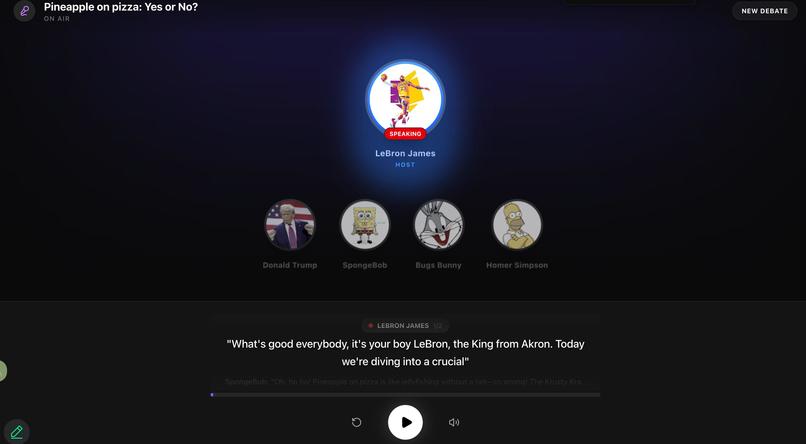
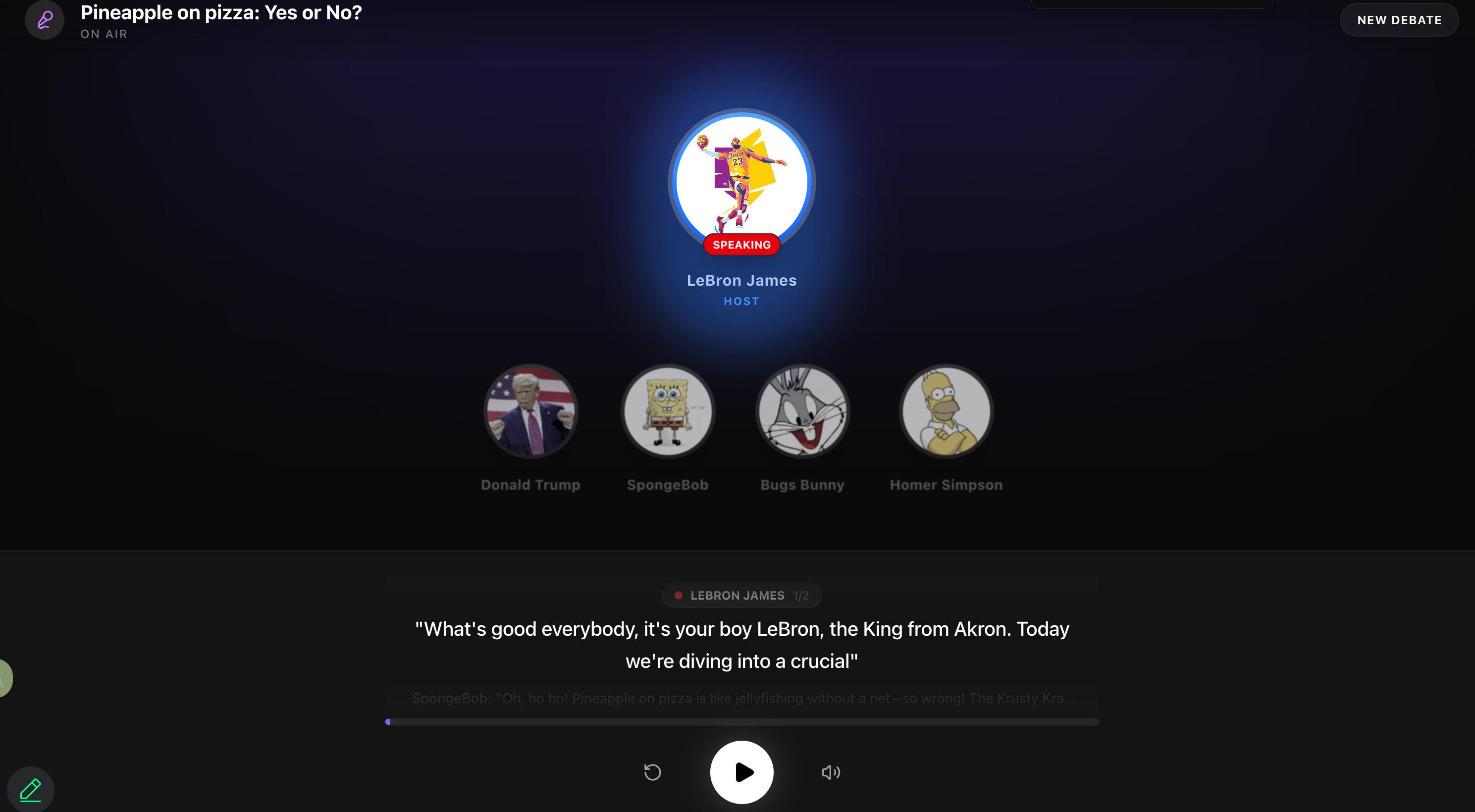
podcast page
Let's Settle This Podcast
Turn ridiculous debates into hilarious AI-generated podcast episodes
Team Information
Team Name: Team Placeholders
Team Members:
- David Liang ([email protected])
- Michelle Ma ([email protected])
- Rachel Wu ([email protected])
Project Description
Let's Settle This Podcast is a web application that transforms absurd topics into comedic "serious debate" podcast episodes. Users submit a ridiculous question (like "Is a hot dog a sandwich?" or "Toilet paper: over or under?"), select a host and four guests from iconic characters (SpongeBob, Trump, Bugs Bunny, Homer Simpson, and more), and generate a 60-90 second AI-powered audio episode complete with character avatars, subtitles, and waveform visualization.
The app creates multi-round debates where characters maintain context, build on each other's arguments, and deliver punchlines - all while taking the topic completely seriously.
What Inspired Us
In the middle of all the deadlines and stressful school life, we really hope you still keep a little sense of humor.
We built this project to bring joy through absurdity. The concept is simple: take the most ridiculous topics imaginable and have iconic characters debate them with complete seriousness. There's something inherently funny about hearing SpongeBob argue passionately about whether cereal is soup, or Trump declaring victory in the great "toilet paper orientation" debate.
Our goal was to make people smile, laugh, or feel immersed - turning boredom into fun, one ridiculous debate at a time.
How We Built It
Architecture Overview
The application follows a modern full-stack architecture:
- Frontend (Next.js) - Handles user input, character selection, and audio playback with real-time speaker highlighting
- Backend (FastAPI) - Orchestrates AI services and manages episode generation
- AI Services - OpenAI for script generation, ElevenLabs and TopMediAI for voice cloning and synthesis
Script Generation
We use OpenAI's API with structured output to generate debate scripts. The prompt engineering ensures:
- Characters stay in their iconic personalities
- Characters can reference the worlds and shows that they came from
- Each speaker builds on previous arguments (context-aware)
- Forced disagreement creates comedic tension
- Episodes stay within the 60-90 second target
Frontend Experience
The playback interface features:
- Character avatars with active speaker highlighting
- Real-time synchronized subtitles
- Audio waveform visualization
- Smooth animations using Motion library
Tech Stack
Frontend:
- Next.js 14+ (App Router)
- TypeScript
- Tailwind CSS
- Shadcn/ui components
- Motion (animations)
Backend:
- FastAPI (Python 3.11+)
- Python
- Pydantic (data validation)
- OpenAI API (text generation)
- ElevenLabs API (text-to-speech & voice cloning)
- TopMediAI API (text-to-speech & voice cloning)
How to Run
Prerequisites
- Node.js 18+
- Python 3.11+
- OpenAI API key
- ElevenLabs API key
- TopMediAI API key
Frontend Setup
cd frontend
npm install
npm run dev
The frontend runs at http://localhost:3000
Backend Setup
cd backend
conda activate [your-env]
pip install .
uvicorn app.main:app --reload
The backend runs at http://localhost:8000
Environment Variables
Create a .env file in the backend directory:
OPENAI_API_KEY=sk-your-openai-key
ELEVENLABS_API_KEY=your-elevenlabs-key
TOPMEDIAI_API_KEY=your-topmediai-key
For the frontend, create .env.local:
NEXT_PUBLIC_API_URL=http://localhost:8000
Challenges We Faced
Multi-Round Context-Aware Debate
Ensuring characters maintain context and build on each other's arguments across the episode was tricky. We solved this with careful prompt engineering that includes conversation history in each generation step.
API Error Handling
Managing failures and retries across OpenAI and ElevenLabs API calls required robust error handling. Network issues, rate limits, and API timeouts all needed graceful handling to provide a good user experience.
Episode Timing Control
Keeping generated content within the 60-90 second target required balancing script length with speech rate. We iterated on prompt constraints and added validation to ensure episodes hit the sweet spot.
What We Learned
- AI Integration - Working with OpenAI API for structured content generation and ElevenLabs for voice synthesis taught us about prompt engineering, API orchestration, and handling async workflows
- Full-Stack Development - Building a complete Next.js + FastAPI application with real-time audio playback deepened our understanding of modern web architecture
- Prompt Engineering - Crafting prompts to generate structured, comedic debate content with consistent character voices was both an art and a science
Video Presentation
License
MIT License - Built with humor for MCIT Hackathon 2025
Built With
- elevenlab-api
- fastapi
- javascript
- nextjs
- openai-api
- python
- react
- topmediaai-api
- typescript


Log in or sign up for Devpost to join the conversation.