-
-
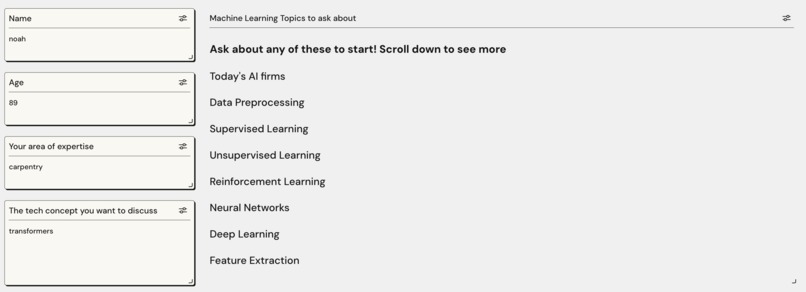
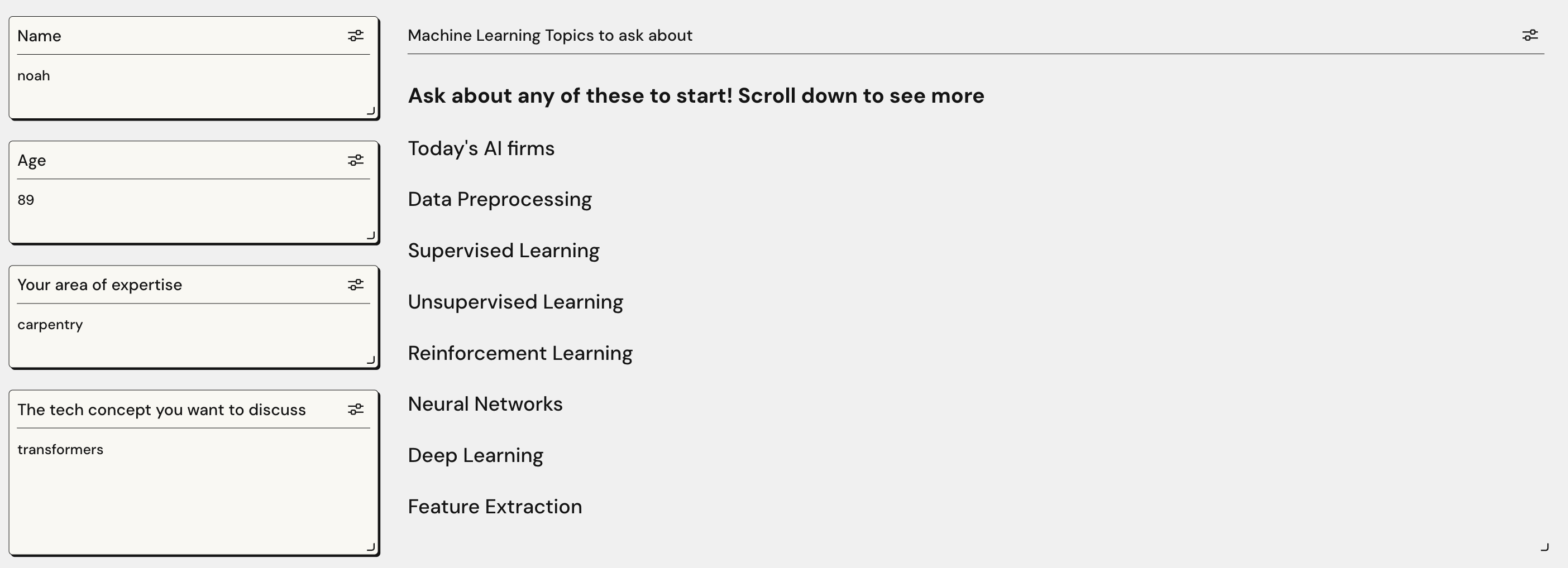
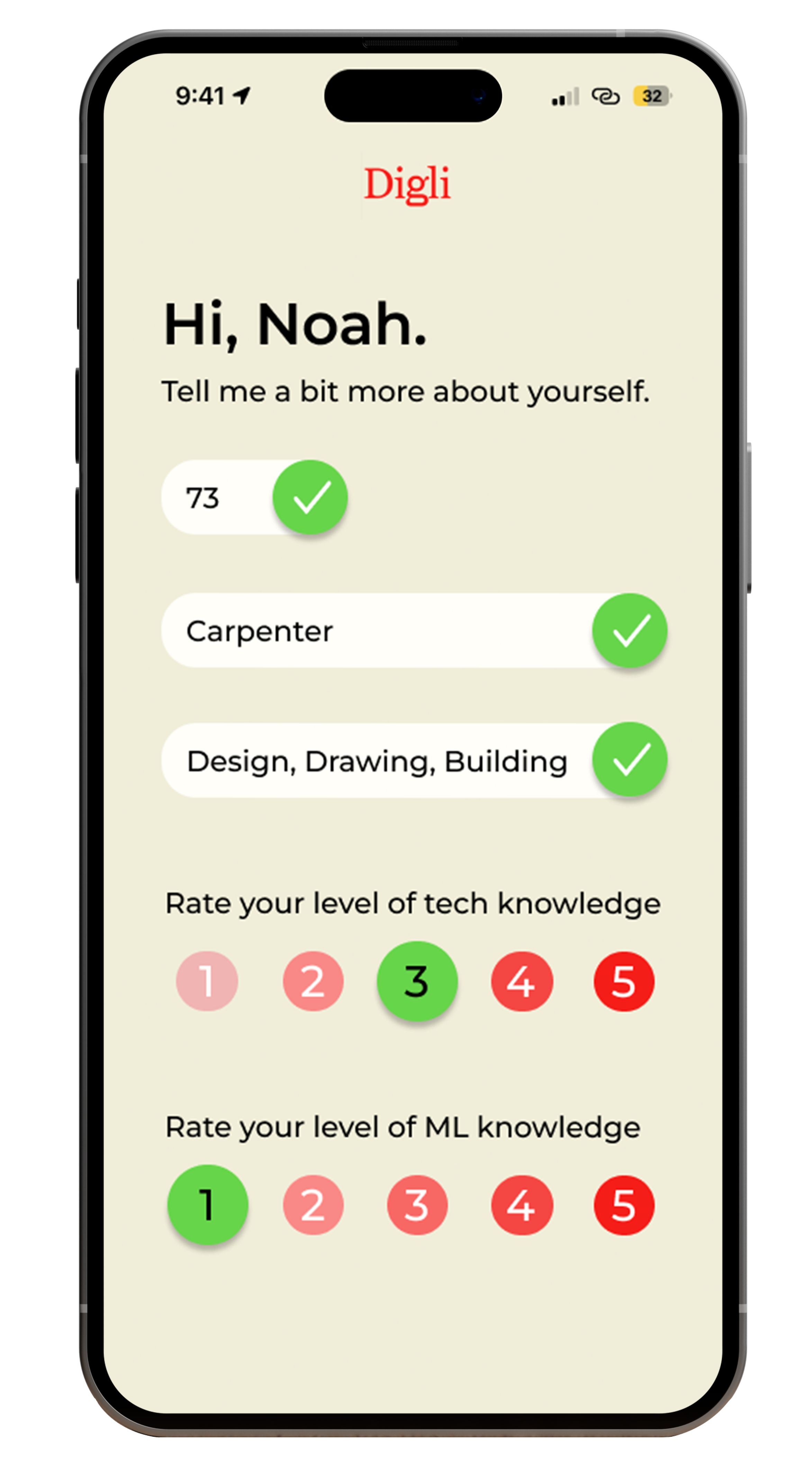
Example of user input for 89-year-old Noah
-
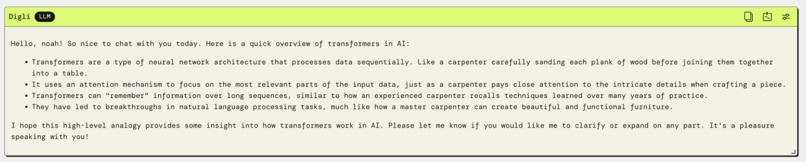
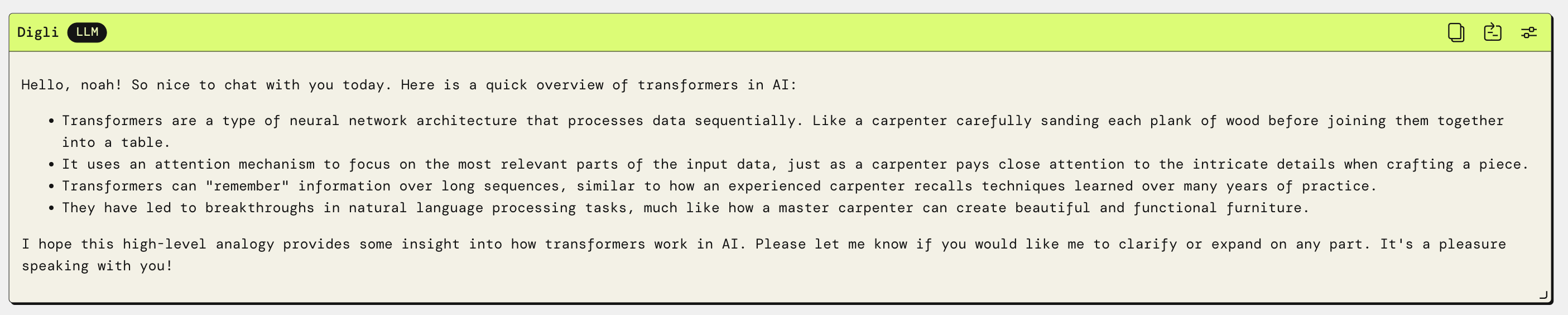
Digli's initial response, kept short so as not to overwhelm the user. You can see Digli referencing Noah's expertise to explain ML
-
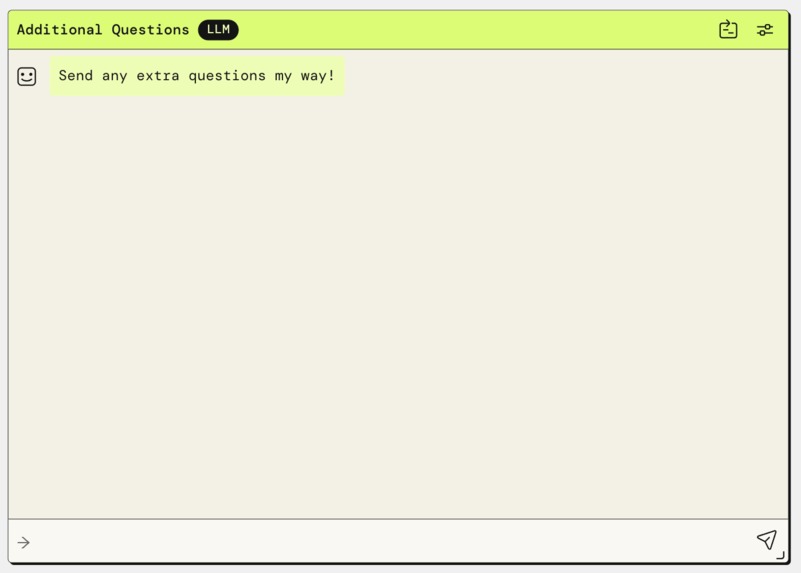
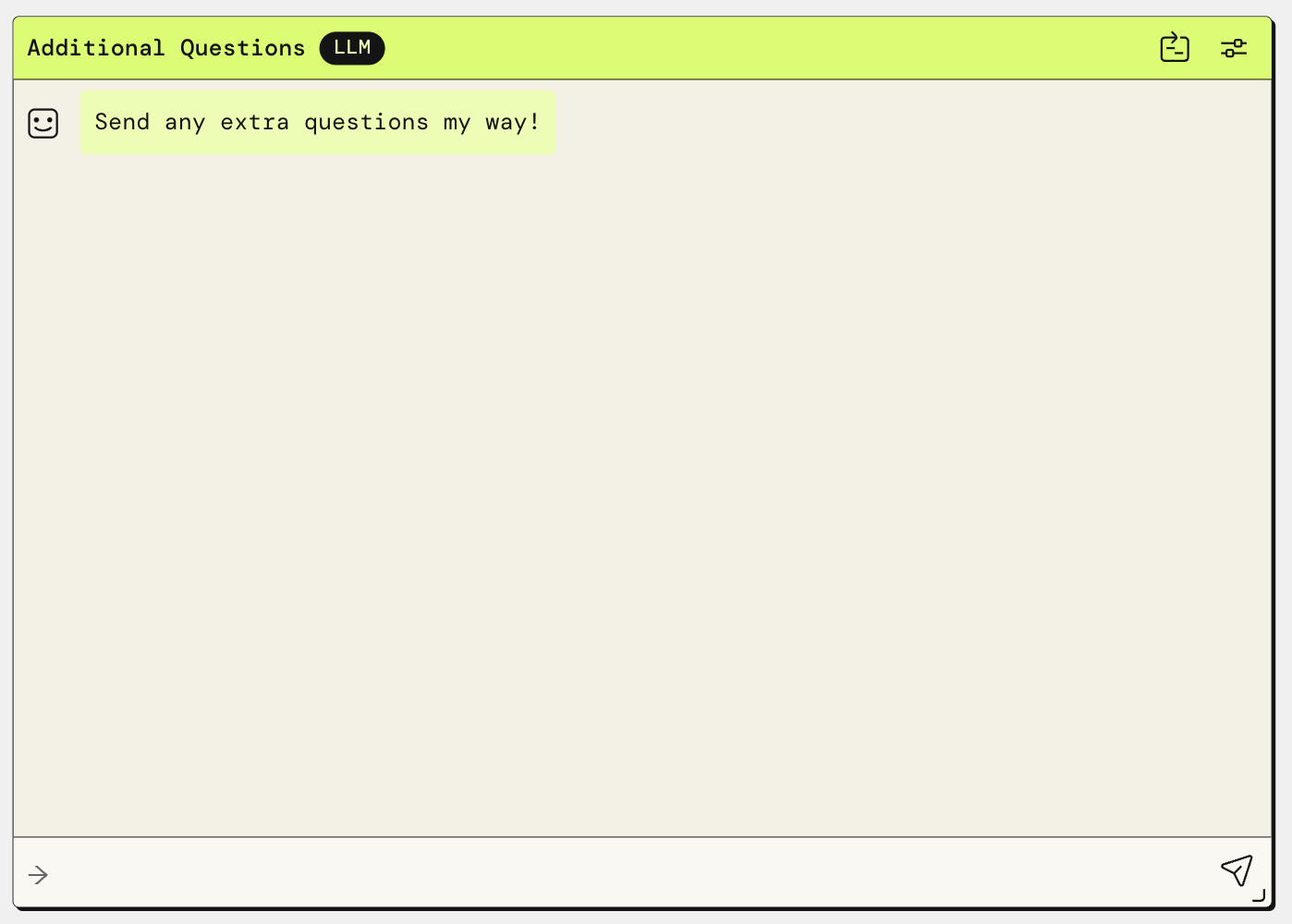
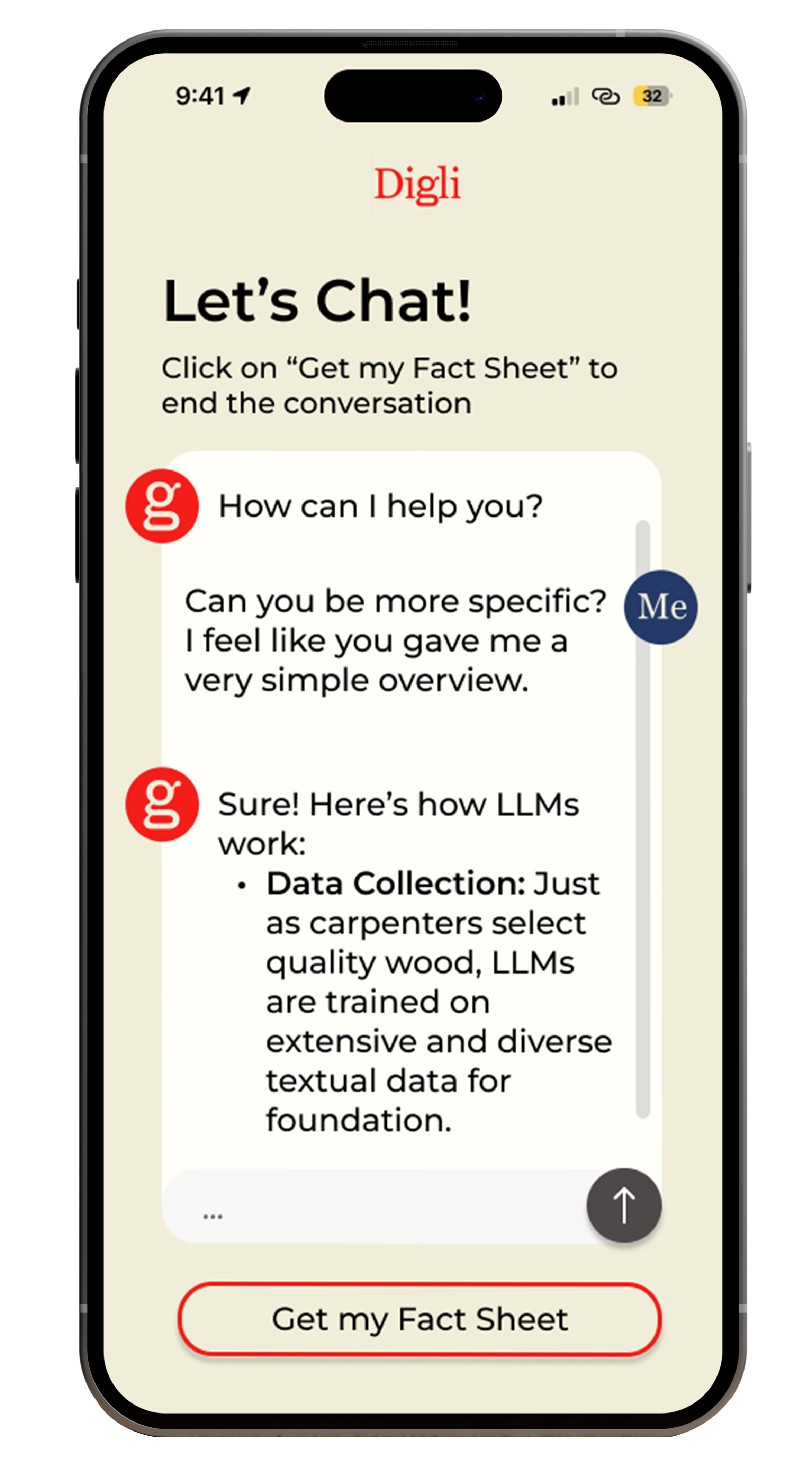
Chat bot for Digli to provide additional information in a personalized conversation upon request
-
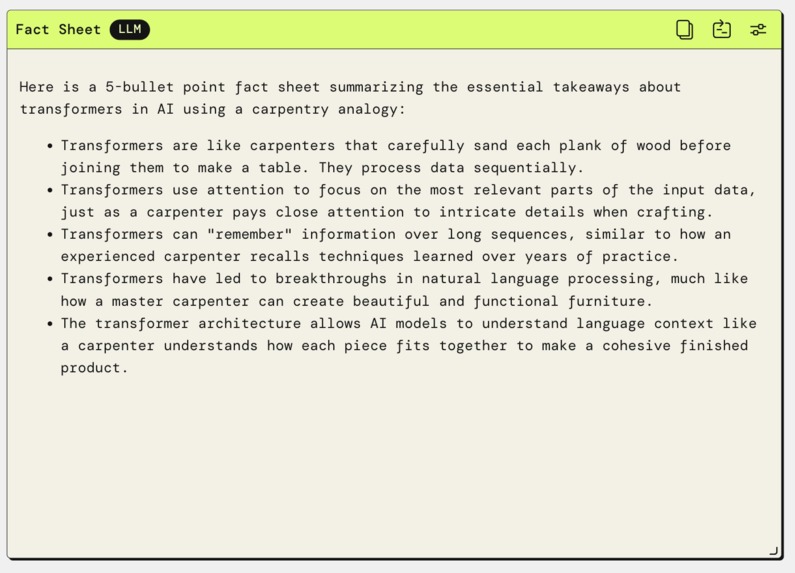
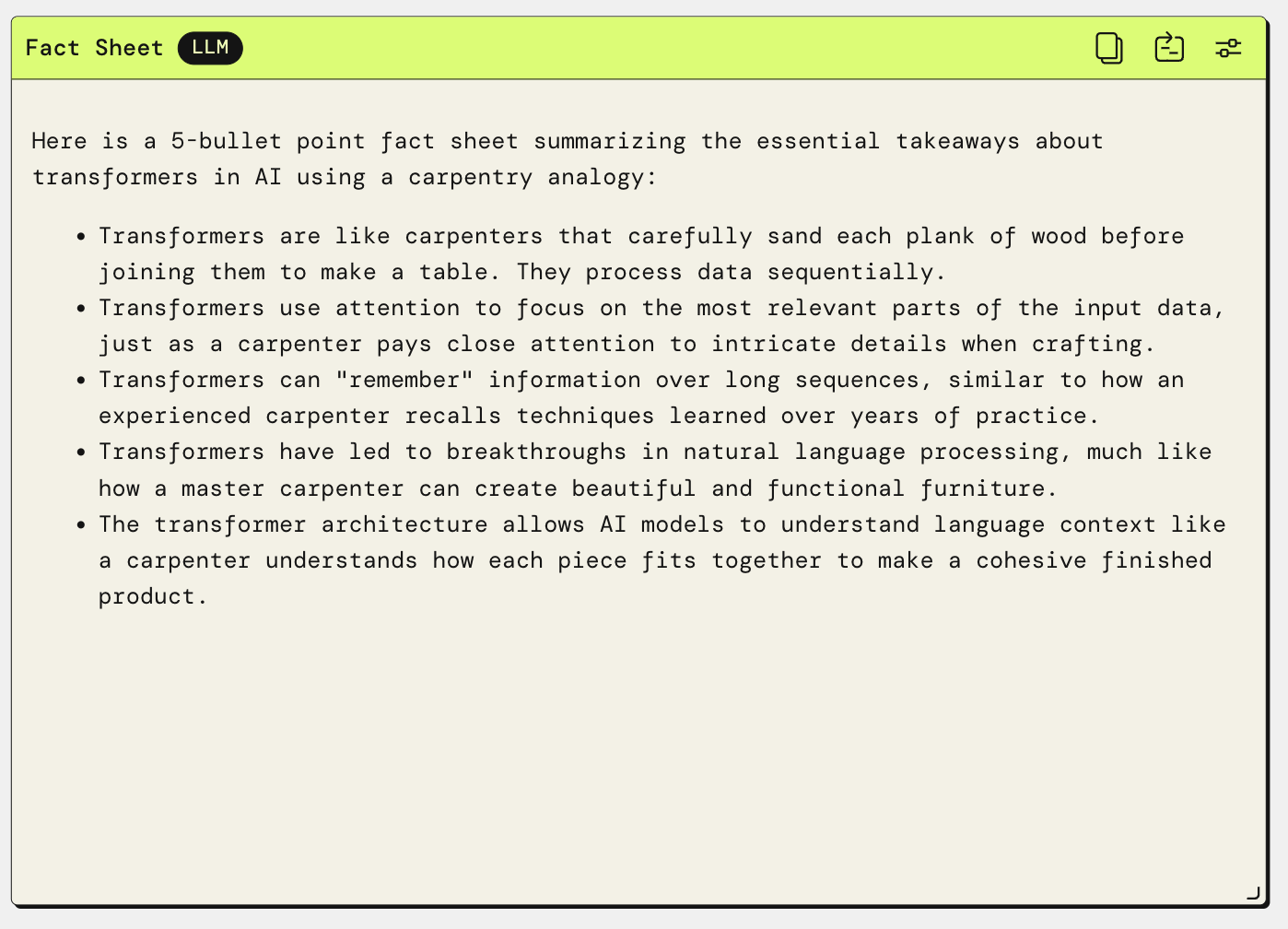
Fact sheet Digli generates and updates as the user engages with Digli in the chat
-
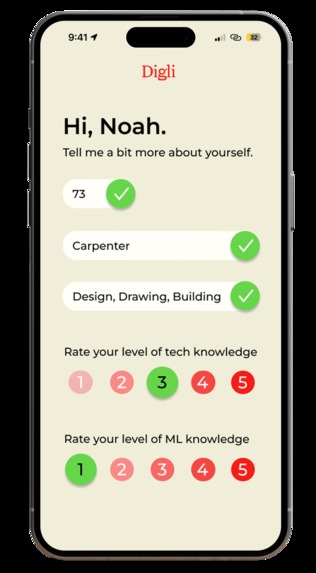
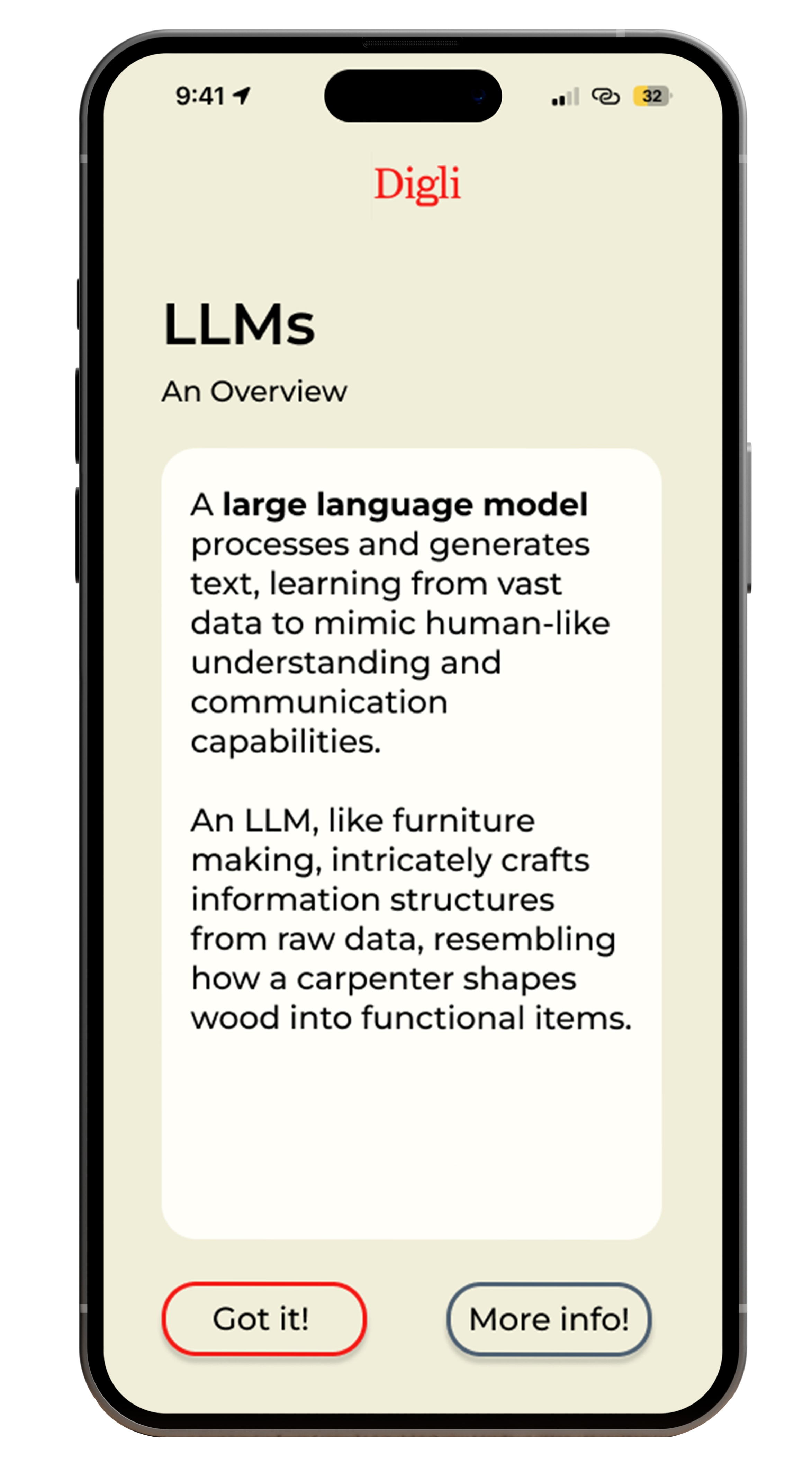
Mockup of Digli as an iOS app (user input)
-
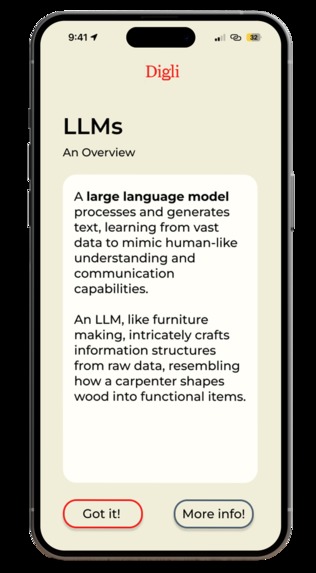
Mockup of Digli as an iOS app (response screen)
-
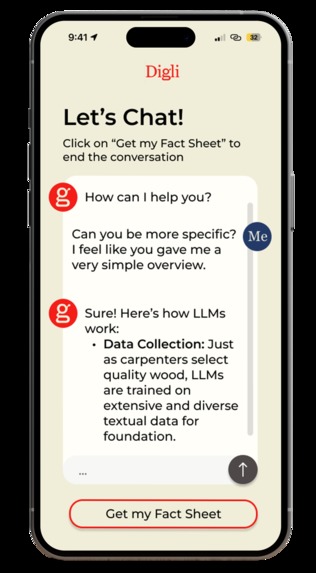
Mockup of Digli as an iOS app (chat)
Inspiration
In recent years, many of my conversations with my grandfather, who is turning 90 this year, have revolved around helping him with his computer. I cherish these moments immensely because I get to spend time with him. However, I know that for him, these sessions can be extremely frustrating. As a very intelligent and accomplished chemical engineer, he gets frustrated by his inability to remember how to do "simple" tasks like saving email attachments. As my cousins and I have gone into data, tech and machine learning fields, this friction has only gotten more present. My grandfather used to lead conversations at the dinner table; now, he's often a silent observer. He is too proud to ask for explanations, and has admitted to feeling left behind by the speed and complexity of today's new tech solutions.
I wanted to create a tool for him and others lacking digital literacy to understand highly technical ML and AI concepts in a way that makes them feel valued and smart, not out of touch. That's where Digli comes in.
What it does
Digli, the digital literacy partner, operates on a simple yet powerful premise. Users start by entering their name, age, and area of expertise. This initial step is crucial, as it tailors Digli's explanations to the user's personal and professional background, ensuring relevance and relatability. After selecting an ML topic they're curious about, Digli will explain that topic in context with their background. Users can opt to embark on a deeper interactive dialogue with Digli to further clarify complex topics. At the end, they are able to download a fact sheet of the conversation.
Why Digli stands out
What sets Digli apart from other educational apps is its empathetic approach to learning, manifested in its commitment to honoring the user's intelligence and experience.
Whether you're a seasoned investor, a masterful chef, or an expert in classical music, Digli crafts ML explanations by drawing parallels to your area of expertise. By doing so, Digli not only simplifies learning but also enriches it, making every explanation a validation of the user's knowledge and life experience. This approach ensures that users, particularly older ones, feel valued and respected, turning a potential challenge into a rewarding journey of discovery. It recognizes the unique challenges faced by those not born into the digital age and offers them a bridge to cross this digital divide with grace and confidence.
How I built it
I built Digli on Amazon PartyRock, using Claude as the LLM model. The user is asked to input their name, age, area of expertise, and the tech topic they'd like to learn more about. Digli treats each of these data points as follows: Digli uses the name input to provide a personalized, approachable experience. The age informs the tone and simplicity of language that Digli will use when communicating with the user. Finally, Digli is asked to explain the requested tech topic with comparisons and references to the user area of expertise.
I designed the logo and UI in Adobe Illustrator and Figma, then made product mockups in Photoshop. The logotype is serif to appear trustworthy, elegant and high-level. The typography in the app is a large sans-serif to ensure legibility. The deep colors also convey calm and professionalism to match the age and expertise of Digli's audience.
Community Impact
Digli has the potential to significantly impact communities by fostering inclusivity and empowering those often left behind by the rapid pace of technological advancements. Its approach to personalized learning can help dissolve barriers to digital literacy, especially for older generations who might feel alienated by contemporary tech jargon. By valuing the user's existing knowledge and experience, Digli promotes a sense of belonging and confidence among learners. This empowerment can lead to increased participation in digital spaces, fostering a more diverse and engaged community where wisdom and experience are cherished assets in navigating the digital world. One of my concerns around the future of AI is that it will lead to a major imbalance of power between the producers of AI solutions and their users. Following the maxim that "knowledge is power", Digli is able to reduce this gap between AI providers and consumers.
Real World Application
- By increasing understanding, Digli can reduce fears around AI and new technology often prevalent in older communities.
- Digli could also equip vulnerable communities with the knowledge to make informed decisions about privacy, security, and digital consumption. It could assist older users in understanding how machine learning algorithms impact their news feeds, recommend personal security measures in the age of AI, or explain the mechanics behind voice recognition software used in smartphones and home assistants.
- Digli can increase the sociability of older generations, who will feel more concerned and able to participate in conversations. It's not just about making ML and AI accessible; it's about ensuring that no one, regardless of their digital literacy, feels left behind or underestimated. Ultimately, Digli is a testament to the power of empathy, personalization, and respect in education.
Challenges I ran into
- A challenge when building Digli was constraining the responses to ML topics. To ensure Digli would not just answer generally (for instance, it struggled to define "Transformers" in an ML context rather than an engineering/machinery context), prompts were modified to include "in the context of ML" frequently throughout the prompt.
- Another thought was balancing complexity: at first, when I asked Digli to provide these explanations, it veered to too simple an answer. It would dumb down explanations and remain incredibly surface-level in its ML applications thus failing at the first goal of making the user feel respected, and failing at the second goal of securing greater understanding for the user. This is the prompt that ended up ensuring more high-level answers = "Speak to the user directly in a respectful, kind and approachable tone. Do not dumb anything down. Assume the user is an intelligent person. Be very specific, with highly technical references to the [Your area of expertise]."
Accomplishments that I'm proud of
- At first, Digli was a very simple interface with merely the person's name and area of expertise, and the a chatbot on the other end. As I built Digli, I kept thinking of new features that could contribute to the users' learning. I remained acutely aware of the need not to overload the system: if I am making something for an older, not tech-savvy audience, I need to ensure they feel welcomed rather than overwhelmed. I appreciated the opportunity to place myself in someone else's shoes and the challenge of thinking constantly about how to tailor Digli's offerings to be the best possible partner for its users. Some of the features I added were: (1) Name input, to make the user feel personally addressed, (2) a list of ML topics to start discussing, so that the user can easily embark on their ML learning journey without needing any foundational knowledge to even know what to ask about, (3) a roadmap of quick summary > (option to chat) > fact sheet, so that users could control the length of their interaction. This would give them the ability to just get a quick overview in a time of need, and the ability to delve deeper on their own time in a personalized conversation.
- Given that I joined the Hackathon on Friday 7th of March, I am proud of having learned how to use PartyRock (very intuitive, thanks for the great design!), built the app, mocked up a design, and produced the video, all for an ML topic I am passionate about and a cause that is close to my heart.
What I learned
- I improved my prompt-engineering skills.
- I had so much fun with PartyRock that I built two side ideas that I debated working with, but they were impossible to complete in the end because I kept getting blocked by the bots safety measures (one of my ideas was to provide safe, confidential and balanced Sex Ed to teens, but understandably the bot refused to engage in any kind of conversation around sex with minors; the other was a more humorous bot that would turn any message into a funny scam email - this mostly worked but I frequently got answers were along the lines of: "I don't feel comfortable engaging in deceptive behavior based on stereotypes.") I am very passionate about AI safety and ethics, and hope to work in this field after graduating from my MFA in May. The times my prompts were blocked and the way in which this was done made me think about the difficulty of ensuring safe use without blocking the general use of the app, and whether there are better ways to filter between requests to discern whether they are really harmful.
What's next for Digli: your digital literacy partner
- I'd like to continue building Digli on Bedrock, and redesign its UI with more time.
- I hope to add text-to-speech and speech-to-text functionality, to enable older users to speak directly with Digli instead of having to type questions and read answers on a small screen.
Alternative Development Scenario with Amazon Bedrock:
1. Additional AWS Services
- Using Amazon CodeWhisperer to accelerate development of the app
- Using text-to-speech and speech-to-text to enable live conversations through the user and app with AWS Lex and AWS Polly
- Using Bedrock for text generation, text summarization and as a virtual assistant
2. Improved Structure
- The app would be split into different systems instead of having all functionalities live on one page: the visitor would be prompted to enter their information when opening the app (with an option to store these if they will be a returning visitor). The text generation and chatbot functionality would then live in different parts of the app.
- A structure would be built based on Amazon Web Services to accommodate: text generation, chatbot functionality, data storage, backend, UI.
- For the purpose of the hackathon, the app's UI was mocked up in Figma to be simple and legible for the older audience it is targeting. A revised version of the app in Bedrock would be coded in React.js for the greatest flexibility and scalability.
Credits for music used in video. Images from Pexels. ▬▬▬▬▬▬▬▬▬▬▬▬▬▬▬▬▬▬▬▬▬▬▬ Uplifting And Inspiring Acoustic Corporate by Wavecont Music provided by https://protunes.net Video Link: https://bit.ly/3vpwHz8 ▬▬▬▬▬▬▬▬▬▬▬▬▬▬▬▬▬▬▬▬▬▬▬
Built With
- adobe
- amazon-web-services
- figma
- partyrock

Log in or sign up for Devpost to join the conversation.