Inspiration
Ride sharing apps have been the biggest "silent killer" to my wallet. Johns Hopkins has a shuttle, Towson has frats, yet Loyola is stuck commuting to bars. I've seen students (like myself) blow through hundreds of dollars each year paying for empty seats! Out on the town, everyone seems to run on their own schedules. Coordinating a "full ride" becomes virtually impossible.
Existing options like Uber Share are slow, sketchy, and cost more than splitting a normal ride.
By making a platform exclusive to Loyola students, ride shares become practical, safe, and a chance to meet new people!
What it does
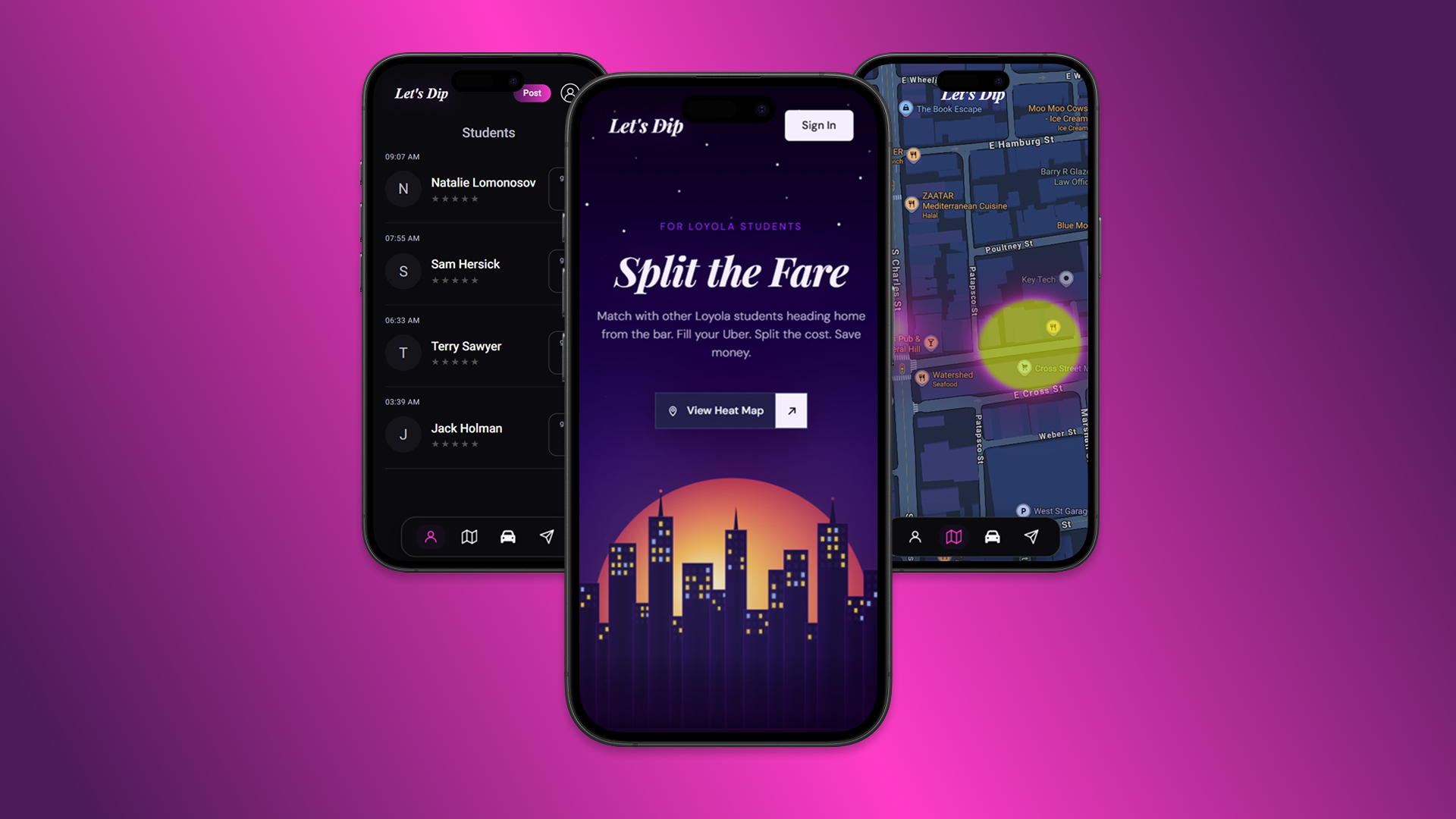
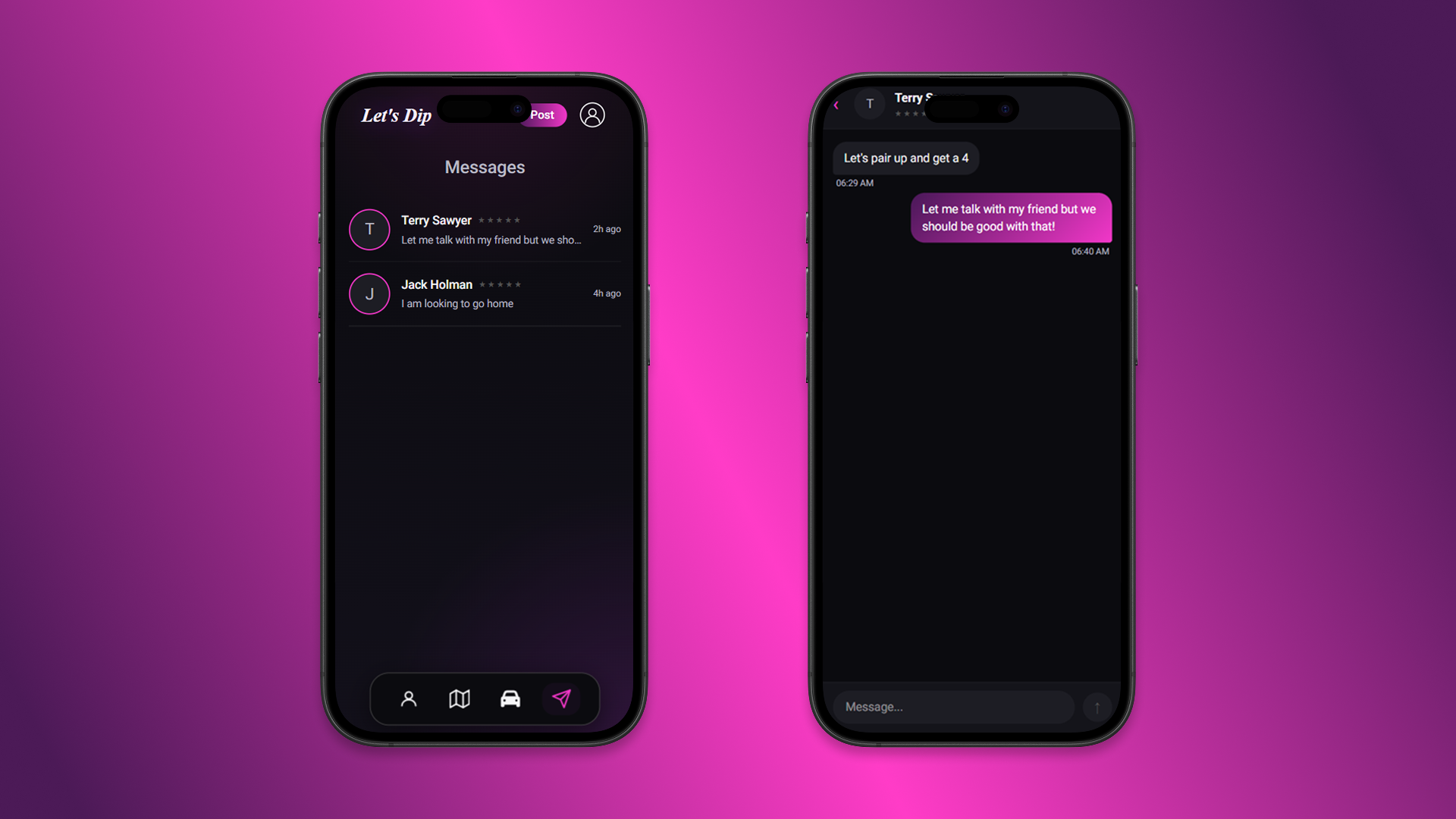
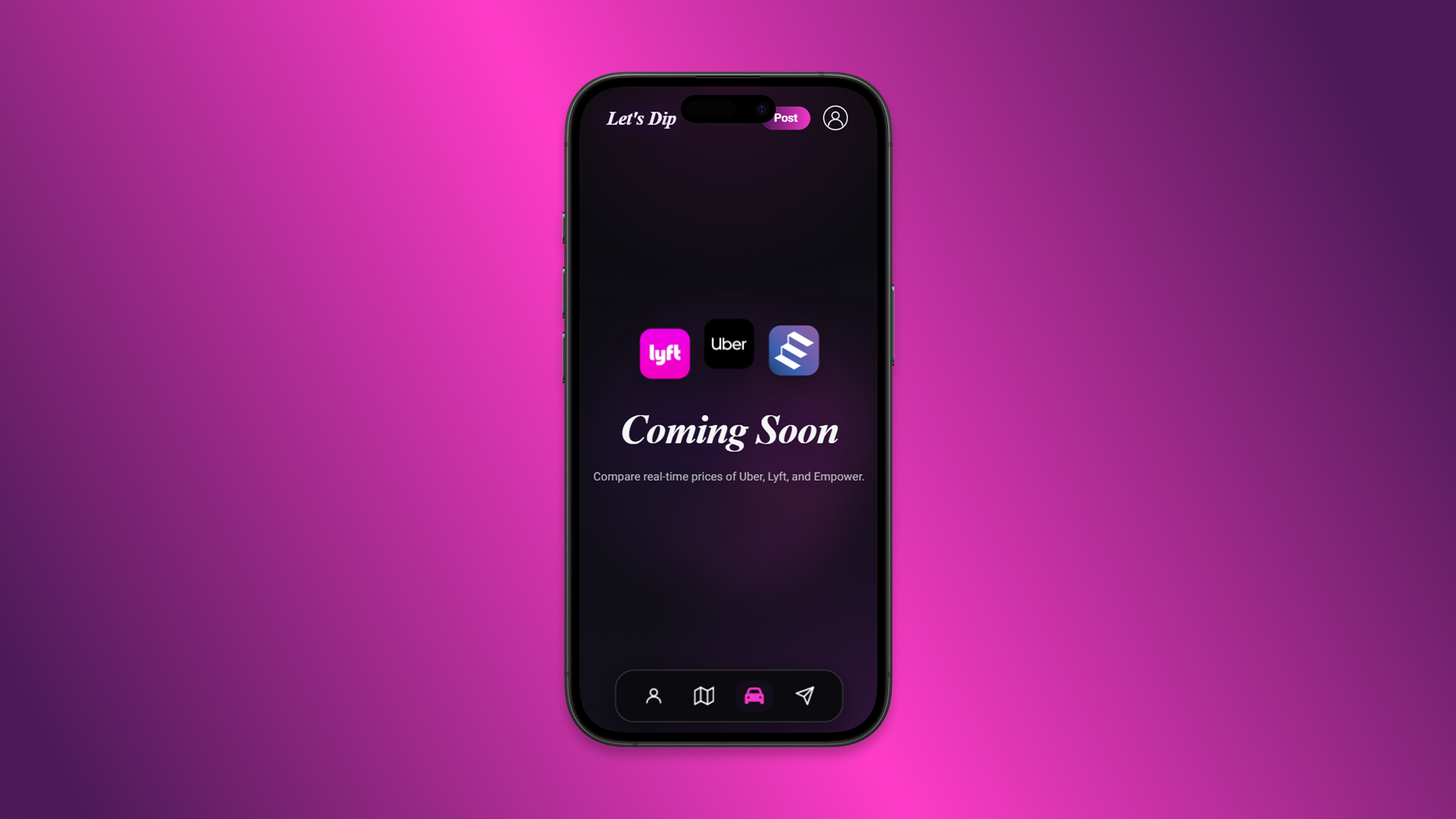
It help's connect odd-sized groups of Loyola students trying to fill Ubers. It also features a "leaving" heat map and a cost comparison across Uber, Lyft, and Empower. It's your guide to a cheaper night out.
How we built it
We built this using Next.js with JavaScript hosted on Vercel. We used Supabase (postgresql) for Authentication and Storage. I enlisted the help of codex, claude code, VS Code, and Figma to develop a production-ready app in just 24-hours.
Challenges we ran into
It turns out it's really difficult to scrape ride share data, and they do this on purpose. If you think about this from Uber's perspective, of course they want empty seats. Less stress for drivers. More rides ordered. More money made.
Uber and Lyft have developer API's but you need explicit permission from the companies to use them. Empower doesn't even have an API. On top of this, you can't just scrape the web because these are mobile apps.
The best method I tested (but unfortunately ran out of time to integrate) was using OpenClaw, Android Studio, and Google Pixel Emulators. OpenClaw was able to successfully open these emulators, enter credentials + pickup details, and record the data all on it's own.
This was my first time using OpenClaw and I must say I was pretty shocked. It quickly learns how to navigate your computer and it's basically real life Jarvis.
Accomplishments that we're proud of
Not only am I proud of building something production-ready in 24 hours (data, security, deployment), I'm also proud of the product itself. I think the UI looks pretty dang good given the time constraints, and I was able to launch a landing page collecting 15 student emails before the app was even built!
I could see students like myself genuinely using this app in the future (especially once I get the cost-comparison finished), so even if I only help a single students, I still consider that a major success!
What we learned
I learned that AI coding tools are no joke. I did this same hackathon last year and in the same time-span I was able to produce 3x as much code solo as I did previously on a team of 4. Additionally, the AI's code was cleaner, smarter, and more accurate.
I truly don't think this idea of "full-stack" development is going to be a job in the future. Companies need people solving hard problems where AI doesn't even come close. Website and web-apps simply aren't that difficult anymore.
What's next for Let’s Dip
I really want to implement that price comparison feature (even if it is "legally ambiguous"). Hopefully I can get some students to try it, and if it's genuinely helpful then maybe I'll even turn it into a mobile app (React Native). The journey remains mysterious and open-ended.
Built With
- javascript
- nextjs
- postgresql
- tailwind


Log in or sign up for Devpost to join the conversation.