-
-

Fetching you some delicious recipes...
-
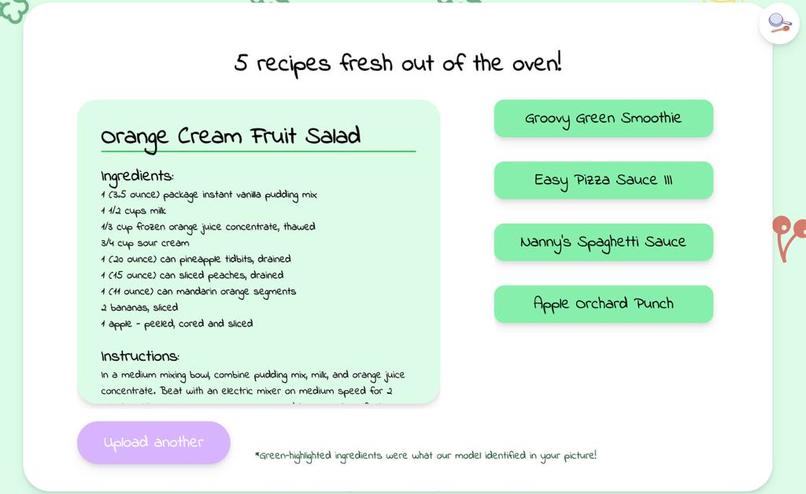
Wouldn't it be nice to have an interactive cookbook? Oh wait.
-
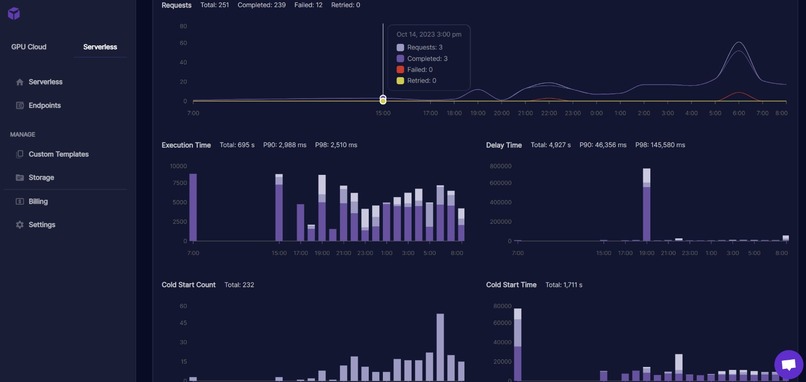
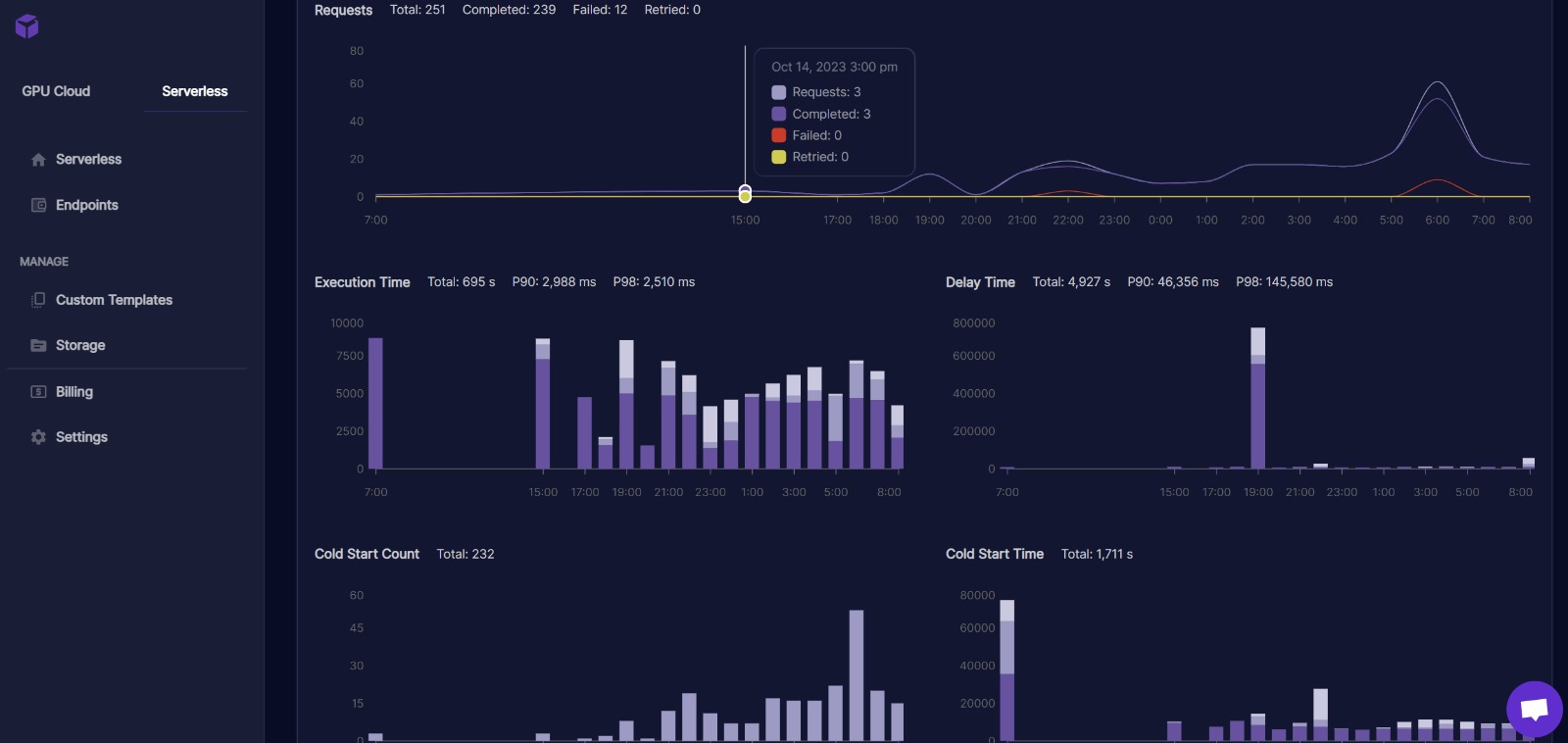
Backend statistics, much data, many wow!
Inspiration
Approximately 330 million pounds of food go to waste in the United States daily. Why is this so? Our team believes frequently disposing of perishable items from refrigerators plays a substantial role in this wastage. We recognize that the miscellaneous ingredients in our fridge often go to waste due to a lack of ideas on how to craft meals out of them. By offering users immediate access to innovative suggestions for ingredient utilization, we could significantly reduce nationwide food waste while saving users money and encouraging them to embrace new recipes.
What it does
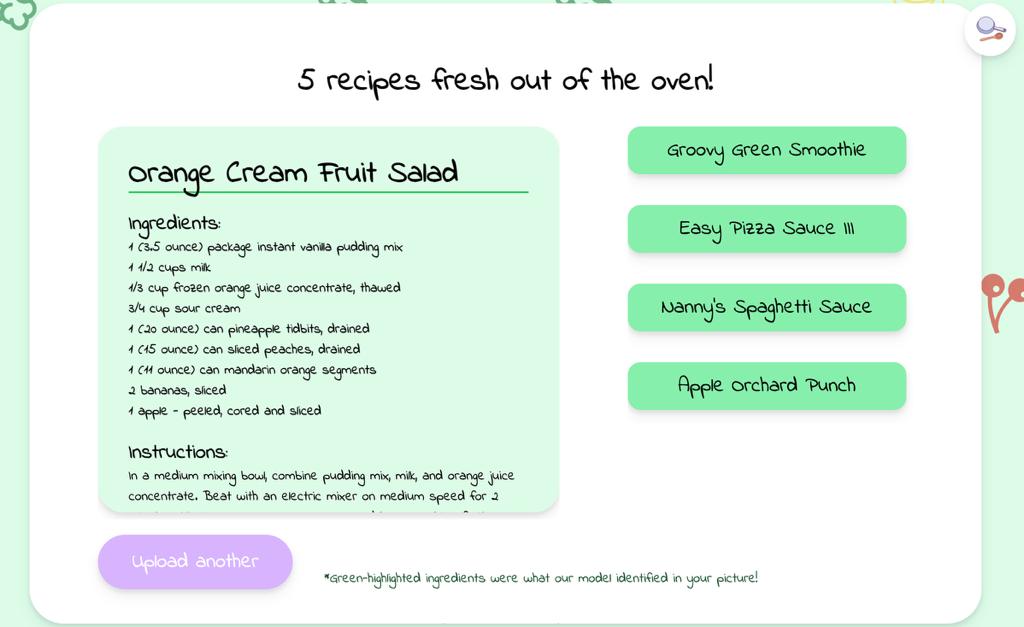
Let's Cook offers an effortless way for users to minimize food waste. Through our interactive web app, users can upload a photo of the contents of their refrigerator and browse viable recipes with said ingredients.
How we built it
The backend uses a microservices and serverless architecture approach. It is packaged in a Docker container and deployed on RunPod. Some microservices include Ultralytics' YOLOv8 object detection model to identify ingredients and a recipe finder module to map them to recipes. A serverless handler function controls the microservices' orchestration to fit our use case. The front end uses Next.js for modularity, leverages Tailwind CSS for efficient styling, and TypeScript for improved code quality and readability. The front end interfaces with the backend through an API call whose payload is a base64 image. In return, the backend provides a list of possible recipes, which are then displayed in an interactive environment for users to browse.
Challenges we ran into
Our main challenges were getting an accurate object detection model, acquiring suitable web-scraped ingredients-to-recipe data, obtaining relevant images for suggested recipes, and fixing bugs in the react components. Each of these was difficult to tackle alone and in a short time. Fortunately, we were able to work together to come up with satisfactory solutions for most of the problems.
Accomplishments that we're proud of
We take pride in our effective collaboration as a team, even though we had just met this weekend. We demonstrated task allocation skills, supported each other when necessary, and leveraged our individual strengths to build a working product. Furthermore, we devoted significant effort to improving the UI/UX design of the application, experimenting with animations, color theories, and overall website functionality.
What we learned
We better understood how different components interact in a web app and learned how to add complex animations to our user designs, creating a more enjoyable and engaging user experience.
What's next for Let's Cook!
We aim to promote our website to add more users to our system. In the future, we would like to incorporate a social element where users can share their recipes, tips, and sustainability hacks on our website. Another suggestion for our website is to provide the nutritional details for each recipe suggestion, helping users make healthier choices while creating a healthier planet.
Built With
- css
- docker
- figma
- javascript
- next.js
- python
- react
- runpod
- tailwind
- typescript
- ultralytics


Log in or sign up for Devpost to join the conversation.