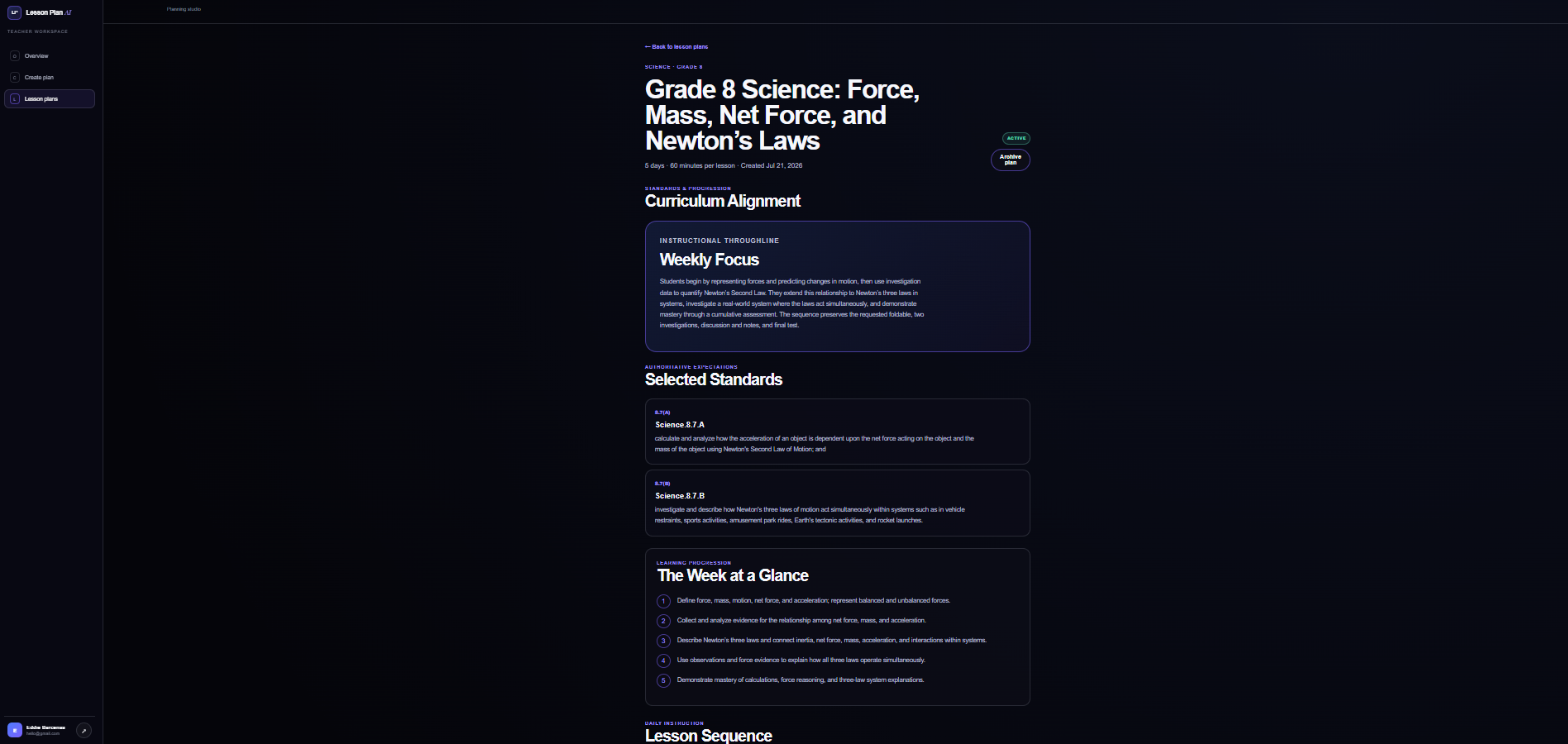
LessonAI: A Multistep AI System for TEKS-Aligned Lesson Planning
A teacher-built, TEKS-aligned application that uses structured curriculum data and a multistep AI workflow to create complete five-day instructional plans—not just isolated lessons or weekly outlines.
Inspiration
I built LessonAI because I know firsthand how much of a teacher’s life can disappear into lesson planning.
I began my career as a science teacher, but I have also always been interested in programming and technology. When generative AI became capable of supporting serious instructional work, I started using it to help create my own lesson plans.
I discovered that when AI receives the right curriculum context, classroom constraints, and instructional guidance, it can organize information into an excellent lesson plan.
The problem was consistency.
A single chatbot prompt might produce a strong lesson one day and an incomplete or poorly structured lesson the next. It could overlook a standard, create an assessment that did not match the instruction, repeat activities, misunderstand the grade level, or lose coherence across a five-day sequence.
In my experience testing existing AI lesson-planning tools, many are designed primarily to generate:
- A single-day lesson
- An isolated classroom activity
- A high-level five-day outline
- Brief topics and activity suggestions
Those tools can be useful for brainstorming, but teachers often still need to expand the output into complete daily instruction, connect the days into a coherent sequence, align assessments with objectives, and prepare the materials required for classroom delivery.
LessonAI was designed to address that gap.
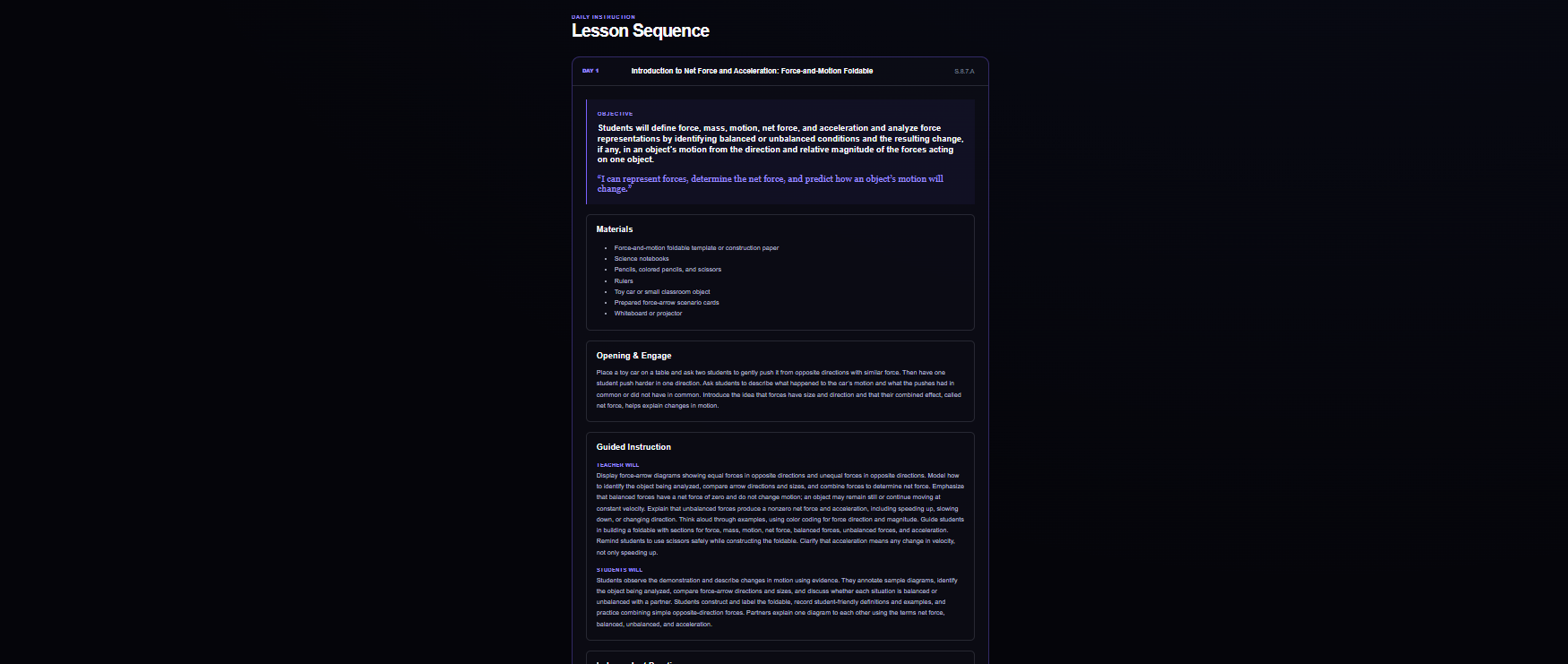
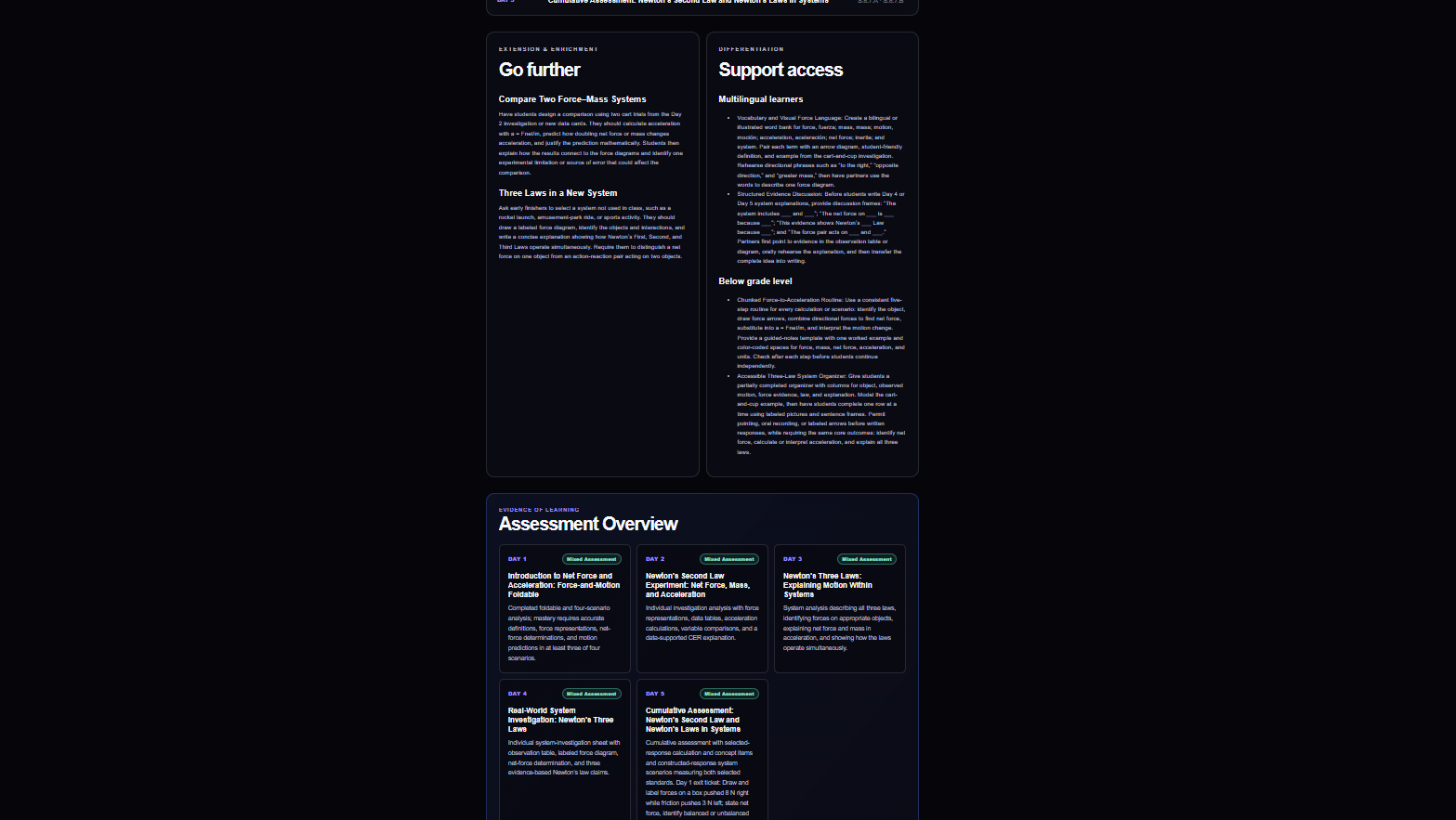
Its central differentiator is the ability to produce a fully developed, TEKS-aligned five-day instructional plan rather than only a single lesson or weekly skeleton.
Each day includes:
- A learning objective
- Guided instruction
- Independent practice
- Assessments
- Checks for understanding
- Guiding questions
- Vocabulary
- Materials
Each lesson is developed individually while remaining connected to the instructional progression of the entire week.
I began by refining and reusing prompts for my own classroom. Over time, those prompts became a personal lesson-planning system. For nearly two years, I wanted to turn that process into a real product.
Ironically, the same problem I wanted to solve often prevented me from building it.
After teaching, grading, planning, preparing materials, and handling responsibilities outside of school, there was rarely enough uninterrupted time or energy left to develop the project.
The Problem Teachers Face
Lesson plans are often treated as required professional documentation—almost like instructional boilerplate that teachers must complete and submit.
However, completing the written lesson plan does not complete the actual preparation.
Teachers still need to:
- Find or create instructional materials
- Prepare presentations and examples
- Design classroom activities
- Adapt resources for different learners
- Develop assessments and exit tickets
- Organize materials for classroom delivery
- Adjust instruction based on student performance
The written lesson plan is only one layer of the work.
This burden becomes especially difficult for middle and high school teachers because they may teach several different courses or subjects.
I have personally taught five or six different subjects.
That does not mean making small adjustments to one lesson. It can mean creating five or six separate instructional sequences, each with different standards, objectives, activities, assessments, vocabulary, and materials.
Weekly Planning Workload = Number of Course Preparations × Time Required per Plan
For teachers with several preparations, planning can consume evenings, weekends, family time, rest, professional growth, and time that could have been spent pursuing personal goals.
LessonAI was created to reduce that burden.
More Than a GPT Wrapper
LessonAI is not simply a form connected to one GPT prompt.
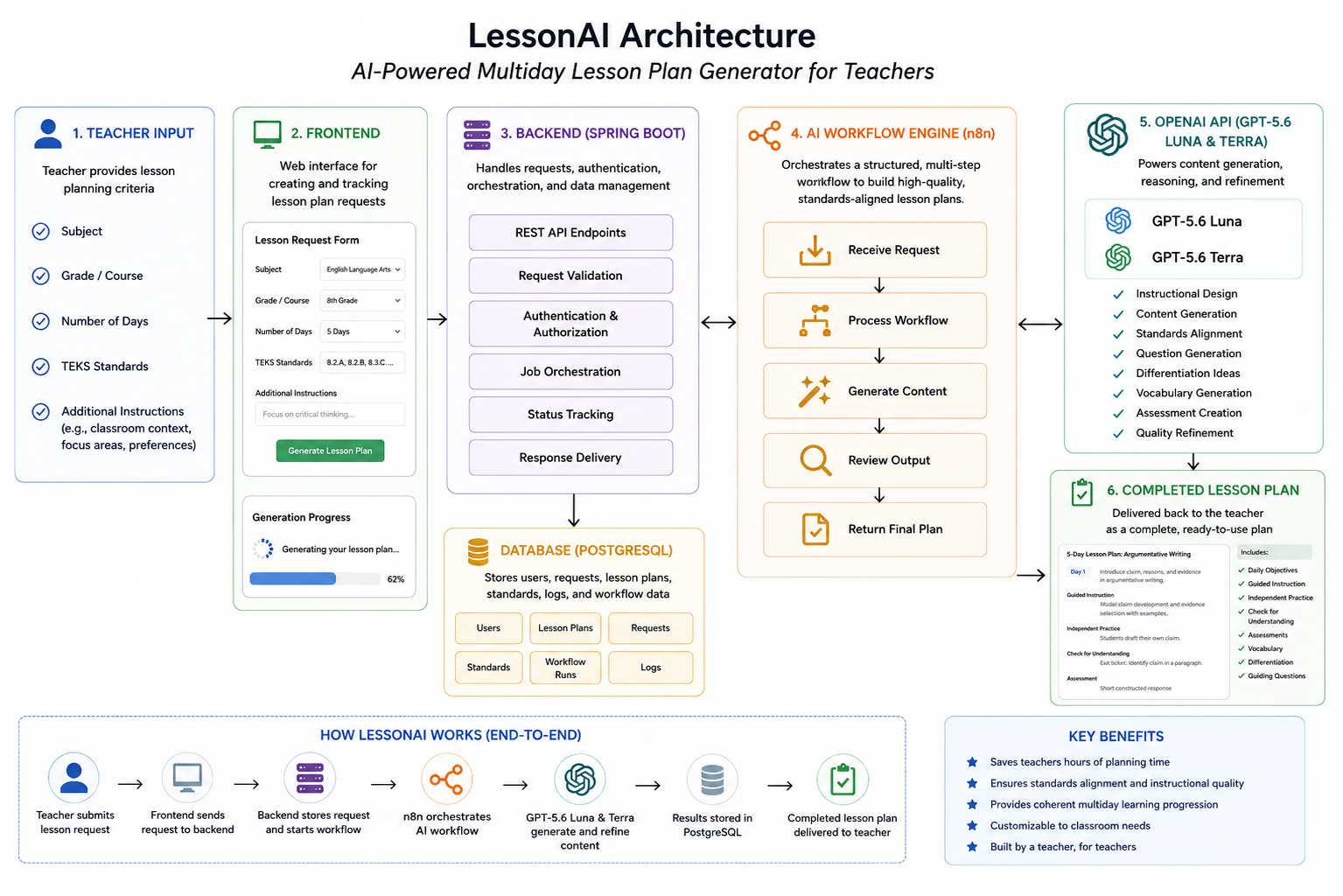
It is a complete application built around:
- Structured TEKS curriculum data
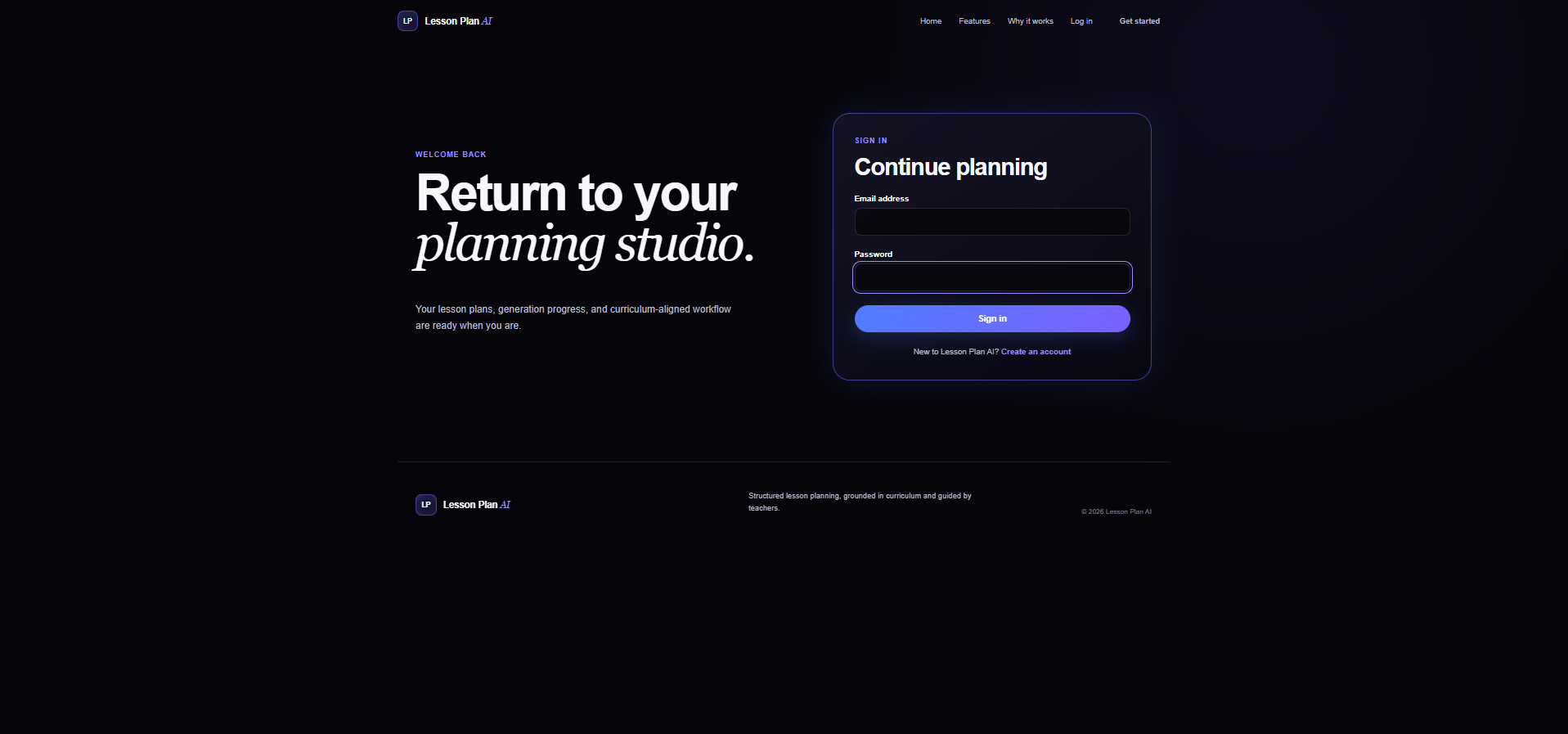
- Persistent teacher accounts and lesson-plan ownership
- A Spring Boot backend
- PostgreSQL curriculum and lesson-plan storage
- Generation-job tracking
- A private multistep AI orchestration workflow
- OpenAI-powered generation and evaluation
The language model is one component inside the system—not the entire product.
The application preserves the teacher’s request, supplies structured curriculum context, coordinates generation, evaluates the result, and returns a complete lesson plan that can be saved and reviewed.
A Workflow, Not a Single Prompt
The breakthrough came when I stopped treating lesson planning as one large AI request.
Instead of relying on a chatbot to produce an entire multiday lesson plan correctly in one response, I developed a structured, multistep workflow. The system separates lesson planning into focused responsibilities that build upon and evaluate one another.
I do not expect one prompt to solve the entire instructional problem.
LessonAI progressively develops the plan, checks its instructional quality, addresses weaknesses, and transforms the result into a consistent teacher-facing format.
This approach produces more reliable and coherent results than asking a chatbot to generate everything at once. It also allows the system to maintain alignment among:
- Curriculum standards
- Learning objectives
- Instruction
- Guided and independent practice
- Assessments
- Vocabulary
- Instructional supports
A weekly outline may help a teacher organize ideas, but it does not eliminate the detailed work required to turn those ideas into five classroom-ready lessons.
LessonAI moves beyond that outline by developing each instructional day while preserving a coherent weekly sequence.
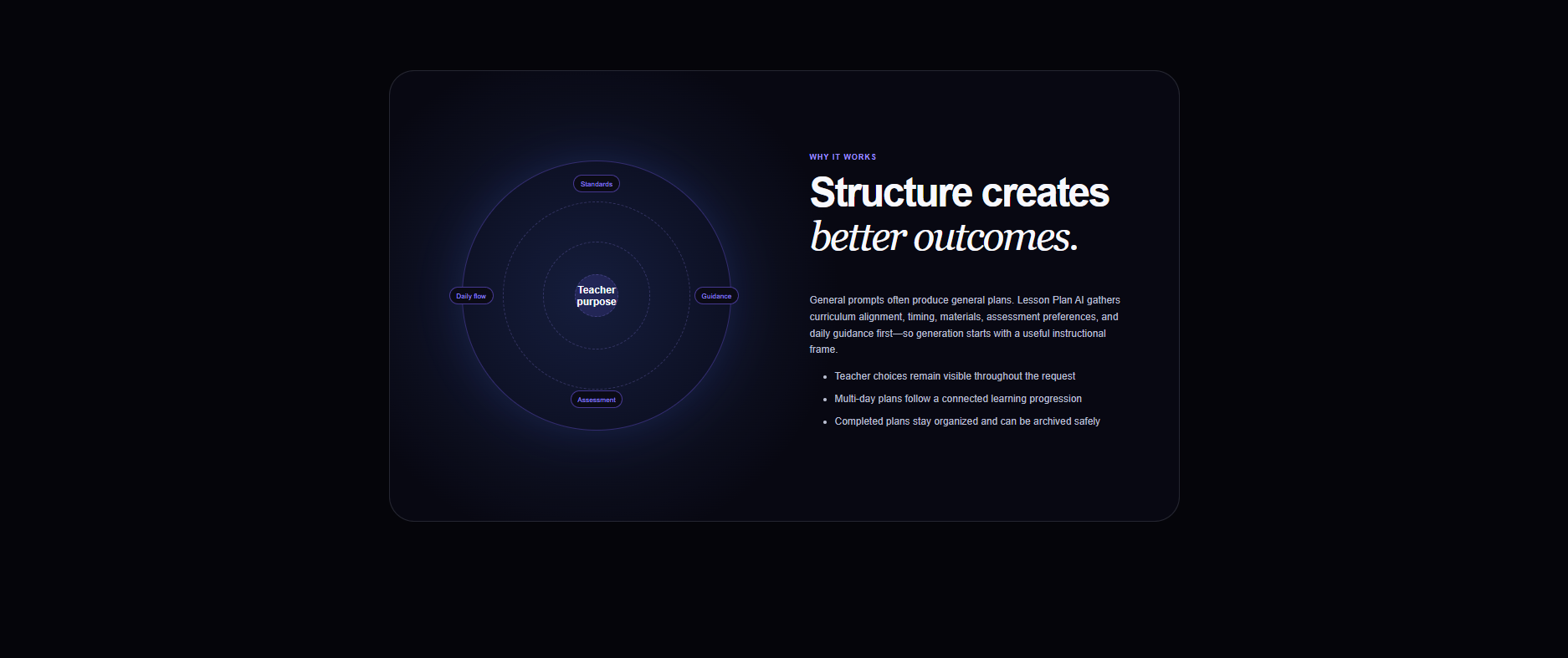
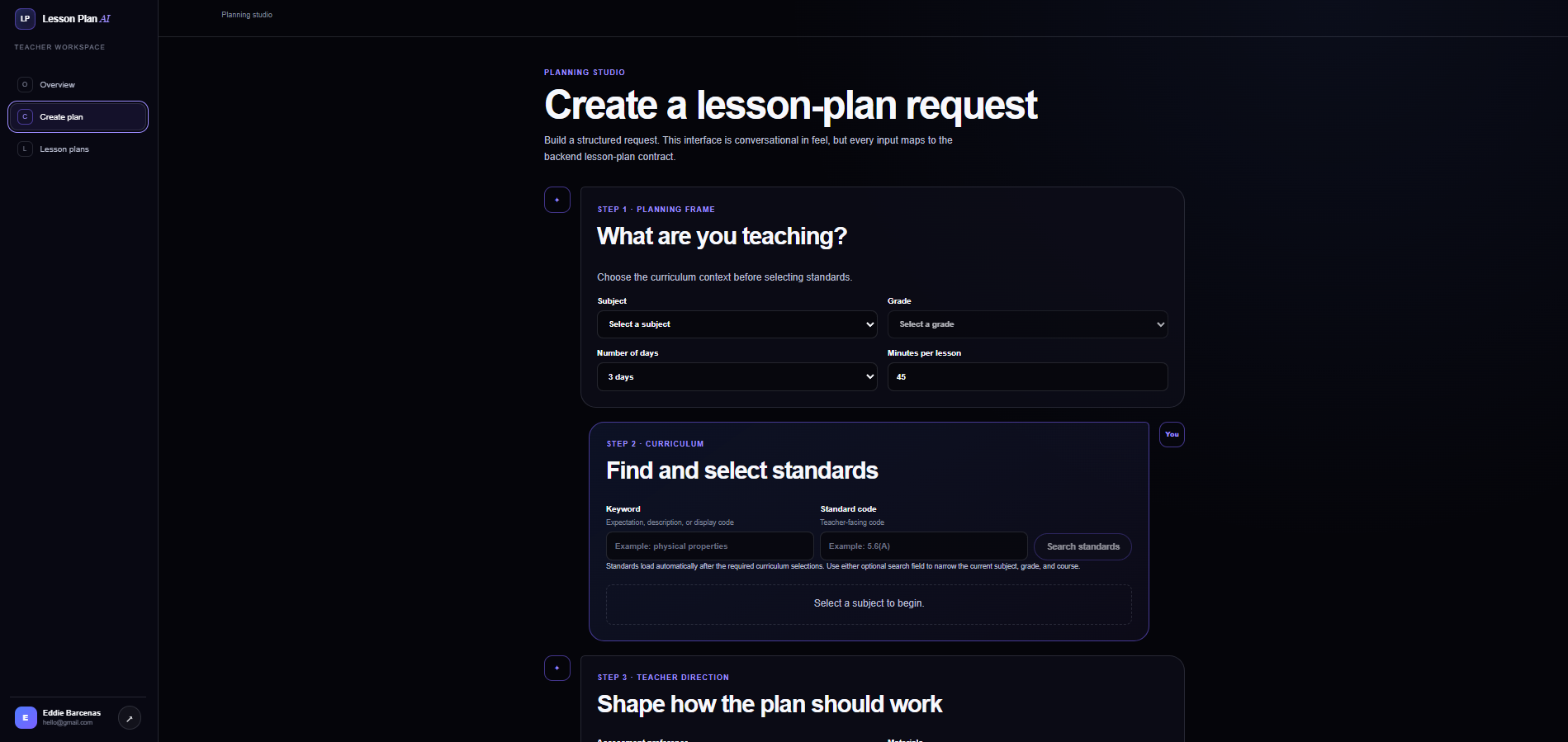
TEKS alignment is built into the foundation of the application. Teachers select the actual standards they need to address, and LessonAI receives structured curriculum context rather than relying only on a short standards code or asking the model to guess what the standard means.
The detailed orchestration is part of LessonAI’s core design, but its purpose is simple:
Turn teacher input and structured curriculum context into a complete, TEKS-aligned instructional starting point through a deliberate AI workflow rather than a single unpredictable response.
Building With GPT-5.6 and Codex
Before Build Week, I already had the instructional workflow, curriculum data, product direction, and much of the architecture planned.
What I did not yet have was a complete working application.
GPT-5.6 and Codex changed the speed at which I could turn those plans into software.
Using GPT-5.6 through ChatGPT, I worked through product decisions, architecture, data contracts, backend requirements, curriculum structures, testing strategies, and the connection between the teacher experience and the AI workflow.
Codex then became my development partner for implementing and evolving the application.
I directed Codex through detailed Markdown task files, architecture references, schemas, acceptance criteria, and testing requirements. I broke the application into manageable development tasks, reviewed the implementation, ran the tests, identified problems, and refined the instructions.
This was not a single request to “build an application.” It was an iterative collaboration.
I contributed the teaching experience, product vision, instructional requirements, architecture decisions, and evaluation. GPT-5.6 helped me reason through complex decisions. Codex helped translate those decisions into working software.
With the right teamwork between me, GPT-5.6, and Codex, we assembled the Spring Boot application in less than one week.
That application includes:
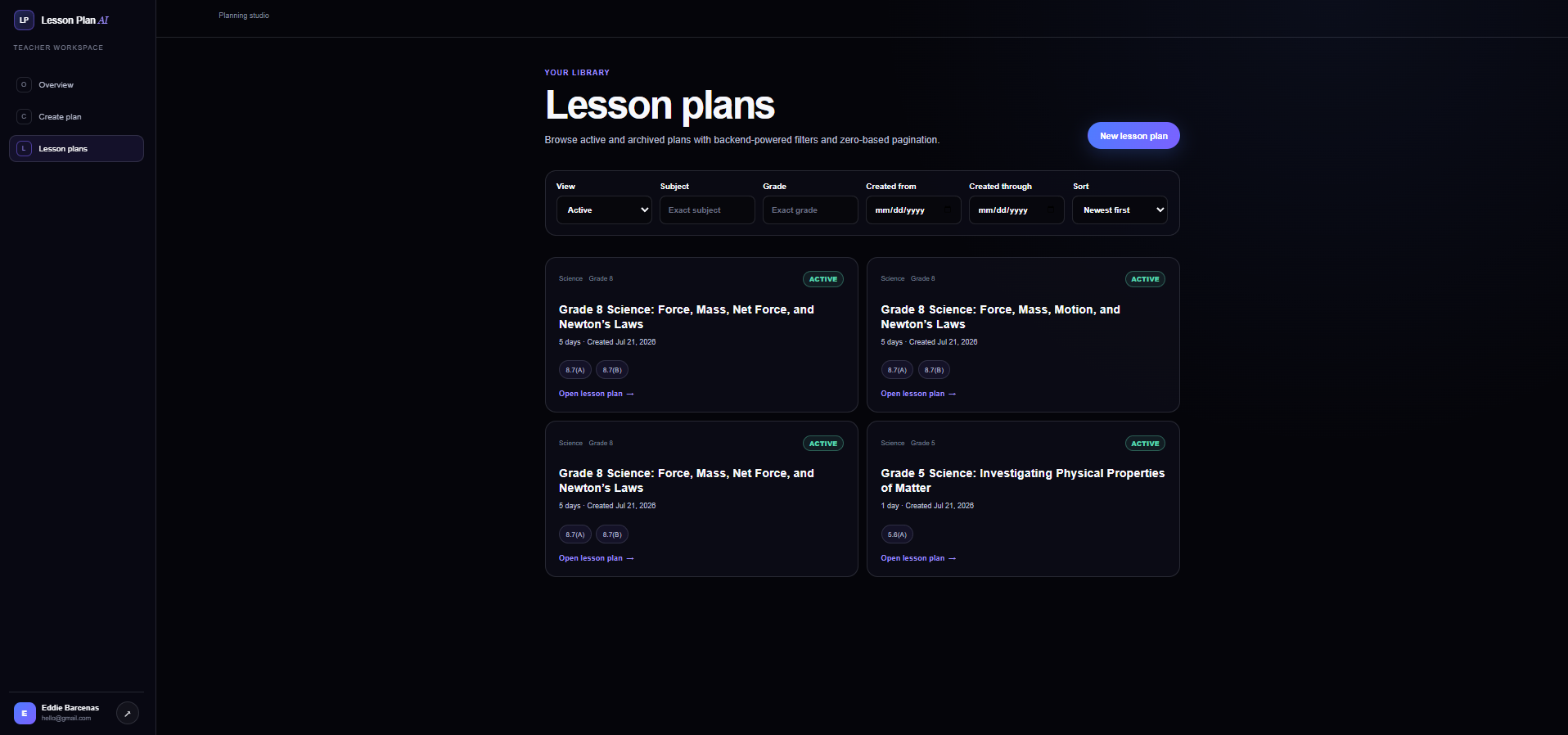
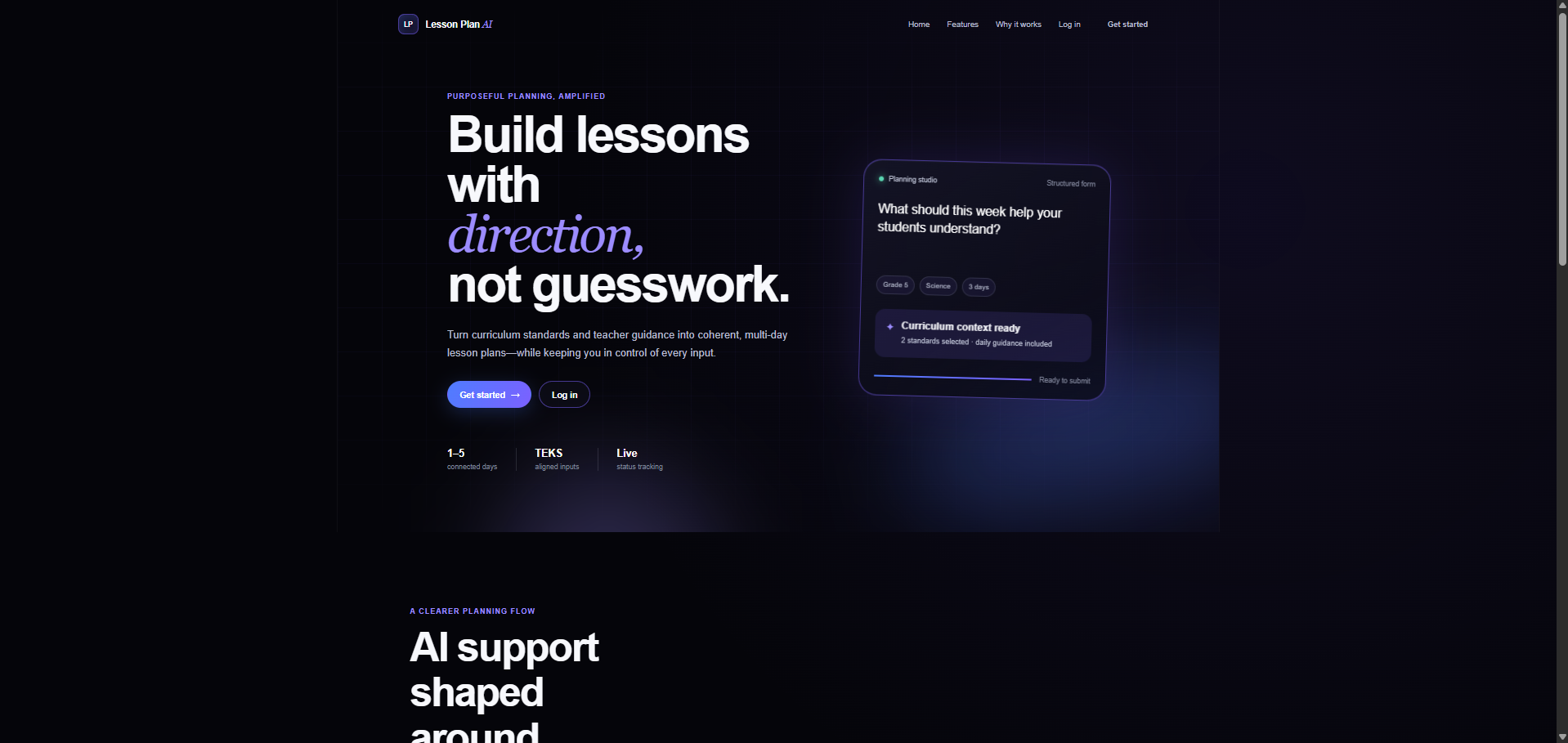
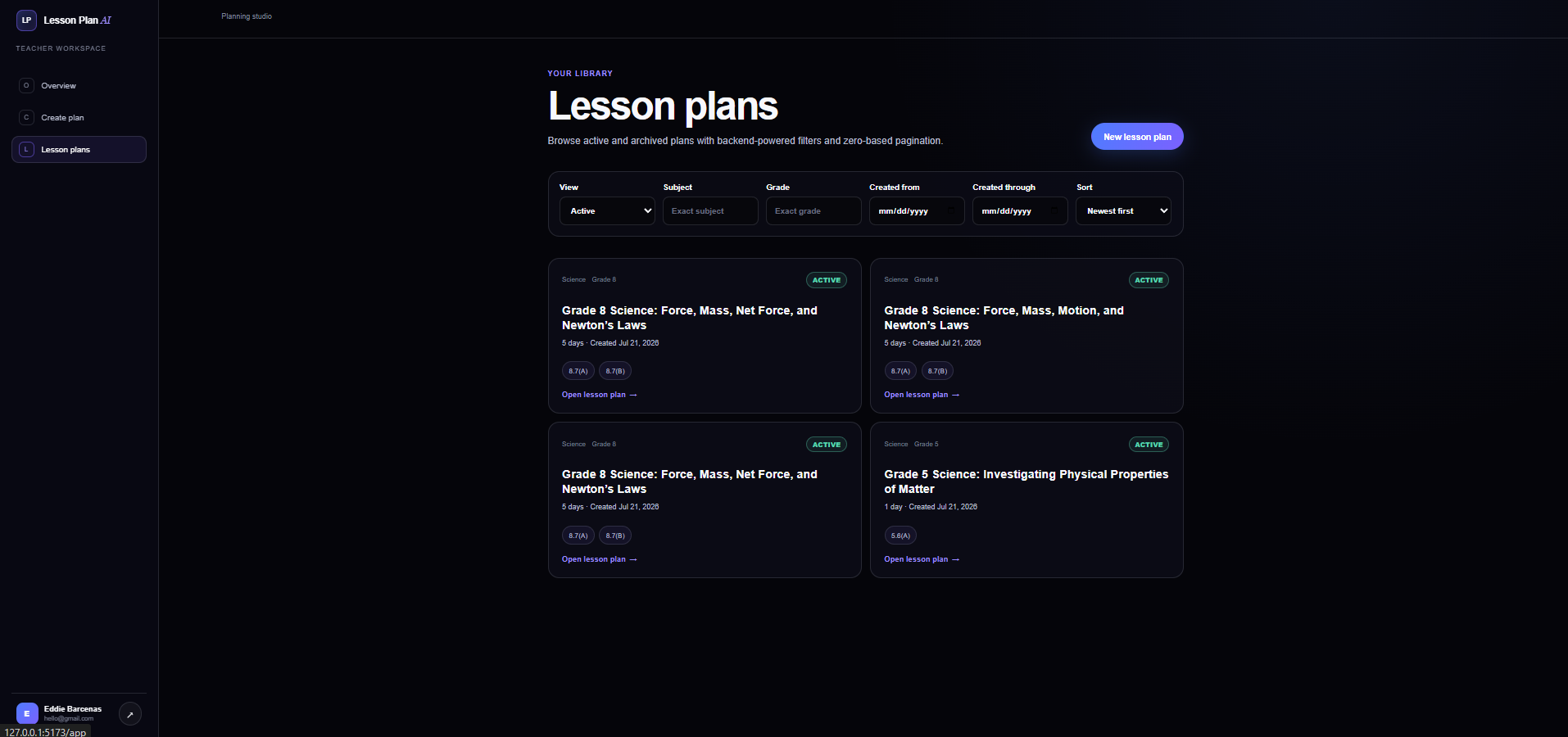
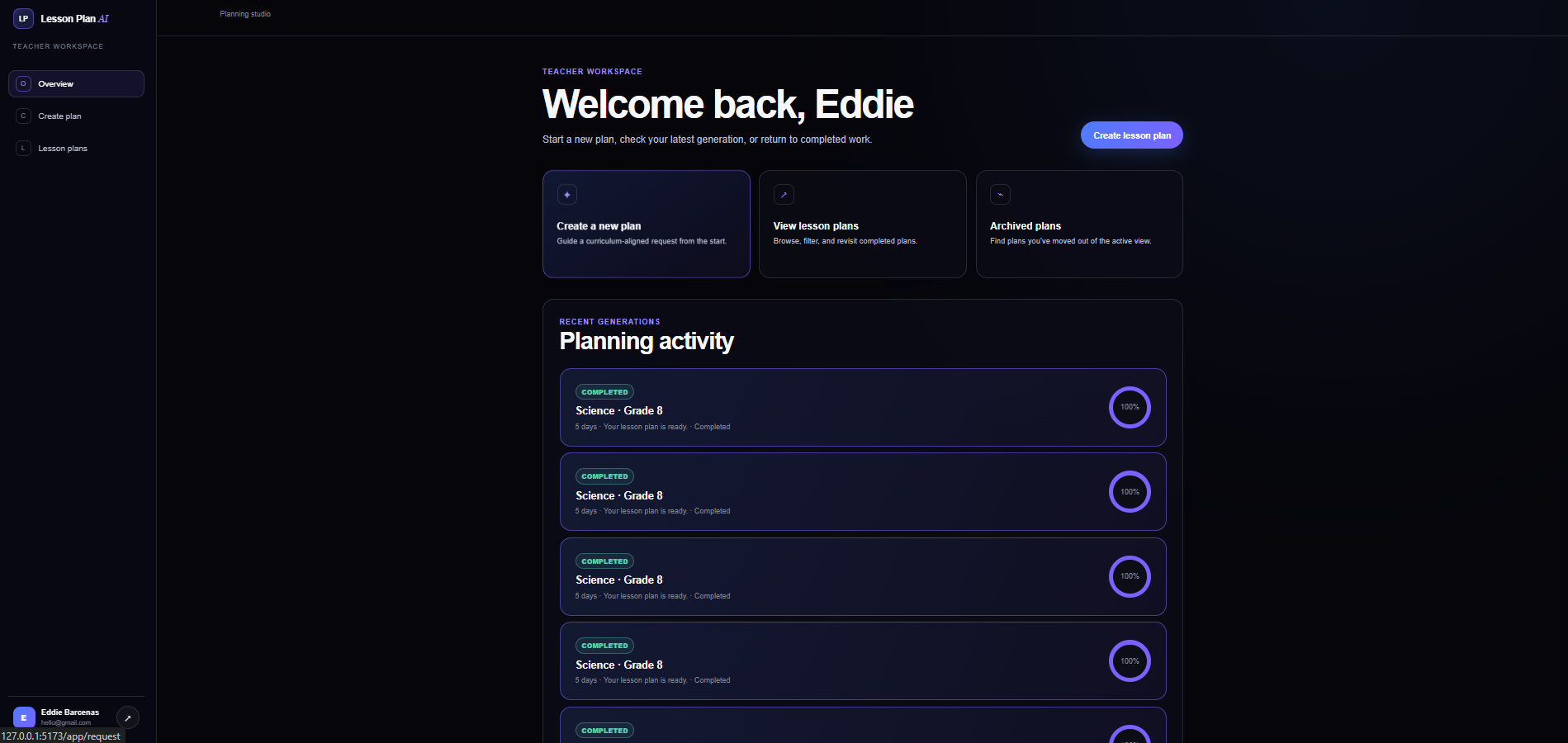
- A polished teacher-facing website
- Java and Spring Boot backend services
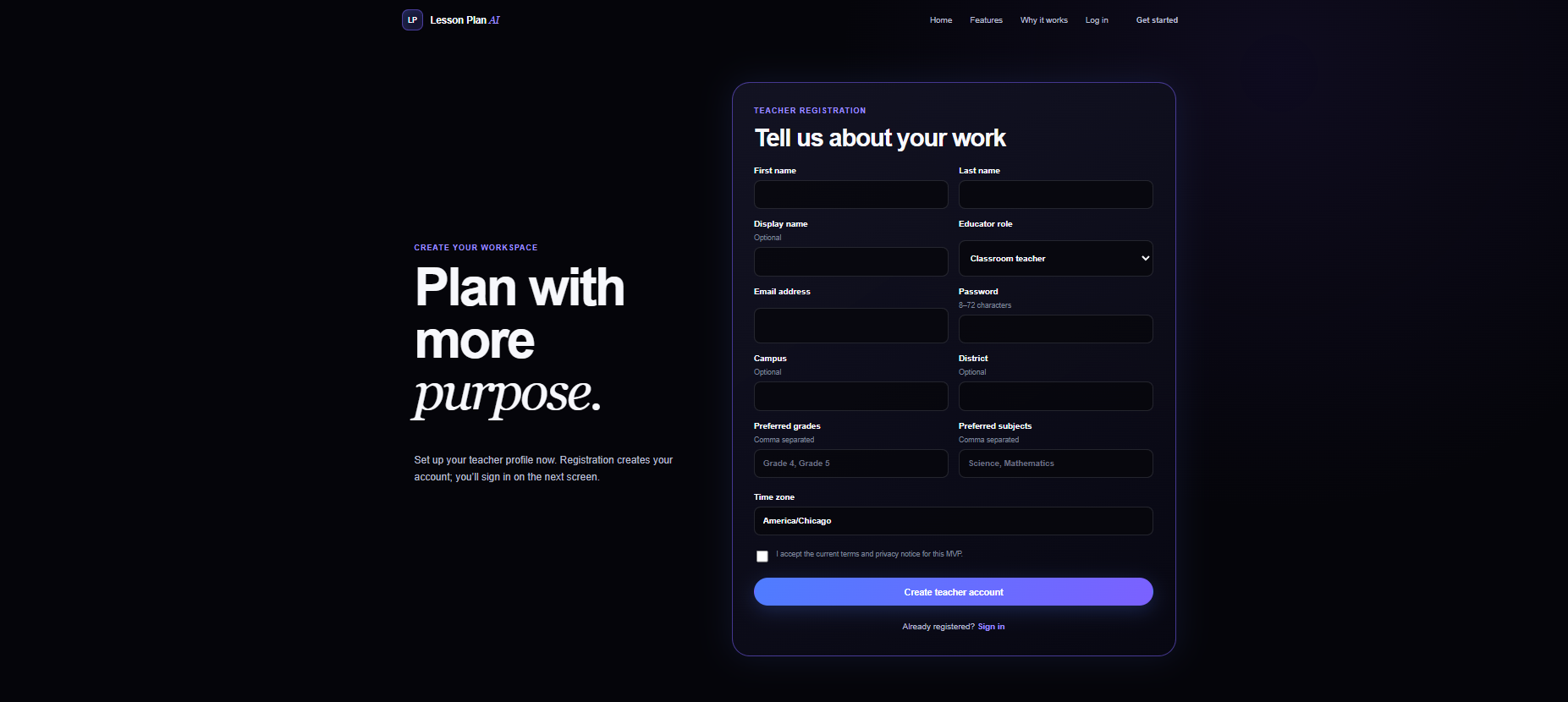
- Authentication and teacher profiles
- Secure ownership of lesson plans
- PostgreSQL curriculum and lesson-plan storage
- Curriculum Standards APIs
- Lesson-plan request and generation tracking
- Saved lesson-plan management
- Administrative functionality
- Docker-based local infrastructure
- An n8n orchestration layer
- OpenAI API-powered lesson generation and evaluation
GPT-5.6 helped me design and reason through the system.
Codex helped me build it.
The OpenAI API powers the intelligence inside the LessonAI workflow.
Building the Curriculum Intelligence
One of the most important parts of LessonAI is the curriculum data behind the generated lessons.
A model cannot create consistently aligned instruction from a standards code alone. It needs the complete student expectation, grade level, subject, course, strand, supporting context, and appropriate academic vocabulary.
I therefore developed curriculum-data pipelines that collect, normalize, validate, enrich, and prepare Texas Essential Knowledge and Skills records for use throughout the application.
The source data was not uniform. Standards from different subjects used different structures, naming conventions, course relationships, and levels of supporting information. Some subjects included official Texas Education Agency glossary definitions, while others provided little or no equivalent vocabulary support.
Codex helped me analyze the available TEA glossary entries across many standards and identify recurring characteristics in how the definitions were written. It helped surface inconsistencies, distinguish authoritative TEA language from generated enrichment, and convert those observations into concrete vocabulary-writing rules with examples and counterexamples.
Those rules then supported the creation of grade-appropriate instructional vocabulary for subjects such as Mathematics and Social Studies, where equivalent TEA glossary coverage was not available in the source records.
The enrichment process uses the student expectation as the primary source of meaning, with the knowledge-and-skills statement, description, grade level, course, and strand providing additional context.
The resulting vocabulary records can include:
- The academic term
- A precise instructional definition
- A student-friendly definition
- A classroom usage example
- A Spanish cognate when appropriate
- The source and standards associated with the term
Generated vocabulary is kept distinguishishable from official TEA-provided content. This allows LessonAI to preserve authoritative curriculum information while still filling practical gaps teachers encounter when preparing lessons.
Codex also helped build and refine the supporting data pipelines. These pipelines process curriculum source files, standardize fields across subjects, preserve source identifiers, validate record structures, calculate glossary metadata, and prepare the records for import into PostgreSQL.
The curriculum pipeline follows five stages:
- Source curriculum data
- Normalization
- Validation
- Vocabulary enrichment
- Application import
This work matters because LessonAI is not relying on a model to guess what a standard means. The workflow receives structured curriculum context that has already been collected, reviewed, normalized, and prepared for instructional use.
GPT-5.6 and Codex helped turn raw curriculum documents and datasets into a usable standards and vocabulary foundation for the application.
Challenges
The greatest challenge was achieving consistent quality across a long, structured lesson plan.
A complete five-day plan may contain thousands of words and many interconnected components. Each day must be useful independently while contributing to a coherent weekly progression.
The system must maintain alignment between:
- Curriculum standards
- Learning objectives
- Instructional activities
- Guided and independent practice
- Assessments
- Vocabulary
- Differentiation
- Materials
- Student needs
- Available instructional time
Long outputs also introduce technical problems. The generated information must remain structured while moving between the website, Spring Boot backend, database, orchestration workflow, and OpenAI API.
During development, I encountered problems including:
- Missing or inconsistent fields
- Malformed structured responses
- Repeated instructional content
- Weak progression between lesson days
- Assessments that did not fully match objectives
- Inconsistent formatting
- Model outputs that were strong in one section but weak in another
I learned that these problems could not be solved reliably by making one prompt longer.
Better results required a better system around the model: stronger context, focused responsibilities, structured contracts, evaluation, validation, and deliberate repair.
Another challenge was maintaining teacher control.
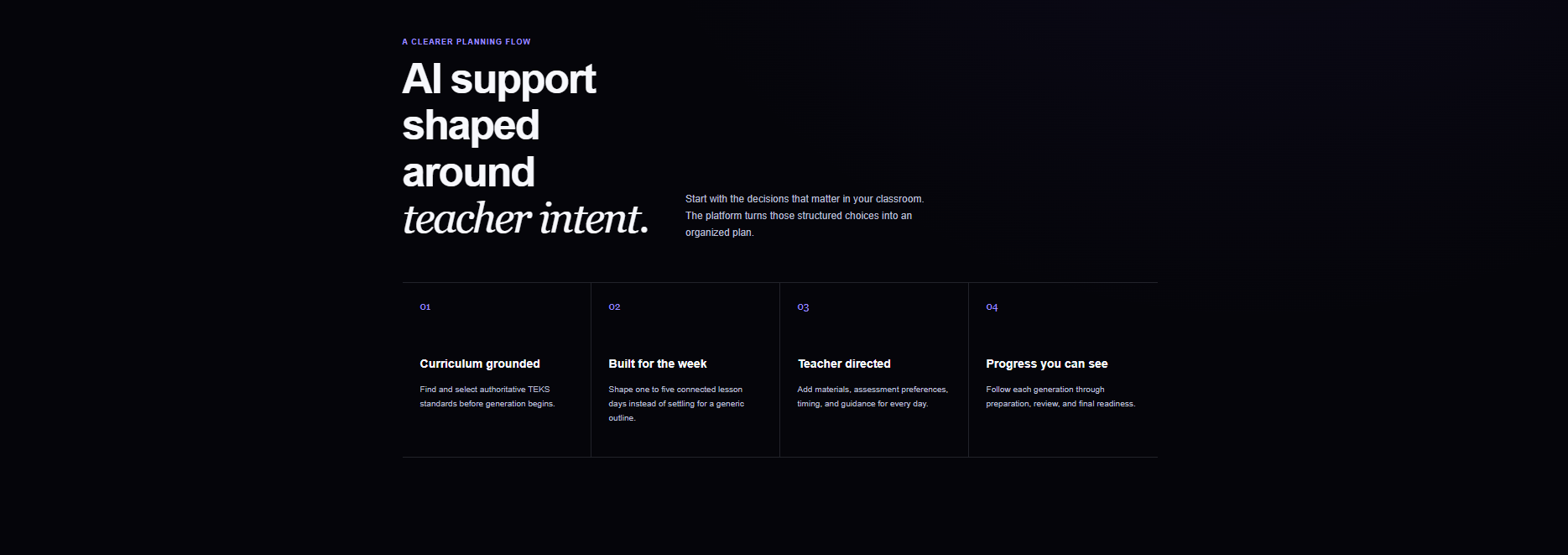
LessonAI is not intended to dictate how someone must teach. The teacher selects the curriculum standards, grade or course, instructional duration, and classroom context. The platform accelerates the preparation process while leaving the final instructional decisions with the educator.
What I Learned
The most important lesson I learned is that AI quality depends on much more than the model.
The surrounding system also matters:
- Domain expertise
- Relevant curriculum context
- Structured data
- Clear responsibilities
- Evaluation
- Iteration
- Software architecture
- User experience
- Human judgment
My teaching experience helped me recognize needs that may not be obvious to someone outside education.
Teachers do not simply need more generated content. They need content that is aligned, organized, editable, practical, and appropriate for their students.
They need a system that understands that lesson planning connects standards, objectives, assessments, materials, classroom constraints, and the sequence of learning across several days.
I also learned how dramatically GPT-5.6 and Codex can amplify someone who understands the domain and provides precise context.
They did not create the reason for LessonAI or replace the instructional experience behind it. They helped transform nearly two years of ideas, experiments, prompts, curriculum work, and planning into a functioning product.
Why It Matters
LessonAI is not designed to replace teachers.
It is designed to reduce one of the most repetitive and time-consuming parts of their work.
Teachers will still select resources, adjust instruction, respond to students, and make the professional decisions that depend on knowing their classroom.
However, they should not have to begin every lesson plan from an empty page, repeatedly reconstruct the same required framework for several different subjects, or receive only a weekly skeleton that they must finish themselves.
LessonAI provides a complete, TEKS-aligned instructional starting point that teachers can review, revise, and adapt.
The potential time savings can be expressed simply:
Time Returned = Preparations x Time Saved per Plan x Instructional Weeks
Even a modest reduction in planning time can return meaningful hours over a school year, especially for teachers responsible for five or six different preparations.
That time can return to their families, health, creativity, professional development, personal projects, and lives outside the classroom.
That is the purpose of LessonAI: not simply to generate more educational content, but to give teachers some of their time back.
What Comes Next
The immediate next step for LessonAI is deployment.
The application currently operates as a complete local system, with the teacher-facing website, Spring Boot backend, PostgreSQL database, curriculum data, n8n workflow, and OpenAI API working together. Deployment will allow teachers outside my own environment to use LessonAI in authentic instructional settings.
After deployment, I plan to conduct a pilot study with middle and high school teachers who use the application for weekly planning. The study will focus especially on educators responsible for multiple subjects or course preparations.
The pilot will examine:
- How much planning time LessonAI saves each week
- Whether time savings increase for teachers with multiple preparations
- How much revision is required before a plan is classroom-ready
- Which lesson components teachers find most useful
- Whether teachers trust the generated standards alignment, instructional sequence, assessments, and vocabulary
- Whether LessonAI reduces planning work completed during evenings and weekends
- How teachers collaborate when planning the same course or curriculum
A meaningful pilot will require support for hosting, OpenAI API usage, monitoring, and continued product development. Because LessonAI produces substantial multiday plans through a quality-focused, multistep workflow, API costs will grow as more teachers begin using the platform.
Access to OpenAI credits, technical guidance, or pilot funding would allow me to test the product with a larger and more representative group of teachers without shifting those early costs onto educators.
That support would make it possible to measure real usage, improve efficiency, compare model configurations, and determine where higher-cost reasoning provides the greatest instructional value.
Another major next step is collaborative team planning.
Teachers rarely plan entirely alone. They work in departments, professional learning communities, grade-level teams, and shared-course groups. However, most AI lesson-planning tools are designed around one teacher generating one isolated resource.
LessonAI’s team-planning functionality would allow teachers to:
- Share lesson plans within a course or department
- Collaboratively review and revise instructional sequences
- Assign portions of a unit or week to different team members
- Preserve a shared standards-aligned planning framework
- Reuse and adapt approved plans across classrooms
- Build a collective instructional resource library over time
This would allow AI to support not only individual productivity, but also the way teachers already plan together.
Teacher feedback and measured pilot results will guide the next development phase, including stronger revision tools, expanded curriculum coverage, retrieval-assisted instructional resources, cost optimization, and collaborative planning.
The development path is:
- Deploy LessonAI
- Pilot it with teachers
- Measure its impact
- Improve and optimize the platform
- Expand into collaborative team planning
Build Week helped transform LessonAI from a project I had envisioned for nearly two years into a functioning application.
The next challenge is obtaining the deployment and API support needed to validate it with teachers and determine how much time it can genuinely return to their lives.


Log in or sign up for Devpost to join the conversation.