Inspiration
FluentTrace grew from my experience learning Spanish and Portuguese. Homework was often generic, disconnected from my classes, and not tailored to my interests or needs. There was no clear way to track what I had learned, revisit it through spaced practice, or tell my teacher when homework felt too easy, difficult, or irrelevant.
What it does
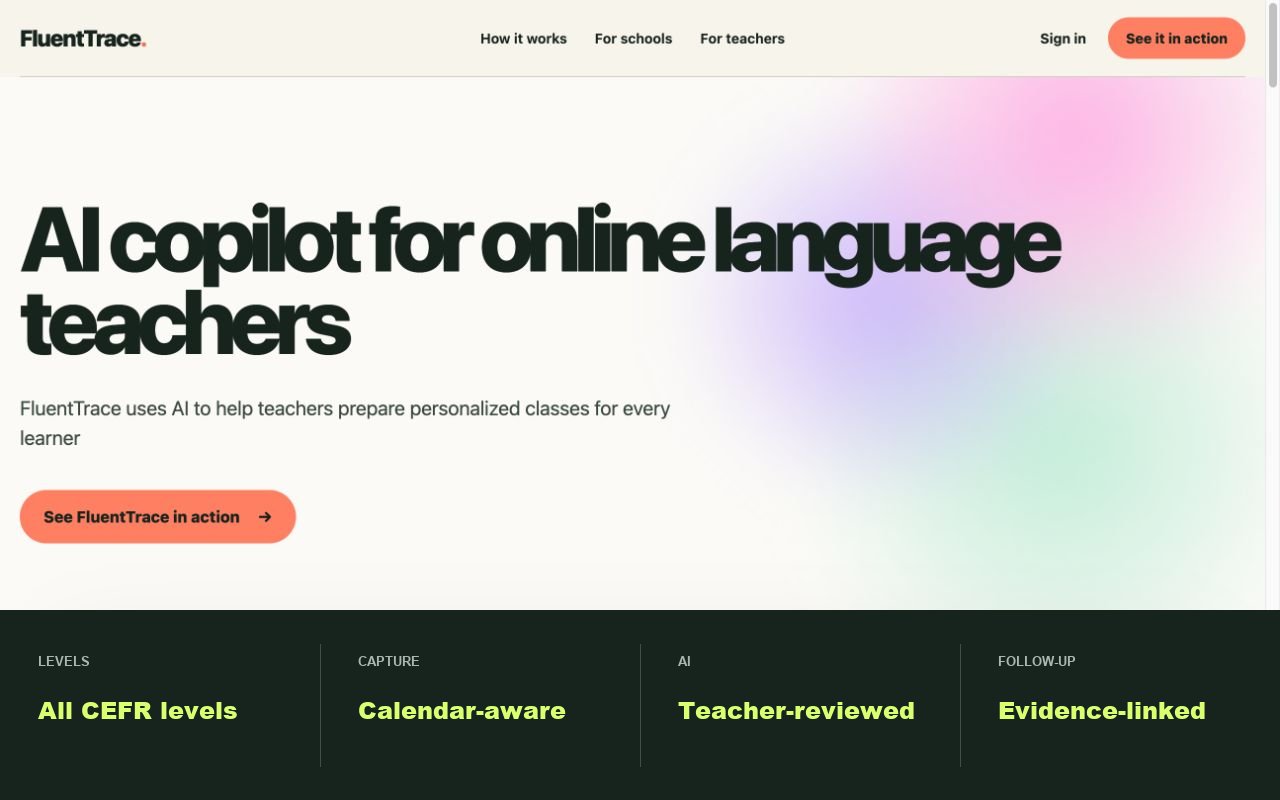
FluentTrace closes this loop. It uses real class data to help online language teachers capture insights, prepare every lesson, and create personalized practice. Learners can provide feedback, while important knowledge is reinforced over time and in new contexts.
Teachers remain in control: AI-generated insights, homework, and feedback are reviewed before affecting a learner’s record.
How I built it
I built FluentTrace during OpenAI Build Week using Codex with GPT-5.6. Codex helped me create the Chrome extension, teacher and learner experiences, AI workflows, database, tests, and production infrastructure.
The biggest challenge was making AI trustworthy and genuinely useful. I learned that effective personalization requires continuity—remembering what happened, collecting feedback, reinforcing knowledge, and helping teachers decide what should happen next.
Built With
- chrome
- cloudflare-queues
- cloudflare-r2
- cloudflare-workers
- cloudflare-workflows
- codex
- gemini-3-flash
- gpt-5.6
- hono
- hyperdrive
- manifest-v3
- postgresql
- react
- react-router
- supabase
- typescript
- vite
- vitest
- zod

Log in or sign up for Devpost to join the conversation.