-
-
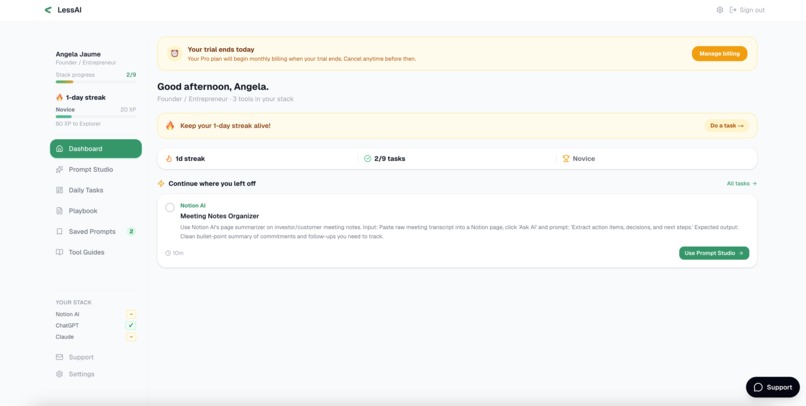
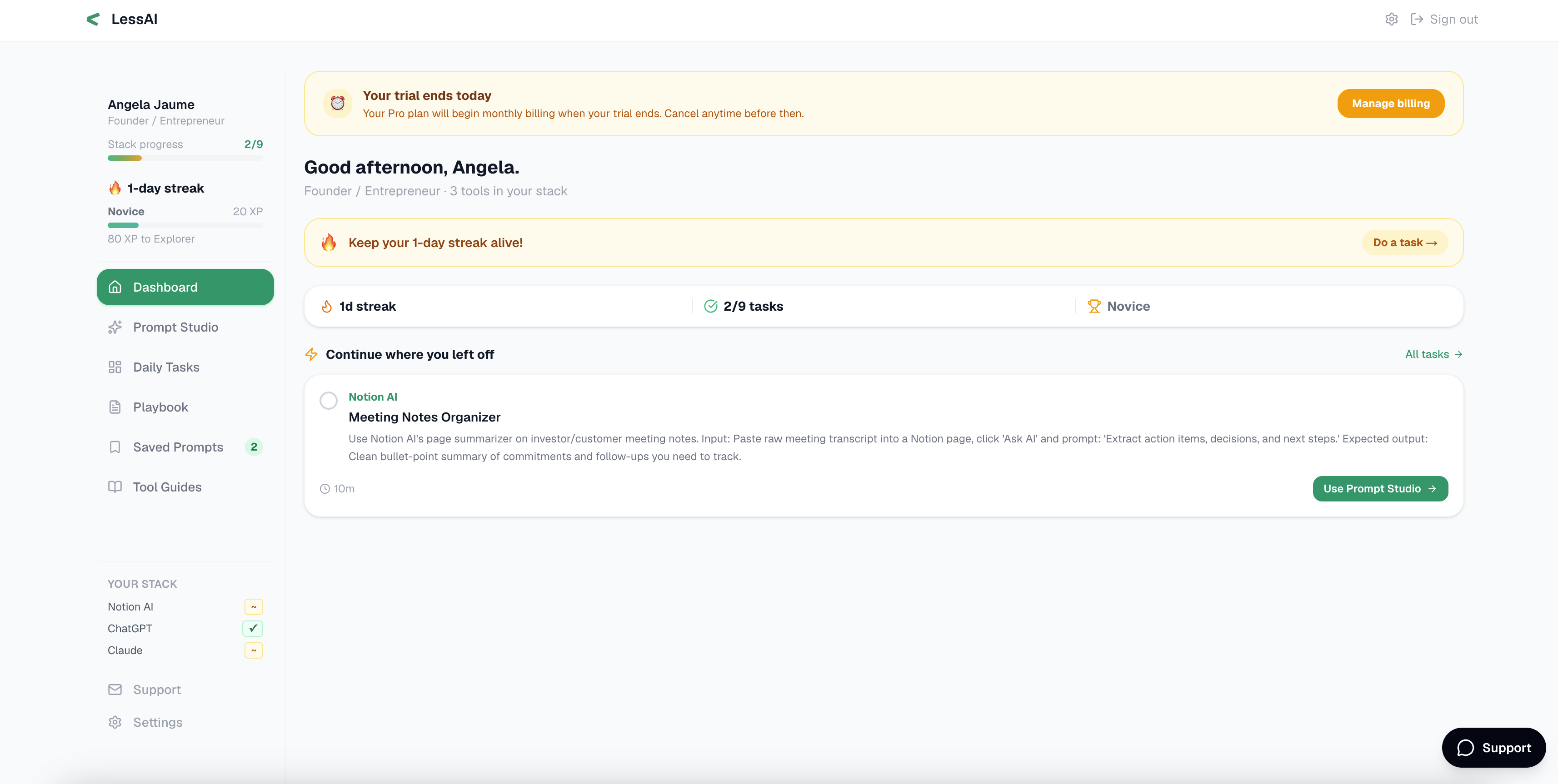
Dashboard
-
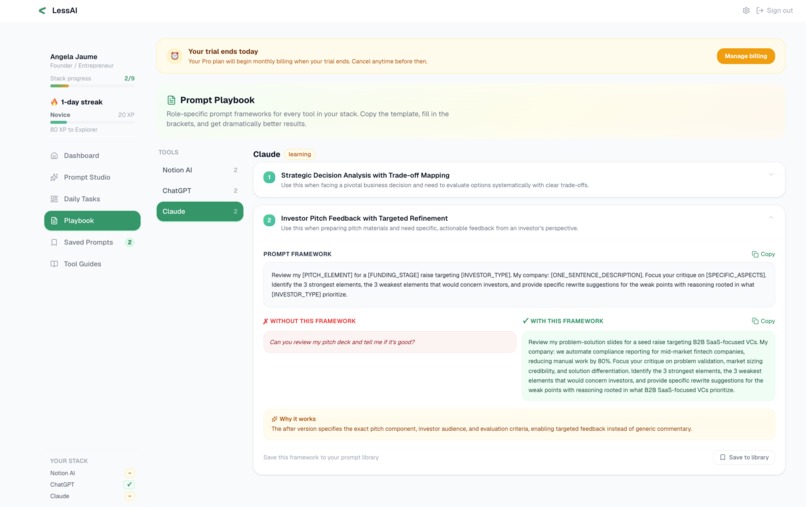
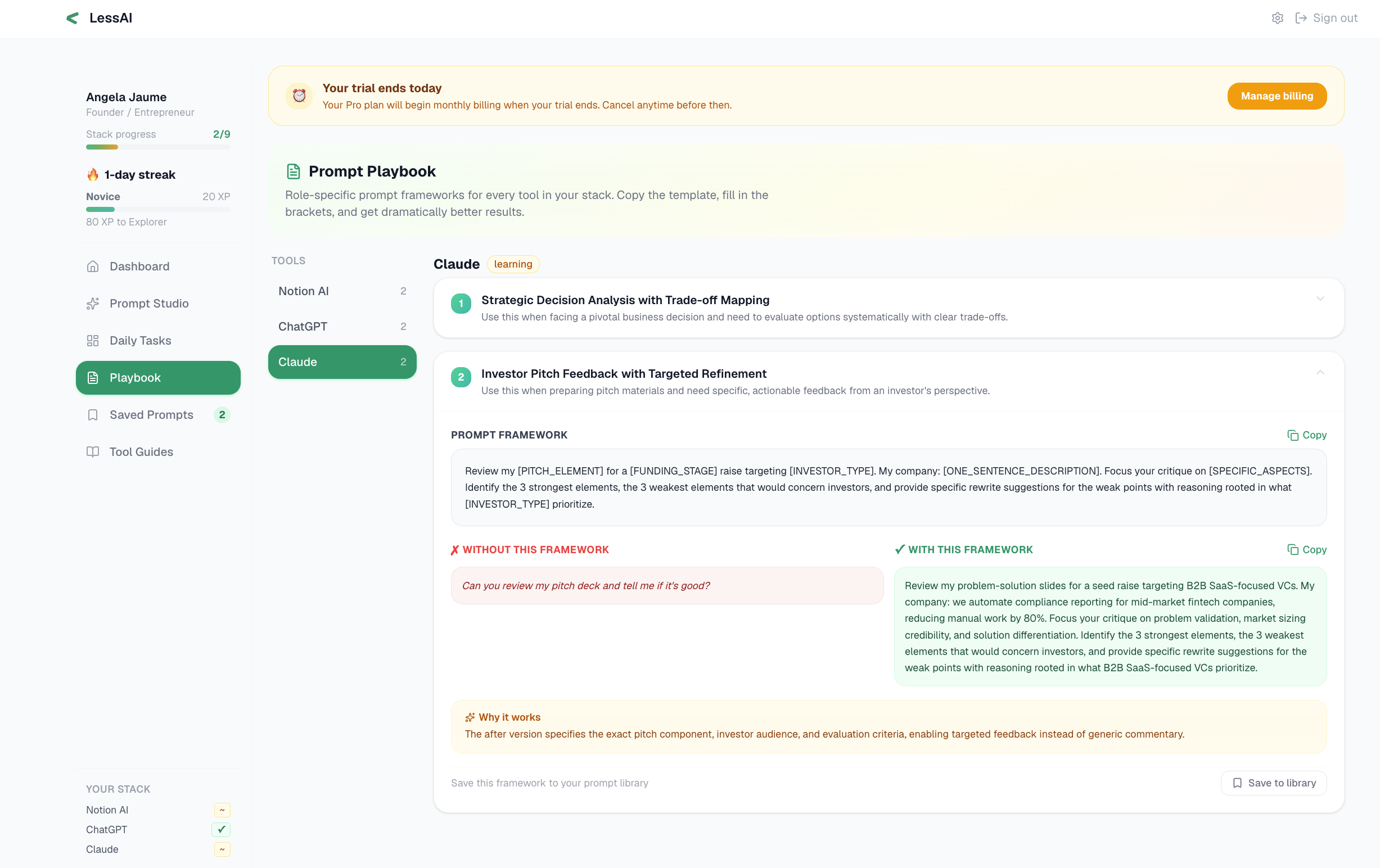
Prompt playbook
-
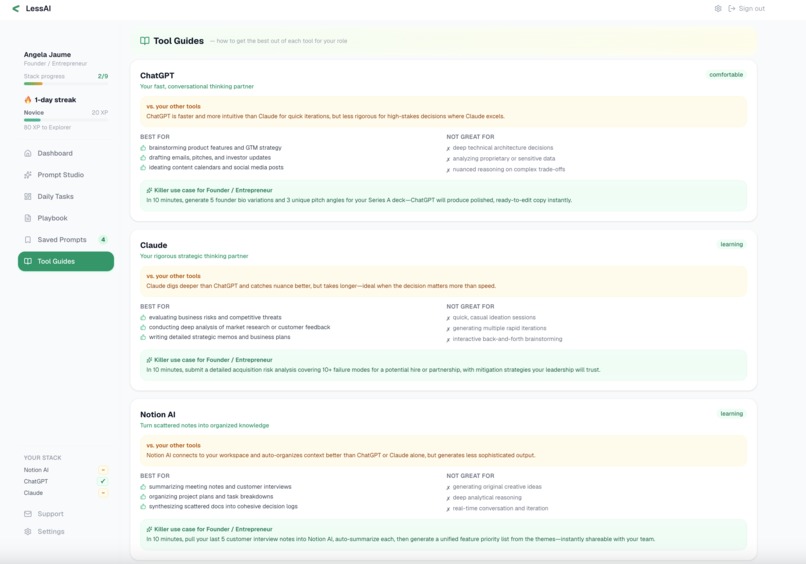
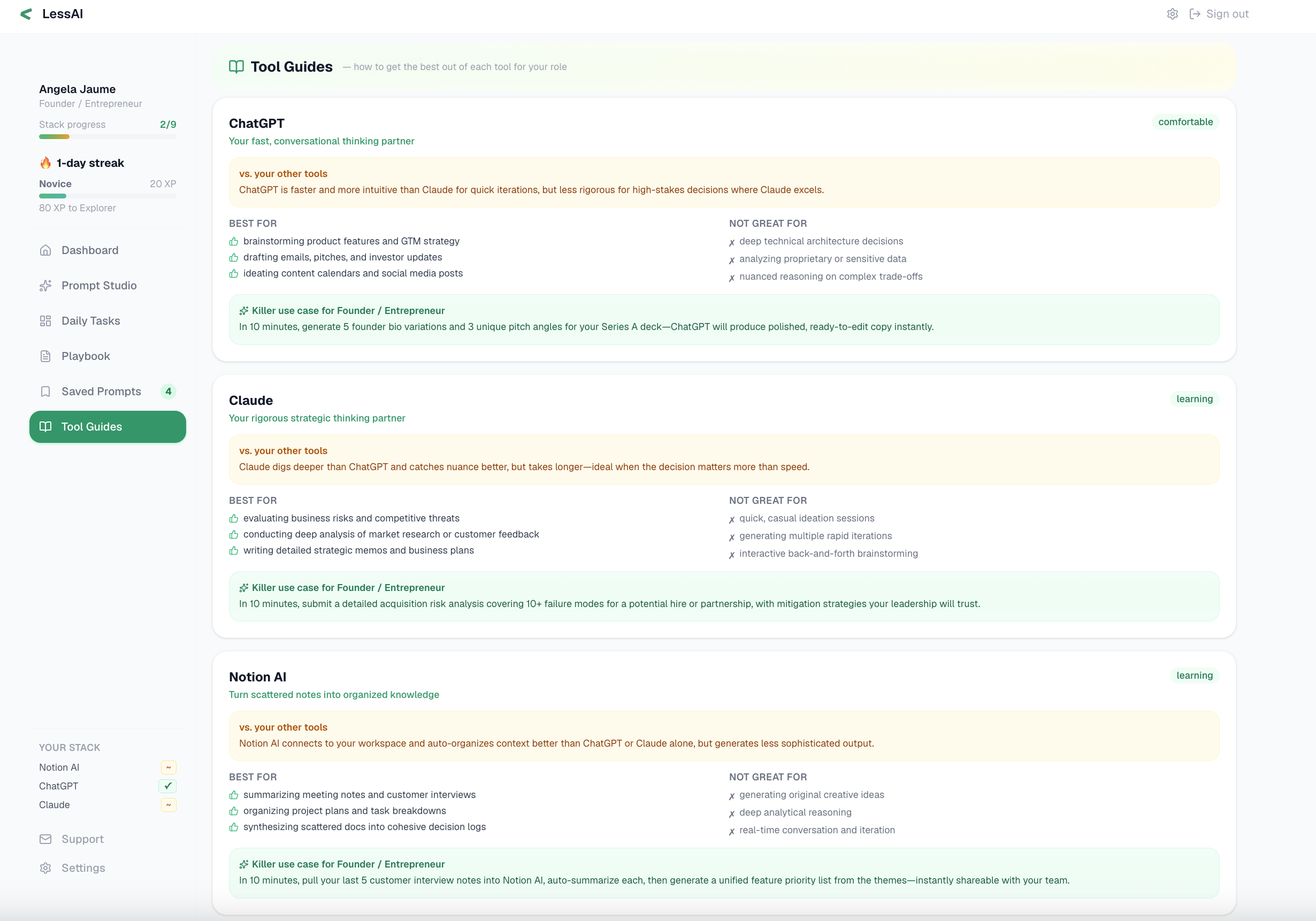
Tool Guides
-
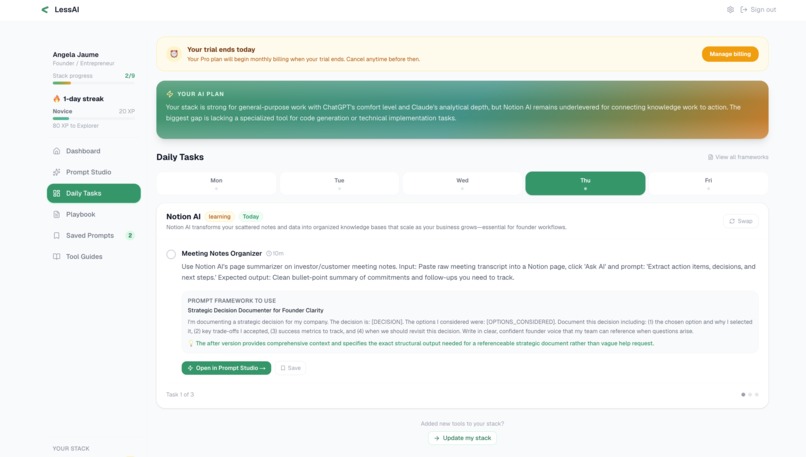
-
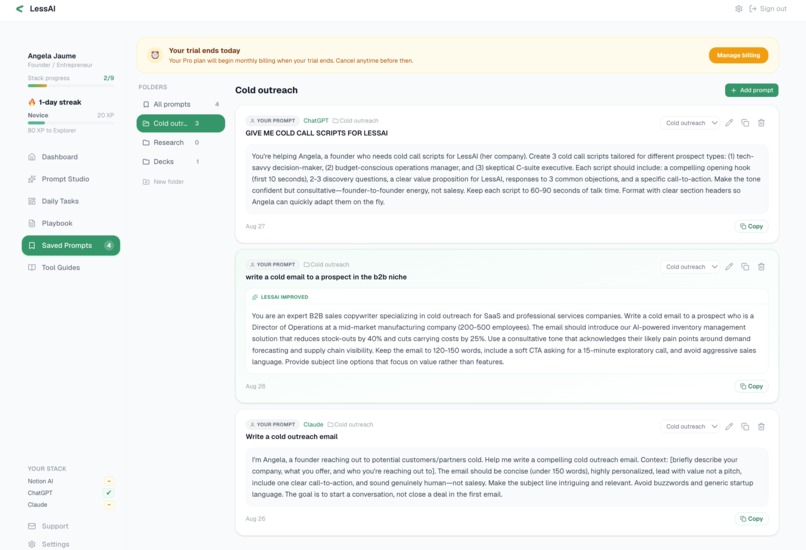
Saved Prompts
-
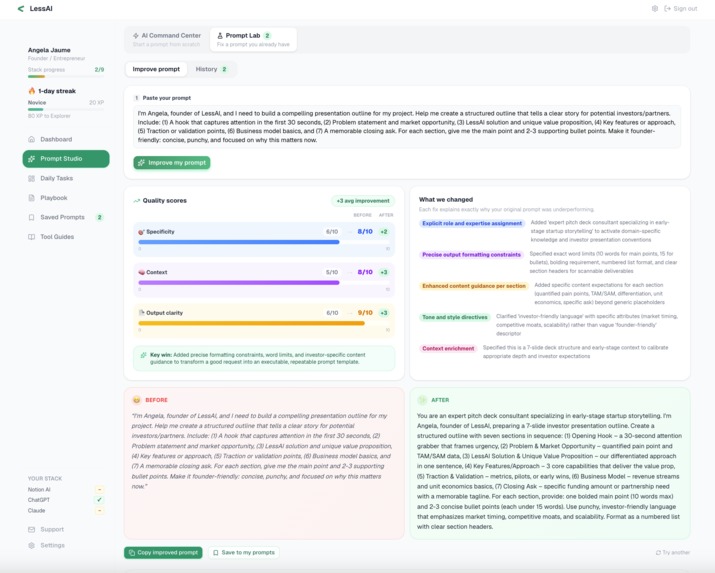
Improved Prompts - Prompt Lab
-
-
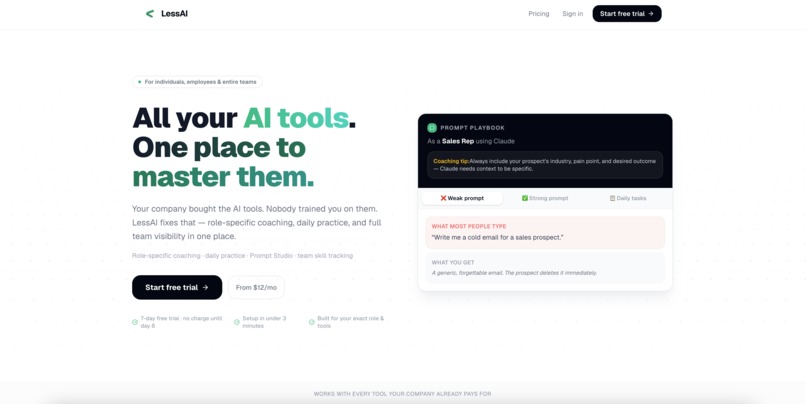
Landing Page
Inspiration
LessAI started from a problem I was living myself. In my current role as a founding Customer Success Manager I found myself building playbooks, decks, onboarding materials, and plenty of processes for a role I had never done before. No matter how techy and comfortable with AI tools I was, there was a lot to figure out quickly, and I had to lean heavily on these tools to help me write, structure, and move faster.
But using AI well was not automatic. I would ask for something, get an answer that was close but not quite right, then rewrite the prompt, add more context, try a different tool, or start again from scratch. Over time, I realized that the difference between an average result and a genuinely useful one often came down to knowing how to frame the ask.
That experience made me think about everyone else who is expected to use AI at work without much guidance. Companies are giving people tools like ChatGPT, Claude, Copilot, and Notion AI, but many employees are still learning through trial and error. LessAI came from wanting to make that learning process feel more practical, personal, and way less frustrating.
What it does
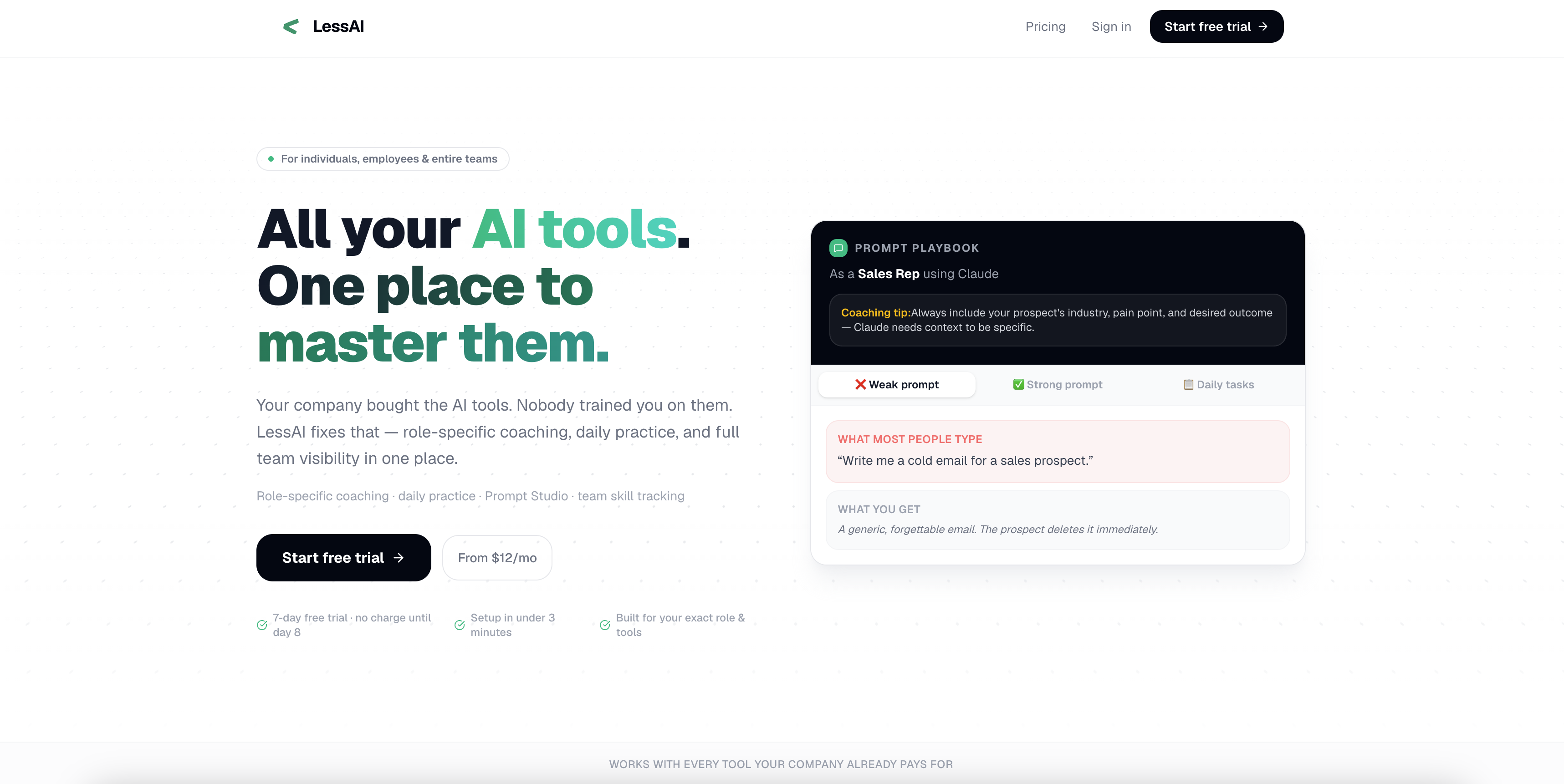
LessAI is a personalized coaching platform for individuals and teams. It coaches you and helps you get better at the AI tools you already have in place.
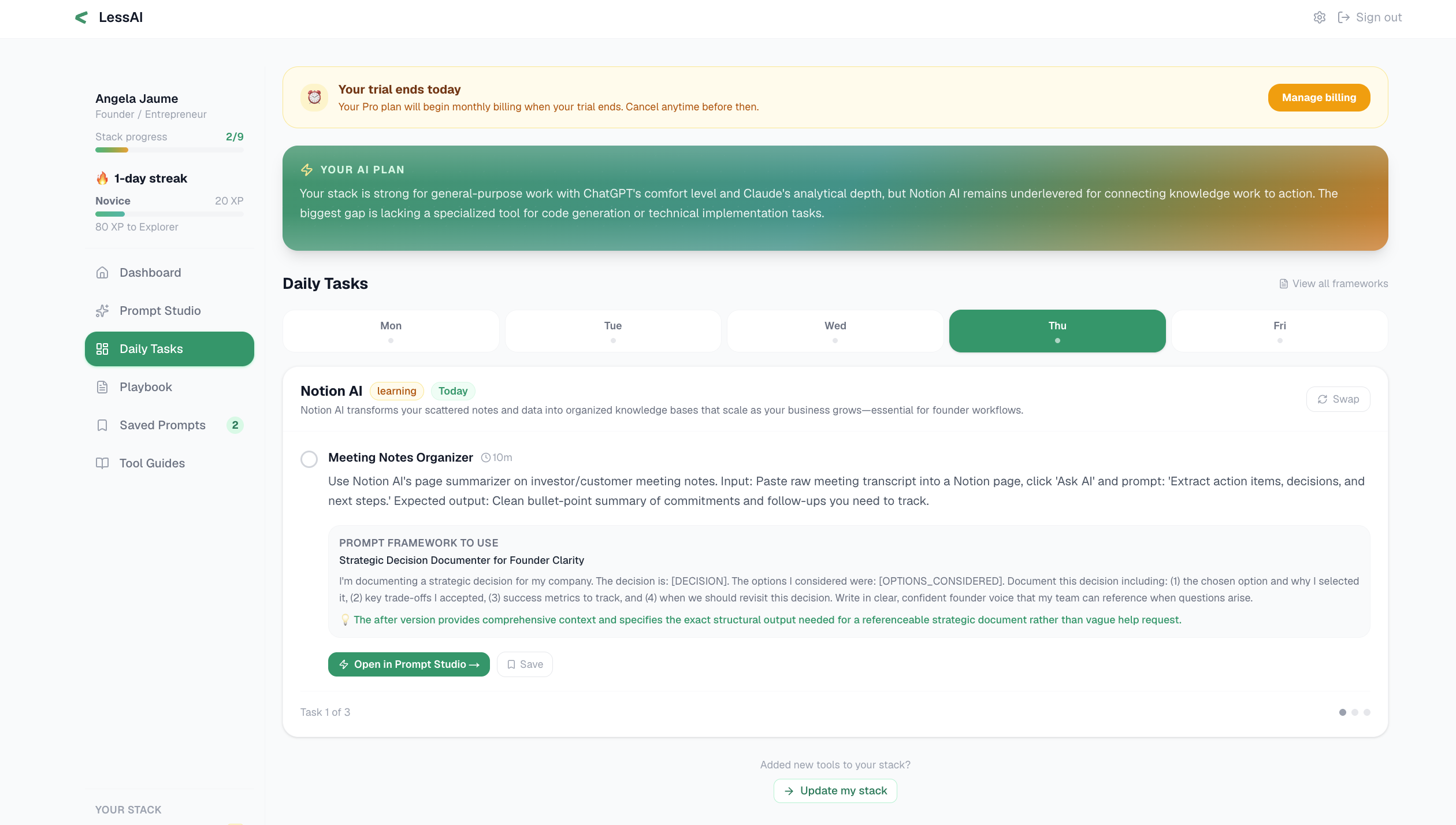
During onboarding, a user selects their role, the AI tools they use, their current skill level, and their company website. Then we use that context to create a personalized learning path with practical tasks, prompt frameworks, and guidance on how to use each tool more effectively. The platform includes:
- Daily practice tasks that help people build AI skills through short, relevant exercises
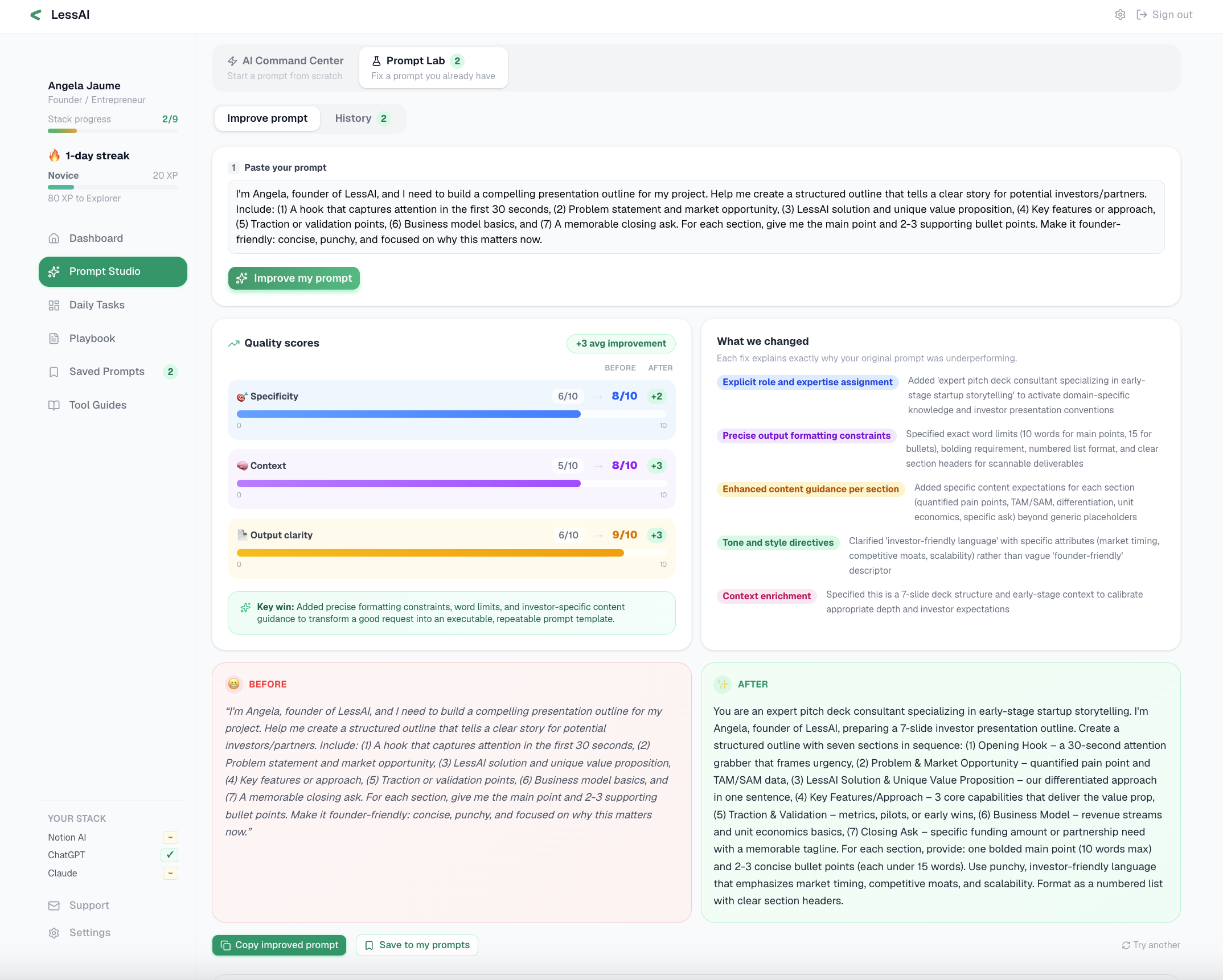
- A Prompt Lab where users can paste a prompt in plain language and receive a clearer, stronger version with feedback on specificity, context, and output clarity
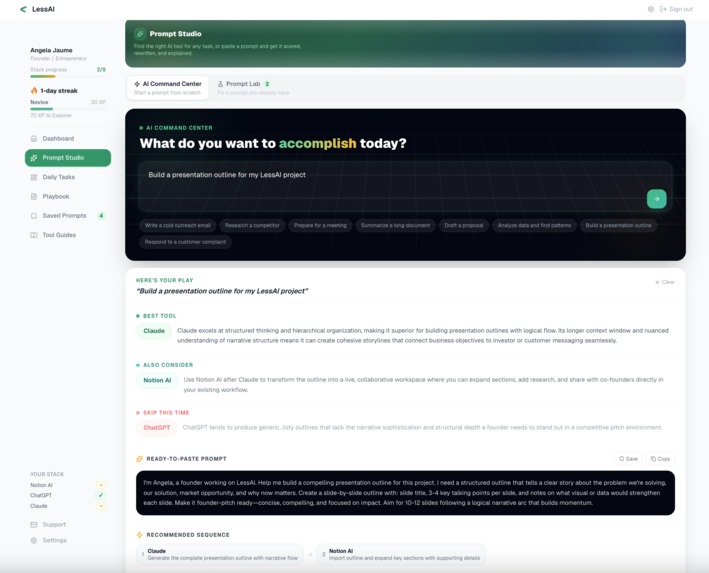
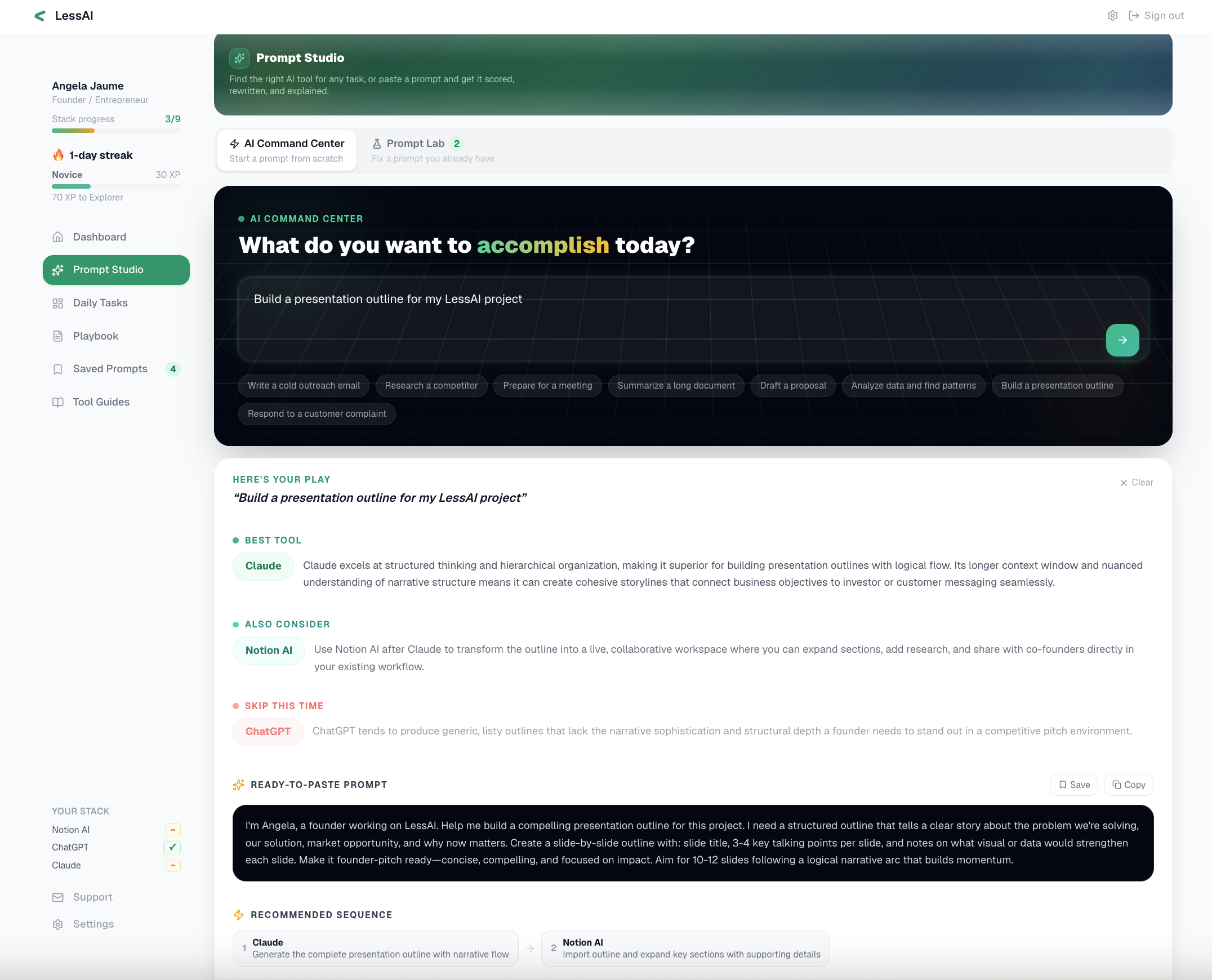
- An AI Command Center that recommends the best AI tool within your tech stack for the task you want to do and creates a ready-to-use prompt
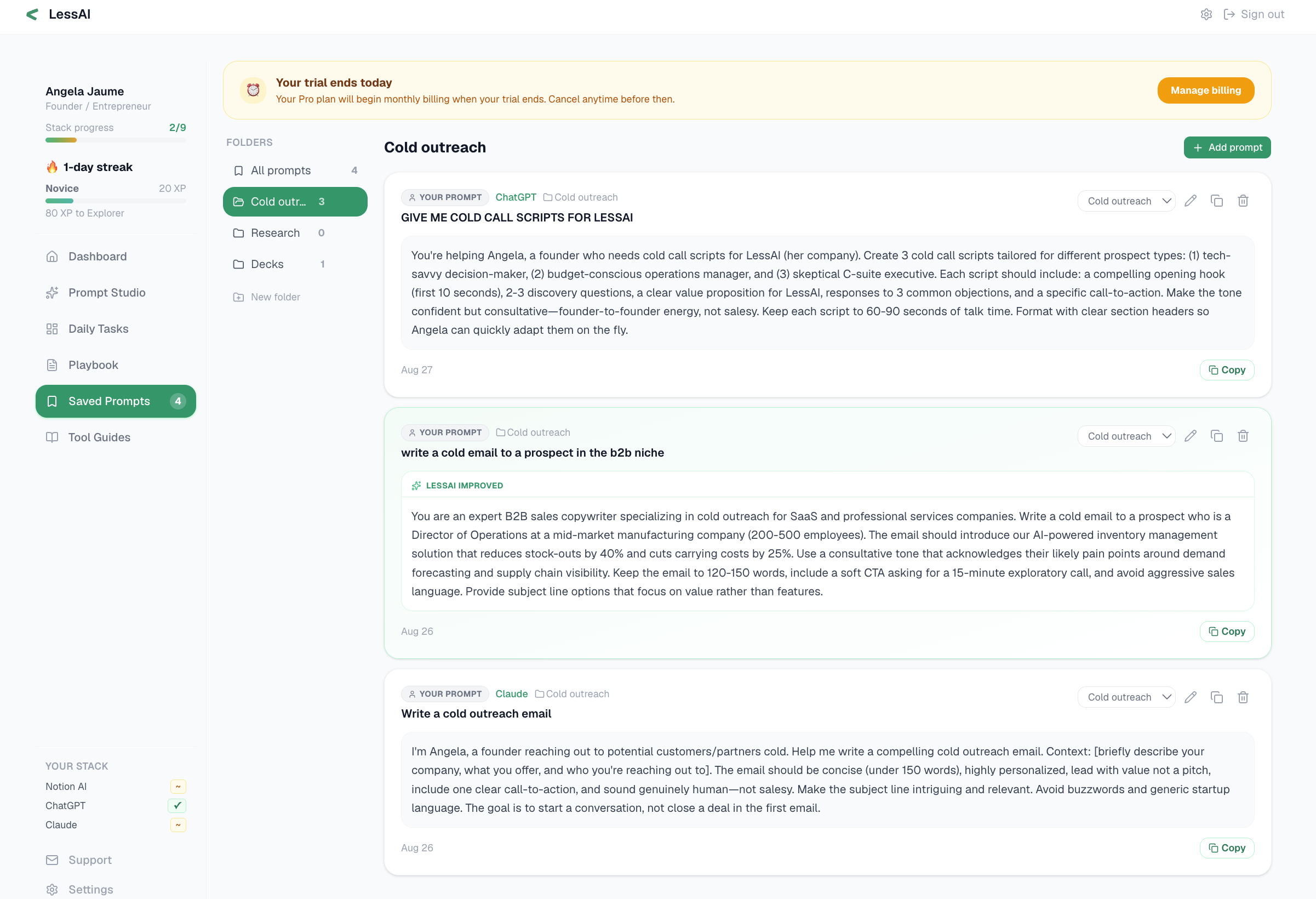
- A prompt library where you can save all of your useful prompts and organize them in custom folders
- XP, streaks, and progress tracking to make practice feel motivating rather than overwhelming
- A team dashboard (for the Teams plan) so managers can understand adoption, spot skill gaps, and offer more targeted support
The goal is not to give people another AI tool but to help them get way more value from the tools they already have in place.
How I built it
I built LessAI as a full-stack web application using Next.js, React, TypeScript, and Tailwind CSS.The AI layer uses Claude models through OpenRouter. A faster model handles onboarding content such as personalized tool tracks and practice tasks, while a more capable model supports coaching experiences like prompt improvement, tool recommendations, and prompt playbooks.
Supabase handles authentication, PostgreSQL data storage, and Row Level Security so users can only access their own data. I used Next.js for AI workflows, task completion, company-context scraping, billing, email, and scheduled jobs. For subscriptions I used used Stripe, Resend for emails, and Vercel for deployment.
Challenges I ran into
The biggest challenge was making the output feel genuinely useful instead of just generic. It's easy to generate broad advice, but much harder to make a task or prompt feel relevant to a specific person’s role and day-to-day work. I addressed that by grounding the experience in the user’s role, selected tools, skill level, and company context. That is what makes LessAI feel more like a coach than a chatbot giving the same answer to everyone.
Another challenge was balancing personalization with speed. Onboarding creates several pieces of personalized content, so I split work between faster and more capable models to keep the experience responsive without sacrificing quality.
Accomplishments that we're proud of
I am proud that LessAI is finally a working product rather than just an idea. I've had friends use it and give me great feedback which is such an accomplishment to see it really is a helpful tool. I am also proud of the product’s focus. There are already many tools that can generate content but LessAI focuses on the missing layer: helping people develop the habits and judgment needed to use those tools well.
The team dashboard is another feature I am excited about because it connects individual learning with a real business need: understanding whether AI adoption is actually turning into capability.
What I learned
Building LessAI reinforced that the hardest part of an AI product is often not the model itself, but more so it is creating the right context, workflow, and feedback loop around the model. I also learned that personalization has to be earned. Asking for someone’s role, tool stack, and company context only matters if the product clearly uses that information to make the experience way more useful.
What's next for Lessai.io
Next, I'd love to run a small pilot with real teams and measure activation, task completion, prompt-quality improvement, and time to a useful first result. I'm also planning on adding stronger manager reporting, shared prompt standards, and team workflows so organizations can turn their best AI habits into reusable knowledge. The long-term vision is for LessAI to become the practical enablement layer that helps people use AI with more confidence, better judgment, and less AInoise.
Built With
- anthropic
- claude
- github
- next.js
- node.js
- openrouter
- postgresql
- react
- resend
- shadcn/ui
- stripe
- supabase
- tailwindcss
- typescript
- vercel

Log in or sign up for Devpost to join the conversation.