-
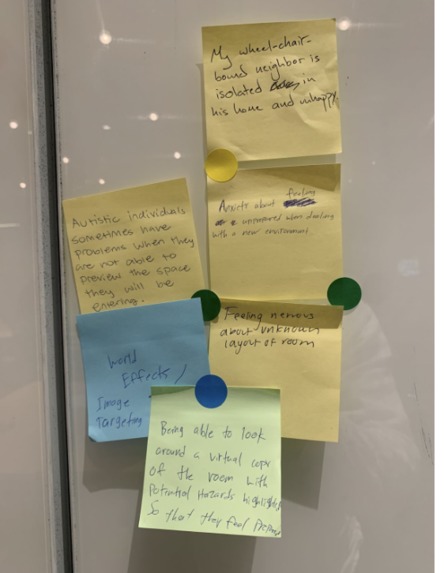
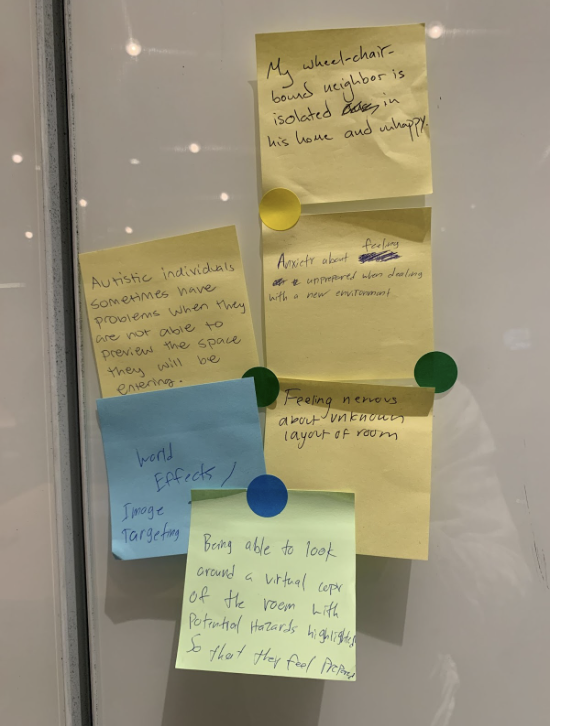
Where we started: Sticky Notes
-
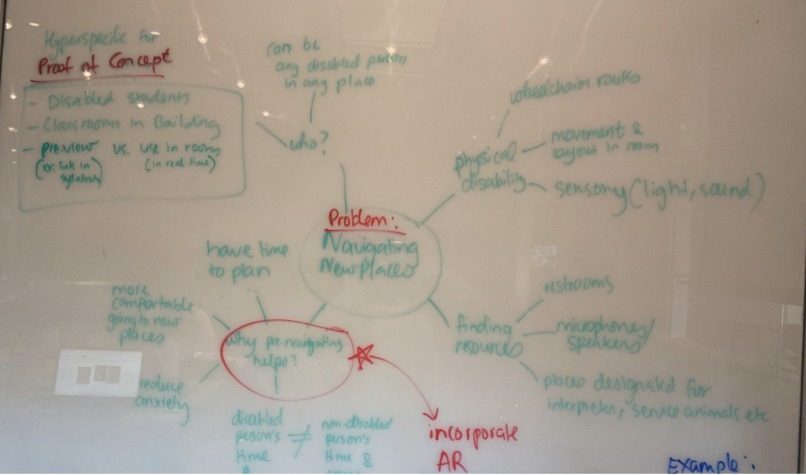
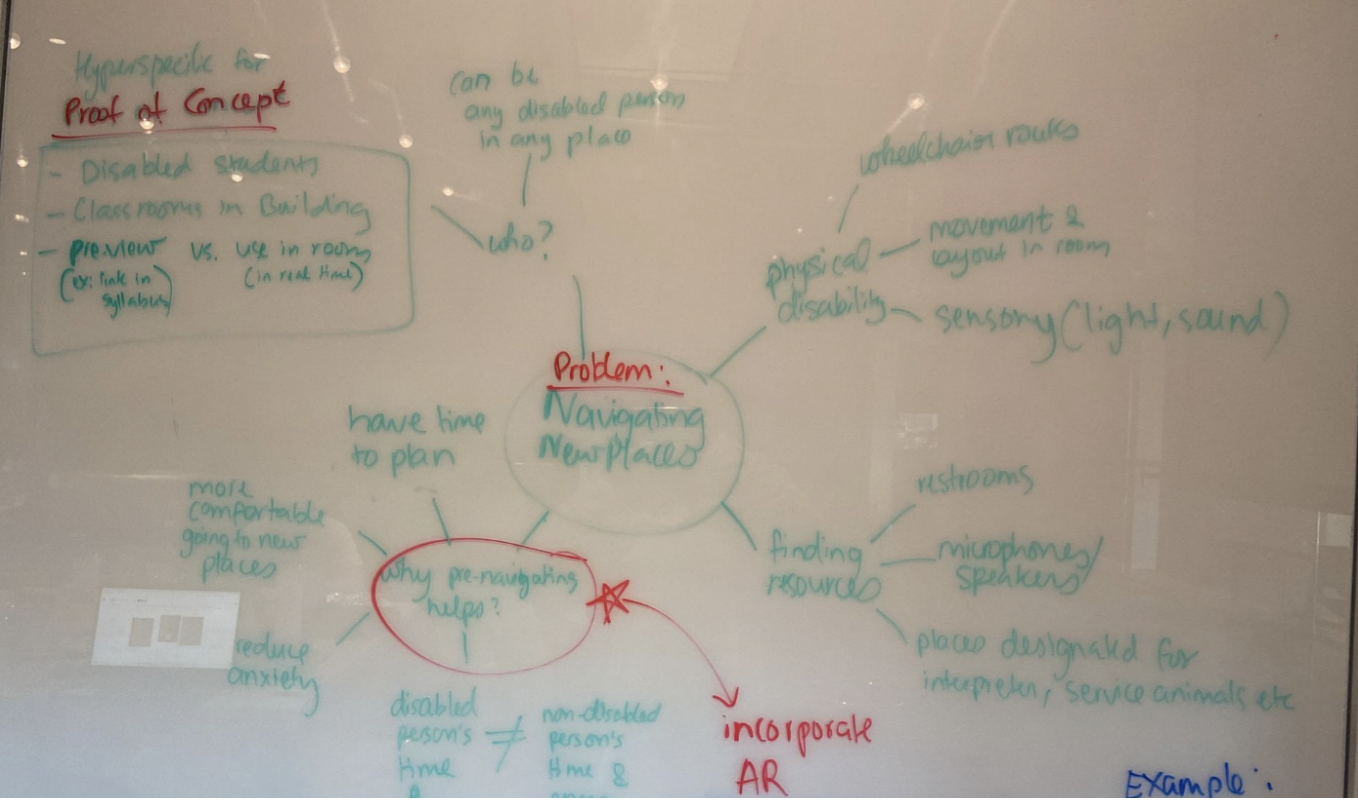
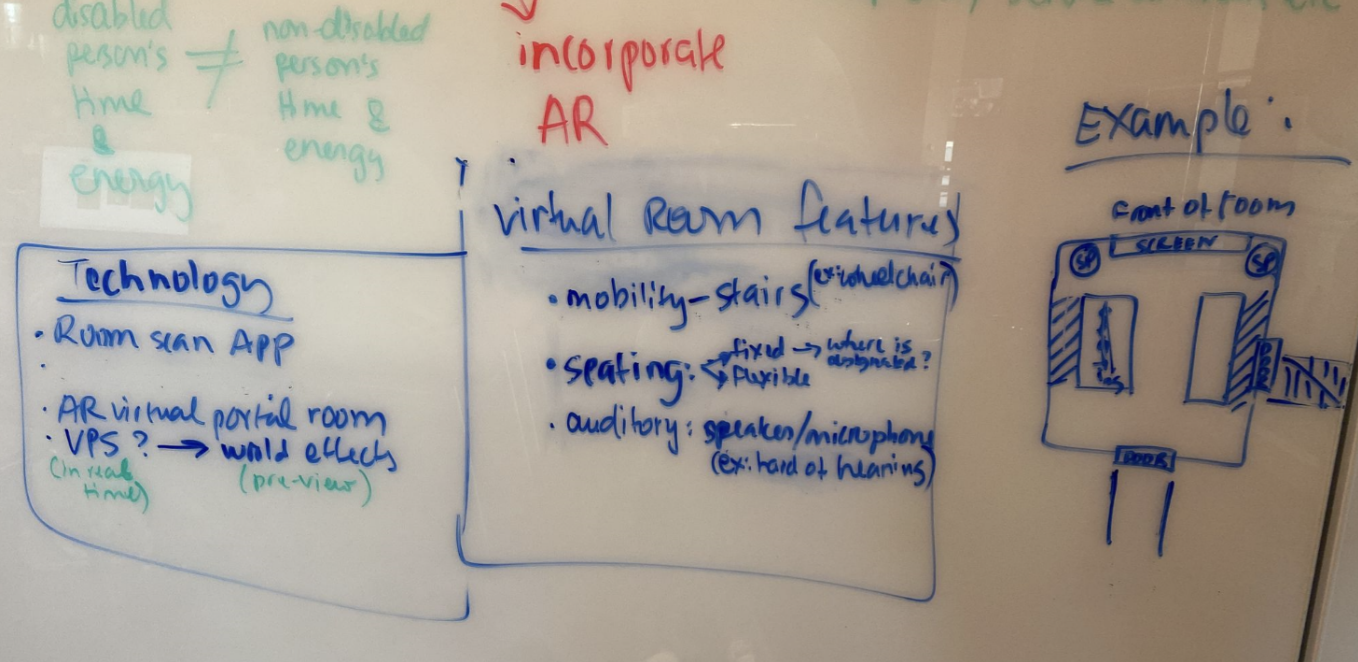
What our topic is: Concept Map
-
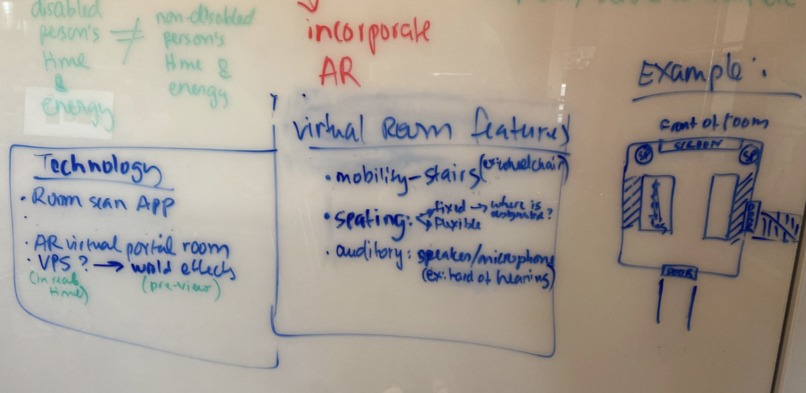
How can we incorporate VR: Features
-
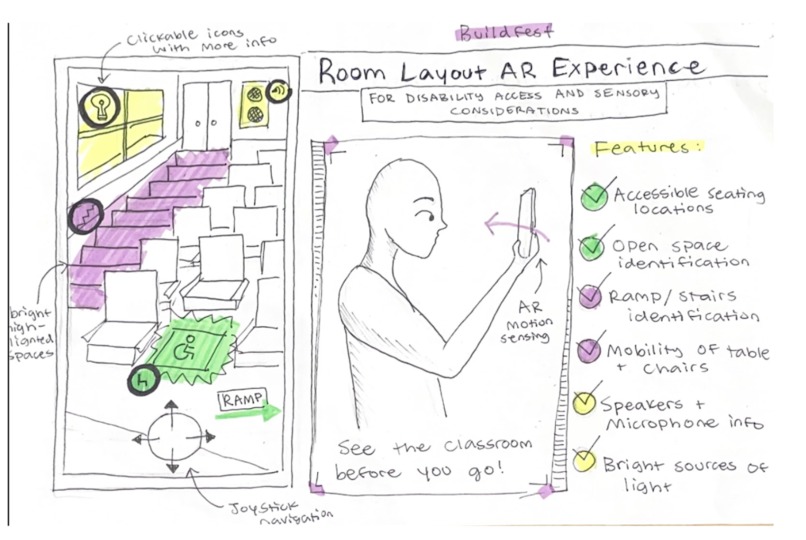
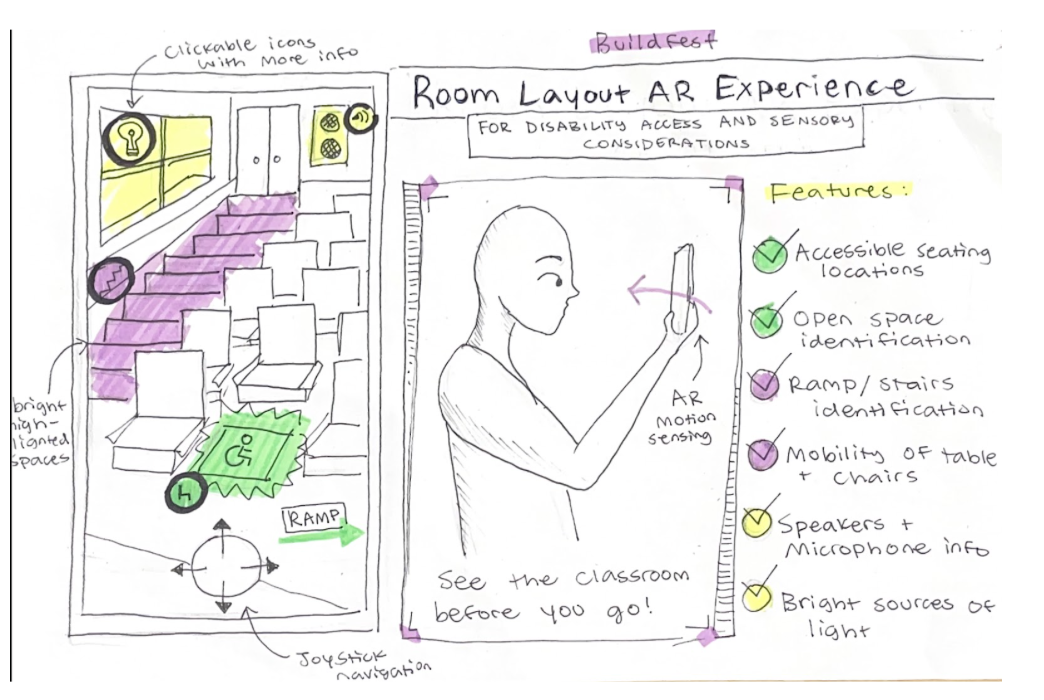
Our vision: Sketch
-
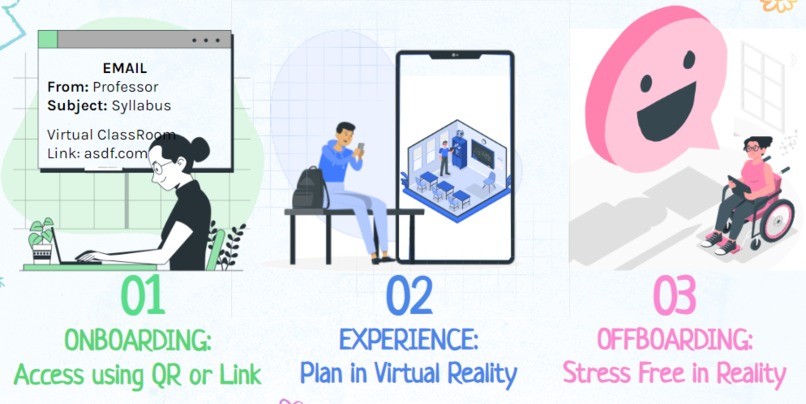
Our Experience
-
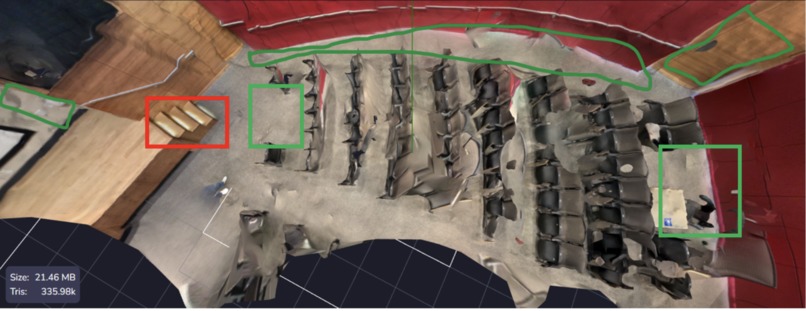
Mockup
Inspiration
We're aware that individuals with mobility impairment and sensory considerations have trouble with navigating areas, especially unfamiliar ones. After talking to our mentor, we've realized how much of an impact this problem has due to the amount of stress it causes. For example: the first day of class. For us, it's already an overwhelming day. Add that stress to finding routes that have accessible ramps, paths, elevators, and more! There has to be a way to make it easier.
What it does
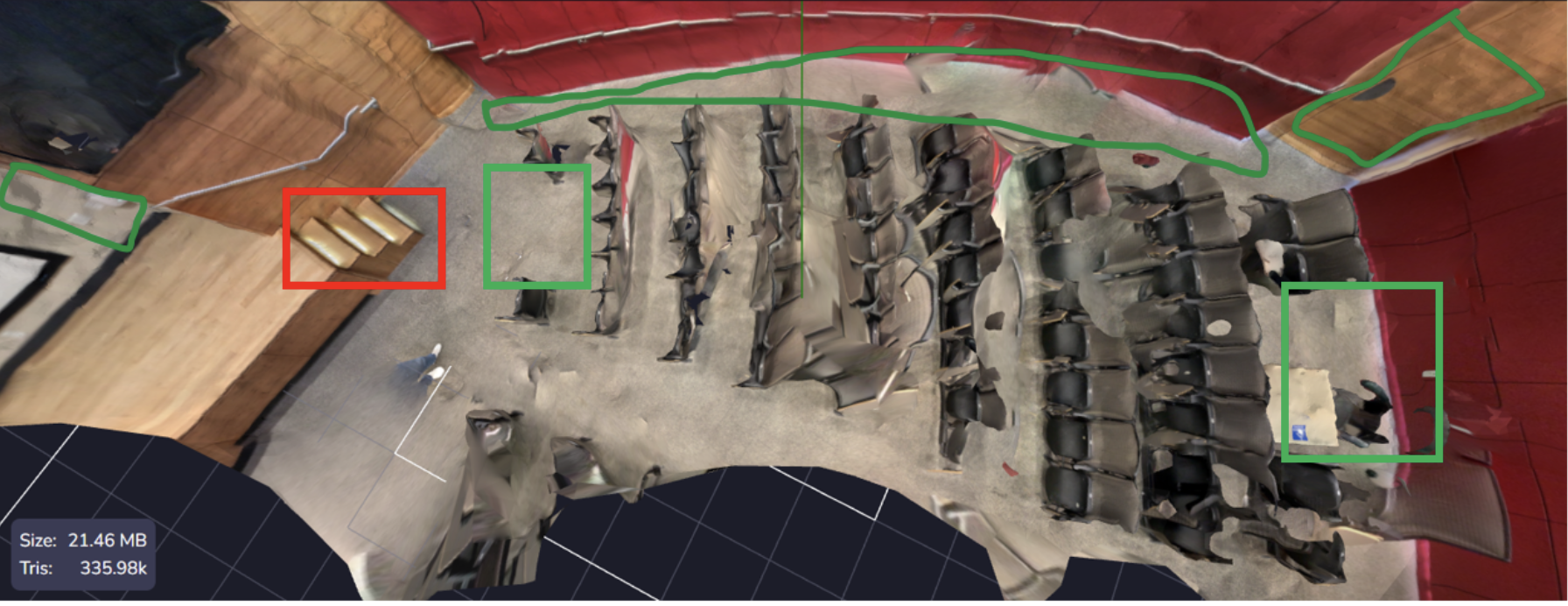
Less Stress Access is an AR experience that allows any individual to access a virtual copy of their classroom. Any concerning or accessible areas, such as stairs, ramps, and available seating are highlighted in their respective color to visibly help the user plan their entry and participation in that area.
How we built it
We first scanned the model room and made note of the pain points and accessible areas. Then, using 8th Wall, we placed highlights on those areas using polygons in the 3D model to draw attention to them for the user. We added a plane of text for a legend, and adjusted the camera view to be upon entry of the room.
Challenges we ran into
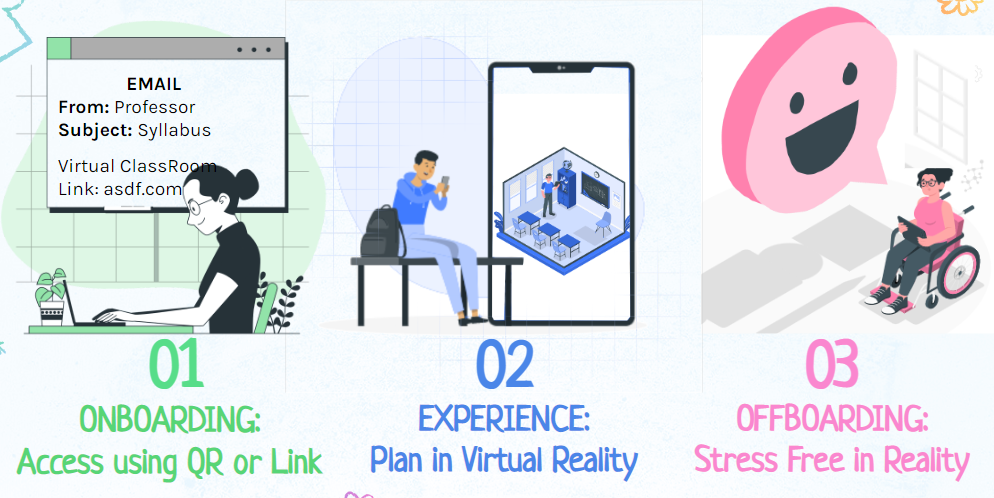
We had a few aspects of our vision that were not feasible within the time and knowledge available (interaction with entities, portal on-boarding). At these impasses, we pivoted and focused on the most practical aspects that we could accomplish.
We couldn't figure out the interactive aspects of the experience at first. We thought about making a "tap" feature to give more information about each area but realized that might not be as intuitive as we thought. So, we created a legend on the side. In addition, our initial plan was to manually model all the aspects of the room, but after discovering 3D mapping, we decided to use that feature instead. Finally, we wanted to have a portal-based on-boarding experience, but after technical difficulties we streamlined the process so that the user is placed directly in the room.
Accomplishments that we're proud of
We're most proud of our technical accomplishment of taking an actual room at the DMC and adding digital features to it. We think this combination of real and digital add-ons mimics the behavior of AR tools, but in a VR environment for someone who may not be able to go the classroom itself. In a more broad context, we're proud of how our idea would impact communities that often go unnoticed. For example, a VR visualization of a classroom helps mobility-impaired individuals, but it also aids those with generalized anxiety disorder, so they would be more at ease after knowing exactly what their learning environment looks like. Pre-visualization, especially in VR form, is not often a tool made specifically for this community and we are proud to launch this and hopefully inspire others to keep every group within the disabled community in mind while creating technology solutions.
What we learned
With this project, we deepened our understanding of the difficulties experienced by those with motor impairment. Exploring different classroom structures made us recognize that many areas are not accessible at all too. We also learned 3D mapping and various technical skills within 8th wall.
What's next for Less Stress Access
To improve Less Stress Access, we plan to add features for sensory conditions such as auditory impairment (if there is a microphone, volume level, locations of speakers), and light sensitivity (depending on the location of the building, there can be a glare).

Log in or sign up for Devpost to join the conversation.