-
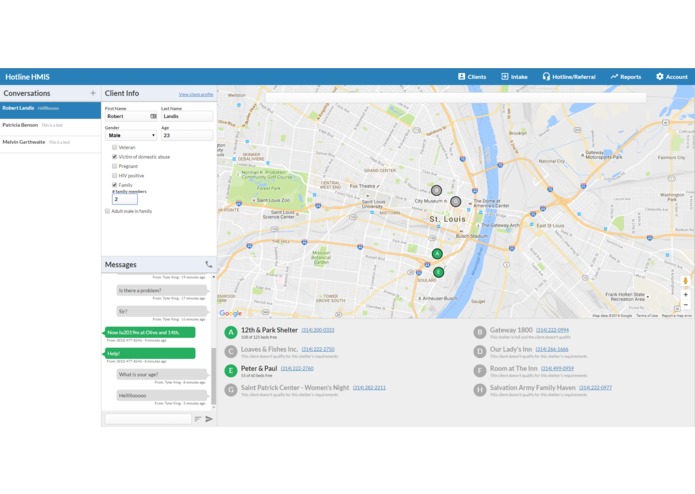
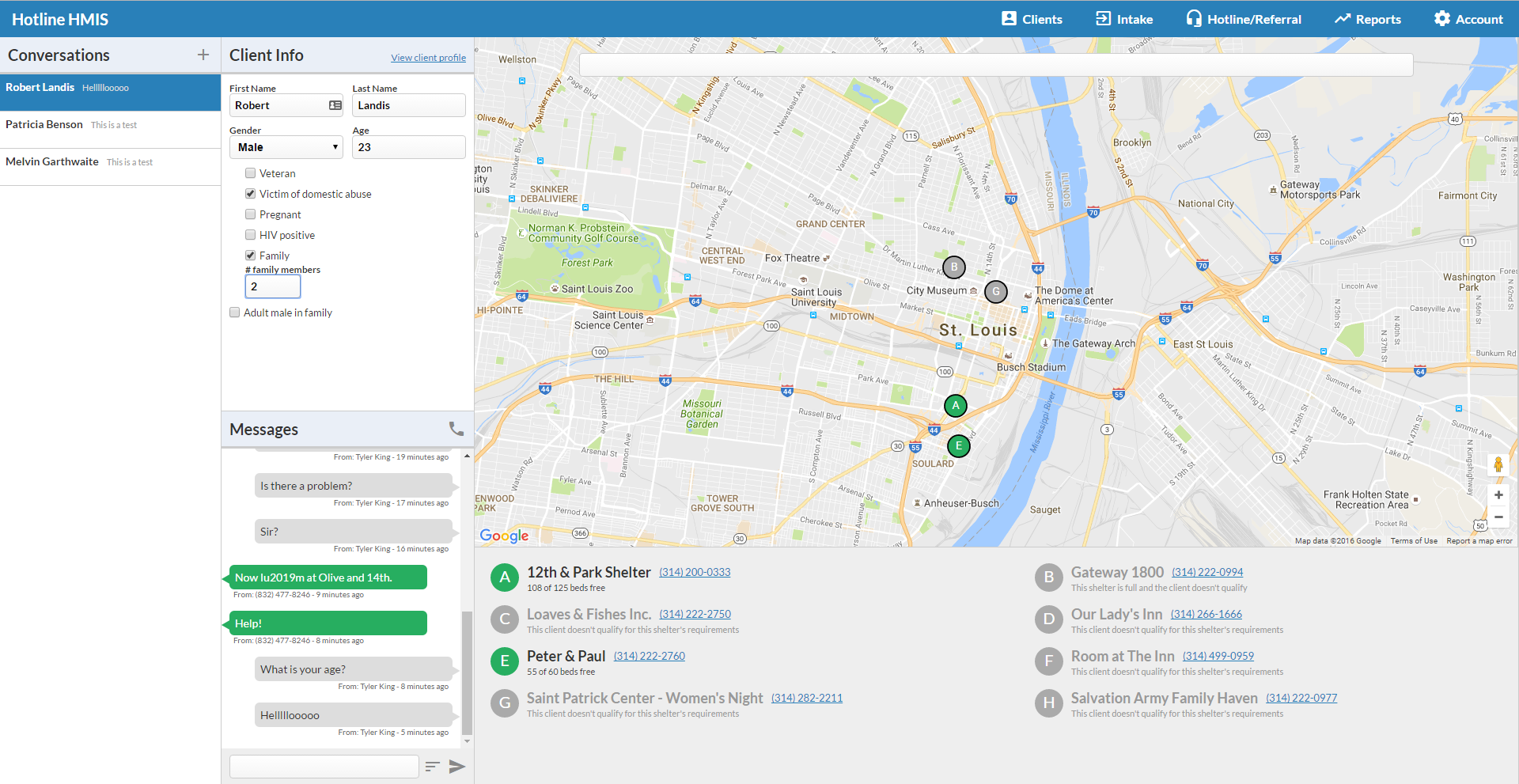
Hotline view of the HMIS
-
-
-
Initial approach
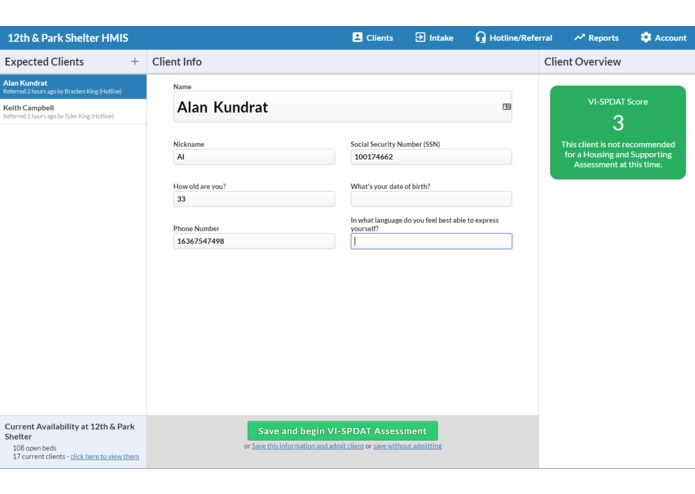
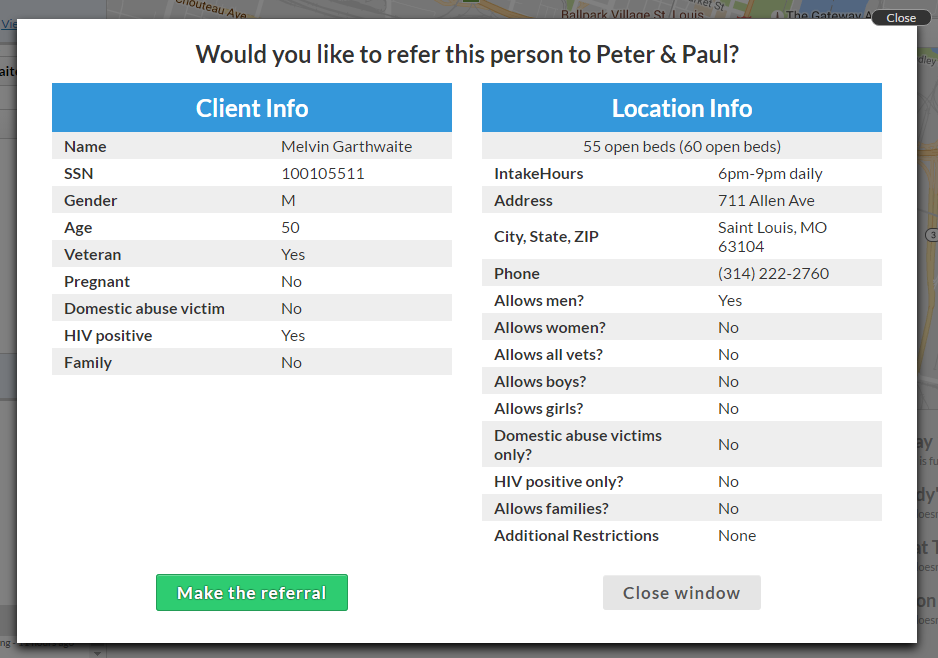
We decided almost immediately that the problem we were most equipped to tackle was that of handling the referrals between services, as that was the area most likely to fall through the cracks. Making sure that clients could easily request assistance, and in the case that a shelter is already full, for example, that the providers could easily refer the client to another provider that fit their needs and status.
Over time, the data collected could be used to determine which providers need more resources to better serve the community.
What it does
Less Annoying HMIS is a service that allows communication between service providers (on their computers) and clients who are homeless, or who are in danger of becoming homeless. Clients can text a number that they've been provided, which adds them to the hotline of new requests in the "hotline" of the HMIS. The providers manning the hotline can reply and converse with the clients via text, collecting information on what the client is in need of.
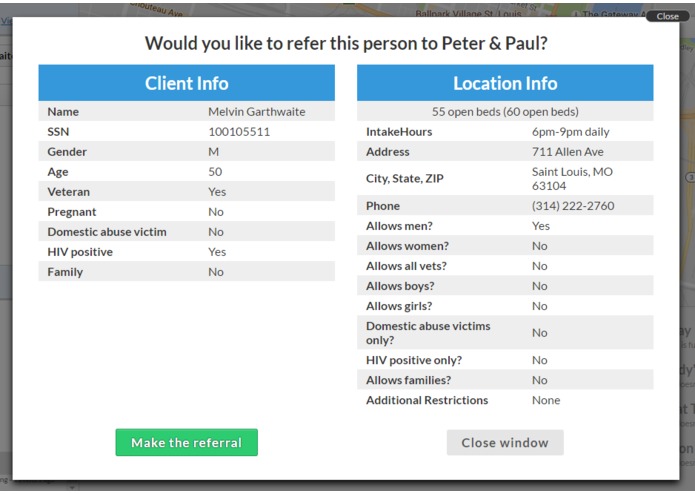
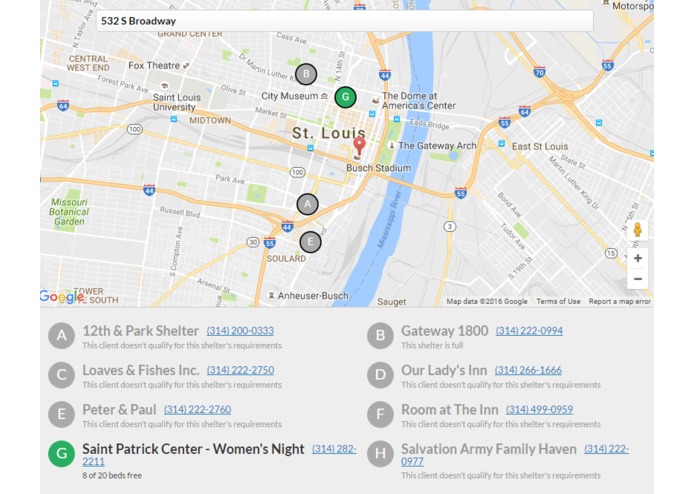
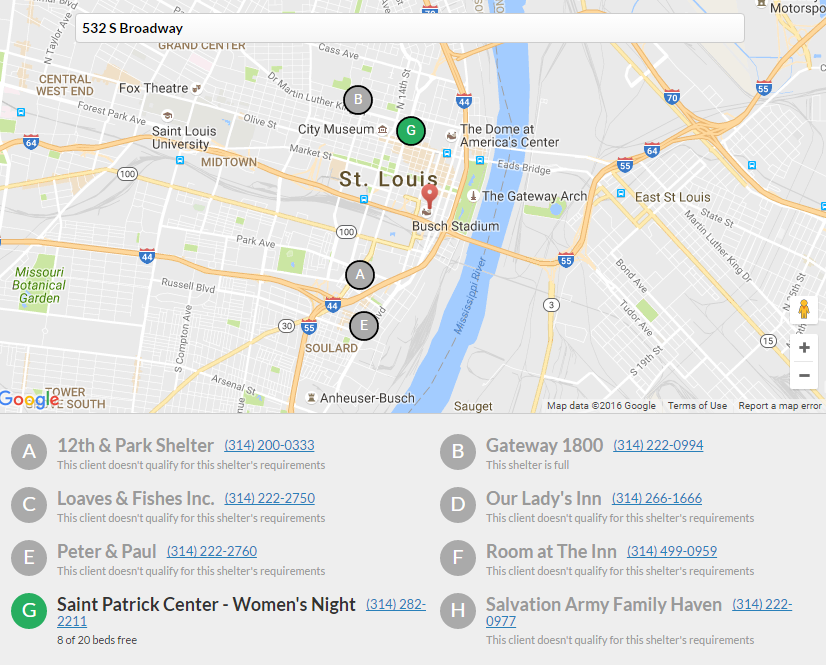
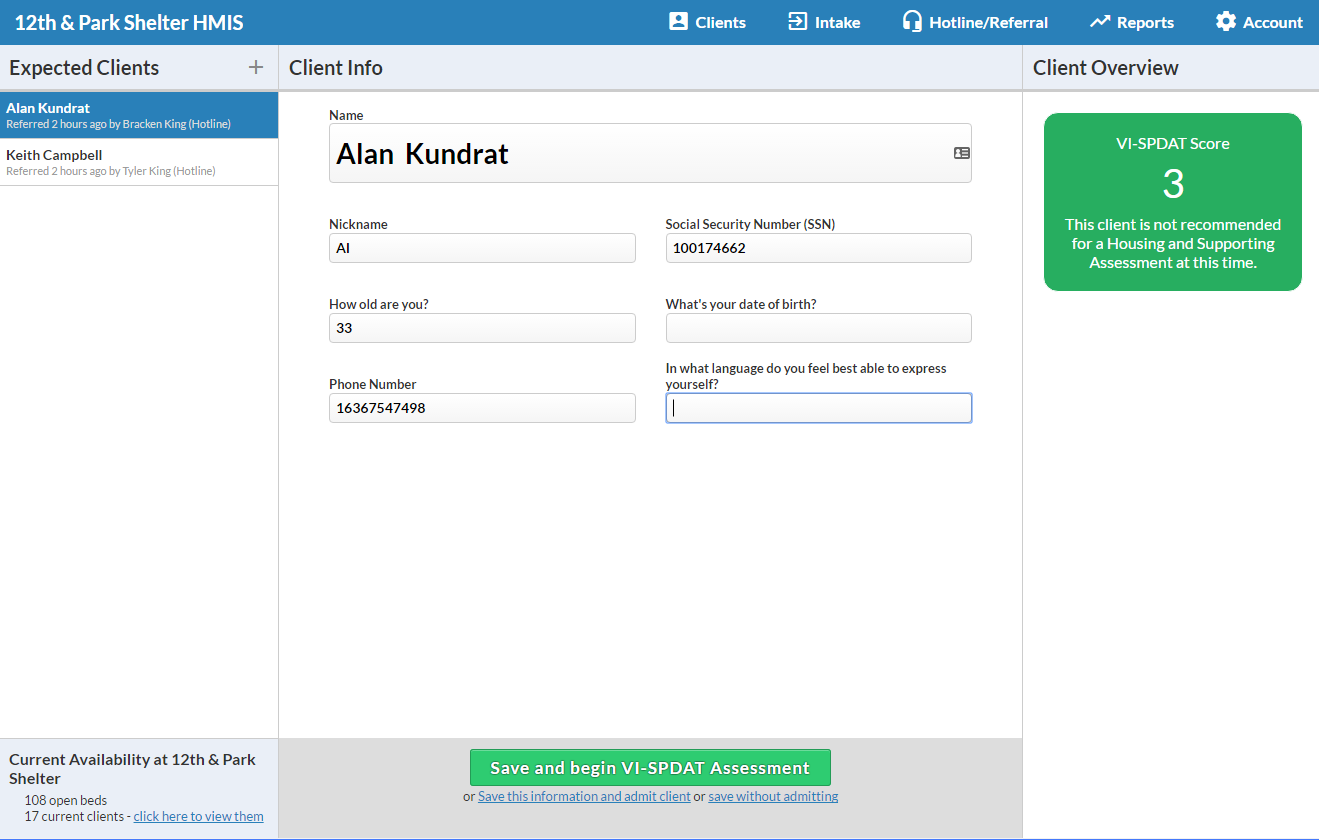
The map in the hotline allows those providers to easily see the closest shelters who can provide services, including information about each of those locations. Locations also using the HMIS can easily update to provide a live view of their information (for example, how many beds remain). From there, a service provider in the hotline can filter down to what shelters are able to provide services, and exclude those for whom the client doesn't fit the location's requirements.
If the client is already within the database, the hotline will display (and automatically filter results based on) demographic information for that client.


Log in or sign up for Devpost to join the conversation.