
Grid the Globe activity report Team name: IKUN Team members: Zhiwei Cheng, SID: 540249451 Software Engineering Yan Fu, SID:540269194 Software Engineering Shicheng Wang, SID: 530743734 Software Engineering, Sibo Yang, SID: 530777843 Software Engineering Solution name: Hybrid Remote Connectivity System (HRCS)
- Introduction In disaster-prone and remote areas, traditional communication infrastructure is often damaged or unavailable, with high costs to restore. The Hybrid Remote Connectivity System (HRCS) combines Low Earth Orbit (LEO) satellites, Large Area WiFi (LAWIFI), and LoRa technology to provide an efficient and quickly deployable communication solution. This system ensures reliable internet and data transmission in extreme conditions.
Key Technologies Low Earth Orbit (LEO) Satellites • LEO satellites like Starlink provide global internet coverage with high bandwidth (100-200 Mbps) and low latency (20-40 ms). LEO satellites offer reliable internet access even in areas with no ground infrastructure. Large Area WiFi (LAWIFI) • LAWIFI, using commercial WiFi chipsets, provides a 1.5 km coverage radius and is compatible with existing WiFi devices. It enables local users to connect to the internet through standard WiFi-enabled devices. LoRa (Long Range Low-Power Communication) • LoRa supports long-distance communication (up to 15-20 km) with low power, ideal for IoT devices like sensors for environmental monitoring or agricultural data collection.
System Architecture
Global Backbone (LEO Satellite): A satellite terminal provides global internet connectivity.
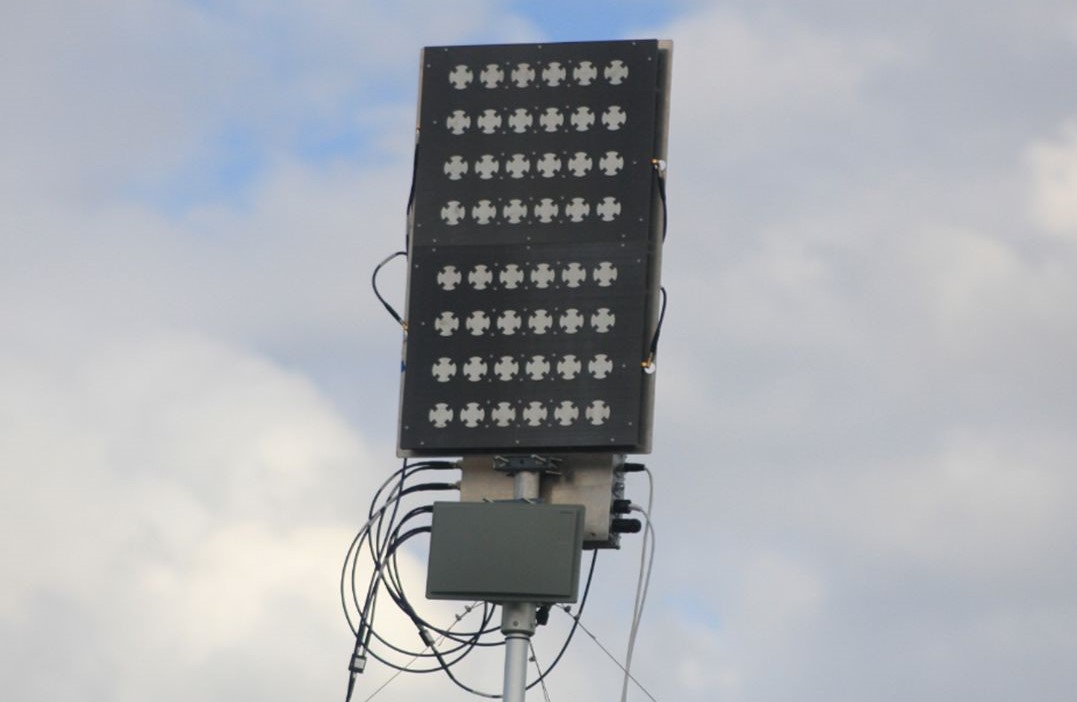
Local High-Speed Network (LAWIFI): LAWIFI covers a 1.5 km area, allowing users to connect via WiFi-enabled devices.
Low-Power Long-Range Communication (LoRa): LoRa devices collect and transmit sensor data to the central network or via the satellite. Deployment Process
LEO Satellite Setup: Deploy a satellite terminal to provide global internet access.
LAWIFI Deployment: Set up a LAWIFI router to provide local WiFi coverage.
LoRa Devices: Deploy LoRa devices to collect and transmit sensor data.
Applications Disaster Recovery HRCS can be rapidly deployed after disasters to provide communication support for rescue teams and affected communities. LEO satellites offer global connectivity, LAWIFI supports local coordination, and LoRa monitors environmental conditions in real-time. Rural Connectivity In remote and rural areas, HRCS offers internet access, supporting online education, remote healthcare, and agricultural monitoring. LEO satellites serve as the backbone, LAWIFI provides local WiFi, and LoRa collects agricultural data.
Advantages
Quick Deployment: HRCS can be set up within hours to establish communication.
Cost Efficiency: By reducing the need for multiple satellite terminals, HRCS lowers access costs while extending coverage via LAWIFI.
Sustainability: Solar-powered systems and low-power operation allow HRCS to run for extended periods in off-grid areas.
High Reliability: LEO satellites maintain connectivity even if ground infrastructure is damaged.
Conclusion The Hybrid Remote Connectivity System (HRCS) integrates LEO satellites, LAWIFI, and LoRa technologies, providing a fast and cost-effective solution for disaster recovery and rural connectivity. HRCS ensures communication reliability in extreme conditions, supporting local communities’ internet access and enabling remote monitoring and data collection.
Built With
- ppt
