-
-
Introduction
-
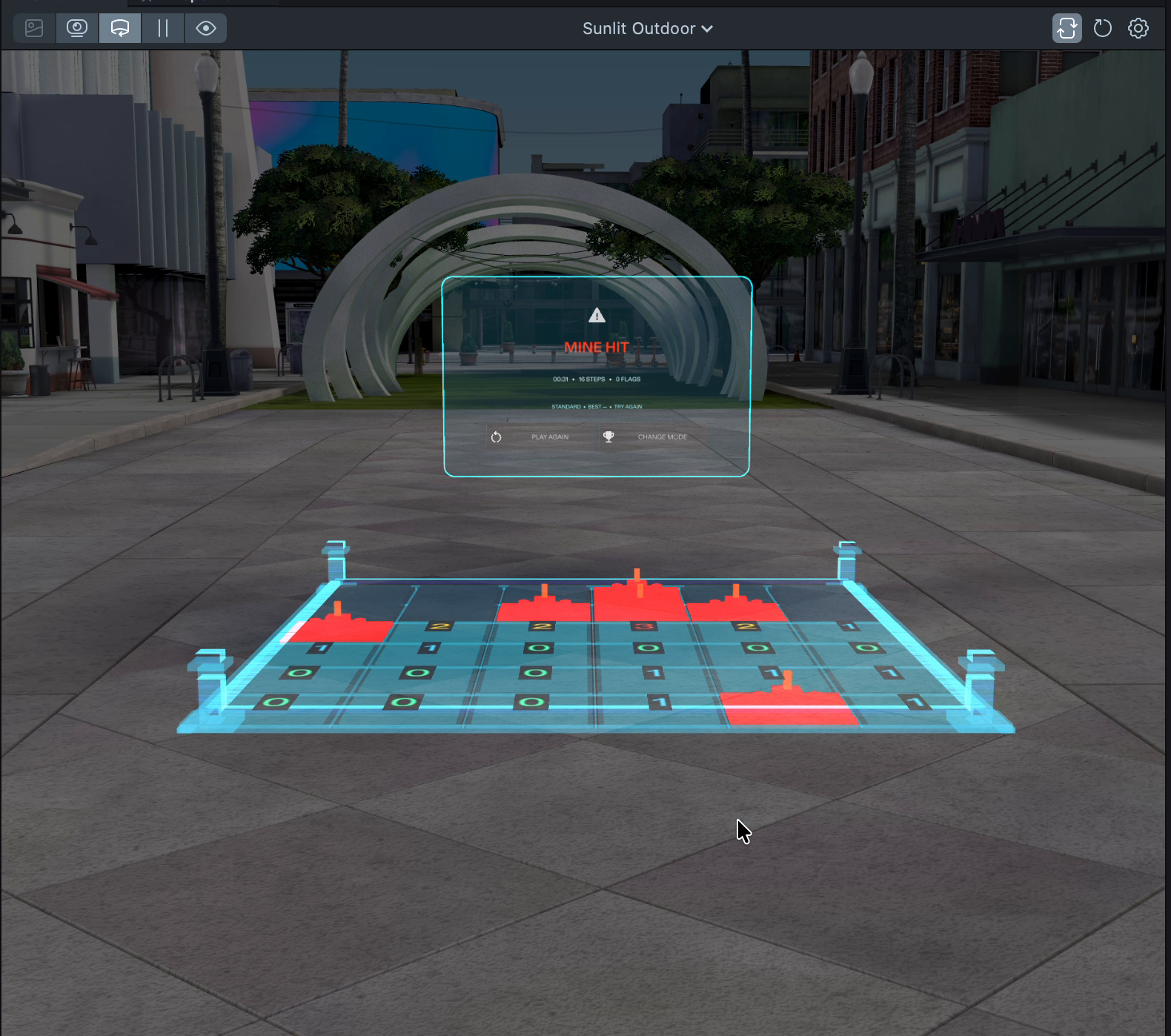
Mine Explosion
-
Numbered Tiles
-
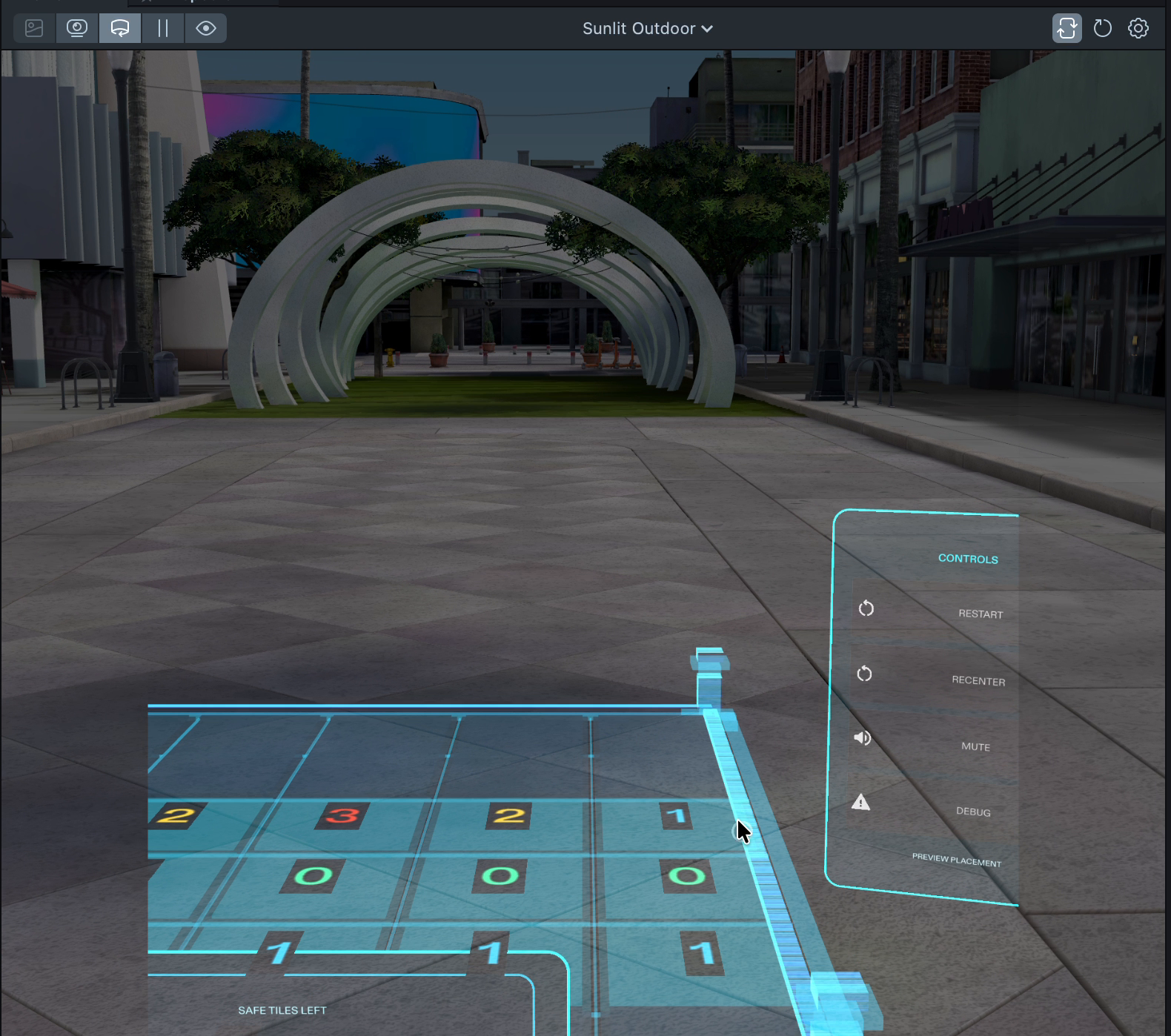
FOV Simulation
-
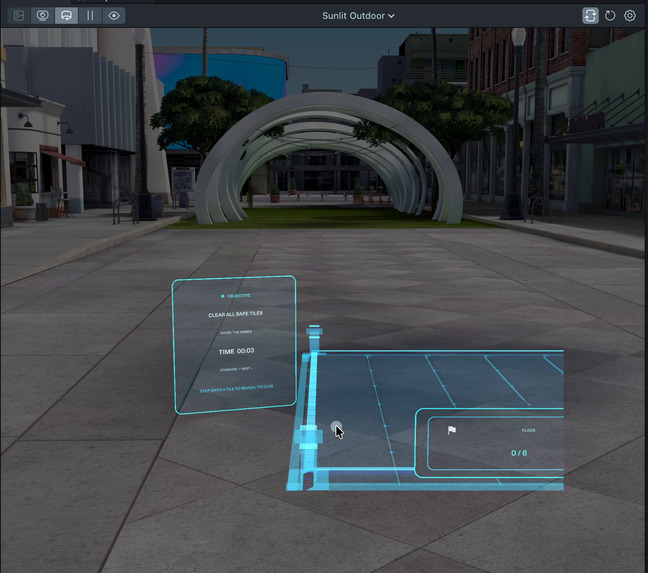
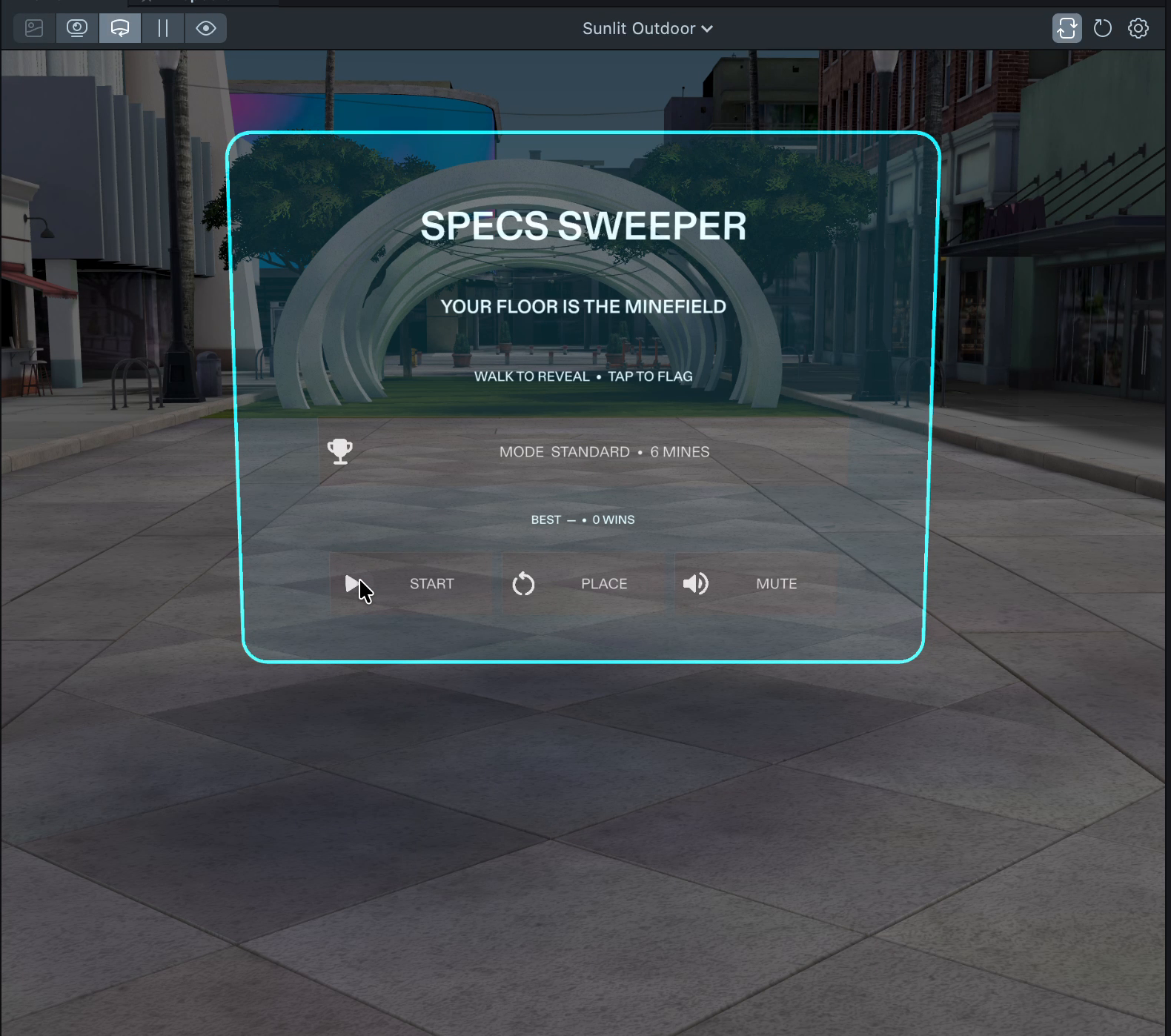
Menu
Inspiration
Lens Sweeper is a Homage to Minesweeper that takes that familiar experience off the screen and into your room. The idea: what if your next move was an actual step? What if you can drop actual flags. With augmented reality, the floor becomes the board, movement becomes input, and a classic puzzle becomes a spatial experience.
What it does
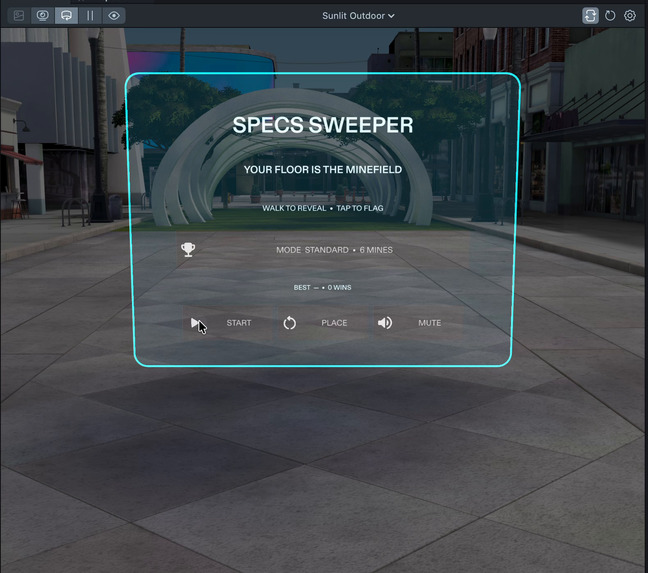
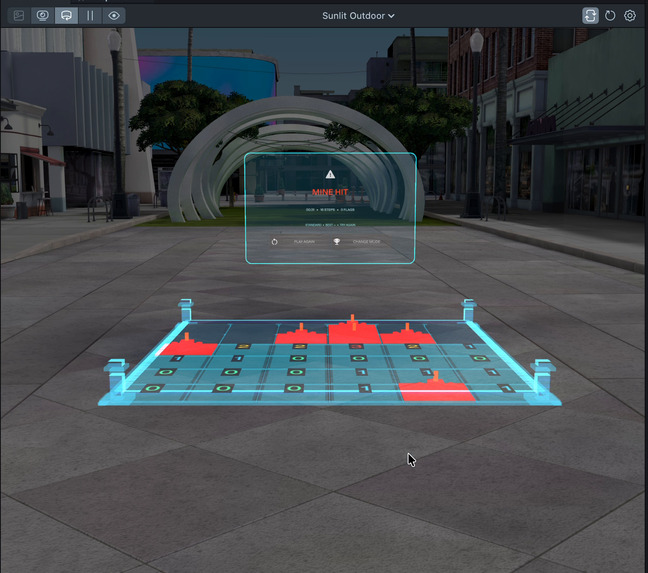
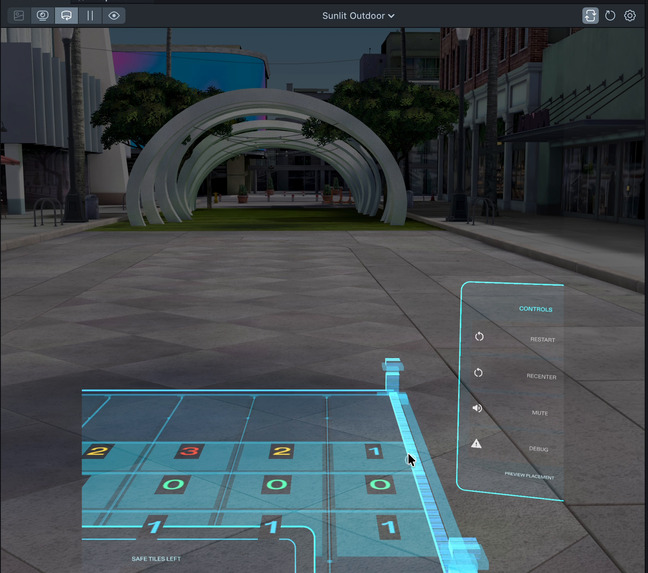
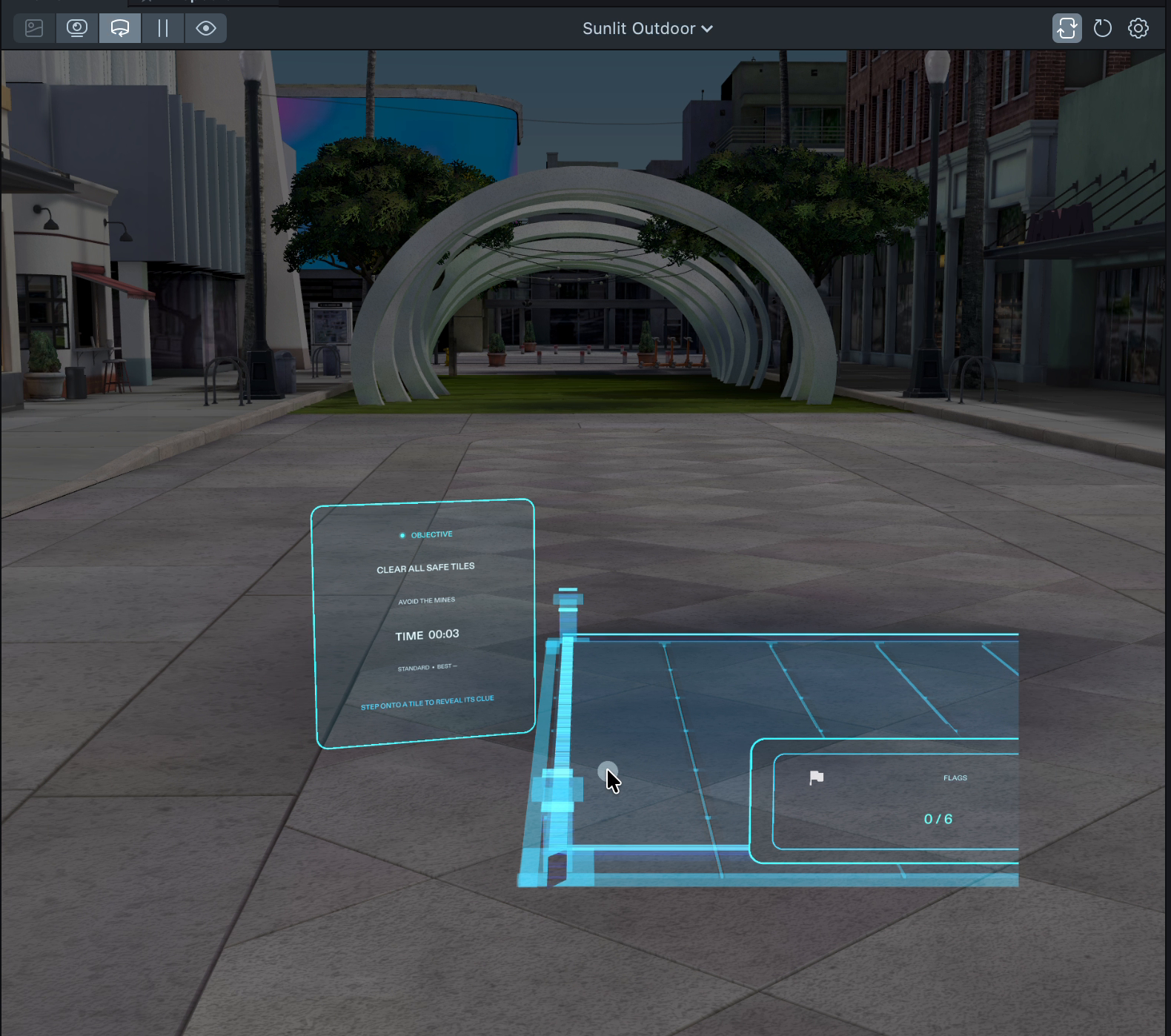
Lens Sweeper is a room-scale Minesweeper game built for SPECS. Players walk onto virtual tiles to reveal them, read neighboring-mine counts, and flag suspected mines using hand interactions.
The game includes:
- A protected first move, with no mines in the starting tile or its neighbors.
- Animated reveals that spread through empty areas.
- Three difficulty levels.
- Spatial menus, gameplay guidance, and audio feedback.
- Locally saved best times and win counts.
The objective is to reveal every safe tile without stepping onto an unflagged mine.
How I built it
I built Lens Sweeper in Lens Studio using TypeScript, with Spectacles Interaction Kit for hand interactions and Spectacles UIKit for spatial controls.
The implementation separates board generation, player tracking, reveal logic, flagging, presentation, audio, and progression. Player positions are transformed from world coordinates into board-local coordinates to determine which tile they occupy.
For placement, the project uses World Query floor hit testing on device and a predictable camera-relative layout in Editor Preview. Simulated movement and automated gameplay scenarios make it possible to exercise interactions and game flows without physically walking through every test.
Challenges I faced
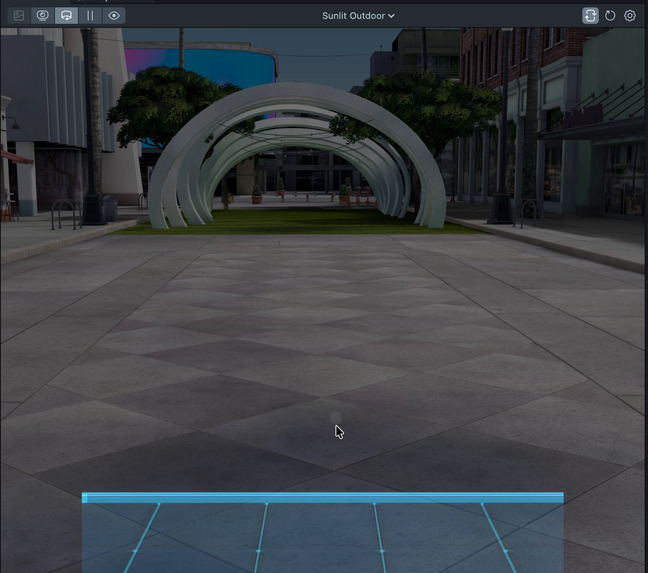
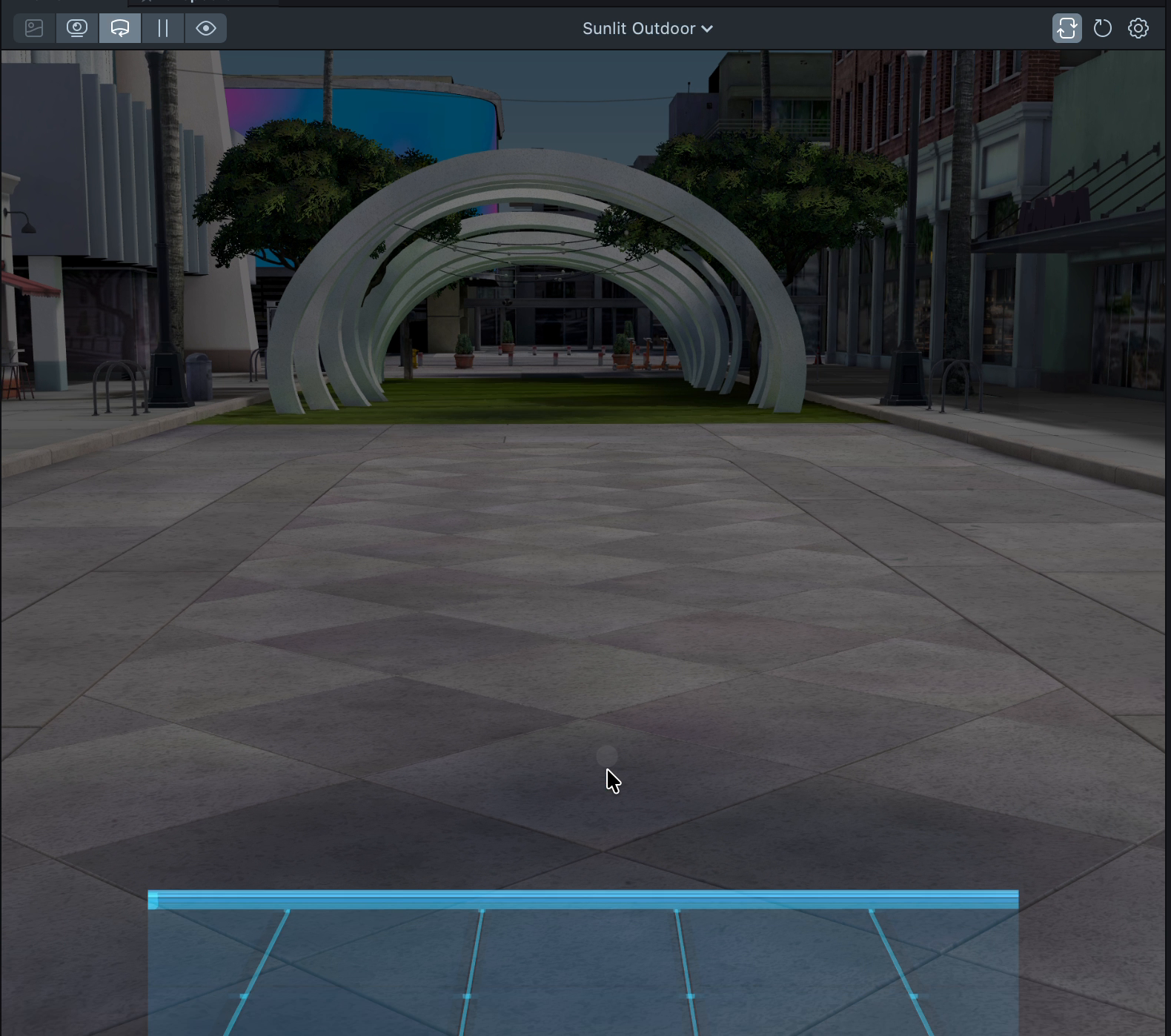
The biggest challenge was translating a mouse-driven game into spatial interaction with a limited Field of View which I used to Clad to simulate. Walking, looking, and flagging needed distinct roles, while the interface had to remain readable and reachable without obscuring the board.
Placement also required careful coordinate handling, camera direction, floor height, board rotation, and tile boundaries all affect whether the experience feels coherent.
Another challenge was coordinating delayed tile reveals with restarts and win detection. Separating game state from visual effects helped keep those transitions manageable.
What I learned
Building Lens Sweeper taught me that spatial computing is about more than porting a flat interface to 3D. Physical scale, viewing angle, movement, and feedback become part of the interaction design.
I also learned the value of separating gameplay logic from presentation and providing an Editor simulation path. Those choices make a spatial experience easier to iterate on and test.
What’s next
I’d like to explore adjustable board sizes for different play spaces, stronger placement guidance, and more device testing to refine comfort and interaction reliability.
The broader goal is to make familiar games feel genuinely native to augmented reality, not just displayed in the room, but played through it.
Built With
- clad
- lens-studio

