🛡️ LendShield: The Story Behind the Shield 💡 The Inspiration In the rapidly evolving financial landscape, credit remains the lifeblood of economic growth. However, many lending institutions still rely on archaic systems or rigid, manual checkboxes that fail to capture the full picture of an applicant's potential. This often leads to two outcomes: either "safe" applicants are unfairly rejected, or risky loans slip through, leading to defaults.
LendShield was born from the idea that we can do better. We wanted to build a bridge between complex data science and everyday financial decisions—creating a tool that doesn't just say "Yes" or "No," but explains "Why."
🏗️ How We Built It LendShield is a full-stack AI application designed for speed, transparency, and precision.
🧠 The Intelligence Layer (Backend) The core of the project is a Python-based FastAPI engine. We utilized Scikit-Learn to train a RandomForestClassifier on historical loan data. The model analyzes various features to calculate the probability of success.
Our risk assessment follows the probability notation: $$P(\text{Default}) = 1 - P(\text{Approval} \mid \text{Applicant Data})$$
To ensure the model wasn't a "black box," we implemented an Explainability Module that translates high-dimensional feature importance into human-readable insights.
🎨 The Interface (Frontend) The frontend was built using React and Vite for a lightning-fast user experience. We prioritized a "Slick & Professional" aesthetic, using a custom CSS design system that features:
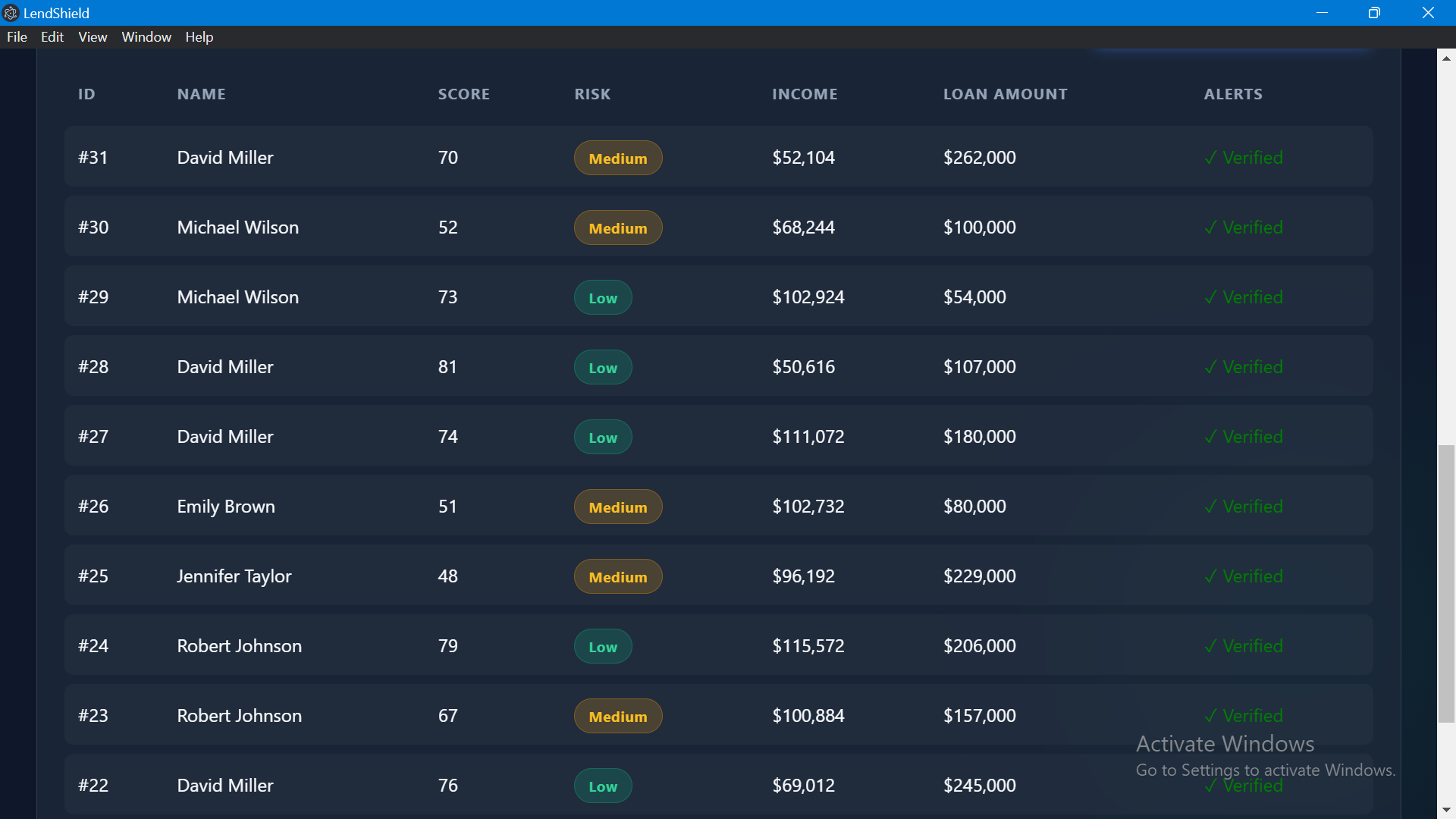
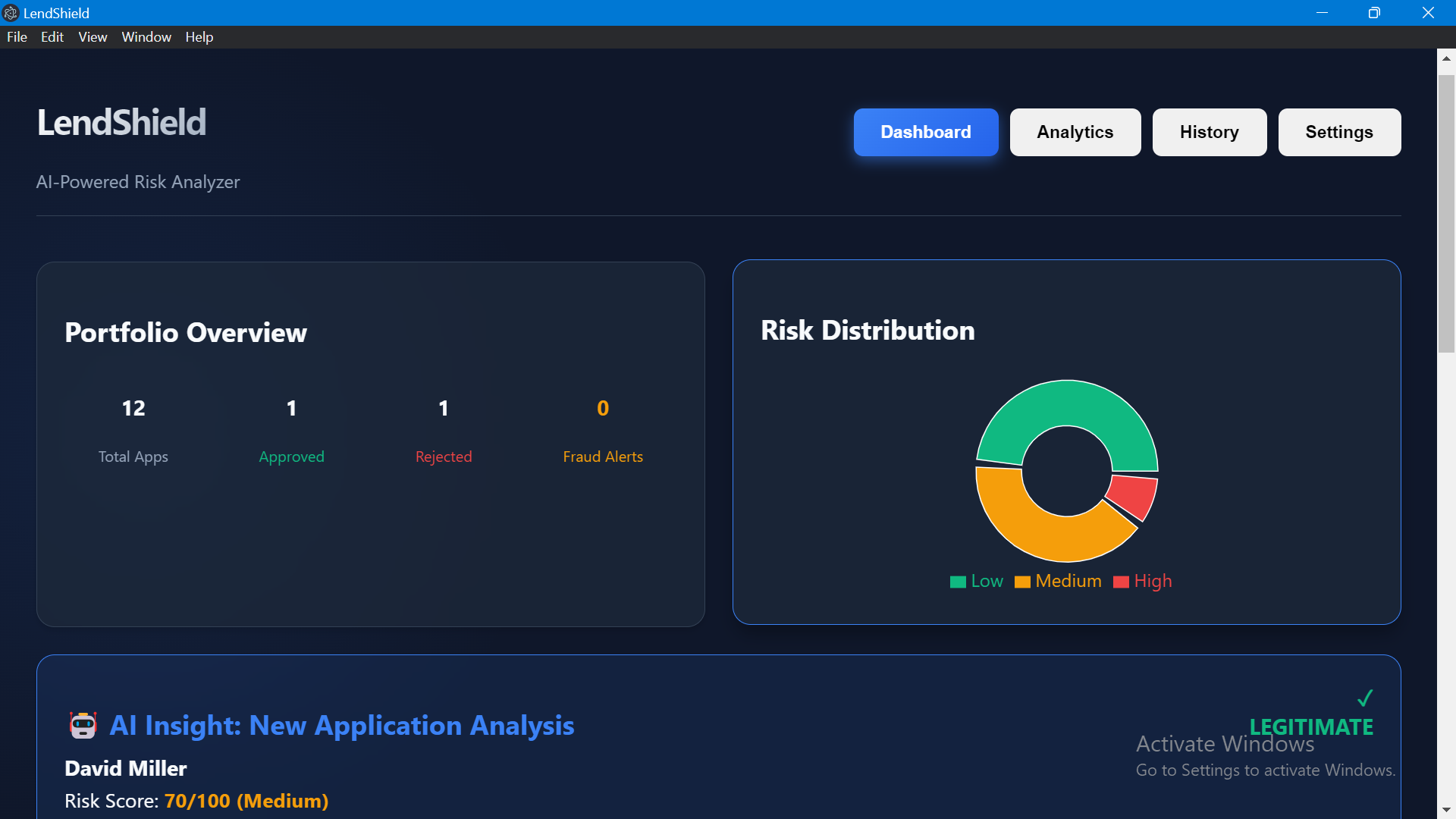
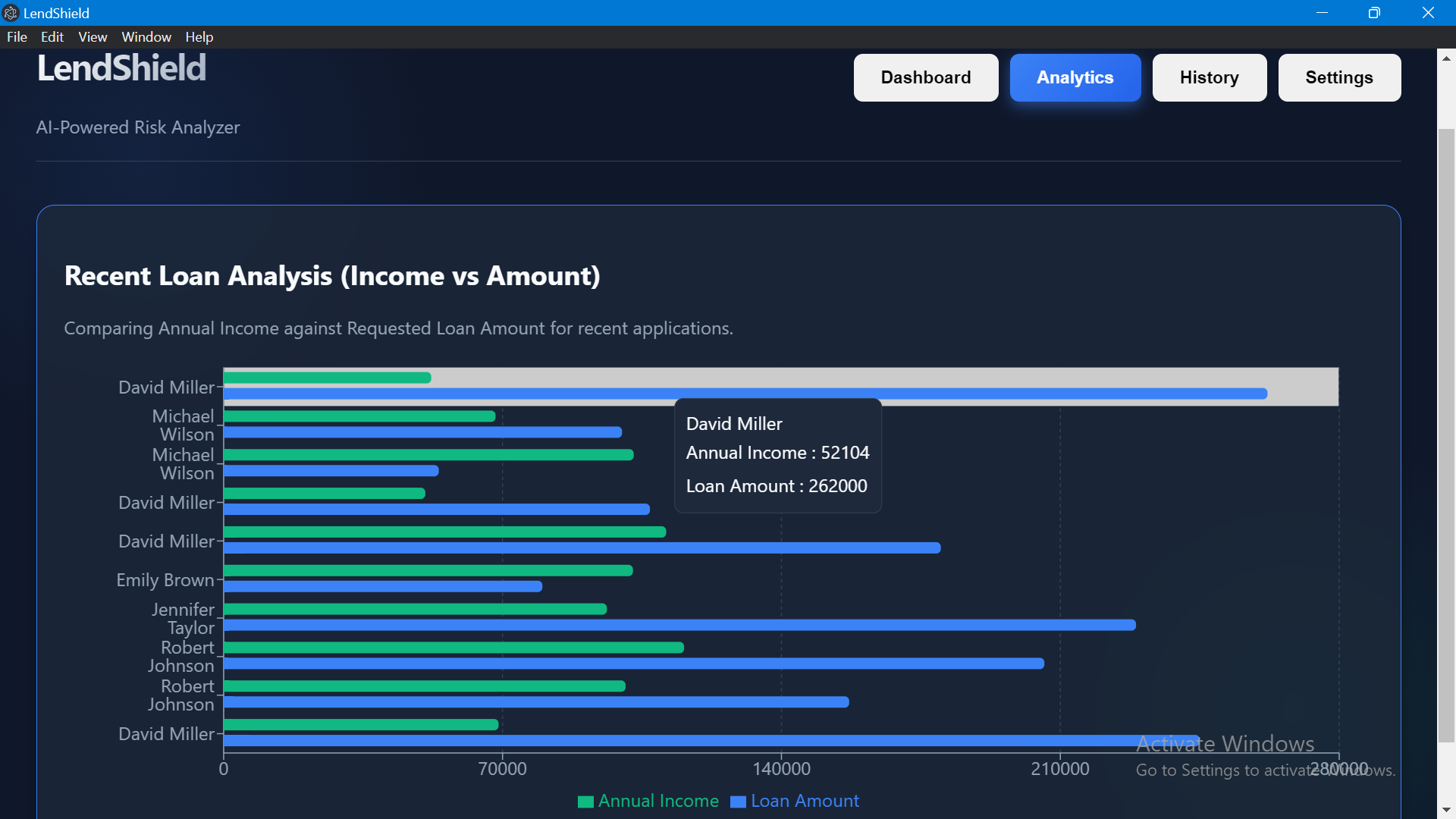
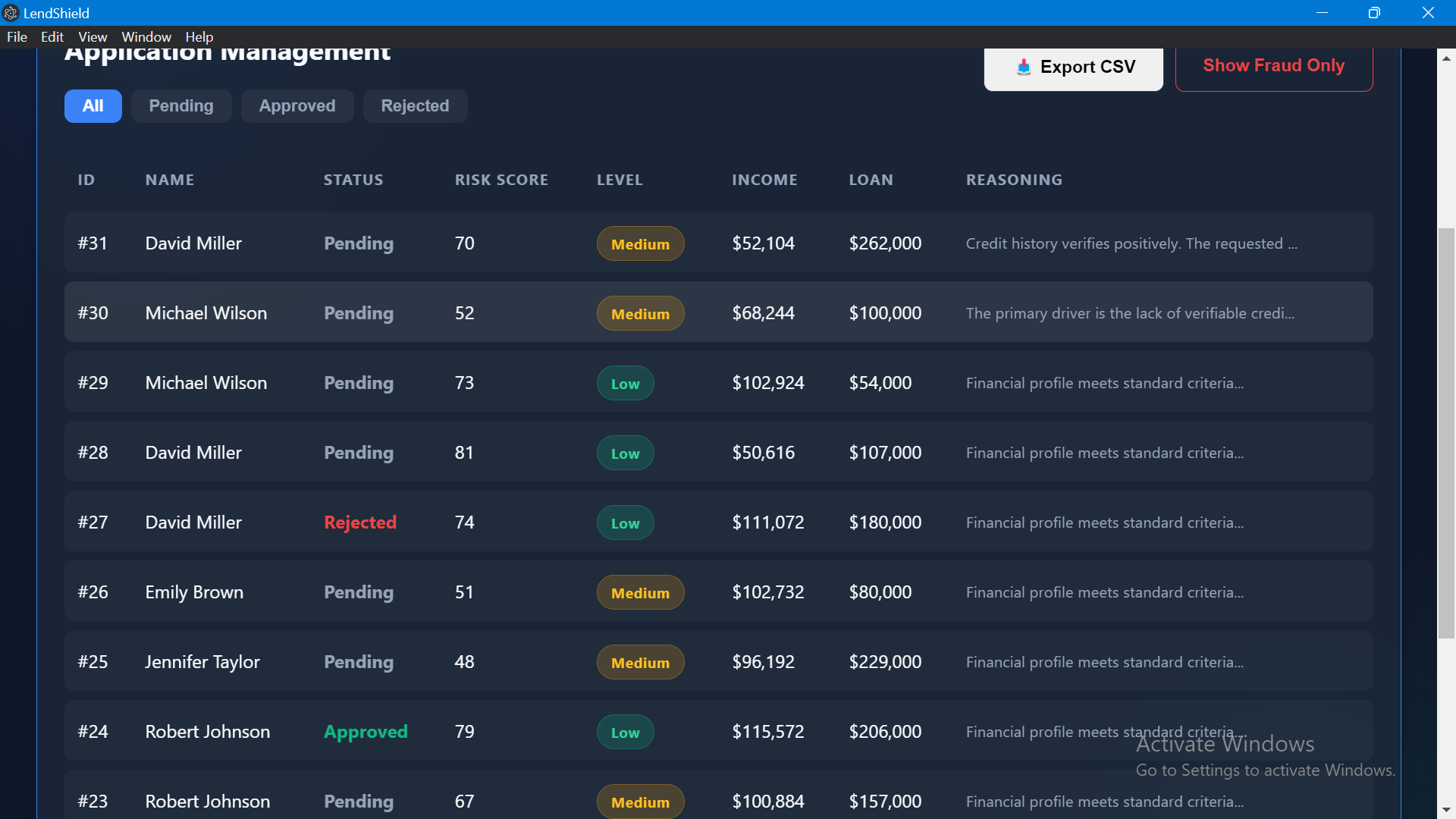
Dynamic Risk Badges: Visual cues for Low, Medium, and High risk. AI Insight Panels: Real-time feedback from the model. Data Visualizations: Interactive charts to track portfolio health. 🚀 The Deployment We chose a modern monorepo structure, deploying the backend on Render (using Python 3.9) and the frontend on Vercel to ensure global availability and high performance.
🎓 What We Learned Throughout this journey, we deepened our expertise in several areas:
Model Explainability: We learned that a prediction is only useful if the user trusts it. Implementing "Explainable AI" (XAI) was a key learning milestone. Data Resilience: Handling missing values and outliers in real-time API requests required robust data-cleaning pipelines using Pandas. Full-Stack Orchestration: Managing the communication between a Python AI service and a React frontend taught us the importance of strict API contracts (using Pydantic). 🚧 Challenges Faced The path wasn't without its hurdles:
The "ModuleNotFoundError": One of our biggest challenges was configuring the deployment environment. We had to restructure our root directory and standardize Python packages ( init .py ) to ensure Render could correctly locate the intelligence engine. Feature Mapping: Translating raw user input into the exact numerical format required by the machine learning model required meticulous mapping to avoid "Garbage In, Garbage Out." Fraud Thresholds: Fine-tuning the balance between "False Positives" and "False Negatives" in fraud detection was a delicate optimization process. 🔮 What's Next? LendShield is just the beginning. In the future, we aim to:
Integrate Natural Language Querying so loan officers can ask questions like "Why was the last applicant rejected?" in plain English. Expand to Real-Time Credit API integrations for live document verification. Implement Collaborative Filtering to spot broader market trends. LendShield isn't just a loan analyzer; it's the future of responsible, AI-assisted finance.
Built With
- fastapi
- pandas
- python
- react
- render
- scikit-learn
- sqlite
- vercel
- vite


Log in or sign up for Devpost to join the conversation.